
AI Marketing Daily · 2026-11-19
AI Marketing Daily for 2026-11-19 compiles twenty items led by CMI's B2B content marketing report on AI content speed versus quality, with sections on GEO and AI search citations, agent tools and pricing, platform launches, playbooks, and industry data.
Five of today's twenty items circle the same question: AI search is rewriting how traffic gets distributed — is your brand being cited? The headline is CMI's annual report, and its most gut-punching set of numbers shows AI making content faster and cheaper while quality falls behind — with the executives who most need to hit the brakes sitting the most comfortably. The tooling and budget layers both brought fresh evidence today, and the warnings at the career layer carry real weight too. Worth twenty minutes, front to back.
🎯 Today's Headline
Fast, Cheap, and Anything but Better: CMI's 2027 Report Takes an X-Ray of the AI Content Machine
CMI and MarketingProfs have released their annual B2B content marketing trends report, and author Robert Rose opens with the candy-factory sequence from I Love Lucy: the conveyor belt keeps speeding up, Lucy and Ethel start stuffing chocolates into their hats, their clothes, and their mouths; the supervisor pops back to inspect, finds the belt spotless, and turns toward the back room shouting to speed it up again. The 2026 survey data is a snapshot of that assembly line. 88% of B2B marketing teams are using AI to generate content, 60% expanded their usage within the past year, and 23% of those count as unconstrained expansion. AI agent usage doubled from 28% a year ago to 59%, and 13% already classify it as strategy-level. On the credit ledger teams keep for AI, the top three entries are speed at 78%, efficiency at 59%, and output at 44%; quality manages only 17%, innovation 22%, and help with actual performance 12%. Meanwhile, the three biggest challenges they list are all quality items: ensuring accuracy 54%, quality control 54%, brand voice and authenticity 52%.
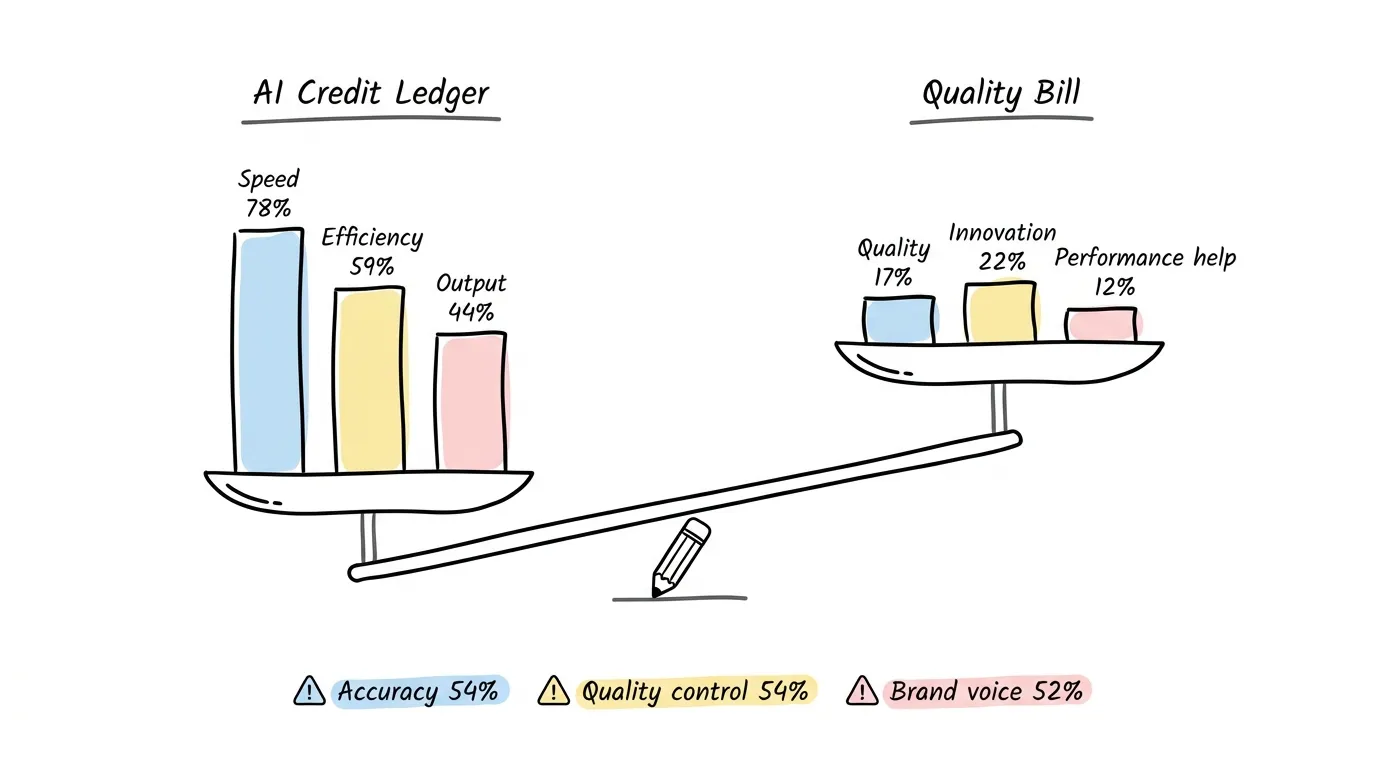
The numbers add up to a blunt conclusion: AI optimized the dimension marketers themselves rate lowest, while damaging the one they value most. On the effectiveness-drivers ranking, the top two slots are content relevance and quality at 47% and team skills at 43%; AI adoption scrapes in at 14%. Marketers say it themselves: audience trust is built by consistently delivering useful information 64%, showing your expertise 59%, and telling real customer stories 50%. Speeding up doesn't help a single line on those lists. Then there's the bill: 65% of practitioners feel pressure to speed up, and the price is burnout 35%, less original thinking 32%, and content homogenization 29% — while so-called efficiency gains rank only fourth, at 28%.
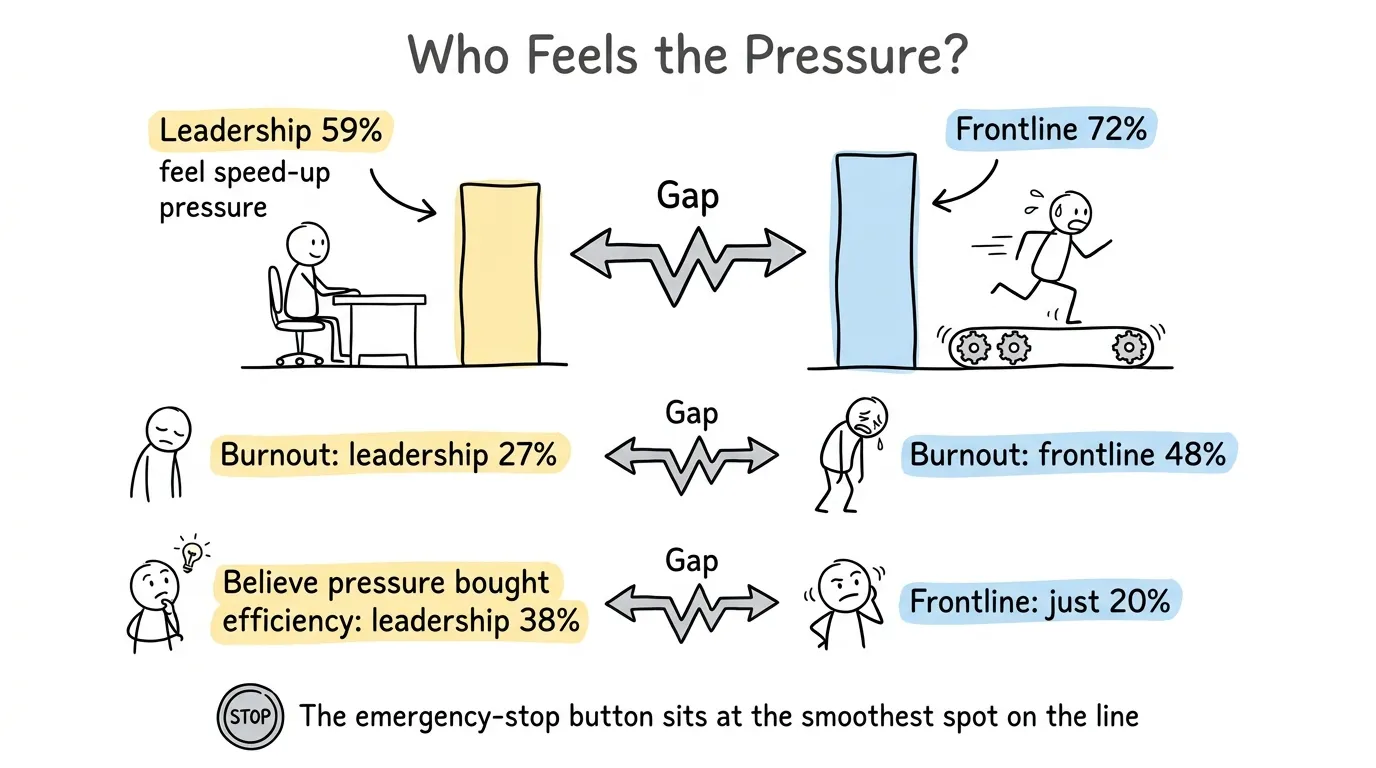
The cross-analysis uncovers the layer most worth remembering. Perception of speed-up pressure: leadership 59%, frontline 72%. Perception of burnout: leaders 27%, frontline 48%. Belief that the pressure actually bought efficiency: leaders 38%, frontline just 20%. The report's metaphor is that the only person authorized to press the emergency stop sits at the smoothest spot on the entire line. So the 2027 budget direction is no longer guesswork: intent to invest in owned media rises to 42%, up 10 percentage points year over year; big spenders on experiential marketing double from 17% to 31%; intent to invest in AI tools falls to 30%, down 15 points. Marketers are voting with their feet, shifting from buying machines to buying land. The traffic data backs the pivot: rising and falling site traffic split evenly at 31% apiece, and among those falling, 79% blame AI search. Public traffic isn't dead — it just can't be planned anymore.
Two things you can do this week. First, write quality items into the acceptance criteria for your AI pipeline: set a threshold each for accuracy and brand consistency, and spot-check originality separately. Machines are only accountable for speed — you have to build the gate for quality. Second, if you're in management, next time you walk the floor don't just read the output dashboard; count the three invisible losses: the original thinking that never happened, the experts who were never called on, and the customer stories that were synthesized instead of collected. The report also leaves behind a disclosure paradox: 75% worry that AI content makes audiences trust online information less, yet 52% of organizations have no disclosure policy at all, and only 8% disclose on every single piece. The author's remedy deserves the first page of your memo: audiences never care about process, only about provenance. Trust comes from named experts, real customer stories, and original research — so asking "where is the AI" has become a pointless question. Ask "where are the people."
The harshest sentence in this report hides inside what it calls leadership's soundproofing effect. Nobody actively decided to trade quality for speed. The dashboards decision-makers looked at genuinely showed output rising — they weren't lying. Erosion happens one chocolate at a time, and by the time it shows up on the dashboard, it's already too late. If next year's hiring plans and performance reviews leave no seat for quality, your team's conveyor belt will only spin faster.
🔗 Further reading: Read the full article
🏷 AI Search & GEO
Surfer Breaks Down Ten GEO Tactics: Domain Authority Is Nearly Zero-Correlated with AI Citations
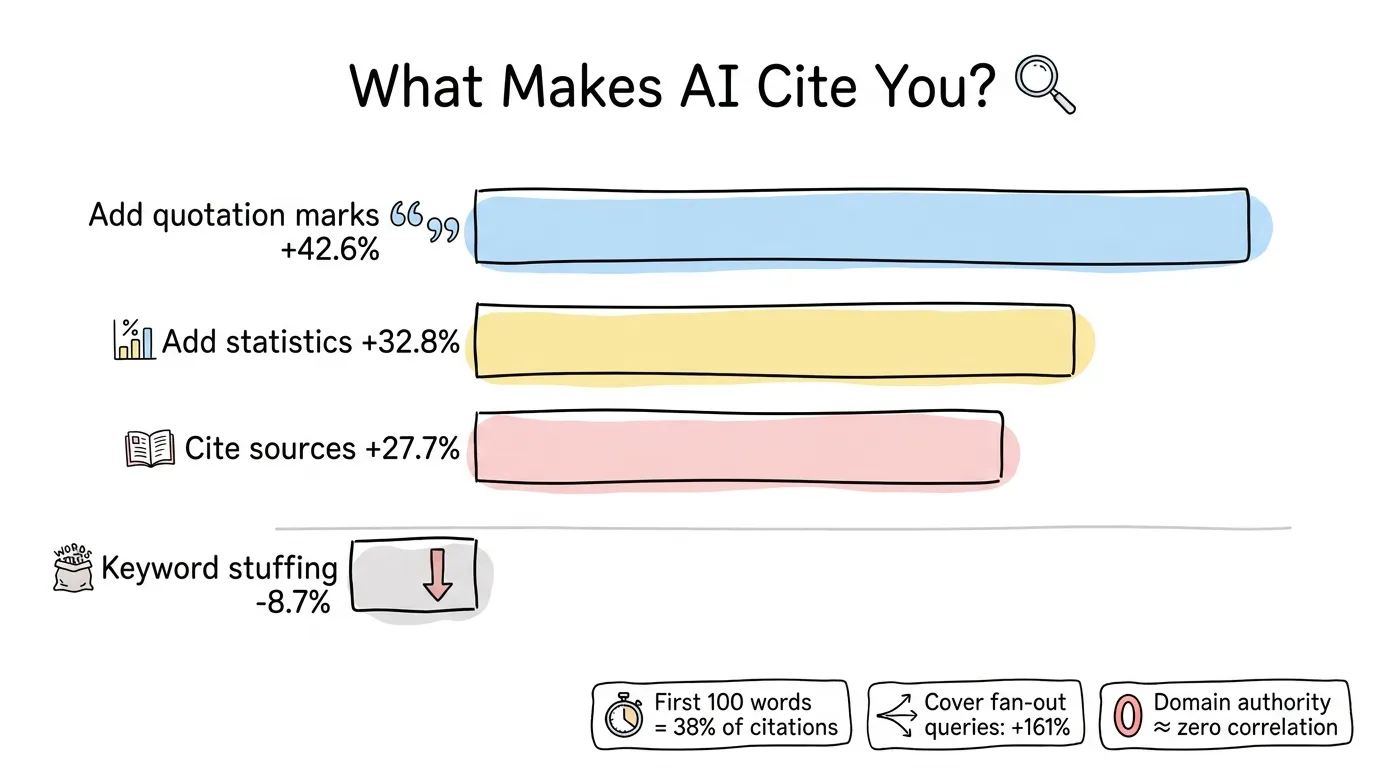
Surfer co-founder Michał Suski's GEO (Generative Engine Optimization — optimizing content to be cited by AI answers) guide, updated October 22, carries the strongest evidence chain in its genre. The original research comes from Aggarwal et al.'s KDD 2024 paper, and a benchmark of ten thousand queries shows: adding quotation marks lifts visibility 42.6%, adding statistics 32.8%, citing sources 27.7% — while keyword stuffing actually drops 8.7%. Two counterintuitive findings are worth even more: a page ranked fifth that used the cite-sources method saw visibility climb 115.1%, while the first-place result using the same method fell 30.3%; and when Surfer analyzed roughly 5 million URLs cited by AI, it found domain authority nearly zero-correlated with citations. On the operational level, pages that cover both the main query and its fan-out splits (fan-out — the sub-queries a search engine generates from one search) are 161% more likely to be cited by AI Overviews; 38% of citations come from a page's first 100 words; YouTube accounts for about 23% of citing domains; and 86% of citations come from brand-managed sources. Measurement has a trap: API-scraped results overlap only 15.5% to 31.6% with what users actually see. Google's official position, all in one place: optimizing for AI features is still SEO, llms.txt has no effect on Google, and building separate pages for each fan-out query will be judged as scaled content abuse.
💬 Small and mid-size sites should treat this piece as a checklist, with three steps to land this week: put citable conclusions and numbers in the first 100 words of the opening paragraph, write out the full set of split variants for one topic cluster, and refresh data quarterly. Stop paying to inflate domain authority — AI citations don't recognize it — and measure against real answers.
🔗 Further reading: Read the full article
Semrush Tracked 2,500 Prompts: AI Citations Turn Over 40% to 60% Every Month
Search Engine Land's systematic definition of GEO comes from authors at Semrush, with first-hand tracking data. Scale first, so expectations are calibrated: ChatGPT has over 1.2 billion weekly active users, Gemini has passed 1 billion monthly actives, and AI Overviews appear in at least 16% of searches — higher still for high-intent queries. In the case of form tool Tally, ChatGPT has already become its number-one referral traffic source. Tracking 2,500 prompts, the authors found that the cited sources at both engines turn over 40% to 60% every month — wildly volatile — yet the brands cited continuously share three structural traits: entity clarity, content extractability, and multi-platform presence. Mechanically, LLMs slice content into chunks for retrieval and then reassemble answers, so definition and explanation paragraphs must be self-contained, with conclusions up front. Entity consistency is grunt work: the brand description on your website, schema, product feeds, LinkedIn, and review platforms must all say the same thing, because AI cross-verifies across sources and down-weights conflicts. Measurement has blind spots too: conversions from AI recommendations often land in later brand-keyword searches that GA4 can't attribute, so supplement with four metric types — citation frequency, share of voice, sentiment, and triggering prompts.
💬 High volatility means don't agonize over any single ranking; spend the effort on the three things that barely change: unify brand descriptions across platforms, write paragraphs as blocks that can be lifted out intact, and watch citations and sentiment weekly. Set up separate monitoring for the brand-keyword conversion path — that's where the real money comes back.
🔗 Further reading: Read the full article
The GEO Budget Table Is Out: 40% Traditional SEO, 25% Digital PR, 10% Training
Search Engine Land's 2026 GEO planning guide stands out for organizing decisions around behavioral science. The quantified base: Google handles 417 billion searches a month, ChatGPT processes 72 billion messages a month, and users under 44 search across an average of 5 platforms — so the industry should shift from pondering what people search to pondering where they search. The method starts from audience behavior, mapping four search motivations — rational verification, peer validation, taste fit, and habitual trust — then matching content formats to mindset: opinion pieces shape discourse, short audio and video build emotion, long-form articles give decision confidence, and how-tos remove friction. One handy tactic for entity authority: surface the buying logic buried in code and support workflows as explicit "How we choose" content plus structured markup. The digital PR mix: 45% standing commentary and seasonal topics, 30% evergreen assets, 20% on-site integration, 5% experiments. The full allocation: traditional SEO 40%, digital PR and E-E-A-T 25%, data reports 20%, training 10%, innovation 5% — and for most brands the total pie grows rather than shrinks.
💬 Take this table straight into next year's budget conversation; the pitch is two sentences: search isn't dead — search shattered into five platforms; and GEO doesn't cut SEO's money, it adds a 25% trust budget alongside. Fill the audience-research gap first, because touchpoint planning without research is just blind spend.
🔗 Further reading: Read the full article
Core Update Collides with Black Friday: Agencies Should Make No Attribution Calls Before December
DesignRush's biweekly SEO roundup, published November 16, untangles three data events tangled up with one another. Google's November core update began rolling out on November 10, with a window of up to two weeks that could drag past Black Friday — last year's June and December updates ran 17 and 18 days. Search Console's generative AI report undercounted impressions from November 9 to 11 due to a logging error, landing right on the tail end of the core update's baseline week; Ahrefs confirmed that November 6 ranking data had recovered from October's contamination. Gemini 4 Hydrogen became AI Mode's default model on November 12. The author's judgment is blunt: before December, any agency's explanation of the core update is merely a hypothesis; the baseline week carried two data problems at once, and adjusting daily budgets on that basis is a bad-data decision. SE Visible's data lands even harder: among 28,500 sampled sites, 79.2% received at least one AI referral in September, versus only 39.7% in January; in the thousand-plus site cohort, every 100 organic visits came with 75.5 AI visits, versus 5.1% in January. Anthropic's usage policy, effective November 12, adds one more twist: using Claude seeds to pollute search and AI answer sources is now banned.
💬 Set three rules for the team: pages that still rank stay untouched; annotate every chart with platform events and bad-data windows; and give AI referrals their own line in every report. When clients ask about traffic swings in mid-December, the unified answer is: the baseline was contaminated. And put 79.2% into next year's planning deck.
🔗 Further reading: Read the full article
ChatGPT Business Hub Opens for Testing, and Ahrefs Counted Brand Mentions Across 5.5 Million Answers
Nexora Digital's weekly covers 11 items from November 6 to 12, each tagged with an evidence-strength rating. The core update and the Search Console data problems were already unpacked in the previous item — here's only the increment. OpenAI has launched the ChatGPT Business Hub beta, where enterprises can claim their presence, manage their information, and view mention and click insights; managing enterprise visibility now extends beyond Google Business Profile. Ahrefs analyzed roughly 5.5 million US-region ChatGPT answers: the five most-mentioned brands are Walmart, Target, Apple, Amazon, and Home Depot, with retail taking 35% of Top-100 mentions. Peec AI's experiment: after updating the descriptions and adding timestamps to 15 YouTube videos, AI retrieval volume rose 359%, against 17% for the control group — the author notes that a single variable couldn't be isolated. The buyer-side signal is worth even more: Kevin Indig's survey of 200 software buyers shows that among buyers who already had candidate vendors, nearly 63% added another vendor through AI-assisted research. AI reshapes the consideration set before buyers ever reach your website.
💬 Two things to do this week: claim your brand's presence in Business Hub — it costs nothing; and monitor whether AI recommends you on commercial prompts, instead of only counting citations. 63% is exactly the number to wave at a B2B boss to get GEO budget approved.
🔗 Further reading: Read the full article
🏷 Agents & Automation Tools
Automation Platform Agent Face-Off: Structured Tasks Can Do the Job, Multi-Step Autonomy Is Still Experimental
Automation Atlas's annual face-off carries an editor's note that clearly separates hands-on testing from vendor claims. Market data first, to calibrate expectations: the AI agent market was worth $7.84 billion in 2025, is projected to reach $52.62 billion by 2030 at a 46.3% compound annual growth rate; Gartner predicts 40% of enterprise applications will embed task-specific agents by the end of 2026, up from under 5% in 2025; multi-agent inquiries rose 1,445% in a year, but only 14% of enterprises have production-grade solutions. The tested verdict in one line: structured single-domain tasks are ready for work; multi-step autonomous decision-making remains experimental; and the production pattern is narrow scope plus human-in-the-loop backup. The platform split is clear: Zapier Copilot works for simple-to-medium workflows but needs manual fixes for nested JSON; n8n wins on self-hosting and privacy, at a $2.5 billion valuation; Workato bets MCP-first. MCP's timeline is worth memorizing: Anthropic launched it in November 2024, OpenAI and Google DeepMind adopted it in turn, there were over 5,800 servers by mid-2025, and it was donated to the Linux Foundation in December. Billing is quietly shifting: Airtable scrapped per-seat AI fees, Make moved to credits, and Zapier charges 1.25x on overages. Tested benefit samples: logistics delays down 40%, support call duration down 25%, human-handoff rate down 60%. Relay.app shut down in September.
💬 Before choosing, ask two numbers: how many production-grade cases does this platform have, and is billing in ops or credits — and how are overages charged. Betting your integration investment on open protocols like MCP won't be wrong. Pilot one narrow task for two weeks first, and don't buy the multi-step autonomy sales pitch.
🔗 Further reading: Read the full article
Marketing Agent Pricing, Field-Tested: HubSpot 50 Cents, Salesforce Two Dollars per Resolved Conversation
Young Urban Project's implementation guide, published October 24, verifies prices item by item down to specific dates. It opens with Gartner's agent-washing warning: of the thousands of vendors calling themselves agentic, only about 130 are real agents, and over 40% of agentic projects will be canceled by the end of 2027. The price list, ready to copy: HubSpot runs about $0.5 per resolved conversation and $1 per recommended lead, with overage credits that don't roll over; Salesforce charges about $0.1 per standard action and $2 per customer conversation; Zapier Pro is $50 a month with 1,500 activities. All three meter differently, so the only fair comparison is the true cost per completed task. The top cause of failure isn't the model — it's data: in Salesforce's survey, only 58% of marketers have full access to service data. Garbage in, confident garbage out. The six-step rollout: pick one repeatable, measurable task; map the existing workflow; write down the scope and the forbidden moves; test edge cases with human approval; then scale against a baseline. ROI must include implementation, integration, monitoring, and human review. Google Cloud says 88% of early adopters see positive ROI on at least one use case — and the author flags that "at least one" is a four-word dose of survivorship bias.
💬 Your first agent shouldn't face customers: pick one internal repetitive task, run it for two weeks, and record a baseline before talking ROI. Before signing anything, ask one question: at 2 a.m., the agent makes a mistake — who finds out, and how fast can you roll back? Vendors who can't answer are out.
🔗 Further reading: Read the full article
Salesforce Lists the Agent Reliability Checklist: Guardrails, Context, and 20-Second Latency
Salesforce distills eight trends for enterprise-grade agents in 2026, and the throughline is making agents run reliably in production. Deterministic guardrails rank first: Agentforce launched Agent Script, a scripting language that uses explicit if/then rules to enforce step order — a banking agent must verify identity first, for example. Early customers moved from "usually correct" to "always compliant," which a reasoning model cannot deliver on its own. Prompt engineering is table stakes now; the new craft is context engineering — designing which data the agent can see, how fresh the knowledge base is, and when to retrieve. MCP's openness also widens the tool-poisoning attack surface: use trusted gateways to limit reachable servers and keep full audit logs. Latency is the hard flaw: agent interactions can run to 20 seconds. Salesforce spent six months on 30 system changes — cutting LLM calls before the first token from 4 to 2, and replacing LLM safety checks with deterministic rules — for a 70% overall latency reduction. Success lives in the harness, not the model: a strong model on bad data equals confident errors. One more easily missed item: agent failures are semantic. It misreads the question yet answers fluently, without erroring out — traditional monitoring can't catch that, so you need session-level reasoning traces and behavior-drift alerts.
💬 Copy the governance trio outright: hard-code if/then into main flows, pair a permission whitelist with audit logs, and monitor behavior drift rather than error rates. Hire for the Agent QA role first — a failed agent is harder to hold accountable than a failed employee.
🔗 Further reading: Read the full article
The Three-Layer B2B Lead Tool Stack: Cal.com's 2-Second Routing Beats Feature Lists
B2B Marketing Exchange's AI lead-gen selection guide promotes three things that didn't matter two years ago to the front of the checklist: scoring accuracy, CRM integration maturity, and EU AI Act compliance. Forrester sets the tone: 88% of B2B organizations are adopting or plan to adopt AI agents. The three layers, unpacked. Scoring layer: 6sense's 6QA claims 99% higher average opportunity value and 27% faster closes; ZoomInfo Copilot, in beta, predicts nearly half of existing pipeline and saves 10 hours a week; Salesforce Einstein is native in CRM and already offers factor-level explanations. Enrichment layer: HubSpot Breeze runs on a credit system with an LLM filtering sandbox; Apollo is $49 per user per month. The latency gap at the routing layer is startling: Cal.com completes form-to-booking in two to three seconds and is open-source and self-hostable; RevenueHero and Chili Piper take 15 to 30 seconds; human handoff takes 24 to 48 hours. Compliance is the new filter: all EU AI Act obligations take effect on August 2, 2026, and scoring vendors must provide factor-level explainability and data lineage — black-box scorers will get eliminated by regulatory teams.
💬 Speed-to-lead is the highest-return upgrade in this stack: compress form-to-booking under 60 seconds and the conversion difference shows immediately. The EU AI Act's effective date is right in front of us — add a line to the procurement checklist: can the vendor give a factor-level explanation of its scoring? Those who can't — start looking for a replacement.
🔗 Further reading: Read the full article
Gane Index Tested 14 Models on Who AI Recommends: Celtra's First-Choice Share Hits 50%, Canva Slides to 2%
Gane Index's November edition turns AI recommendations themselves into a measurable object: 14 models, 4 prompt types, 46 first-choice records, plus a noise floor. The standings for enterprise creative-automation platforms: Celtra's first-choice share is 50%, up 12 points from October — beyond the 11-point noise floor, so a real move; Bannerflow is at 15%, up 11 points; Smartly fell from 13% to 0%; Canva fell from 8% to 2%, with a 52% negative-mention rate — in negative prompts, the models said outright that consumer-grade tools can't support governed enterprise workflows. The citation analysis carries more weight than the rankings: 77 of 84 answers cited sources, with 978 links across 242 sites, and the most-cited page is bannerflow.com's own 2026 ranking page — 44 answers across 12 models. Model recommendations lean heavily on vendors' own SEO content. The methodology is worth copying too: the noise floor is measured by model drift when the same question is asked twice, and any movement below the floor is honestly labeled as noise.
💬 This data lays bare the real business of GEO: AI recommendations can be gamed by vendor content. If you're the buyer, treat AI answers as leads — demand demos and customer cases before deciding. If you're the brand, copy its method; building your own AI visibility monitoring doesn't cost much.
🔗 Further reading: Read the full article
🏷 Product & Platform Launches
OpenAI Puts Ads on ChatGPT: Visual Formats First, Measurement Ecosystem in One Step
OpenAI's official announcement, published October 5. The chassis: ChatGPT reaches 1.2 billion people every week. The new visual ad format tests first in the image-generation scenario, aimed at US users on Free and Go plans — clearly labeled, separated from generated images, with an official promise that ads don't affect answers. The measurement ecosystem is laid out end to end: conversion data can flow in from Hightouch, Tealium, and LiveRamp; attribution partners include AppsFlyer, Triple Whale, and Rockerbox; and geo incrementality experiments go to Haus, Measured, and WorkMagic. All early data is platform- and partner-reported: WeightWatchers' attributed CPA on ChatGPT Ads ran 15.3% below its blended paid-search benchmark; Dose saw 67% of incremental purchases come from new customers; Portland Leather's visitors were 93% new. There's movement on brand safety too: ads exclude emotionally vulnerable and sensitive contexts, DoubleVerify and IAS are running brand-suitability pilots, and none of it touches private conversations.
💬 Three sets of early data point the same way: this channel is dense with new customers. Carve out a small test slot in the budget, and validate with geo incrementality experiments rather than platform-reported attribution. Watch how fast it diverts search ad spend — new-customer acquisition campaigns get hit first.
🔗 Further reading: Read the full article
Agent Week in Brief: Microsoft Sells Governance as the Feature, and Influencer Outreach Gets a Fully Automated Pipeline
AI Agent Store's weekly covers November 12 to 18, each item fully framed as change, impact, and a way to try it. Replit Missions lets multiple agents collaborate under budget caps and approval gates, claiming an internal monitoring platform delivered in 2 days for $3,000. Cognition's Devin Bots take the agents-managing-agents route: splitting projects into tasks, running parallel sessions, and reporting through Slack — early customers' usage grew 10x in two weeks. Microsoft Ignite framed agent deployment as a governance problem, with Agent 365 extending identity, security, and observability to enterprise agents. On November 16, GitHub deprecated some older models in Copilot — CI workflows pinned to specific models may silently fall back. AT&T announced nearly 500 autonomous workflows in production processing over 1 million transactions a month — note: all company-reported. On the marketing side, the directly actionable item is Nectar Creator Agent: it retrieves over 300 million creator profiles, runs brand-safety checks, ranks matches, and sends personalized outreach automatically, with plans to open up via MCP. United Airlines banned unauthorized third-party agents from booking flights. Two security items to handle today: for the MCP write-operation replay problem, dependents should add idempotency keys immediately; and exploit framework ARTEX has been linked to real attacks.
💬 Pilot Nectar-style pipelines on a small influencer campaign, with human approval kept in place before anything sends; if you use Copilot, audit your model configurations this week to prevent silent fallback. Adding idempotency keys to MCP write operations is a five-minute job — don't put it off.
🔗 Further reading: Read the full article
🏷 Playbooks & Teams
Pearl Engineering Retrospective: LLMs in Email Orchestration, Clicks Up 113%, Latency from 20 Milliseconds to 20 Seconds
A first-hand retrospective from Pearl's engineering team on wiring an LLM into their internal customer-communications orchestration system. The approach has two moves: make the LLM's output an ordinary template variable plugged into the existing email template system, so marketers need zero understanding of the underlying infrastructure; and wire AI signals — customer intent, satisfaction, whether the issue was resolved — directly into targeting and scheduling decisions, replacing fixed follow-up schedules. The effect and the cost are equally concrete: some tests saw click-through rise 113%, but message-generation latency degraded from 20 milliseconds to as long as 20 seconds. The engineering countermeasures come itemized: tier messages by priority, so transactional messages like password resets pass through at low latency while marketing messages tolerate AI generation time; build a two-layer fallback — provider-level switching plus an application-level retreat to preset templates — because AI must not be a single point of failure for customer communication; and use lazy execution, calling the LLM only when needed while centrally reusing existing AI signals to control cost. On model choice, Anthropic's tone reads more natural for customer emails.
💬 This piece spells out the price: the 113% click lift was bought with 20-second latency. Tech teams should copy the architecture straight off the page — priority tiering, two-layer fallback, signal reuse. Marketing should first request wiring up win-back and lifecycle emails — those scenarios have the best increment economics.
🔗 Further reading: Read the full article
Postbeam's Omnichannel Guide: Fewer Than 1% of People Post on LinkedIn — That's a Free 10x Network
A 2026 B2B content guide from Postbeam's co-founder, with screenshots of their own data. The main thesis: the center of gravity has shifted from company accounts to people-as-media and to being cited by AI. LinkedIn organic traffic is priority one: fewer than 1% of members post in a given month, and the algorithm hands free reach to individuals rather than company pages. A single founder account posting for a year pulled 853,000 impressions, up 202% year over year, and brought in more than 20 customers. SEO's breakthrough point is informational gain: use unique material like competitor pricing screenshots and sales-call transcripts; record a two-person conversation, then hand the transcript to Claude to assemble the article. Content that echoes the Top-10 results gets punished by Google, skipped by readers, and refused citation by LLMs. Running LLM high-citation domains has data behind it: by Semrush's measure, Reddit sits at 11.29%, LinkedIn at 11.03%, YouTube at 8.77% — and one project drew 43,000 sessions from Reddit alone, more than from Google. The clip-machine math is elegant: one two-person conversation yields a long video, a long article, and short clips — a TBPN livestream drew about 7,000 views while a single clip hit 257,000. Original data reports are the highest-authority content of all: journalists cite them, and LLMs love citing unique numbers.
💬 Don't spread across ten channels — go deep on two first: LinkedIn employee advocacy plus one compounding channel. A small thing you can start this week: transcribe next week's sales meeting recording and feed it to Claude to produce your first article with real informational gain. Measure by LTV, not CAC.
🔗 Further reading: Read the full article
Turn Repeated Processes into AI Skills: Keep skill.md Under 200 Lines
A hands-on short piece from Mike Kaput at Marketing AI Institute, published November 18 — short and filler-free. A skill is not a prompt: a prompt explains a task, while a skill encodes a complete process, including format, tone, templates, and automation code, and works across systems like Claude Code, OpenAI Codex, and ChatGPT Work. Structural best practices: keep skill.md under 200 lines and written imperatively, pushing details down into referenced files such as brand-voice.md and output templates; the most overlooked trick is handing deterministic operations to script code, which saves both time and tokens. The criteria are clear: work that is repeatable, has a fixed output format, and follows a known process becomes a skill; strategic, exploratory work whose process changes every few weeks belongs to agents. Four steps to land it: inventory the recurring weekly and monthly tasks, document one process this week, generate and evaluate against the Anthropic Agent Skills standard, then maintain it quarterly like software.
💬 Step one is doable today: pull the list of tasks that appear three or more times in your team's weekly reports, pick one, and write it up as a skill.md. What you save isn't just time — it's also how fast new teammates get up to speed. Don't skip quarterly maintenance; an outdated skill is worse than none.
🔗 Further reading: Read the full article
Jensen Huang at BoxWorks: Don't Wait for the Next Model — Put Your Sleeping Files to Work
MarTech's Susan Ferrari unpacks the BoxWorks 2026 keynote, adding practitioner judgment to every claim — a rare piece of noise reduction. Huang's view: current models can already do useful work, and enterprises needn't wait for the next breakthrough; his analogy is early PCs and the iPhone. The author's metaphor cuts deeper: a Ferrari parked in the driveway while the owner argues about next year's engine. The recommended entry point is customer retention: have AI read the past year of customer feedback, support tickets, and churn reasons, and go hunting for recurring problems with evidence in hand. The hard part is that this unstructured data is scattered across folders and inboxes. Box's context engine claims up to a 90% reduction in agent token consumption; the author flags this as keynote talk — actual results depend on the task and configuration — but filtering out irrelevant material genuinely cuts time and cost at once. The governance trio: the business pre-defines process steps and approval points, because agents shouldn't invent processes on the fly; solved problems settle into institutional memory, but someone must verify they're still current; and least privilege per role, plus zero trust, plus the ability to halt anything at any time. The productivity yardstick has changed too: saved time should flow toward work you previously couldn't afford — producing more content shouldn't be the default destination.
💬 Copy the four-step starter: pick one customer question you've never answered well, collect tickets and research at small scale, run a single task and verify it against the source materials, then spend the saved time with customers. First ask your team one question: what do we know about our customers that general models don't? The answer is your moat.
🔗 Further reading: Read the full article
A CMO Who Sells Time-Tracking Software Says: Price by Outcomes — and Start Logging Hours Now
MarTech's Margaret Lee — CMO of Devart and TMetric — published an opinion piece on November 18, and the delight is that she sells time-tracking software yet argues against billing by the hour, disclosing the conflict of interest up front. Argument one: experience no longer sells. AI delivers in minutes a first draft that once took a senior marketer half a day; BCG research shows AI genuinely boosts efficiency on tasks it's good at, while on tasks it isn't, people who lean on AI end up worse than those who don't use it at all; the WEF projects 39% of workers' core skills will be outdated by 2030. Argument two: pay for results. A brief changes from "12 blog posts a month" to "30% growth in qualified pipeline at under $500 per opportunity"; Upwork data shows 38% of US knowledge workers now freelancing, up from 28% a year ago. Argument three: the manager layer is shrinking. Amazon requires the IC ratio to rise by at least 15%, Google cut 35% of managers with fewer than 3 reports, Korn Ferry's survey found 41% of companies cut management layers within a year, and Cloudflare's CEO said most of those cut were measurers. She still recommends logging hours starting now — so that six months from now you can quantify how much routine work AI has eaten and where the profit has migrated.
💬 For individuals: at your next salary conversation, don't price by the hour — price by the decisions you've called and the outcomes you've carried. For team leads: do log the hours; six months from now you'll have the data to negotiate headcount and pricing from strength. The biggest hidden worry is the mentorship gap — where the next generation of seniors comes from is a question to ask now.
🔗 Further reading: Read the full article
🏷 Industry Data
94% of B2B Buyers Already Use LLMs for Purchase Research
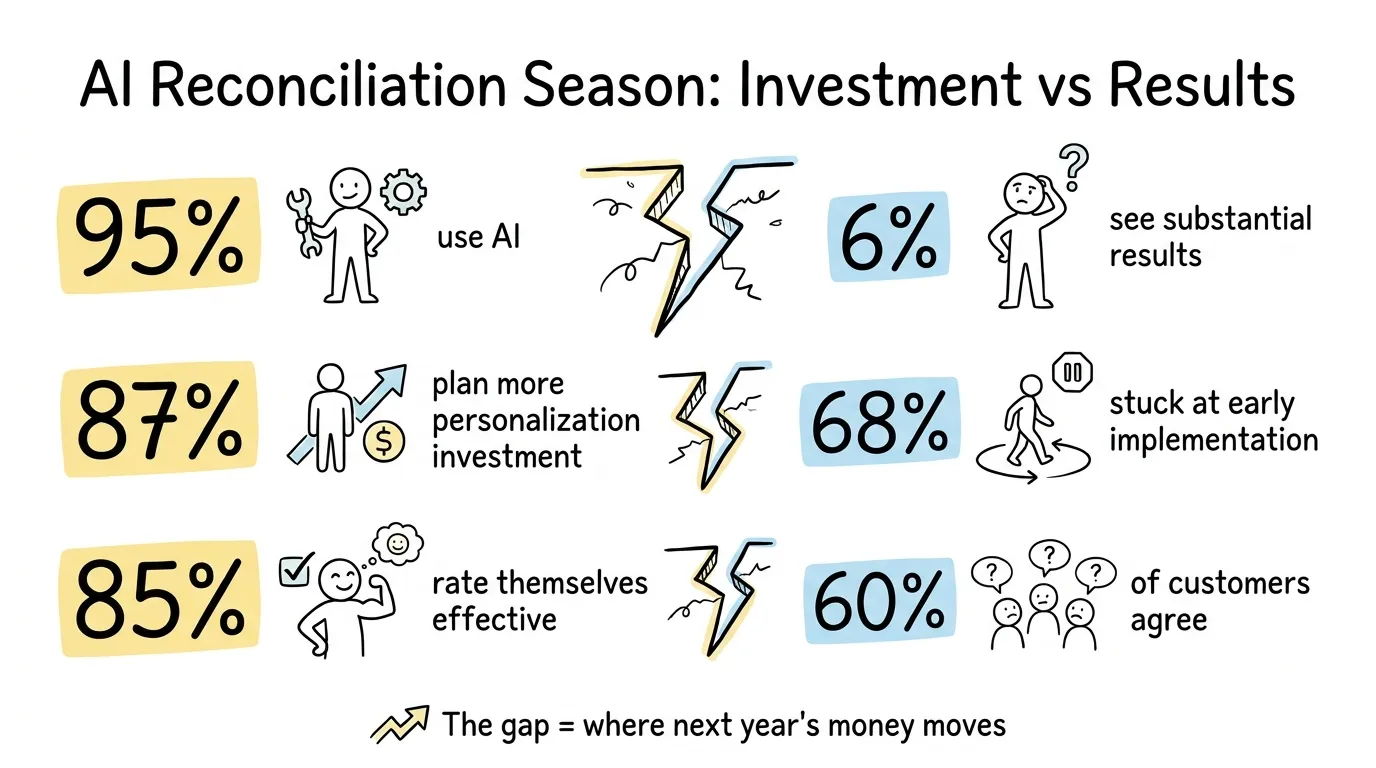
Omnibound's compilation of 2026 B2B content marketing statistics packs more than 47 data points, with sources and sample sizes fully disclosed. The buyer-behavior numbers are the most valuable: 6sense's survey (sample of 4,510) shows 80% of B2B deals are won by the vendor buyers already preferred before first contact, and 95% of winners were on the Day-One shortlist; 94% of buyers use LLMs for research during the purchase process; and AI search visitors stay on pages up to 3x longer. Personalization remains a revenue lever: leaders post 40% higher revenue. The execution gap is the starkest contrast of all: 87% of brands plan to increase personalization investment while 68% remain stuck at early implementation; 85% of companies consider their personalization effective, and only 60% of customers agree. AI adoption shows the same gap: 95% of marketers use AI applications and 80% use them for content creation, yet only 21% of brands achieve full cross-channel integration. Gartner adds one more: 78% of consumers say explicit labeling of AI-generated content matters for trust.
💬 Both gaps are executable opportunities. The 85-versus-60 perception gap means a single personalization audit built on real customer data can put you ahead of most of your peers. With 94% of buyers using LLMs, whether your content gets cited has become the new distribution problem — test first, then fill the gaps.
🔗 Further reading: Read the full article
Kolsquare Annual Report: 95% of Organizations Use AI, Only 6% See Substantial Results
Kolsquare's webinar went live on November 17, unpacking its 2027 influencer marketing report, dense with first-hand survey data. Bain's number pours the cold water first: 95% of organizations are using AI tools, but only 6% see substantial results — the gap sits in data and process foundations. Kolsquare's own survey shows penetration is already broad: 84% of influencer-marketing practitioners and 72% of creators use AI. One agency's time allocation flipped from a 90/10 to a 30/70 split on data retrieval — AI's first wave of value really is back-office. The transparency numbers are worth noting: on TikTok, organic content carrying an AI label sees 21% lower engagement, Instagram shows no significant difference, and content labeled as sponsored actually performs better. The GEO signal is the strongest of all: in AI answer citations, YouTube's share of social-media citations climbed from about 19% in August to 39% in December, with Instagram at just 1.7% and TikTok at 0.5% — mostly long-form review and demo videos getting cited. Keep Forrester's warning in reserve: CMOs who cut 25% of marketing roles will face declining capacity. The 2027 winner profile: brands that use AI to stretch budgets while holding the line on trust.
💬 Don't blame the tools for the 95-versus-6 gap — fix the data foundation first, then talk AI. The creator-marketing play is clear: shift budget toward long YouTube reviews, which is where AI answers are doing their citing. AI labels will dent engagement, but don't hide your usage — sponsored labels actually lift trust.
🔗 Further reading: Read the full article
💡 Today's Big Picture
Read together, today's twenty items share a single throughline: AI marketing has entered its reconciliation phase — the season of tallying up what the machines actually bought. CMI's report says machines optimized the dimension marketers themselves rate lowest; Bain says 95% of organizations have deployed AI while only 6% see substantial results; on Omnibound's side, 87% of brands want to pour more into personalization while 68% are still stuck at the early stage. The investment is fully laid out, and the starting point of every question today has become the same sentence: what did AI actually buy?
Reconcile quality first. Acceptance criteria must be set by you — machines won't set them for you. Accuracy and brand consistency deserve thresholds; originality deserves spot checks. Then reconcile trust. Gane Index nailed one thing with data: AI recommendations can be gamed by vendor content, and Anthropic has started cracking down on tactics that pollute the sources of answers. Disclosure processes can't win trust — what wins is provenance, and the real people standing behind it. Finally, reconcile the organization. Managers are shrinking in number, entry-level work is vanishing, and new roles like Agent QA are growing — who answers for outcomes has become the new question.
One action for readers: pick your most expensive content process and tally how quality and hours changed before and after AI stepped in. Finish the reconciliation, and where next year's money should move becomes obvious.
=== META ===
Continue reading
Related articles
AI Marketing Daily · 2026-11-22
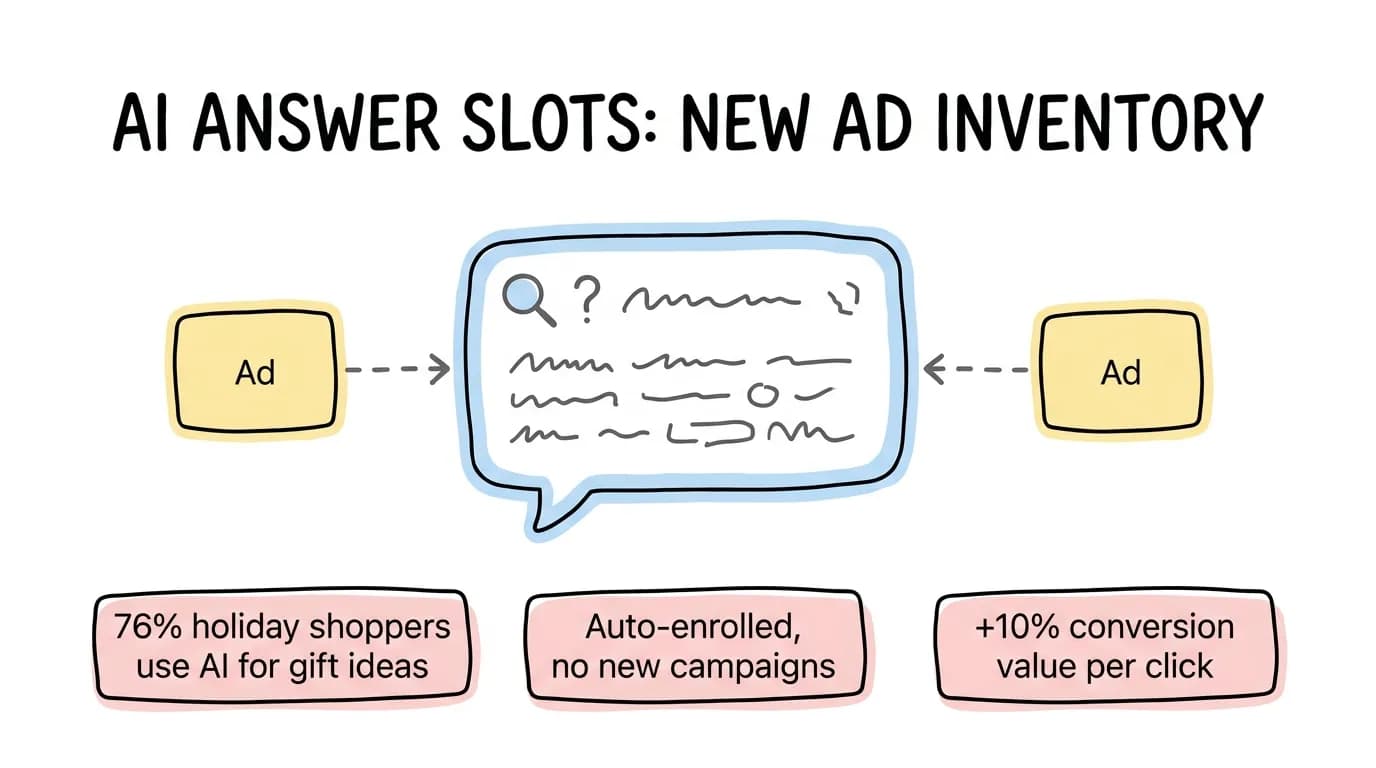
AI Marketing Daily for 2026-11-22 rounds up 20 items led by Microsoft opening Bing AI Overviews to ads and Google expanding AI Mode ads to ten countries, plus GEO guides, ad automation delegation guidance, AI Overviews CTR data, and a legal-risk checklist for AI-generated creative.
AI Marketing Daily · 2026-11-21
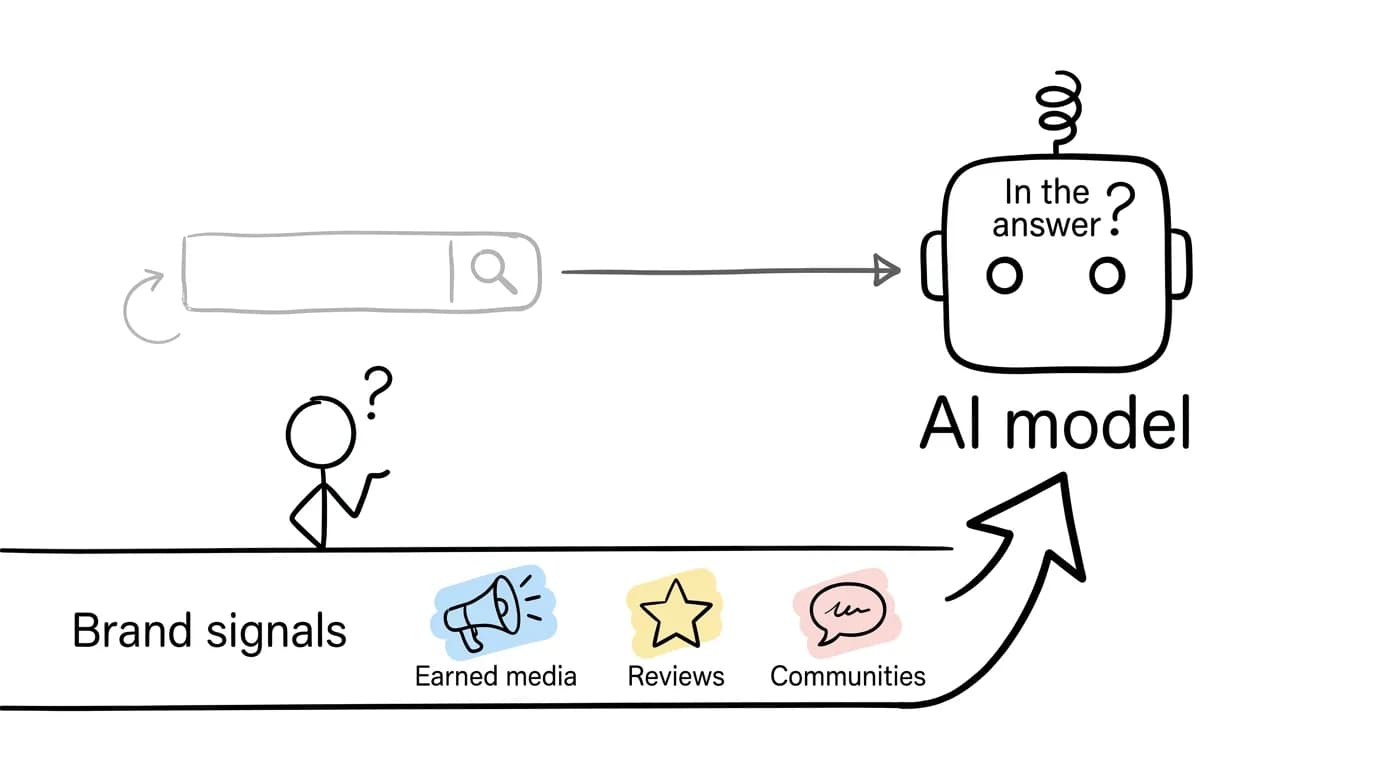
A November 21, 2026 AI-marketing daily covering AI search visibility, GEO methods, Google AI Mode ads expanding to ten countries, Meta's pre-Black Friday changes, agentic shopping, and industry adoption and ROI data.
AI Marketing Daily · 2026-11-20
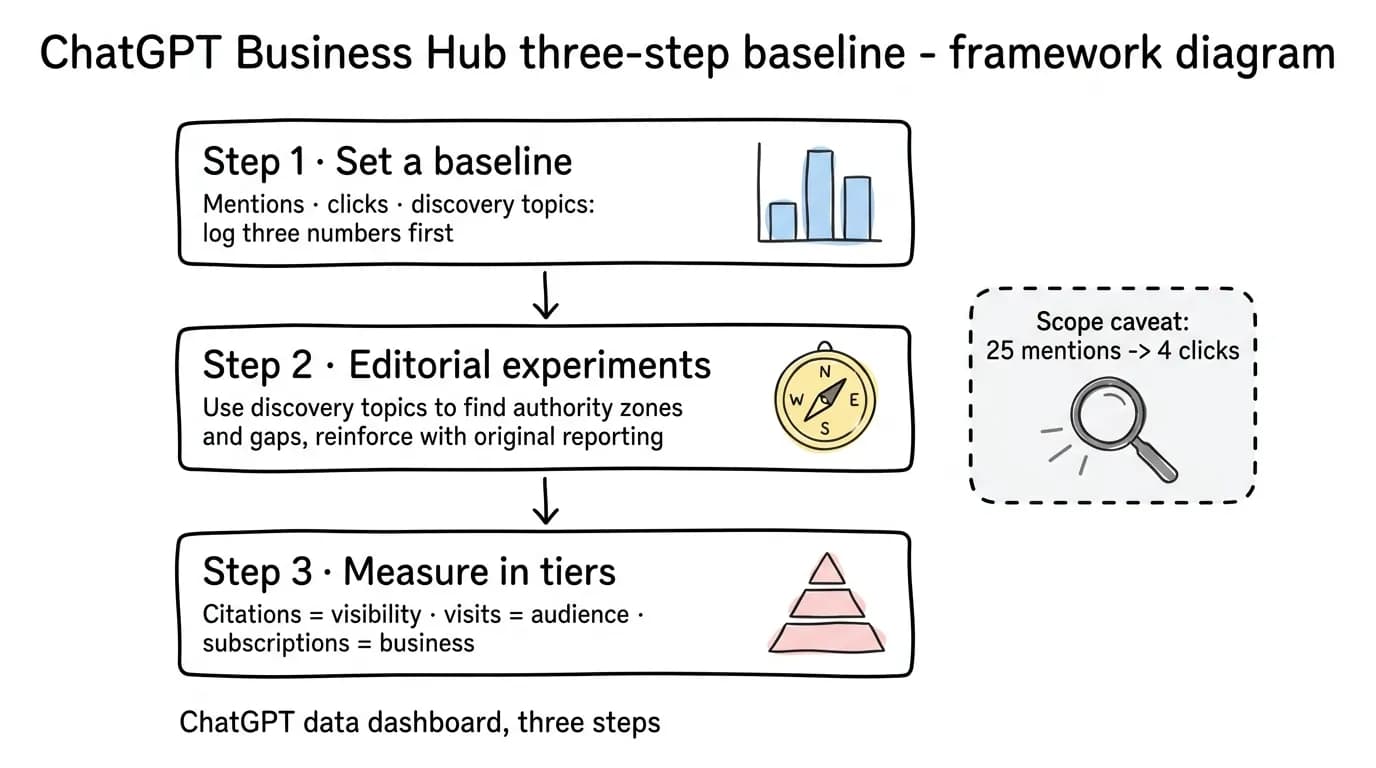
AI Marketing Daily for 2026-11-20 rounds up 19 items centered on measurement: OpenAI's ChatGPT Business Hub dashboard, EU rules for agent-mediated purchasing, Meta pausing four AI terms, and B2B data on shortlists and the dark funnel, each with action advice.