
Google's November Core Update Crashes Into Black Friday — and the Data Is Leaking: Don't Draw Conclusions About SEO This Week
A learn article arguing against making SEO decisions during the November 2026 Google core update rollout, citing data-quality issues in Search Console, AI visibility metrics, Gemini 4 Hydrogen in AI Mode, and recent statements from Google, OpenAI, and Anthropic.
A few days ago, a friend who runs an e-commerce store came to me. His SEO agency had just sent over a report: traffic is down, they said — you should overhaul the site right away, before Black Friday.
I asked him: what's the overhaul based on?
He said: the data.
I said: don't touch anything. The data this week is broken in several places all by itself.
What do I mean? Let me walk you through what happened in the search world over the past few days. By the end, you'll understand why the most dangerous move right now is "decisive action."
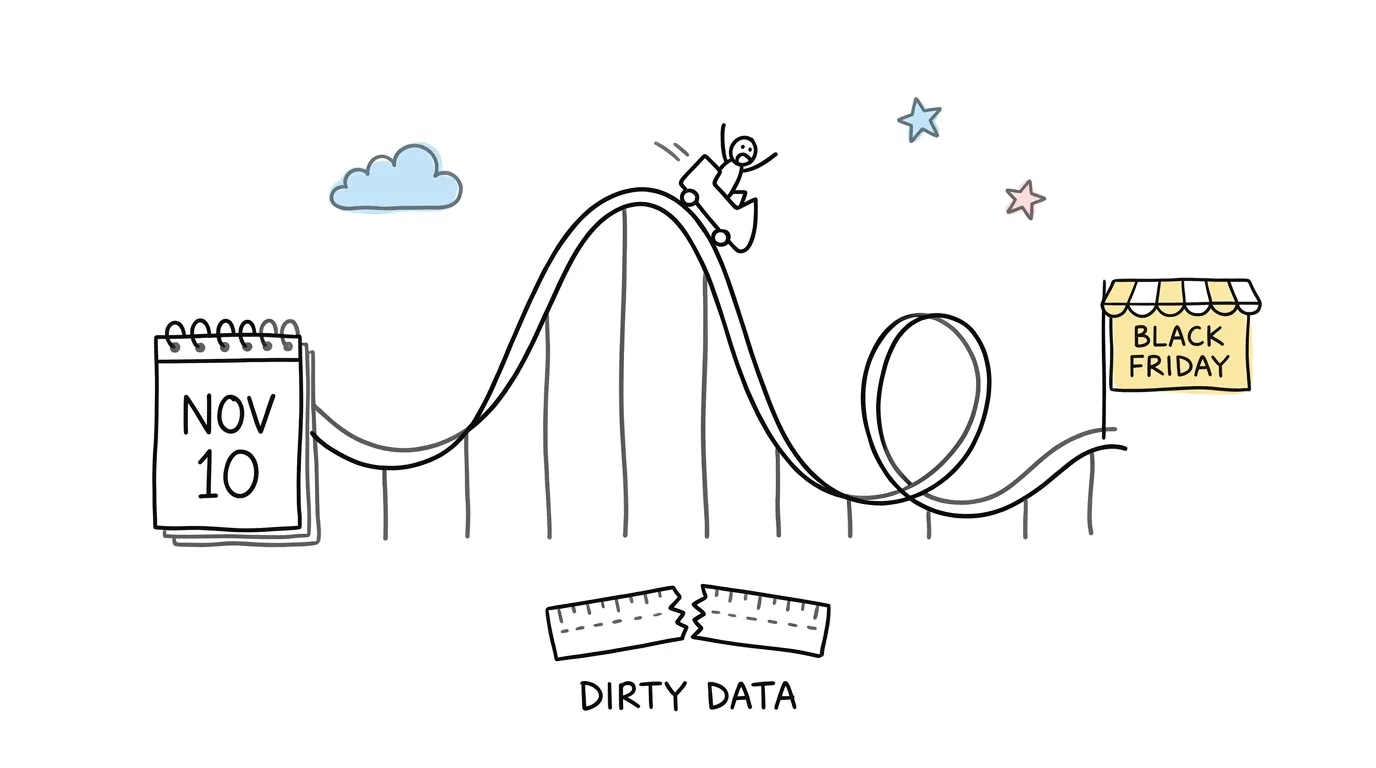
First, the biggest story: Google's November core update has started rolling
At 10:06 a.m. Pacific time on November 10, Google began rolling out the November 2026 core update. Official guidance: up to two weeks.
What's a core update? A major adjustment to Google's ranking systems. Once it starts rolling, a lot of websites go on a rankings roller coaster.
Think about it: a two-week rollout, plus Google's own documentation line that you should wait at least another week after the rollout finishes before analyzing Search Console data — the earliest an agency could get a clean before-and-after comparison is around December 1.
But there's a timeline math problem here.
Of Google's last five core updates, two ran longer than two weeks: the June 2025 one took about 17 days, and the December 2025 one about 18 days. The March and May updates this year each took about 12 days.
If this one follows 2025's "marathon" pace, the day the rollout ends could be Black Friday — or the day after.
Retailers would face unexplained traffic swings during the busiest shopping weekend of the year.
The platform is changing the rules, and you don't have a clean ruler in hand. The most expensive move right now is making budget decisions on dirty data.
Worse: the baseline week itself has broken data
When agencies compare updates, they have to pick a baseline week. This time, Google chose the week of November 3–9 as the reference.
And that particular week has two potholes.
Pothole one: on November 6, Ahrefs said their homepage ranking data had mostly recovered from October's "poisoning" results. In other words, the first half of that week, a lot of ranking data was contaminated.
Pothole two: Search Console's generative AI report, due to a logging error, undercounted impressions from November 9 through 11. And the core update started on November 10 — dead center in that pothole.
Oh, and Google's data anomalies page added one more line: the error only affects data recording, not actual traffic.
What does that mean? The AI impressions "drop" you're seeing may not be a drop at all — just an under-filled ledger.
So my read is: no agency can genuinely explain this core update right now, because the measuring stick itself has two cracks in it.
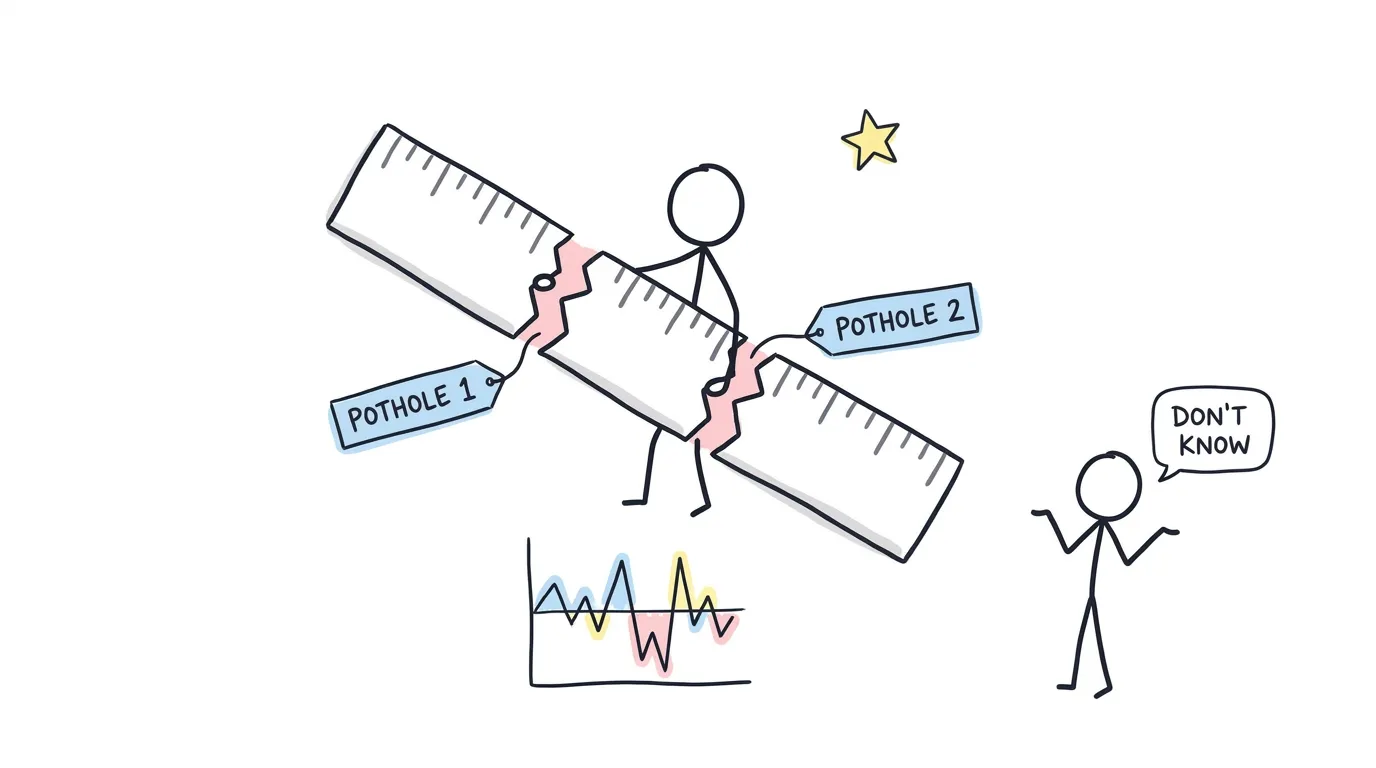
So which kind of agency would you trust? My answer: the one that can say "here's where our baseline data comes from, and we can't draw conclusions yet." The ones willing to say "we don't know" are more trustworthy than the ones who pound their chests.
The other side of the data: once the ledger is fixed, AI impressions will "spike" out of nowhere
This logging error isn't Google's first offense.
From August 13 to 17, the same report undercounted impressions. On August 21, Google restored the data.
If November follows the same script, once those undercounted days get patched, a lot of brands' AI visibility numbers will suddenly jump.
That jump won't come from anything you did. It's a backfilled ledger.
And there's a bigger pothole you should know about: from May 13, 2025 to April 27, 2026 — nearly a full year — Search Console's impressions, CTR, and average position were all distorted by a bug. Only clicks stayed untouched.
So any year-over-year report spanning that window has inflated impressions, CTR, and rankings.
Clicks are the only clean metric from that period. For Black Friday year-over-year comparisons, look at clicks first.
You can run this comparison yourself inside Search Console — no need to wait for the agency's holiday wrap-up.
Gemini 4 Hydrogen: AI Mode has a new default model
On November 12, Robby Stein, Google's VP of Search Product, announced on X: Gemini 4 Hydrogen is now the default model for AI Mode, and the hardest questions in AI Overviews run on it too.
He said one of the model's biggest improvements is query fan-out. Let me translate that term for you.
What's query fan-out? When you type a question into the search box, AI Mode quietly breaks it into dozens of related questions behind the scenes, searches them all at once, then blends the results into a single answer. The smarter the fan-out, the more diverse the links that surface.
Sounds like good news for websites? More links, more exposure opportunities.
But here's the thing: the announcement gave no link counts, and Stein's post never defined what counts as a "hardest question."
Without a definition, brands can't know which of their queries are running on the new model. The theoretical upside can only be validated with your own data.
That 79.2% number sounds scary — hold your horses
SE Visible (SE Ranking's AI visibility monitoring product) published a study: out of 28,500 sampled sites, 79.2% received at least one AI referral in September 2026. In January 2025, that number was 39.7%.
Oh my god, it doubled?
Hold your horses. The threshold on that line is: one single AI visit counts as "received an AI referral." It measures reach, not contribution.
What does contribution look like? For typical sites with 1,000+ monthly organic visits, every 100 organic visits bring only 2 to 5 AI visits.
The ratio is rising, though — that part is real. At least one in five sites now hits 5+ AI visits per 100 organic visits. In May 2026, that figure was just 1.2%.
But SE Visible itself issued a caveat: this ratio can also rise while organic traffic declines.
Think about it: shrink the denominator, and the ratio goes up. An agency could easily report "your AI traffic share is climbing" when what actually happened is that organic traffic dropped.
And this study comes from a vendor that sells AI visibility monitoring tools.
So when you see a number like 79.2%, ask first: Did AI traffic grow, or did organic traffic shrink? Those two answers point to completely different prescriptions.
Three quick hits this week, all about "credibility in the AI era"
First: John Mueller on "not indexed."
On November 10, Google's John Mueller answered a question on Bluesky: what to do when a page stays stuck in "currently not indexed" status.
His answer stings: it usually means Google's quality systems don't endorse your site — or endorse it in a way you didn't want. Making the site smaller won't meaningfully raise overall quality.
He added: crawl budget is a separate issue, tied to severe technical failures.
That distinction is useful. A stuck index is either a quality problem — fix the content — or a technical problem — call a technical SEO. Figure out which one it is before you start throwing remedies at the wall.
Second: OpenAI is bringing merchants into ChatGPT.
On November 10, OpenAI opened Business Hub (beta): verified merchants can now see how often ChatGPT mentions them, and how many users click through.
Two days later, SEO expert Lily Ray looked at the accompanying agent builder and said her biggest takeaway was: recommendations mostly pull straight from your website, and the setup barrier is very low.
What does that mean? Every word on your website has become the opening script for ChatGPT agents.
Website content has, for the first time, a dual identity: written for search engines, and also the "script" for AI agents. Your internal team can absolutely do this setup themselves — and spend the saved agency hours auditing the site copy.
Third: Anthropic drew a red line on AI-driven volume gaming.
On November 12, Anthropic's "deceptive activity" clause took effect: no using Claude to feed answer sources for search engines and AI systems, and no lying about "source, authorship, or independence" in content.
AI tools can generate a page in minutes. But a website's credibility in search engines and AI answers takes a long, long time to accumulate.
AI can produce content. It can't produce credibility. Credibility is a slow variable — and slow variables are the real moat.
Consultant Glenn Gabe also said on X that he'll be watching whether sites that use risky tactics to pump their Claude exposure get slapped down. We're all watching.
Three demands for your agency's reports before December
Back to my friend's story. I gave him three demands — feel free to copy them.
One: don't touch pages that are still ranking.
Google's own documentation is clear: a drop from position 2 to position 4 doesn't call for drastic surgery — don't rewrite content that's performing well. Small fluctuations are not a reason to rewrite.
Two: annotate platform events next to the charts.
Every chart a client receives should be marked with external events and broken data. For example, the removal of FAQ rich results on May 7 also suppresses impression counts. It's the same category as the logging error — mark both.
Three: AI referrals on a separate line.
Clients should see answer-engine traffic broken out as its own line in every summary report. Per SE Visible: among sites with 1,000+ monthly visits, 75.5% delivered at least 1 AI visit per 100 organic visits in September 2026. In January 2025, it was just 5.1%.
That growth rate deserves its own line item.
Back to my friend. Here's how I left it with him: after December 1, once the clean data lands, then decide. Black Friday budget — don't move a single dollar early.
When the data isn't clean, the biggest risk isn't missing an opportunity — it's swinging at noise.
Here's to a December report where every single line can be explained.
Continue reading
Related articles

It's 2026: Stop "Buying" AI Tools for Your Marketing Team — Start "Hiring" AI Agents
This learn article explains how AI agents differ from standalone AI tools in marketing, outlines three agent categories — build-your-own platforms, CRM-native agents, and vertical tools — and covers use cases across SEO, social media, advertising, and reporting, plus criteria for choosing one.

What Is GEO? How Your Brand Gets "Mentioned" in the Age of AI Search
An explainer on GEO (Generative Engine Optimization) for e-commerce and DTC brands: how it differs from SEO and AEO, why AI answers shape brand visibility, and eight practices covering question-focused content, consistent brand messaging, structured pages, external evidence, comparisons, and AI mention tracking.

AI Is Already Making Decisions for Your Customers. Are You on the List?
A learn article explains GEO (Generative Engine Optimization): why AI-generated answers now shape which brands customers see, and how SEO fundamentals, entity clarity, citable evidence, and monthly measurement affect visibility in AI answers.