
AI Marketing Daily · 2026-11-05
Daily AI marketing digest for November 5, 2026, themed around traffic entry points shifting to AI answers. It leads with a no-cost four-step AEO keyword-gap audit and also covers AI search benchmarks, reported chatbot adoption, agentic ad tools, and pre-purchase governance checks across 20 items.
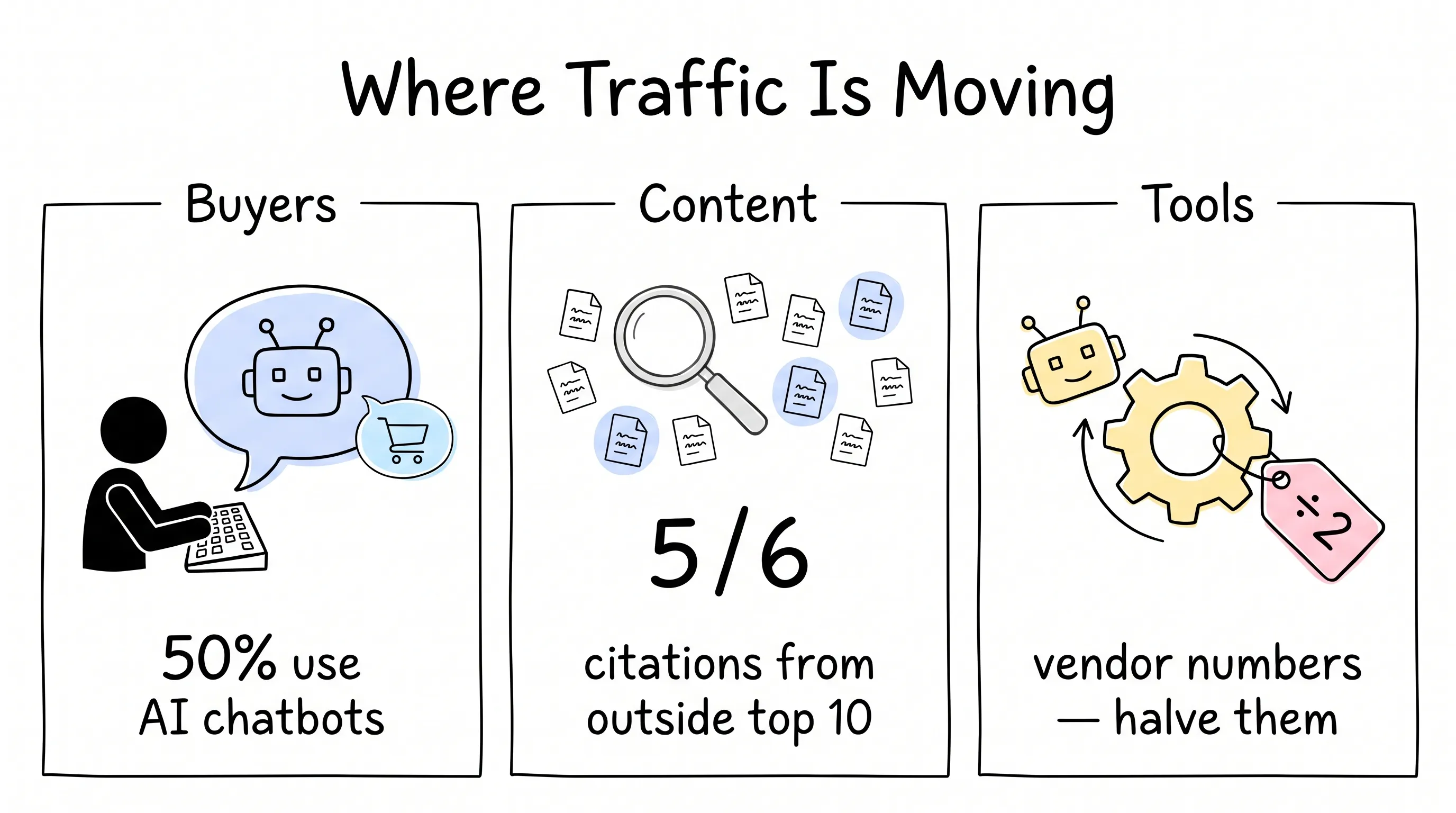
Today's throughline is the migration of traffic entry points. The headline item delivers a complete playbook for auditing AEO keyword gaps — and it costs nothing to start. Another data point: roughly half of Americans already use AI chatbots to find information, and purchase actions are starting to happen inside AI conversations. On the tools front, ad delivery and marketing automation are going fully agentic — halve any vendor-reported number before you trust it. 20 items, about a 15-minute read.
🎯 Today's Headline
The AEO Keyword Gap: Five Out of Six AI Citations Come From Where You Don't Rank
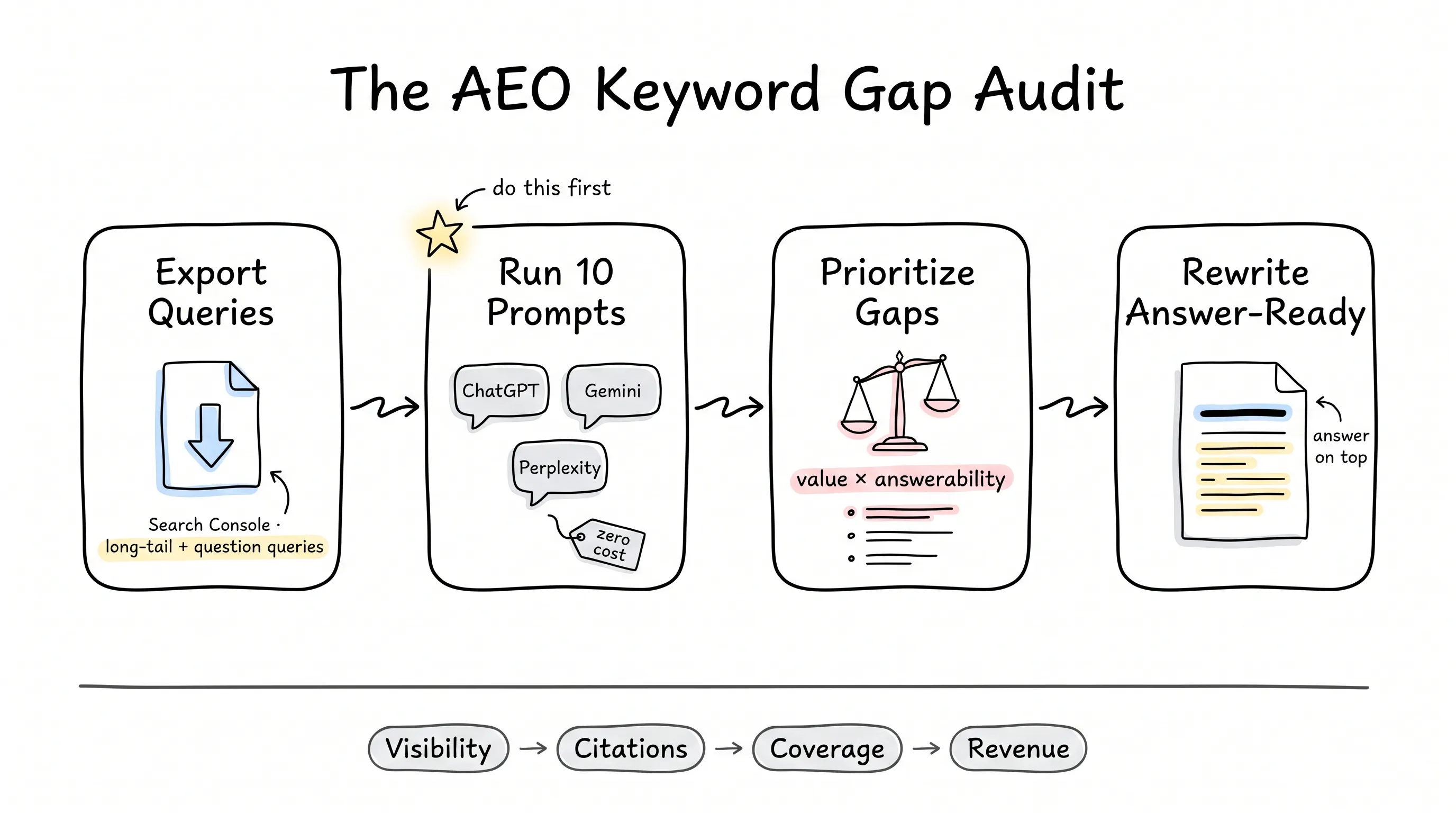
A hands-on AEO guide, updated just on November 4, pulls apart a pair of concepts that blur together easily: the SEO keyword gap and the AEO (Answer Engine Optimization) keyword gap are two separate systems. The former tracks keywords where competitors rank and you don't; the latter tracks the prompts and questions where your brand is absent from AI answer citations. Neither substitutes for the other — a page can rank on page one of Google yet never be cited by ChatGPT, Gemini, or Perplexity. Behind the claim is BrightEdge's analysis of AI Overview: only about 17% of cited sources also sit in the top 10 organic results — in other words, roughly five out of six AI citations come from content outside the traditional first page. The guide lays out a four-step audit, from query export to content rebuild, plus a set of tracking metrics.
Buyer behavior has already changed. A survey of 3,063 CRM purchasing decision-makers by a marketing software vendor found that 42% have brought AI search into their procurement evaluation — and it is the strongest purchase-intent predictor among all the signals they track. Referral traffic from AI tools has roughly tripled in a year. When buyers ask answer engines to hand them a shortlist, absent brands are eliminated before the buyer ever opens their website. The traditional keyword gap report can't answer this question; it can't see which content ranks well yet gets consistently skipped by AI answers.
For marketers, the first impact lands on the scorecard. Content teams' scorecards now add a new column — citations — alongside rankings, impressions, and clicks: did AI-generated answers actually cite you? The writing rules change too: answer engines excerpt clearly structured, direct answers, entity naming must stay consistent, and single-question pages — comparison pages, definition pages, FAQs — are the easiest to get into the citation pool. On team structure, SEO and content are no longer upstream and downstream stations on one assembly line; citation performance belongs in the weekly report. Tool budgets are affected as well: AEO tracking is productizing fast, and the buying decision will arrive sooner than expected.
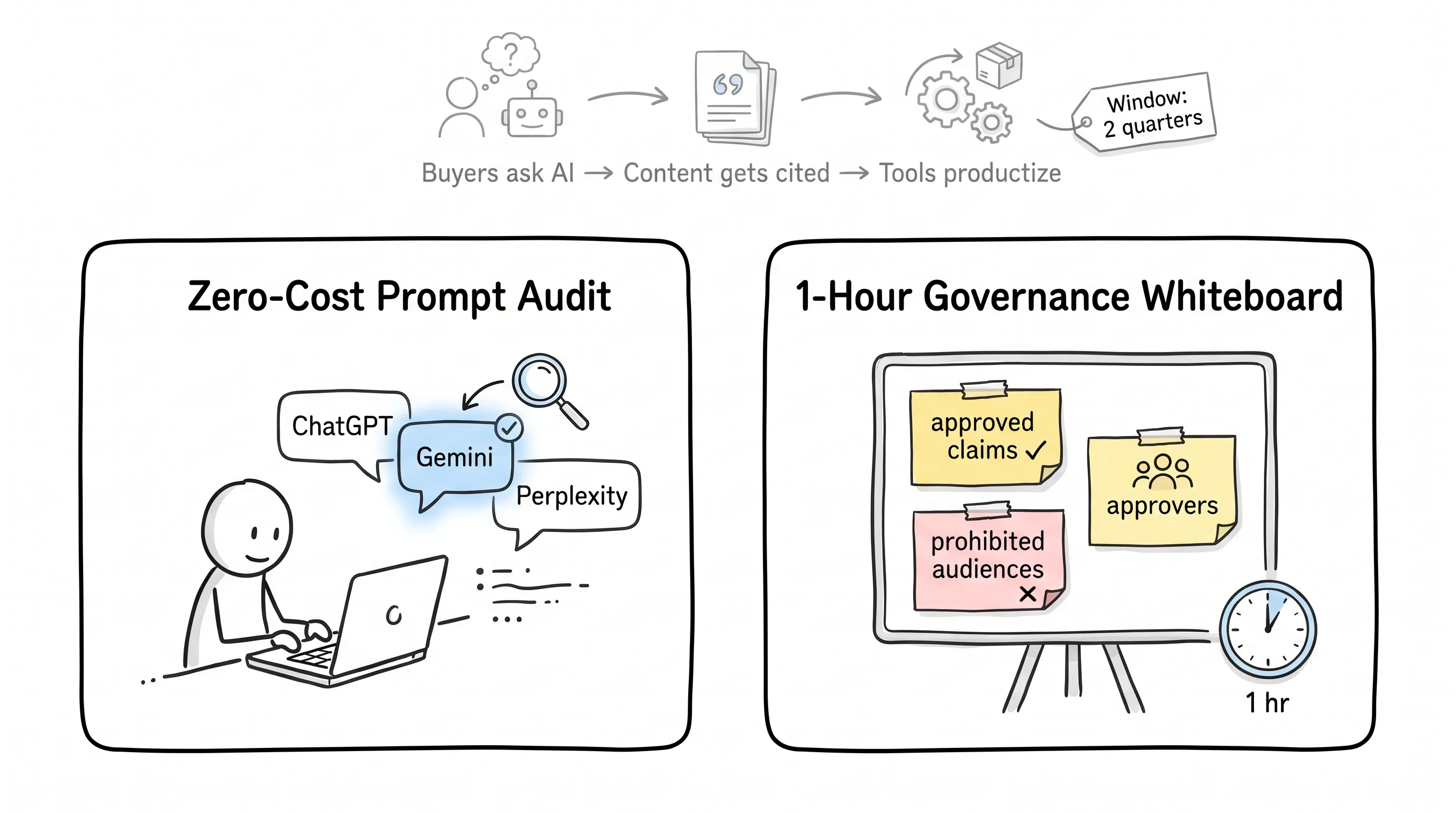
How to use it? The four-step audit can be followed as-is. Step one: export query data from the Search Console Performance report, use formulas to count the words per query, and pull out long-tail and question-style queries — the two types most likely to surface in answer engines. Step two: manually run 10 category prompts in ChatGPT, Gemini, and Perplexity, record who gets mentioned and who gets cited, and compare coverage against competitors — zero cost, do this first. Step three: prioritize the gaps by commercial value and answerability, filling the ones closest to conversion first. Step four: rewrite the gaps into answer-ready content — the direct answer up top, evidence right behind it, entity naming consistent. Track four layers: visibility trends, citation changes, prompt-set coverage, and finally leads and revenue attributable to AI traffic. The first two are leading indicators; revenue is what keeps the budget alive. One combined signal deserves its own watch: if visibility rises while citations stay flat, answers are mentioning you without treating you as a source — the problem is perceived authority, not a content gap, so go build citable content off-site rather than adding pages to your own site. Re-baseline once a quarter, or monthly in fast-moving categories. There's also a free option: use the industry-level volatility dashboard to tell whether it's your own strategy failing or the whole industry's citation baseline shifting.
My take: this methodology is usable today and requires buying nothing. Worth noting is the publisher's commercial position — its own AEO tool appears in the piece at least four times, bundled with a free industry volatility dashboard. Tooling is accelerating, but don't get the order backwards: manually run those 10 prompts first, confirm the gap is real and worth investing in, then talk procurement. The guide's author mentions a client whose six-figure proposal originated from a single question asked inside Gemini — a direction that holds especially true for B2B. AEO audits will become a standard motion for content teams next year. Run one quarter early, and the gap becomes your moat.
🔗 Further reading: Read the full article
🏷 Foundation Model Watch
Half of Americans Now Use AI Chatbots for Information — and Transactions Are Starting to Bypass Merchant Websites
A report from the audio and local advertising industry says AI is rewriting how consumers search, research, and buy. Pew's survey shows roughly half of Americans have now used AI chatbots — growth of nearly 50% over two years — and four in ten users ask them for information. The platforms are moving faster: Google is experimenting with purchasing and booking inside AI experiences, meaning consumers could complete a transaction without ever clicking through to the merchant's site. The risk of website traffic getting skipped as the middle step is real. The industry's framing is that AIO (AI search optimization) complements rather than replaces — the other half of consumers still search the traditional way, SEO and paid search keep running as usual, and budgets shouldn't be moved wholesale. The advice for local advertisers: first map how your brand shows up in AI search, grill your agency on real-world test results from their AI tools, and keep maintaining original authoritative content, FAQs, and genuine customer reviews so the brand enters AI's citation pool.
💬 Local businesses can do two things this week: search 10 prompts in your own category and see how AI answers your trade; call in your agency and demand real test data on their AI tools. Reviews and FAQs are the cheapest ticket in — patch those first.
🔗 Further reading: Read the full article
AI Agent Rollouts Hit an Expectation Gap — Dynamic Feedback Loops Are the Key
A martech podcast hosted the head of an agentic marketing product to discuss where AI Agents actually land in marketing and customer experience. His read: the industry is still early on the adoption curve, and early deployments show a clear gap between expectations and actual satisfaction — teams bought Agents as fully automated employees, but what they reliably deliver is semi-automated assistance. The yardstick for touchpoints has changed too: customer experience shouldn't be measured by single-click conversions but by the full shopping journey from first discovery to repeat purchase. Agents also have an undervalued use: dissolving cross-department information conflicts and removing operational failure points — when marketing, sales, and support hold inconsistent views of the same customer, an Agent can align them in the middle. He also stressed that static data warehouses produce no results; dynamic feedback loops and reinforcement learning are where the performance comes from, with data rolling forward on the outcome of every touch.
💬 Evaluating an Agent offering? Skip the demo videos and ask two things: how is the feedback loop built, and how are cross-department data conflicts resolved. Start by listing where your own internal data contradicts itself — that's exactly what an Agent can chew through first.
🔗 Further reading: Read the full article
The Historical Baseline for Generative AI in Content Marketing: 58.9% Already Using It, 13% Say It's Indistinguishable
A 2023 analysis piece still serves as a common baseline for AI in content marketing. It cites a 2022 industry survey: 58.9% of marketers were already using AI to optimize existing content, but only 13% believed AI content had become indistinguishable from human content. The article lists four high-leverage uses: content repurposing, personalization by buyer behavior, mass-generating keyword content, and A/B test assets. The conclusion still holds today: AI can't yet replace original, brand-distinctive, authoritative publish-ready content, and human review can't be pulled. One more caution: the piece ends with a funnel into a paid report, so read the data and the conclusions separately.
💬 Use it as a historical baseline. Re-run an internal poll this year with the same two questions — the movement in those 58.9% and 13% figures is the best material you can hand your boss on how AI content capability has evolved.
🔗 Further reading: Read the full article
🏷 Product Launches
Fantasy Sports Platform Adopts an AI-Powered CRM: Four Capabilities Locked on Player Retention
Fantasy sports platform Underdog Fantasy has adopted Optimove's AI-powered CRM. The announced partnership covers four capabilities: deep insights from unified customer data, AI-plus-business-rules multichannel orchestration, multi-touch incremental attribution, and personalization at scale — targeting player engagement, retention, and LTV. The rollout path: unify customer data first, then let AI and business rules jointly decide which channel the next touch uses and what it says, while the attribution layer answers how much true increment each touch actually drove. iGaming scenarios like this one are heavily regulated and high-frequency on repeat purchases, with far harsher demands on orchestration and attribution than ordinary e-commerce — the capability list is worth benchmarking against.
💬 High-frequency repeat-purchase businesses can lift this capability checklist outright. In vendor selection, write multi-touch incremental attribution into your POC acceptance criteria — no proven increment, no signature. Retention teams at subscription e-commerce can use it this week to grade their current CRM setup.
🔗 Further reading: Read the full article
An Agency Productizes AI Personalization as a Lifecycle Orchestration Service
A data marketing agency has packaged AI personalization under an explicit service name: buyer lifecycle orchestration. The offering spans customer journey mapping, persona building, and AI personalization execution, powered underneath by the agency's own AI decisioning engine and integrated outward into platform ecosystems like Databricks, Optimizely, Salesforce, and Adobe — selling personalization at scale to B2B and B2C e-commerce and brands. The pitch: brands don't have to assemble their own data platform; they buy orchestration logic by lifecycle stage. Agency-side services are productizing, and pricing and delivery boundaries will get more transparent — that's the directional signal.
💬 Productized services are a good thing — pricing and boundaries get clearer. Smaller teams don't need the full bundle; pilot lifecycle orchestration on two channels first — email and onsite messaging — and incremental signals should show up within a month or two.
🔗 Further reading: Read the full article
🏷 Marketing Tools
Before Buying an AI Martech Platform, Answer Three Questions: Brand Rules, Customer Facts, Approval Authority
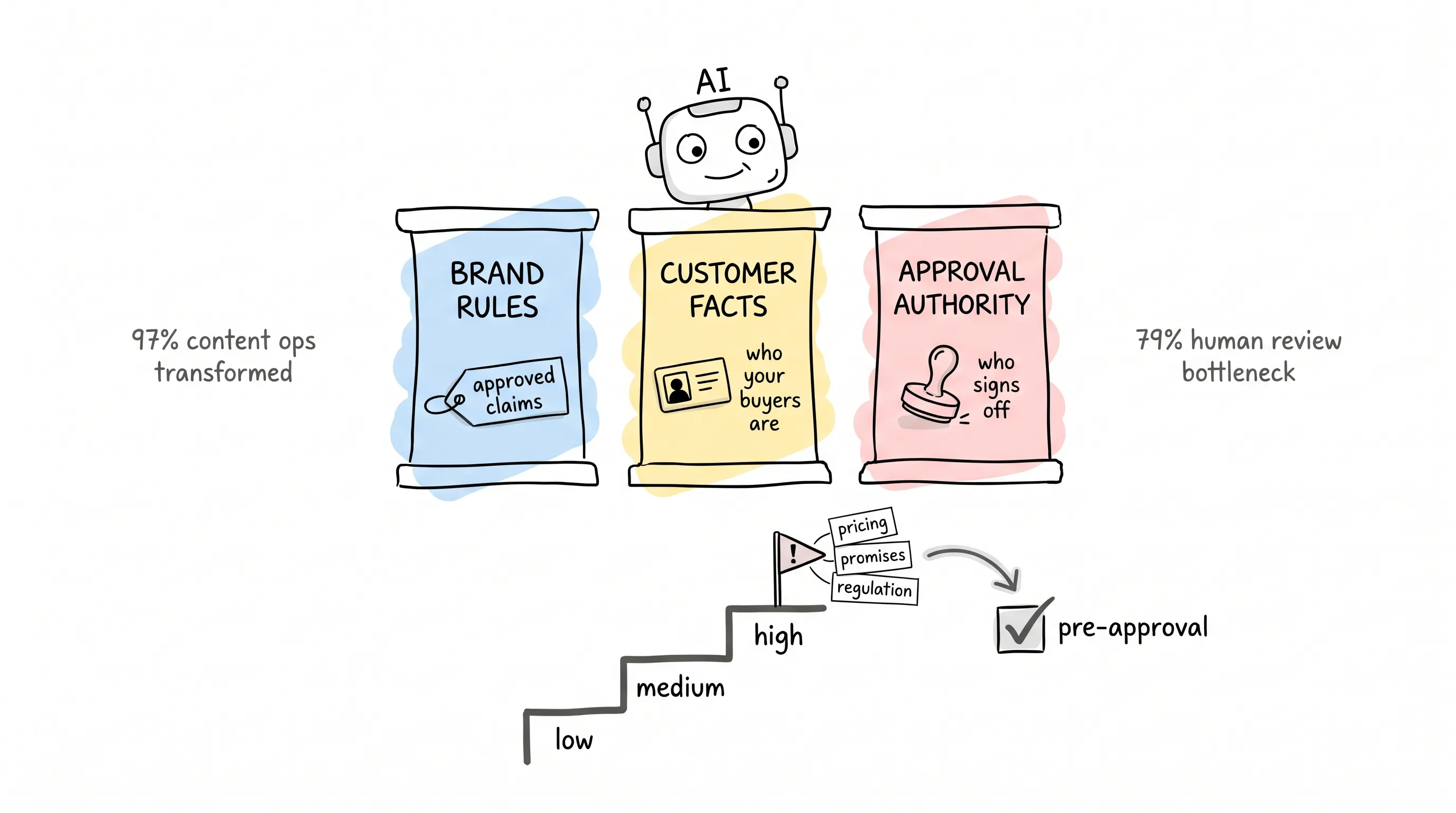
An article on buying martech platforms opens with a gut-punch: on Monday an AI Agent built five emails, a landing page, and a batch of ads; by Friday the team discovered it had promised a 60-day money-back guarantee that had already been discontinued. The problem is context. An industry annual report names context the 2026 martech word of the year, defining it as the instructions, curated data, and authorized tools you feed an AI Agent. Most of the context vendors are hot-selling is work teams should have finished themselves. The article's whiteboard-level framework comes down to three things: brand rules (which claims you may make), customer facts, and approval authority. Two supporting data points: a content operations survey found 97% of respondents say content ops has been transformed by AI; in another report, 79% of marketing leaders cite human review of AI output as the biggest obstacle to expanding AI use. The practice: grade AI output into low, medium, and high tiers by the cost of getting it wrong — pricing, promises, and regulatory statements, as high-risk content, must go through pre-approval by brand plus legal. If you can't list your approved claims, prohibited audiences, and approvers within a week, the gap isn't the platform.
💬 Add a whiteboard exercise to your procurement process: one hour, everyone in, list your approved claims, prohibited audiences, and three tiers of approvers. If you can list them, talk platforms; if you can't, fix governance first. That hour could save you real money in payouts for promises the AI should never have made.
🔗 Further reading: Read the full article
The 2026 B2B AI Tool Roundup: 64% of Organizations Already Use AI — Adoption Itself Is No Longer a Differentiator
A 2026 roundup of B2B AI tools offers a handy litmus test: strip the AI out — does the product still stand? If yes, it's AI-native; if all that's left is decorative features, it's AI-washing. The roundup runs through three categories: sales, marketing, and operations. Sales gets intent identification, revenue intelligence, and real-time visitor routing; marketing covers content generation and website personalization for conversion; operations spans supply-chain and finance process automation. On the data side it cites NVIDIA's 2026 report: 64% of organizations already use AI, rising to 76% among large enterprises. Sales reps using AI tools are 3.7x more likely to hit quota; on the marketing side, targeting optimization can lift CTR to as much as 72% and cut CAC by 17%. The article doesn't dodge the pitfalls either: cold-start data, privacy compliance costs, and explainability all belong in the selection math.
💬 Run the litmus test over the tools you already use — odds are you'll surface one or two rebadged white-labels. Selection comes down to two things: is there a proprietary data moat, and can ROI be validated on your own data. Halve vendor-reported CTR figures before you verify.
🔗 Further reading: Read the full article
The 2026 AI Marketing Platform Map: All-Purpose Agents vs. Single-Point Specialists
A 2026 roundup of AI marketing platforms draws the market as two layers. The upper layer is all-purpose Agent platforms, built around chat-as-the-execution-layer cross-channel campaign delivery, AI search visibility tracking, and SQL-grade analytics. The lower layer is single-point specialist tools, each with its own job: one-click multi-platform campaign launching, creative-level optimization for Meta e-commerce ads (vendor-reported ROAS lift of 20% to 40%), structured marketing workflows, and behavior-level omnichannel profiling. General workflow-automation platforms only move data and don't execute marketing — the boundary is clearly drawn. Notably, tracking brand visibility inside AI engines like ChatGPT and Perplexity has become a default metric across tools.
💬 Two layers, two buying strategies: on a tight budget, buy the single-point tool first and get one channel to stable performance before considering a platform. Any vendor-reported ROAS figure only counts after you re-run it in your own account for a month.
🔗 Further reading: Read the full article
Marketing Automation Selection: AI Segmentation and Real-Time Journeys Emerge as Buyer-Endorsed Differentiators
On an enterprise-software buyer review platform, the alternative rankings for the B2B marketing automation category make a useful selection reference: HubSpot leads with 4.4 stars across 2,218 reviews; Microsoft Dynamics 365 Customer Insights sits at 4.3 with 535 reviews, with buyers specifically calling out AI segmentation and real-time journeys as improvements to personalization; Oracle Eloqua holds 4.4 across 261 reviews, strongest on complex journeys and enterprise-scale expansion, with SAP, Adobe, Zoho, and others behind. Sample sizes vary enormously — 2,218 reviews and 261 reviews don't carry the same confidence, so read the sample size alongside the score. Among AI capabilities, buyer reviews volunteer only two: segmentation and journeys. Almost no one mentions the rest.
💬 When switching platforms, don't stop at the overall score — filter reviews down to your own industry. Compare one capability above all: does AI segmentation ingest your behavioral data in real time? That single item decides whether personalization can land, and it's worth more than any price difference.
🔗 Further reading: Read the full article
ChatGPT Ads Appears in a Bulk Campaign Tool's Channel List
An AI bulk campaign tool covering 15 channels including Meta, TikTok, and Google has updated its channel list, and ChatGPT Ads is on it. That's a channel signal: AI answer engines are becoming new ad placements. The tool positions itself as eliminating the repetitive grind of building ads one by one, with unified reporting to reconcile inconsistent metrics across platforms, plus AI-generated new creatives and a 13-million-ad inspiration library where creative people can browse by industry through ads others have run. It claims over 10,000 ad accounts served and $8 billion in Meta ads placed annually, priced from £199.99 per month. The scale numbers are all vendor-reported — listen and move on.
💬 ChatGPT Ads entering the channel list is the thing to remember, more than the tool itself. Carve 5% of your test budget for answer-engine ad placements — grab low-cost traffic while competition is thin, run two to four weeks, and let the data decide whether to scale up.
🔗 Further reading: Read the full article
Shopify Store Ad Automation: Handing Cross-Platform Campaigns to AI for Small Teams
An ad automation product built for 5-to-20-person e-commerce teams syncs the Shopify catalog to four platforms — Meta, Google, TikTok, LinkedIn — then automatically builds campaigns, runs dynamic remarketing, unifies attribution, and adjusts budgets up and down on its own. Once attribution is unified, budget decisions execute automatically on performance, freeing the team to return to product selection and creative. The vendor claims 250+ stores served, an average 2.3x ROAS lift, and 85% less manual work — unverified by any third party. The process is no mystery: connect the store, AI builds campaigns, unified tracking goes live, budgets scale automatically.
💬 For a small team's first use case, pick remarketing: clear audience, controllable creative, low cost of failure. Don't trust claims like 85% less manual work off the marketing page — run it on your own store for a month, compare labor efficiency and ROAS, then decide on renewal.
🔗 Further reading: Read the full article
🏷 Industry Data
Four Benchmarks for AI Search: Citation Rate Leads
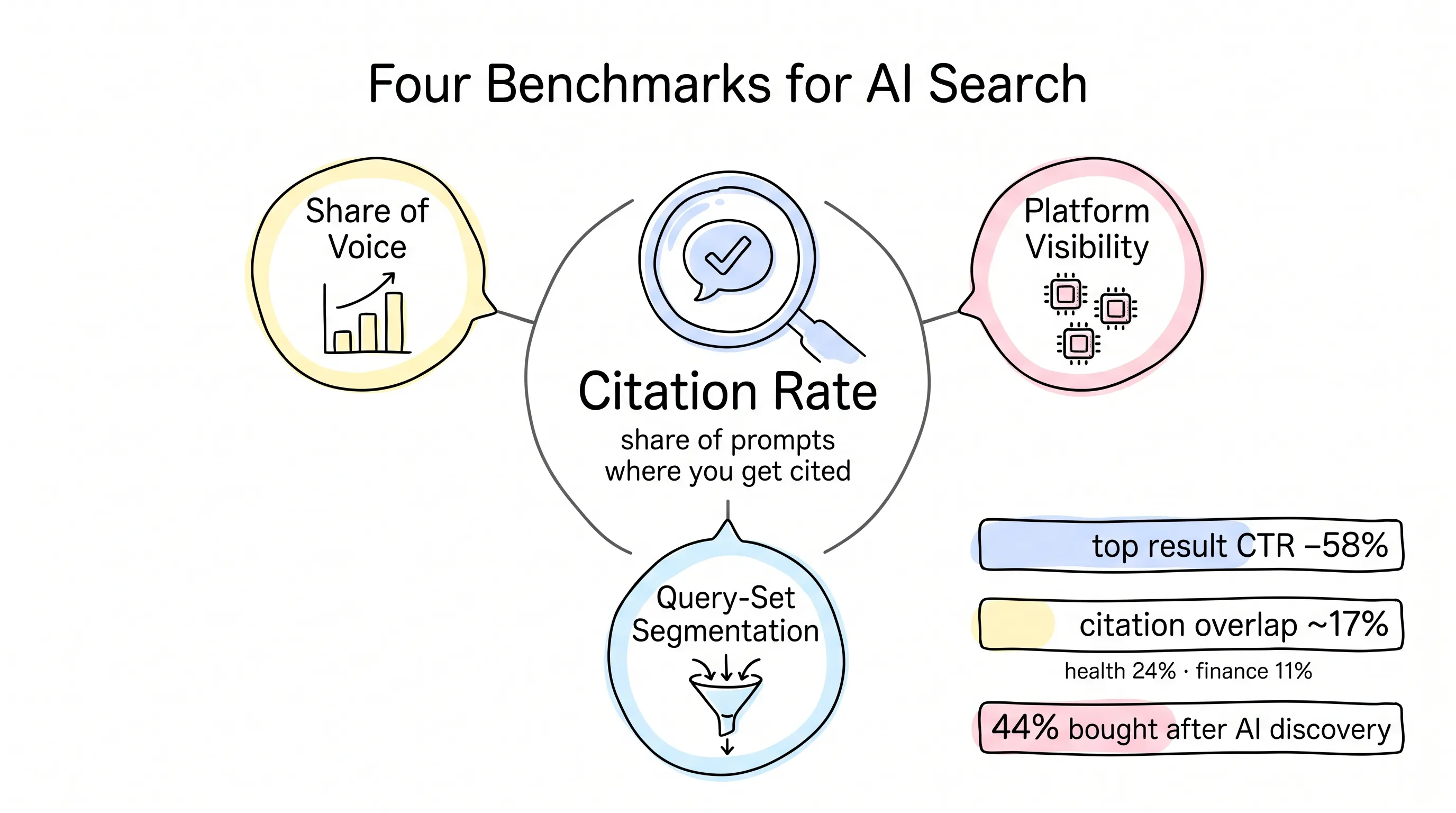
The hardest step in putting AEO into practice is measurement — 23% of B2B marketers rank it their number-one challenge. A new guide separates mentions from citations and lays out four computable benchmarks: citation rate, the share of prompts where you get cited; share of voice, your prompt share relative to competitors; platform-level visibility, visibility broken down by engine; and query-set segmentation, sliced by topic and purchase stage. Keep in mind that every time an AI answer is generated it can come out differently — benchmarks are estimates conditional on a defined prompt set plus a collection window, not fixed rankings. Three data sets back it up: Ahrefs calculates that after AI Overviews appeared, the top organic result's CTR fell by 58% on average; the overlap between citations and the organic top 10 diverges by industry — healthcare 24%, finance 11%, about 17% overall; and 44% of marketers have made a purchase after discovering a brand through AI search.
💬 Two numbers are enough for the management report: citation rate and share of voice versus competitors. Lock down the prompt set and collection window before you start, or the week-to-week jumps will muddy your own conclusions too.
🔗 Further reading: Read the full article
A Conference Paper Offers an AI Framework for Cross-Border E-Commerce Marketing
A conference paper published this October systematically maps how AI is reshaping cross-border e-commerce business models and marketing strategy. On the marketing side the framework is four things: user profiling, dynamic pricing, automated content production, and intelligent attribution modeling. The supply-chain side covers intelligent product selection, digitalization of the marketplace model, AI customer service, and VR/AR shopping experiences. One strategic recommendation is worth keeping: shift from product operations to brand operations, while introducing blockchain provenance and data compliance. It's an academic framework with limited empirical depth — best used as a reporting skeleton.
💬 Cross-border teams can borrow this framework directly for their quarterly review: score the four marketing capabilities one by one, and the weakest one becomes next year's budget destination. Trial dynamic pricing on long-tail SKUs first — leave your hero products alone.
🔗 Further reading: Read the full article
Survey: In Social Media, Generative AI's Top Benefit Is Efficiency (38%)
A May 2024 survey of 1,680 marketing, PR, sales, and support practitioners worldwide ranked the benefits of using generative AI for social media marketing: efficiency gains 38%, easier ideation 34%, higher content output 33%, enhanced creativity 33%, lower costs 32%. The survey asked practitioners to self-assess their single biggest benefit, and it ran in the first year of the generative AI boom, sampling across four roles. Efficiency leads second place by 4 percentage points, the creativity-type benefits cluster in the 33–34% band, and cost control ranks last — in practitioners' eyes, AI's value is first about output, with savings as a by-product.
💬 The direct use of these numbers is for internal project pitches: efficiency at 38% in first place means what the boss wants to hear is hours saved, not ideas gained. Open your AI social-media proposal with the hours ledger on page one.
🔗 Further reading: Read the full article
Cross-Border E-Commerce Projected to Grow 37.6% Over Five Years; the Unified Customer Profile Ranks as Use Case No. 1
A review of AI applications in cross-border e-commerce puts the industry expectation at 37.6% growth over the next five years. AI's primary value in this industry is summed up as connecting scattered data: language, seasonality, devices, and time zones sit across different systems, and only after they are consolidated into unified customer profiles do personalized recommendations, service bots, inventory logistics, and fraud prevention get room to work. One case in the piece comes from a straw-hat manufacturer in Zhejiang that used machine learning plus generative AI to shorten the design-to-production cycle, lifting both its market responsiveness and its sales performance. The conclusion lands on a soft condition: trust determines how fast AI gets adopted in cross-border scenarios.
💬 Small foreign-trade teams, don't overreach: get the unified customer profile done first. Once the data flows, recommendations, service bots, and fraud prevention finally have a foundation. This may be the most certain-ROI item in today's entire digest.
🔗 Further reading: Read the full article
Generative AI Rewires Brand Storytelling: $4.4 Trillion and a 72% Endorsement
A digital marketing agency's press release sorts the convergence of generative AI and brand storytelling into four directions: personalized stories, content at scale, immersive media, and cross-language/cultural adaptation. Two third-party figures it cites are worth adding to your deck: McKinsey estimates generative AI could contribute up to $4.4 trillion in economic value annually, with marketing and customer engagement taking the largest share; and in a separate executive survey, 72% of business leaders believe generative AI will significantly influence marketing innovation within three years.
💬 Both numbers are ready-made budget endorsements. When pitching an AI storytelling project to management, use $4.4 trillion for the size of the prize and 72% for urgency. Start implementation with multilingual versions — lowest cost, fastest payoff.
🔗 Further reading: Read the full article
Global B2C Cross-Border E-Commerce Market Size — Hidden Behind a Paywall
A data chart updated this July shows the global B2C cross-border e-commerce market expanding continuously from 2020 to 2026 — starting at the hundreds-of-millions-of-dollars level and ending inside the trillion-dollar band — sourced from ECDB's 2026 cross-border e-commerce report. The catch: the intermediate years and all key figures sit behind a paywall, and the curve's shape and direction are all you can confirm for free. For planning, you can still take two anchors: the directional judgment of expansion holds without a subscription, but before citing any specific growth rate, get the original report and check its methodology first.
💬 The value of this item is the reminder: before citing market data, confirm you can actually see the original methodology. Numbers behind a paywall are better left unused — substitute verifiable data from your own industry, and your report stands on firmer ground.
🔗 Further reading: Read the full article
🏷 Policy & Funding
European Industry Body Launches a Survey on AI-Generated Content and Brand Safety
A European digital advertising industry body, together with a media quality verification firm, has launched a new survey covering where social media budgets flow in Europe, media quality and brand suitability verification, confidence in measurement transparency, and the actual impact of AI-generated content on brand safety. It targets European advertisers and agencies; results are not yet out. The last item is the notable one: once AIGC (AI-generated content) enters ad creative, brand safety verification expands from media placement to how the creative itself was produced — advertisers need to know which assets were AI-generated and who carries the risk. The topic choice itself signals that industry bodies now treat AIGC brand safety as the next measurement agenda.
💬 Results aren't out, but you can move first: audit your share of AIGC creative and your review workflow now. When the results publish, you'll be among the first teams with a benchmark — and a ready-made frame of reference for reporting upward.
🔗 Further reading: Read the full article
A Pileup of Cross-Border Compliance Whitepapers Confirms the Tariff Pain Point, Again
In cross-border e-commerce, a sponsored post from a tax compliance vendor promotes its trends guide — themed on how tariffs, trade rules, and customs compliance turn from obstacles into competitive advantages — with the real substance being a whitepaper download funnel. The content itself is thin; the value is the signal: when compliance keeps getting used as marketing material, the pain point is real and widespread for operators, and vendors' budget chase has extended from logistics and payments into customs.
💬 When vendors pile onto the same pain point, willingness to pay there is real. Cross-border teams shouldn't cut compliance budgets — and while you're at it, turn your tariff scenarios into FAQ content, ready-made citation material for AI engines, linking straight back to the headline playbook.
🔗 Further reading: Read the full article
💡 Today's Big Picture
Read together, today's 20 items form one chain: buyers go to AI for answers, content creators race to get cited, and toolmakers rush to productize it. The headline's AEO gap audit and the four benchmarks are two halves of the same job — one finds the gaps, the other proves the effect — and with the governance whiteboard slotting in before any martech purchase, you have a complete loop from spotting the problem to holding the line. Roughly half of Americans now use AI for information, and purchases are starting to happen inside the conversation — which says the window is the two quarters right in front of you.
The data side simultaneously warns against running too fast. Buyer-endorsed AI segmentation, vendor-reported ROAS figures, market sizes behind paywalls — they all point to the same thing: the cost of verification is becoming the new capability bar. Teams that know how to verify can start with a zero-cost audit; teams that don't just pay to store their own chaos. The clutch of low-information, press-release-grade items at the bottom of today's list makes the same point: the real upside hides in methodology and first-hand data, not in syndicated announcements.
Two recommendations for this week: run a zero-cost prompt audit to see who AI cites in your category, and hold a one-hour governance whiteboard session to settle what you may claim and who approves. Don't rush to buy tools — once the gap and the approval framework are both clear, the money goes where it counts.
Continue reading
Related articles
AI Marketing Daily · 2026-11-22
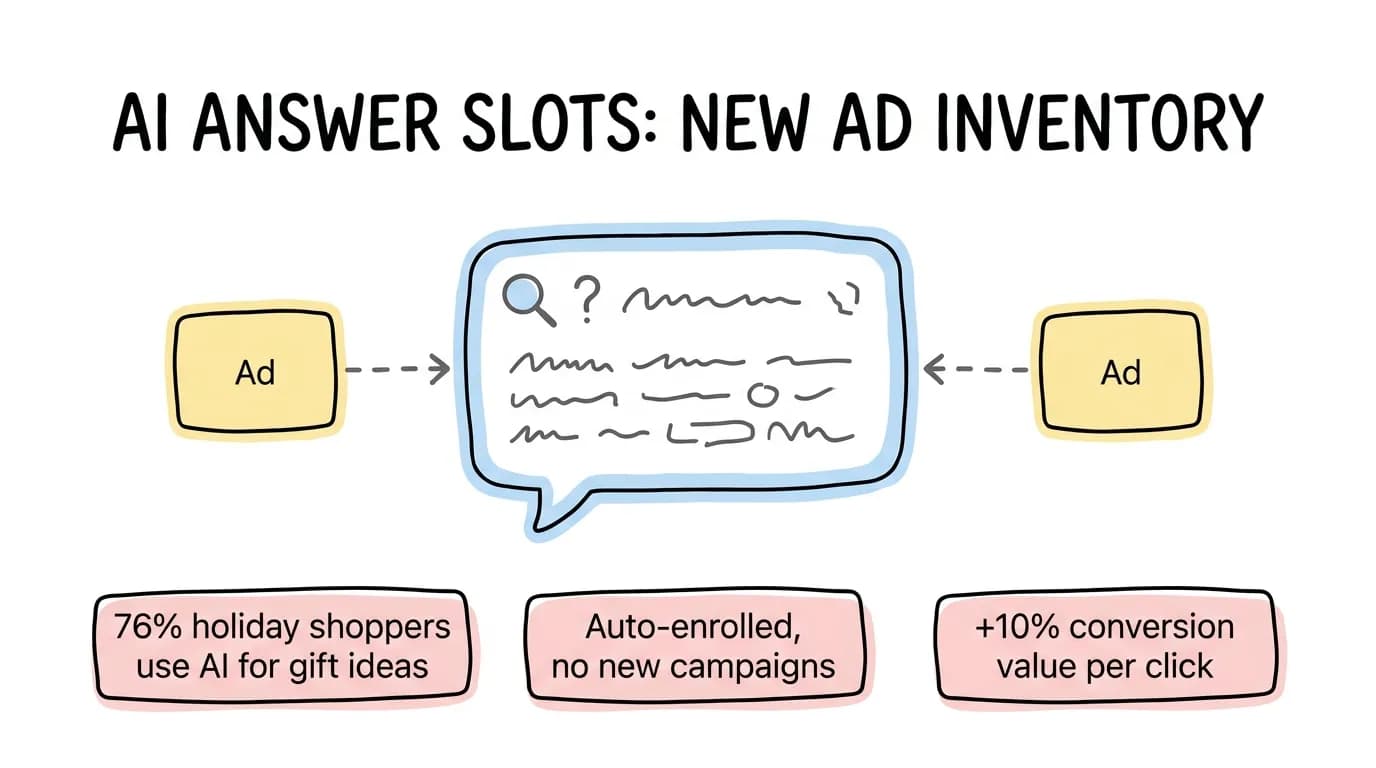
AI Marketing Daily for 2026-11-22 rounds up 20 items led by Microsoft opening Bing AI Overviews to ads and Google expanding AI Mode ads to ten countries, plus GEO guides, ad automation delegation guidance, AI Overviews CTR data, and a legal-risk checklist for AI-generated creative.
AI Marketing Daily · 2026-11-21
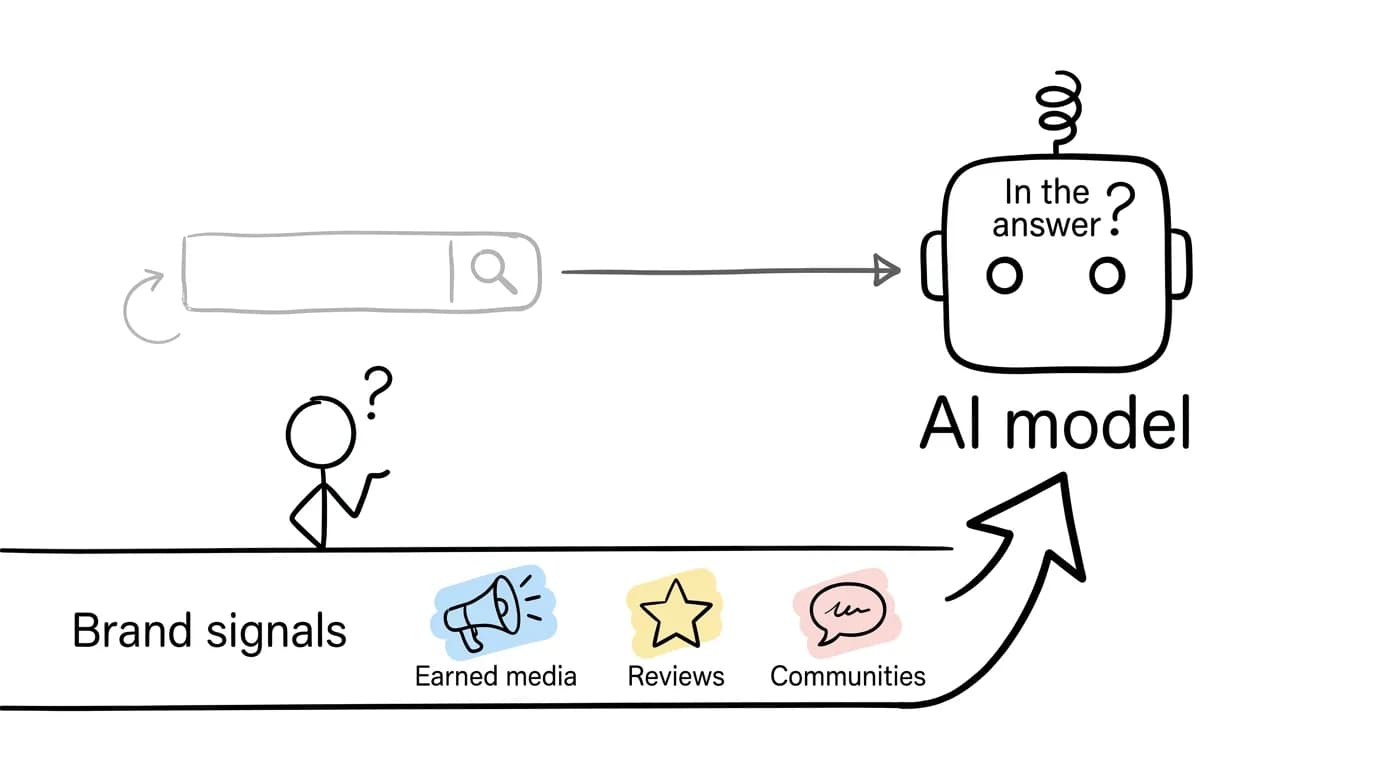
A November 21, 2026 AI-marketing daily covering AI search visibility, GEO methods, Google AI Mode ads expanding to ten countries, Meta's pre-Black Friday changes, agentic shopping, and industry adoption and ROI data.
AI Marketing Daily · 2026-11-20
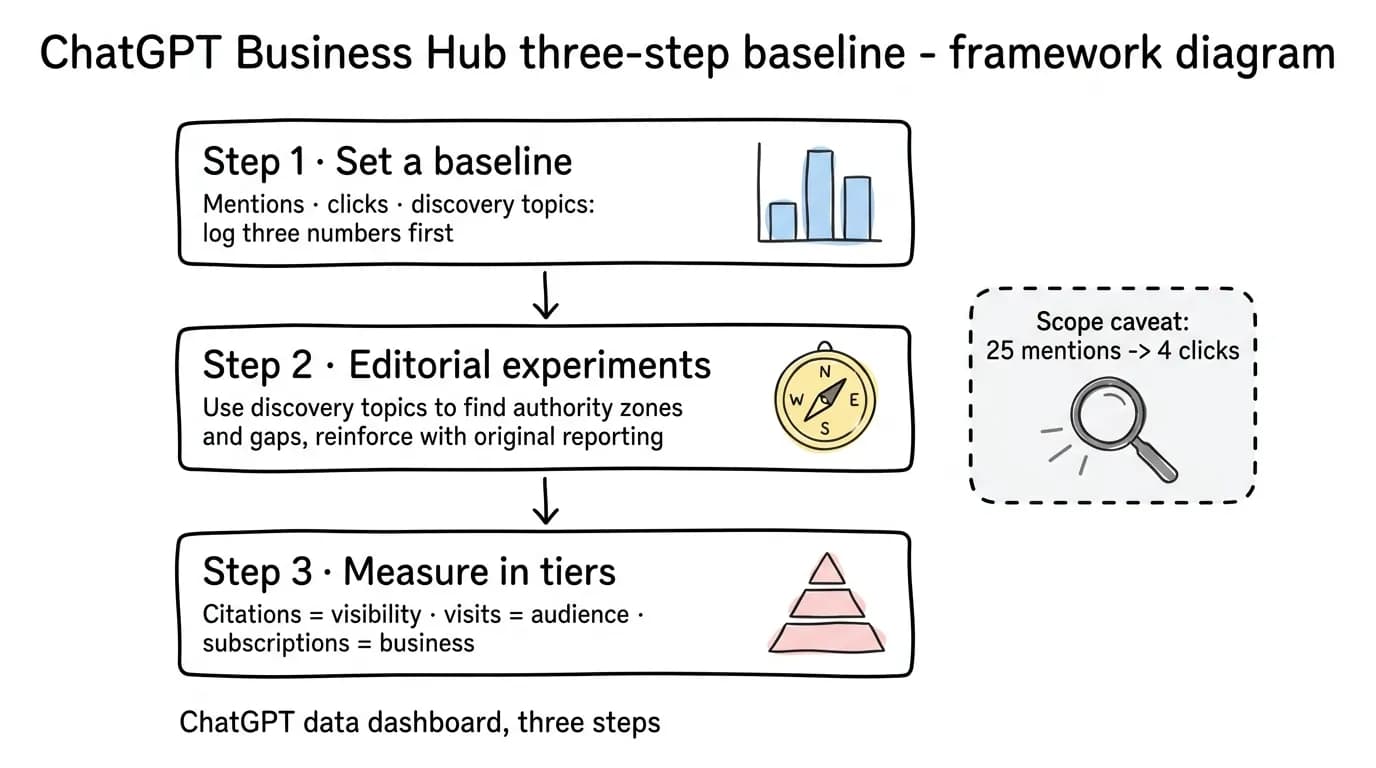
AI Marketing Daily for 2026-11-20 rounds up 19 items centered on measurement: OpenAI's ChatGPT Business Hub dashboard, EU rules for agent-mediated purchasing, Meta pausing four AI terms, and B2B data on shortlists and the dark funnel, each with action advice.