
AI Picks Your Products for You Now — What's Left of Your Cross-Border Business?
A commentary on how AI is reshaping cross-border e-commerce: data-driven product selection, round-the-clock multilingual customer service, faster attribution and dynamic pricing, with reminders to keep tuning algorithms, build brands, and safeguard trust and compliance.
A while back, a friend of mine who runs a cross-border business invited me out for coffee.
He'd been at it for seven or eight years, selling his goods to over a dozen countries. Yet when he talked about the business, he looked worn out: product selection was gut instinct, customer service was manual babysitting, ad spending was pure superstition. More and more competitors, and profits spread thinner and thinner.
I asked him: what do you think this wave of AI is actually changing?
He said: tools, I guess. A productivity boost.
I said he might be underestimating it. AI isn't changing efficiency — it's changing the algorithm of the business itself.
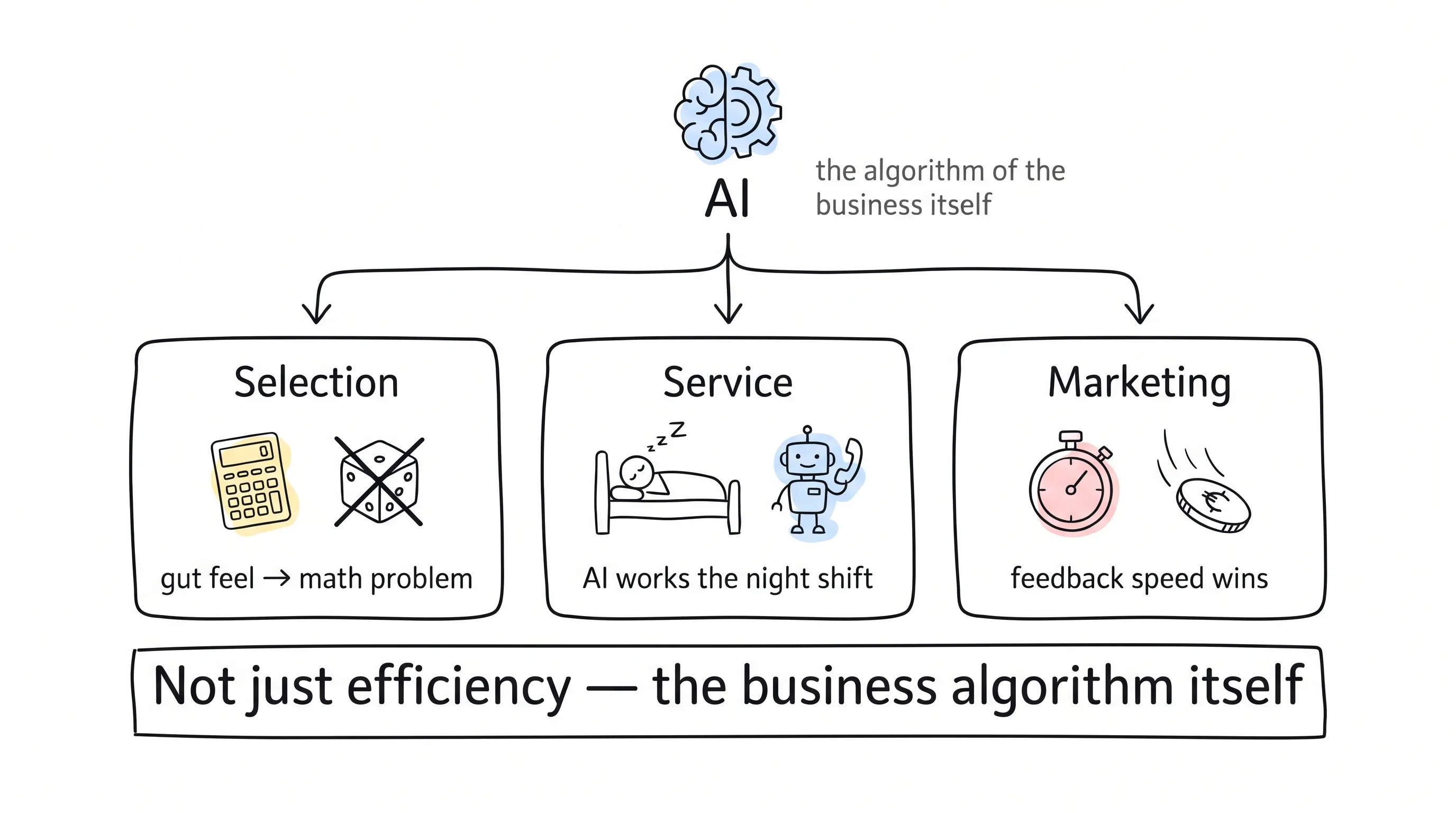
What do I mean by that? Let me break it apart for you, piece by piece.
First: Where the Products Come From
What is smart product selection?
It's this: the things you used to guess at are now calculated by data.
How did product selection work before? Scroll the bestseller rankings, see what competitors were selling, make the call on experience. Ship a batch of 100 SKUs overseas, and often fewer than 30 survived — and the ones left were where all your profit came from.
Now? Algorithms keep constant watch on search, sales, review, and return data across the whole web. Which market lacks which product, what price points get accepted, what selling points move people — it runs the numbers and shows you.
Think about it: before, you were betting on a market with your own wallet; now you're staking it with data.
Product selection has gone from a subjective judgment call to a math problem.
Next: What About Service
That's not the end of it.
Once you open your store to the whole world, the trouble is just beginning. It's daytime in the US and deep night in Europe; buyers don't pick timezones when they ask questions. What did you do before? Hire a team of support agents on three shifts. Expensive, and they still often answered the wrong question.
Now, AI customer service works the night shift for you. A Brazilian customer asks about sizing in the middle of the night, and it replies in seconds — in Portuguese.
And then there's VR and AR, which is even better. The customer doesn't have to imagine how that piece of clothing would look on them; they put on a headset, and it shows them, tried on for real.
Experience is unforgiving: if it can't cross ten thousand kilometers and still land, the business dies. AI compressed those ten thousand kilometers down to the far side of a single screen.
Marketing Has Gotten Faster Too
Products, done. Service, done. There's still marketing.
Let me pick the one most easily overlooked: attribution.
What is attribution? Working out who actually brought in a given order. It's like a table of diners walking into your restaurant — you'd want to know whether they came because of the poster at the intersection, or because a friend sent them.
You ran ads, posted on social media, did livestreams, and the customer placed an order. So whose credit is it? Count by gut feel, and the money keeps getting thrown at the wrong places. An intelligent attribution model does exactly one thing: it credits every dollar's effect to that exact dollar.
Take dynamic pricing, too. The same product should be priced differently on holidays, when competitors raise their prices, when inventory runs tight. In the past you watched for it by hand and couldn't keep up; now the algorithm adjusts on its own.
And content. A single product page used to mean outsourcing, waiting, rework — a whole week gone. Now machines can turn out ten versions in a day, and the data decides which one wins.
Marketing used to be a contest of creativity; now it's a contest of feedback speed. The slow ones never even get their chance to test and fail.
But I Have Three Things to Say
Reading this far, you might be thinking: just go all in, then.
Not so fast. Everything has another side.
First: algorithms need raising, not buying-and-forgetting. An immature algorithm recommends things wilder than gut instinct ever would. It needs you to feed it data, watch for drift, and keep tuning it.
Second: move from selling products to building a brand. Once AI has leveled selection, pricing, and content, anything everyone has is no longer an advantage. The only thing that can hold a customer's attention for three seconds is the brand. Product thinking grabs market share; brand thinking makes people remember you.
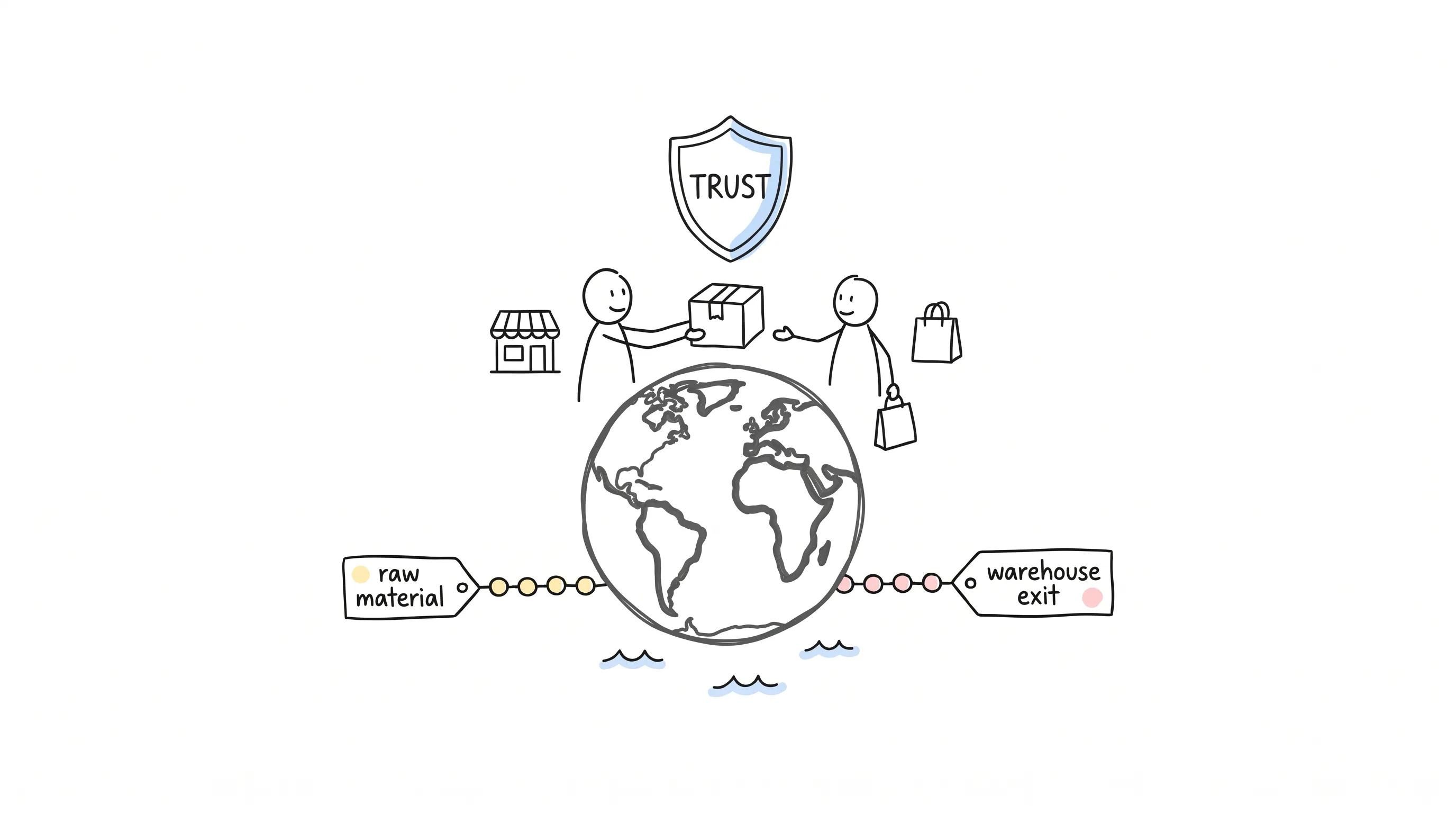
Third — and this is the one I most want to say: trust is the most expensive thing in cross-border business.
The goods are an ocean away; customers can't touch them or verify them. Blockchain traceability can leave a tamper-proof record of a product's whole journey, from raw material to warehouse exit. And data security and privacy are a threshold you can't get around. The harder you use data, the stricter your compliance has to be. That's not a cost — that's the entry ticket.
The farther your cross-border business goes, the more trust is worth.
Back to That Cup of Coffee
Later, my friend drank that coffee slowly.
He asked: so what should I do now?
I said: design AI into your business as part of the business, not outsource it to technology as a project. What should be calculated, hand it over to the algorithm. What should settle into a brand, build with heart. The trust you must guard — don't skimp a single penny on it.
He nodded, set his phone down on the table, and said he'd go back and rework the plan tomorrow.
And here's my wish for you, too, reading this far: in an era when AI has already picked the products for you, may you take your business farther than anyone else's.
Continue reading
Related articles
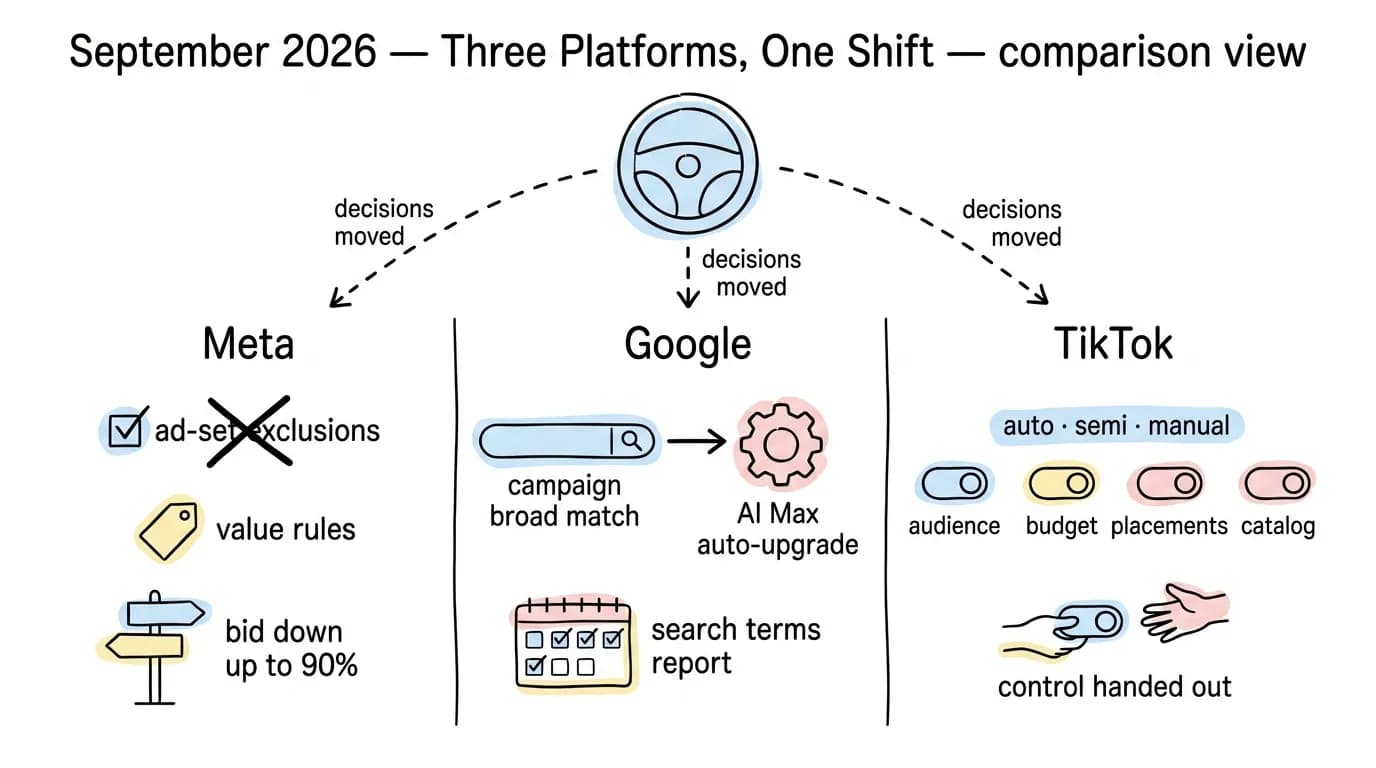
In September, Three Platforms Took Away Part of Your Steering Wheel
A few days ago, I went through everything the three big ad platforms did in September 2026. And I noticed a remarkably interesting coincidence.
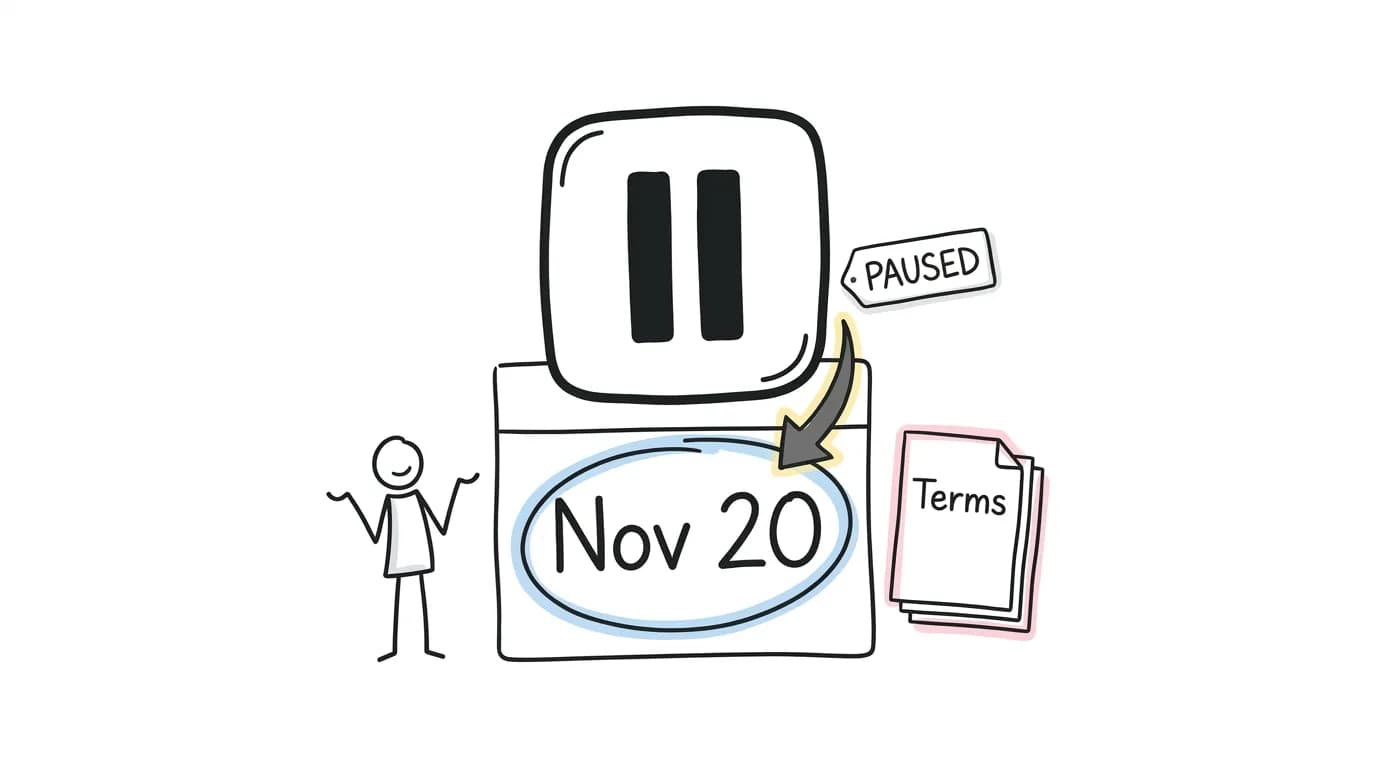
Meta's New Terms Hit the Pause Button on the Eve of the Effective Date
A while back, I was helping a friend of mine who runs a cross-border e-commerce business go through the compliance checklist for his ad account.
Google and Meta changed 17 ad rules this week. 6 of them need checking today.
A few days ago, I was helping a friend who runs a cross-border e-commerce business go through his ad accounts.