
In Cross-Border E-Commerce, Compliance Isn't a Cost — It's Your Competitive Edge
A learn piece on how shifting tariff, trade-rule, and tax requirements now gate cross-border e-commerce shipments, arguing that compliance built in advance acts as a competitive edge rather than a cost, with a reference to Avalara's cross-border tax compliance guide.
A while back, a friend who runs a cross-border e-commerce business invited me to dinner. Before he even sat down, he let out a sigh.
A shipment of his was stuck at port. Not because it wouldn't sell — because it couldn't clear customs. The tariffs had changed, the rules had changed, and the taxes no longer added up.
I asked how much he stood to lose.
"Don't ask," he said. The goods were worth around 200,000 yuan (about US$28,000); demurrage — port charges for goods that sit at the dock — ran two to three thousand yuan a day. Add in amended customs declarations, returned shipments, and breach-of-contract penalties on his customer's side, and by the time the whole loop closed, he had lost more than double the value of the goods.
I wasn't surprised at all. This isn't just his story.
Over the past two years, the rules of the cross-border e-commerce game have changed.
What does "changed rules" mean?
Cross-border used to be about product selection, traffic, and shipping costs. If your goods were cheap and arrived fast, the business would run.
Now? Before your goods ever ship, you have to answer three questions: How will this tariff be calculated? Is this category even allowed in? And which country do you pay the taxes in?
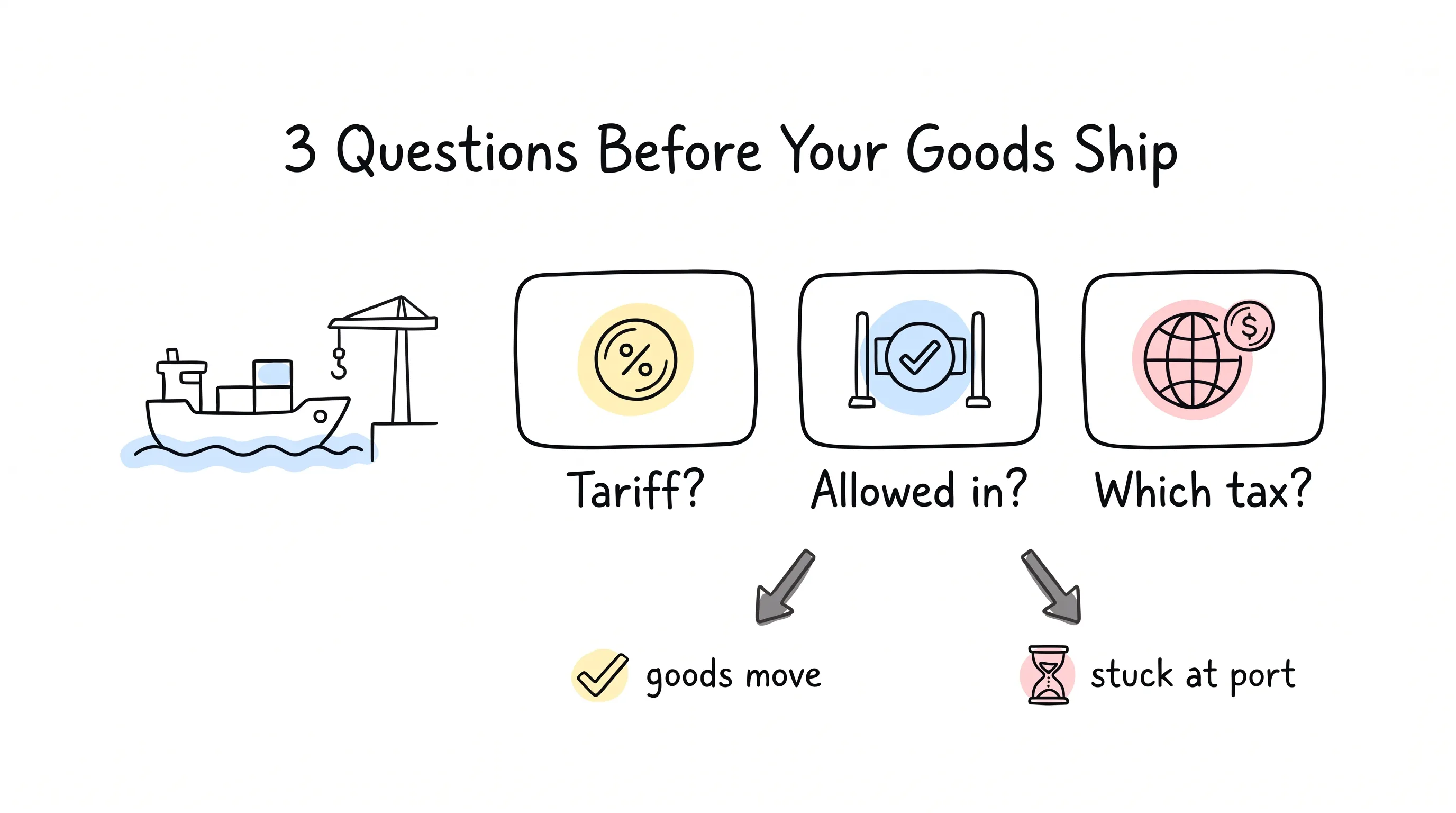
Tariffs are easy to understand. Trade rules — which products, under what conditions, can enter which market — have always been shifting from country to country. It's the third one that grinds you down: tax. The same shipment, in different countries, faces different tax rates, different thresholds, different filing requirements — and all sorts of different names. You have to match them all.
Get it right, and the goods move. Get it wrong, and they sit at the port, racking up charges by the day.
Think about it: isn't this the same exam, only super-sized?
It used to be multiple choice — a right answer earned you points. Now it's a qualifying exam. Get one wrong, and you don't even get into the exam hall.
So my friend says what he fears most now isn't platform commissions. It's compliance.
That line stayed with me for a long time.
Because so many people treat compliance as a cost. A finance matter. A legal matter. Something to cut wherever possible.
Wrong. Compliance is a competitive advantage.
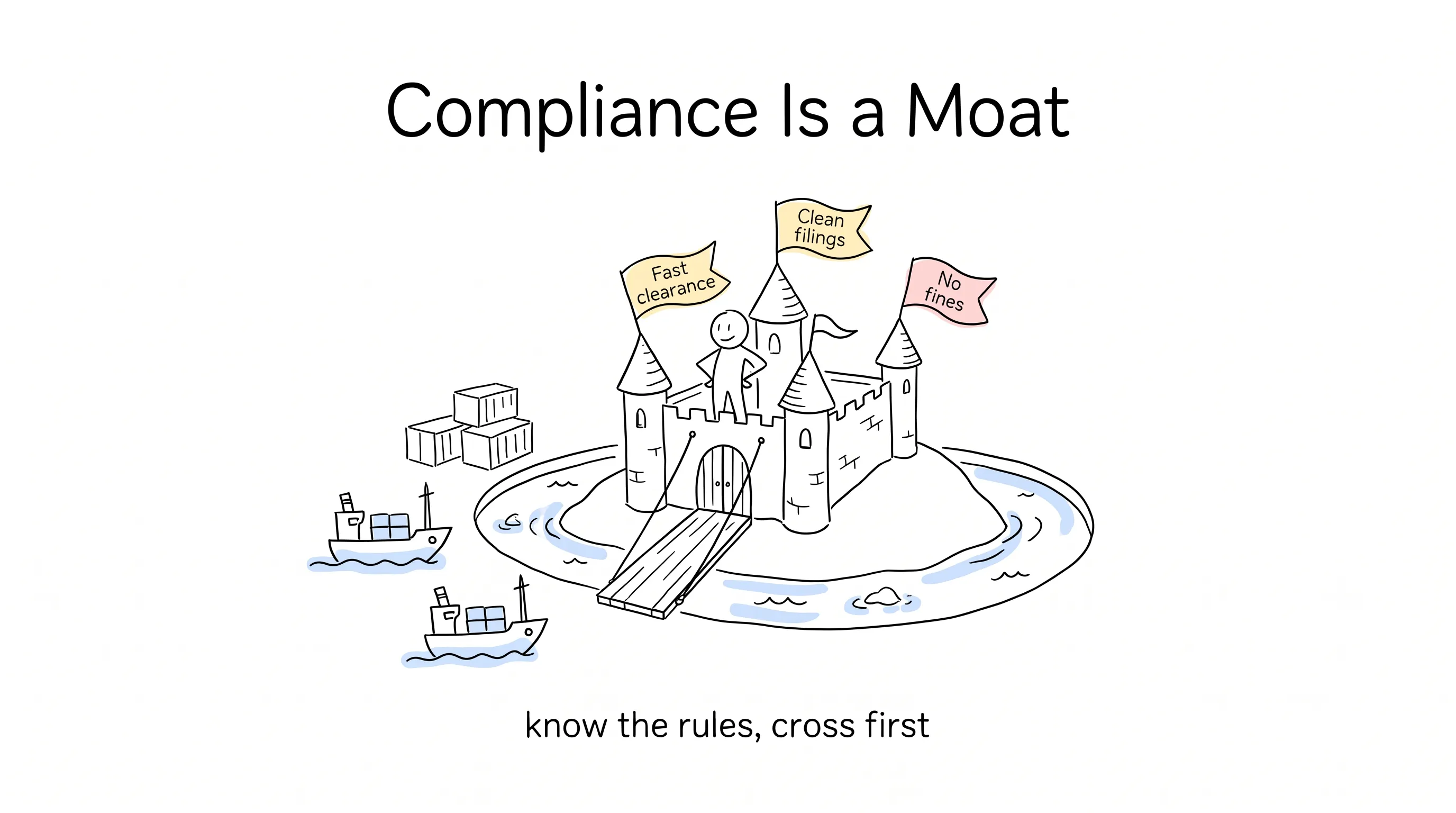
Think about it: when the rules tighten, who suffers most? The ones who never took the rules seriously. Meanwhile, those fluent in the rules hold a ticket nobody else has: their goods clear faster, their declarations hold up, they never get fined, their delivery dates stay reliable, and their customers' payments stay safe.
Same goods, same price — who would you rather build a long-term business with? The answer is obvious.
Last October, Avalara, a company that provides tax compliance for businesses, published a cross-border guide on exactly this: how leading companies manage tariffs, trade rules, and tax codes — and how they turn compliance from a roadblock into an executable playbook for global trade.
My takeaway after reading it: the direction is right. Compliance isn't something you scramble for at the last minute when your goods hit the port. It's a system you build in advance. The taxes that need calculating? Calculate them ahead of time. The declarations that need filing? File them ahead of time. When the rules change, your systems change with them. The rules belong to others — but how fast you respond to them is entirely your own.
When the bar rises, those who know the rules are already standing behind a moat.
When the bill came, I beat him to it and paid. I told him dinner was on me — consider it tuition.
He laughed.
I wish him well: may those goods stuck at port clear soon. And my wish for you: may you never find a tax bill barring the front door of your business.
Continue reading
Related articles

What Is an AI Marketing Agent? From "Using AI" to "Delegating to AI"
A learn article explaining what an AI marketing agent is, how it differs from rule-based automation, and which repetitive tasks such as lead qualification, reporting, and campaign monitoring can be delegated while humans keep key decisions.

Marketing Automation Is Shifting from "You Do It" to "You Say It"
This article explains how marketing automation is shifting from rule-based platforms that merely execute toward AI agents that plan, create, publish, and review campaigns, covering delegable tasks, underlying technologies, tool categories, adoption steps, and risks such as privacy and automating without strategy.

When AI Does the Creative, Mistakes Come in Batches Too
A learn article on the risks of using generative AI for marketing creative across brand, legal, compliance, and operational layers, with case examples and seven practices for review, rights clearance, documentation, and vendor governance.