
AI Is Writing Brand Stories Now — Something Every Marketer Should Be Thinking About
A learn article on how generative AI is used to draft brand stories and produce campaign copy, images, and video at scale, covering personalization, mass asset production, multimedia formats, and localization, with a caution that story authenticity still depends on human judgment.
A few days ago, I had dinner with a friend who works in branding, and one thing he said cracked me up.
Their brand stories, he told me, now start as AI first drafts — a light human edit, and they're good to go. A campaign that used to keep a whole room of copywriters busy wraps up in a single afternoon.
So I asked: how good is it, actually?
He took a sip of his drink and said, you know what? It really holds up.
The thought rattled around in my head for days. Today it finally clicked. Let me walk you through it.
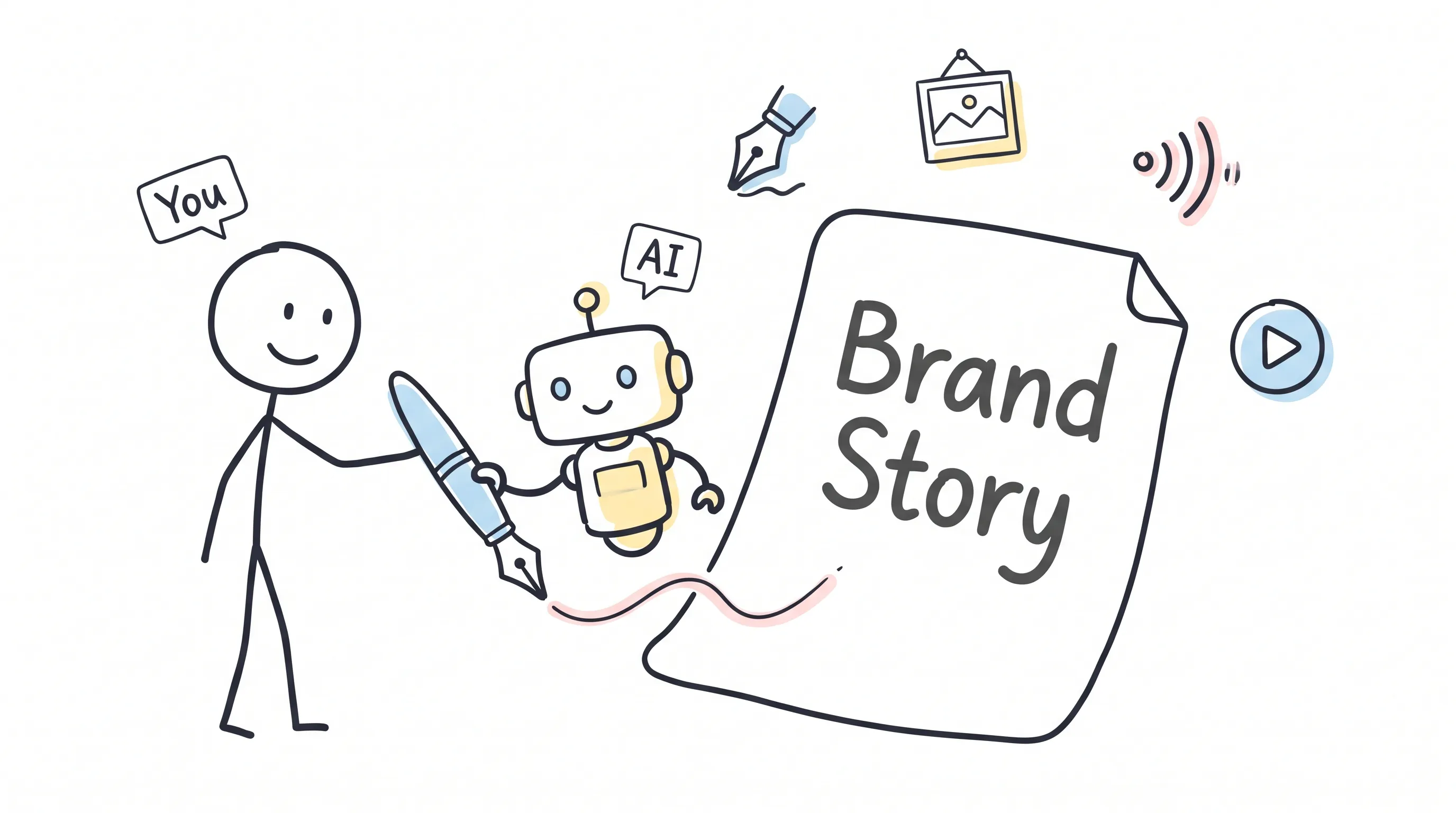
What Is AI Actually Telling Stories About?
What does brand storytelling even mean?
Have you ever been on a blind date? When you introduce yourself, you don't recite "175 centimeters, 65 kilograms, 300,000 yuan a year." You say: I love hiking on weekends, and last year I hiked the Yubeng trail (a legendary trek in Yunnan) all by myself.
Brands work the same way. Product specs are the resume; the brand story is that blind-date introduction. Whether the other person wants to keep talking to you depends entirely on that part.
Until recently, that introduction could only be written by humans. One brand, one voice, one playbook — told the same way for years.
Not anymore. Generative AI has entered the room.
There's a digital marketing company in New York called Digital Silk that helps brands run their online business. They recently shared what they're seeing: more and more companies are using AI to produce brand narratives — copy, images, video. The assets for an entire campaign? AI can crank them out in bulk.
What does "in bulk" mean?
It used to be: want one video? Find a production company, wait for a slot, wait for the final cut. Now AI generates images, audio, and video, and you deploy them across channels all at once. The speed changed. So did the volume.
How Big Is This Business?
Let me run the numbers for you.
McKinsey has an estimate: generative AI could contribute $4.4 trillion a year to the global economy — and a very large chunk of that lands right on marketing and customer communication.
Meanwhile, PwC ran a survey in 2025: 72% of executives believe that within the next three years, generative AI will play a major role in marketing innovation.
Over seventy percent. This isn't an experiment anymore. This is the mainstream.
How Do You Actually Use It? Four Plays
Digital Silk sorted the use cases they're seeing into a few categories. Here's my own retelling.
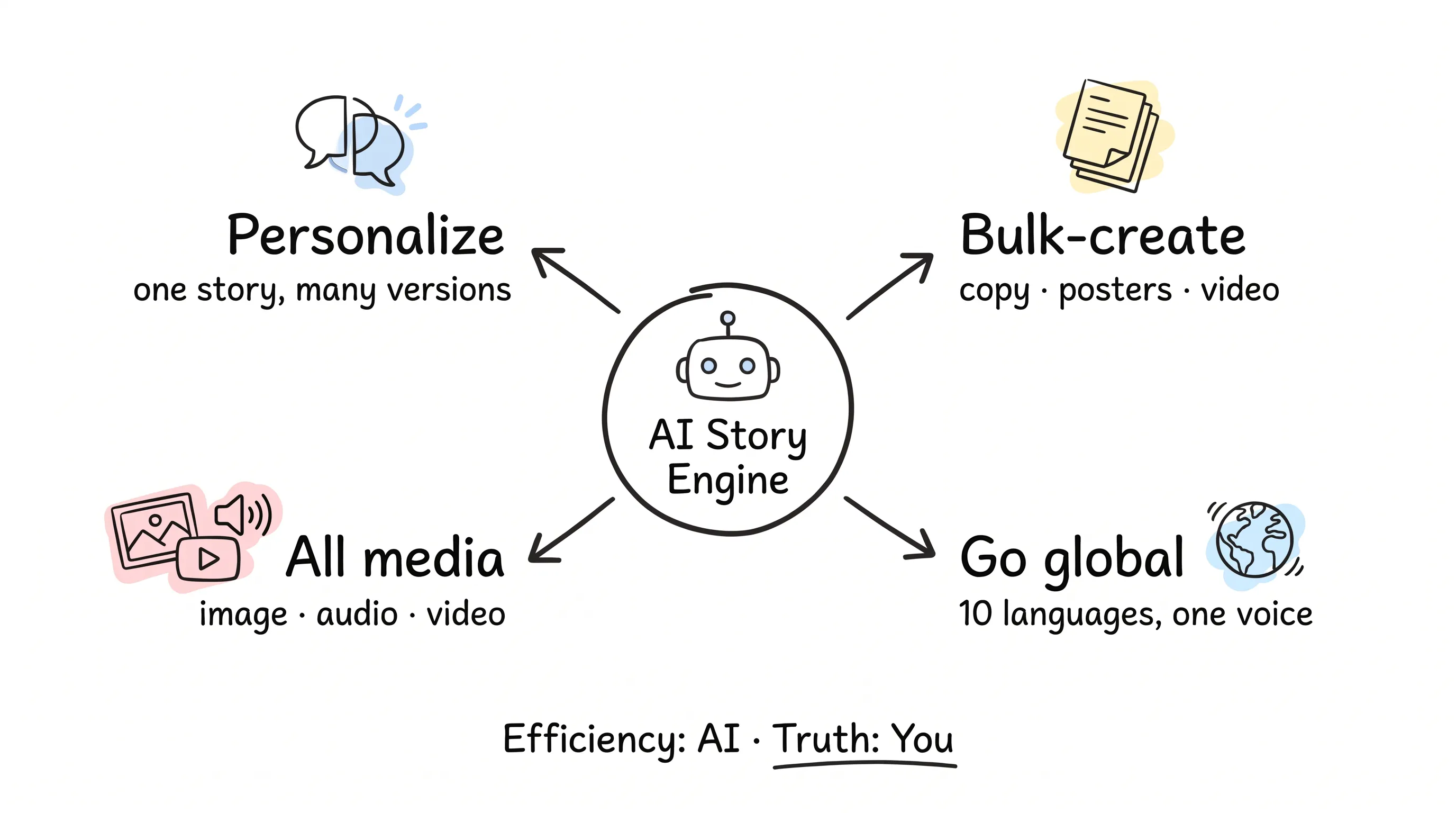
First, the story tailors itself to whoever's listening. The same brand narrative, and AI can automatically spin different versions based on each consumer's preferences. Whatever you care about — that's the part of the story it tells you.
Second, mass production of assets. Copy, posters, videos for an entire campaign — AI generates them in bulk, and the style stays consistent. Not long ago, that was weeks of work for a whole team.
Third, full multimedia coverage. Images, audio, video — AI can produce them all, splitting one story into several forms and spreading them across every channel you've got.
Fourth, going global without going off-key. When a brand expands overseas, one story has to be translated into ten languages and adapted for a dozen markets. AI does the adapting — fast, and without losing the brand's original flavor.
Notice what these four things have in common: they used to be a contest of manpower. Now it's a contest of whether you know how to use AI.
But Here's the Trap
By now you might be itching to try it yourself.
Hold on. One point Digital Silk makes I completely agree with: AI has gone from an experimental tool to the actual driver of brand communication. But the real test comes after scale — is the story still true?
Put simply: AI can put your story in front of a hundred million people. But no one — and no machine — can guarantee the story is sincere.
Consumers aren't fools. If a brand story is one even you don't believe, no matter how beautifully the AI writes it, it's a plastic flower. Looks lovely. Smells like nothing.
My advice is one line: let AI run efficiency and scale. The "true" part — that has to come from you.
At the end of that dinner, my friend told me their job postings have changed too: they no longer ask for "can write copy." They ask for "can direct AI to write copy."
See it? The tool changed. The job didn't. What changed is who gets to hold it.
Here's wishing your brand story has AI's speed — and a human's warmth.
Continue reading
Related articles

When AI Does the Creative, Mistakes Come in Batches Too
A learn article on the risks of using generative AI for marketing creative across brand, legal, compliance, and operational layers, with case examples and seven practices for review, rights clearance, documentation, and vendor governance.
Which AI Should Your Startup Actually Use for Marketing?
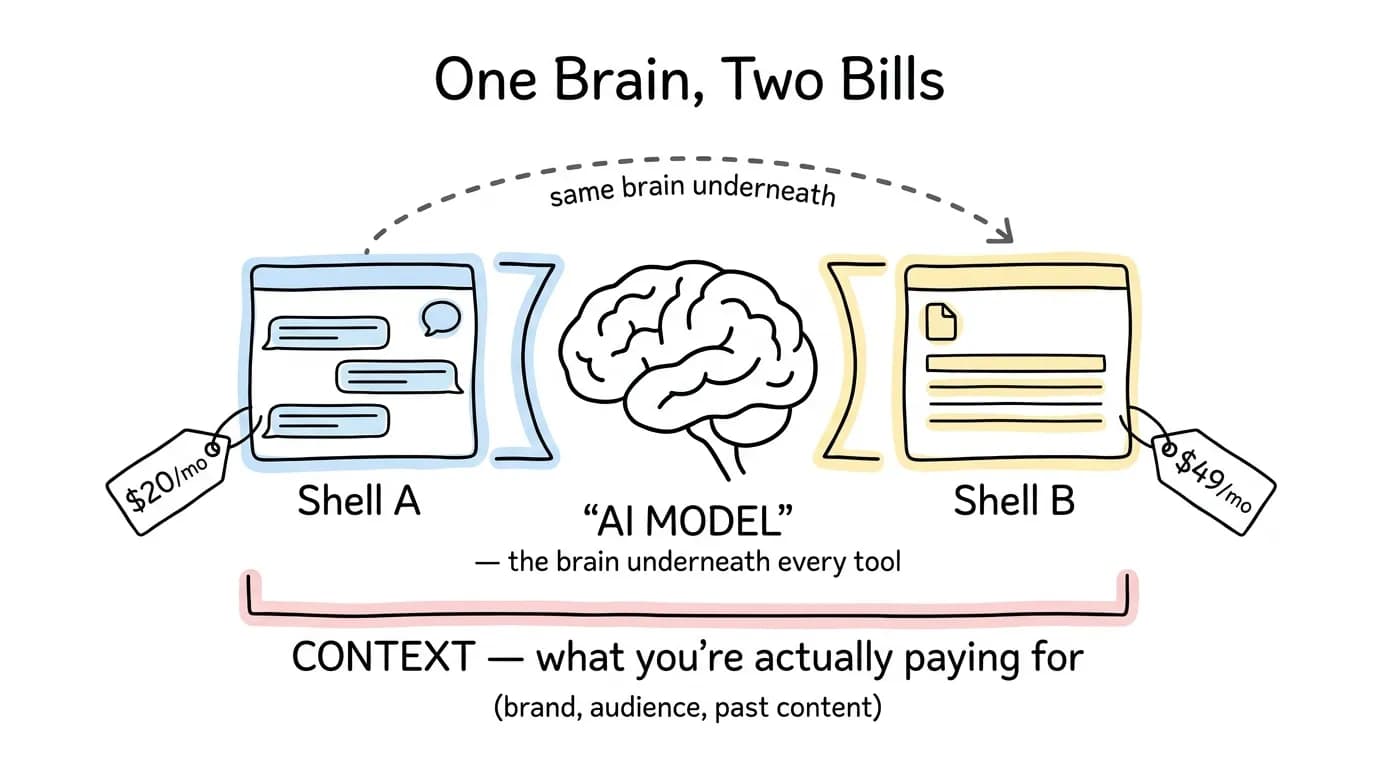
A startup marketing guide explaining the difference between AI models and tools, sorting tools by job (writing, research, design, leads, email, video ads), and outlining a 30-day test plan for choosing them. It also covers generative engine optimization and budget trade-offs.
31 AI Marketing Tools, Reviewed One by One: How Exactly Should You Spend the Money?
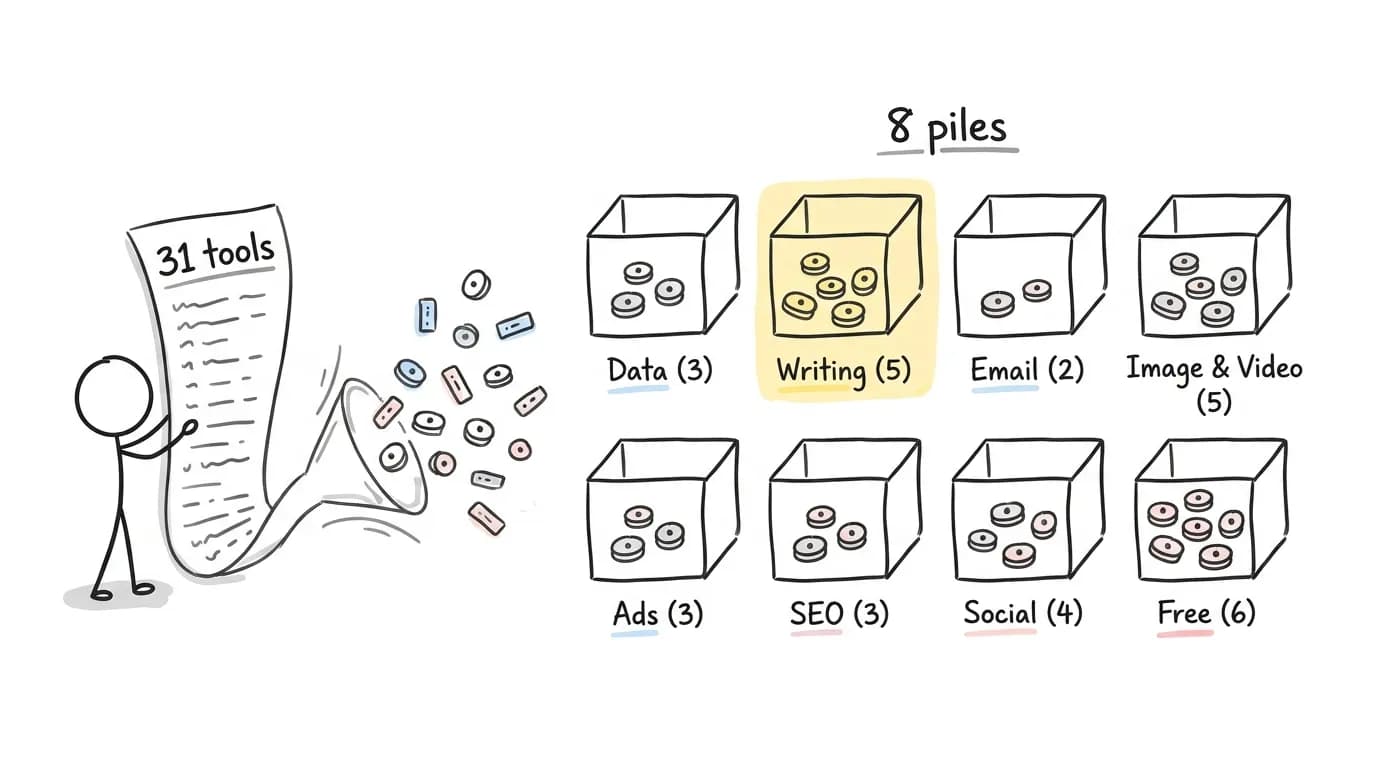
A review of 31 AI marketing tools grouped into eight categories, covering data, content, email, video, ads, SEO, social, and free options, with guidance on choosing one strong tool for your most frequent task and testing free tiers first.