
AI Writing Your Content? Don't Panic Yet
AI can refresh, personalize, and test content, but it can't replace marketers. Learn where generative AI helps, where it fails, and the three steps to use it without losing your brand voice.
A while back, a friend of mine who works in content marketing came to me venting. Ever since his boss got hooked on ChatGPT, he said, the whole team had been on edge: was the day coming when the boss would lay them all off and have AI finish everyone's work in a single day?
I laughed when I heard that.
Truth is, someone had raised this same worry with me back in 2022. ChatGPT had just burst onto the scene, and DALL-E 2 and its AI-generated images were all over everyone's feeds. Everyone was convinced the content industry was about to be turned upside down.
Four years on, has the sky fallen? It has changed. Just not the way you'd expect.
What Can AI Actually Help With?
So what is generative AI? Tools like ChatGPT and DALL-E 2. You give it a sentence, it hands you back an article, an image, even a video.
For marketers, the appeal is obvious: it brainstorms ideas, saves time, and produces content outright.
But when it comes to actually putting it to work, what are people using it for?
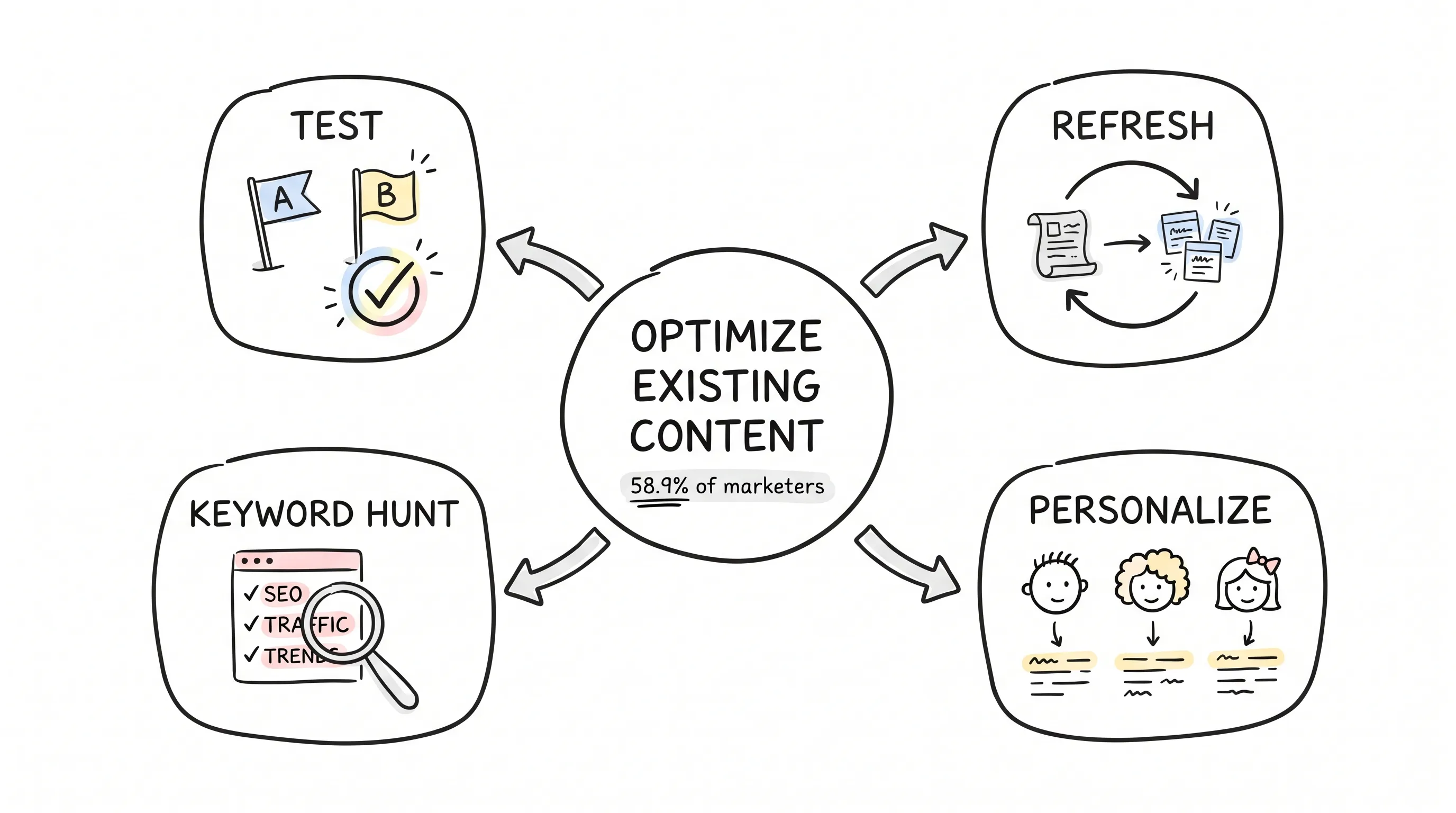
In 2022, Aira (a marketing research firm) ran a survey of marketers around the world: 58.9% of respondents said they were already using AI to optimize existing content.
Note the word: "optimize."
That detail is telling. Optimize how? From what I've seen, the play falls into roughly four buckets.
Refresh. Take an old article, have AI rewrite and expand it into a set of related new pieces, then distribute them across channels.
Personalize. Using buyer and customer behavior data, have the same core content say different things to different people.
Keyword hunt. Have AI generate a massive list of competitor keywords in one go, pick out the ones most likely to rank, and build content around them.
Test. Create two versions of the same topic, throw them both out to collect the data, keep whichever performs better.
Notice: all four revolve around existing content. Not a single one is "dream up a viral hit from scratch."
But Here's the Catch
Every coin has two sides.
The biggest pitfall of AI writing is making things up. It makes words sound right — not facts be right. An article can read smoothly from start to finish while its data, examples, and quotes were all invented on the spot. Would you dare hit publish on that?
The other pitfall is copyright. AI was raised on a massive diet of existing works. Whether what it writes or draws for you "borrowed" from someone — you have no idea. But the liability lands on you. Same goes for plagiarism.
So the handier the tool, the warier you need to be.
So, Can AI Replace Content Marketers?
Back to that same Aira survey. Here's the interesting part: only 13% of marketers believe AI-generated content has become indistinguishable from human writing.
13%. Even the marketers who use AI every day aren't buying it.
Why? Because AI can't deliver the content that's actually valuable.
What kind of content is valuable? It's original. It carries the brand's own signature. It's authoritative. And it's ready to publish the moment you get it. Behind each of those four qualities stands a person who truly understands the business.
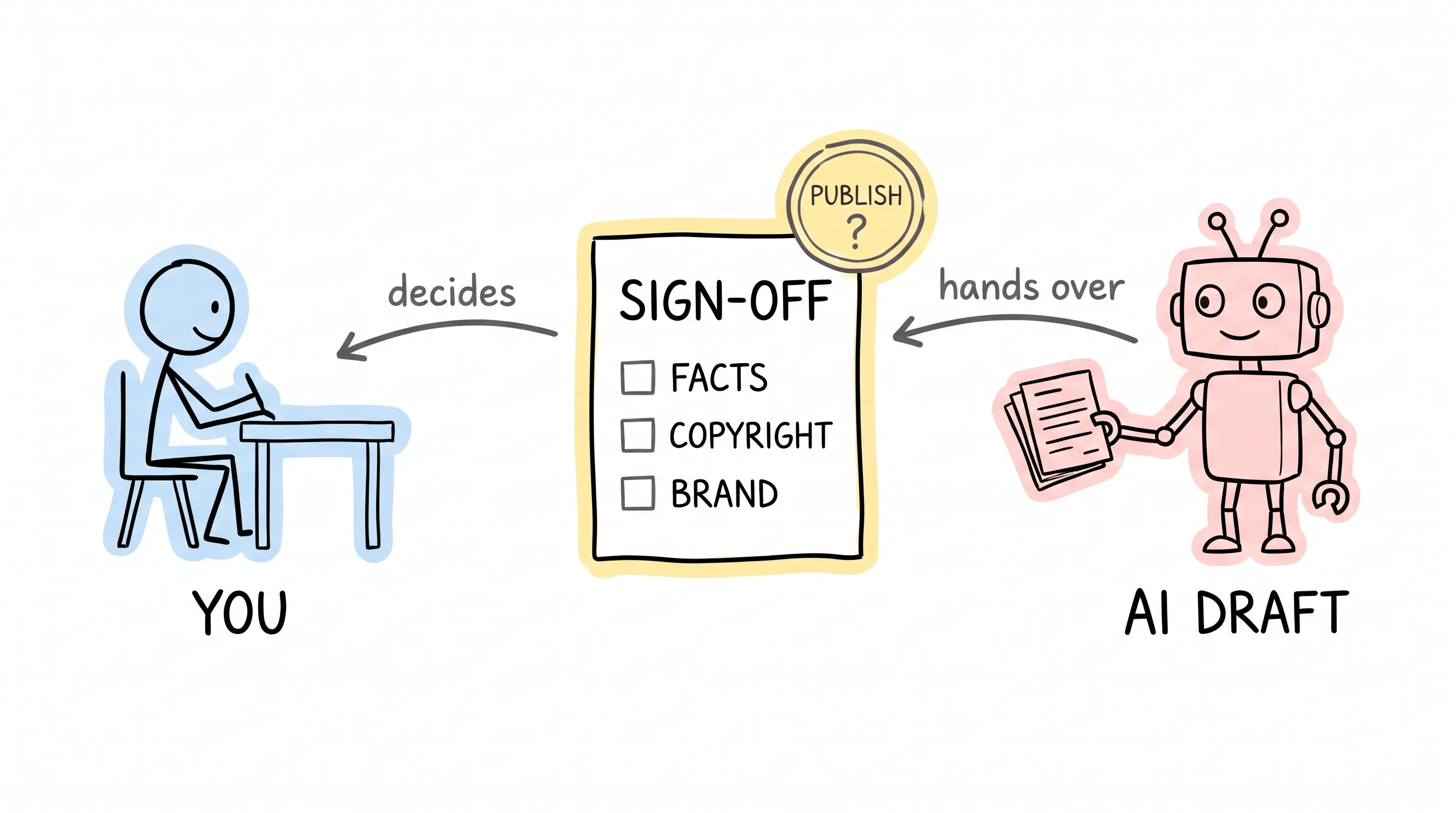
AI is a remarkably capable intern. But an intern can't sign off on publishing for you.
So What Should You Do?
My approach comes down to three things.
First, get the strategy straight before you hit the gas. Content strategy is the steering wheel; AI is the gas pedal. If the wheel isn't steady, the harder you press, the further off course you go.
Second, test small. AI-generated work should first go out to a small audience to collect data — don't go all-in on day one.
Third, put humans back in the loop. Someone has to verify the facts, someone has to guard the copyright, someone has to make the brand calls. That last step can't be cut.
A Final Word
Back to my friend from the beginning.
Here's what I told him: you're afraid of the wrong thing. AI isn't what's scary. What's scary is the person sitting next to you who has quietly learned to make AI do your job.
Tools are levers. And a lever only ever amplifies the person wielding it.
Here's to content that sounds more and more like you.
Continue reading
Related articles

It's 2026: Stop "Buying" AI Tools for Your Marketing Team — Start "Hiring" AI Agents
This learn article explains how AI agents differ from standalone AI tools in marketing, outlines three agent categories — build-your-own platforms, CRM-native agents, and vertical tools — and covers use cases across SEO, social media, advertising, and reporting, plus criteria for choosing one.

What Is GEO? How Your Brand Gets "Mentioned" in the Age of AI Search
An explainer on GEO (Generative Engine Optimization) for e-commerce and DTC brands: how it differs from SEO and AEO, why AI answers shape brand visibility, and eight practices covering question-focused content, consistent brand messaging, structured pages, external evidence, comparisons, and AI mention tracking.

AI Is Already Making Decisions for Your Customers. Are You on the List?
A learn article explains GEO (Generative Engine Optimization): why AI-generated answers now shape which brands customers see, and how SEO fundamentals, entity clarity, citable evidence, and monthly measurement affect visibility in AI answers.