
AI Marketing Daily · 2026-10-21
AI Marketing Daily for 2026-10-21 covering AI search's shift from keywords to contextual prompts, AEO and GEO playbooks for small teams, Google and OpenAI ad platform updates, and brand-side AI practices from Mastercard, Newell, and Uber.
Today has a single dominant theme: AI search has rewritten "how users ask." The keywords people used to cram into a search box are being replaced by complete, personalized prompts, and for the first time customer motivations and trade-offs are laid bare at the discovery stage. Around this shift, HubSpot has shipped an AEO playbook for small teams, Hostinger has unpacked the GEO concept, Google has bet its entire advertising stack on AI, Mastercard and Newell have shared how big brands are fighting on the front lines, and Shiv Singh's ten trends spell out the pressure management is under. Read these 8 items and you'll have a complete map of today's AI marketing.
🎯 Top Story
AI search is turning prompts into customer research
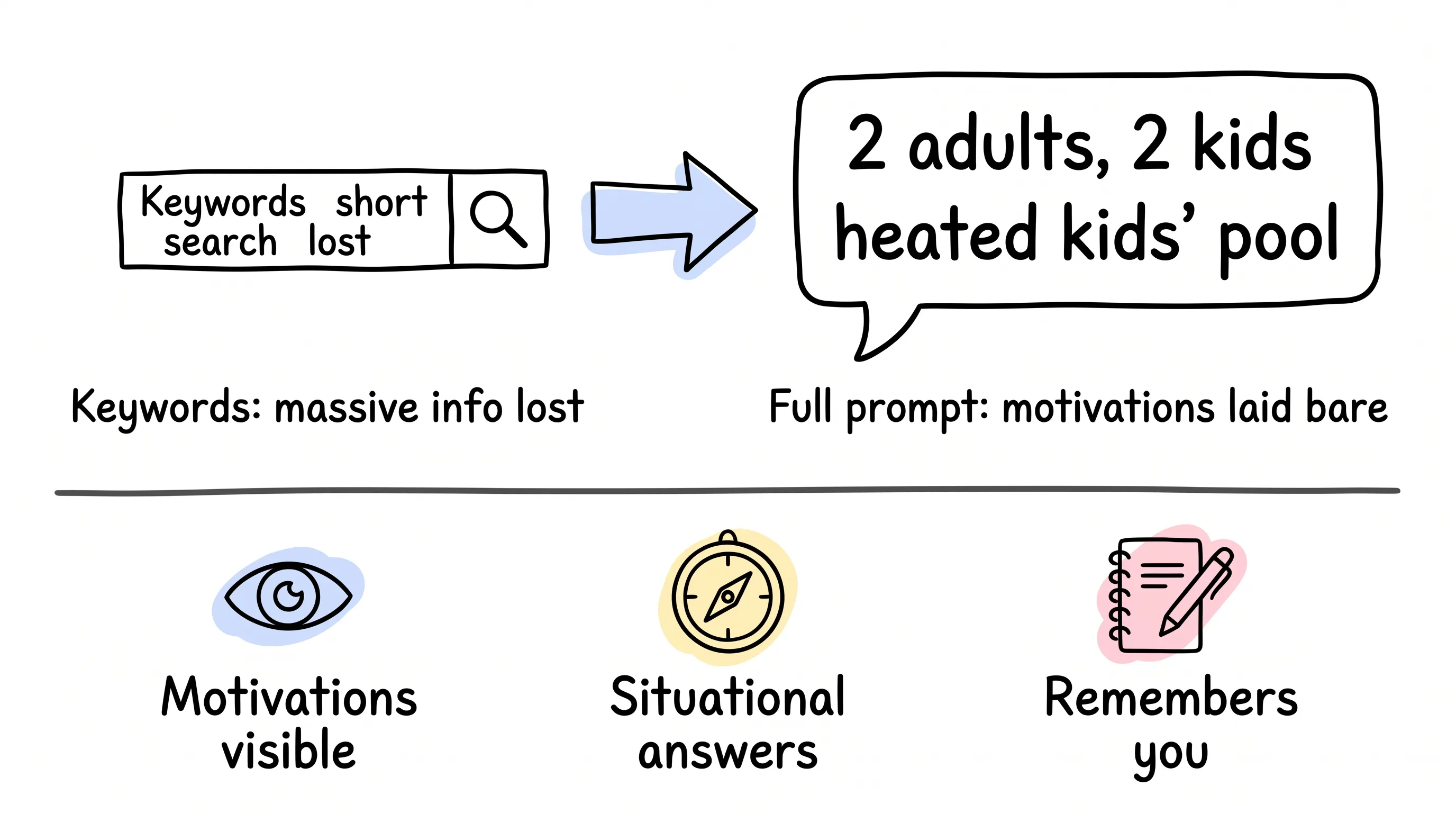
MarTech published a deep-dive opinion piece today by Reflect Digital founder Becky Simms arguing that AI search is turning prompts into a new form of customer research. She uses a travel scenario: in the past, searching "best family hotel Tenerife" — four words — lost a huge amount of information: budget, kids' ages, dietary preferences, whether they'd rent a car. Today users can tell an AI assistant everything, just as they would a human travel advisor: two adults and two kids, the kids' pool needs to be heated, food quality matters. Demand at this level of granularity used to surface only at a travel agency counter or on the phone, and even then the agent couldn't always answer everything, because some information simply couldn't be looked up. Complex needs weren't invented; they were compressed for decades and finally allowed to be released. Humanity spent decades learning to squeeze itself into the language of the search box; now it is relearning how to ask questions like a human.
This release means two things for marketers. First, the motivations and barriers from behavioral science are visible at the discovery stage for the first time: a keyword expresses intent, but a full conversation exposes drivers and concerns. Information that used to wait for a sales conversation is now front-loaded into the search behavior itself. Personalization has been a slogan for years; AI search is the first time it becomes operationally real. Second, content has to catch up to this granularity. Users arrive with specific situations; if brand content is still stuck on category-level big words, it can't catch these questions. Traditional search is good at understanding what we're looking for; AI search has the potential to understand what we're actually trying to accomplish.
One layer deeper is memory. AI assistants accumulate an understanding of the user from past conversations: one person asks about running shoes, another person asks about running shoes, but the first one previously discussed an old knee injury with the AI, so the same question may yield a completely different recommendation. The knee injury doesn't need to appear in the prompt to shape the answer. Memory capabilities vary by platform and user settings and won't override every search experience, but the direction is clear, and that's why the word "assistant" feels right. The author goes further with a Mexico hotel example: a user can even say "find me that similar hotel in Tenerife," a query that would be nearly meaningless to traditional SEO, yet AI can understand it through memory. Meaning lives outside the prompt, and that poses a fundamental challenge to prompt tracking.
The author therefore argues that relevance is becoming situational. Someone training for their first marathon, someone with an old knee injury, someone on a budget under $150: the same "best running shoes" query should return completely different answers for each. There is no single optimal answer, only the answer that fits this person in this situation. That's a structural tailwind for brands that genuinely understand their audience: niche content, vertical influencers, and specialist communities all have an opening. And the most valuable question is no longer "how do I get AI to recommend me" but business questions: In exactly which situations are we the best choice, and for whom? What evidence proves it? What are the reasons users choose us without even articulating them? Which combinations of needs is nobody serving well?
On how marketers can act, the article lays out three paths. First, on-site data is more honest than external prompt tools: look at which pages are drawing traffic from AI platforms and which increasingly specific long-tail pages are growing, and you can reverse-engineer the situations users are really asking about and the contexts where your brand shows up. Second, push search insights upstream as inputs to business and content strategy. You might find an unexpectedly well-matched audience; you might find that something customers care intensely about is buried three levels deep on your site; you might identify a combination of needs nobody in your category serves well. These aren't SEO problems, they're business opportunities. Third, don't ignore your company's internal front-line intelligence: the odd questions sales hears every day, the questions in support records your website can't answer, the moments of choice store staff witness. These are the most underrated source of insight, and they should flow back into search and content strategy.
My take: this article names a mistake a lot of people are making right now — treating prompts as new keywords to chase rankings on. The industry has done keyword tracking for twenty years; rankings made it into marketing reports and even board decks, so instinctively we're trying to rebuild the same apparatus for AI search. But the model has changed: if the same query returns different answers to two different people, the ceiling of standardized tracking is obvious. It has value, but treat it only as an approximation. What you should actually build is a capability for situational understanding: knowing in whose context, in which scenario, you're the right answer. Prompt dashboards can be part of the toolkit; don't expect them to answer this question for you. This is not something you can outsource to a tool. You have to work on content and business structure. Two things you can do this week: go through the pages that are pulling AI-driven traffic, and ask sales for ten of the weirdest questions they've heard.
🔗 Further reading: Read the full article
🏷 Product Launches
ADWEEK BrandWeek conversation: Mastercard, Newell, and Uber on brand growth in the AI era
The ADWEEK BrandWeek live conversation brought together Mastercard EVP of Global Brand Strategy & Innovation Cheryl Guerin, Newell Brands CMO Nick Hammitt, and Uber Advertising's global head of measurement science Edwin Wong to discuss brand growth in the AI era. Each opened with a consumer trend: Uber sees deep pre-purchase engagement, with consumers wanting to experience the product virtually or physically before ordering; Mastercard is betting on agentic commerce, where everyone has an assistant that can carry a transaction through to checkout and trust has to be rebuilt across the entire transaction chain.
Mastercard treats AI as an orchestration layer. Its newly launched card design studio systematizes the creative work it does daily for card issuers, letting issuers design their own cards; early next year it will open to consumers for personalized customization, compressing the content production cycle while protecting brand consistency. They've also combined transaction data with Dynamic Yield personalization, card-linked offers, and measurement capabilities to build a Commerce Media network: 500 million authorized consumers, 25,000 advertisers, attribution that drills all the way down to purchase behavior, and advertiser returns that have reached as high as 22% ROAS (return on ad spend).
Newell uses AI personas for evergreen consumer research. It builds target-consumer personas from its own data, for example Graco's persona of first-time expectant mothers, and brand managers can ask at any time "what do you think of this trend?" and get answers from the consumer's point of view. The AI personas even participate in new-product development, offering improvement suggestions on stroller concepts. After a year in operation, it has spread from three or four brands to nearly all of them; they even paired two personas to run innovation challenges, to see whether colliding perspectives could surface white-space markets. But the pitfall they hit is worth remembering: AI personas are overly positive and will never tell you outright that your idea should be killed, so every project ends with real consumers brought in for validation.
Uber Advertising proves its value through context and timing. They studied instant commerce discovery in Australia and found that what consumers really want is reducing cognitive load; speed is just the surface. A brand showing up at the right moment can compress the funnel directly. In the Kahlua case, timing intelligence powered an espresso martini campaign across all Uber surfaces including Uber Eats: delivery scenarios saw a 188% lift, and sales at partner bars and restaurants rose 7%.
💬 How marketers can use this: mid-sized teams can copy the AI persona workflow. Start by building personas from your own customer data for creative pre-screening and compress the idea-to-concept-validation cycle, but you must put real-human testing at the end of the pipeline as the safety net. Never trust the AI when it says "this idea is great." The lesson from the Kahlua case is to move part of your budget from audience targeting to timing intelligence: who needs your product at what moment is worth more than who they are. If you're thinking of building your own retail media network, first check whether you hold exclusive data. Mastercard's answer was to stitch together transactions, loyalty, and measurement.
🔗 Further reading: Read the full article
🏷 Marketing Tools
HubSpot's small-team AEO playbook: three paths plus a one-week minimum workflow
HubSpot updated its Answer Engine Optimization (AEO) guide for small teams on October 20. The conclusion is one line: one to three people can run AEO — the key is picking the right path and sticking with it. Each of the three paths involves trade-offs. DIY is the cheapest, but manually testing prompts, tracking results in spreadsheets, and cross-referencing SEO data stalls the moment the team gets busy: fine as a starting point, not as a system. Software sets your prompts once and tracks them on an automatic cycle; the recommendation is to tie tracking directly to specific pages and gaps. Agency support is the least effort, but insights have to pass through an external team, so iteration is the slowest. The criterion isn't "which is best," it's "which will you keep doing."
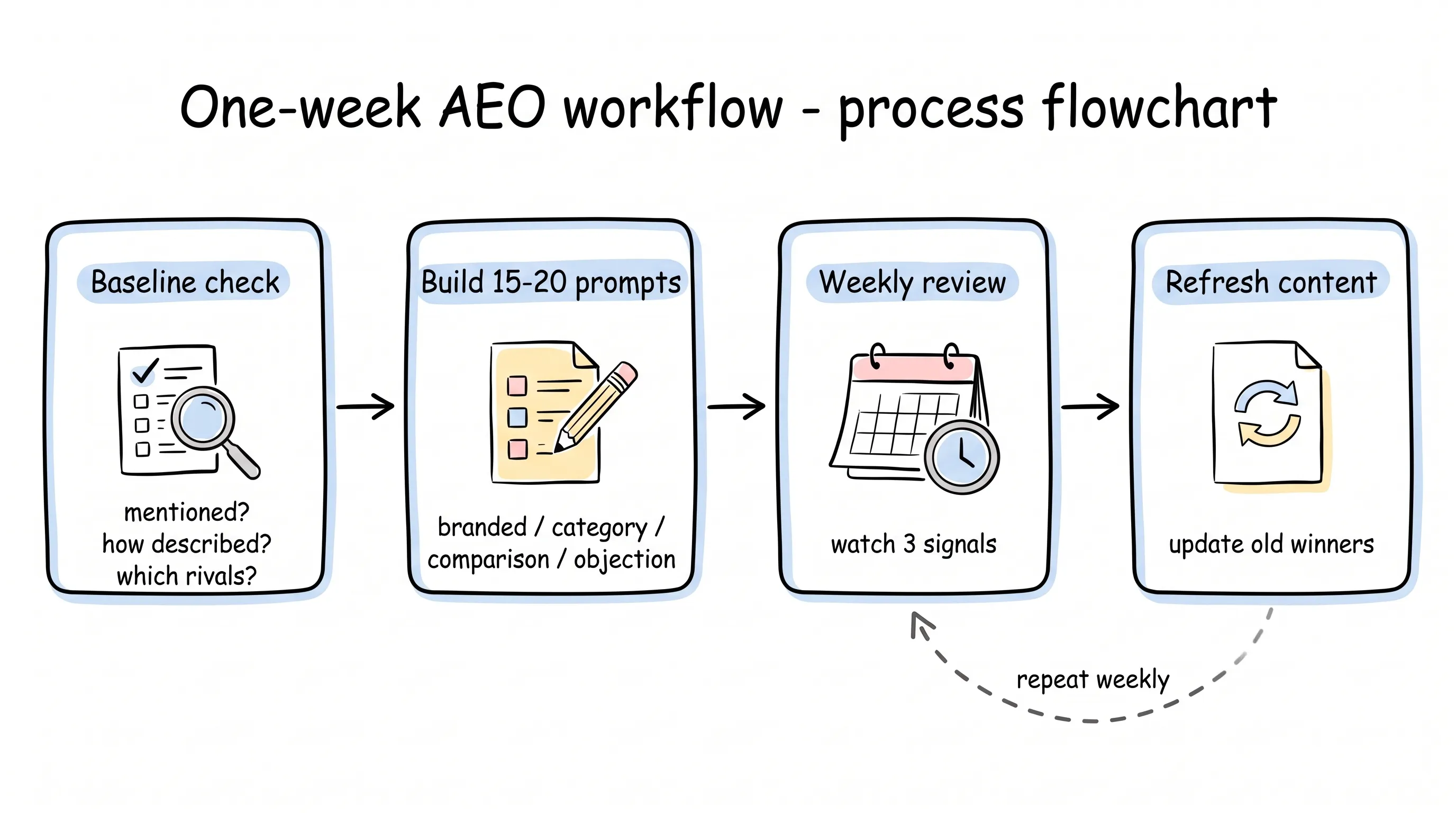
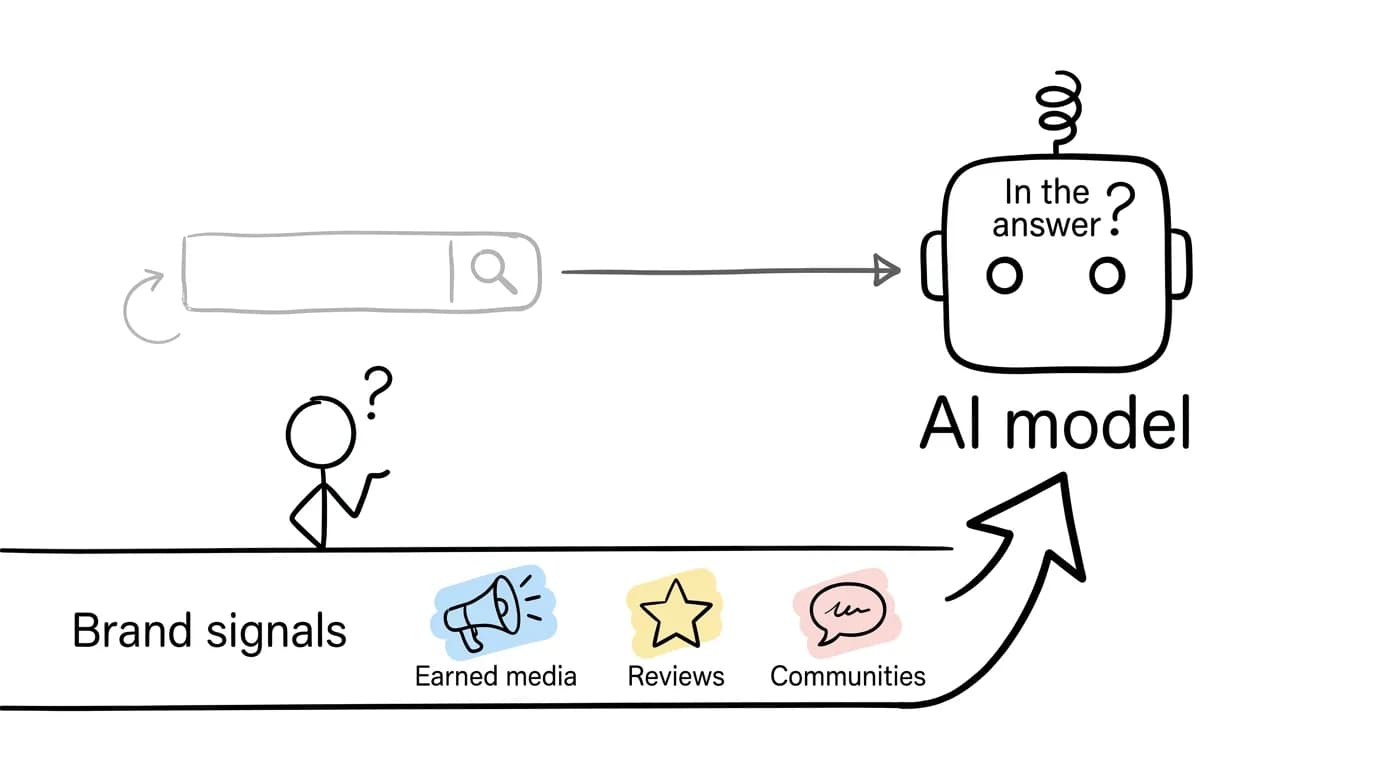
The author's one-week minimum workflow has four steps. Step one is a baseline visibility check covering three things: whether your brand is mentioned, how it's described, and which alternative brands come up. The free AI Search Grader gives you a snapshot across five dimensions in minutes: sentiment, content quality, brand awareness, share of voice, and market position. Step two is building 15 to 20 starting prompts across four categories — branded terms, category terms, comparison terms, and objection terms — and keeping them fixed week over week so results are comparable. Non-branded terms are the real battleground: more than 30% of Gen Z already gets information through chatbots, and if you only track branded queries you'll see nothing but a flattering illusion. Step three is a weekly review watching three signals: newly appearing competitors, shifts in how your brand is described, and prompts where your brand has vanished entirely. The last one is usually the clearest pointer to which pages need fixing. Step four is closing the loop with content updates: answer engines cite more than your official site, with third-party articles, forums, and reviews all in play.
On the data side, it cites Seer Interactive research: content published within the last five years accounts for 94% of LLM crawler hits, with the bulk in the last year. Industry differences are significant. Financial services shows the strongest recency bias, with AI crawls concentrating almost entirely on the last one to two years of content, because tax and payroll topics change fast; for travel content, 92% of hits fall within the last three years; energy-sector evergreen content lives far longer. So refresh cycles should be set by industry, not by a publishing calendar. One practical caveat: AI search is sensitive to wording. "Best CRM for small teams" and "best CRM for a five-person sales team" may return different answers, and results are personalized by person and location, so manual snapshots are only approximations.
💬 How marketers can use this: a one-person team can complete the baseline check plus the starter prompt set this week, about half a day of work, and AI Search Grader is free. Fix the weekly review at the same time each week; ten minutes watching the three signals is enough. Put "refresh existing content" on the calendar instead of waiting for rankings to drop: turning a good two-year-old article into a short video and adding it back to the original page delivers far better ROI than writing a new piece.
🔗 Further reading: Read the full article
Hostinger GEO expert Q&A: AI SEO's goal shifts from ranking to being cited
A Hostinger Academy expert Q&A video on GEO untangles several easily confused terms. AI SEO is the umbrella concept, covering optimization for AI search experiences like ChatGPT, Google AI Overviews, Google AI Mode, and Perplexity. GEO specifically means Generative Engine Optimization, aimed at tools that generate answers directly rather than lists of links. LLM SEO focuses on how large language models understand and cite content, with the emphasis on structuring content so models can easily use and trust it. There's no industry consensus on terminology; the author personally prefers AI SEO as the umbrella term.
The biggest shift is in the goal. Traditional SEO fights for rankings on results pages; AI SEO fights to be mentioned, cited, or even used outright in AI-generated answers — to be trusted by summarizing systems, not just linked to. The expert lists the common reasons content is invisible in AI search: lacking structured Q&A formats, weak authority signals, and stale updates. The trust-building path comes down to three things: a consistent factual narrative across platforms, quotable expert attribution, and clearly structured passages that are easy to extract. Vague landing-page titles that just say "Pricing" or "Features" no longer work; content should answer real questions in a natural, conversational tone. KPIs need to change too: stop watching only rankings and start tracking AI citations and mentions. The video also introduces new mechanisms like llms.txt. As for "will AI search replace Google?" — the answer is short-term diversion and complement, not wholesale replacement. The video includes an arXiv GEO paper (Aggarwal et al. 2024) for reference.
💬 How marketers can use this: this Q&A works well as internal team training material — half an hour to align terminology and save a full round of term debates in future meetings. This week's moves: add Q&A structure to key pages, rewrite landing-page titles from feature names into question-shaped phrasing, and check whether your brand's factual narrative is consistent across platforms. On tracking, establish a baseline of your brand's mentions in AI answers before talking optimization — don't reverse the order.
🔗 Further reading: Read the full article
🏷 Industry Data
Early-June digital marketing digest: Google goes all-in on AI, ChatGPT ads open to all US merchants, bot traffic passes half
ALM Corp's early-June roundup is dense; four threads are worth noting individually. Google Marketing Live 2026 turned AI into the main layer of its ad products: Ask Advisor uses Gemini to connect Ads, Analytics, and Merchant Center, so advertisers can pull reports and diagnose issues across systems with a single question. AI Max for Search graduated to become the preferred approach for Dynamic Search Ads, with its migration deadline pushed from September to February 2027 after advertiser pushback. Also announced: Asset Studio (generating images, copy, and video from a simple brief), AI Brief (letting advertisers set brand guardrails), Business Agent for service businesses, and Conversational Discovery Ads designed for AI search experiences. On the commerce side came Universal Cart: a cross-merchant cart that runs through Search, Gmail, YouTube, and Gemini, supports price comparison and price-drop alerts, and completes purchases via Google Pay or merchant sites. Nike, Walmart, Sephora, and Shopify merchants are already on board. Underneath it is the open-source Universal Commerce Protocol, which lets AI agents find products, compare prices, manage carts, and complete checkouts on a user's behalf. Brands with accurate inventory, prices, descriptions, and reviews will hold a structural advantage in agentic shopping.
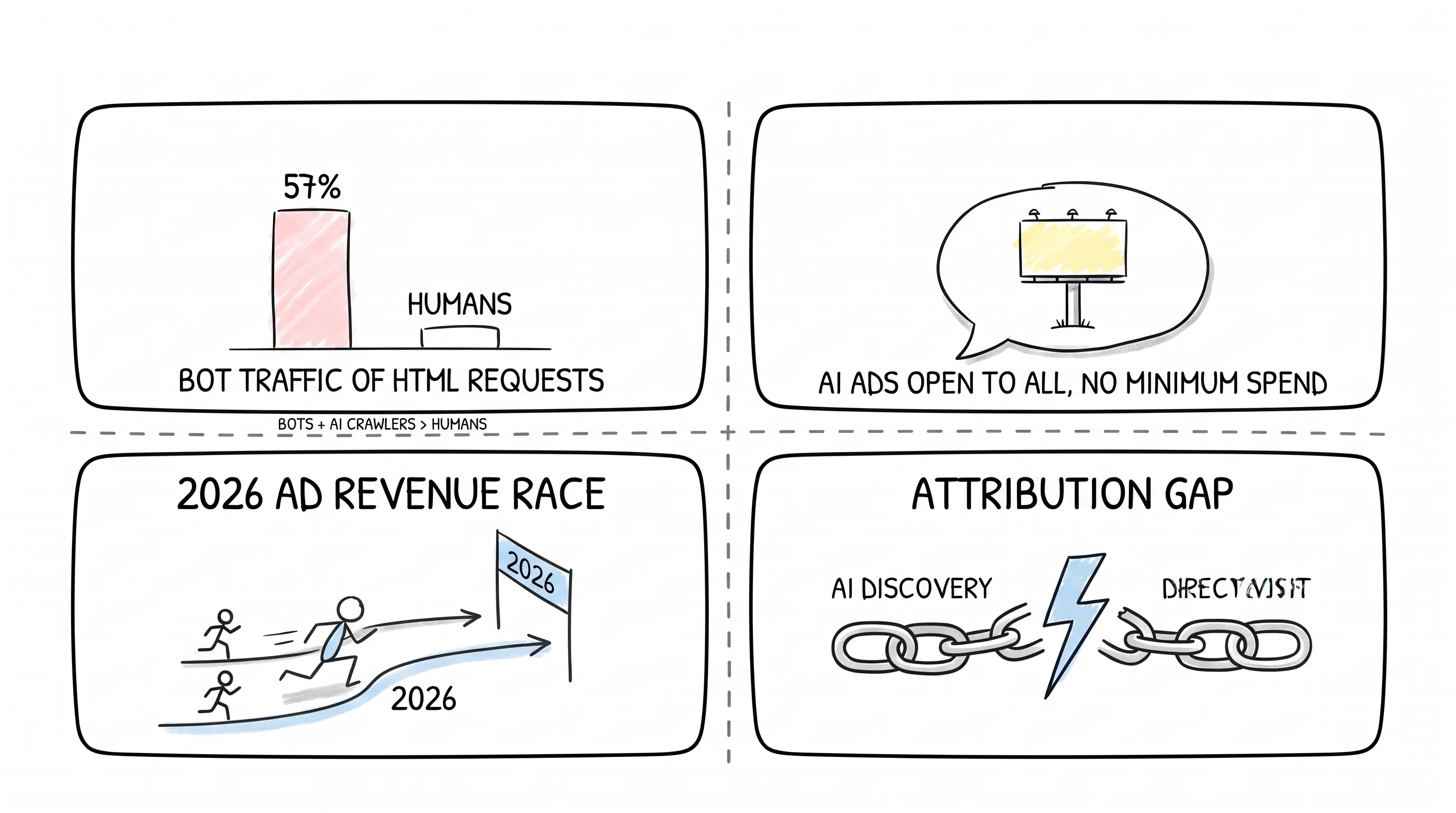
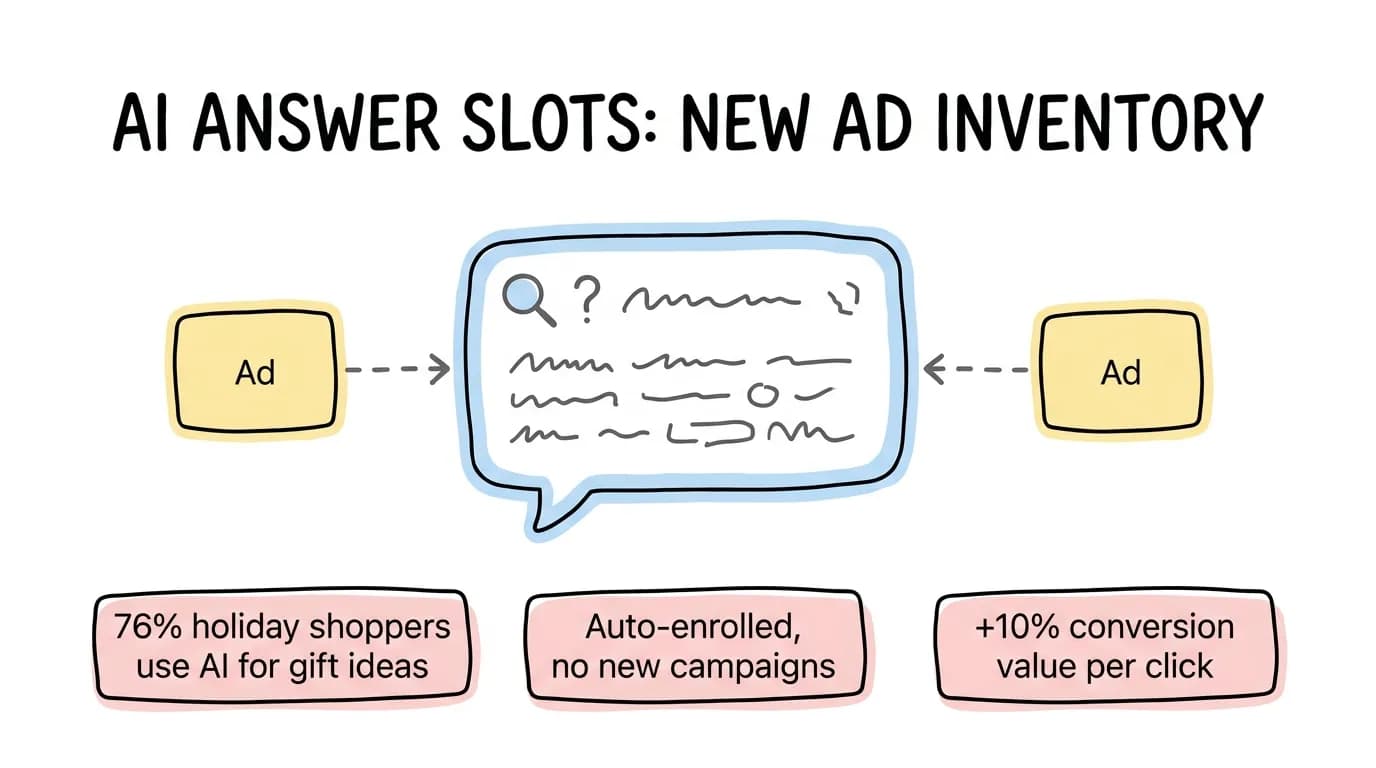
On OpenAI's side, ChatGPT advertising opened to all US merchants with no minimum spend, offering CPC and CPM bidding, conversion tracking, and product feed integration. Ads are contextually matched to the commercial intent of the conversation, with no user-level profiling, a fundamental difference from traditional ad platforms. Teams familiar with Performance Max (PMax) and Shopping can reuse their feed management workflows directly; costs on a new channel only go up, so the earlier you get in, the better. Meta, by industry forecasts, may overtake Google in ad revenue in 2026, which would be the first time Google loses the top spot in the modern digital advertising era. Reels monetization, Advantage+ expansion, and WhatsApp and Threads growth are all pushing it; True Classic has already moved most of its Meta budget to automated campaign systems. On measurement there are two alarms. Cloudflare's June data shows bot traffic at roughly 57% of HTML requests, and bots, AI crawlers, and proxy traffic combined exceed human traffic, so A/B tests and analytics metrics need server-side tracking plus bot filtering. The AI attribution gap is widening: users discover products through ChatGPT or Perplexity first, then convert via direct visits or branded searches, breaking traditional attribution. You'll need a combination of citation monitoring, branded-search trends, surveys, and direct-visit correlation analysis to fill the gap. Google also released official guidance on AI search, reiterating that high-quality content remains the foundation and adding mitigations to AI Overviews such as inline source links and hover previews, but traffic decline remains the industry's reality.
💬 How marketers can use this: just run down the four priorities. Structured product feed data is now the entry ticket to AI recommendations; fix the feed before anything else. Don't stack all your spend on a single platform: Google, Meta, and ChatGPT each have strengths, and diversification is risk control, not a menu choice. Measurement teams should get server-side tracking and bot filtering on the schedule this month; wait longer and your data's credibility is gone. The visible front of agentic commerce is Google and OpenAI sparring; the foundation is your own product data and fulfillment capability.
🔗 Further reading: Read the full article
LinkedIn post: AI is becoming the new DNA of cross-border e-commerce, with customs as the first landing zone
Jason Li, a cross-border logistics practitioner at AEB, posted on LinkedIn that AI is becoming the new DNA of cross-border e-commerce. On the data side he cites Shopify: intelligent recommendations can triple revenue, double conversion rates, and lift average order value by 50%. ReelMind forecasts the 2025 cross-border e-commerce market at $551 billion, driven mainly by AI-powered personalization, logistics optimization, and intelligent customer service. Industry signals include the DHL eCommerce trends report listing AI as the most-wanted innovation, spanning personalization, delivery, and logistics improvements; a Businesswire analysis showing that the fastest-growing use of generative AI in logistics is customs and cross-border processes, improving clearance speed, route optimization, and resilience; and ResearchGate research noting that AI can automatically process customs documents and anticipate logistics bottlenecks, while bringing governance challenges.
For implementation, the author gives two concrete customs-side applications. Automatic HS (Harmonized System) code classification: AI scans product descriptions, historical declarations, and classification data to suggest tariff codes automatically, reducing errors and speeding clearance decisions. Structured PDF document extraction: turning unstructured documents like invoices, bills of lading, and packing lists into structured customs declaration data, eliminating manual entry and dramatically accelerating clearance. The author calls it a quiet revolution from manual firefighting to intelligent trade orchestration — the foundation under every smooth e-commerce fulfillment. One caveat: the post itself carries AEB promotional intent, and the data is secondhand rather than original research, so read it for direction, not for numbers.
💬 How marketers can use this: most teams fixate on the marketing front end, yet the customs-and-logistics side is where AI saves more labor. Cross-border teams should audit two numbers first: what share of declaration errors come from HS-code misclassification, and how many person-days per month manual customs document entry consumes. If either is big enough, it's time to look for tooling. Use AI recommendations to lift order value on the front end and AI to cut clearance time on the back end — efficiency means moving both ends at once.
🔗 Further reading: Read the full article
🏷 LLM Developments
Shiv Singh's ten marketing AI trends for 2026: work identity breaks first, leadership becomes the biggest variable
In an online talk hosted by Section, Shiv Singh — author of "Marketing with AI for Dummies" and former LendingTree CMO — drew on four months of more than a hundred executive conversations and extensive one-on-one advisory work to lay out ten marketing AI trends for 2026. The keynote quote set the tone, from Salesforce CEO Marc Benioff: AI may be the most important technology of any era — comparing it to the internet, mobile, TV, or even the industrial revolution undersells it.
Several of the ten trends cut deepest. Work identity will collapse before org charts do, and AI-era leadership and the definition of personal value need to be rebuilt. One study found that leaders who can manage AI agents well can also manage human teams well, but not the reverse, making leadership quality the biggest performance variable; hybrid human-agent teams will surface management problems never seen before, like members squabbling over territory and agents bullying humans. Brands will inherit ethical risk out of nowhere: the author cites the 2025 tragedy involving ChatGPT and teenagers, noting that ethics governance will land on marketing teams whether they want it or not. Most companies will get stuck in the middle of AI maturity: from the experimentation stage (handing out licenses, running siloed pilots) to the enablement stage (tools entering daily workflows) and on to workflow redesign and end-to-end AI-native — most brands will still be sitting at the enablement stage in 2026, because redesigning workflows is too painful, too risky, and training hasn't kept up.
AI-native creative will flood the market and dilute the value of good creative: Puma's fully AI-agent-produced ad film, from insight to brief to storyboard to final-cut evaluation, was done entirely by agents, and System1 test scores for Coca-Cola's 2024 and 2025 AI ads proved AI creative can hit launch benchmarks: faster, cheaper, and capable of a thousand personalized versions. AEO will kill businesses that arbitrage discovery traffic: Chegg, a business built on acquiring high schoolers through SEO, collapsed into a hollowed-out shell after ChatGPT arrived, and AI-driven traffic to US retail sites surged 805% last Black Friday. CMOs will be forced into fewer, harder strategic bets: over 40% of marketers say their CEO and CFO expect 20%+ in AI-related cost savings from marketing within 12 to 24 months, money that then has to go to AI licenses and research. The final trend: uneven AI capability creates new invisible failure modes, stunning at its best and dim-witted at its worst, and humans will increasingly work in a cyborg mode, half human, half machine, clear-eyed about where the boundary lies when using AI.
💬 How marketers can use this: find yourself in two of these first. One: compute your own team's AI savings commitment — the 20% ask will land on your desk sooner or later, and setting your own plan beats being named in someone else's; count both hard and soft savings. Two: audit how dependent your business is on search traffic. If acquisition leans mainly on discovery-oriented keywords, that's your highest risk exposure; immediately diversify your acquisition structure toward branded search, owned channels, and communities. And don't dismiss the leadership trend as a platitude: this year's experience leading AI agents will directly decide who gets to lead next year.
🔗 Further reading: Read the full article
🏷 Policy, Funding & Investment
Translated's cross-border e-commerce localization guide: localization is a strategic investment, not the last step before launch
Translated's localization guide for cross-border e-commerce lays out a complete framework spanning product catalogs, payments and logistics, customer service, legal compliance, marketing transcreation, and ROI measurement. The through-line argument: localization should enter at the strategic starting point — research consumer behavior and cultural norms in the target market first, then decide categories and information architecture — rather than bolting on translation after launch. The author, Daniele Patrioli, is Translated's VP of Marketing, and the piece runs a steady promotional thread for its TranslationOS platform and Lara adaptive AI translation, so read it with that filter on.
Several warnings around high-abandonment zones are practical. Product catalog localization ties directly to conversion: local language, local units, and cultural references together build trust. Online shopping has no sales assistant to help, and if shoppers can't understand the product information, they leave. Payments require local gateways and local currency display, and the entire checkout flow, including error messages and confirmation pages, must be fully translated; any ambiguity loses orders. Logistics copy needs precise translations of delivery times, shipping costs, tracking, and return policies; transparency measurably cuts cart abandonment and support tickets and frees up the customer service team. On the service side, multilingual chatbots handle first-line FAQ responses consistently across time zones, with routing by language to the right team. Legal texts — terms, privacy policies, GDPR compliance — can't rely on machine translation alone; certified human experts must backstop them, because errors cost heavy fines or even market access. Marketing needs transcreation, not literal translation: a slogan that works in one country can offend in another; visuals and holiday contexts need local adaptation; and local SEO should be built on regional search intent. For measurement, track conversion rate, average order value, and CLTV (customer lifetime value) per market, treat localization as an investment rather than an operating cost, and keep testing and iterating.
💬 How marketers can use this: teams going global get the best value by using the payments, legal, and customer-service sections as a checklist. Check one thing this week: does the checkout page in your target market support local payment methods and local currency? It's the single biggest variable in cart abandonment — small change, fast payoff. Have certified translators review your legal text checklist; don't skimp on this, and save AI translation for places a human shouldn't have to sign. In the annual budget, put localization under investment, not operating cost, and switch your performance metric to CLTV per market.
🔗 Further reading: Read the full article
💡 Day in Review
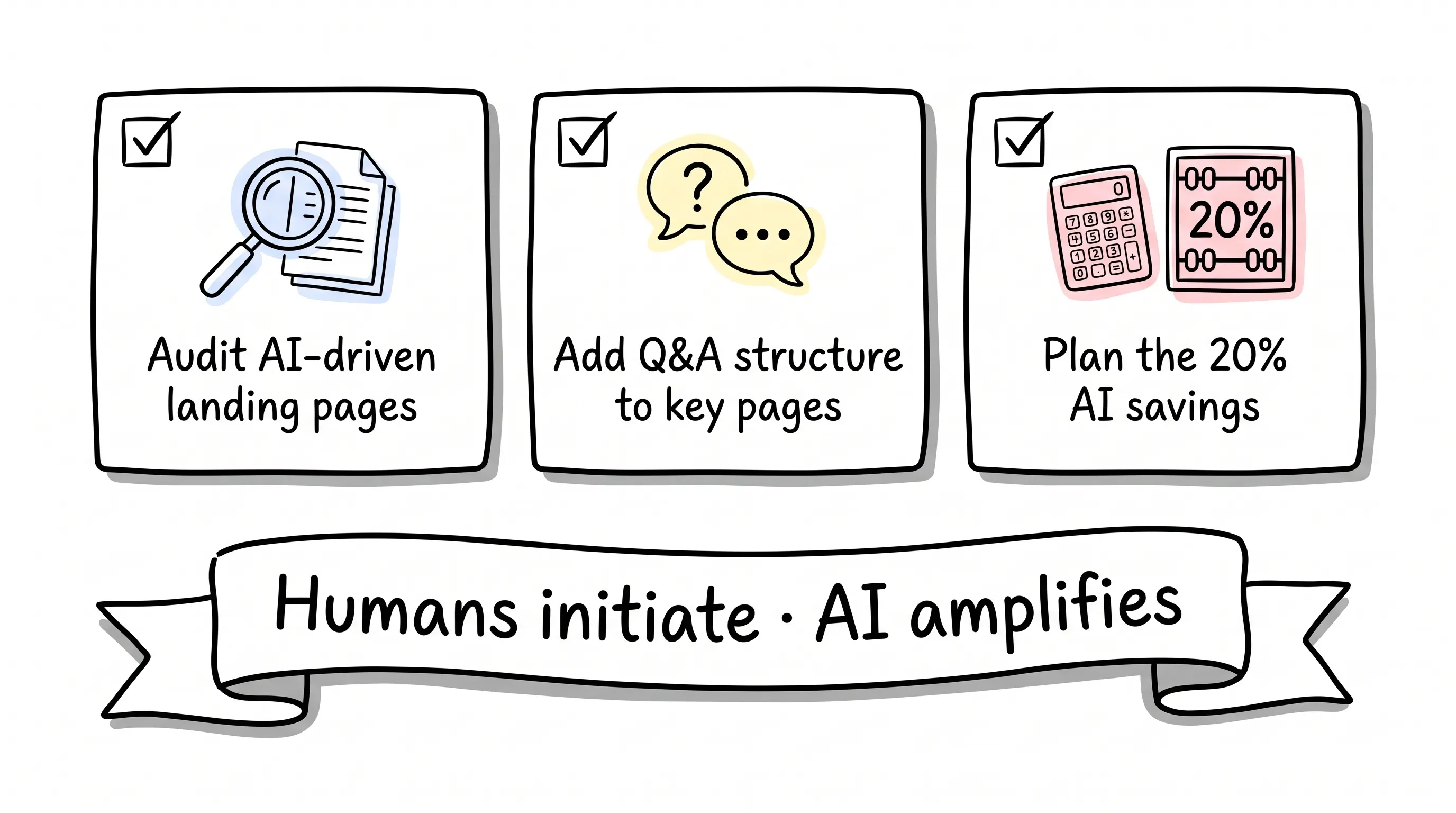
Read together, today's 8 items are two ends of the same thread. On the user side, AI search lets people state their needs completely for the first time: motivations, trade-offs, and unspoken context all shape the answer. On the enterprise side, the marketing machine is being rebuilt around this wave of questioning: HubSpot is teaching small teams to run AEO workflows, Hostinger is unpacking GEO concepts, Google is moving its ad products and shopping cart wholesale into AI-agent logic, and Shiv Singh warns that businesses arbitraging discovery traffic will be killed outright, all while AI attribution gaps and bot traffic keep polluting measurement. The judgment worth remembering today: prompts are not new keywords — context is. Tool-based prompt tracking only sees the standardized side, while answers are decided by memory and context. So stop asking how to get AI to recommend you, and start asking in which situations, for whom, you are truly the best. That question will simultaneously determine your content depth, product positioning, and acquisition structure. On execution, do three things this week: go through your AI-driven landing pages to find long-tail question patterns, add Q&A structure to your key pages, and work out how your team will deliver its 20% AI savings commitment. Big brands' workflow answer is "humans initiate, AI amplifies," and small teams can run a scaled-down version just as well. Today's leaders aren't the ones who've run the longest; they're the ones who restructured their organizations for human-machine collaboration first.
Continue reading
Related articles
AI Marketing Daily · 2026-11-22
AI Marketing Daily for 2026-11-22 rounds up 20 items led by Microsoft opening Bing AI Overviews to ads and Google expanding AI Mode ads to ten countries, plus GEO guides, ad automation delegation guidance, AI Overviews CTR data, and a legal-risk checklist for AI-generated creative.
AI Marketing Daily · 2026-11-21
A November 21, 2026 AI-marketing daily covering AI search visibility, GEO methods, Google AI Mode ads expanding to ten countries, Meta's pre-Black Friday changes, agentic shopping, and industry adoption and ROI data.
AI Marketing Daily · 2026-11-20
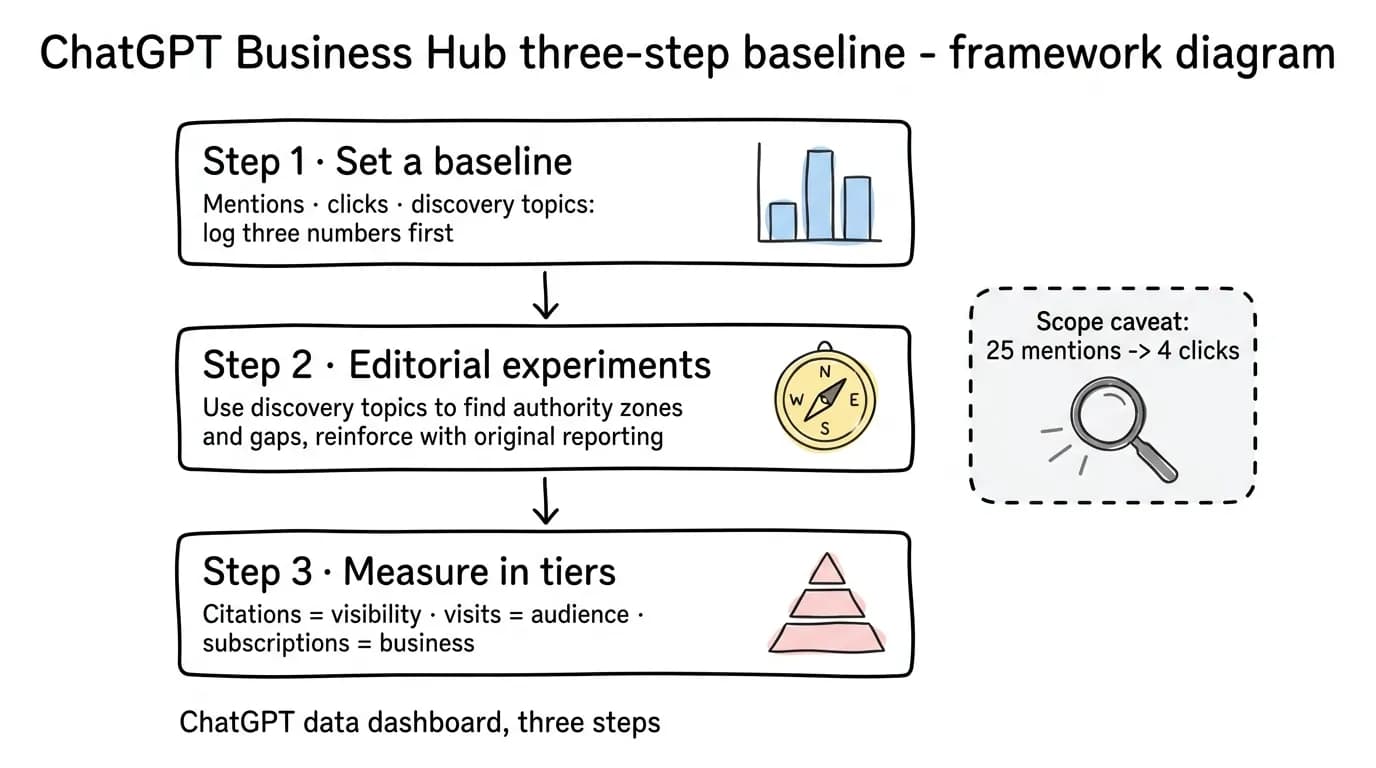
AI Marketing Daily for 2026-11-20 rounds up 19 items centered on measurement: OpenAI's ChatGPT Business Hub dashboard, EU rules for agent-mediated purchasing, Meta pausing four AI terms, and B2B data on shortlists and the dark funnel, each with action advice.