
In Cross-Border E-Commerce, Don't Confuse "Translation" with "Localization"
A learn article explaining why cross-border e-commerce sellers should treat localization as more than translation, covering product detail pages, payments, logistics, customer service, legal text, and marketing transcreation.
A while back, I met the owner of a smart small-appliance business. He looked worried. "Our products are this good — why won't they sell in Europe and America?"
I asked him: your English product pages — who wrote them?
He said: "We hired a very professional translation agency. Word for word, not a comma out of place."
I said: that's exactly where the problem lies — "word for word."
A lot of people think going global just means translating your website once. Chinese to English, English to Japanese. And yes, that is called translation. But honestly? It's only the first step of a long march.
So what is localization?
Localization, plainly put, means that in your user's eyes, your product stops being a foreign import and becomes a "local product" — one they can understand, feel reassured by, maybe even feel a little fond of.
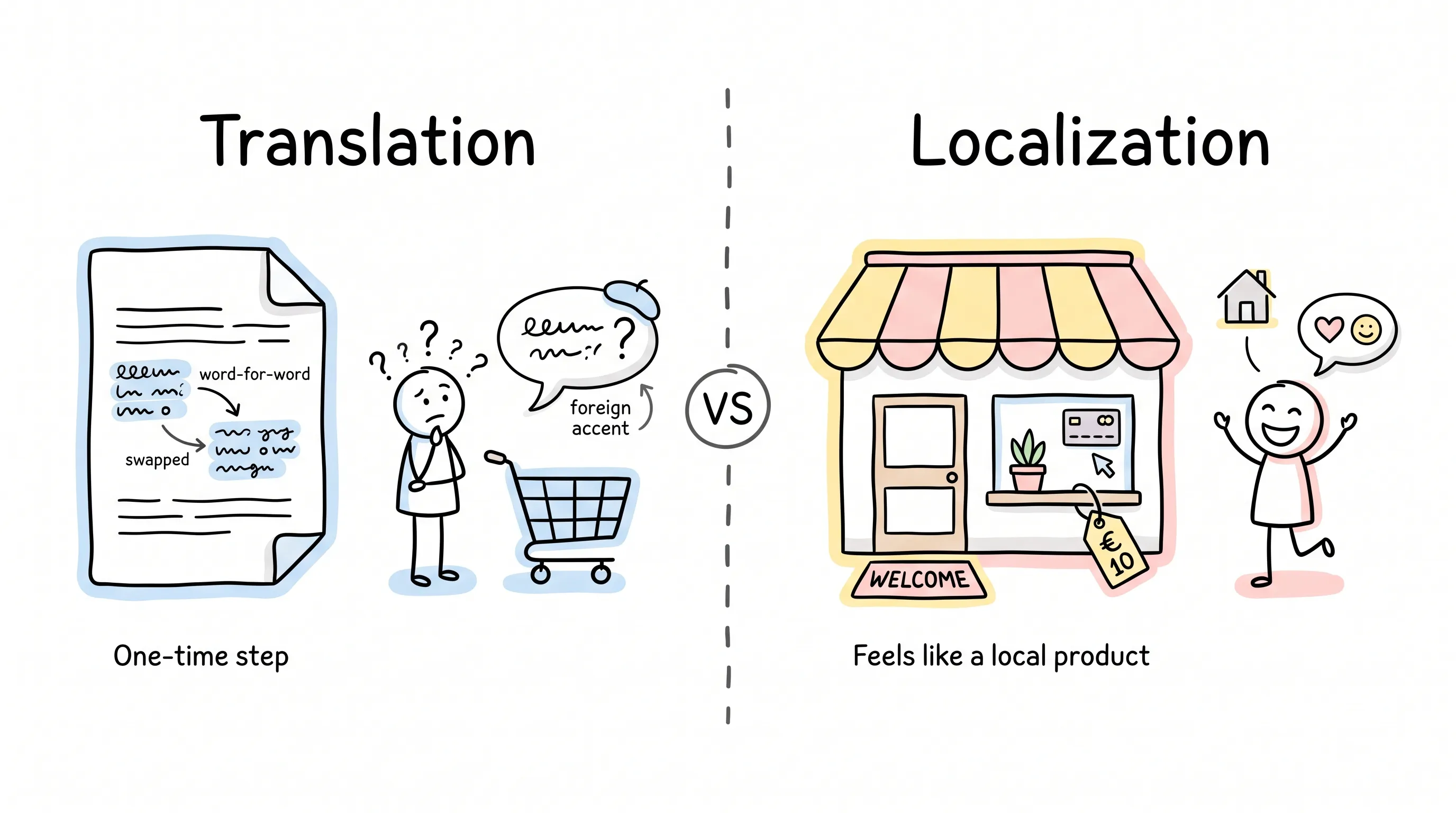
This step is far harder than translation. What makes it so hard? Let me break it down for you.
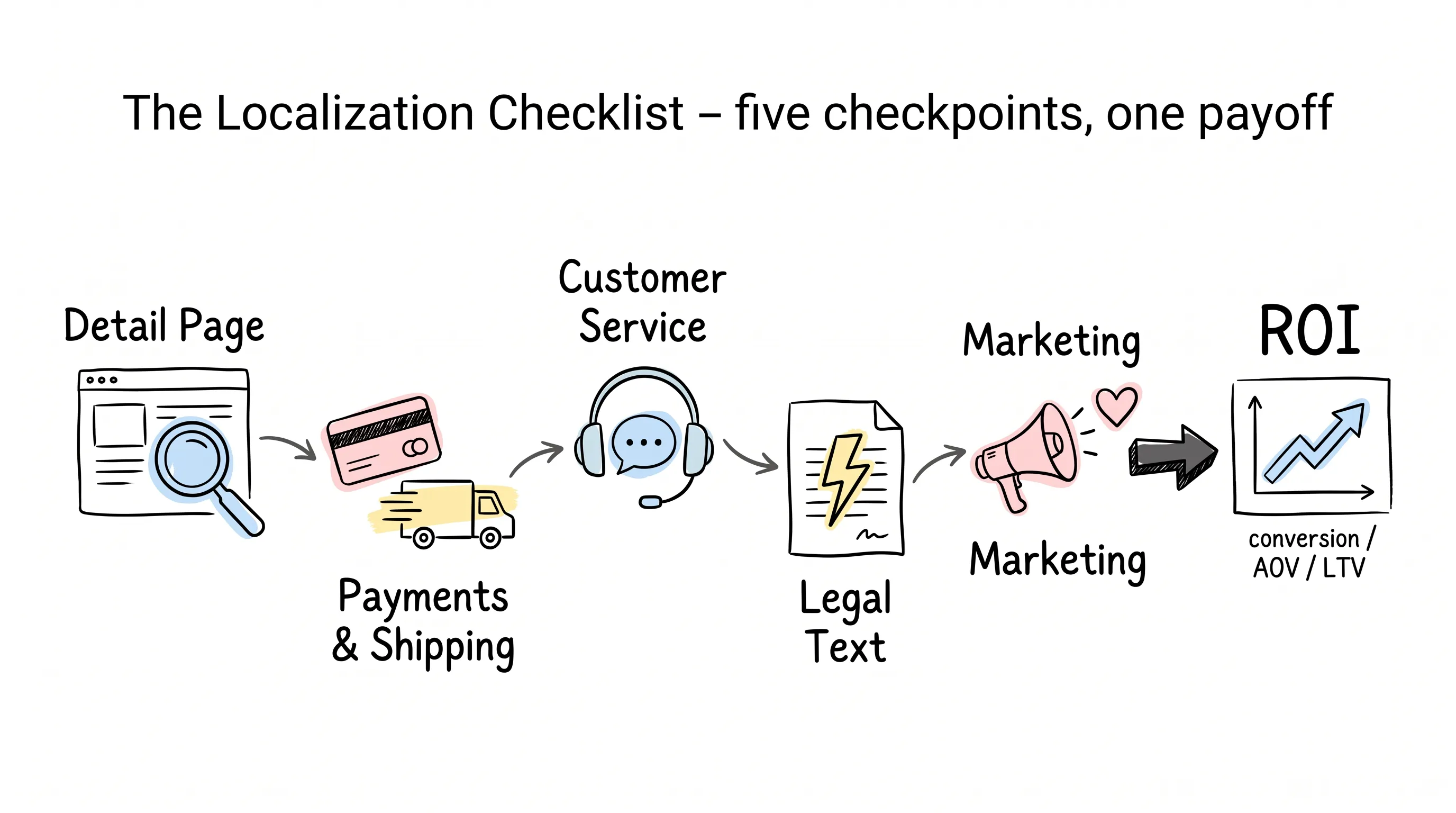
First, the product detail page. This is your first threshold
In cross-border e-commerce, customers can't touch the product. All they have is words and pictures. If a single measurement unit or cultural reference on that detail page carries a "foreign accent," a corner of trust caves in. There has never been a salesperson standing beside an online shopper; whether they buy depends entirely on whether your words give them the confidence to do it.
So what do you do?
Fix it by hand, line by line? Too expensive.
Run it through machine translation in bulk? The quality's too poor.
What you need is a system. A company I've been studying lately, called Translated, runs a platform called TranslationOS, which includes an adaptive AI named Lara. It learns your product's specialized terminology and translates fast and accurately. And when a piece of content needs a human touch, the system uses an algorithm called T-Rank to match you with the best-fitted industry expert to polish it.
There's a creative-hardware company called Cricut whose products sell all over the world — and behind that is exactly this kind of scalable localization infrastructure.
Next, payments and logistics. This is the ballast of trust
Think about your own online shopping. If you discovered you couldn't use your usual payment method, or the price showed in a foreign currency — what would you do?
Most likely you'd hesitate for a second, then close the page.
So you must integrate local payment gateways and price in the local currency. Even error messages and confirmation emails need to read like a native wrote them. Every little snag at checkout tears a big hole through which customers leak away.
The same goes for shipping information. Delivery times, shipping costs, tracking, return and exchange policies — all of it must be written crystal clear. When customers know where they stand, the anxiety fades. And with fewer support inquiries, your team is freed up for work that matters more.
Then, customer service. This is your last line of defense
When users run into a problem, getting helped in their own mother tongue creates that feeling of being understood — and that feeling is the key to loyalty.
Multilingual FAQs, email templates, even AI chatbots can help you deliver consistent service across time zones. The bot steps in first and handles the common questions; anything complex gets routed to the human team for that language.
And the most dangerous one: legal text. Whatever you do, don't grab the live wire
When you do business abroad, legal text is the high-voltage line. User agreements, privacy policies, warranty terms — mistranslate a single word and the price can be massive fines, or being shut out of an entire market. Europe's GDPR is a sword hanging over every cross-border seller's head.
This kind of high-stakes text must never be handed entirely to machines. Professional legal-linguistics experts have to be the gatekeepers. A system like T-Rank exists precisely to help you find the right experts.
And marketing copy. What it needs is "transcreation"
What is transcreation?
It means judging by effect, not by the letter. A slogan that rings loud back home can turn baffling when translated literally — even off-putting. So you have to recreate it around the local culture, holidays, and values.
And your ad campaigns need local search keywords, too. Whatever words users type into search in that market is what you optimize for. Otherwise your ads can look stunning — and still never surface in search.
How do you measure the results? For every market, every language version, review the engagement and conversion data on its own.
Finally, do the math
Many people think localization is too expensive, and file it under "operating costs."
Wrong.
Here are the numbers to watch: conversion rate, average order value, customer lifetime value. Review each market on its own. Localization done well brings growth that far exceeds what you put in. It is an investment — the key that opens the global market.
Back to the boss from the beginning. He rebuilt his product pages, localized his payments and logistics. A few months later, when we met again, he told me orders had clearly picked up.
You see — going global was never just about the strength of your product. It's about whether you can walk into your users' hearts.
Here's my wish for you: may you go out into the world — and truly get in.
Continue reading
Related articles
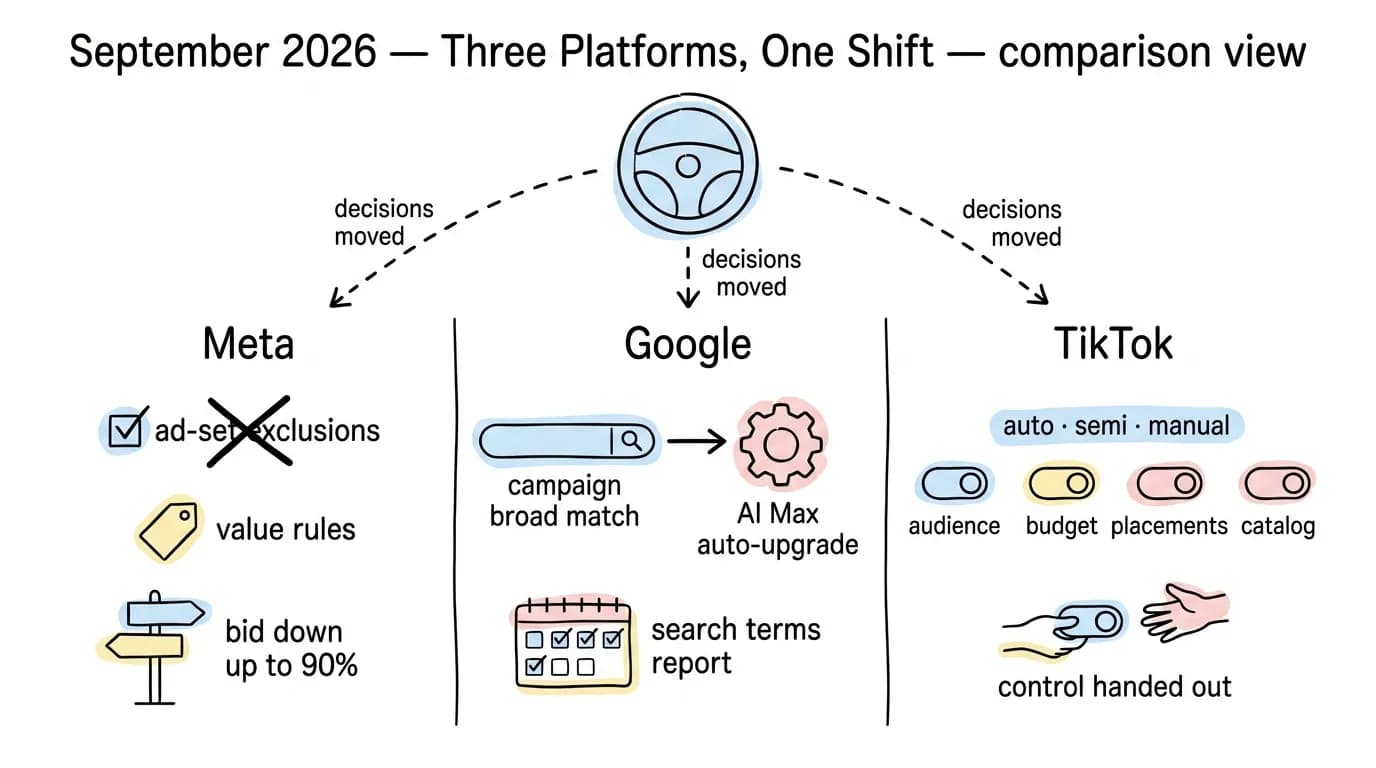
In September, Three Platforms Took Away Part of Your Steering Wheel
A few days ago, I went through everything the three big ad platforms did in September 2026. And I noticed a remarkably interesting coincidence.
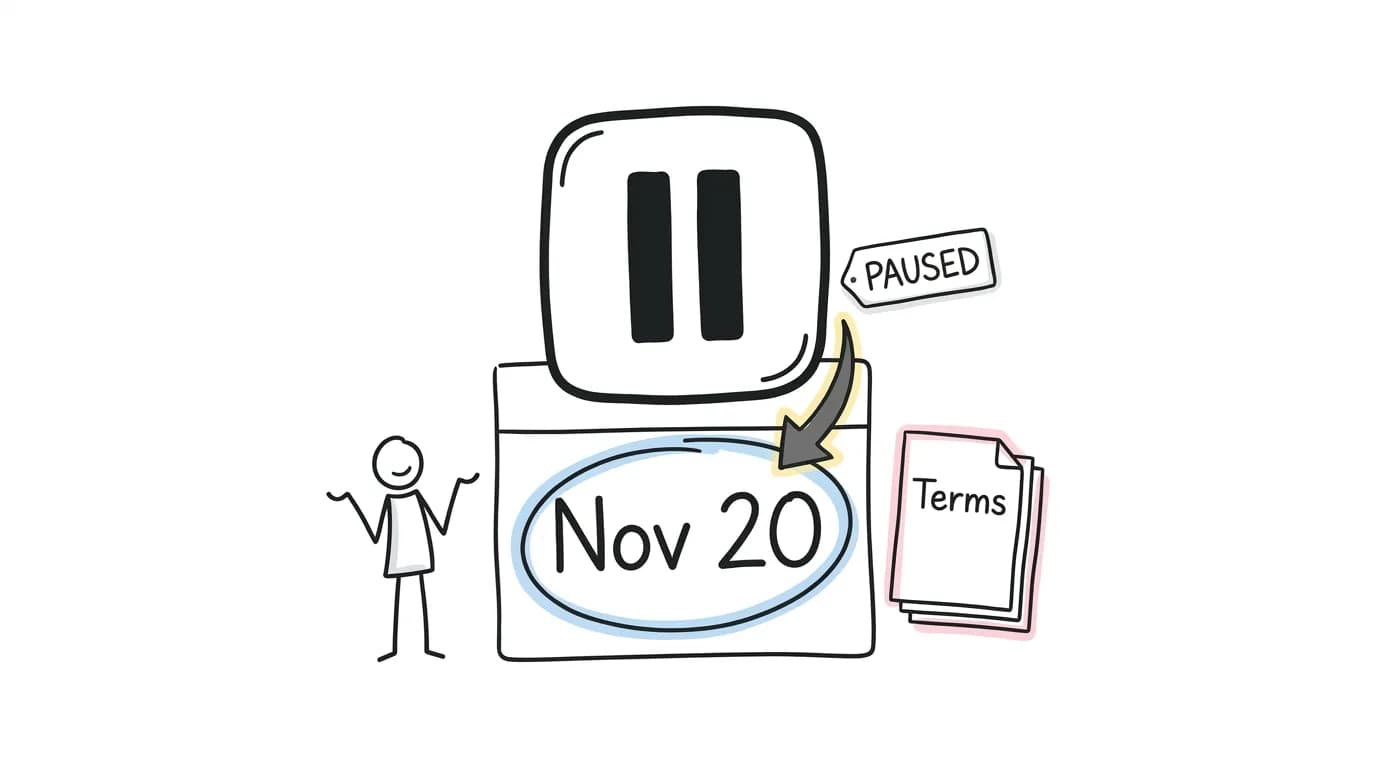
Meta's New Terms Hit the Pause Button on the Eve of the Effective Date
A while back, I was helping a friend of mine who runs a cross-border e-commerce business go through the compliance checklist for his ad account.
Google and Meta changed 17 ad rules this week. 6 of them need checking today.
A few days ago, I was helping a friend who runs a cross-border e-commerce business go through his ad accounts.