
Three Marketing Leaders from Global Brands Spent an Afternoon Talking AI — and I Filled My Notebook
Notes from a panel discussion with marketing leaders from Mastercard, Newell Brands, and Uber Advertising on brand building in the AI era, covering human-led AI workflows, attention-based ad measurement, and AI-generated consumer stand-ins.
A while back, I came across a news story: several hundred Gen Zers had collectively deleted their social apps. They call it a "digital detox," and it has exactly one goal: to take their attention back.
I stared at that story for a long time.
Since when has attention become so scarce that people have to quit it cold turkey?
As it happened, not long after, I listened to a panel conversation. Three marketing leaders from global companies sat down together. One was from Mastercard, in charge of global brand strategy and innovation. One was from Newell Brands, the chief marketing officer of a portfolio of more than fifty consumer brands. And one was from Uber Advertising, responsible for the global measurement of ad effectiveness. For an entire afternoon, they talked about a single question: in the age of AI, how exactly should brands be built?
I took notes the whole way through and filled my notebook. Today I'm organizing those notes for you.
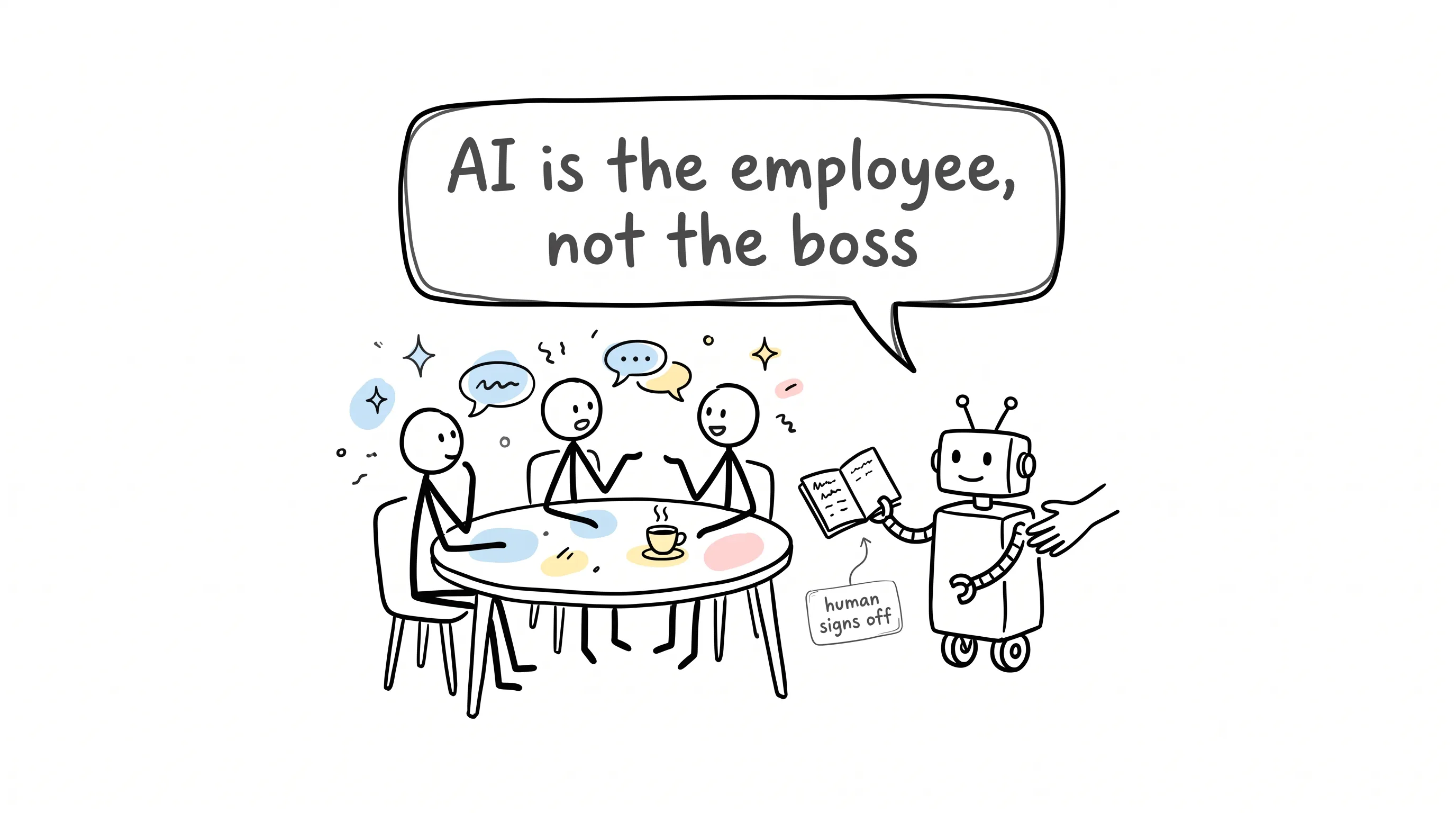
The Takeaway First: AI Is the Employee, Not the Boss
When most people talk about AI, they talk about "what can it do for me."
The most valuable consensus in this conversation lay on the opposite side: what AI can do is not what matters—what matters is whether you let it cross the line.
What does "humans lead, AI amplifies" mean?
It means every idea must start from a person. If a person doesn't nod, AI cannot charge ahead on its own. AI's job is to kill the tedious middle steps; then, at every critical checkpoint, a human checks: is this still our brand?
Newell Brands' approach is just that plain. Their portfolio is all physical products. In the past, launching a new one meant waiting for the first batch of samples to come off the line, shipping them to a studio, turning on the lights, shooting the footage, and retouching it. Now? They feed the production files destined for the supply chain straight into AI, generate a digital twin of the product, and the content comes straight out.
An eight-week studio cycle shrank to one to two weeks.
And there's something even easier. Yankee Candle's email business used to have a big stretch of coding work sitting between the design file and a send-ready email. Now it's done with one click.
Why are they willing to move this fast?
Because content's appetite has grown. The Newell Brands people said the content volume this year will be five to seven times last year's. Without AI, no amount of headcount could fill that hole.
But did you notice? Every one of their speed-ups runs through the same valve: humans.
It passes through legal; it passes through brand guidelines. AI only does the dirty, tiring work—it doesn't make the calls.
This is the phrase Mastercard used: AI orchestrates the work; it doesn't conduct it.
What's Interesting Is That AI Doesn't Just Save Money—It Can Grow New Things
If efficiency gains are AI's passing grade, then what Mastercard pulled off is an entirely different game.
Mastercard designs bank card faces for partner banks every day. This is slow, heavy work: draw the design, go through approvals, pass compliance, then schedule production. Only after a full cycle can a card reach the market.
They just launched an AI card-design studio, turning design capability accumulated over years into a system, so partner banks can design cards themselves. Next it will open to consumers and small business owners, so they can personalize their own cards.
The math works on three levels:
One, the process is faster. Compliance systems, brand systems, and creative tools are packed into the same platform, and the speed at which thousands of partner banks issue cards has changed completely.
Two, emotion is there. Sixty percent of consumers—especially Gen Z—simply want to express "who I am" on a card. The card has gone from a payment tool to a canvas for self-expression.
Three, this is a new product. Card design used to be a cost; now card design is a business.
You see, with the same AI, some use it to slash costs, and some use it to grow a new organ.
So How Do You Get Past the CFO?
At this point, you might say: I understand the logic. But branding is something you can't see or touch—how do I justify it to the CFO?
This was my favorite part of the whole conversation.
The Uber Advertising people reported a number. They partnered with Adelaide, a company that specializes in attention measurement, moving beyond the traditional "was the ad served" metric to track attention itself—and then tie that attention to real business results.
The gap between their own ad placements is telling: TV-style ad placements in the ride scenario command 11% more attention than ordinary online video; placements after checkout and during the ride can stretch the gap to 40%.
In one sentence: an ad being served doesn't count; being remembered and acted on does.
Impressions are a cost; being remembered is an asset.
Then there's Mastercard. They simply built their own media network, called Mastercard Commerce Media. What do they have in hand? Billions of transaction records, 500 million consenting users, and 25,000 advertisers. Once an ad is placed, can it be traced all the way to purchase behavior and measured for incrementality (sales that would not have happened without the ad)? Yes. The return on ad spend they've seen runs as high as 22%.
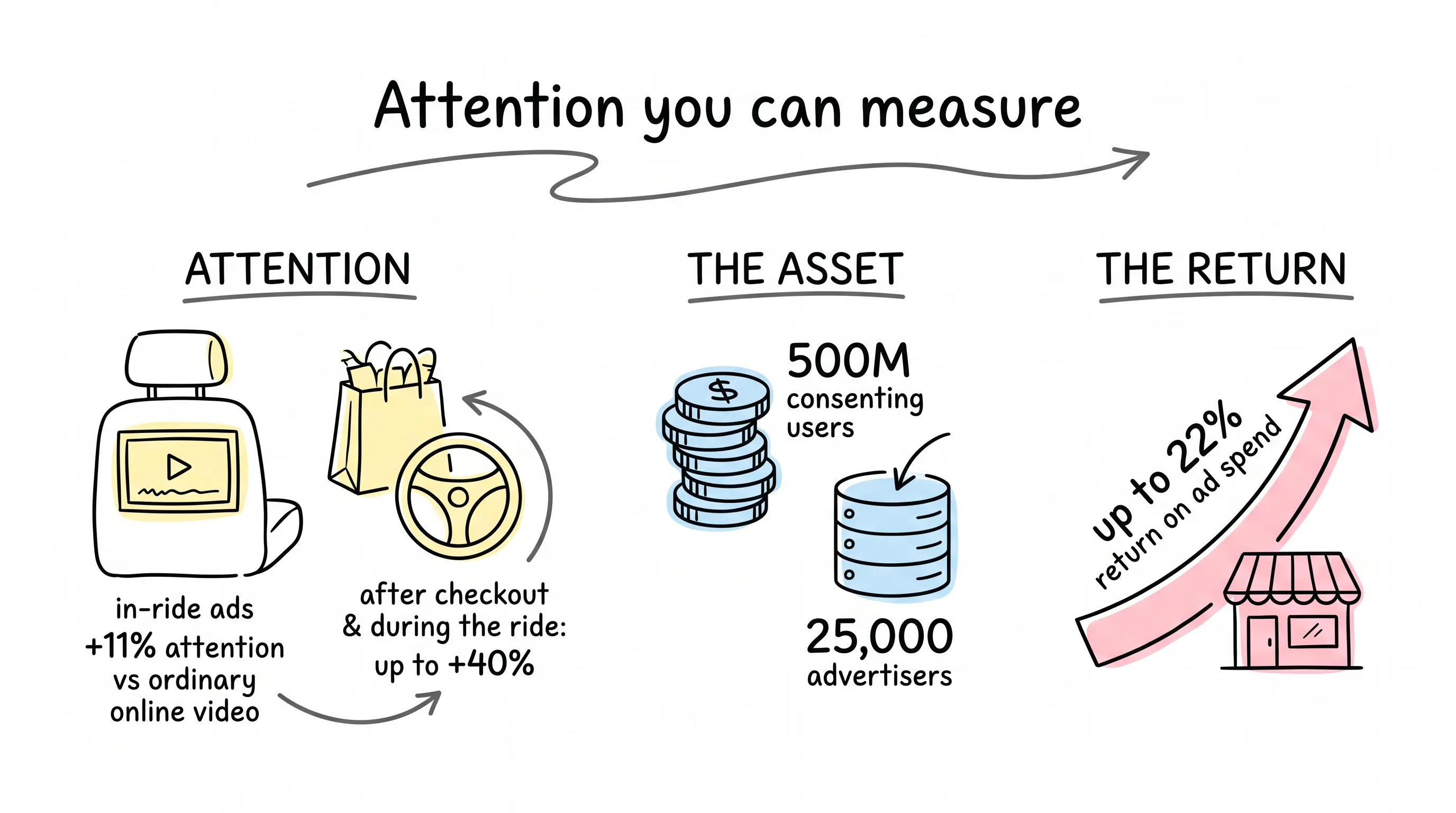
The feud between brand people and CFOs has raged for decades. It used to run on faith; now it runs on the ledger.
And then the boldest move. Mastercard even pulled out hard numbers for something as mystical-sounding as "multisensory branding": they removed the name under the logo, because phone screens are too small to see it clearly anyway; they built sonic branding, because in the age of smart speakers, your brand might only be heard, not seen; they even built haptic branding—the vibration when a payment succeeds, reassuring you the money went through just fine.
After adding sonic branding, the boost to user trust was twice as strong.
They even dared to get into the restaurant business. There's a particularly clever joke inside the company: when they proposed opening a restaurant to the CFO, the CFO said you're crazy, restaurant gross margins are so low. But they weren't doing restaurants at all—they were doing experiences. And every experience, whether the user participated or not, even if they just received an invitation, pushed brand favorability and usage up.
Only when mysticism becomes math can the budget survive.
Timing Matters More Than Targeting
One case study from Uber Advertising was, I think, the most valuable of the day.
They studied instant retail. Everyone assumed users wanted speed; the research found that users wanted "relief."
What does relief mean? Your head is stuffed with things, and a food delivery order helps you offload the decision of "what to eat tonight," and your brain clears instantly. This logic is called cognitive load in psychology; scholars were studying it back in the 1980s, nothing new at all. What's new is applying it to business: what users remember is not which brand, but "I have a need right now—which platform can catch it immediately?"
Need comes first, brand comes after. Whoever catches the need gets remembered.
In product terms: you're walking to the office, the system knows there's a Starbucks 150 meters ahead of you, and slides an offer your way. Take it? Odds are, yes.
The most famous case happened in 2025. The coffee liqueur brand Kahlúa ran ads across all of Uber's surfaces, delivery included. The result: delivery order volume was about 188% higher than usual; and in offline bars and restaurants, orders for the Kahlúa espresso martini were up 7% too.
One online ad pulled people into offline stores.
The ad didn't change; what changed was the timing of its appearance. Show up at the moment you want a sip, and it stops being an interruption and becomes a help.
One More Play: The AI Version of the "Synthetic Consumer"
What Newell Brands talked about was, to me, the most eye-opening.
One of their brands is Graco, which makes baby products. One core user group is first-time moms-to-be. They fed all the first-party data about this group into AI and created an "AI mom-to-be."
Brand colleagues can chat with her anytime:
"What do you think of this new feature?" "Does this latest trend have anything to do with you?"
They can even throw a new product brief to her and let her pitch proposals back as a mom-to-be; or take the concept they wrote for her to review: where is it confusing? Be honest.
In one year, these AI stand-ins grew from three or four to almost all brands. Sometimes they even put two stand-ins together to brainstorm and explore white space no one has touched.
But the Newell Brands person followed up with a dose of blunt truth—a line I found worth more than the product itself:
These stand-ins are always too polite. They praise you, flatter you, occasionally get passive-aggressive, but they will never say "this idea doesn't work, kill it."
So the final call still has to be made by real people. At the end of every project, they pull in real consumers to do the final gatekeeping, to prevent AI's collective hallucination from driving the company into a ditch.
I copied this line onto the front page of my notebook.
AI gives you speed; judgment is still your own.
One Last Uncomfortable Truth
All the way through, I kept thinking about that group of Gen Zers deleting their apps at the start of this piece.
Everything the three executives discussed—efficiency, measurement, timing, stand-ins—ultimately answered the same question: why should users give their attention to you?
The Newell Brands folks put it plainly. Their blenders—any brand you bring home will blend things just fine. The gap between products is real, but small. So how do you make the answer that pops out of a user's mouth be Oster?
Beyond the product, you still need a brand story that makes people feel something.
Interchangeable commodity products only compete on specs, and by the end of that race, nobody makes money. Only a brand with emotion earns the right to be someone's favorite.
So you see, technology keeps changing, AI looks different every year, but the most fundamental thing about business has never changed:
Being there, at the exact moment users need you.
May the brand you work for always happen to be there at that moment, too.
Continue reading
Related articles

It's 2026: Stop "Buying" AI Tools for Your Marketing Team — Start "Hiring" AI Agents
This learn article explains how AI agents differ from standalone AI tools in marketing, outlines three agent categories — build-your-own platforms, CRM-native agents, and vertical tools — and covers use cases across SEO, social media, advertising, and reporting, plus criteria for choosing one.

Did the Money You Spent on AI Marketing Ever Come Back?
A guide to measuring AI marketing ROI across three layers: ad reports, sales pipeline, and the financial ledger. Covers metrics such as ROAS and CPA, eight dashboard metrics, industry benchmarks, and common measurement mistakes.

How to Pick a Creative Automation Platform: First, Figure Out What These Eleven Actually Do
A learn article sorts eleven creative automation platforms — including Bannerflow, Celtra, Smartly.io, and Storyteq — into four functional groups and proposes five evaluation questions covering publishing reach, automation depth, ease of adoption, team fit, and verifiable evidence.