
Why Would Anyone Pay for a Person Who Doesn't Exist? The Business of AI Influencers
A few days ago, a friend of mine who runs an e-commerce business sent me a screenshot and asked: take a look at this influencer — does she look real to you?
A few days ago, a friend of mine who runs an e-commerce business sent me a screenshot and asked: take a look at this influencer — does she look real to you?
I studied it for a long while. The makeup, the tone of voice, even the rhythm of her glances at the camera — all perfectly natural.
Then he said: not a real person. From head to toe — including the person herself — she's made from the ground up.
My first reaction was disbelief. My second was to go scroll through her account. Then I went quiet.
Because this is no isolated case. It's a business model that already works.
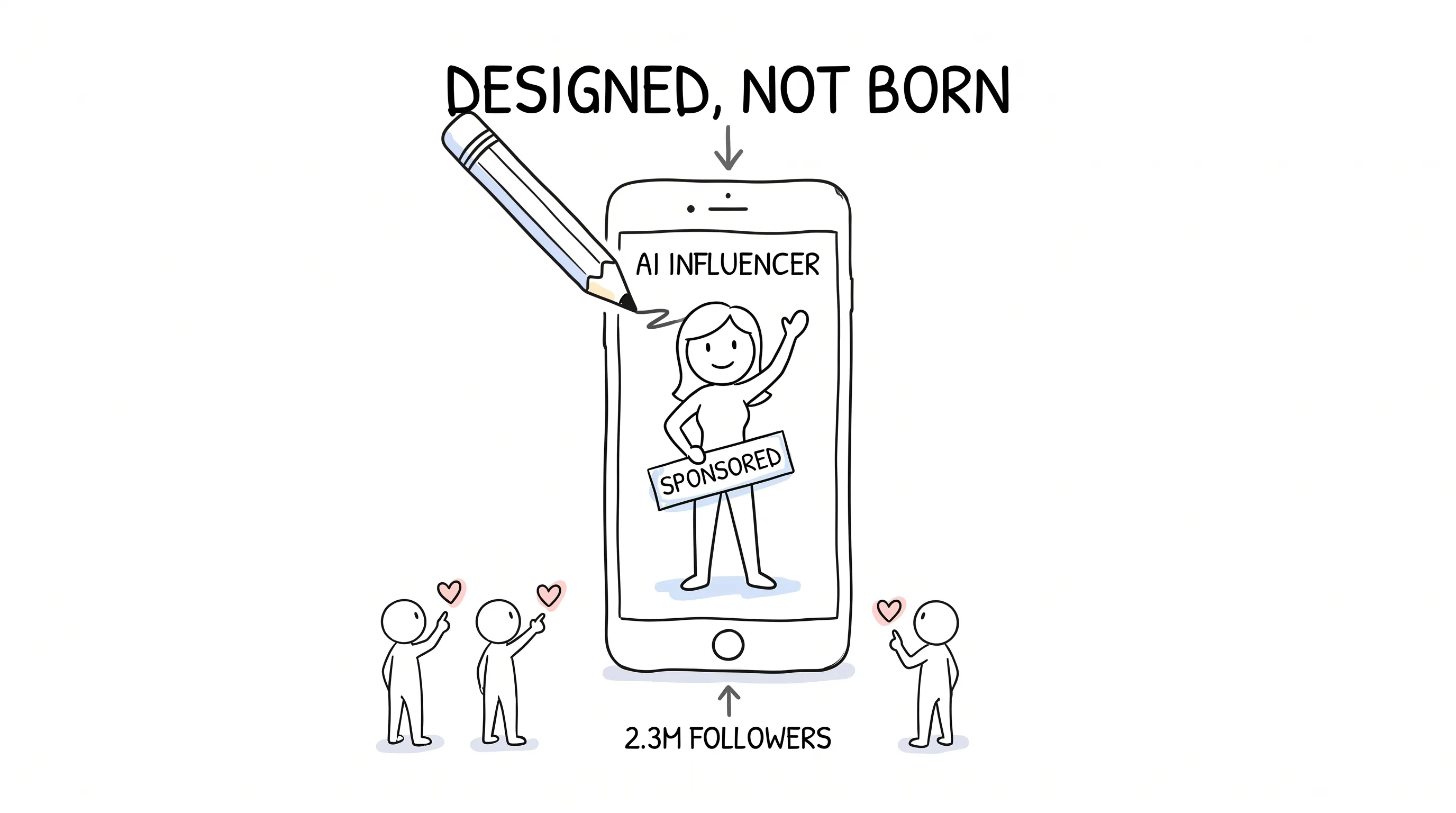
What Exactly Is an AI Influencer?
So what is an AI influencer?
Put simply, it's a persona manufactured with AI and computer graphics. She posts content, replies to comments, takes on sponsorships — every move just like any influencer. With one difference: she doesn't eat, doesn't sleep, and has no real life.
There's no "someone" playing her behind the scenes. She is designed, full stop. Her looks can be photorealistic enough to fool the naked eye, obviously cartoonish, or deliberately futuristic. Some come with a full backstory, personality, and opinions — kept consistent across every platform, so she's never icy-cool one day and a meme queen the next.
How big is this business?
In 2024, the global virtual influencer market was worth $6.06 billion. Forecasts put it at $45.88 billion by 2030. That's a compound annual growth rate of 40.8%.
What does 40.8% mean? Roughly tripling in four years. That's not a trend — that's an eruption.
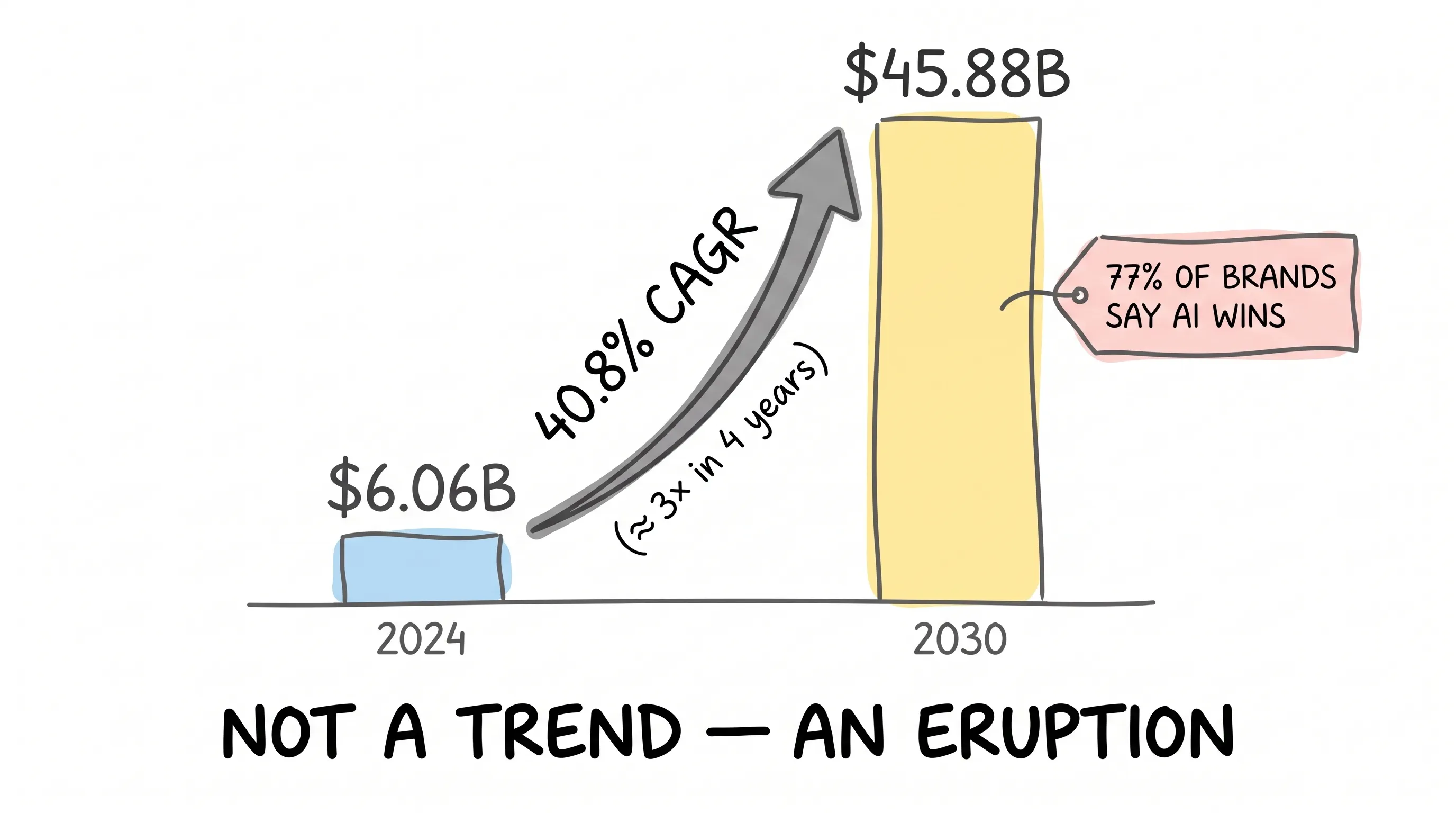
And it left the novelty stage long ago. 77% of brands now report that bringing AI into influencer marketing actually makes campaigns perform better.
What Are Brands Actually Buying?
Think about it: when a brand hires a human influencer, what is it actually buying?
On the surface, exposure. Underneath, a bundle of uncertainties.
The star could get canceled. Could bail at the last minute. Could post something that clashes with the brand's tone and wake up to it trending. Or the contract expires without renewal, the followers follow the person, and the brand is left with nothing.
AI influencers flip that around and sell certainty.
The tone of voice? You decide. When to post? You decide. Visual style, the wording of every single line — all yours to set. She doesn't melt down at 2 a.m., has no scandals or lawsuits, never jacks up her price. You want daily posts? She'll post daily, 365 days a year without ever getting tired.
For companies obsessed with brand consistency, this alone is worth the price of admission.
Then there's the math. Building an AI influencer takes upfront investment, but once it's running, the marginal cost is low. A human influencer's rate only climbs with follower count; a virtual one gets more cost-effective the longer you use her. That's why plenty of cash-strapped startups and D2C (direct-to-consumer) brands would rather start with her.
And there are two hidden bonuses.
First, fast experiments. A human needs scheduling; a virtual influencer can swap copy and visuals for a test the same day — you know whether it works within the week. Today's top AI influencers are almost all backed by performance data and analytics.
Second, going global. She can post in multiple languages at once, and adapt cultural references market by market. One account, ten markets.
What Do AI Influencers Actually Look Like?
Not all virtual humans look alike. There are roughly four types.
Type one: pure fiction. A person invented from nothing — identity, personality, story, all written. The most common kind.
Type two: hyper-realistic. Realistic enough that most people can't tell at first glance. Brands want the warmth of a human face without the unpredictability of a human.
Type three: brand-owned. Built not for fame but for endorsement. The company's own digital spokesperson — no chasing trends, no drama, just delivering the message clearly.
Type four: platform-native. Tailor-made for a single platform, with content shaped to that platform's ecosystem.
Here are three real names — you've probably scrolled past all of them.
Lil Miquela. Looks human, sounds human, posts like a human — yet she's entirely generated. She has worked with numerous luxury and fashion brands and has 2.3 million followers on Instagram. She's one of the earliest proven cases in this business.
Shudu. Hailed as the world's first digital supermodel, 238,000 followers. High-fashion aura, minimalist captions, clean visuals — a persona almost tailor-made for luxury.
Noonoouri. The interesting part: she doesn't chase realism at all. Cartoon to the max — and that's exactly what makes her recognizable. 480,000 followers, and a strong pull on young audiences in fashion and beauty.
See? The photorealistic and the obviously fictional both work. This market is more tolerant than most people assume.
One side note: these virtual humans live mainly on Instagram. They have X and LinkedIn accounts too, just with modest reach. Whether that grows is worth watching.
How Does This Business Make Money?
Five revenue streams.
The most mainstream is brand sponsorship. Brands pay; she promotes. Brands like three things about it: predictable content, fully controllable creative, and zero risk of a scandal.
Second, affiliate commerce. A virtual influencer's content has a stable structure and can be mass-reproduced — perfect for tracking links, earning a commission on every sale. Plenty of solo creators start here, without waiting around for a big-brand contract.
Third, brand-owned. Some AI influencers never take outside ads at all; their job is driving traffic to their own brand, backing product launches, serving as a long-term digital ambassador. E-commerce and SaaS companies use this most.
Fourth, licensing and white-labeling. I build the persona, rent it out, and other brands pay to put this figure in their own campaigns. For creative agencies and studios, it's like building an asset and collecting rent on it, over and over.
Fifth, selling digital goods. Virtual fashion, digital merchandise, paid content. This path demands the strongest fan loyalty — if the persona doesn't hold up, nobody buys.
How Much Can You Make?
Here are three numbers.
A small account just starting out: $500 to $2,000 a month, kept afloat mostly by affiliate links and scattered small deals.
Mid-tier accounts: $5,000 a month to start, and plenty clear more than $20,000.
Top accounts: a single brand sponsorship runs into the tens of thousands of dollars. Those with long-term deals reach the million-dollar-a-year level.
Just like human influencers, where you land depends on your niche, your engagement quality, and your persona positioning. There's no money for nothing — only the work of running it.
But Here Comes the Other Side
Everything has a flip side. This model's biggest weakness is precisely its starting point: she has no life.
Following an influencer is, at its core, forming a bond with a real, lived life. The mistakes she's made, the nights she's pushed through, what she genuinely loves — these are what trust is made of. An AI influencer has none of that. She never fails, never grows, has no emotions. And audiences know it, deep down.
Knowing creates distance. The moment someone realizes "she was never real," some fans will always turn and walk away.
What's trickier is how trust collapses. If the operators deliberately let people believe she's human from day one, the day she's exposed, the comment section will turn vicious. A persona can be manufactured. Trust cannot be faked.
And there are hurdles you can't go around.
Compliance: honestly disclosing "this is AI-generated" isn't optional — it's the floor, tied to questions of ethics and law.
Platforms: the rules of major social platforms were never written with virtual humans in mind, and disclosure standards are still evolving. An account running smoothly today could face restrictions tomorrow if the platform tightens up. Many brands underestimate this variable.
Content: don't assume that building a virtual human means winning by default. AI influencers with mediocre content and sloppy personas are just as common as human influencers with dismal numbers.
Culture: the faster she scales, the faster a misstep spreads. One ill-judged post can burn across several markets in a few hours.
The Next Chapter: From Renting to Building
So where does this business go next?
My take: the next wave won't be about virtual humans being everywhere — it will be about being useful.
Today's AI influencers mostly run on influencer logic: build a following first, then sell ads — renting other people's attention. More and more brands are working out something else: why not build our own?
A virtual human you build yourself lives on your own website, app, livestreams, and ads. Nothing to rent, no risk of her walking away — the asset sits on your own books.
From renting traffic to building assets.
For anyone thinking of entering, the playbook isn't complicated — five steps. First, nail down the persona: personality, niche, target audience, home platform. Second, build the visuals: face, styling, color palette, expressions that stay consistent. Third, set up the content system: who writes the copy, who replies to comments, how the brand voice is protected. Fourth, choose your platform play — each platform has entirely different rules of the game. Finally, add automation. But keep one pair of human hands. A fully automated account has no soul, and the ratio of human involvement is exactly what decides whether this is a sustainable business or an obviously fake gimmick.
And the tools are no mystery, either: Open Art AI, Soul Machines, HeyGen, Synthesia, tagshop.ai, Arcads AI, The Influencer AI, D-ID, VEED, Reface AI — each covers a piece of the pipeline: some generate the likeness, some handle video voiceovers, some run overall operations. There is no "one-click influencer that goes viral" button. Only a combination of moves.
Back to that screenshot from the beginning. I dug it out and looked again — this time, not wondering whether she looked real.
I was thinking about something else: on the day "is she real" stops being the question, what will make you follow a person?
Every brand-builder would do well to think about that question early. Because before the answer arrives, the numbers have to be straight first.
Continue reading
Related articles
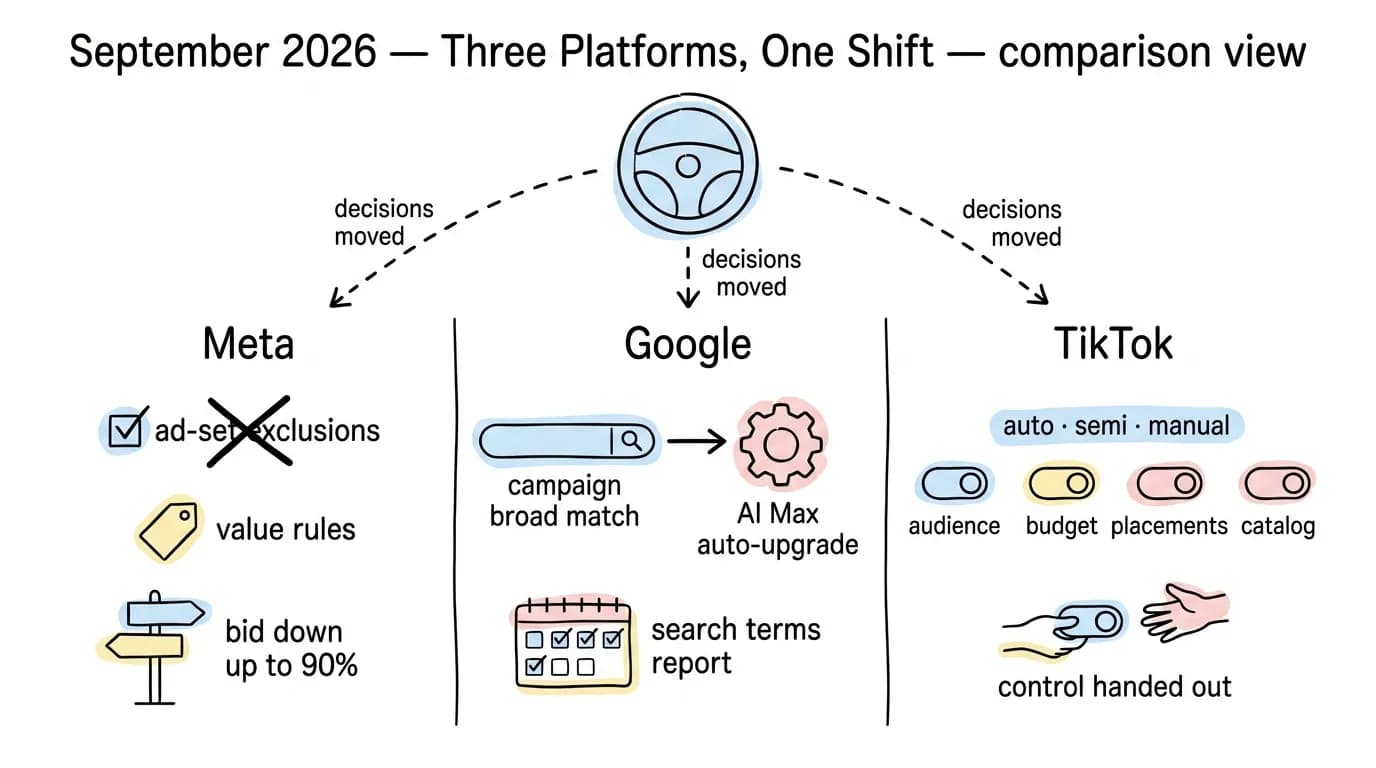
In September, Three Platforms Took Away Part of Your Steering Wheel
A few days ago, I went through everything the three big ad platforms did in September 2026. And I noticed a remarkably interesting coincidence.
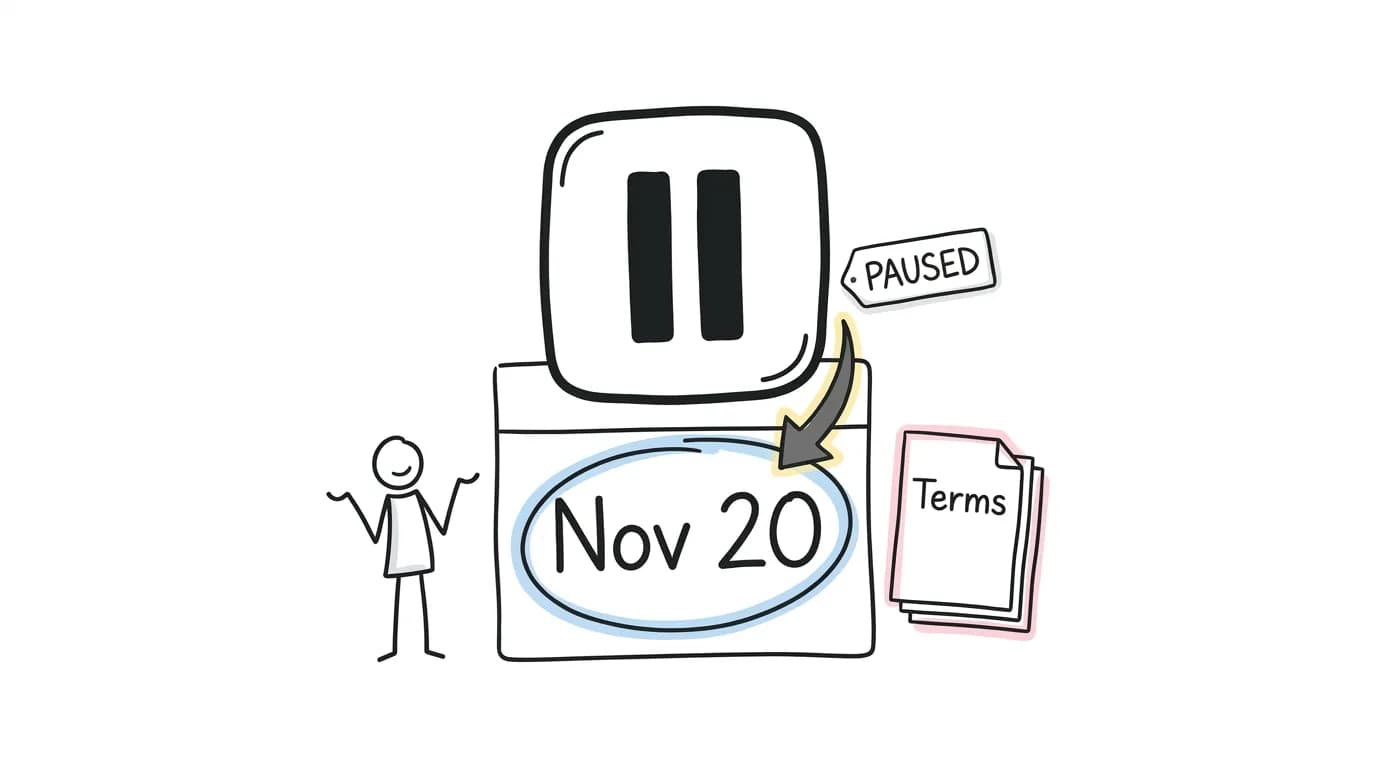
Meta's New Terms Hit the Pause Button on the Eve of the Effective Date
A while back, I was helping a friend of mine who runs a cross-border e-commerce business go through the compliance checklist for his ad account.
Google and Meta changed 17 ad rules this week. 6 of them need checking today.
A few days ago, I was helping a friend who runs a cross-border e-commerce business go through his ad accounts.