
What the EU is going after this time: the calculations engineered into the interface
An explainer of the EU's draft Digital Fairness Act, presented as five proposed rules against dark patterns: banning fabricated scarcity claims, labeling influencer promotions as ads, restricting pay-to-win in minors' games, requiring trial expiry reminders, and disclosing the highest total price before checkout.
Let's start with a quick test.
Have you ever come across a page like this: the product is marked "only 3 left," and one slip of the hand places the order. Or a free trial runs out with no warning, and the bill gets charged automatically.
If so, congratulations. Both of these experiences now have a name and an accusation in the EU's new draft law.
What are dark patterns? Put simply: the product never lies, but the design itself is pushing you toward the wrong choice. The color, position, and wording of every button are calculated — and the only goal of that calculation is to make you spend more, or stay longer.
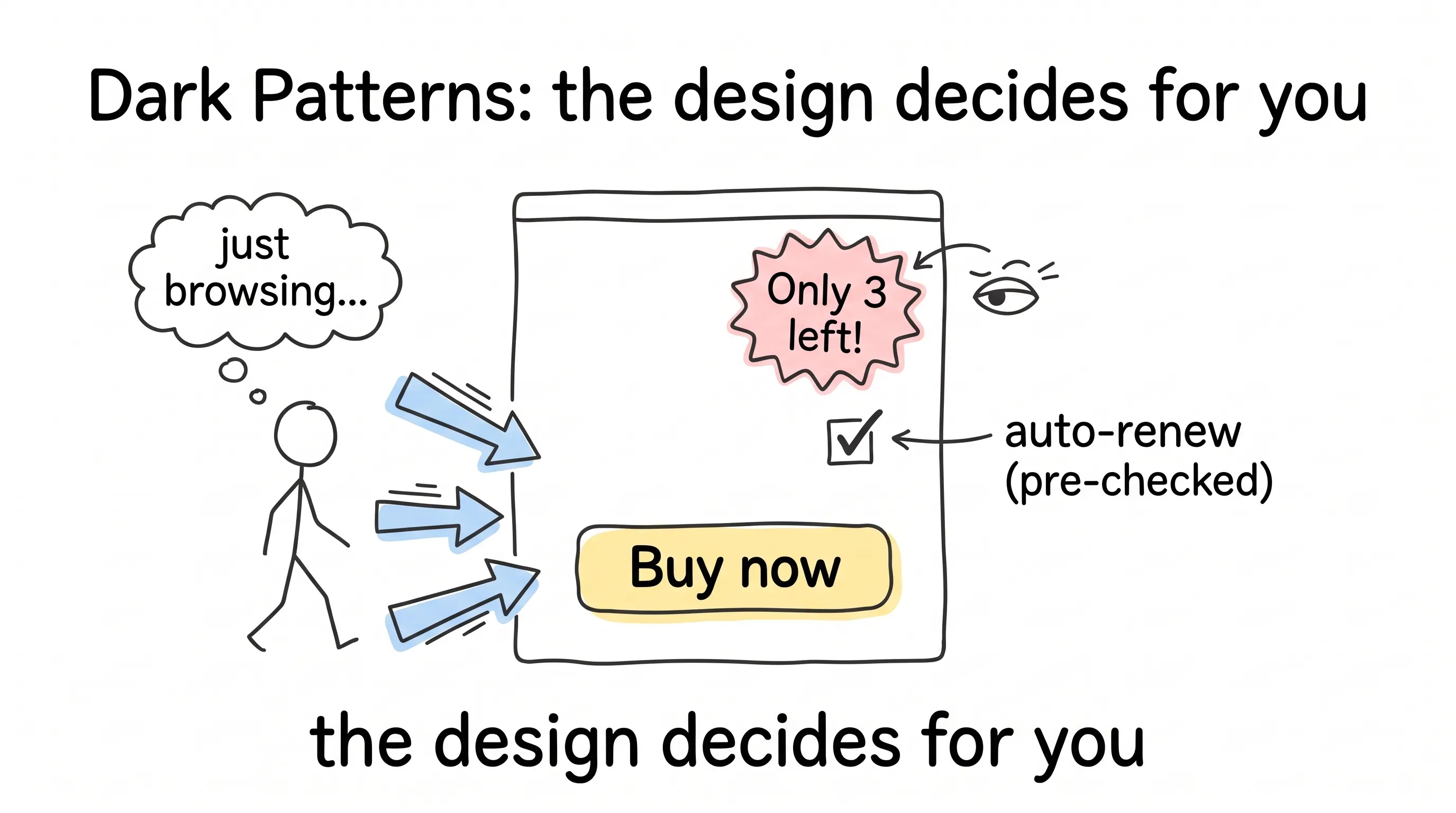
When the tricks aren't illegal, the tricks themselves are a business.
What the EU is doing this time is making that business untenable.
Here's the background. The EU already has a set of laws on the books: data protection, artificial intelligence, online content — each with its own set of rules. At first glance, everything that should be regulated is covered. But when the EU's consumer protection department went back over the record, it found one gap: those laws watch the data you hand over and the content you see. Your consumption experience, from start to finish, is the one thing nobody has ever looked after.
The law that fills this gap is the Digital Fairness Act. EU consumer protection chief McGrath officially unveiled it this Wednesday. The details are still being revised, but the direction is already clear.
How clear? Almost every provision of the draft points to a specific design mechanism. Let me walk you through them one by one.
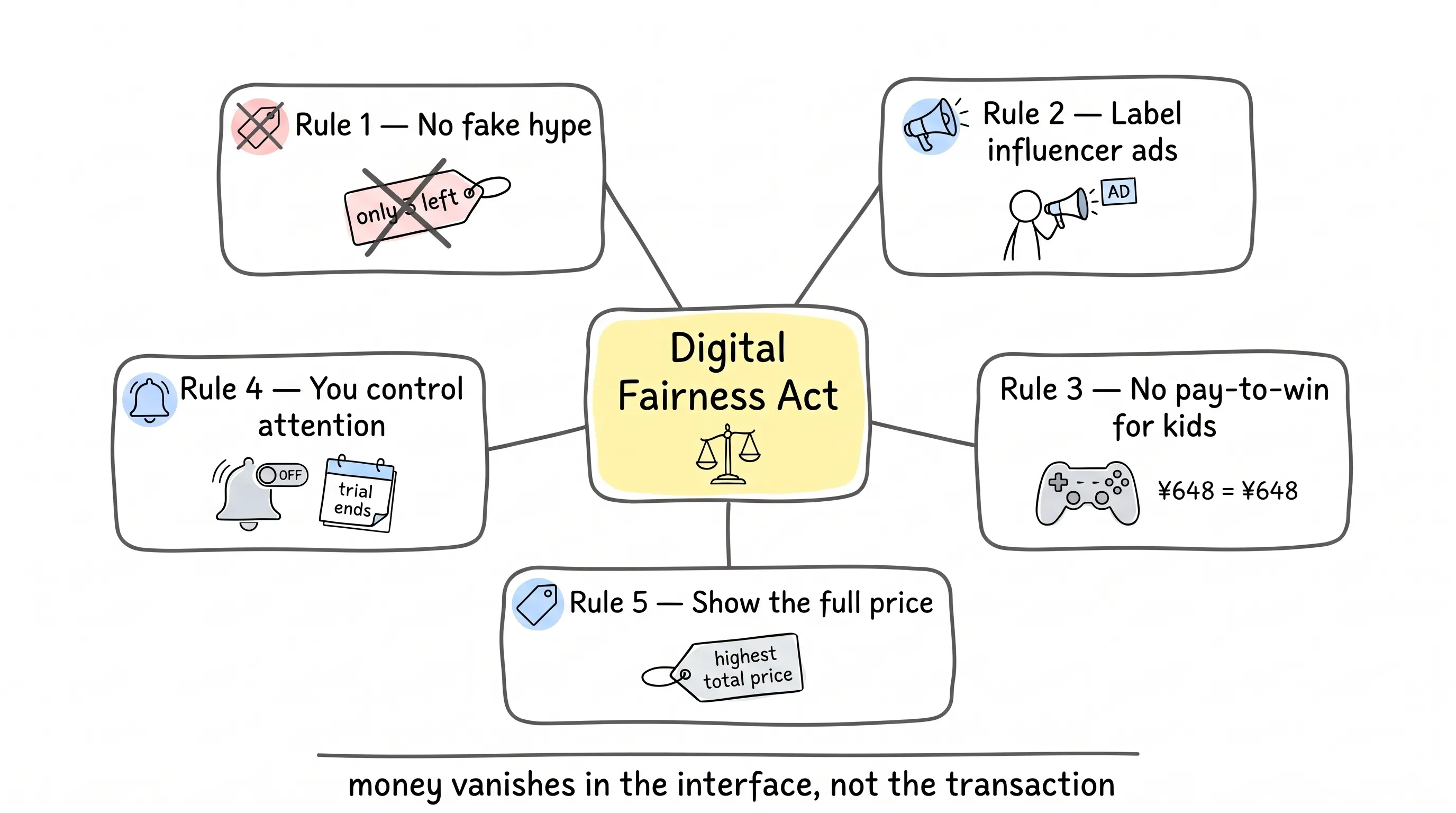
Rule one: no more manufactured hype.
Merchants can no longer fabricate "low stock" or "flying off the shelves." If a page shows "5,000 people have already ordered," there must genuinely be 5,000 people. Packaging "it's selling well" as "it's about to sell out" is explicitly prohibited in the draft.
Rule two: it reaches the influencers.
When brands collaborate with influencers, the content must be clearly labeled as "advertising" or "commercial collaboration." Even tougher: brands cannot require influencers to steer children toward purchases in commercial content, nor use children's voices to persuade parents to open their wallets.
This rule nearly rewrites the logic of influencer seeding — the practice of planting product recommendations that look like organic enthusiasm. In the past, many brands liked to make promotional content look exactly like genuine sharing — the influencer supplied the "natural" look, the brand supplied the "selling," and the boundary was blurry. From now on, blurry means in violation.
Rule three: it reaches the games.
Games for minors can no longer include pay-to-win or pay-to-skip designs. Virtual currency in games must be converted into real-world prices and displayed.
You spend ¥648 — you see ¥648, plain and clear.
Rule four: it reaches your attention.
Autoplay: you can turn it off. Notifications unrelated to your activity: you can turn them off. Before a free trial expires, the platform must remind you: when it expires, and how much the renewal costs.
Rule five: the harshest.
Before checkout, you must see the complete total price of the order. The industry calls this "drip pricing": the ticket price looks cheap, but service fees and handling charges stay hidden all the way to settlement, popping out only at the final step. The new rules require merchants to directly disclose "the highest price you might pay."
Five rules, all pointing at the same thing: money isn't lost at the transaction — it vanishes in the decisions of interface design.
The amount per incident is too small to seek redress over. One pre-checked box, one renewal that came with no warning. Multiply by hundreds of millions of users, and it becomes a big business.
The draft is still being revised, and the final provisions may be fine-tuned. But the EU's approach this time is restrained: it never accused merchants of being evil by nature — it simply turned these calculations hidden inside the interface into explicit legal obligations, one by one.
The rest is left for the market to judge. Compliance and goodness have never been the same thing.
Continue reading
Related articles
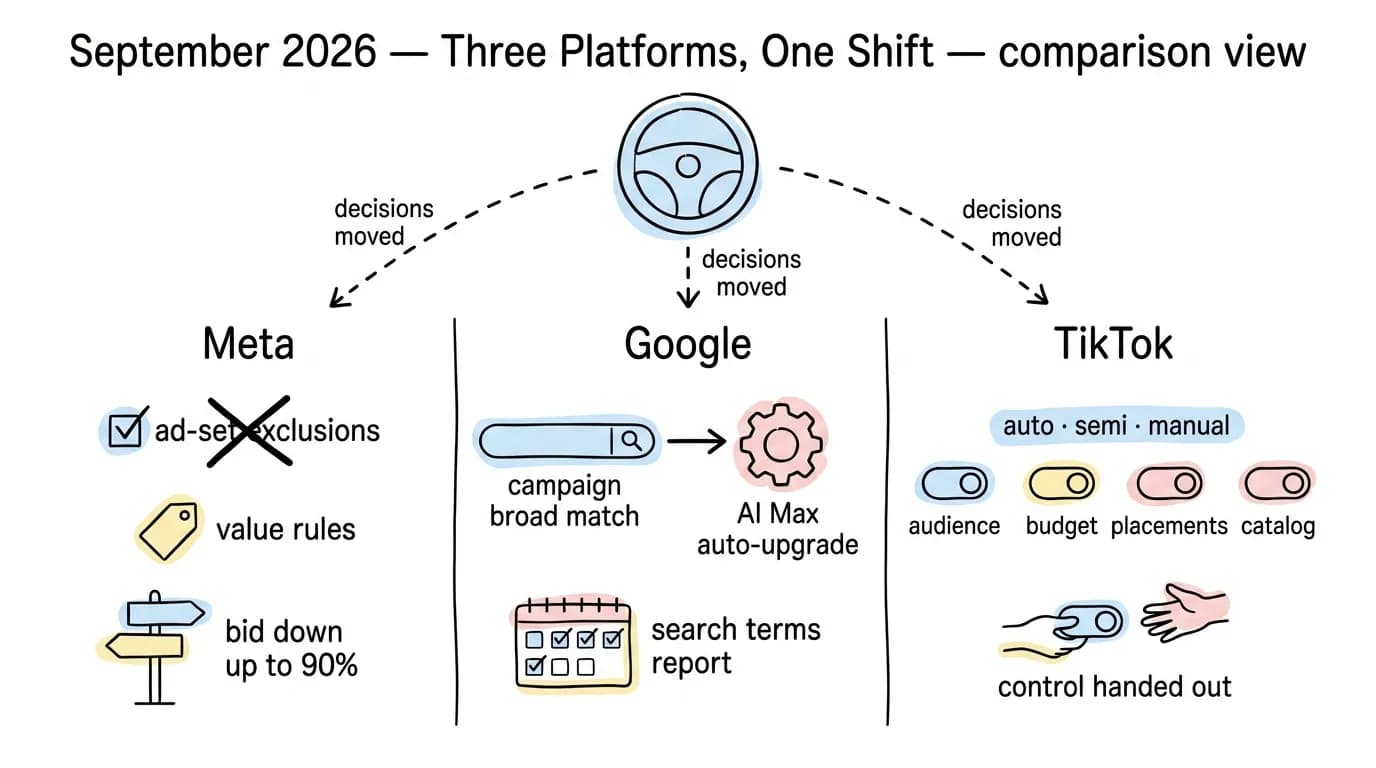
In September, Three Platforms Took Away Part of Your Steering Wheel
A few days ago, I went through everything the three big ad platforms did in September 2026. And I noticed a remarkably interesting coincidence.
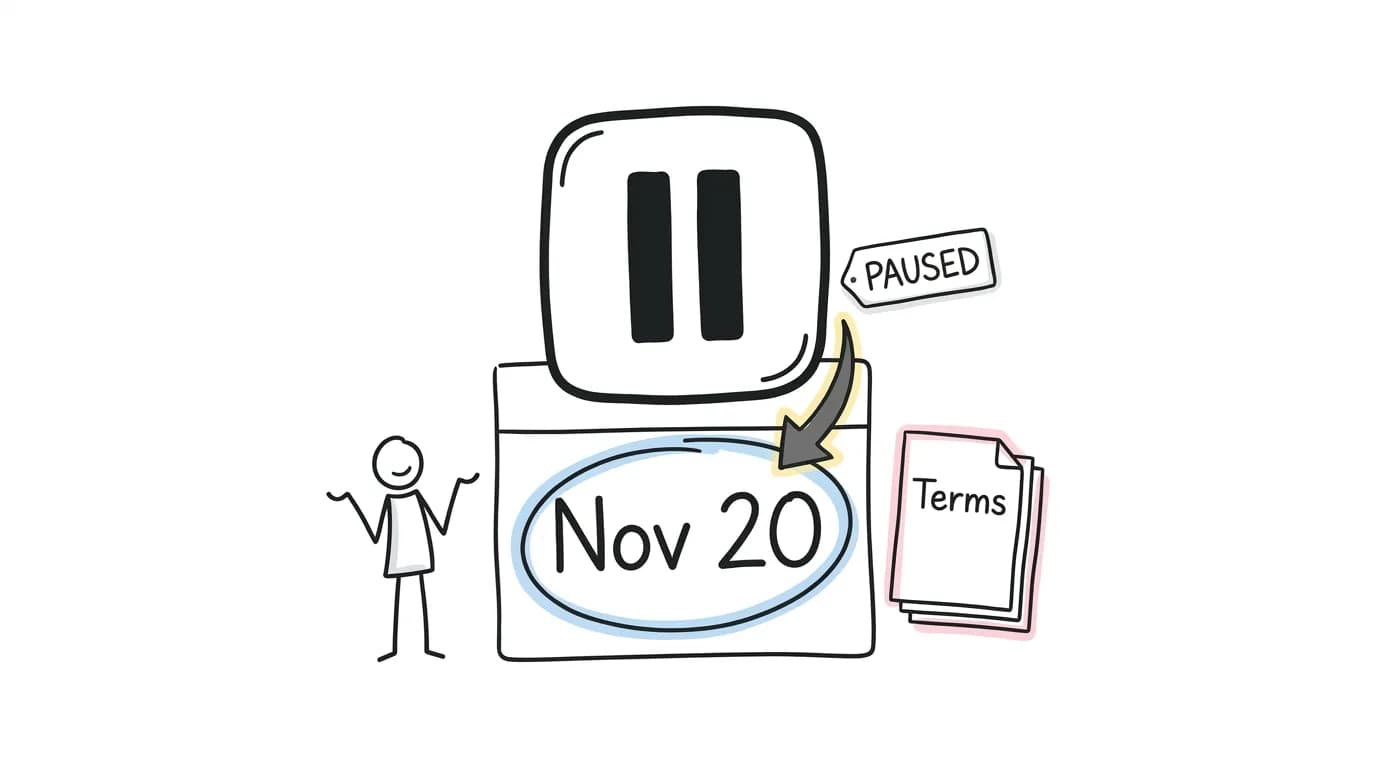
Meta's New Terms Hit the Pause Button on the Eve of the Effective Date
A while back, I was helping a friend of mine who runs a cross-border e-commerce business go through the compliance checklist for his ad account.
Google and Meta changed 17 ad rules this week. 6 of them need checking today.
A few days ago, I was helping a friend who runs a cross-border e-commerce business go through his ad accounts.