
What Is an Influencer? A Big Follower Count Doesn't Count.
An explainer on what defines an influencer, arguing that trust and engagement matter more than follower count, and covering influencer tiers, how brands collaborate with influencers, and common creator income streams.
A while back, I was flipping through a 2026 industry benchmark report when a number stopped me cold: 55.5% of consumers admit they've bought something because an influencer recommended it.
Think about that. For more than half of all consumers, the moment of opening their wallets was shaped by a stranger they've never met.
And the money follows. In the same report, 87.49% of marketers say they plan to increase their influencer marketing budgets — and 72.22% of them intend to raise them by more than 50%. Real money is pouring toward these people.
But here's the question: what actually is an influencer?
Many people answer without thinking: someone with a lot of followers.
Wrong. Followers are the ticket; trust is the business.
So What Is an Influencer?
An influencer is someone who has built up enough trust, expertise, or closeness with a specific group of people that they can shape what that group thinks about, watches, and buys.
That influence can come from expertise — they genuinely understand skincare. It can come from companionship — they've been with you for five years. It can come from talent — their videos are simply that good. And the medium isn't just short video: blogs, podcasts, and newsletters all count.
Note what I'm not talking about: follower counts.
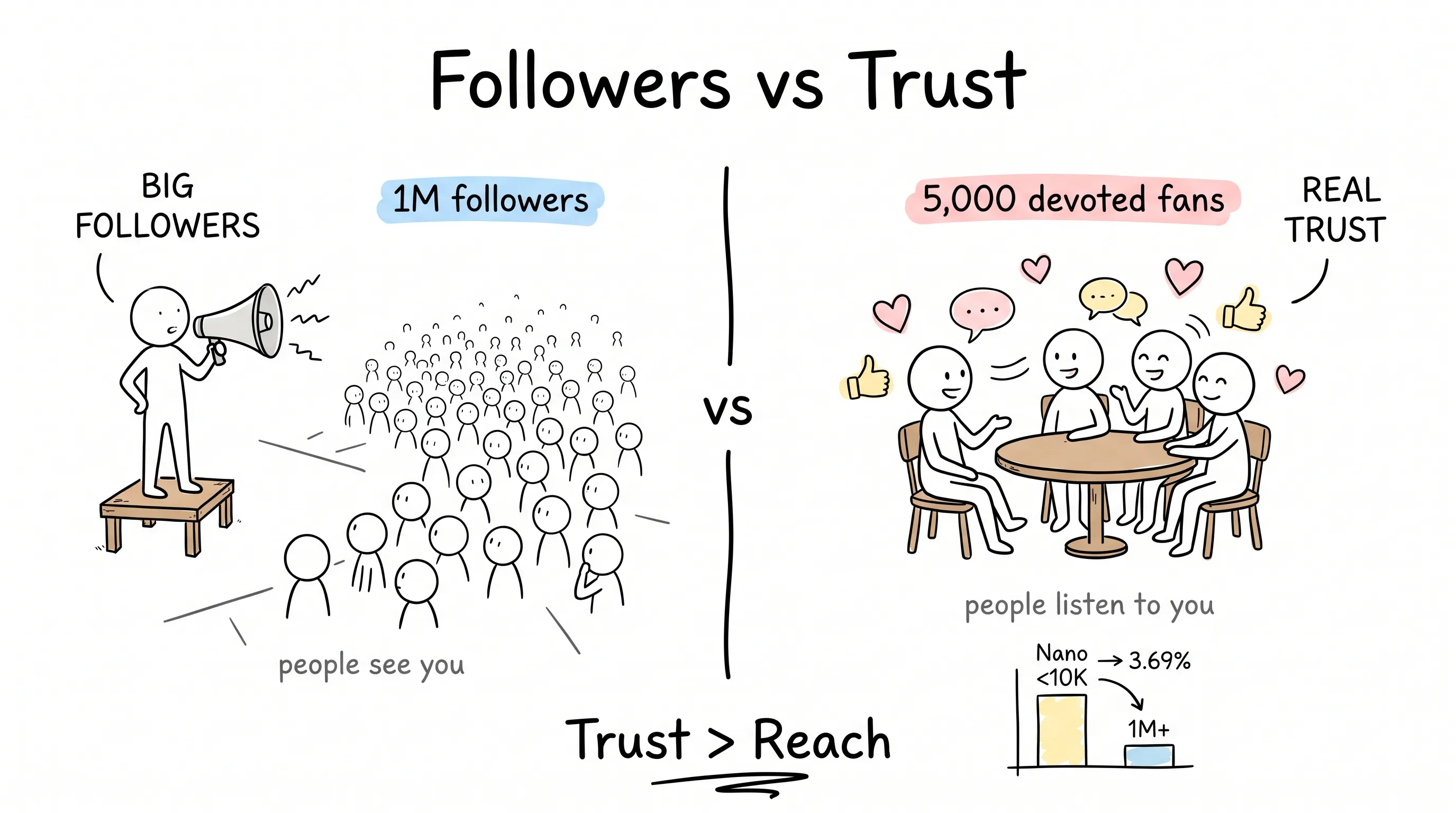
A niche blogger with 5,000 devoted fans can wield more influence than an account with hundreds of thousands of dead followers. Don't believe it? Run the numbers: a 2026 industry analysis found that nano influencers — those with fewer than 10,000 followers — average an engagement rate of 3.69%, more than double that of accounts with a million-plus followers.
A big following means people see you. High engagement means people listen to you.
Take James Charles, a beauty creator with large followings on TikTok, Instagram, and YouTube, who teaches makeup and reviews products every day. His followers stay because they trust his taste. When he recommends something, they actually go look.
That is what an influencer is.
Justin Welsh offers an even tighter definition, and I love it: an influencer is someone who can affect other people's purchasing decisions by virtue of their authority, knowledge, status, or relationship with their audience.
The key word is still relationship.
How Do You Tell If Someone Is Actually an Influencer?
There's no magic follower threshold you cross to become an influencer. The real test is: do people change what they think or do because of what you say?
Break it down, and it comes to five things:
- The right audience. Are their followers genuinely interested in what they talk about?
- Credibility. Do they speak from expertise, from experience, or from years of recommendations that never miss?
- Engagement. Do followers watch, like, comment, save, and share — or just sit in the follower list?
- Consistency. Is there a reason people keep coming back?
- And the most important one: do their recommendations actually make people want something, search for it, and buy it?
That's why, in 2026, 53.8% of brands name nano influencers as their preferred collaborators. Small, precise communities are worth more than big, unfocused exposure.
But small has its own risks. In a separate survey the same year, more than 56% of industry professionals said their biggest worry was fake followers and bots.
Put plainly, buying followers fools no one — least of all brands that can do the math.
So when you evaluate an influencer, don't ask "how many followers do they have?" Ask three questions: Who is listening to them? Why are they listening? And what happens when they speak?
What Do Influencers Actually Do?
At its root, it comes down to one sentence: keep giving a group of people who chose to follow them a reason to keep coming back.
It might mean reviewing a new face cream, translating complicated personal finance into plain language, documenting a trip, testing a new phone — or just making you laugh.
Break the job down, and a good influencer is usually doing five things at once: making content; running a community — replying to comments, joining discussions, developing a signature style; bringing new products and trends into your field of view; testing things on your behalf and giving advice; and doing business with brands — sponsorships, product pushes, collabs, endorsements.
Video is the big one. In 2026 data, 80% of brands said short-form video is the most effective influencer content format, and 83% said long-form video is equally effective. That's why you'll see the same person cutting quick TikToks and recording in-depth YouTube reviews.
One more example. Fitness creator Jesse James West partners with the athletic brand GymShark, sharing his discount code with his followers. Followers save money, the brand books sales, the creator takes a cut. Everyone gets what they came for.
And an influencer's value goes beyond the content itself. The same product demo video, posted by the brand itself, is an ad. Posted by someone you follow, it's a recommendation from a friend.
That's why brand awareness remains the most commonly set KPI in influencer marketing. But metrics like conversions, traffic, and content quality are increasingly making it onto the scorecard too.
How Many Tiers of Influencers Are There?
The industry habitually sorts influencers into four tiers by follower count: nano (1,000 to 10,000), micro (10,000 to 100,000), macro (100,000 to 1 million), and mega (1 million-plus).
That's convention, not an official standard. Platforms work on different logic, and the dividing lines are blurry to begin with.
So what is each tier worth, and what is it good for? Let's run the numbers.
Nano: fewer than 10,000 followers, but rooted deep. Best fit for brands selling niche products. Rituel de Fille, a niche cosmetics brand that goes for a dark-magic aesthetic — the packaging and product names drip with mystery — was promoting a brightening serum. Instead of chasing big accounts, they picked a makeup artist with 2,400 followers who specializes in dark makeup looks. The audience was small, but every single follower was one of their own — exactly the people who'd want it. That money landed more precisely than an ad on a million-follower account would have.
Micro: 10,000 to 100,000 followers, the best value in the game. Industry rate data shows most micro influencers charge $100 to $500 per Instagram post, rarely more than $1,000. Some will even collaborate for free — just send product. The fragrance brand Sana Jardin sent samples to a perfume reviewer with 38,000 followers without attaching any posting requirements; the reviewer posted an unboxing video out of pure enthusiasm. Zero budget spent, and in return they got a piece of content ten times more authentic than an ad.
Macro: 100,000 to 1 million followers. Come here when you want volume. They're experienced at collaborations, low-friction to work with, and vastly more numerous than mega influencers, so they're easier to find. When It Cosmetics launched its CC cream, it brought in a skincare creator with 269,000 followers to demo it.
Mega: 1 million-plus followers — the MrBeast and PewDiePie tier. A post starts at $10,000, and only top brands with serious budgets can play. Enormous reach, but engagement rates aren't necessarily higher. Scale can buy exposure. It cannot buy trust.
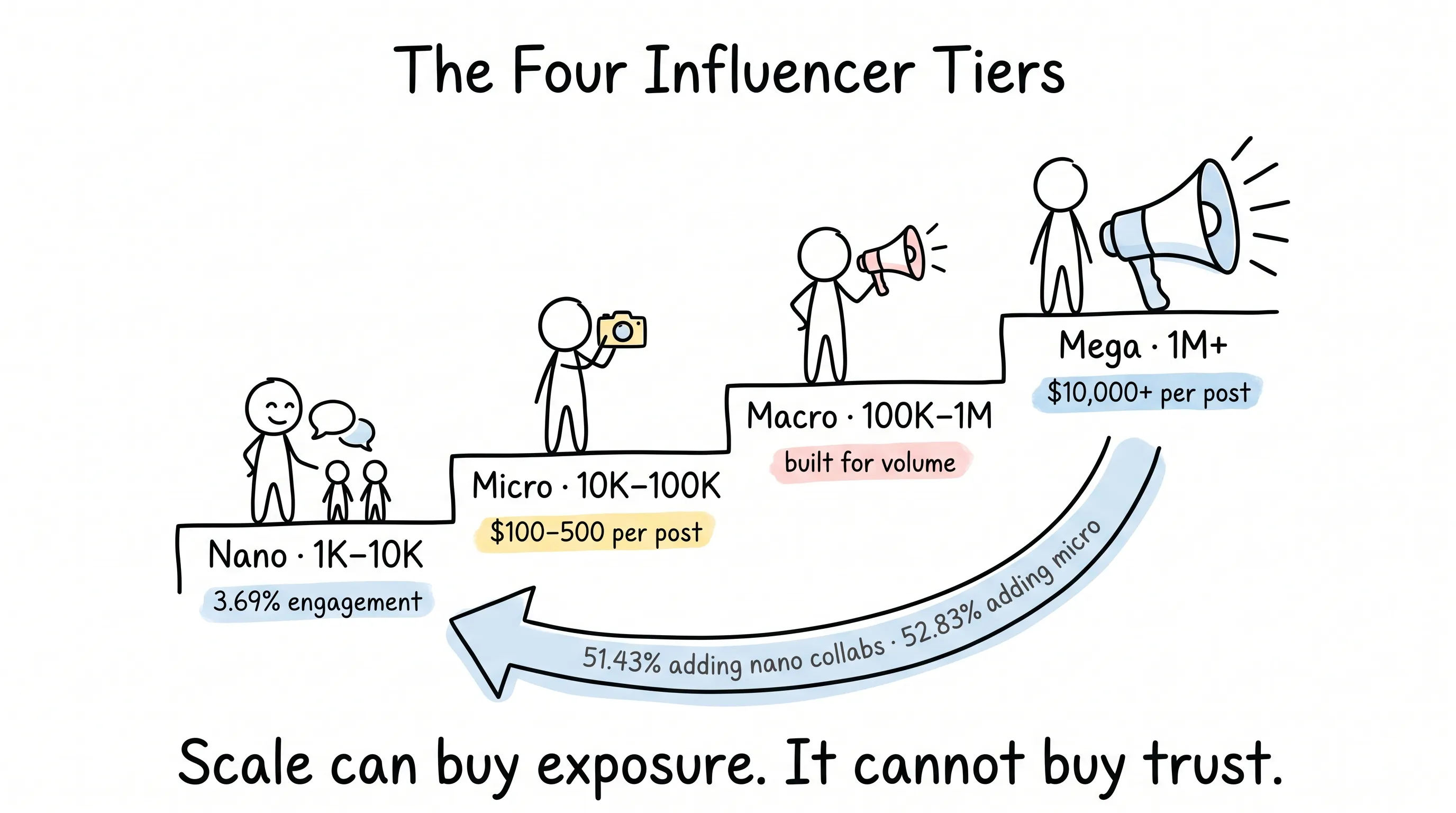
A 2026 survey confirms the drift: 51.43% of marketers plan to expand their collaborations with nano influencers, and 52.83% with micro ones. Everyone is moving toward smaller.
So which tier should you pick? It depends on what you want. For volume, go big. For precise conversion, a fleet of small accounts is often the better deal.
Influencer, Creator, Celebrity, KOL — Are They the Same Thing?
No. The simplest way to tell them apart: look at why people pay attention to them.
Influencers run on trust — followers believe in the person. Creators run on craft — steady output, great content, but not necessarily an audience of their own. Celebrities run on fame — fame built in film, sports, or music, then extended to social media. KOLs (key opinion leaders) run on expertise — doctors, analysts, scholars. Small followings, but one sentence from them outweighs ten thousand from anyone else.
The easiest pair to confuse is influencer and creator.
Most influencers are creators, but not the other way around. Many UGC creators are hired by brands purely because their content is excellent — what the brand buys is the material itself. Hire an influencer, and you're buying the content plus the crowd of believers standing behind it.
Of course, these identities stack all the time. A dermatologist with a big TikTok following is a KOL because of the expertise, and an influencer because of the community.
How Do Brands Work with Influencers?
There's a whole spectrum of formats, from "send a sample and hope for the best" to a year-long ambassador relationship. Seven come up most often:
- Sponsored content. Pay, and they post as agreed.
- Product seeding. Send product with no posting guaranteed — you're buying genuine goodwill.
- Affiliate selling. Commission on every closed sale.
- Brand ambassador. Long-term binding, present all year.
- Co-created products. Build a collab line together.
- Event appearances. Launches, store visits, brand trips.
- Content licensing. The brand takes the influencer's content and runs it as ads.
In a single campaign, these often stack: seed first, then a sponsored post, then sales commission, then take the best-performing video and put it behind paid ads.
One more signal from the 2026 data: 66.3% of brands say their influencer programs are now fully run in-house. Working with influencers has gone from an occasional campaign to a standing capability of the brand.
A word on the legal boundary while we're here: in the United States, paid promotion must be clearly disclosed. If you took the money or the product, say so. There's nothing shameful about disclosure — hiding it is the shameful part.
How Do Influencers Make Money?
Influencers who last rarely depend on just one stream. There are five main income sources.
Brand deals. The brand pays a flat fee for one video, one placement, or an entire content package. There's no standard rate card — follower count is only part of it. Engagement rate, audience profile, production difficulty, and licensing scope all move the price. Within the same micro tier, some charge $100 a post and others command more than $2,000.
Affiliate. Drop your exclusive links and discount codes, take a cut of every sale. The upside: content keeps earning after it ships. An old video might still be making you money six months later.
Platform payouts. Ad revenue shares, tips, subscriptions, livestream gifts. But platform policies can change overnight — treat this as pocket money, never a livelihood.
Selling your own products. Courses, templates, paid communities, consulting, your own brand. At this point you're not just an influencer anymore — you're a businessperson built on attention.
Licensing content. A brand wants to run the video you shot as an ad? That's another payment. Usage scope, exclusivity period, license duration — all negotiable price points.
But a bucket of cold water here: a 2026 creator-economy analysis found that more than 200 million people worldwide create content professionally or semi-professionally, and more than half of them earn under $15,000 a year.
200 million people chasing this market, and half of them aren't making a decent wage.
So: influencing is a business, not a lottery ticket. Instead of counting on one viral video to turn your life around, design multiple income streams the honest way.
Want to Become an Influencer? Where to Start?
There's no standard path, but five moves are common to nearly everyone:
- Pick a field you genuinely know and love, so people can tell at a glance what following you gets them.
- Ship consistently. You don't need to post daily, but give your audience the habit of tuning in on schedule.
- Turn followers into a community. Reply to comments, answer questions, make the people following you feel like participants.
- Watch the data. Watch which content gets saved and shared — the market will tell you the answer.
- Once you've built up enough trust, then design how to monetize.
Think about it: which of those five moves can overnight fame pull off for you? None. Becoming an influencer can't be rushed. It's closer to planting a tree than buying traffic.
A Parting Word
Influencers range from ordinary people with a few thousand followers to global A-listers with hundreds of millions. The forms vary wildly, but the underlying logic is the same: first earn a group of people's attention, then earn that group's trust, then use that trust to trade for what you want.
For brands, choosing an influencer means choosing audience fit and whether the trust is real. Follower count is the last line of the reference sheet.
And if you're thinking of getting in: don't spiral over someone else's millions of followers. Start with the field you genuinely know. Publishing your first piece of content today beats everything else.
Here's to earning your first 1,000 true fans — people who trust you, genuinely — sooner rather than later.
Continue reading
Related articles
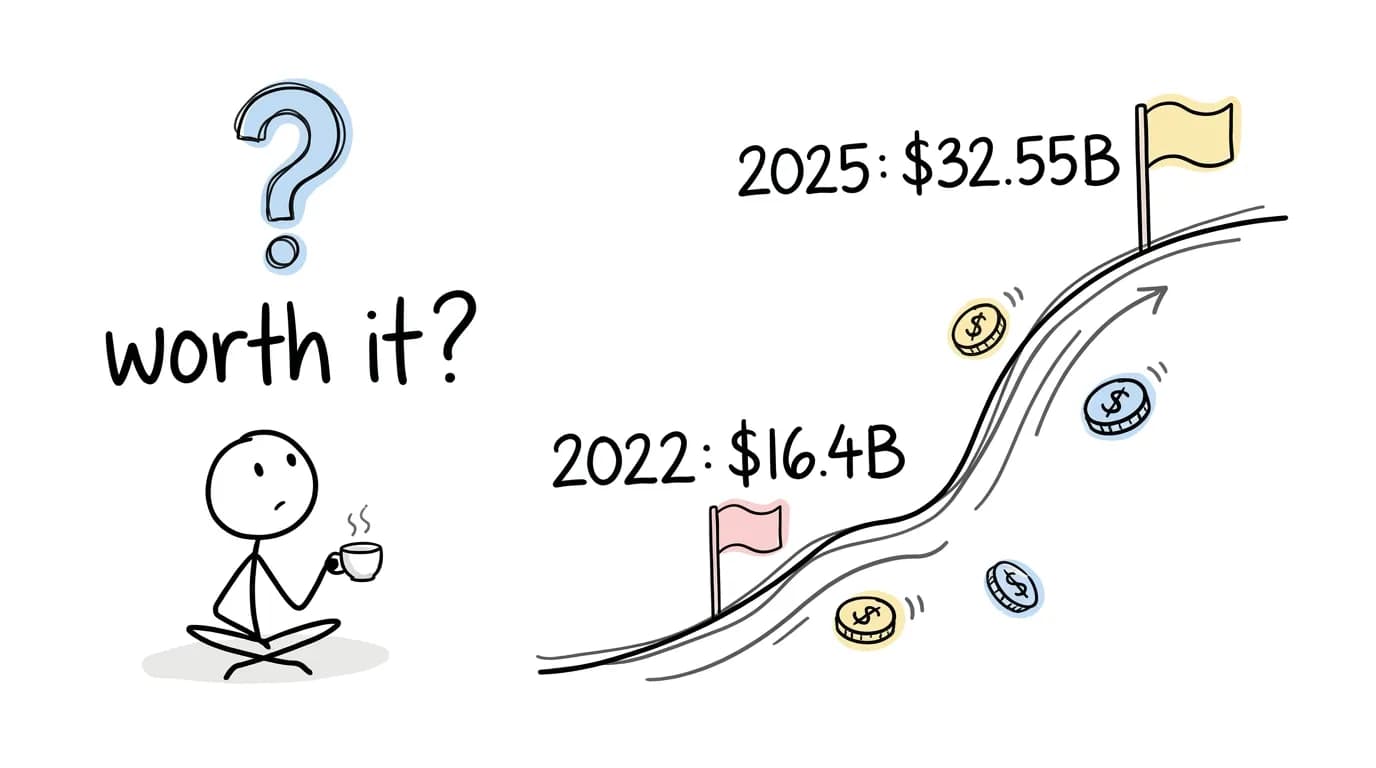
Is Investing in Influencers Actually Worth It? I Broke Down These Dozens of Numbers and Ran the Math for You
A learn article that compiles industry data on influencer marketing, covering market size, ROI measurement practices, nano versus mega creator pricing and engagement, platform budget allocation, AI tooling, and ad disclosure compliance.
The EU Is Handing the Pause Button Back to You
The EU's draft Digital Fairness Act targets dark patterns, addictive design, undisclosed influencer ads, silent subscription renewals, and game spending by minors, while keeping dynamic pricing legal but banning drip pricing; fines could reach 6% of annual turnover.
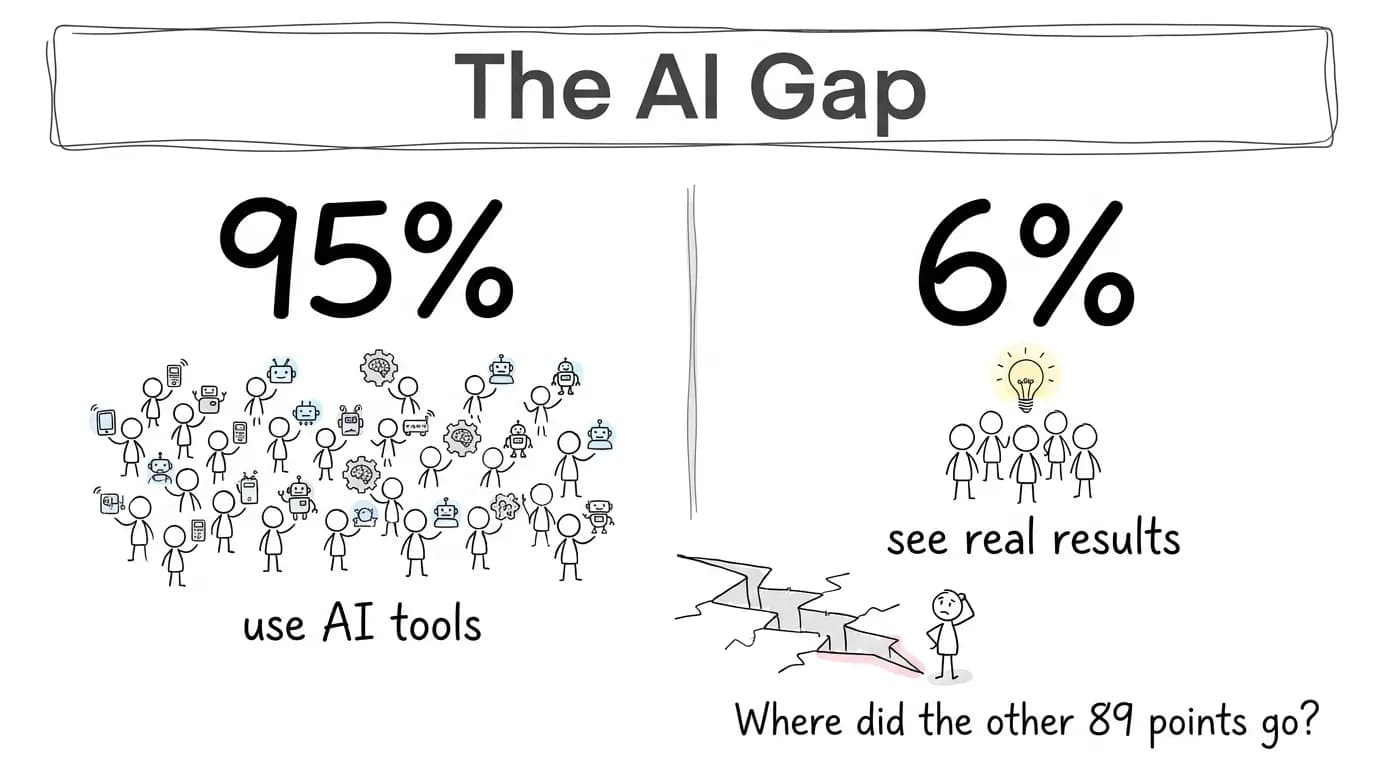
95% of Companies Use AI. Only 6% See Real Results. What's the Gap? Kolsquare's New Report Nails the Answer
A recap of a Kolsquare webinar on AI in influencer marketing, covering adoption gaps, AI-labeled content engagement, AI influencer limits, and generative engine visibility. It also outlines four practical moves for 2027 planning.