
The EU Is Handing the Pause Button Back to You
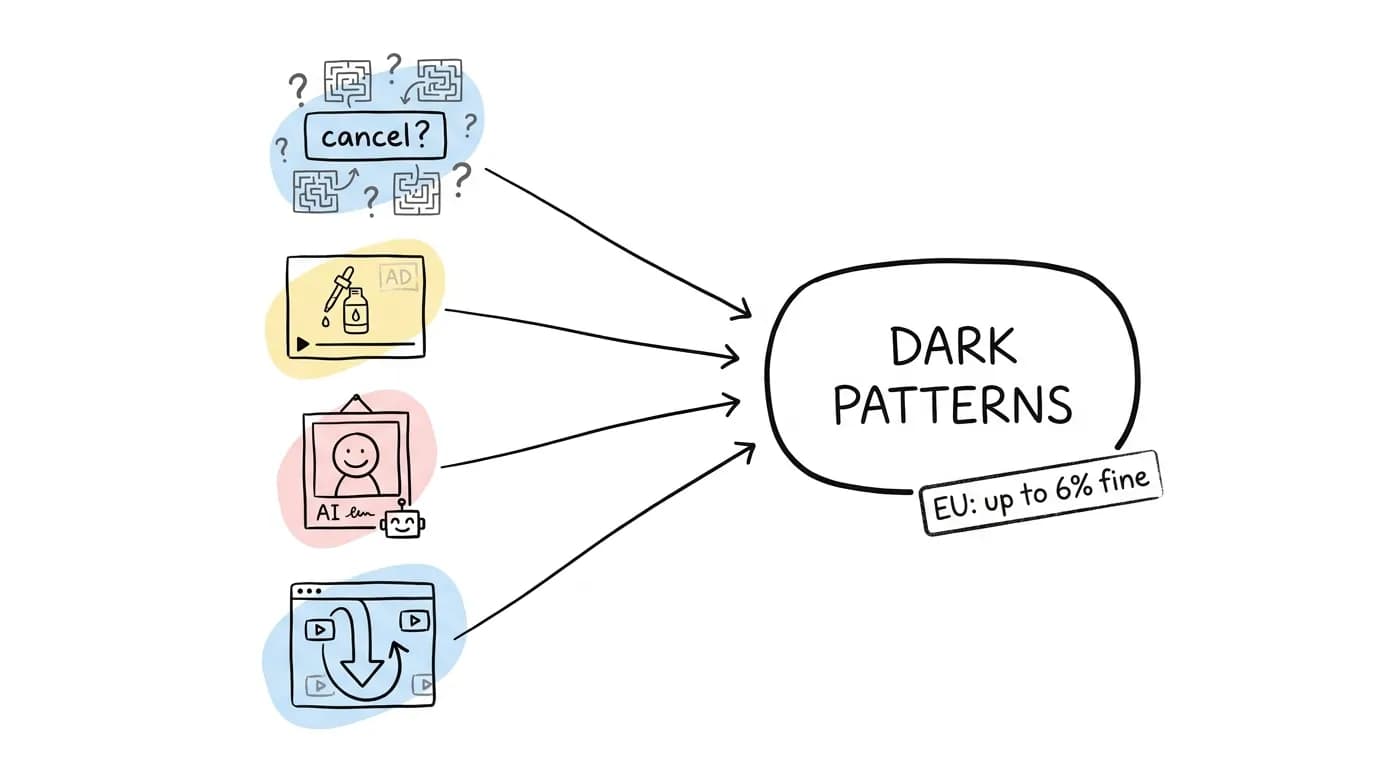
The EU's draft Digital Fairness Act targets dark patterns, addictive design, undisclosed influencer ads, silent subscription renewals, and game spending by minors, while keeping dynamic pricing legal but banning drip pricing; fines could reach 6% of annual turnover.
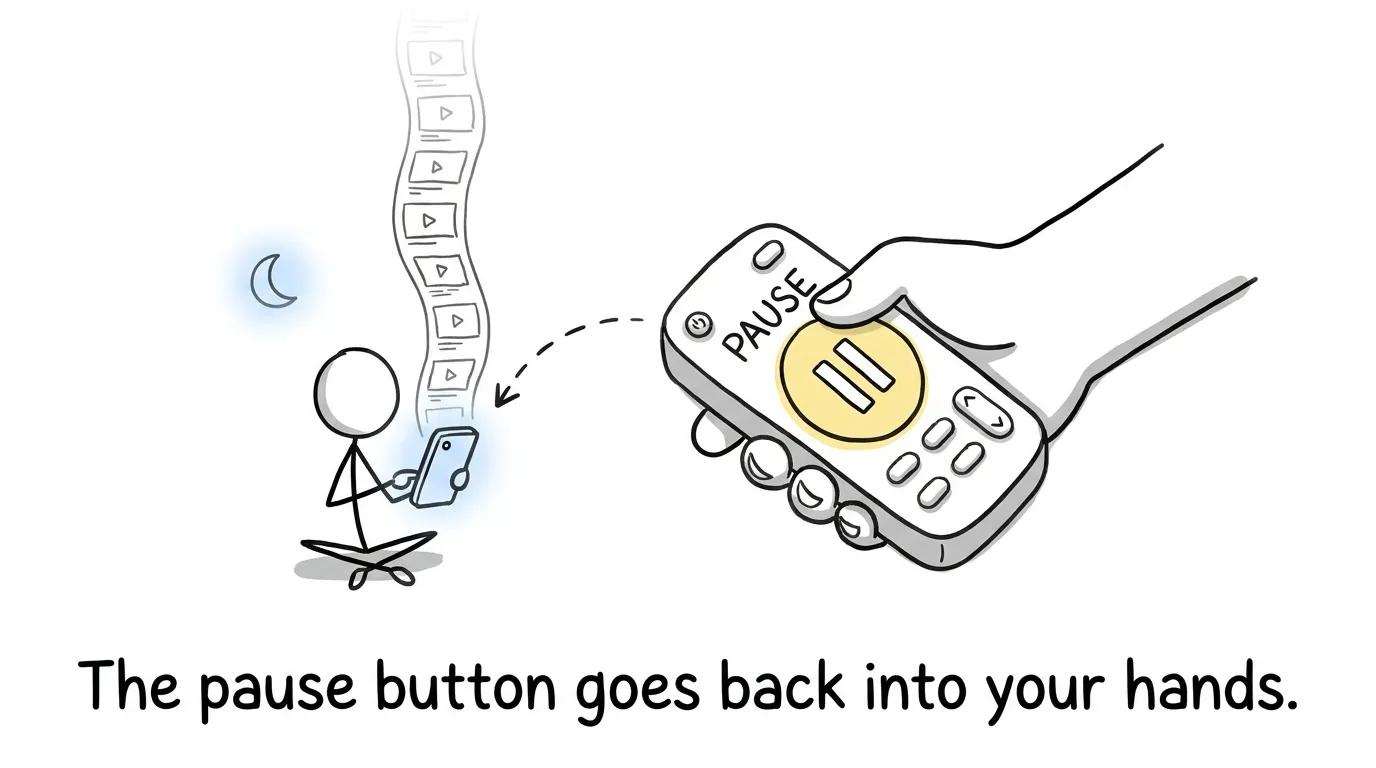
A few nights ago, late at night, I was scrolling short videos.
I wanted to stop. I couldn't. One video ended, and the next one started on its own. Swipe down, and there's no bottom in sight. You know the feeling: you meant to watch for ten minutes, and by the time you looked up, forty were gone.
When I finally put the phone down, I saw a news story. The European Union has stepped in.
Why Do We Need a New Law?
This past week, the European Commission put forward a draft bill called the Digital Fairness Act — DFA for short.
Some will say: hasn't the EU been regulating the internet all along? There's a dedicated law for data protection, a dedicated law for artificial intelligence, a dedicated law for online content. True — it regulates all of it.
But regulating is not the same as leaving no gaps.
Influencers posting ads without labeling them, prices quietly climbing between the item page and checkout, free trials that roll into auto-renewal charges, games nudging kids into topping up... These little tricks land precisely in the seams of existing law. Brussels' judgment is that if the seams aren't closed, consumers will be left completely exposed.
This time, the point is to close them.
What Does the Bill Actually Say?
There are plenty of clauses. I'll pick the ones that concern you most.
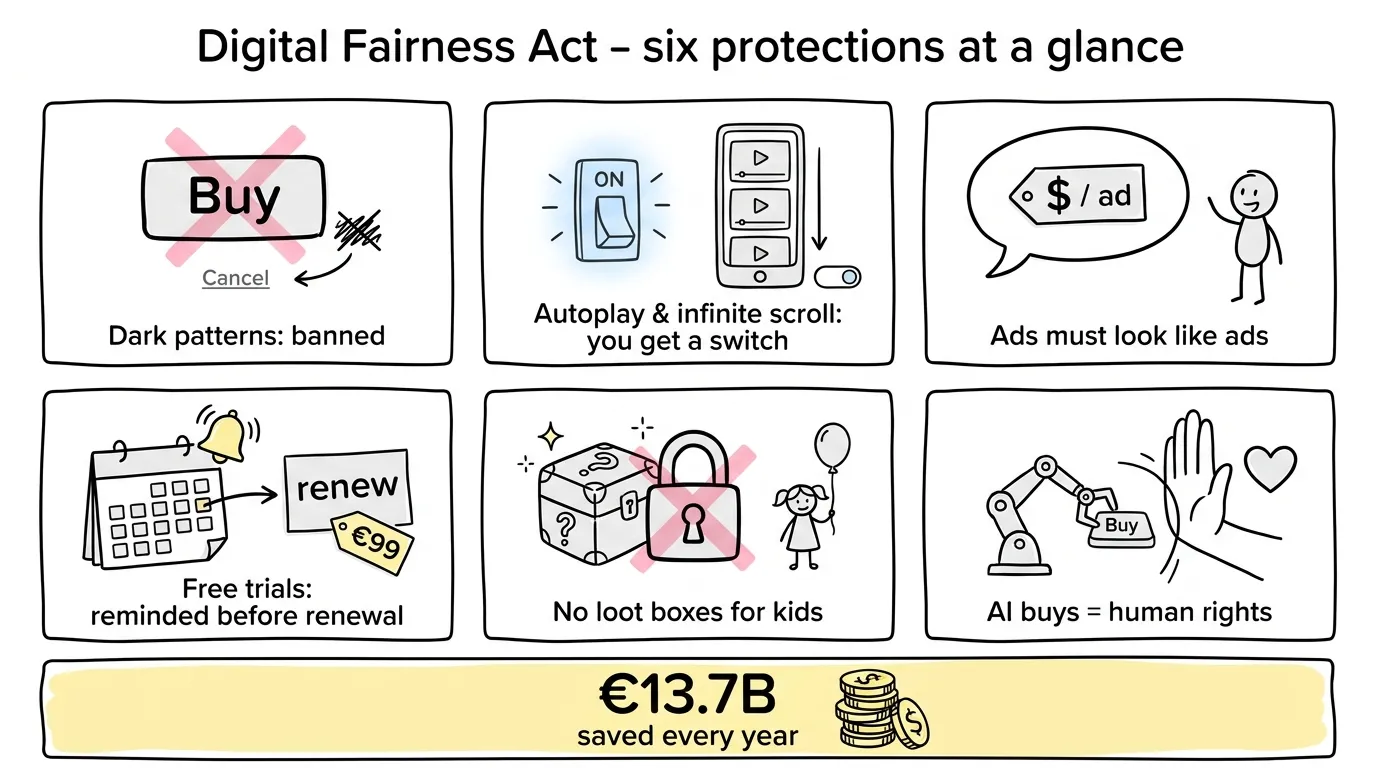
First: dark patterns, banned.
What is a dark pattern? Picture this scene: you want to cancel a subscription. The payment button is big and bright; the cancellation option huddles in a line of small gray text, nearly impossible to find. Using visual design to steer you into an action you never intended — that's a dark pattern. Under this bill, the practice is explicitly banned.
Second: addictive design. You get a switch.
Autoplay, infinite scroll — the features that make you unable to stop even when you want to. Platforms will have to offer a way to turn them off. In plain terms: the pause button goes back into your hands.
Third: influencers promoting products must disclose who they're working for.
When a brand promotes content through a blogger, it has to carry a clear label — "ad" must mean "ad," and no hiding. What you thought was a friend's recommendation is actually a paid placement; that information gap is finally coming out into the open.
Fourth: before a free trial expires, platforms must remind you.
When it ends, how much the renewal costs — spelled out in advance. No more quietly paying for a second year without your knowledge.
Fifth: money inside games gets the strictest treatment.
No pay-to-win for minors, and loot boxes are banned outright. In-game virtual currency must show what it's worth in real money, so you're not spending in a daze.
Sixth — and this one is interesting — AI shopping agents.
More and more people now use AI agents to place orders for them. The bill says: when an agent buys something for you, your rights are the same as if you'd clicked the button yourself. And as long as you ask, the platform must connect you with a human customer-service agent. The machine does the buying; a human has your back.
Let's Do the Math
How much are these little tricks actually worth?
Brussels has run the numbers for European consumers: up to €13.7 billion a year in savings. In US dollars, roughly $15.3 billion. That is not pocket change — it's money extracted from countless moments of spending in a daze.
The cost of breaking the rules is spelled out too: for the most serious cases, fines can reach 6% of a company's annual turnover.
And there's a tripwire: if a problem affects two-thirds of the EU's 450 million people, the European Commission can step straight into an investigation — and straight into fines.
Michael McGrath, the EU official in charge of consumer protection, put it bluntly: with households under cost-of-living pressure, consumers must be able to trust that the price they see is the price they pay, and that no one is engineering them into spending more.
The price you see is the price you pay. That sentence should be a baseline, not a wish.
There Was Opposition, of Course
The business world's reaction was unanimous.
BusinessEurope, the business organization representing companies across Europe, warned that the new rules could bring unnecessary obligations, pile on top of existing requirements, undermine legal certainty, and work against the EU's own Simplification Agenda.
The two major games-industry lobby groups were blunter, calling the draft "unworkable, unjustified, and disproportionate" — and saying it would erode the competitiveness of Europe's entire games industry.
They have their own ledger, and that's understandable.
But the supporters' ledger is on the table too. The head of the European Consumer Organisation called it a badly needed tool for taking back control — control over how much time you spend and how much money. And a Spanish Member of the European Parliament said something I liked: consumer law is, at its core, a safety net — and a net exists to catch the people who are falling.
Fairly speaking, my own read is this: businesses genuinely find the rules excessive, and consumers genuinely get harvested by the little tricks. Both are true. It's just that this time, the scales tipped one notch toward consumers.
One more thing while we're here: the EU's recent moves go beyond this bill. Earlier, it floated a plan to ban children under 13 from social media platforms. Add the Digital Services Act, already up and running, and the net governing the internet is being woven ever tighter.
One Exception Worth Its Own Section
You may remember the ticketing fiasco around the Oasis reunion tour in 2025 — dynamic pricing, tickets vanishing in seconds, prices leaping with demand. It caused an uproar at the time.
This time, the EU did not impose a blanket ban on dynamic pricing. For airlines, hotels, and ride-hailing, pricing by demand has its logic; ban it across the board, and the cost gets passed on to everyone in the end.
The EU chose a different path: what's banned is drip pricing — the practice of hiding various fees until the very last step; what's required is transparency — ticket sellers must state clearly how many tickets remain at a given price.
Quietly jacking up the price on you: not allowed. Openly pricing by the market: fine. That line is drawn with a clear head.
Finally
The bill is still far from taking effect. Next come rounds of negotiation with the EU member states and the European Parliament — it won't be quick.
But the direction is set: the pause button goes back to the people watching the videos, the checkout page shows the true total, and ads have to look like ads.
Before I go, I'd like to wish you two things.
May you, scrolling late at night, always remember why you opened the app in the first place.
And may you, when you reach the checkout page, see exactly the number you're about to pay — then press "buy" because you want it, not because you were designed to want it.
Continue reading
Related articles
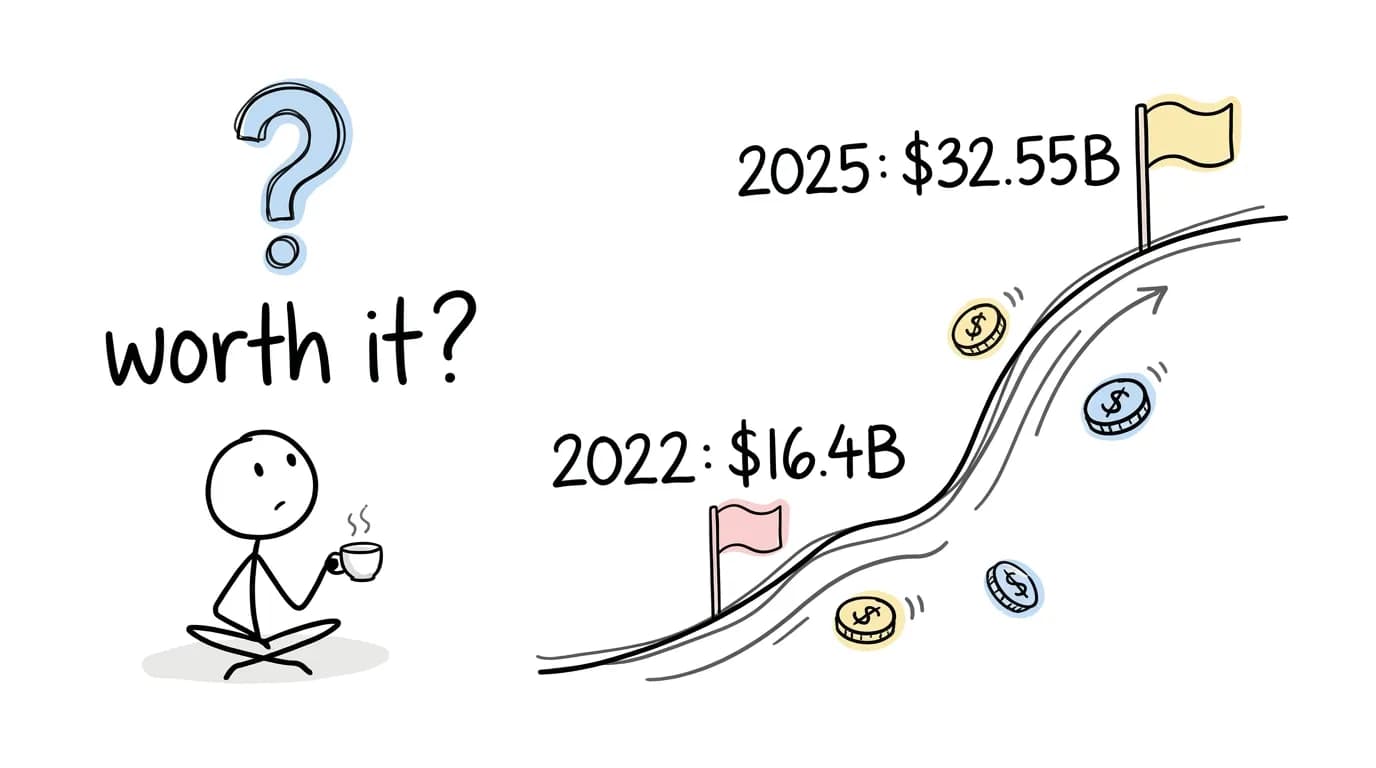
Is Investing in Influencers Actually Worth It? I Broke Down These Dozens of Numbers and Ran the Math for You
A learn article that compiles industry data on influencer marketing, covering market size, ROI measurement practices, nano versus mega creator pricing and engagement, platform budget allocation, AI tooling, and ad disclosure compliance.
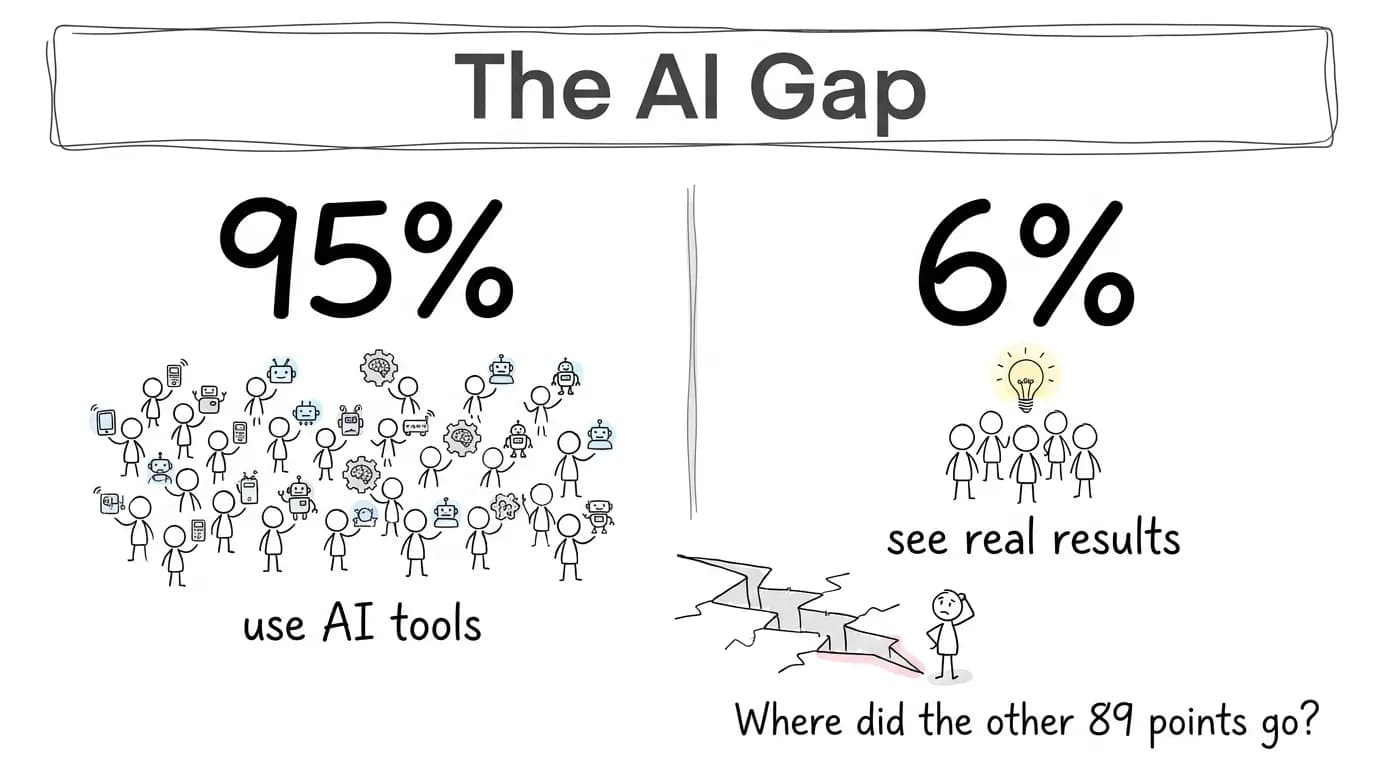
95% of Companies Use AI. Only 6% See Real Results. What's the Gap? Kolsquare's New Report Nails the Answer
A recap of a Kolsquare webinar on AI in influencer marketing, covering adoption gaps, AI-labeled content engagement, AI influencer limits, and generative engine visibility. It also outlines four practical moves for 2027 planning.
The EU Has Finally Had Enough of the Tricks You Fall For Online
The EU's proposed Digital Fairness Act targets 'dark patterns' such as hard-to-cancel flows, undisclosed paid influencer posts, AI-generated virtual influencers, and addictive autoplay design, with fines of up to 6% of global annual turnover.