
The AI Money Is Spent. Its Most Valuable Words? Only 37% Are Picking Them Up
A while back, I came across a survey report — and sat there stunned for a moment after finishing it.
A while back, I came across a survey report — and sat there stunned for a moment after finishing it.
The numbers themselves aren't scary. But what the numbers mean? That hits hard.
The report came from Invoca this past July. They surveyed 600 U.S. B2C marketers across seven high-stakes industries — telecom, finance, insurance, healthcare, and home services all made the list. The conclusion fits in one sentence: AI's ambition is running ahead of AI's execution. And the gap in between is turning into real money leaking out the door.
What does "ambition running ahead of execution" look like?
Think about it. Over the past two years, there's hardly a marketing team that doesn't preach AI. Budgets were approved, tools were bought, and in every meeting room people are talking about AI agents and automation, laying it on thick.
But who's actually using it? Who has turned AI into actions that run every single day?
That's the gap this report measured: investment is one thing, adoption is another, and capability is a third. All three run on their own tracks, never aligned. The money went to the first; the second and third are still standing still.
That's exactly how the money leaks.
The Most Valuable Signals Are Gathering Dust
Of everything in the report, the harshest number was a different one.
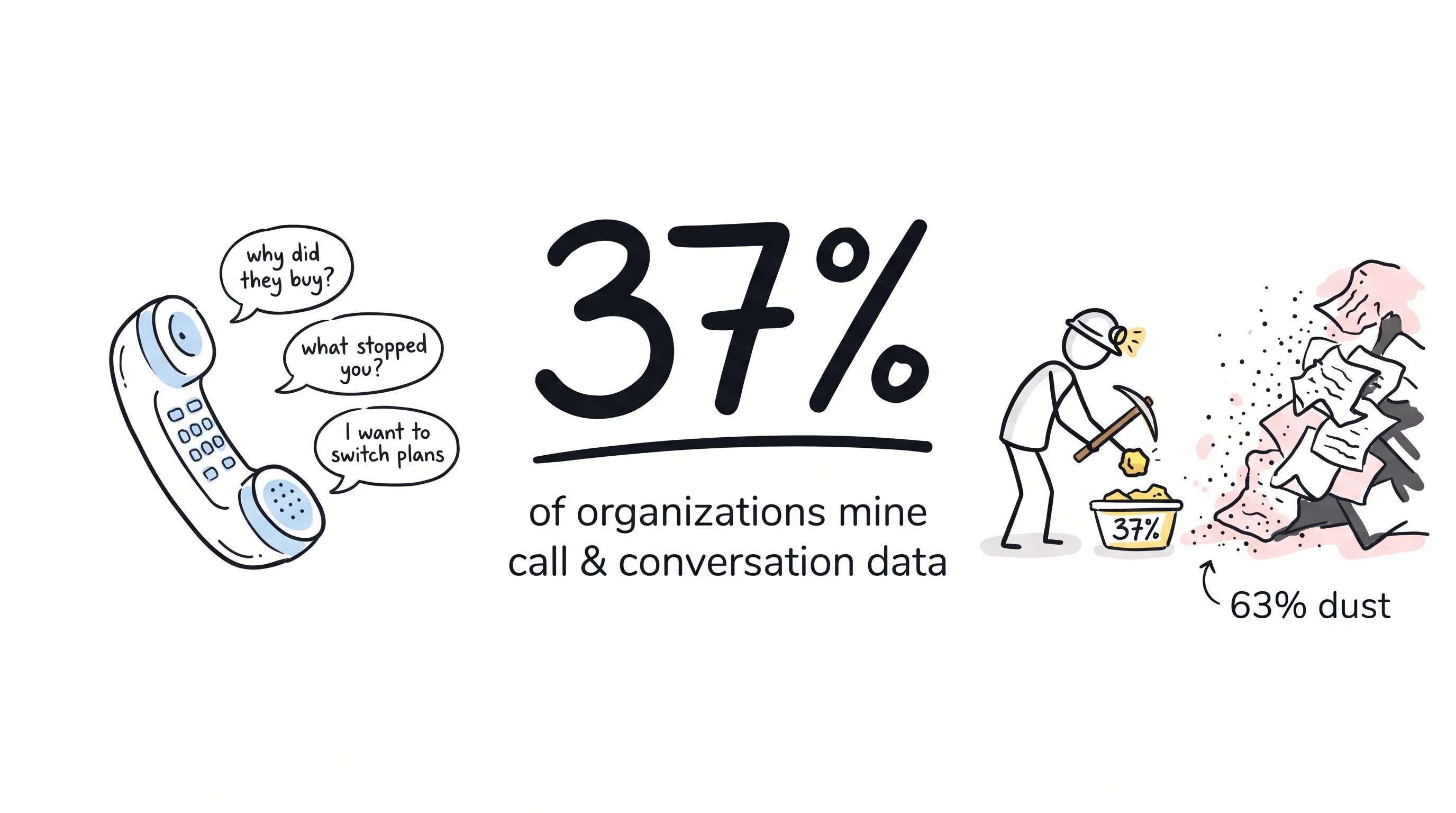
Only 37% of organizations are mining call and conversation data.
First, let's be clear about what call data is.
When customers pick up the phone and call in, the words they say on that call — that's call data. You might say: isn't that just customer service recordings? What's so valuable about that?
Incredibly valuable.
Think about when a customer actually calls. Browsing a page — they won't call. Seeing an ad — they won't call either. When they actually pull out their phone and dial, it's usually because a clear thought has already formed in their mind: I want to buy, but I have specific concerns, and I need to ask first.
At that moment, every sentence they speak is intent in its most honest form.
An online click tells you "they showed up." The exact words on the phone tell you "why they came, what they're hesitating over, and where that final step fell short." One is behavior; the other is what they're really thinking.
Flip that number around and it stings even more: the remaining 63% of companies record those words, store them in a system, and then... nothing. Dust.
Do the math. A company taking 100 calls a day logs more than thirty thousand calls a year. Thirty-thousand-plus answers to "why did they buy, why didn't they buy" — all asleep on a hard drive.
It's like opening a gold mine, hauling out the ore, and carrying off only the single piece you grabbed by the entrance — leaving the rest piled in the yard, exposed to wind and rain.
A waste? Absolutely. But the greater waste is that most companies have no idea they're sitting on a gold mine.
AI Can Be the Ears Now
Why did nobody listen to these words before?
The reason is simple: speech doesn't behave like clicks. A click is a number — the system logs it and it's done. Speech is alive; it needs someone to listen, someone to understand, and someone to follow up. When a company handles hundreds or thousands of calls a day, where would all those ears come from?
So you can't blame anyone's laziness for this blind spot. In the past, it genuinely couldn't be done.
Now it can. Call analysis happens to be AI's specialty: breaking an entire call down into structured data — who called, which campaign they were responding to, what they asked, whether there was any intent to buy — laid out for you item by item. This is exactly what platforms like Invoca do: their call tracking and analytics connect with Google Marketing Platform, Meta, Adobe Experience Cloud, and Salesforce, feeding "what was said on the phone" into your existing marketing stack and turning it into data you can actually run the numbers on.
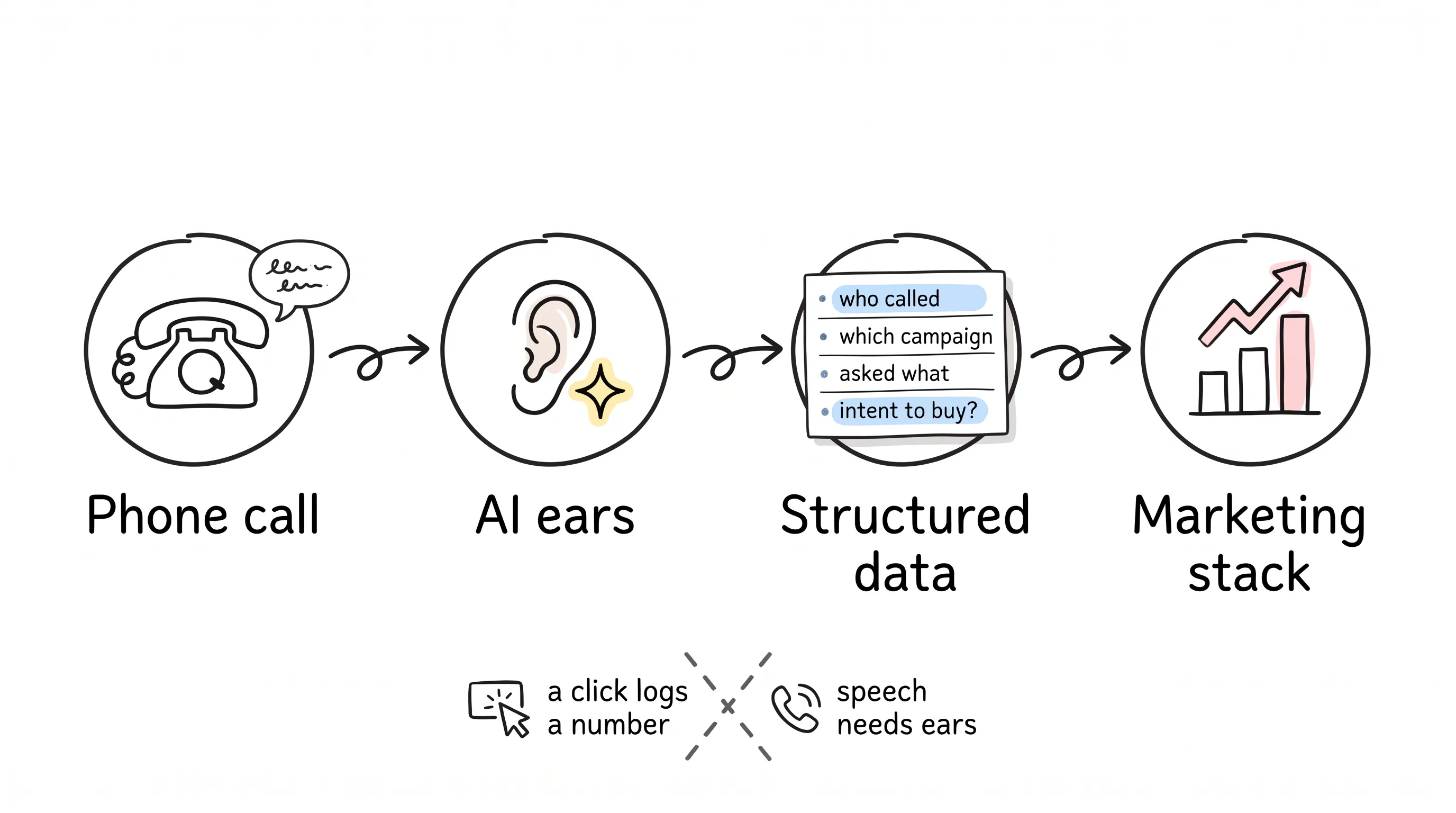
"Run the numbers on" — that phrase is the key.
Marketing, at its core, is an accounting problem. The real fear isn't spending money in the wrong place — it's spending money and never knowing where it went wrong. Call data fills in precisely the pages that have always been missing from the ledger.
Where the Divide Falls
So what separates the leaders from the laggards?
My takeaway from reading this report: it really isn't about budget. When it comes to budget, everyone is willing to spend.
The difference is whether you treat what customers say out loud as data.
For teams that treat it as data, AI has the richest possible soil to grow in, and every dollar you put in, you can hear the echo. For teams that don't, AI is a castle in the air — no matter how expensive the tools, they just keep circling inside clicks and impressions.
The truer the material you feed AI, the more accurate the answers AI computes for you.
Every sentence a customer says on the phone is a reason to close the sale, placed directly in your hands.
Don't let it gather dust.
Continue reading
Related articles
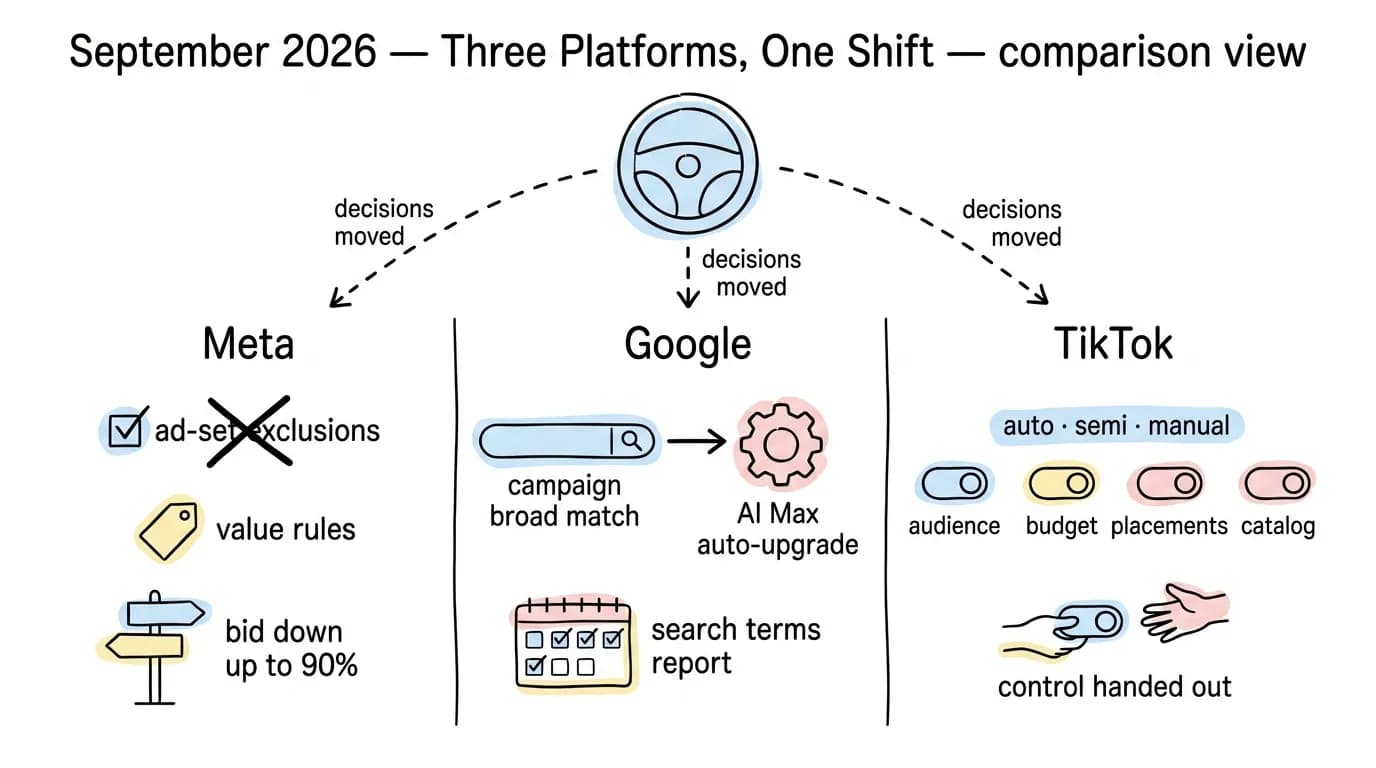
In September, Three Platforms Took Away Part of Your Steering Wheel
A few days ago, I went through everything the three big ad platforms did in September 2026. And I noticed a remarkably interesting coincidence.
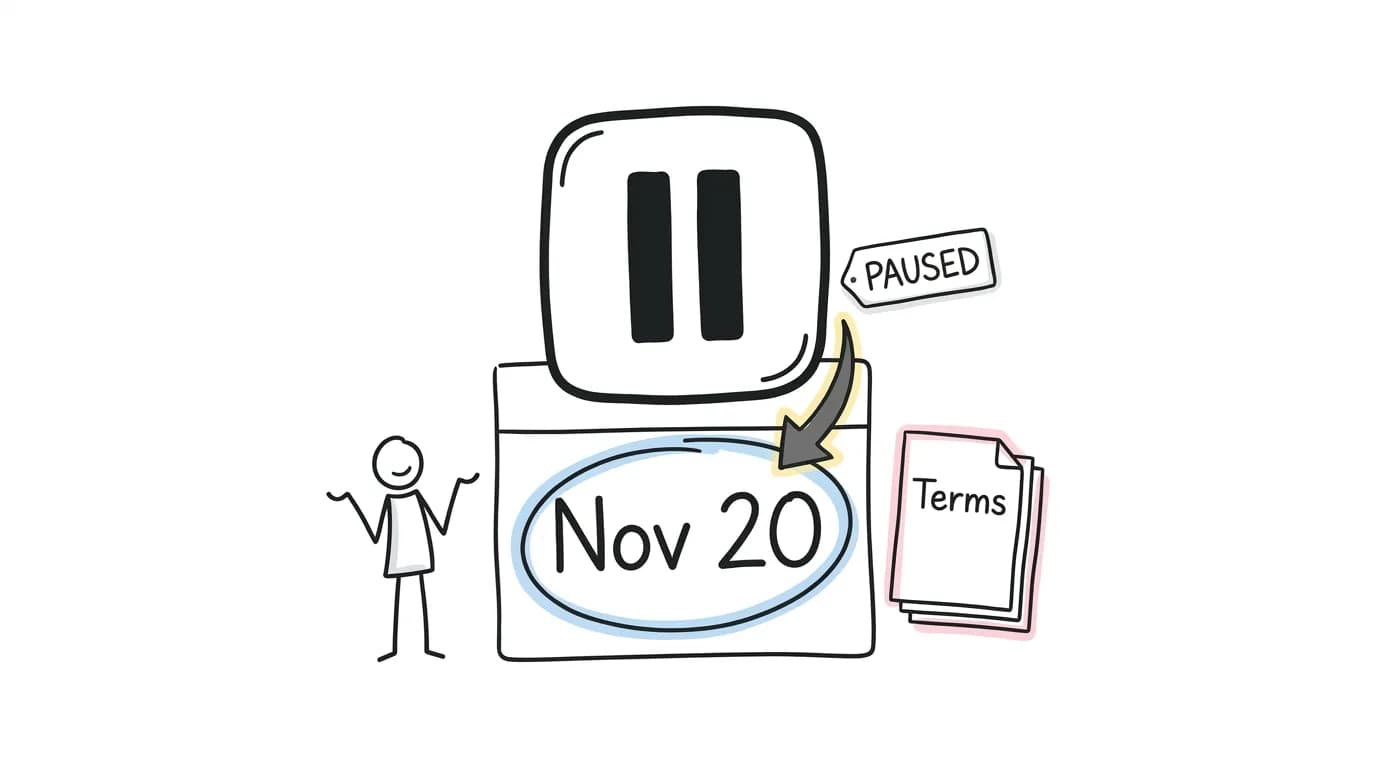
Meta's New Terms Hit the Pause Button on the Eve of the Effective Date
A while back, I was helping a friend of mine who runs a cross-border e-commerce business go through the compliance checklist for his ad account.
Google and Meta changed 17 ad rules this week. 6 of them need checking today.
A few days ago, I was helping a friend who runs a cross-border e-commerce business go through his ad accounts.