
Creator Marketing Finally Makes Money — but the Systems Can't Keep Up
A data-driven read of CreatorIQ's seventh annual creator marketing report: more brands report 3x+ ROI and larger budgets, while top challenges shift from resources to data integration, cross-team collaboration, and measurement, with AI both cutting costs and adding complexity.
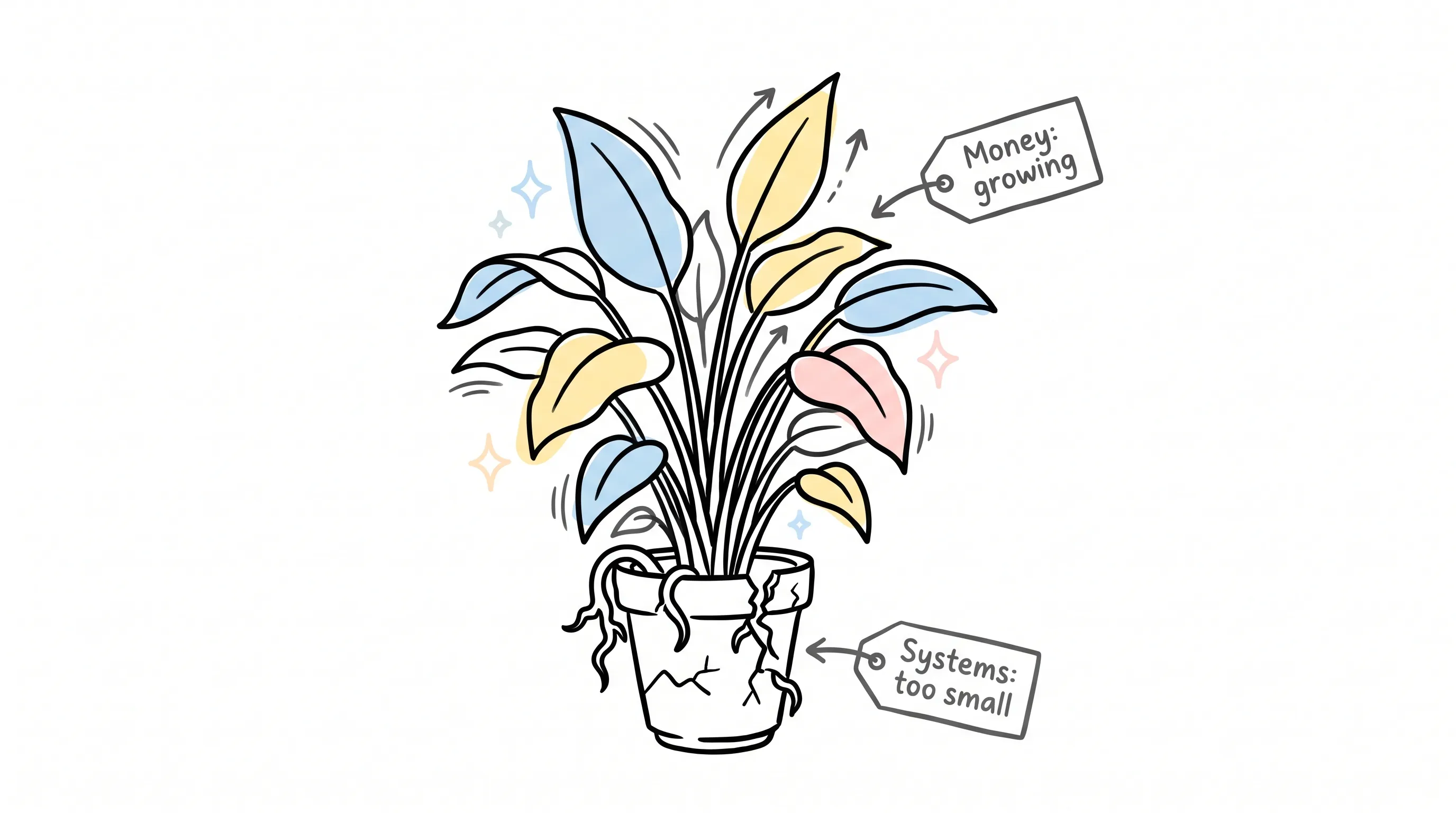
At the end of September, CreatorIQ released its seventh annual creator marketing report. After reading it through, one feeling kept growing stronger: this industry has genuinely grown up.
But growing up has a price: the old clothes no longer fit.
The survey asked more than 2,000 marketers from brands and agencies worldwide, spanning 17 industries and 9 countries — the largest annual study in this field. It tells two stories: one is good news, the other a warning. Let's take them one at a time.
First, the good news: the money is real
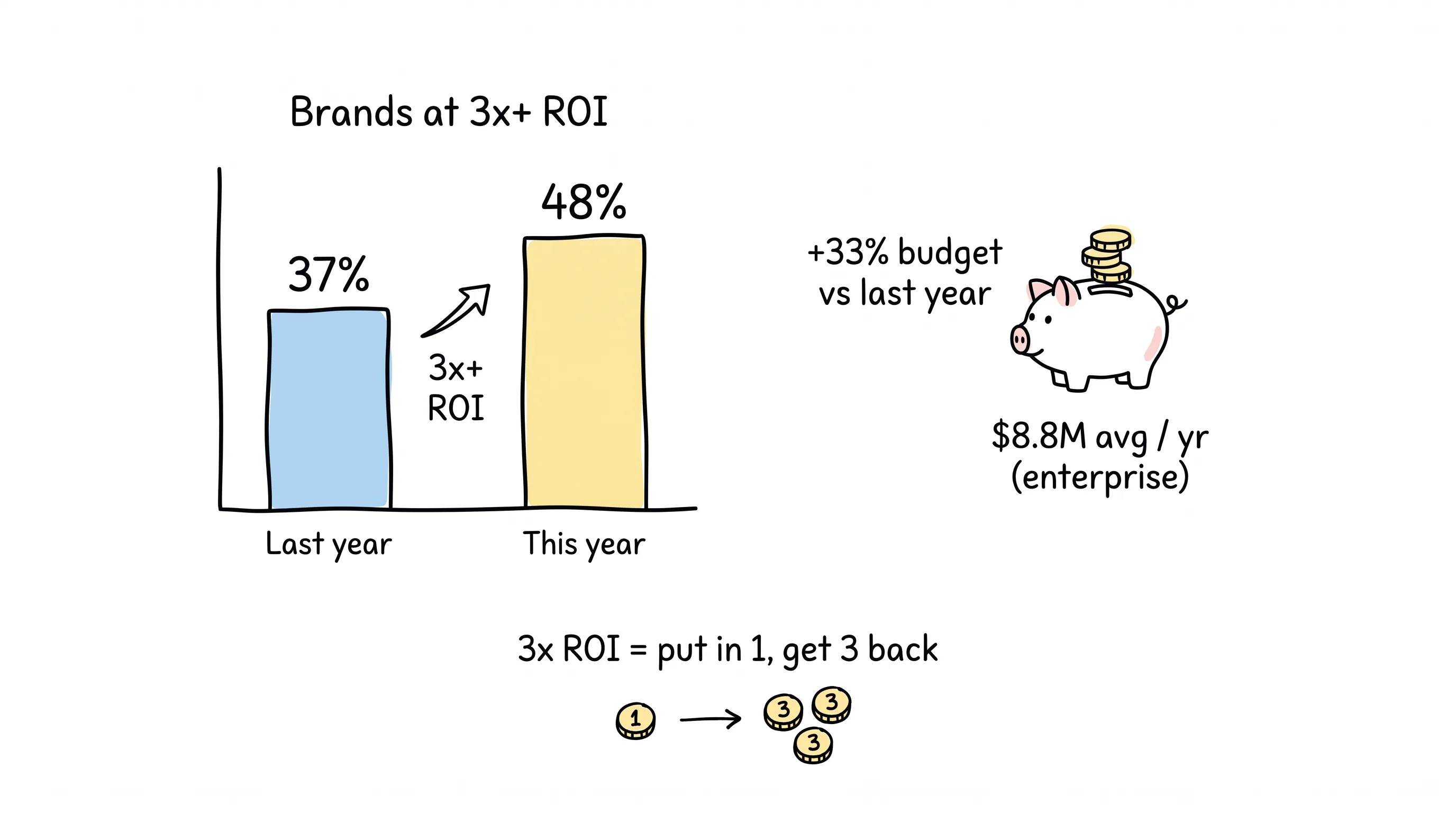
What does 3x ROI mean? You put in 1 dollar and get more than 3 back.
In this survey, 48% of brands said they achieved a return of 3x or more. What was that number last year? 37%.
Within a single year, nearly half of all brands crossed the 3x line. And the share of brands hitting 5x returns doubled outright.
Now look at the spending side. Brands are spending 33% more on creator marketing than last year on average. Large enterprises go even harder: $8.8 million a year on average, up 28% year over year.
Think about it: if a channel doesn't make money, does the boss increase its budget? No. There's only one reason to add budget: seeing returns.
So put these numbers together and they amount to a single sentence: creator marketing has gone from "an experiment worth trying" to "a formal, core channel."
But the interesting part comes next
The more money comes in, the more you'd expect celebration. Yet the survey's most revealing numbers are a different set: brands say their biggest headache has changed.
What does "changed" mean? Year after year, in industry survey after industry survey, the number-one challenge was always a lack of resources. Not enough budget, not enough staff — the answer never changed.
This year is different.
Budget and headcount both fell to the bottom of the list, with only 18% of brands still complaining about each. So what climbed to first place?
Integrating creator marketing data and workflows into the overall marketing stack. 27% of brands named it their top obstacle. Cross-functional collaboration and performance measurement follow right behind, at 26% each.
Notice something? Integration, collaboration, measurement — these are all growing pains of a "mature channel." A boss who has only ever hired an influencer for the annual gala never worries about whether the data connects.
When the headaches change, the industry has entered a new stage.
CreatorIQ's CEO put this observation bluntly: the constraint is no longer budget — it's infrastructure. Trust long ago shifted from institutions to individuals, and the brands that moved early on that shift have now grown so big they've burst the very systems they built back then. What winners do now is run creator marketing the way you'd run any serious channel — turning trust into a repeatable machine rather than one-off collaboration after one-off collaboration.
Paid media and creator marketing are merging
The report also has a set of numbers I stared at for a long time.
92% of paid media practitioners have already worked creator content into their own ad creatives. And "putting paid spend behind creator content" remains the highest-return play in all of creator marketing, at 38%.
At the operational level, the line between paid media and creator marketing has long since blurred.
What about budgets? In theory, creator marketing money should be carved out of the paid media pie. That is happening — but the share is shrinking: among brands with growing budgets, 64% were pulling from paid media last year; this year only 52%. Meanwhile, genuinely net-new budget rose from 33% to 38%.
What does that mean?
Creator marketing used to be the freeloader at the table, its meal money scraped from the paid media bowl next door. Now it cooks on its own stove. When does a channel truly stand on its own? The moment it has a budget of its own.
The biggest earners have the most headaches
This is the part of the report I found most counterintuitive — and most instructive.
By conventional thinking, the brands with the highest returns should have the simplest playbooks and the most effortless execution, right? It's exactly the opposite.
Among brands achieving 5x ROI, 63% said AI has made creator marketing more complex; among brands at only 1x, the figure is 42%. On brand safety and content risk control, 73% of 5x brands treat them as top priorities, versus only 57% of 1x brands.
And the two groups worry about entirely different things. High-return brands make "streamlining creator operations across brands and regions" their first priority; low-return brands are still busy finding creators and building awareness.
This isn't high-return brands overthinking things and inventing suffering for themselves.
Complexity is the shadow of scale. Run a small restaurant and you just cook — where would supply-chain problems even come from? Turn it into a chain, and central kitchens, cold chains, standardization — every headache arrives at once. All that trouble exists precisely because the plate is big.
The winners aren't the ones who dodged complexity; they're the ones who built infrastructure for it.
AI: saving money with one hand, stirring up trouble with the other
When it comes to AI, its role in this survey is deeply ambivalent.
Ambivalent how? Look at the savings side first: among brands with budget growth, 41% said one source of that growth was efficiency gains from AI. That's almost level with "net-new budget approved by the boss" (38%). Money saved by AI turns directly into ammunition for the next round of spend.
Now the trouble side: 45% of brands say AI has made the day-to-day running of creator marketing more complex; only 38% say it has made things simpler.
And it gets more uncomfortable. What do brands consider the biggest threat to trust in creator marketing? AI-related issues, precisely. AI-generated content at scale, AI influencers, and undisclosed AI use — 44% of brands cast their number-one threat vote to these.
The same knife that chops vegetables can cut your hand. This isn't an AI problem; it's the two-sided tug every general-purpose technology goes through when it lands in the real world.
Finally, my read
Piecing these numbers together, I realized the report is really telling different sides of one story:
The channel has been validated. 48% of brands earning 3x or more is a result unseen in seven years of surveys. But while the money showed up, the systems didn't — data integration, cross-team collaboration, performance measurement, all the trouble surfaced at once. And AI is pumping efficiency into this system while pumping new problems in with it.
So the competition in the next stage is no longer about "who does more creator marketing."
The industry has proven it can make money. What comes next is a contest over who can turn "making money" into a machine that runs on repeat.
As I closed the report, I thought: this lesson applies well beyond creator marketing. Every new channel walks the same road: first prove it can make money, then prove it can be managed. When it's making money, the contest is about vision; when it's being managed, the contest is about grinding, unglamorous work.
And you — which stage are you in right now?
Continue reading
Related articles
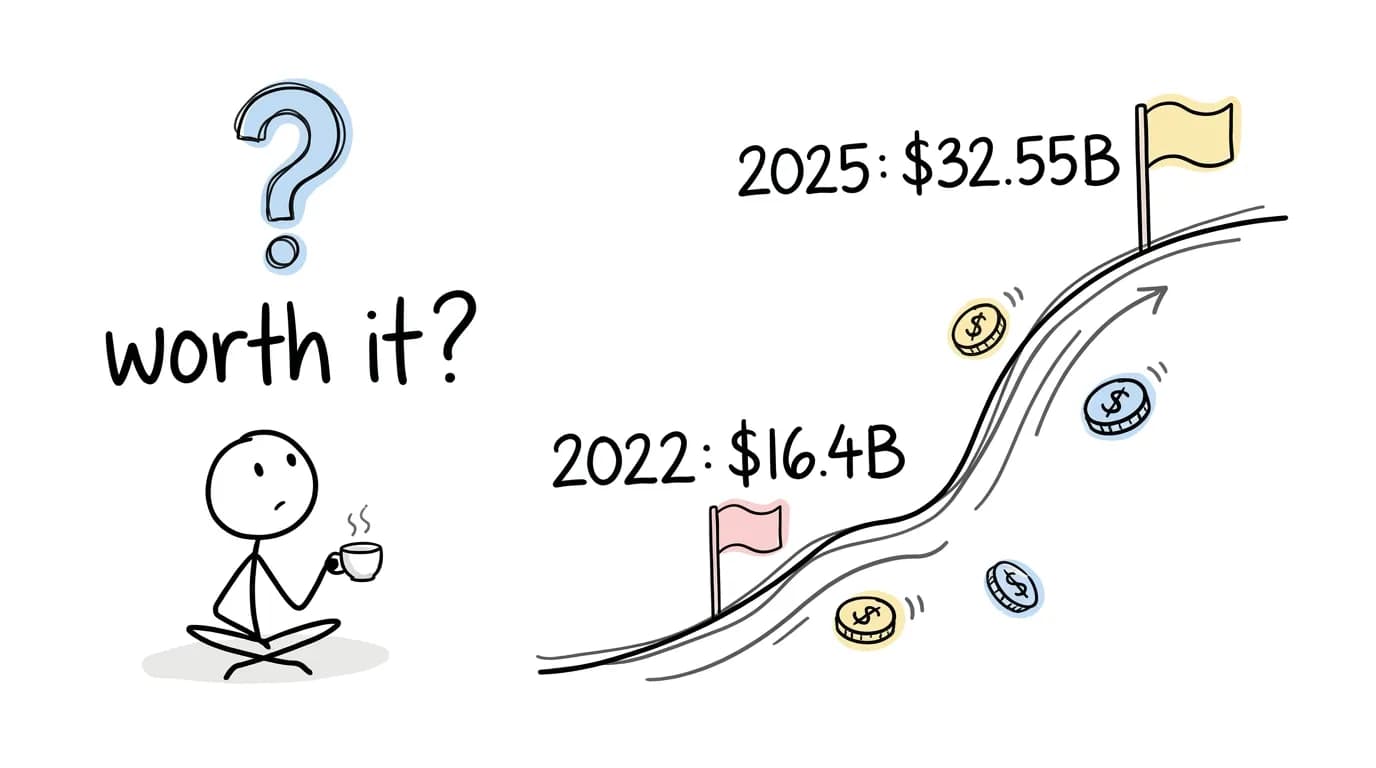
Is Investing in Influencers Actually Worth It? I Broke Down These Dozens of Numbers and Ran the Math for You
A learn article that compiles industry data on influencer marketing, covering market size, ROI measurement practices, nano versus mega creator pricing and engagement, platform budget allocation, AI tooling, and ad disclosure compliance.

The EU Is Handing the Pause Button Back to You
The EU's draft Digital Fairness Act targets dark patterns, addictive design, undisclosed influencer ads, silent subscription renewals, and game spending by minors, while keeping dynamic pricing legal but banning drip pricing; fines could reach 6% of annual turnover.
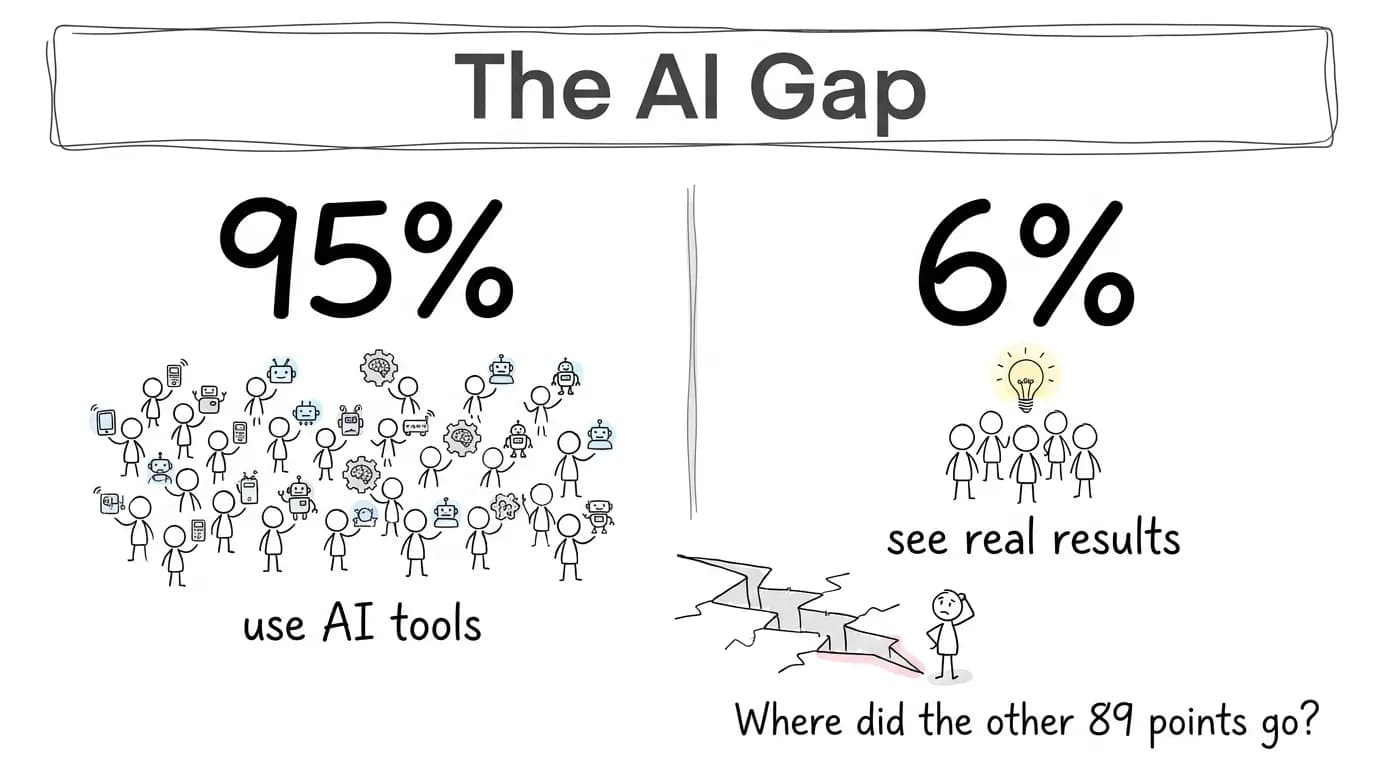
95% of Companies Use AI. Only 6% See Real Results. What's the Gap? Kolsquare's New Report Nails the Answer
A recap of a Kolsquare webinar on AI in influencer marketing, covering adoption gaps, AI-labeled content engagement, AI influencer limits, and generative engine visibility. It also outlines four practical moves for 2027 planning.