
Can AI Move Your Whole Store — Goods and Shoppers Alike — Overseas?
A learn article exploring how generative AI can help cross-border sellers adapt entire shopping scenarios to new markets through semantic and visual localization, why effects vary between markets, and why attribution of results needs careful checking.
A while back, a friend of mine who runs a cross-border e-commerce business invited me out for tea. He said something that left me stunned for a good long while:
"Going global used to mean shipping goods out. Now, I want to move the entire store over — without moving an inch."
I said, people move house all the time — but a store can just move?
He said it really does seem possible now. And the thing that makes it possible is the word we've all heard until our ears grew calluses: generative AI.
That hooked me. Back home, I dug through recent empirical research, and sure enough there was a paper devoted to exactly this question, with the North American market and the Southeast Asian market run side by side as a comparison. So today, let's take this thing apart piece by piece.
What Is "Scenario Migration"?
So what is scenario migration?
Put plainly: it means your e-commerce playbook has already been run to perfection back home. How to lay out the storefront, how to design a promotion, how to script a livestream, how to write product pages that make people want to buy the longer they look. This whole apparatus has been battle-tested in your home market.
Now you're headed into a market with a completely different culture. Southeast Asia, say. Or North America.
The old approach was translation. Hand the copy to a translation agency, swap the photos to local models, done and dusted.
And the result? More often than not, it doesn't take root.
What scenario migration wants to do is move the entire shopping experience over as-is, then use AI to plant it in local soil: the copy isn't literally translated, it's rewritten the way locals actually speak; the images aren't just a swapped face, they're redrawn to local ideas of what looks good.
Behind this sit two parallel tracks: one handles the words — semantic adaptation; the other handles the pictures — the translation of visual aesthetics.
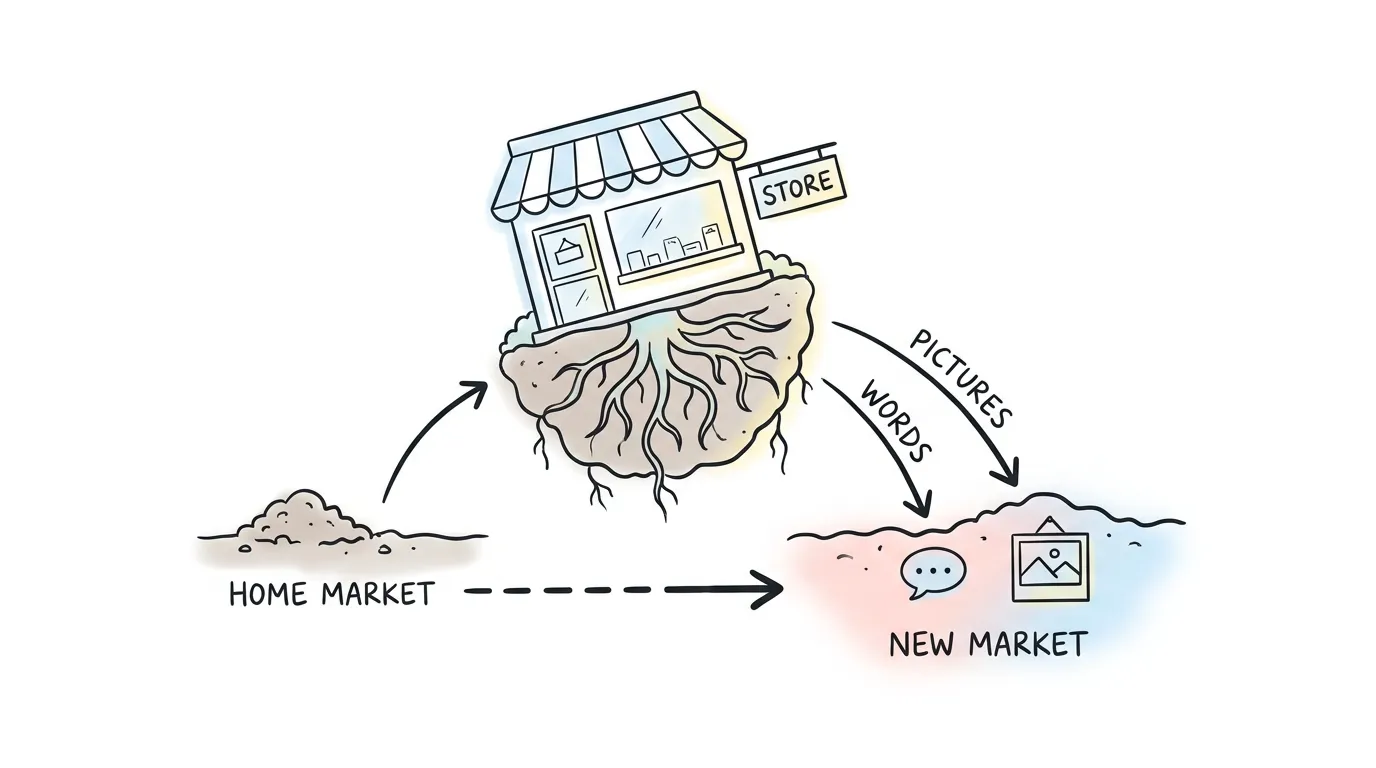
Walk on both legs and you go far; lose either one, and you hobble.
Sounds Beautiful, But…
Think it through: if this worked in a straight line, going global would be simple — switch on the AI, take the whole world.
But the researchers began with exactly that expectation, and stumbled over real data.
The early pilots ran, and the data came out a mess. Metrics in some markets swung up and down violently; worse still, the mismatch in local language ran deep. Copy generated by AI often didn't read to locals as "authentic" — it read as "odd." Apply your home-market thinking directly, and to them it reads awkward, even offensive.
What to do? Calibrate, over and over. Run a round, look at the data, revise, run another round.
Machines can translate words. They cannot translate context. Context hides in local people's lives, not in dictionaries.
So Does AI Actually Work?
Yes — it works. But the way it works may differ from what you imagine.
The researchers used a method that sounds frightening, called structural equation modeling. Don't let the name scare you; the gist is: use a pile of real behavioral data to test whether AI localization can actually close the distance between people and brands.
The conclusion: it can. Up to a point, it really can.
That wall of "this is a foreign brand, I don't quite dare buy it" — AI localization shaved some of it away. Only when distance narrows can trust have room to grow.
But, and here comes the point: the size of this effect varies enormously across markets.
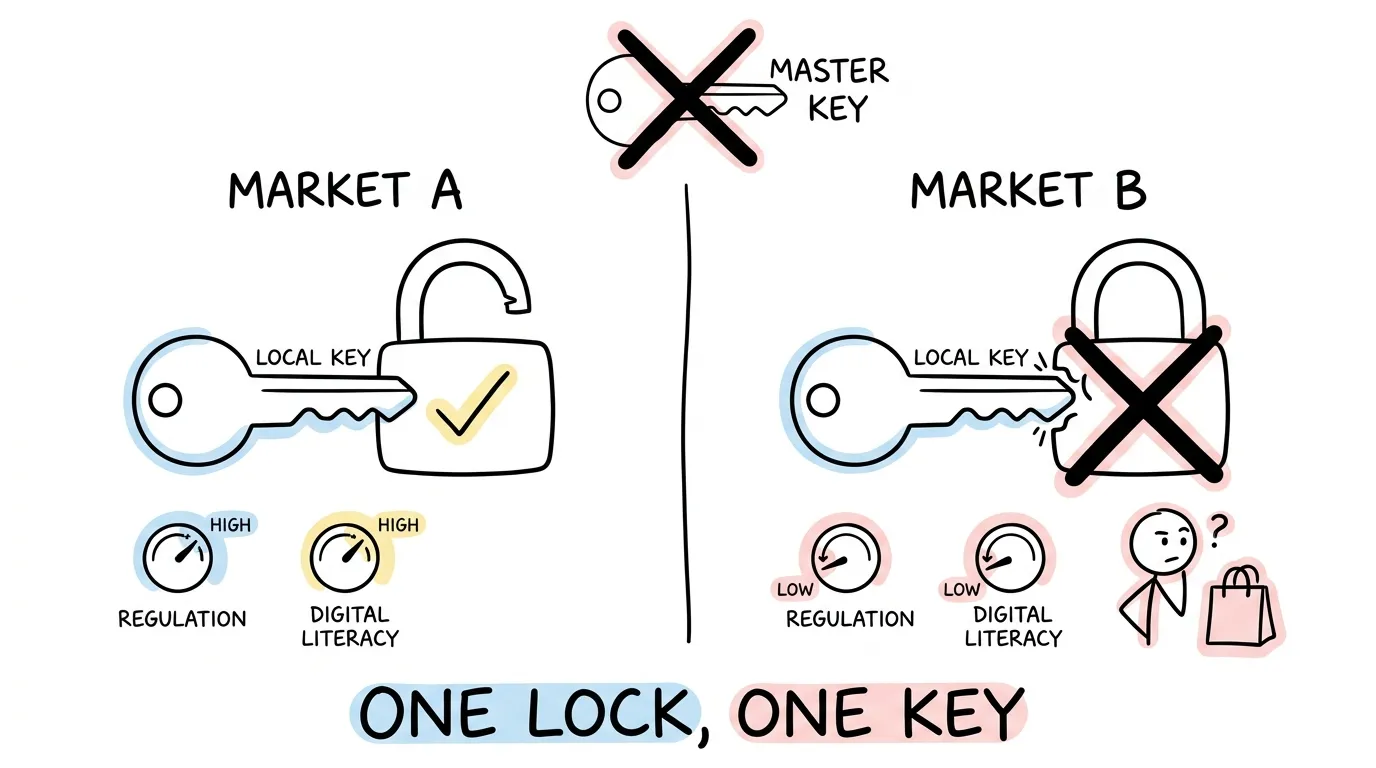
The same AI localization, in North America and in Southeast Asia, plays on entirely different scales. What decides how large the effect is comes down mainly to two things: one is the local regulatory environment, the other is the digital literacy of local users.
What does that mean?
Take one market: users order on their phones every day, they've seen AI-generated content so often nothing surprises them — AI says it, they believe it. Take another: a user is buying something big online for the first time, and the platform's rules are strict. However flashy your AI, suspicion kicks in first.
The same move, transplanted somewhere else, differs in power by an order of magnitude.
AI localization is not a master key. It is a local key. One lock, one key.
An Even Colder Bucket of Cold Water
Even supposing conversion rates really did rise, the researchers' second splash of cold water cuts deeper: is that rise actually AI's doing?
They put forward two competing explanations.
First, novelty. Users are seeing AI-generated localized content for the first time; it feels fresh, so they're willing to click and look. But novelty always fades — and then what?
Second, the broader market. The study happened to land in a consumer upswing; the tide lifted all boats. Your numbers look good, but the algorithm may not deserve the credit.
Put bluntly, the name written in the credit ledger may be the wrong one.
This is where, reading the research, I felt it was worth the most. It didn't ride everyone's excitement and hail AI as miraculous; it told you honestly: numbers can lie, and attribution demands care.
Finally, on Boundaries
There's one question the researchers themselves couldn't answer.
Generative AI is a black box. It can produce a passage of copy that reads thoroughly "local" in a given market — but why it wrote it that way, where the floor is, whether it will suddenly blow up on some cultural landmine — no one can fully explain.
The ethical boundary, the cultural boundary — where to draw that line, nobody has managed to draw it yet. That is the homework it leaves to future researchers, and the reminder it leaves to everyone heading overseas right now.
Back to My Friend
That day over tea, he asked me last of all: so this store of mine — do I move it or not?
I said, move it. But first keep three sentences in mind.
AI can help you carry the scenario over and pull the psychological distance closer. That is true.
But it is no one-click magic wand for going global. The language must be calibrated, the aesthetics must be calibrated, and every time you change markets you recalibrate the whole thing. That is also true.
As for whether the numbers in your dashboard went up — first get clear whether that's the algorithm's credit, or whether luck hitched a free ride. That is true as well.
Oh, and as he left, he added one more line: "So should I start by taking the Southeast Asia stop live with AI?"
I said, fine. But keep your eyes glued to the dashboard. The moment the data looks wrong, don't complain about the hassle — turn back and fix it immediately.
Machines handle speed. Humans handle right.
Going overseas, fast matters. But "right" is always worth more than "fast."
Here's wishing your store, wherever it moves, puts down roots.
Continue reading
Related articles
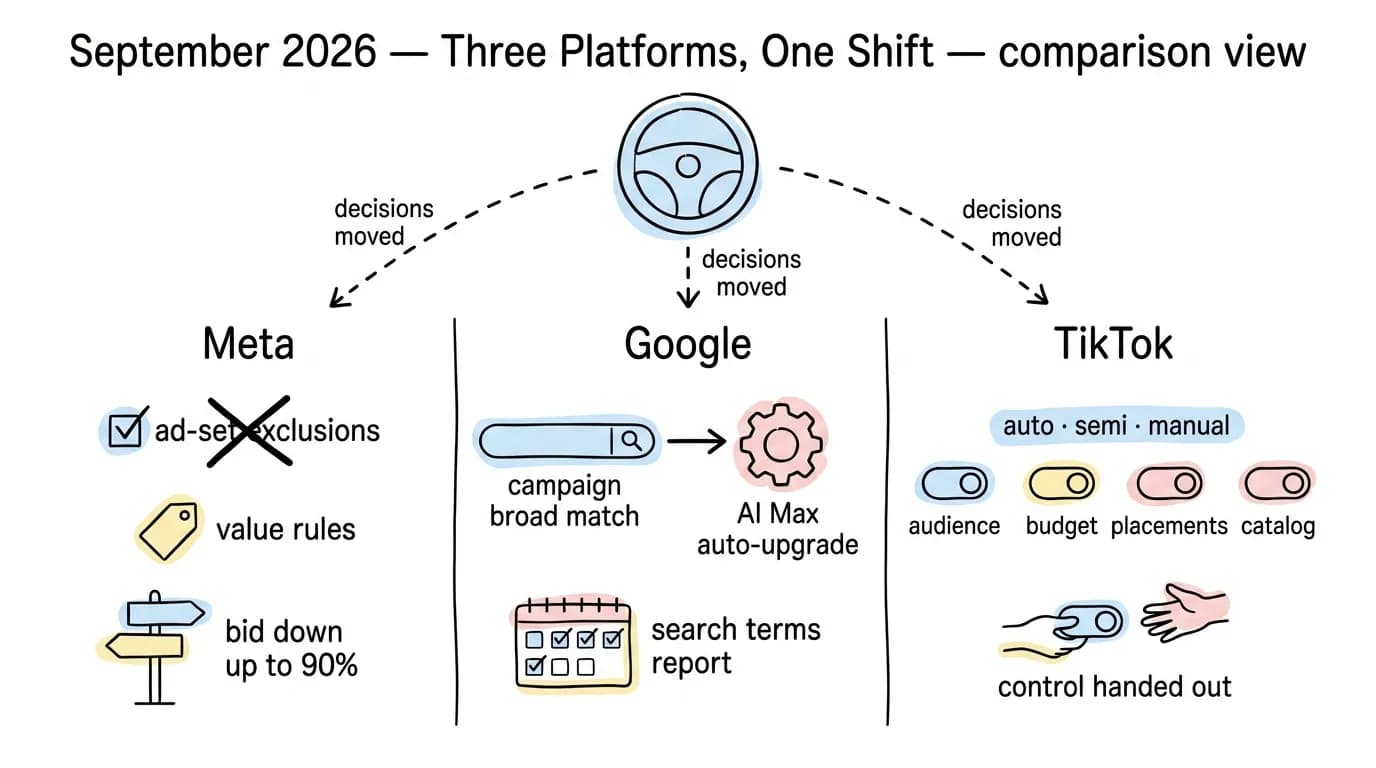
In September, Three Platforms Took Away Part of Your Steering Wheel
A few days ago, I went through everything the three big ad platforms did in September 2026. And I noticed a remarkably interesting coincidence.
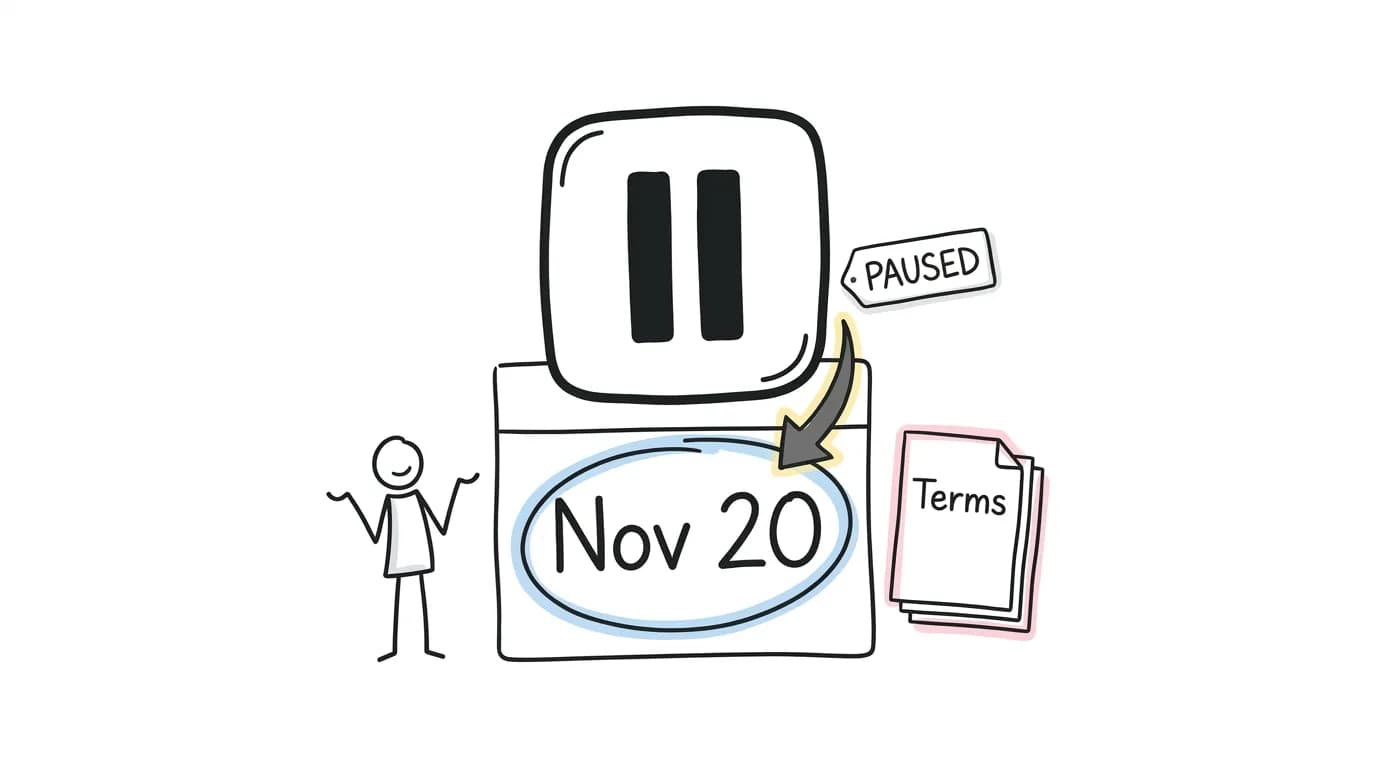
Meta's New Terms Hit the Pause Button on the Eve of the Effective Date
A while back, I was helping a friend of mine who runs a cross-border e-commerce business go through the compliance checklist for his ad account.
Google and Meta changed 17 ad rules this week. 6 of them need checking today.
A few days ago, I was helping a friend who runs a cross-border e-commerce business go through his ad accounts.