
AI Walked Into the Content Workshop: Writing, Matching, Publishing — All of It Changed
A learn article explaining how AI is changing content marketing across writing, audience matching, optimization, distribution, and video, with tool examples and notes on limits such as creativity, content flooding, and disclosure-related trust.
A few days ago, an old friend who has worked in content for seven or eight years asked me out for coffee.
His first sentence as he sat down: "The volume I publish in a single week now tops what an entire quarter did three years ago. And yet I can't shake the feeling that I'm getting cheaper."
I asked why.
He said, "It's as if suddenly everyone knows how to write."
I thought about it for a moment and told him: you've probably put the problem in the wrong place. It's not that you've gotten cheaper — the work itself has changed.
So today, let's talk about exactly that: now that AI has entered the content marketing workshop, which jobs has it actually touched?
First, Let's Be Clear About What AI Actually Came In and Did
What do we mean by AI in content marketing?
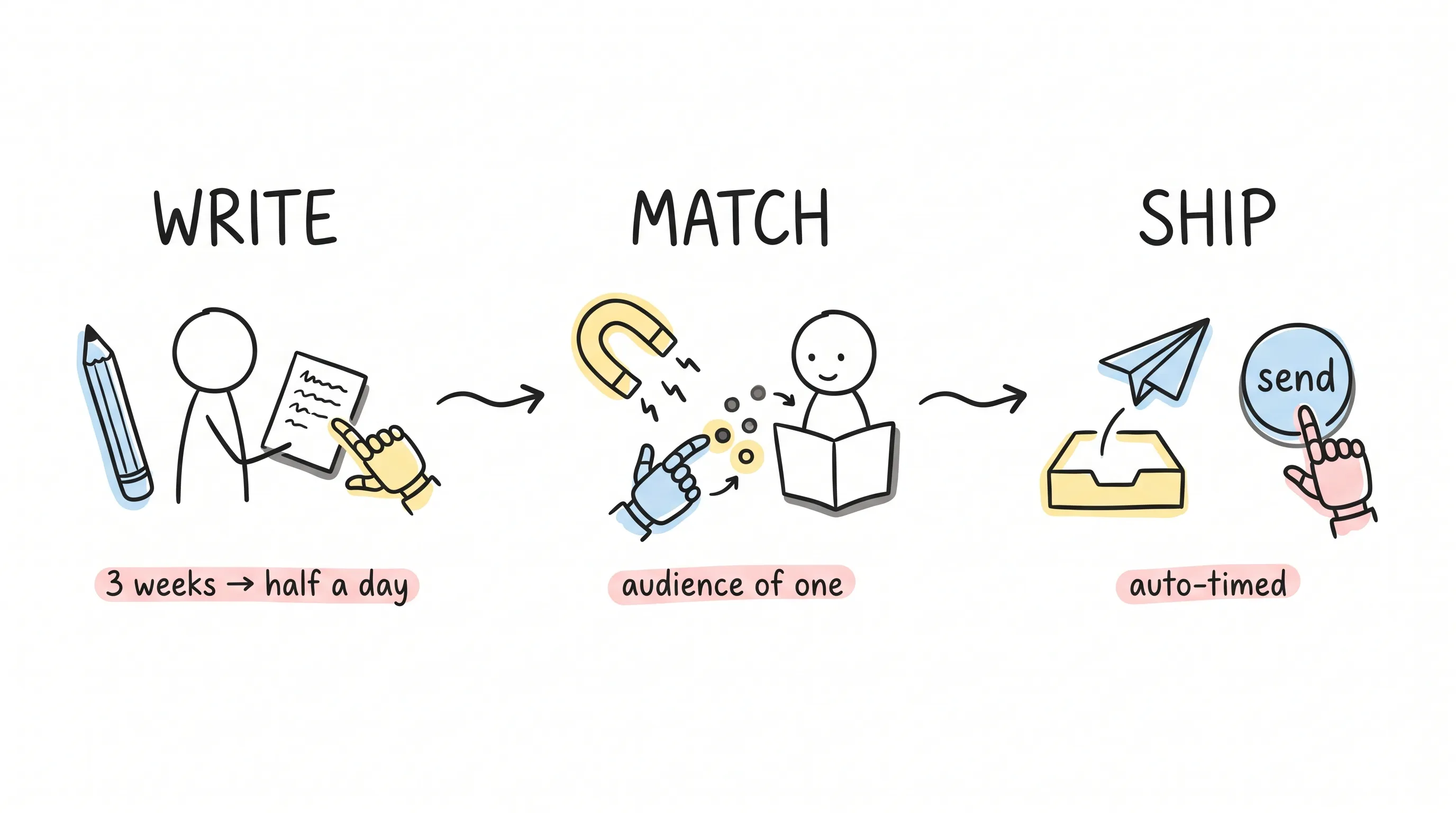
Put plainly, it's three jobs that used to be entirely human-supervised: write it, match it, ship it. Now, on every one of them, a machine is lending a hand.
Why these three in particular?
Because the content industry has been backed into a corner these past few years: more and more channels, and every new channel doubles the amount you have to publish; meanwhile readers have gotten pickier — serve them something even slightly off, and they swipe away without a backward glance. The manual approach can't keep up with either end.
AI squeezed in through that crack.
Let's take them one at a time.
Job One: Writing It
The most famous are the writing tools.
GPT-3, the language model, propped up a whole wave of products like Jasper and Copy.ai. Give it a topic, and it will produce everything from the headline and the opening to entire stretches of body copy.
The principle isn't mysterious. It reads oceans of existing text and learns how language is arranged. Give it a prompt, and it keeps writing along those patterns.
Who is this job best suited for?
Structured, repetitive content. Product descriptions, for instance.
Do the math. Say you have 1,000 SKUs, and one person writes 50 descriptions a day — that alone is three weeks of work. Hand it to the machine now, and every first draft comes out in half a day; the human only does the final check.
Three weeks becomes half a day. What do you do with the time you save? The things that genuinely need a human brain — like setting strategy.
These tools also pitch in. When you're stuck, they build the outline for you; when no title comes to mind, they hand you a row of options; some will even look back at what you've published before and tell you how to tweak the next piece.
But.
Its ceiling is clear: the human touch.
The subtle emotions in language, the cultural in-jokes, the kind of humor that genuinely sends a chill down your spine — it often can't handle those. What it writes is instantly recognizable as "smooth, but soulless."
So when the machine produces the draft, a human must stand guard at the last checkpoint. This step cannot be skipped.
Job Two: Getting It to the Right People
When we used to talk about "segmenting audiences," we segmented by demographics: age, region, gender. Big, coarse buckets.
With AI, the segmentation is behavioral.
What you've viewed, what you've clicked, how long you lingered on which page, what you added to the cart and then pulled back out. It remembers all of it, and then shows you different things accordingly.
You go to an e-commerce site, and the recommendation slots you see aren't the ones I see, because your browsing history isn't mine. Halfway through an article, it's already thinking about what to hand you next.
Netflix's and Amazon's recommendation engines are the most mature form of this logic. They turned "you might also like" into a standardized component that other industries can pick up and use.
Music and news are doing it too.
Spotify's Discover Weekly hands you a personal playlist every week, built entirely on algorithms analyzing your listening habits. The New York Times recommends your next article based on your reading history.
What does personalization look like taken to its extreme?
Everyone who opens your store sees a magazine laid out for an audience of one — them.
Job Three: Polishing It and Sending It to the Right Places
Written, matched — and there's still the last mile: optimization and distribution. This stretch of work is the most tedious, and the easiest for AI to take over.
Start with search.
Tools like MarketMuse, Clearscope, and Surfer SEO take the pile of content ranking at the top of search results, break it apart, and tell you: you missed this keyword, you didn't write this topic deeply enough, this section needs a little more before it stands a chance of competing.
Then readability.
Grammarly and Hemingway specialize in sentences: untangling the tangled ones, lightening the heavy ones, so it reads without effort.
Then performance.
Heatmap tools like Hotjar use color to show you where readers stop and where they swipe straight past. Which sections hold people, which chase them off — one chart tells you at a glance.
And the sending step? AI is on that too.
Curation. Editors used to manually comb through dozens of sources for content worth resharing. Now platforms like Curata and Scoop.it use machine learning to trawl the whole web and filter automatically, by your keywords and your audience's taste.
Timing. Hootsuite, Buffer, and Socialbakers analyze when your audience is online and which platforms they're active on, then schedule your publishing calendar for you — even tuning the tone by platform: one voice for social media, another for email.
Email gets even more granular. How to write subject lines for a higher open rate, what time to send for the best chance of being opened, who is most likely to reply after receiving it — AI can predict all of it.
Going a step further: predicting things that haven't happened yet.
HubSpot and BuzzSumo can tell you, before you even publish, roughly how this piece is likely to run — so you spend your effort on the content with the best odds.
It used to be guesswork. Now it's calculation.
Don't Leave Out Video
Beyond text, video is being remade too.
Lumen5 and Magisto can turn a blog post straight into a video: the script broken down automatically, visuals and music matched — a few clicks and it's a finished piece.
Adobe's Sensei has taken over the drudgery of editing: color grading, audio fixes, transitions. The machine does it fast and steady, and you no longer wait around for renders.
Even more ruthless: a different video for every viewer. Vidyard and SundaySky can generate different versions in real time based on the viewer's location and past behavior. Take a wealth-management firm — it can generate a personalized monthly account report video for each individual client.
And finally, the infrastructure: Google Cloud Vision and Amazon Rekognition automatically tag images and video so people can find them through search. AI also watches for the exact second viewers drop off, and tells you which segment to cut in the next version.
So Does the Math Actually Work Out?
Add up everything above, and the benefits come in four parts:
The work is faster. What used to take days or weeks now produces a first draft in hours or even minutes.
Distribution is more precise. One-to-one personalization, with open rates and dwell time climbing visibly.
You have the numbers. Every step is backed by data — no more going on gut feel.
Money is saved. Less manual labor, less rework. For small and mid-sized teams on tight budgets, it's like adding an assistant you don't have to pay.
Sounds like all good news?
Hold on. Everything has a flip side.
But There Are Three Things the Machine Can't Handle
First, creativity.
AI can produce content that is structurally complete and factually sound. But it cannot tell a personal story that makes you laugh out loud, or keeps you up all night after reading it. Because the person telling that story has to have actually lived it.
Second, the flood of mediocrity.
When the cost of mass-producing "passable content" drops to nearly zero, the world is buried under passable content. And passable is precisely what's worth the least.
Third, trust.
AI learns from existing content, and one careless moment means it collides with someone else's work — that's plagiarism risk. And readers have the right to know who they're talking to: which pieces are machine-written and which are human-written — you have to say it. Hide it, and once you're exposed, what you lose is the entire brand's trust.
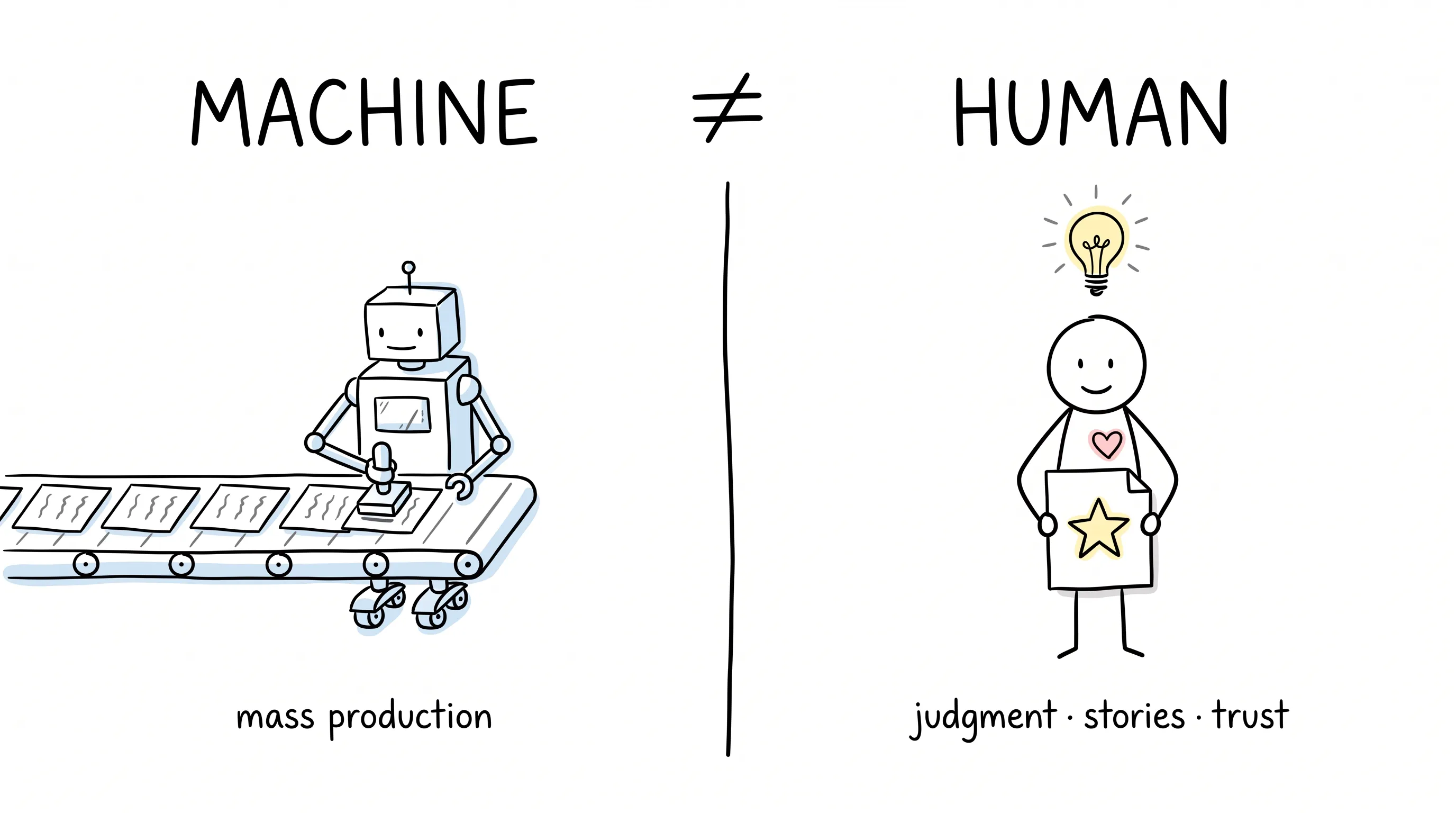
So the conclusion isn't "use it or don't." It's: machines run mass production, humans own the soul.
Where Is This Headed Next?
Several lines are already visible.
The models will keep getting better at nuance. Every generation from GPT-4 onward is more adept at handling context, tone, and emotion. The line between machine-written and human-written will keep blurring.
Content will grow more senses. In immersive AR and VR experiences, AI adjusts in real time behind the scenes: you walk into a virtual store, and its displays and recommendations are rearranged on the spot to fit your preferences.
Content will respond to you in the moment. Interactive content will become more common: quizzes, polls, videos that shift shape depending on how you tap. Even an email, at the instant you open it, will re-order its content based on what you just looked at.
Personalization will narrow from "segments" down to "this moment." It used to be a few hundred buckets sorted by profile; now it aims straight at you — the one person in front of the screen, right now. Whatever you want, it serves up that very second.
Back to That Cup of Coffee
At the end of that coffee, I said one thing to my friend:
AI didn't make you cheaper. Handing all the work over to the machine, and never adding the layer only you can add — that's what does.
What the machine takes away was never your skill in the first place; it's the part of the work that least resembles "you." The things that are truly valuable — your judgment, your stories, the bold call only you dare make — the machine can't give you those now, and won't for a long time to come.
The better the tools, the more expensive the human touch.
I'm writing this down for myself, and I'm passing it on to you.
May you make good use of the machine — and always keep that layer only you can add.
Continue reading
Related articles
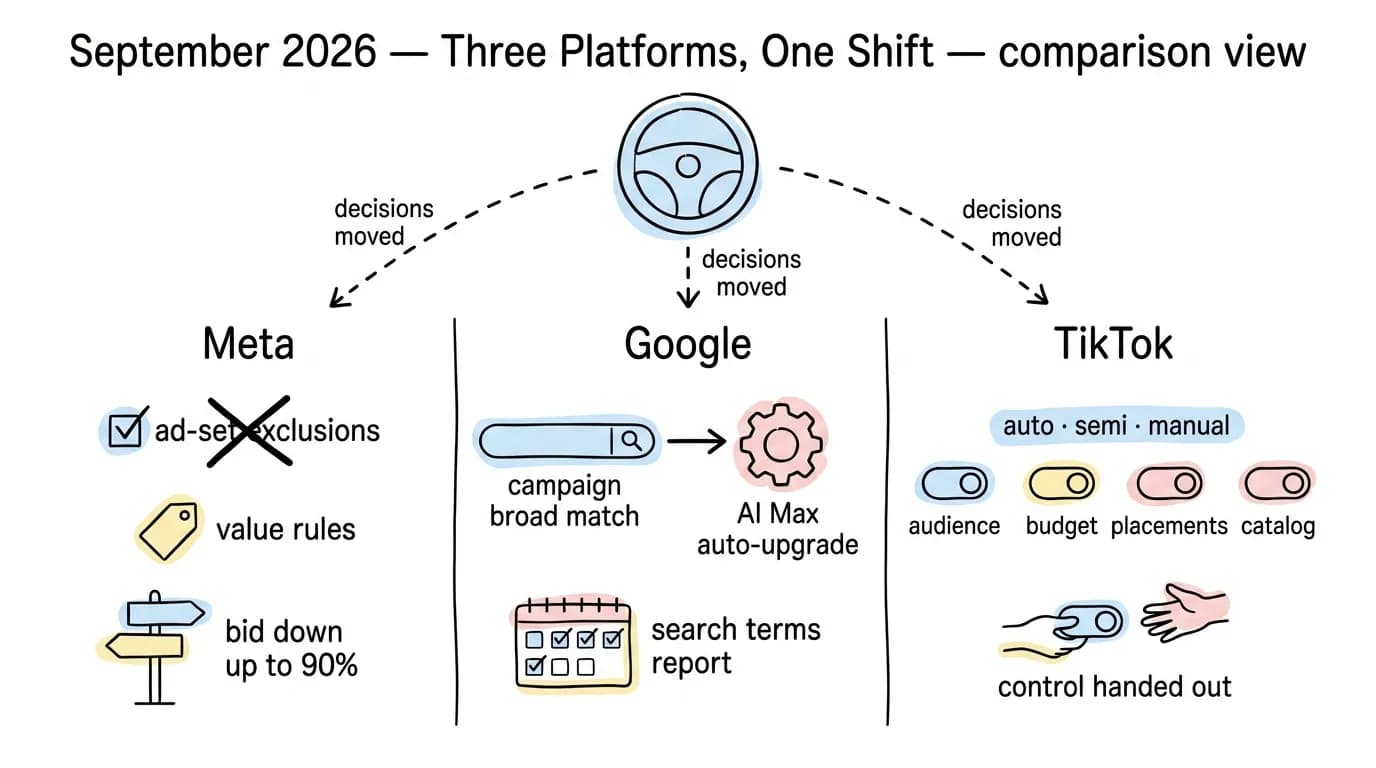
In September, Three Platforms Took Away Part of Your Steering Wheel
A few days ago, I went through everything the three big ad platforms did in September 2026. And I noticed a remarkably interesting coincidence.
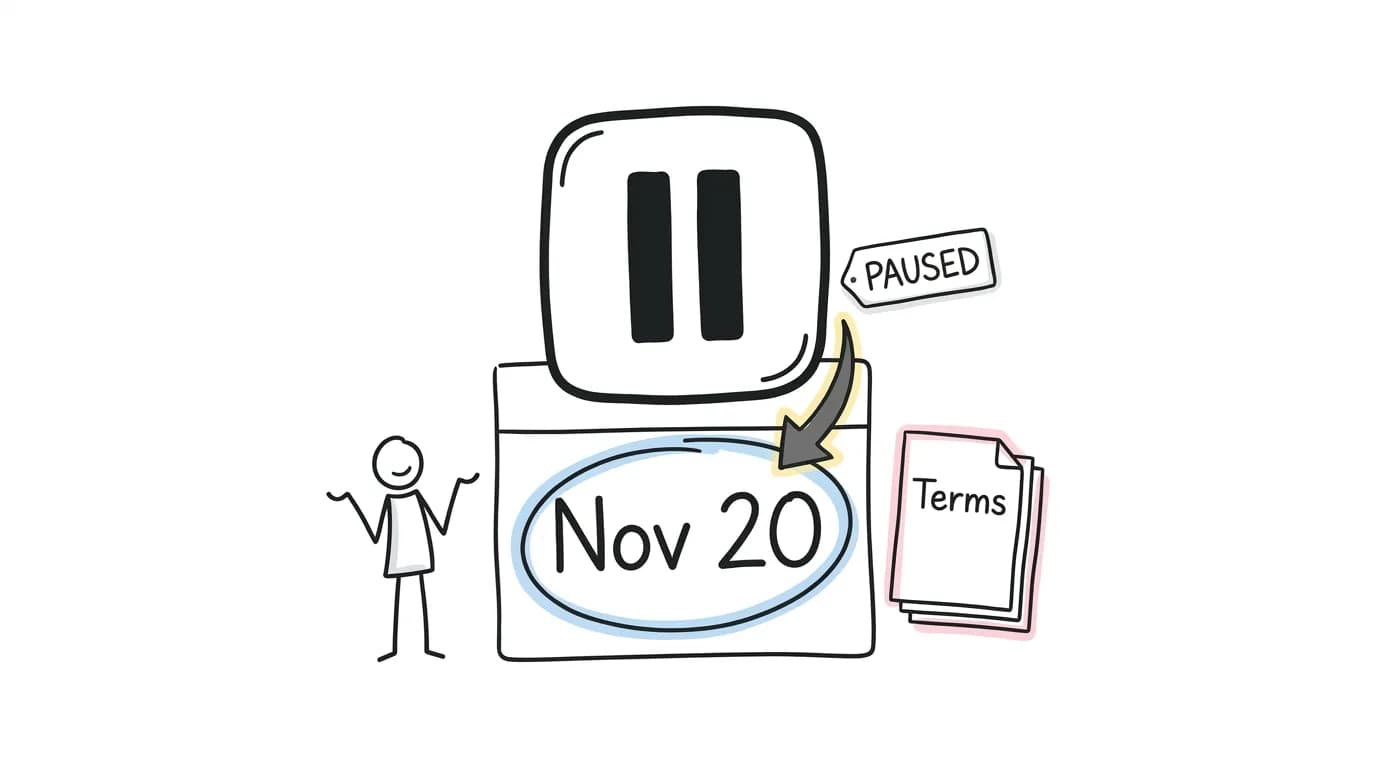
Meta's New Terms Hit the Pause Button on the Eve of the Effective Date
A while back, I was helping a friend of mine who runs a cross-border e-commerce business go through the compliance checklist for his ad account.
Google and Meta changed 17 ad rules this week. 6 of them need checking today.
A few days ago, I was helping a friend who runs a cross-border e-commerce business go through his ad accounts.