
AI Made Marketing Production 10x Faster — So Why Is Delivery Still Three Weeks Late?
A while back, I was consulting for a consumer brand. Their head of marketing poured it all out to me.
A while back, I was consulting for a consumer brand. Their head of marketing poured it all out to me.
He said: "We've bought every tool there is. Top of the line."
Copywriting — Claude cranks out ten versions in seconds. Video — Canva's AI generates it outright; we don't even hire a photographer anymore. Customer journey personalization — fully automated. On paper, a team like this should be shipping work at blazing speed.
And yet their new product still launched three weeks late.
Why?
Because the creative brief sat in the approval queue for half a month. Because two teams were heads-down building conflicting versions of the same thing. Because right up to the final moment, no one could say for sure who had the final call.
The tools got faster. The work didn't.
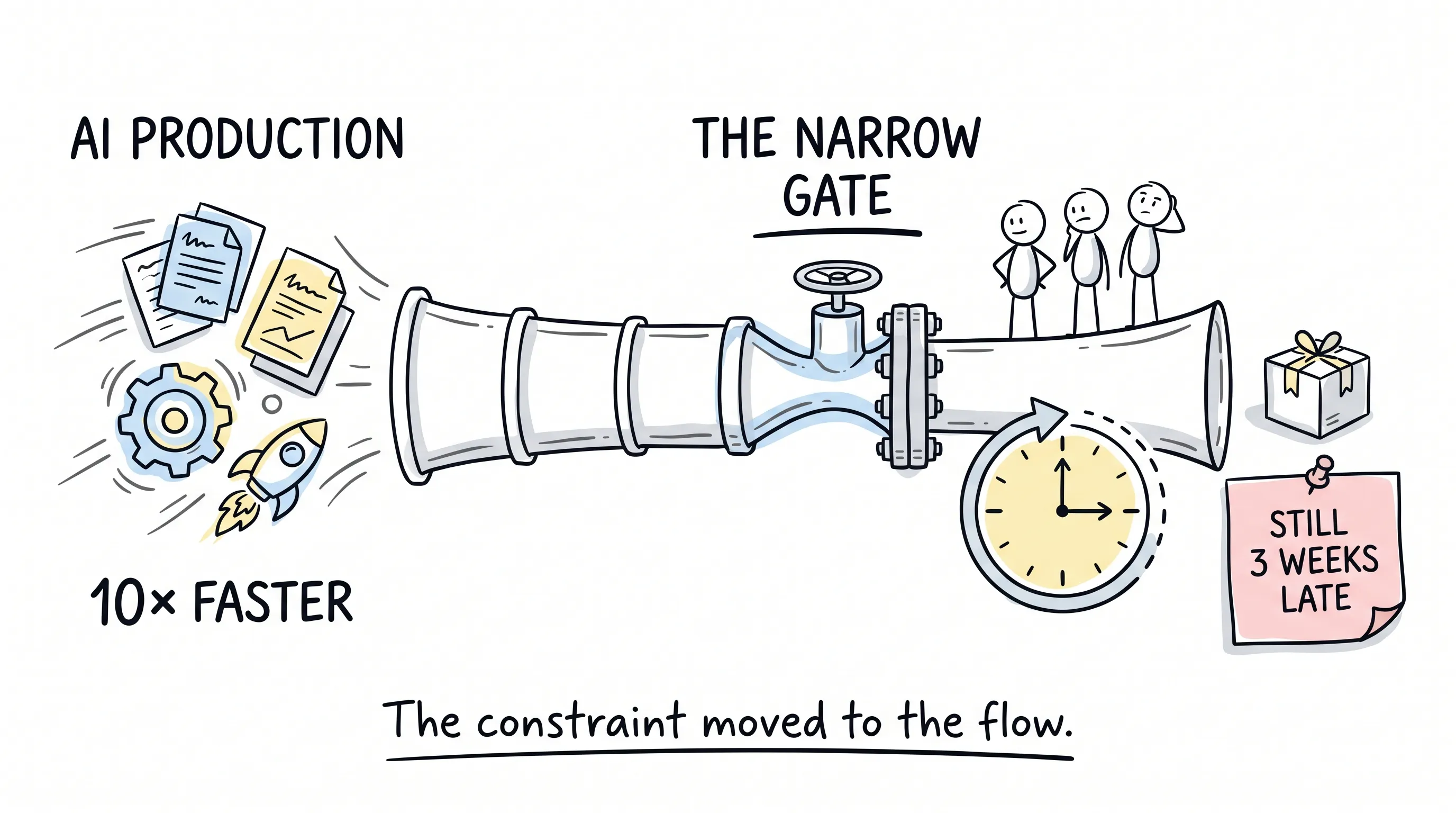
Think about it — isn't this absurd? Production sped up tenfold, and delivery didn't move an inch.
The Constraint Has Moved
What is a constraint? It's the narrow gate that chokes your entire production line.
In the old days of marketing, the narrow gate was production. Copy took time, assets took time, building campaigns and crunching data all took time. There were only so many hands, the day was only 24 hours long, and output just wouldn't climb.
So back then, marketing managers competed on capacity.
But AI has essentially torn that gate down. Drafts in minutes, images in minutes, videos in minutes. Production has gone from a scarce commodity to a mass-market one.
So where did the narrow gate go?
It moved upstream — into intake, decision-making, approvals, and baton hand-offs.
Once production speeds up, what's blocking you is no longer the speed of the doing — it's the congestion in the flow.
The marketing leaders who figured this out first are doing something completely different from before: instead of fixating only on "getting the work done," they are redesigning how the work flows.
Three Reasons Your Playbook Has to Change
Why is change non-negotiable? Three reasons.
First, production has been commoditized. A few years ago, when I consulted for clients, the copy and assets for a campaign took weeks; with personalized customization, it could stretch past a month. Now? Minutes. When output floods in as if it were free, scarcity shifts to everything around it: who takes on requests, who makes the final call, who reviews, who picks up the baton.
Second, the tools have outrun the processes. This may be the most overlooked one. Most marketing teams have long budgeted for tools and don't flinch at buying AI platforms. The problem is that stuffing these brilliant platforms into a way of working designed for the slow era — every department guarding its own stretch — causes collisions. Jamming new tools into old processes adds no speed — only friction and duplicated effort. Expensive software becomes expensive decoration.
Third, complexity keeps doubling. More channels, ever-finer audience segments, more bosses demanding results, more compliance gates. And headcount? Flat, or even shrinking. Brute-forcing it through individual heroics can't keep pace with that growth.
A Familiar Script
Let me tell you about a script I've watched play out countless times.
A company buys an AI platform, or builds some automation. They run a two-day training. Everyone's excited, top to bottom, waiting for a total transformation.
Six months later, the retrospective: usage is spotty, and workarounds that bypass the system are everywhere. In the meeting, the boss asks: what exactly are we getting for this money?
So where did things break down?
The tools changed — but the roles, habits, performance metrics, and approval paths didn't change at all.
Drop a new tool into an old way of working and it won't cure the disease — it just lets the disease run faster.
Four Things Leaders Should Do
So what do you do? Here are four things you can start today.
1. Funnel All Requests Through One Gate
What does that mean? Every new request enters through a single intake point and gets weighed against written, black-and-white criteria: does it qualify for the queue? If not, say no outright.
Otherwise? Otherwise the loudest voice on the team becomes your priority.
2. Run Fewer Assembly Lines
Sounds counterintuitive, doesn't it? The more work you have going, the faster you get things done — right?
Quite the opposite. Most teams' daily reality: start one thing, drop it half-done, move to the next. Ten pots on the stove, not one of them done.
Truly shrewd leaders map the work end to end on a single chart, then watch where the work queues up — not where people are busy.
Limiting the number of parallel tasks is one of the fastest ways to shorten delivery cycles. Many people don't believe it. Try it and you'll see.
3. Divide the Work Between People and AI
AI is already a member of the team, yet many employees are still confused: which of my tasks does it take over? Which ones, after it's done, do I still need to double-check? And which ones can never, under any circumstances, be handed to it?
Drawing that line is your job. Which steps AI has the final say, which steps humans only review, and which judgments can never be outsourced.
Note: this is a process-design question, and it has nothing to do with which vendor's tool you choose. Teams that skip it will get lightning-fast first drafts — and approvals that remain just as slow.
4. Shorten the Feedback Loop
You're accountable for delivering on time. But your plan has never set aside time for "stopping to listen to feedback."
Cut the cycle short. Ship, listen, adjust, ship again. Teach the team to iterate instead of bolting head-down for the next task the moment one is done.
AI happens to be the perfect teacher for this lesson. It makes a revision almost free.
Where to Start?
No need for a sweeping organizational overhaul.
Before you buy anything new, draw a map first. Pick the highest-traffic process on your team — say, the launch of a campaign, or batch content production — and record how long the wait is between every step.
Yes — measure the waiting, not the working.
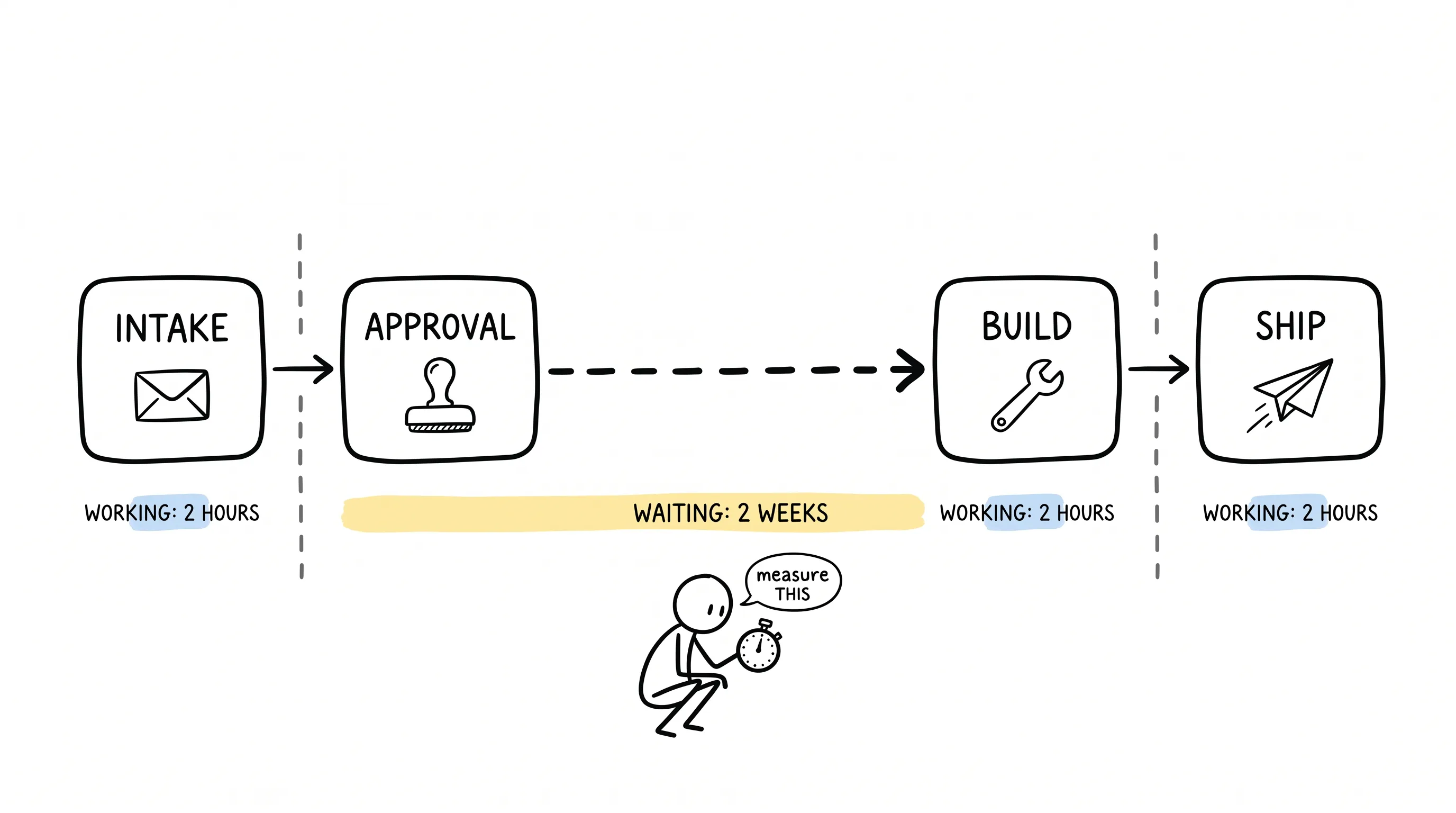
Those few numbers will probably make you wince. They'll also tell you directly where the money should go: redrawing an approval line, or bringing legal in earlier.
The friend from the opening story later changed his brief approvals from serial to parallel, with a single name locked in as the accountable owner. The next new product shipped two weeks early.
He didn't swap a single tool.
Final Word
AI has torn down the narrow gate of production. The next narrow gate lies in how you design the flow of work.
Whoever sees the waiting first can lift delivery first.
May your team never have to waste its best ideas sitting in an approval queue.
Continue reading
Related articles
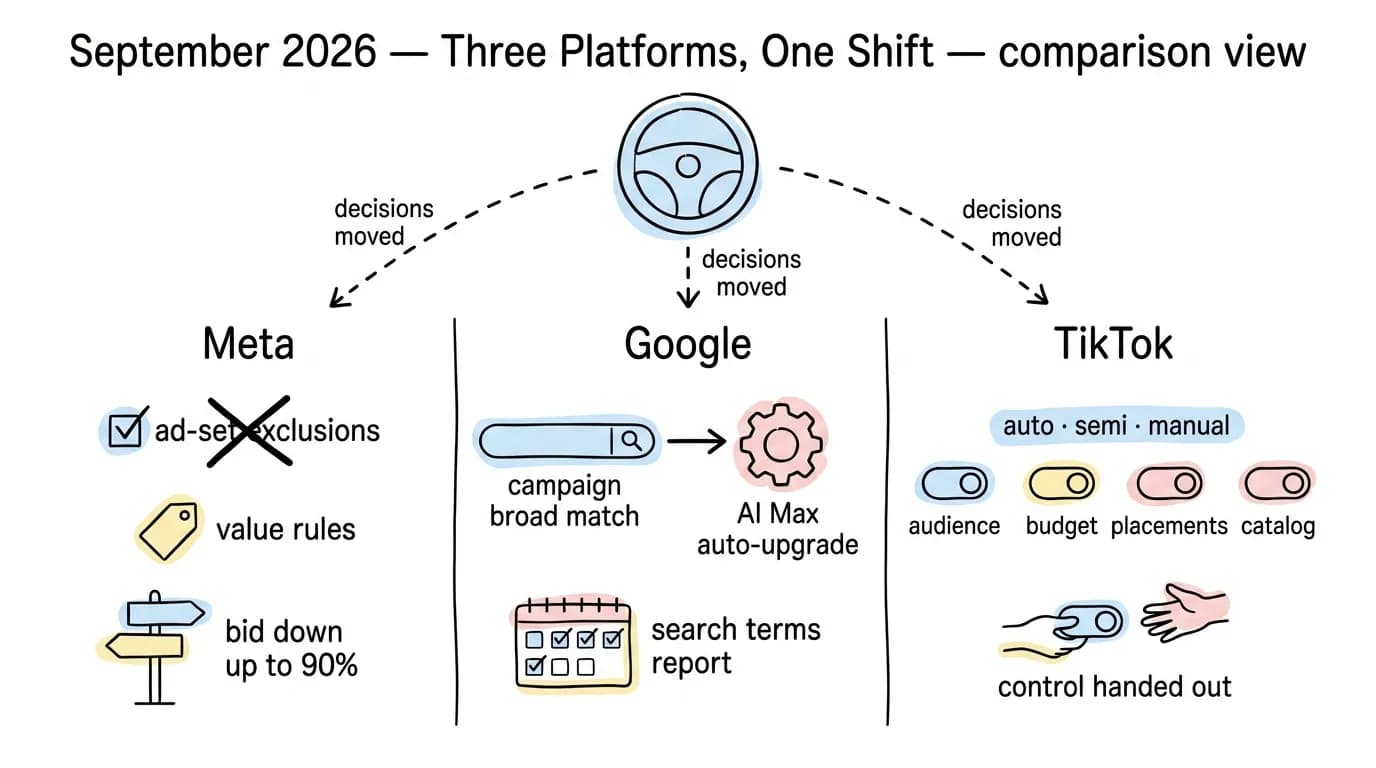
In September, Three Platforms Took Away Part of Your Steering Wheel
A few days ago, I went through everything the three big ad platforms did in September 2026. And I noticed a remarkably interesting coincidence.
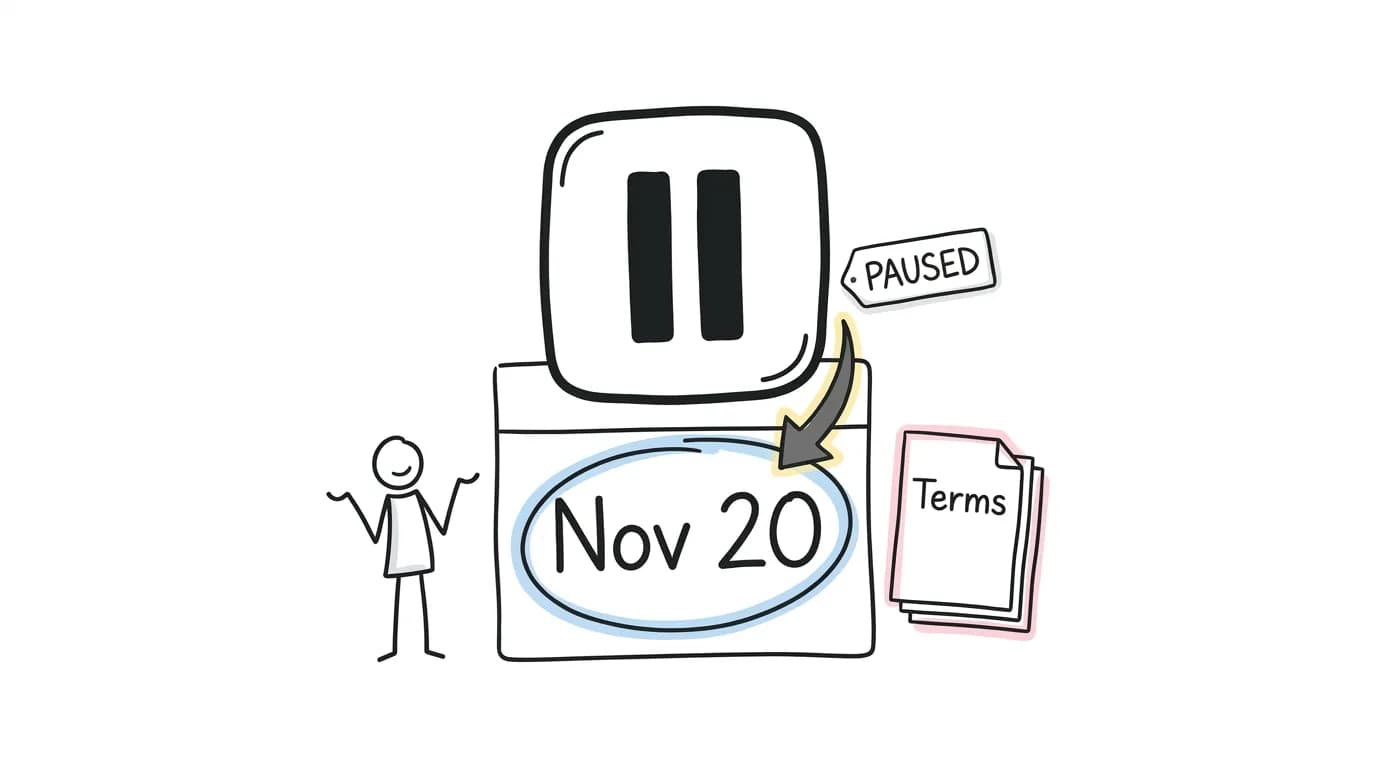
Meta's New Terms Hit the Pause Button on the Eve of the Effective Date
A while back, I was helping a friend of mine who runs a cross-border e-commerce business go through the compliance checklist for his ad account.
Google and Meta changed 17 ad rules this week. 6 of them need checking today.
A few days ago, I was helping a friend who runs a cross-border e-commerce business go through his ad accounts.