
AI Has Started Buying Things for People. So What Happens to Advertising?
This article examines how AI shopping agents could reshape advertising: purchases made through an AI advisor can bypass traditional ad traffic, so brands may need to optimize machine-readable messaging to enter AI shortlists. It also covers AI-generated visuals in e-commerce, compute-cost trade-offs, and new challenges
A while back, I wanted to add a chair to my study.
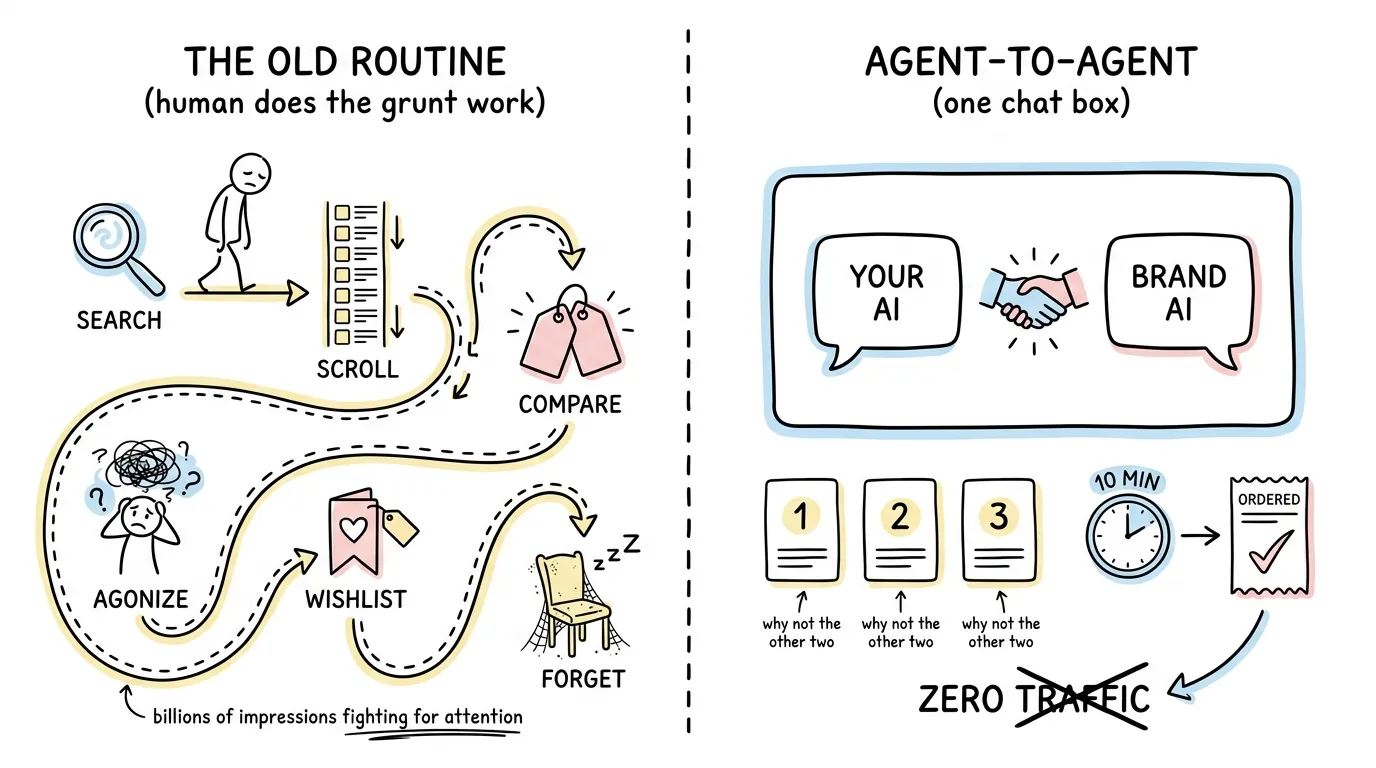
The old routine went like this: open a shopping app, search, scroll through pages, compare prices, scan reviews, agonize, save it to favorites, let it sit, forget about it.
This time I didn't. I handed the whole thing to an AI: budget around two thousand yuan, has to be comfortable for long hours of sitting, wooden floors at home, style not too loud.
It asked me a few questions, then served up three options, each with a note on "why not the other two."
Ten minutes later, I placed the order.
The moment I put the phone down, it hit me: this purchase had passed through zero "traffic."
Which means none of the splash screens, feed ads, or keyword auctions that fight for my attention played any part in it. I was dealing with an AI that had done all the "browsing" for me.
I'm not alone in this. Midway through this year, InMobi co-founder Abhay Singhal offered a judgment in an industry conversation: advertising is heading toward an "agent-to-agent" era. The consumer's AI, talking directly with the brand's AI.
Sounds like science fiction. But take it apart, and it's already happening.
1. So What Is "Agent-to-Agent"?
Put plainly: in the past, all the grunt work of a buying decision was carried by a human.
Searching, comparing, filtering—all you. The brand's job was to plant a few more signposts along that route.
Going forward? The grunt work goes to the AI. You say "find me running shoes with good value for money," and it sweeps the entire web, narrows it to three or five pairs, and walks you through the trade-offs.
Note that the deciding power stays in your hands. But the whole "shopping trip" has been compressed into a chat box.
So where does that leave advertising?
Advertising goes from being a signboard to being a sales assistant you actually enjoy talking to.
Think about it: when a consumer has an AI advisor standing beside them, does it mean anything for a brand to try to "shout louder"? None. You have to make the AI willing to recommend you. It has to read you, understand your merchandise, and confirm you're legit.
The marketing funnel is collapsing too. It used to be: see an ad, click through, wander the landing page, stew for seven days, order—one hurdle at every step.
Now discovery, comparison, and being won over all happen inside the same conversation.
So the marketer's homework has changed. Stop obsessing over how to grab eyeballs. Ask instead: can machines read my message? Will the AI be willing to carry this conversation forward for me?
In the past, you optimized pages for humans to see. From now on, you optimize "letters of introduction" for machines to read.
2. The Headache E-commerce Has Carried for Years May Finally Be Cured
Now for another shift: visualization.
Here's an old question: why is selling books or headphones online so easy, while selling sofas or curtains stays so painful?
Because books don't demand imagination. The specs are right there—page count, subject matter, star rating—plain as day.
A sofa is different. You have to complete an entire picture inside your head: how would it look in my living room? Does it go with the coffee table? Would the color feel oppressive?
That "cost of imagination" filters out a whole crowd of would-be buyers.
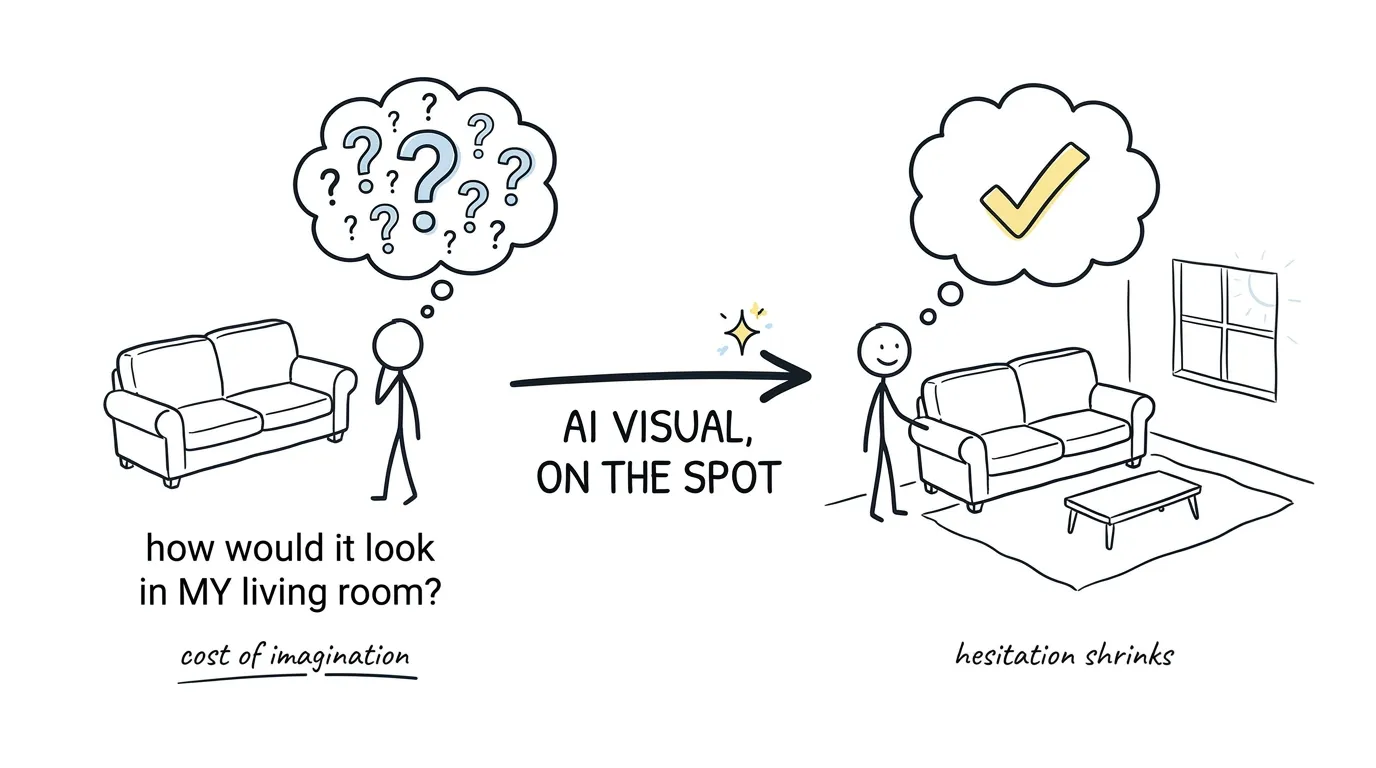
Now AI is pressing that cost toward zero.
Take Glance, an InMobi company: it generates visuals on the spot—how that shirt looks on you. No guessing; it simply puts the shirt "on" you.
Wow.
For categories that live and die by sight—apparel, furniture, home goods, pet supplies—this isn't a minor tune-up of the experience. It tears down the very barrier that blocks the sale.
And the results are visible too. Singhal noted that ads using AI-generated visuals are delivering markedly higher returns than conventional creatives.
Why? Think it through: once you see yourself in the outfit, hesitation shrinks, an emotional bond forms, and the psychological weight before checkout suddenly lifts.
The conversion-rate barrier often isn't price. It's imagination. AI has solved the imagination problem.
3. Let's Do the Math: AI Is a Money-Burning Machine. Who Pays the Power Bill?
Of course, everything has another side.
This stuff is expensive.
How expensive? The ad business runs on billions, sometimes tens of billions, of impressions a month. If a large model has to run behind every single interaction, the compute bill gushes out like water.
Does the business still hold up, then?
InMobi's play is pragmatic: use advertising revenue to subsidize the AI's compute costs.
The logic goes: users enjoy an AI service, the AI service carries ads, and the money the ads earn pays for running the models. As long as users stay long enough and interact enough, the ledger turns positive. Their early tests did show signs of net-positive economics for publishers.
And that hands marketers a new bill to pay.
You used to tally cost per click and cost per conversion. Going forward you also have to tally: what did every AI interaction cost me? What did every token burned buy back?
You'll discover something quietly disruptive: for the first time, the quality of creative directly decides whether "the infrastructure" can stay alive.
Make boring ads and nobody interacts, and the AI's bill can't be covered. Make ads worth engaging with, users talk up a storm, and the money starts circulating.
Creative has gone from the department that spends money to the department that generates it.
4. Consumers Changed. Your Team Has to Change With Them.
Back to that chair.
Look closer at it, and you'll notice the basic mechanics of consumption being swapped out part by part.
Research has been outsourced, but it hasn't disappeared. Consumers can't be bothered to sift a hundred links themselves anymore—but they keep the final say firmly in their own hands. So brands have to find a way to "move into" the AI's shortlist. Being overlooked by the AI amounts to being eliminated outright.
Advertising can no longer be an interruption; it has to be a conversation. Nobody wants a banner cutting into their chat with an AI. But nobody refuses a good guide—someone who actually knows the merchandise and enjoys helping you choose.
Personalization is getting a generational overhaul. The old kind sliced ten million people into a hundred groups and stuck a label on each. The new kind takes one person and generates, in real time, a presentation that belongs to them alone.
Even the org chart will get tugged along. When the ad itself becomes an interactive product, the copywriters, the experience designers, and the data watchers can no longer work in separate silos—they have to sit at the same table.
And one more headache: attribution.
In the past, you could roughly trace who drove a conversion. Now there are several layers of AI in between—so who gets the credit for this sale? Unanswerable. The old measurement models will fail. A new ruler has to be invented from scratch.
Finally
That chair has arrived. Sitting in it the other day, it struck me again: from first inkling to confirmed order, I never laid eyes on a single ad.
And yet, strictly speaking, I was wrapped in "advertising" the entire time. Every reason the AI gave me, that "why not the other two" line—all of it was a new form of brand communication.
So stop writing all this off as "yet another new channel."
This isn't steering your boat into a different river. The current itself has changed direction.
The loudest brand doesn't necessarily win. The winner is whoever first works out how an AI and a brand can value each other.
Here's hoping that in this round of reshuffling, you're the one the AI reaches for first—not the one it brushes aside in passing.
Continue reading
Related articles
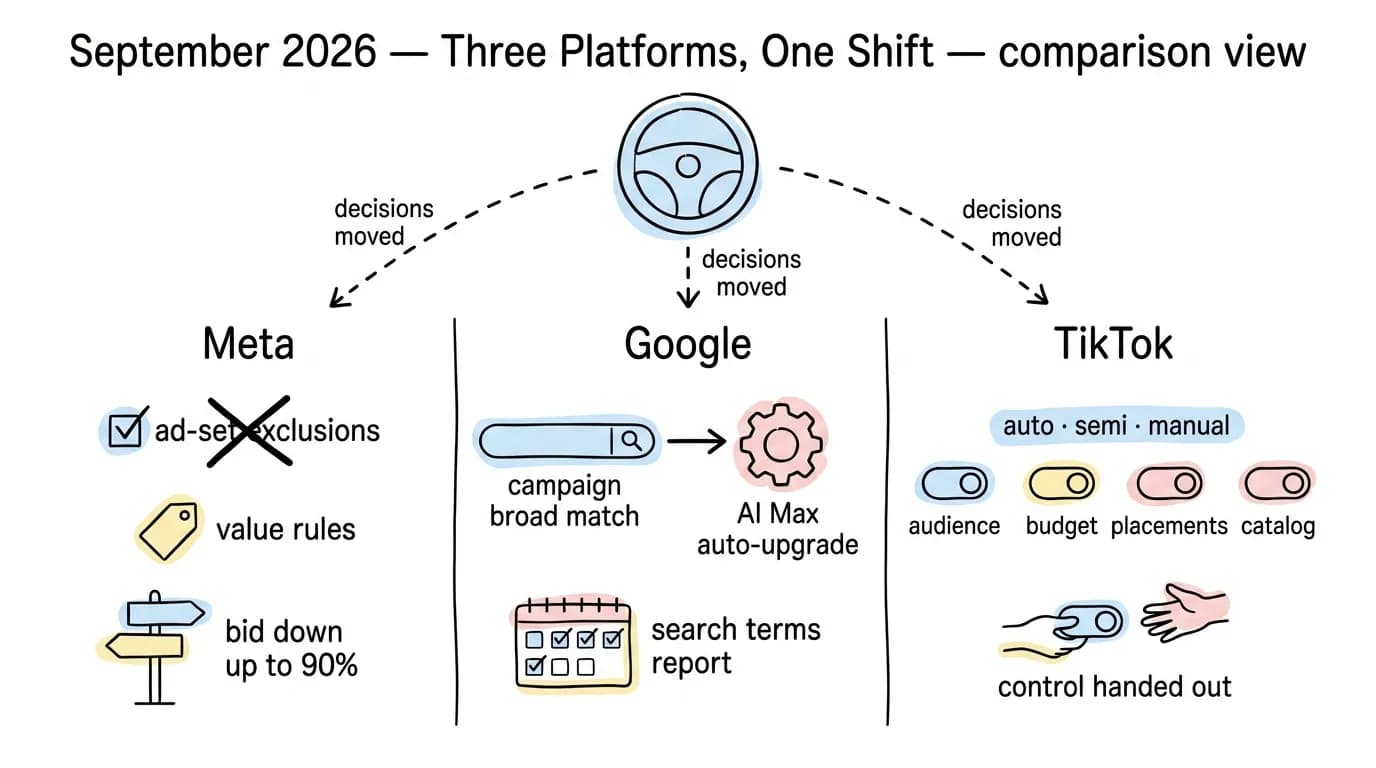
In September, Three Platforms Took Away Part of Your Steering Wheel
A few days ago, I went through everything the three big ad platforms did in September 2026. And I noticed a remarkably interesting coincidence.
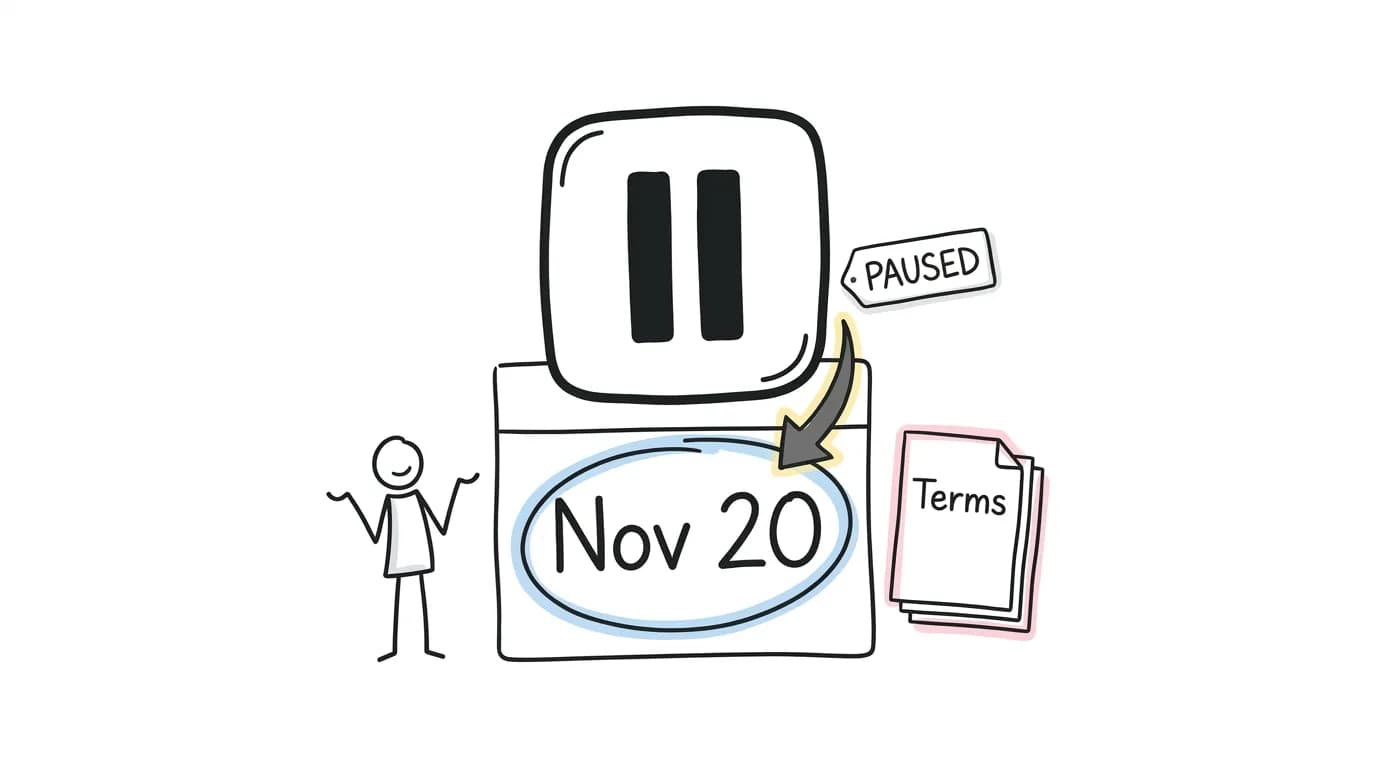
Meta's New Terms Hit the Pause Button on the Eve of the Effective Date
A while back, I was helping a friend of mine who runs a cross-border e-commerce business go through the compliance checklist for his ad account.
Google and Meta changed 17 ad rules this week. 6 of them need checking today.
A few days ago, I was helping a friend who runs a cross-border e-commerce business go through his ad accounts.