
A Prom Dress Seller Gave Me a Masterclass in AI
A learn article about a cross-border seller of prom dresses who applies AI across product research, listings, ads, inventory, pricing, and customer service, while flagging limits around design judgment, data bias, compliance, and tool costs.
A few days ago, a friend of mine who runs a cross-border e-commerce business came to Shanghai, and we got dinner.
He's based in Shenzhen, selling women's fashion overseas, focused on the US market. His specialty: prom dresses — the gowns American girls wear to prom during graduation season. He'd been at this business for years, steady but never spectacular.
But this time, he seemed like a different person.
Over dinner he talked about AI for half the evening, buzzing with excitement. I figured it would be the usual "using ChatGPT to write product copy." Turns out he had rerun his entire pipeline with AI — product selection, ad buying, inventory, pricing, all of it.
Wow. That dinner was worth every minute.
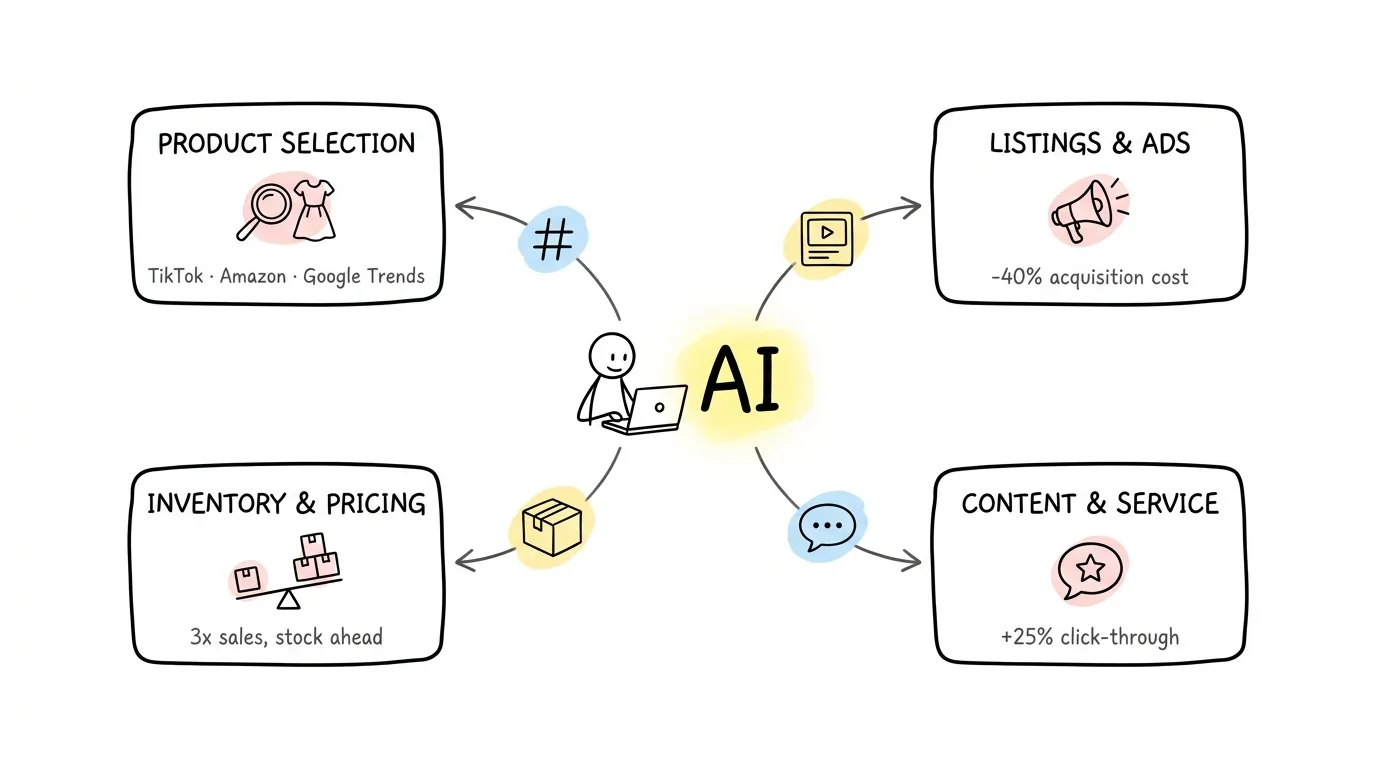
When I got back, I pulled together what he does, plus some data I've come across recently, and put it down for you here. If you're running an overseas business — or planning to start one — this one is worth reading to the end.
Start With a Number
What does it mean for AI to have "come of age"? Feelings don't count. Follow the money.
For non-game apps worldwide, revenue from generative AI applications grew 232% year over year between Q2 2025 and Q1 2026 — an extra $4.4 billion earned in a single year.
What does 232% mean? For an ordinary app, 20% growth is champagne territory for the team.
And here's the more interesting number: downloads have basically stopped growing.
So what does that tell us? AI is no longer a toy people download out of curiosity. It's a mature business. The number of users isn't growing much, but the ones who installed are paying happily. AI assistants, AI agents, AI companions, AI-generated images and videos — one category after another, all starting to make money steadily.
When money pours into a platform, tool capability grows like wildfire. And that wave is about to break over every cross-border seller.
Break how, exactly? I've broken it into four things, one by one.
First: Product Selection
What is AI-powered product selection? Putting a machine to work squatting on TikTok, Amazon, and Google Trends, watching for trends 24 hours a day.
Here's an example from my friend's industry. America's back-to-school season runs from July to October, and prom dresses and homecoming dresses spike in a concentrated burst each year. Have AI scan TikTok, Amazon, Google Trends, and Pinterest, and the conclusions are pretty interesting:
Satin corset-style minis are the most predicted breakout hit. One-shoulder, high-slit gowns lead in search momentum all the way. And one counterintuitive finding: plus sizes — XL through 5XL — are growing faster than standard sizes.
Don't underestimate these signals. How do you read them? Cross-validation. The trajectory of hashtags like #HomecomingDress on TikTok correlates strongly with actual sales. Hashtags heat up first; orders arrive after.
How do you actually put this into practice? Here's the clunky way — it's exactly what my friend does. Step one: use trend tools like Exploding Topics, or write your own scripts, to track keyword volume on Amazon and TikTok. Step two: feed your own sales data from the past few years to a model and let it predict which styles will rise next quarter. Step three: validate against hashtag heat on social platforms.
One night of machine-watching beats two weeks of manual scrolling.
Second: Listings and Ads
What's a listing? The title, the five bullet points, the product description — everything on the product page.
In the past, writing these meant either outsourcing or the boss grinding it out personally. Now, have AI tear through the best-selling listings in your category, and the high-converting formulas are laid out in front of you. Amazon has its own AI assistant, Project Amelia; third-party tools like Jungle Scout and Helium 10 have packed in AI features too.
Ads are the real main event.
TikTok's recommendation algorithm is arguably the fiercest on the internet. Two things you can do with it. First, use tools like Synthesia or HeyGen to generate AI avatar videos — models wearing your dresses, shown across all kinds of scenes. Second, hand your bids over to Smart Performance Campaign (TikTok's automated AI campaign type) and let the AI optimize for conversions automatically.
Let me run the numbers for you. One dress seller used AI to crank out 50 ad creatives in one go — different backgrounds, different music. After AI auto-tested and auto-scaled them, the customer acquisition cost came in 40% lower than manual A/B testing.
40%. Plenty of cross-border businesses run on net margins of just a few points. That's the difference between making money and not.
There are cards to play on the Amazon side too. Dynamic bidding — adjusting bids in real time based on conversion probability. AI prospecting — mining your existing buyers for lookalike audiences. And don't waste your campaign reports either: for keywords with sky-high impressions but nobody clicking, have AI pick them out and add them to your negative keywords.
Every dollar should be spent where it cuts deepest — and AI sees the blade sharper than you do.
Third: Inventory and Pricing
What do cross-border sellers fear most? Stocking out in peak season — or drowning in unsold stock. Either way, you're gambling.
AI turns gambling into arithmetic.
In one past prom season, searches for "mermaid prom dress" — the fishtail silhouette — were up 120% year over year. Sellers who stocked ahead of the trend sold about three times as much as competitors who just sat waiting.
Three times. The difference came down to this: while others were watching, you had already loaded your goods into Amazon's warehouses.
The tools themselves are nothing fancy. Prophet, open-sourced by Meta, is a time-series forecasting tool — pipe in your historical sales data from Amazon and TikTok Shop, and it projects next cycle's demand. Attach automated replenishment rules, and someone is watching your inventory levels around the clock.
Pricing works the same way. What if a competitor suddenly drops prices? A dynamic pricing algorithm senses it and adjusts automatically — matching the cut, or fine-tuning along your margin line. A human doing this by hand burns out within a day; the machine keeps watch for a whole year without blinking.
Fourth: Content and Customer Service
One seller used AI to generate 100 product images — different colorways, different scenes — and threw them onto TikTok for A/B testing. The winning set boosted click-through rate by 25%.
A 25% lift in clicks, without spending one extra cent on photography.
Short-video scripts can be drafted by AI too: a hook at the start, pain points in the middle, a call to action at the end. One night's output matches a copywriting team's week.
Customer service is even more practical. On TikTok Shop and Amazon, buyers ask the same questions over and over — sizing, shipping, returns. Plug in an AI customer-service agent, online 24 hours, and faster replies mean fewer bad reviews.
But Here Come the Traps
Having read this far, are you thinking: just hand everything to AI?
Wrong. These areas are precisely where you must NOT hand everything over.
First, don't let AI do your design. However stunning an AI-generated image looks, only the physical garment can tell you whether the fabric drapes right and the cut sits right. Gorgeous pictures, disastrous products — the industry hears this story several times a year, and when the return wave hits, every dollar you saved upfront goes straight back out. Whether to produce a style is a call for humans to make.
Second, watch out for data bias. Models eat historical data, and they swallow historical bias whole. Take plus sizes: historically underexposed, so an AI may simply never give plus sizes a chance. Remember the faster-growing plus-size segment? An AI surfaced it — but just because one model surfaced it doesn't mean every model will. You need constant calibration against real buyer feedback.
Third, compliance is the red line. Amazon explicitly bans misleading AI imagery; if the color in the photo doesn't match the actual product, you can lose your store. AI is productivity, not magic — don't use it to fool the platform.
Fourth, cost. Premium tools aren't cheap. Small sellers, don't rush: Google Trends, ChatGPT, and Canva's AI features are free or nearly free. Get your workflow running and earning first, then graduate to paid gear like Jungle Scout and Helium 10.
Finally
After that dinner, I asked my friend one question: if AI does everything for you, what do you do?
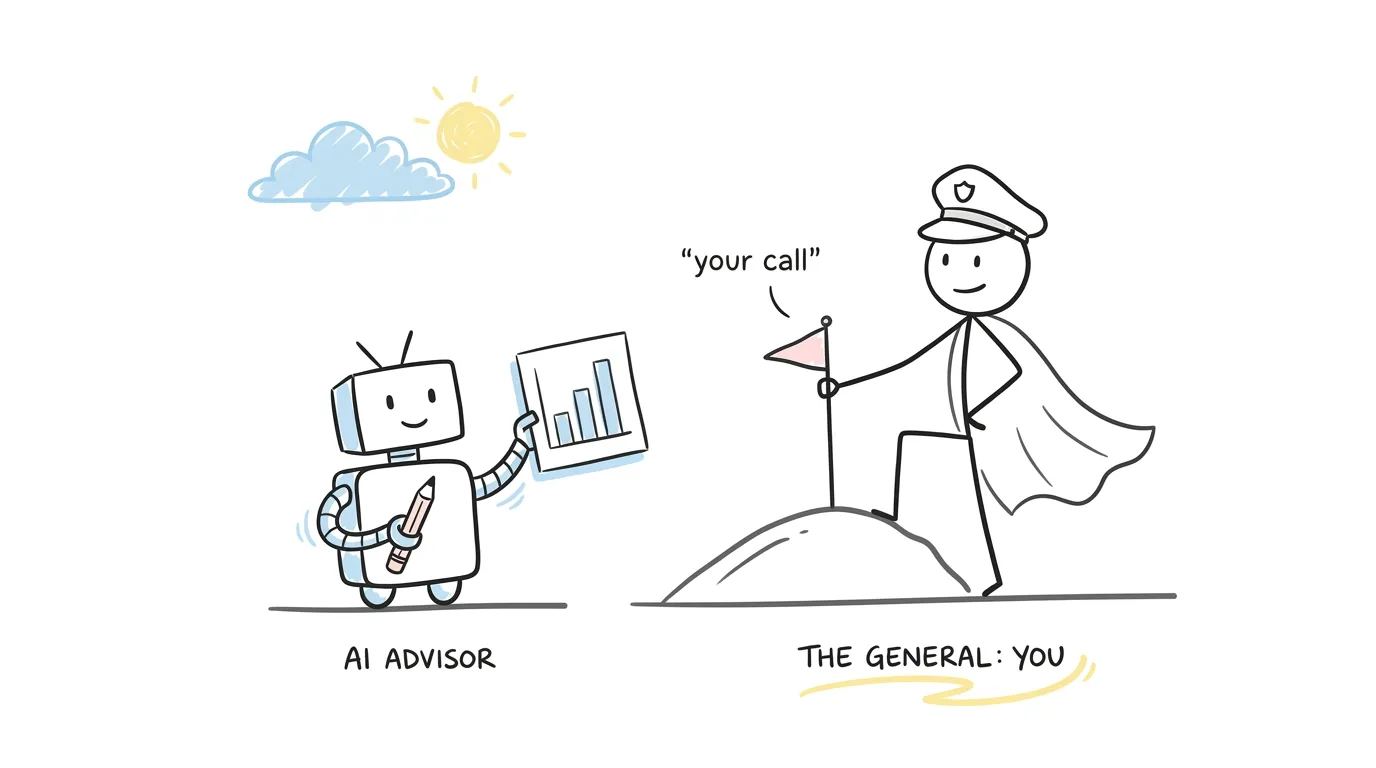
He said, "Picking the styles is still my job. If AI says corset dresses will blow up, I can ride that wave — or I can make sure it never blows up. Ad campaigns, watching the data, answering messages — AI is a hundred times more diligent than I am. But whether to bet on a style? That one's mine."
Beautifully said.
AI makes a great advisor. But the general has to be you.
And may you find yours soon, too.
Continue reading
Related articles
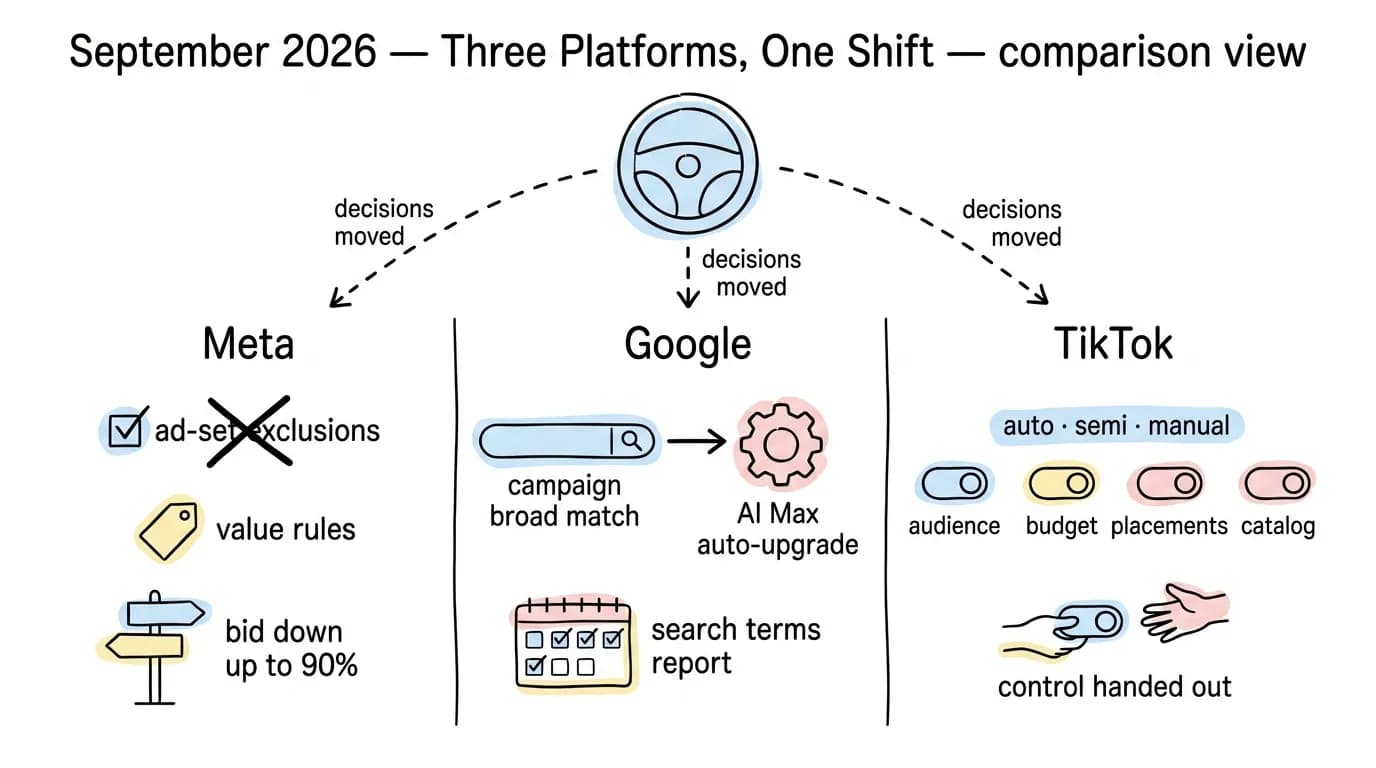
In September, Three Platforms Took Away Part of Your Steering Wheel
A few days ago, I went through everything the three big ad platforms did in September 2026. And I noticed a remarkably interesting coincidence.
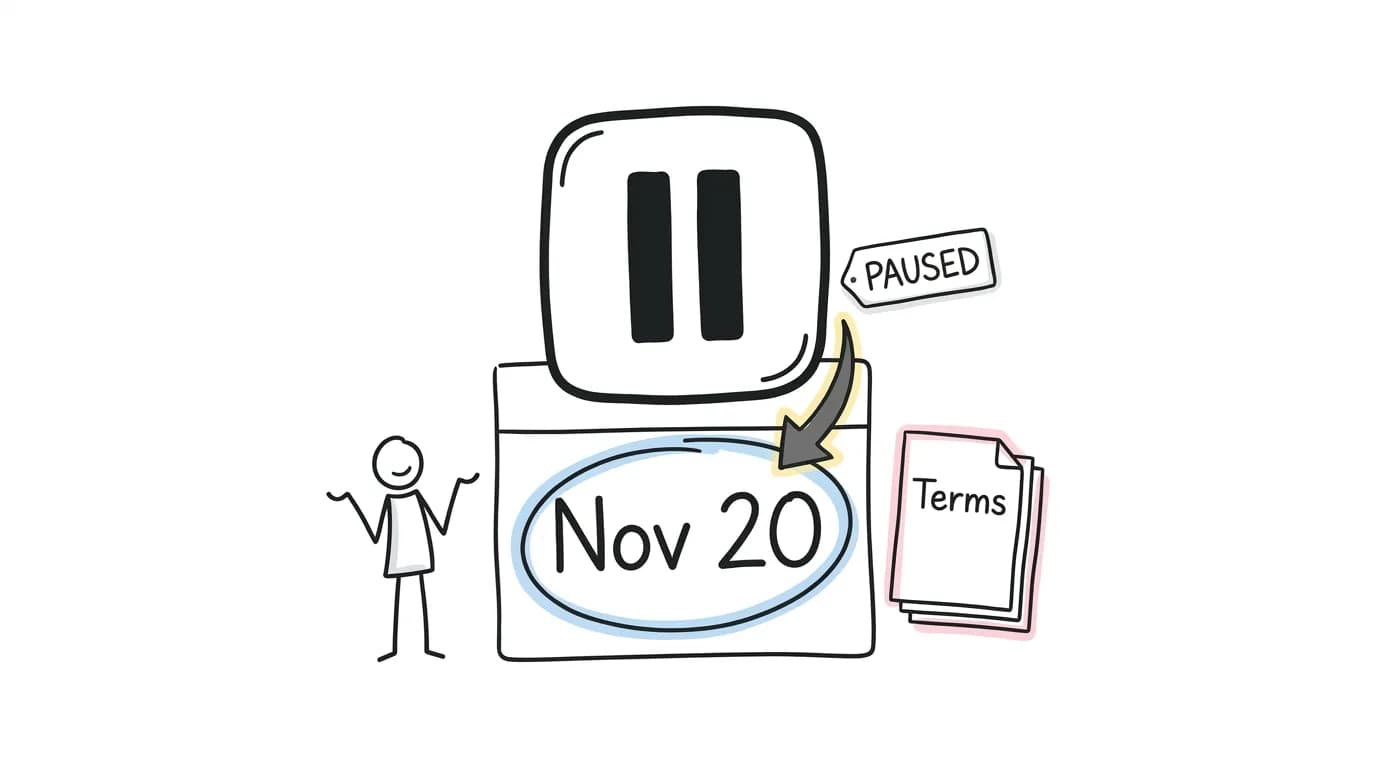
Meta's New Terms Hit the Pause Button on the Eve of the Effective Date
A while back, I was helping a friend of mine who runs a cross-border e-commerce business go through the compliance checklist for his ad account.
Google and Meta changed 17 ad rules this week. 6 of them need checking today.
A few days ago, I was helping a friend who runs a cross-border e-commerce business go through his ad accounts.