
90% of Leaders Think They're Ready. Only 6% Actually Are
An analysis of SAP's AI in Customer Experience report contrasts CX leaders' confidence in AI-agent readiness with the low share of companies whose systems are actually connected. It covers AI-assisted shopping research, fragmented customer journeys, AI-readable product data, and how pricing accuracy and after-sales服务信号
The other day, I came across a report SAP published called AI in Customer Experience. One set of numbers in it stopped me cold.
More than 90% of customer experience (CX) leaders believe their company is ready for AI agents.
But the companies that have actually connected their systems well enough to keep AI agents running? Just 6% in the United States. Germany: 3%.
90% confidence, up against 6% readiness.
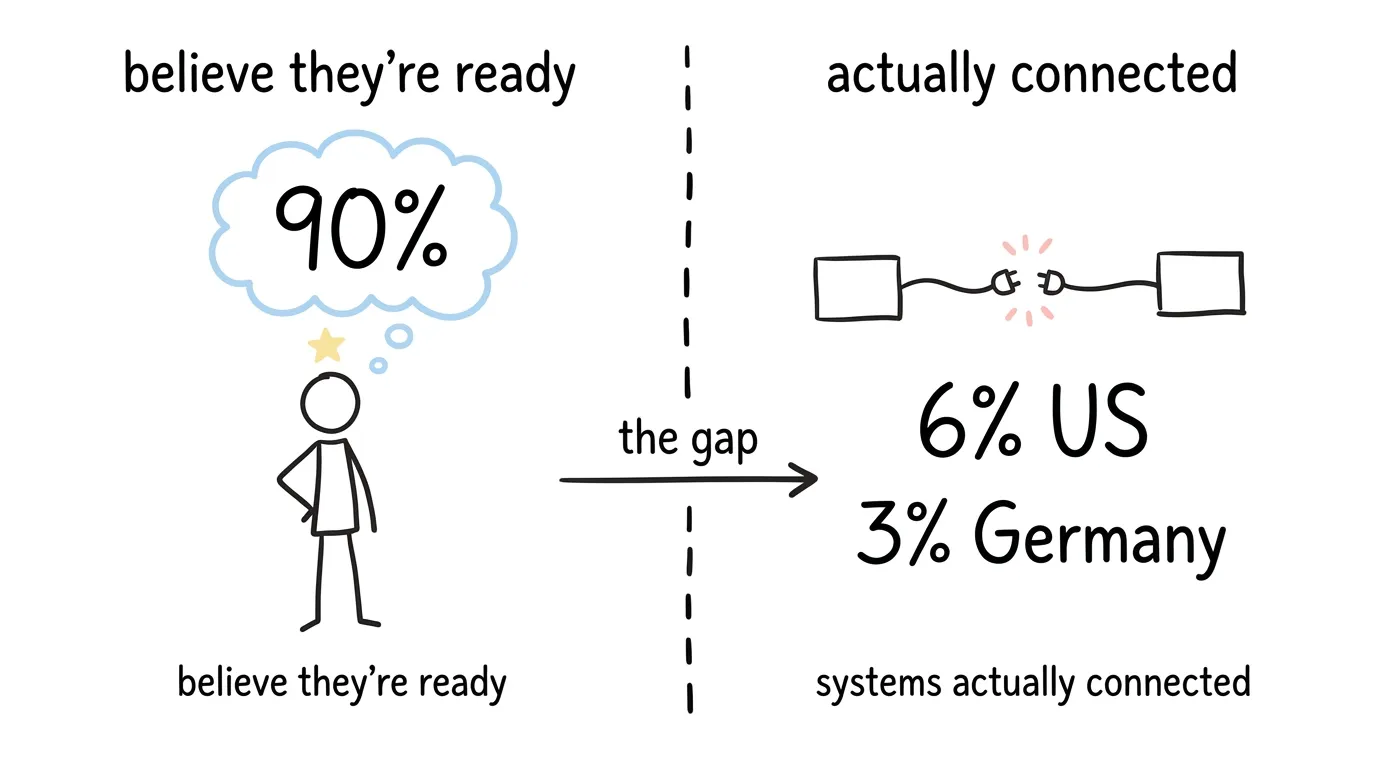
Wow. What's hiding in that gap?
Let me tell you a story first.
Imagine you run a shop and hire a star salesperson. Smooth talker, knows the products, great with people — there isn't a customer question he can't answer.
But you got lazy: no phone line between the salesperson and the warehouse. No system connecting him to the register, either.
So when a customer asks, "Is this still in stock?" the salesperson says, "Yes, it arrives tomorrow." The warehouse actually ran dry long ago. When a customer asks, "Can you go any cheaper?" he cheerfully says, "Take 20% off." The register has no idea any of this is happening.
Customers walk away loaded with promises no one can keep — and they storm off in a fury.
This is exactly what it looks like when many brands plug in AI agents today.
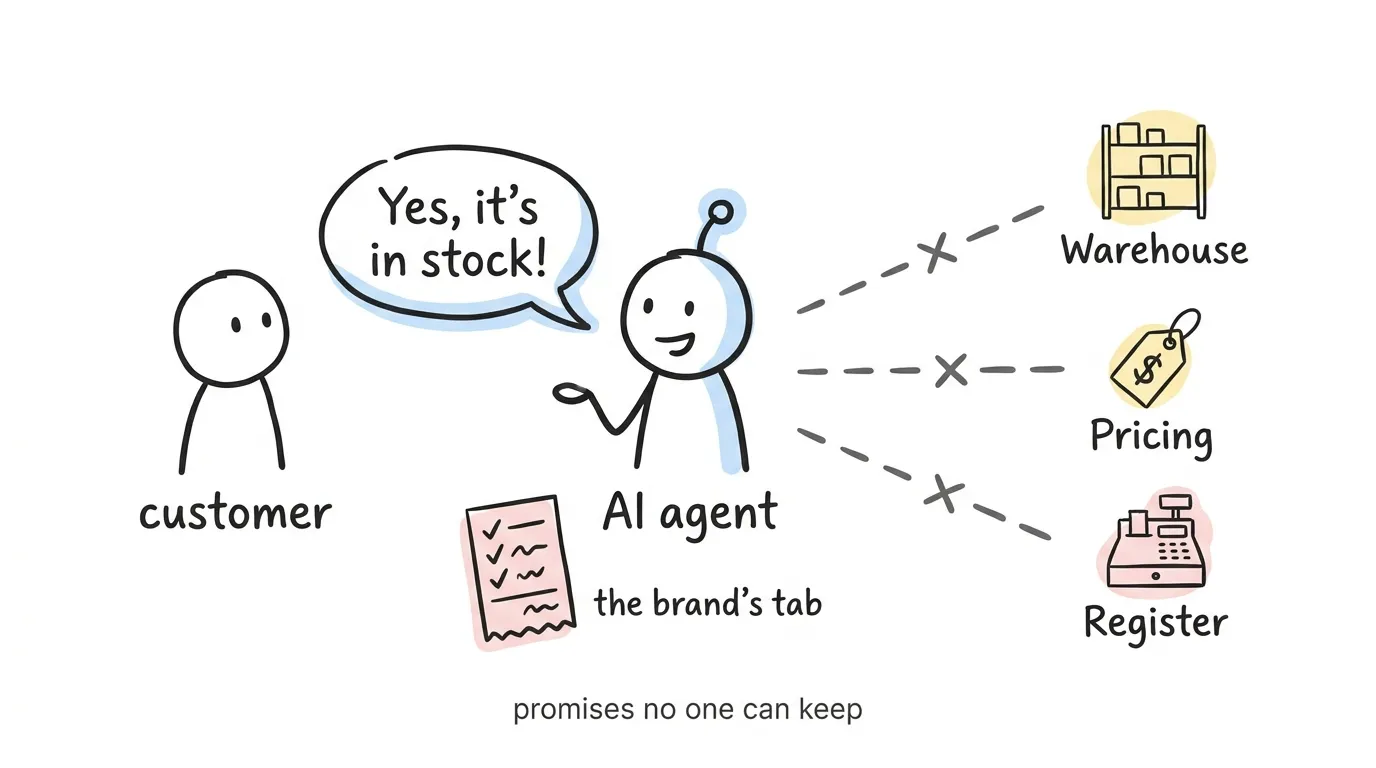
What's an AI agent? An AI that runs errands for consumers. It searches for you, compares for you, asks for you — even places the order for you.
It's remarkably capable. But no matter how capable it is, it's still just a "star salesperson." And every word it says gets chalked up on the brand's tab.
So where does the problem lie? The report offers a few clues. Let me walk you through them, one by one.
1. Customers No Longer Come to Your Store First
The report says 51% of U.S. consumers (58% in Germany) have already done their homework with AI before ever reaching a brand's own channels. B2B is even more extreme: 95% — and 99% in Germany.
Think about what that means. Before a customer walks in, the answer is already in their head. And it was AI that put it there.
So what does "AI-readable" mean?
It means your product specs, prices, inventory status, images and videos all need to be organized in a form AI can read and compare.
If AI can't read you, it won't recommend you.
At the same time, you have to make clear everything beyond price: your expertise, your service commitments, how reliably you deliver. Otherwise, when AI compares you against others on price, you become just another plain bag of rice on the shelf — whoever is cheapest wins.
2. The Customer Journey Jumps Around
A customer buying something may have asked an AI assistant, scrolled through social media, browsed your website, and chatted with your sales team.
Sounds fine, right? But nearly 80% of CX decision-makers say customers have to re-explain their situation at every step, and handoffs keep getting stuck.
Think about it: you've just finished explaining your needs to support, you switch channels, and you have to introduce yourself all over again. Infuriating, isn't it?
This is where Marketing Operations (MOps) should step up: connect every handoff point so the customer's intent and data travel with the person, instead of scattering across disconnected systems.
3. Using AI to Write Copy Won't Fix Broken Systems
Here's another number from the report: about three-quarters of marketing teams are already using AI to produce content, run campaigns, and find leads.
But only 6% have their systems connected end to end. Germany: 3%.
In other words, everyone is installing brighter lights up front while the pipes in the back remain broken.
I once put it this way: using AI to boost efficiency at individual points cannot rescue a broken customer experience.
Point fixes can't hold up a disconnected system.
What Marketing Operations can do is truly connect the customer-facing tools with the back-end systems — inventory, pricing, billing, ERP (the software that keeps a company's core operations running). Otherwise, AI agents will keep making promises on your behalf that no one can keep.
4. Customers Don't Want "Get Me." They Want "Don't Fool Me."
This one, I think, deserves the most reflection from marketing leaders.
CX leaders made "AI personalized recommendations" their number-one budget priority. So thoughtful. So personal.
But what about customers? What they care about most is whether prices and inventory info are accurate, whether discounts actually work, and whether problems actually get solved.
See, you carefully prepared a "we get you" surprise, and all he wants is to confirm his coupon won't expire.
And here's the kicker: even when AI can complete a purchase flawlessly, 87% of U.S. consumers (83% in Germany) still insist on making the final call themselves before the order goes through.
So don't rush to build "fully automated checkout." Put your energy into helping customers do their homework — searching faster, comparing more clearly. That final press of the button? Leave it to them.
5. After-Sales Is the New Battlefield
One last point — the one most easily overlooked.
Today, only about one in four customers believes AI can actually help with after-sales steps like returns and exchanges.
But the direction has changed: when AI agents make recommendations for shoppers, they factor in a brand's fundamentals. Does it ship accurately? Is its inventory stable? Does it fix problems?
Brand preference no longer rides on top-of-the-funnel advertising alone. Marketing and service have to work as one: turn after-sales into word of mouth, let those signals flow back into the AI recommendation engines, and set up a virtuous cycle.
By the way, this report surveyed 4,800 people across the U.S. and Germany: 4,000 ordinary consumers, 400 customer experience practitioners, and 400 CX decision-makers.
Back to the story at the start.
The star salesperson hasn't changed — he's still silver-tongued. What has changed is this: you have to run the phone line for him, connect him to the warehouse, wire him to the register.
Every word an AI agent says on your behalf goes on the brand's tab.
And Marketing Operations is just the right team to reconcile it.
Here's wishing that AI never makes a promise on your behalf — one that no one can keep.
Continue reading
Related articles
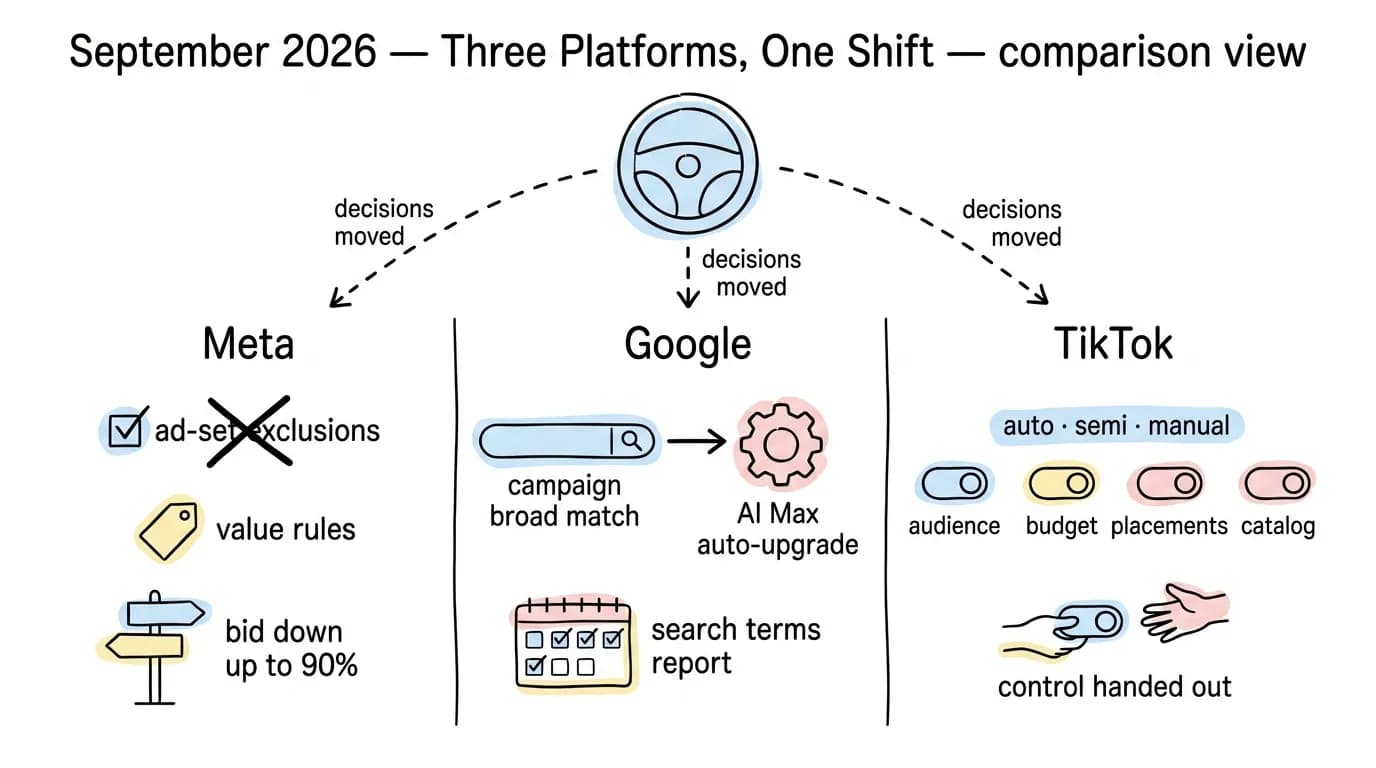
In September, Three Platforms Took Away Part of Your Steering Wheel
A few days ago, I went through everything the three big ad platforms did in September 2026. And I noticed a remarkably interesting coincidence.
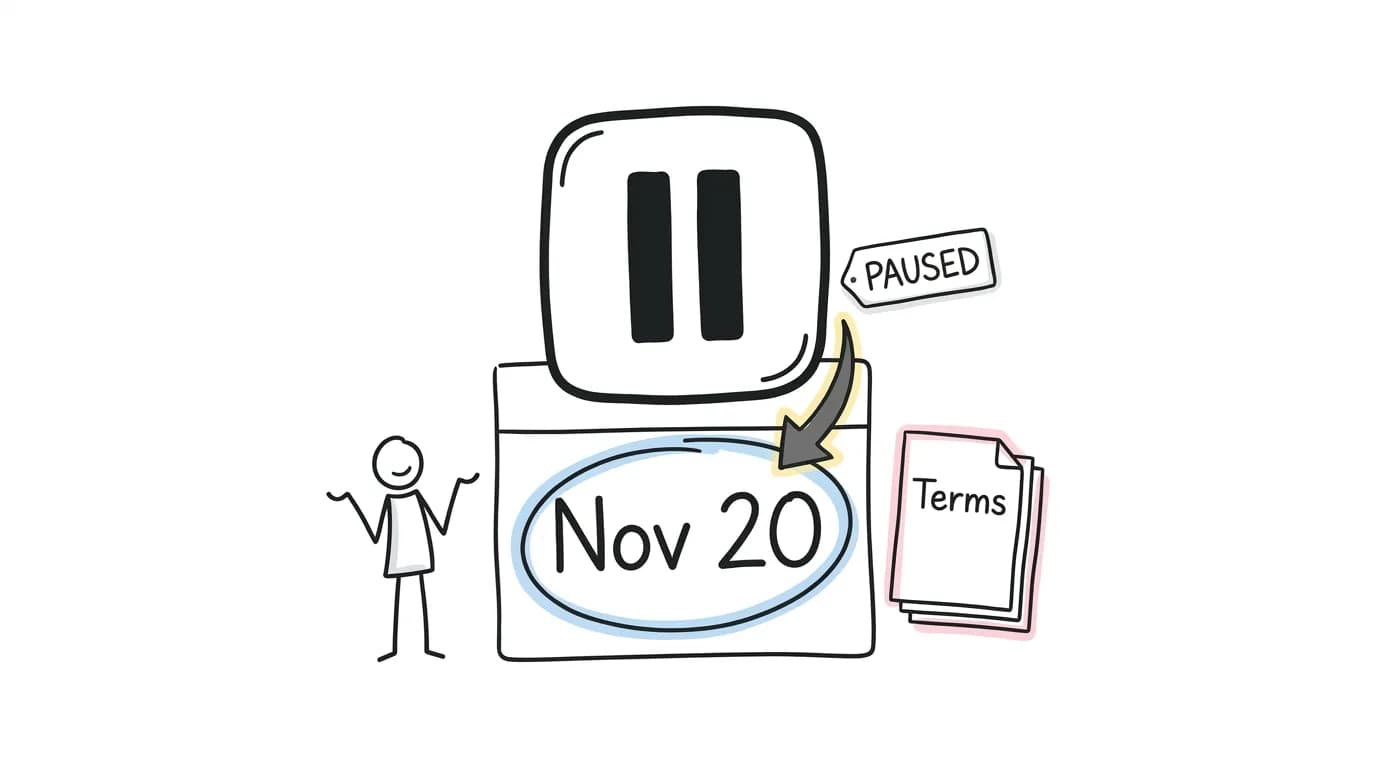
Meta's New Terms Hit the Pause Button on the Eve of the Effective Date
A while back, I was helping a friend of mine who runs a cross-border e-commerce business go through the compliance checklist for his ad account.
Google and Meta changed 17 ad rules this week. 6 of them need checking today.
A few days ago, I was helping a friend who runs a cross-border e-commerce business go through his ad accounts.