
500 Products Waiting to Go Live — How Much Can Generative AI Handle?
A learn article using the example of 500 products awaiting launch to explain what generative AI can draft—descriptions, images, ads, personalized copy—and where it falls short. It recommends an AI-generate, human-review, publish workflow covering product facts, image accuracy, compliance, and brand consistency.
Let me start you off with a quiz.
A seller has 500 products waiting to go live. Each one needs a description, images, ad headlines — plus emails, social posts, and landing page copy.
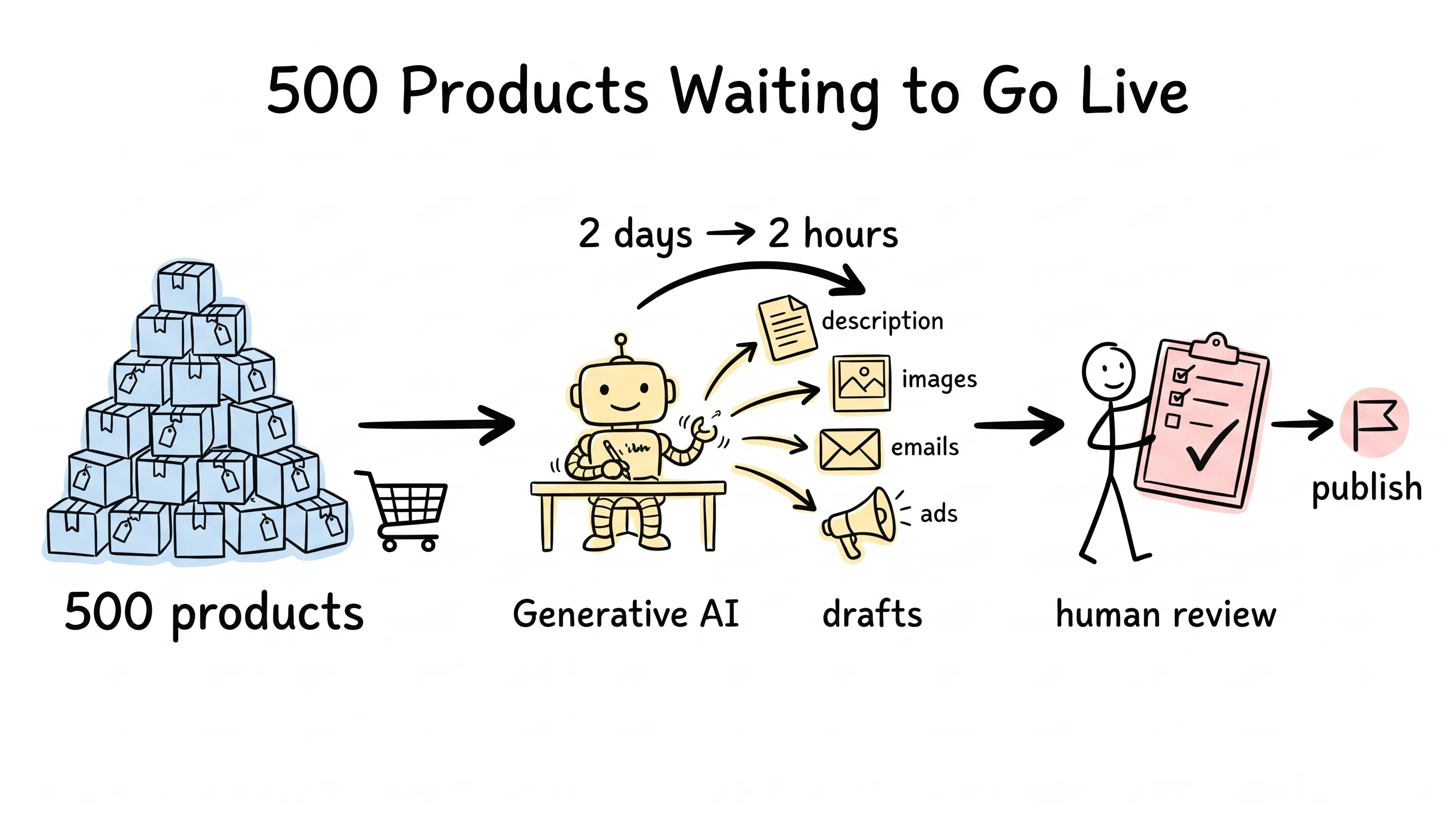
So who gets the job?
A few years ago, there was only one answer: hire, add more people, then add more.
Today, plenty of people will tell you: generative AI.
Right — generative AI. But most people throw that term around without really knowing what it means. So what is generative AI?
Generative AI is technology that creates brand-new content from scratch, based on the instructions you give it and the information it has learned. It writes text, draws images, produces voiceovers, edits video — it can even pitch you a few marketing ideas.
But notice one detail.
It generates content by leaning on patterns it has learned. Not on understanding.
What does "leaning on patterns" mean? It means: the more you've seen, the better you can guess what comes next. It has read mountains of product copy, so what it writes looks the part. But it doesn't actually know whether the chair you're selling can really hold the weight.
Once you get this, everything that follows falls into place.
The Four Jobs It Can Take On
First: writing product descriptions.
Feed it your product specs and it produces a description. It can even turn out one version per platform, one per audience.
But there's a trap: it can describe features your product doesn't have — convincingly.
So the final version must be checked line by line against verified product information.
Second: making images.
Product background shots, lifestyle scenes, ad concept art, visual variations, campaign graphics — it can produce them all. A single scene used to require a studio shoot; now a batch of concept images comes out in one generation.
There's only one bottom line: images must honestly represent the product. If what customers see in the picture doesn't match what arrives at their door, that isn't marketing — it's deception.
Third: drafting marketing content.
Ads, emails, social posts, landing pages, search-engine content — it can produce a first version of all of them. Then people take over and rework it into the brand's own voice, aligned with the campaign's goals.
Fourth: personalization.
Same product — but the pitch to a student, to a working professional, and to a parent can be completely different.
But personalization runs on customer data, and the precondition is compliance and consent. Data isn't fuel you own; it's borrowed.
The Math on One Chair
Here's a concrete example.
A furniture store is adding a new product: one chair.
AI gets the assignment and produces a batch of work: a description, a few ad headlines, an email, several lifestyle images.
Then what? A human team goes through every piece: Are the product facts right? Is the brand voice right? Are the images accurate? Does it meet legal requirements?
Only after clearing these gates does anything get published.
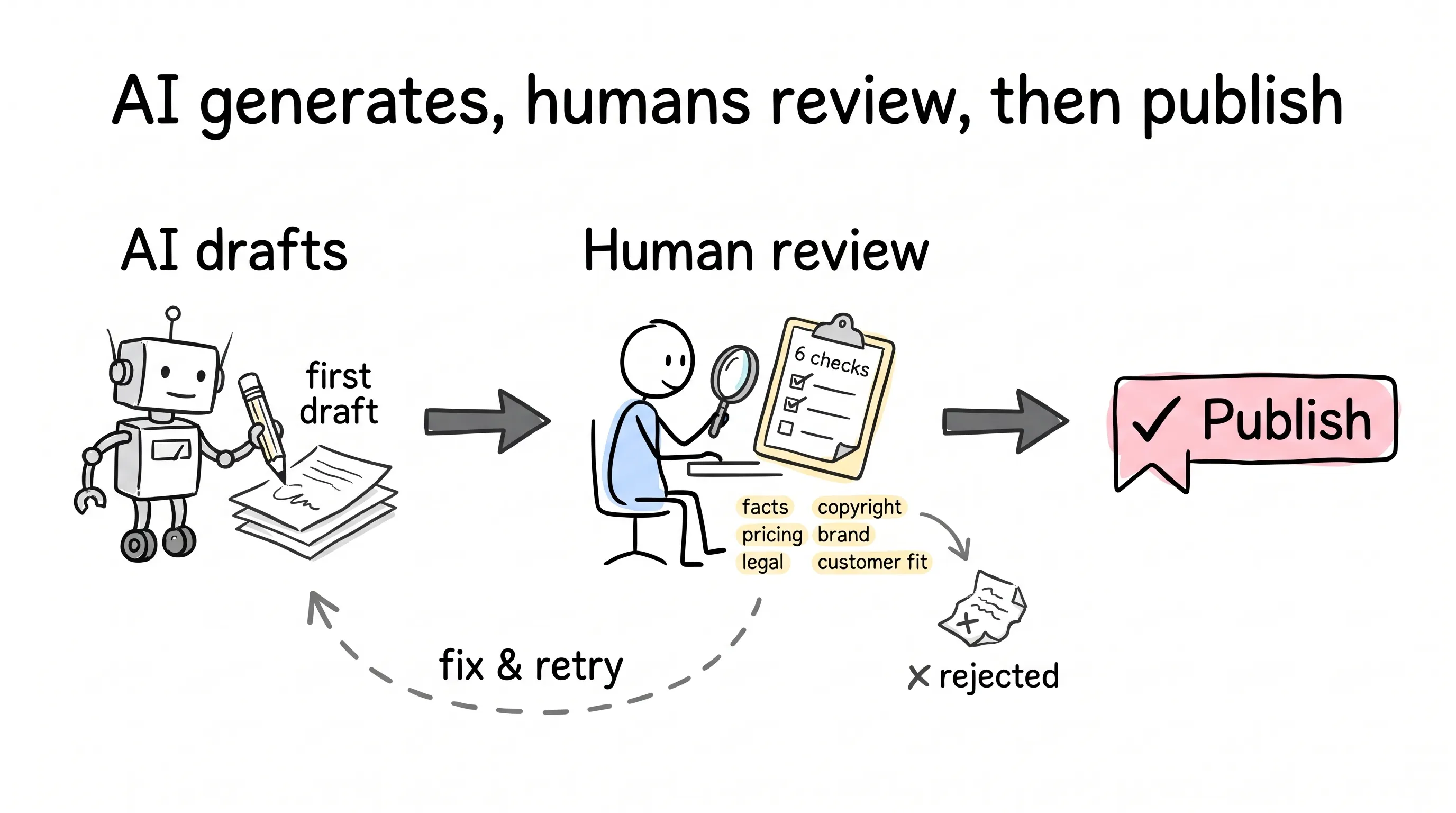
That process is the answer: AI generates, humans review, then publish. AI handles fast; humans handle right.
What It Saves — and What It Can't
The benefits? You could list them off the top of your head.
The most straightforward accounting: work that took two days now gets turned in after two hours. That frees people up to test ten creative ideas and pick the best one.
A few more chores it takes off your hands: it translates copy for different markets, it keeps watch over brand voice across the whole line, and it clears away the mechanical, repetitive work. A small team can start producing at a big team's volume.
But everything has a flip side.
It will casually write false product claims. It will reword someone else's content and hand it in as yours. It will make translation mistakes, and bias can hide in its tone. Once customer data goes in, you can't always see how it's being used. And as volume grows, low-quality, repetitive content doubles right along with it.
And one more — the nastiest: it amplifies mistakes at scale. One mistake, human review can catch. Ten thousand mistakes are already out the door before anyone looks.
So back to the point: generative AI's greatest value is lending a hand. Expecting it to publish unsupervised? Not going to happen.
Human Review: What Gets Reviewed
Human review isn't a formality — it's the last line of defense.
So what do you actually check? Six things: product facts, pricing and promises, legal claims, copyright and licensing, brand consistency, and whether it's right for the customer.
Responsibility always sits with the business, not the AI. When something goes wrong, you can't say "the AI wrote it." AI is the tool; the hand that signs off is yours.
Finally, Back to Those 500 Products
How do you handle them?
My advice is one line: let AI produce the first draft, let the team verify and publish.
Generating content is fast. Generating content that earns customer trust is hard.
Fast is easy. Good is hard. AI has filled in the fast — has it filled in the good? No. What fills in the good is verified data, human creativity, and accountable review.
The 500 products are still there. Let AI finish the first drafts, then put people in the right places.
Here's to a store that's fast — and right.
Continue reading
Related articles
In September, Three Platforms Took Away Part of Your Steering Wheel
A few days ago, I went through everything the three big ad platforms did in September 2026. And I noticed a remarkably interesting coincidence.
Meta's New Terms Hit the Pause Button on the Eve of the Effective Date
A while back, I was helping a friend of mine who runs a cross-border e-commerce business go through the compliance checklist for his ad account.
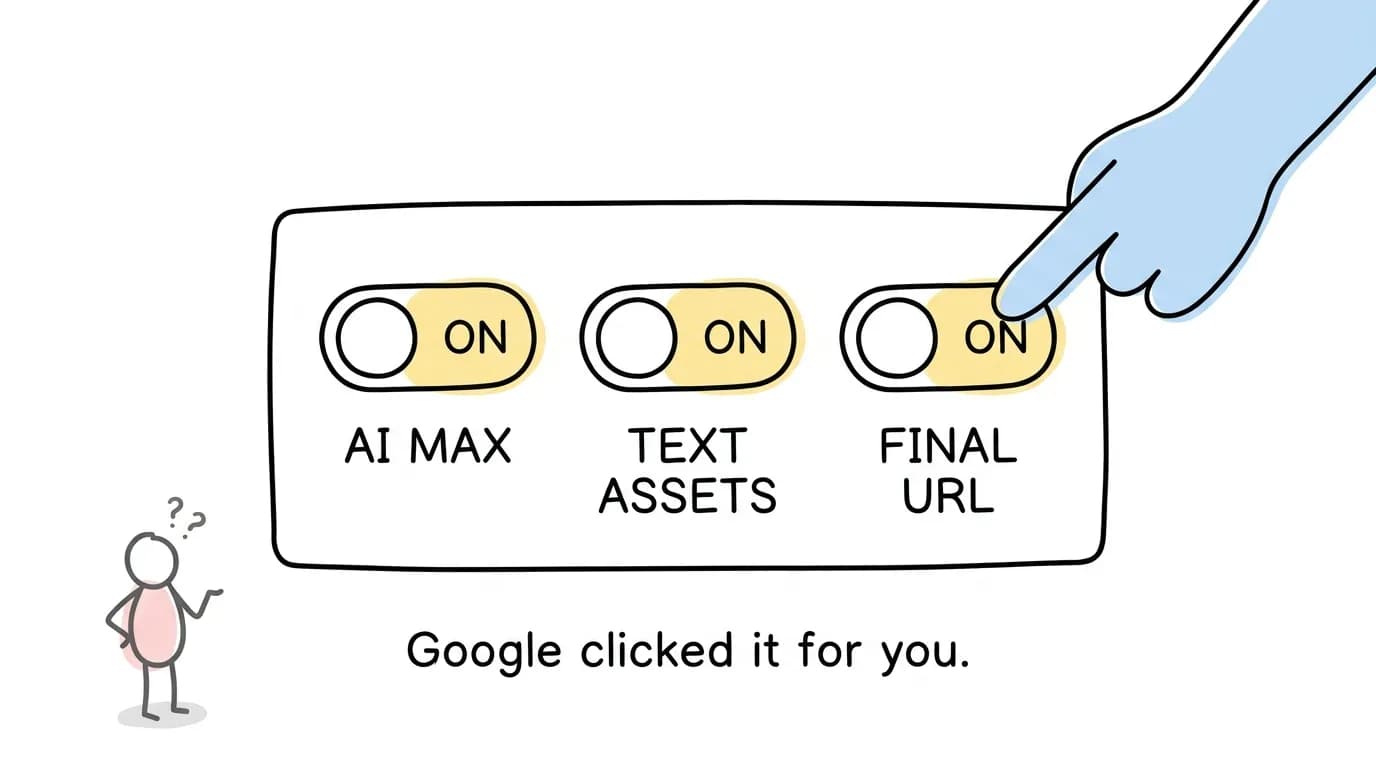
Google and Meta changed 17 ad rules this week. 6 of them need checking today.
A few days ago, I was helping a friend who runs a cross-border e-commerce business go through his ad accounts.