
Your Next Marketing Teammate Is AI. But It Still Needs an Onboarding Lesson
A recap of a MarTech Conference roundtable on turning AI agents into effective marketing teammates. It covers capturing team knowledge, fixing process bottlenecks before tools, keeping humans in the loop for customer-facing work, and governance practices like evaluation layers.
A few days ago, I read the transcript of a roundtable discussion, carefully, from start to finish. It took place at this month's MarTech Conference, where four marketing veterans sat down to talk about one topic: how to turn AI agents into teammates that actually get work done.
They opened with a poll.
51% of attendees said their company is already piloting AI.
But the number worth pondering is the other one: 0. Not a single organization said, "we don't use AI at all."
Think about it — that's the state of marketing teams in 2026: the question is no longer whether to use AI, but how to make it stick.
The reality, though, is that plenty of pilots start with a bang and end in silence. Why?
From this discussion, I've distilled four things. Today I'm sharing them with you.
1. AI Can Take the Work — It Can't Take the "Why"
Let me start with an honest truth.
AI agents can do a lot: research, reports, first drafts. Hand those off and your day gets lighter.
But.
It doesn't know why your brand never uses a certain word. It doesn't know that a client had an unpleasant episode last year, and you need to tread carefully. It certainly doesn't know what lessons the whole team took away from that failed campaign three years ago.
None of this is written in any document. It lives in the minds of your veteran employees.
And those veterans are leaving, one by one. Budgets are shrinking, headcount is frozen, and departing roles go unfilled. The people who remain carry the workload while watching those "whys" walk out of the office alongside the colleagues who held them.
So what's the real bottleneck for AI agents? It's this. It doesn't lack capability — it lacks memory. It lacks your team's memory.
At the roundtable, Lisa Shaw, a consultant who runs her own firm, Devon Point Group, has a smart way of using agents: agents coordinate tasks and pull data together, freeing her attention for judgment and relationships.
Then she did something more important.
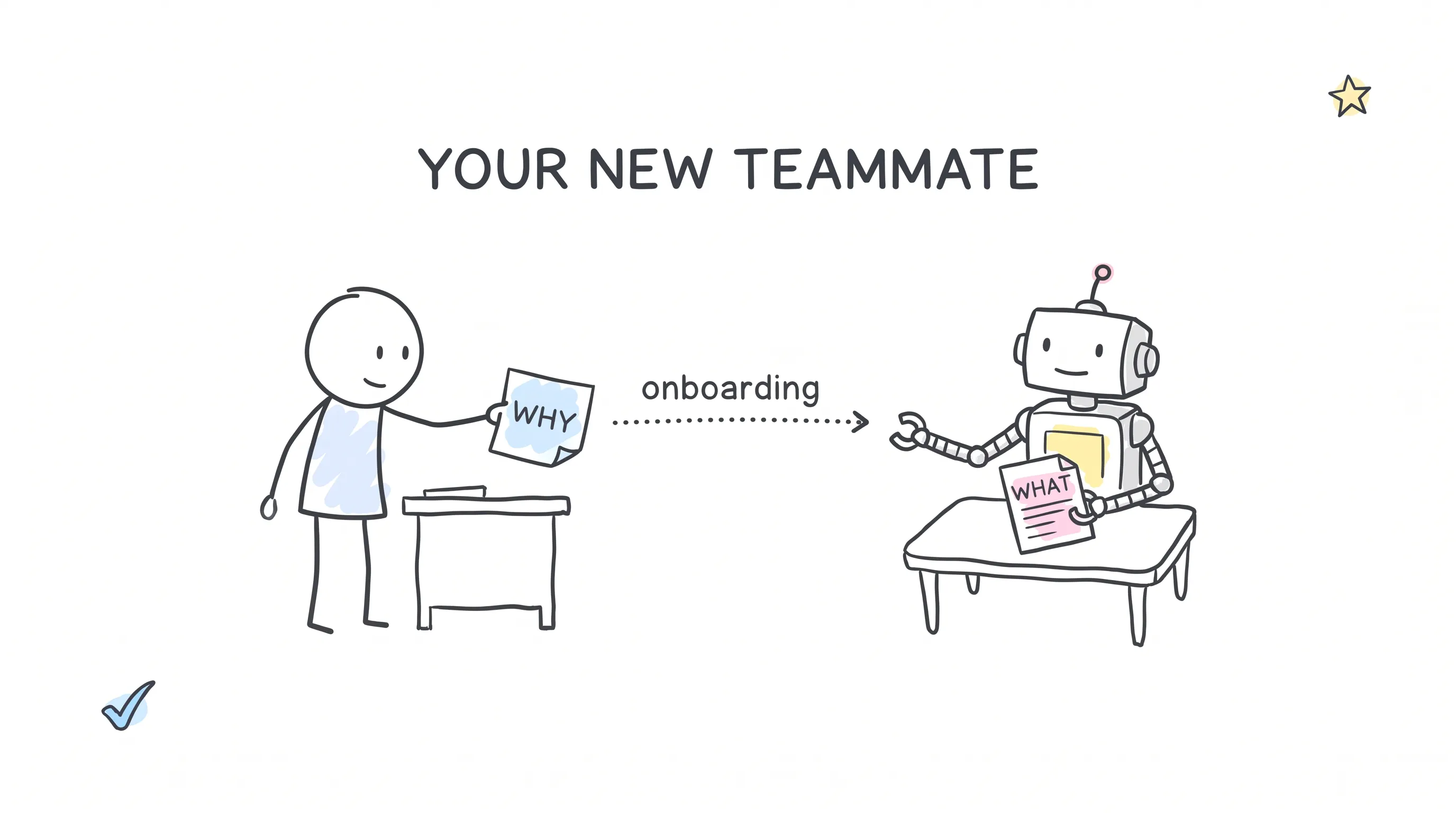
She wrote down the "why" behind every key decision from the past, one by one: the brand's taboos, the client's old grievances, the context of the moment. Then she fed those notes straight into the AI's instructions.
I love her line: why matters as much as what.
AI copies your actions, but only when you hand over your reasons can it inherit your judgment.
Ed Poppe, founder of Poppe Marketing, jumped in with a sharp point. He said: you already know how to do this.
What is a creative brief? Define the deliverables, mark the brand red lines, set the checkpoints. However you brief your designer, that's how you brief the AI.
You've been writing briefs for ten years. Turns out you were practicing for today all along.
2. Build the Road Before You Drive the Car
The second insight comes from Sean O'Connell, head of customer success at workflow software company Screendragon.
He has seen teams at every stage — from a lone individual experimenting, to enterprises putting agents into production systems. And he says the biggest problem for these teams isn't technology.
What is it, then?
Silos. Every department runs its own pilot, each blooming in its own corner, and none of them ever connect into a system.
Many people start by asking: which tool should we use?
Wrong, he says. Look at the process first, the technology second.
What is a process? The full path a piece of work travels from start to finish. An agent is just a worker on a few of the repetitive steps along that path. If you speed up one isolated step tenfold while the whole road is jammed, what happens?
The bottleneck simply moves. You get faster, and downstream chokes. An acceleration at one stage becomes a disaster at another.
Moderator Stacey Ackerman added: layering AI directly onto a manual process that already doesn't work just amplifies the friction.
So what do you do? First find the bottleneck that's truly choking the flow, define clearly what "success looks like," then get to work.
And one more tactic I find especially worth learning: once you have a pilot that actually runs, don't hide it — show it to colleagues in sales, operations, and creative. The skeptics don't read reports; they watch working examples. One running demo beats ten pitch meetings.
3. The Closer to the Customer, the More a Human Stays in the Loop
The third insight is a very practical dividing line.
Which tasks go to AI, and which must stay with you?
Shaw offered a one-line test: the closer a task is to the customer, the more it needs a human in the loop (a person stays involved in reviewing and approving AI's work).
Pulling data, formatting layouts, assembling first drafts — hand those over freely. But executive communications, sensitive client renewals, the letter that needs genuine empathy — a human must write those.
Why? Picture the scene. A client at renewal time receives an email that's polished and eloquent but has no warmth. They won't think "this was written by AI." They'll only think: this company doesn't care about me.
O'Connell supplied the other half: the final call always stays with a human. AI can make the run-up to a decision faster and better, but the hand that signs must be a human hand.
And even the best-trained agent drifts. Shaw offered a metaphor I can't forget:
AI is like an overconfident intern.
It delivers drafts fast, formats beautifully, and sounds polished. But precisely because it looks so good, you're more likely to forget to review it. Over time, it also quietly drifts, slowly sliding out of your brand voice.
So no editorial gate gets skipped. The more polished the draft looks, the more you should ask: is this actually right?
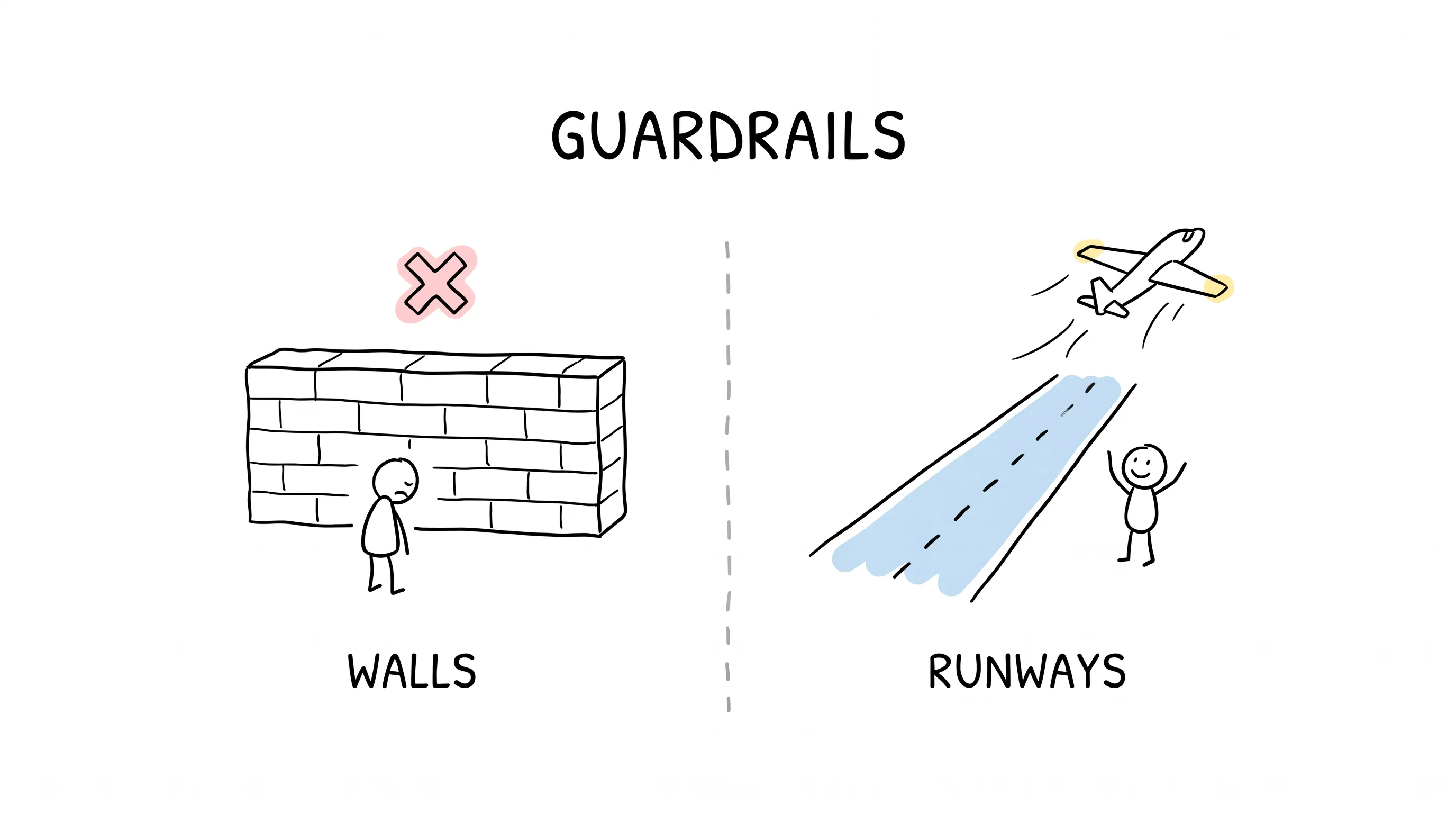
4. Guardrails Aren't Walls — They're Runways
The last insight is about governance. It sounds big; the practice is surprisingly light.
O'Connell shared one concrete mechanism: an evaluation layer.
What's an evaluation layer? You bring in a second AI model to act as quality inspector. When the first agent finishes its work, the second model scores it item by item against the brand standards you've defined, flags the problems, and only then sends them to a human.
Humans don't review every piece — only the flagged ones. AI policing AI.
Meanwhile, keep an eye on performance data over the long term, and you'll know when switching to a different model would be more accurate and cheaper.
Governance has another side: governing people. During the Q&A, an audience member asked: what if employees secretly use AI on their personal accounts?
O'Connell's answer was clear-eyed: you can't stop it. The deadline is sitting right there. Lock the front door, and people go through the window — and the data leaks out with them.
Rather than blocking, open a compliant door. Give them a safe, easy official channel, and innovation happens in the light, not in the shadows.
Finally, Back to That Roundtable
As the session closed, Poppe summed it up in one short line: learn it, then share it.
I love that ending.
Looking back, the whole discussion really came down to one thing: bringing AI into the team isn't a tool purchase — it's a system of memory, process, boundaries, and trust. But it isn't mysterious at all; you can even start tomorrow:
Pick a bottleneck that's truly choking the flow. Draw clear boundaries for your agent. Write down your "whys" and hand them over. Then, tell the people around you about the stretch of road you've gotten running.
Here's to your new teammate holding its own soon. And here's to your team becoming more valuable because of it.
Continue reading
Related articles

What Is an AI Marketing Agent? From "Using AI" to "Delegating to AI"
A learn article explaining what an AI marketing agent is, how it differs from rule-based automation, and which repetitive tasks such as lead qualification, reporting, and campaign monitoring can be delegated while humans keep key decisions.

Marketing Automation Is Shifting from "You Do It" to "You Say It"
This article explains how marketing automation is shifting from rule-based platforms that merely execute toward AI agents that plan, create, publish, and review campaigns, covering delegable tasks, underlying technologies, tool categories, adoption steps, and risks such as privacy and automating without strategy.

When AI Does the Creative, Mistakes Come in Batches Too
A learn article on the risks of using generative AI for marketing creative across brand, legal, compliance, and operational layers, with case examples and seven practices for review, rights clearance, documentation, and vendor governance.