
Marketing Automation Is Shifting from "You Do It" to "You Say It"
This article explains how marketing automation is shifting from rule-based platforms that merely execute toward AI agents that plan, create, publish, and review campaigns, covering delegable tasks, underlying technologies, tool categories, adoption steps, and risks such as privacy and automating without strategy.
A few days ago, an old friend of mine who runs a cross-border e-commerce business invited me out for tea. He's been running his independent store for seven or eight years, with a team of fewer than ten — hardly a small operation.
Five minutes after we sat down, he started venting. Three years ago, he gritted his teeth and signed up for a legacy marketing automation platform — several thousand dollars a year in subscription fees. And the result? His welcome email flow was set up by an implementation consultant back then, and it has barely been touched since. In his own words: "What I paid for was an execution machine. But designing the workflows, writing the emails, reading the reports — that's still all me."
I told him: that money bought you the hands, but not the brain.
This isn't a problem with the platform — it's that he bought the wrong expectation in the first place. Let's walk through it from the top: what exactly should that expectation be?
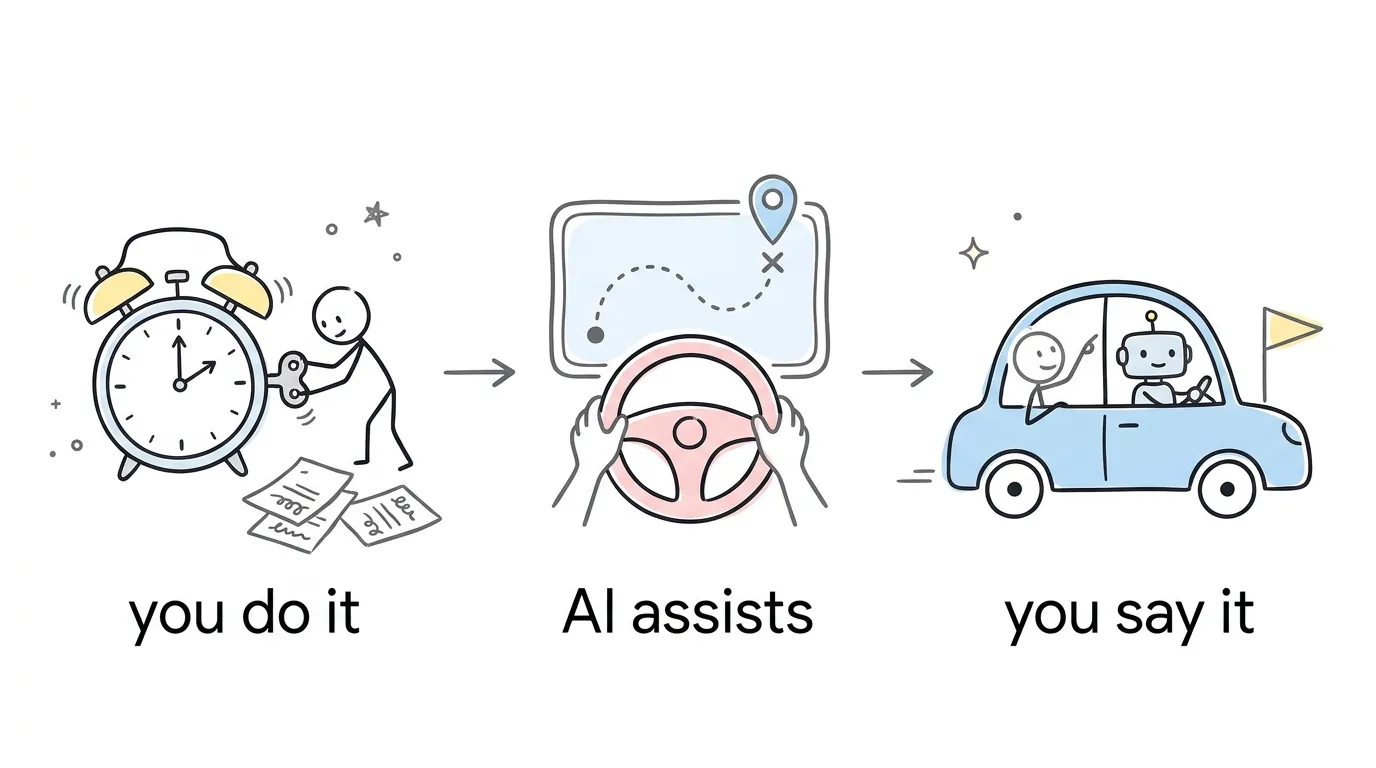
What Is Marketing Automation, Anyway?
Most articles open by stacking up definitions. Not me. Let me start with a plain-English metaphor: old-school marketing automation is an alarm clock.
You set it to "ring at 7 a.m.," and it rings at 7 a.m. No ambiguity, no thinking.
HubSpot, Klaviyo, Marketo — these legacy platforms are, at their core, exactly that alarm clock. The moment a trigger condition is met, the preset email goes out, down to the second. Reliable? Genuinely reliable.
But that's also the problem. Every rule, you have to set. Every email, you have to write. Every report, you have to read. The platform handles "execution," while all the "thinking" lands on you. That's why most teams only use a small corner of their platform's features — it's not that the features fall short; it's that the person configuring them is worn out.
Legacy platforms are execution engines, not decision-makers. Remember that line — everything that follows builds on it.
The Platforms Noticed Too — Enter the Second Wave
In recent years, these platforms have been bolting on AI features: helping you brainstorm subject lines, pick the best send time, predict which users are about to churn.
These features are genuinely useful. But they hit two ceilings.
First, each feature lives in its own little cubby inside the platform, and they don't talk to each other. Second, they only help you "draft" — they never "decide." You're still the one designing the workflow; you've just gained an assistant who types really fast.
It's like driving with GPS: the navigation plans the route, but the steering wheel is still in your hands.
The Third Wave Has Arrived: The Agent
So what is an AI marketing agent?
Same driving metaphor. GPS helps you plan; an agent takes the wheel for you: you only name the destination, and it watches the road, changes lanes, and finds a parking spot on its own.
Applied to marketing, you describe what you want in plain language — say, "Next quarter's focus is the new product line. Get social, email, and ads all lined up." Then it builds its own calendar, writes its own content, assembles its own email flows, watches its own data, and adjusts itself after each cycle.
Writing, scheduling, publishing, reviewing — one loop, and it spins on its own.
The difference between this and the previous two layers is clearest when you run the numbers on money and time.
With legacy platforms, you design the workflows and write the content; each platform guards its own data silo; subscriptions run from a few hundred dollars a month up past $3,000; and it often takes weeks from signing to go-live.
Platform AI features are usually bundled into the subscription at no extra charge — but they only circle within that platform's own walled garden.
Autonomous agents: you give them a paragraph of requirements, they grow an entire plan out of your own data, and they can be up and running in a few hours. Products built this way are already on the market. One example is a marketing agent called Helena, which plugs into the tools you're already using — Google Ads, Meta, Klaviyo, WordPress — and strings planning, creation, publishing, and review into a single closed loop, with one shared memory across channels. It starts at $39 a month.
What does $39 mean? A little more than a day's wage for a junior ops hire — in exchange for execution power that works seven days a week without rest.
The dividing line between tools isn't "does it have AI" — it's "does it make the decisions, or do you?"
Which Tasks Can You Hand Over?
Now for the practical part. Let me walk you through it, stage by stage.
Social media content: produced daily in your brand's voice, scheduled, published, and spread across platforms.
Email: welcome flows, abandoned cart recovery, re-engaging dormant customers — let AI build these directly inside your existing Klaviyo or Mailchimp, then iterate on its own based on the data.
Ads: refresh creative on a regular cycle, clean up messy search terms, keep an eye on budget pacing, and run a waste audit while it's at it.
SEO: topic selection, long-form writing, publishing — one end-to-end pipeline.
Listening: who's mentioning your brand, whether the sentiment is positive or negative, what your competitors are doing — monitored around the clock.
Reporting: the numbers in GA4, Search Console, and your CRM, automatically assembled into weekly reports — no one pulling all-nighters to stitch spreadsheets anymore.
So what can't you hand over?
Strategy, pricing, brand judgment. These three are the judgment calls your business can least afford to outsource.
No matter how fast the machines spin, the words "where to" stay in your hands.
What's Actually Doing the Work Under the Hood?
Break it down, and it's three technologies. Let me translate them one by one into plain English.
Machine learning: flipping through the historical ledger to find patterns — who looked three times and still didn't buy, who bought once and will buy again. Once it guesses, ads go where the guesses point.
Natural language processing: teaching machines to understand human language and write it too — chatbots, copy in your brand's voice, emails reworded differently for every recipient. It's the engine behind all of it.
Predictive analytics: adjusting before the results land — predicting what you'll want to buy next month, which campaign will outperform, so strategy moves ahead of the change instead of behind it.
Combine the three, and you get three kinds of behavior that old rule-based platforms simply can't produce: real-time adjustments to bidding, audiences, and content distribution without waiting for a human nod; personalization at every single touchpoint — more than any team could cover by hand; and reports that compress from days into minutes.
The industry has been doing this for a while. Optimove orchestrates multichannel journeys with customer data; Salesforce uses predictive models to surface high-value customers; Pinterest applies AI to ad delivery optimization; Yum Brands runs massive personalization across its many restaurant brands. Netflix recommendations and the Amazon shelf — underneath, they all run on the same logic.
And the results can be counted. Tasks like reporting, monitoring, and data analysis shrink from days to minutes once automated, freeing the team to think about strategy. When a campaign underperforms, the system can figure out on the spot whether it was the content, the targeting, or the timing — and fix it right there. The revenue numbers are more direct: teams that adopt it commonly report lifts of around 15%. IBM adds one more observation: AI can segment audiences by behavior and predict which group will respond to which offer.
The Tools on the Market, Sorted into Four Buckets
At this point you might ask: with this many tools, how do I choose?
I sort them into four buckets by role — clearer than reading ten comparison posts.
Bucket one: AI features inside legacy platforms. HubSpot's Breeze, ActiveCampaign, Braze — they help you write emails and schedule workflows inside the CRM you already live in. Right for teams that are already settled in these ecosystems.
Bucket two: connectors. Zapier threads things together across more than 8,000 apps, stringing point tools into workflows. But note — the workflow diagram is still yours to draw.
Bucket three: data foundations and creative workshops. Customer data platforms like Segment gather scattered behavioral data into a single stream, and many AI tools stand on their shoulders; Midjourney and Crayo handle image and short-video output, feeding the content pipeline. Optimove, the retention specialist, also fits here, building customer journeys with predictive models.
Bucket four: the all-in-one agents we discussed earlier. Requirements in one end, results out the other, and the work in between is theirs.
There's no absolute best among the four — only what fits your stage. Just starting out? Bucket two plus bucket three will do. Want to truly pull your hands out of execution? Focus on bucket four.
If You Want to Get Started, Remember Four Steps
One: list out the work you repeat every week — posting, blasts, reports, ad checks. That list is your automation baseline.
Two: lay the data foundation first. AI is an amplifier: feed it clean conversion tracking and clean lists, and it amplifies signal; feed it a mess, and it amplifies noise.
Three: hand over execution first, decisions later. Let go of the publishing step first; keep strategic sign-off in your own hands. Trust is built round by round — it doesn't come from flipping a switch.
Four: pull your context into one system with shared memory as much as possible. Five small tools that don't know each other add up to less than one assistant that remembers the whole story.
But Don't Rush to Hand Over the Keys
There are a few pitfalls, and I want to flag them for you in advance.
The privacy line cannot be crossed. AI needs to eat data, and regulations like GDPR govern how you feed it. Anonymize what can be anonymized; collect less where less will do.
Full automation is not full peace of mind. Leave customer inquiries entirely unattended, and edge cases will absolutely fall over. For anything customer-facing, keep a human check in the loop.
The sneakiest pitfall: automating without a strategy. If there's no clear plan underneath the workflows, all you're automating is a pile of noise. Figure out where you're going first — then hand the steering wheel to the machine.
And then there's the human side. Put AI in the right position: it's here to take over the repetitive labor, not to take over people. Say this to your team early and clearly, and bring them into the process — so that no one wakes up one day to find a tireless "colleague" sitting in the next cubicle.
What Happens Next
My judgment: AI will move from being a "tool" to being the default operating layer of marketing.
Audience segmentation shifts from hand-drawn profiles to real-time generation; lead scoring and budget allocation go to predictive models; a single piece of content automatically grows into the shape a blog, a video, and a social post each need. Search itself is becoming conversational — how your content gets "asked about" will matter more than how it gets "searched."
These changes will come fast in some places and slow in others, but the direction holds little suspense. The teams that win in the end are the ones that can direct the machines and check the results; the teams still executing by hand will only fall further behind, and tire faster.
At tea that day, before we parted, my friend asked me: so the platform I bought — was it a waste?
I said no, it wasn't. The platform is still the old bookkeeper that keeps your records, and not a word of it goes to waste. What changed is how you use it: before, you hired it as an alarm clock. Now, you can hire a driver — and drive it wherever you want to go.
Here's to you becoming, sooner rather than later, the person who assigns the homework to AI instead of the person configuring workflows.
Continue reading
Related articles

What Is an AI Marketing Agent? From "Using AI" to "Delegating to AI"
A learn article explaining what an AI marketing agent is, how it differs from rule-based automation, and which repetitive tasks such as lead qualification, reporting, and campaign monitoring can be delegated while humans keep key decisions.

When AI Does the Creative, Mistakes Come in Batches Too
A learn article on the risks of using generative AI for marketing creative across brand, legal, compliance, and operational layers, with case examples and seven practices for review, rights clearance, documentation, and vendor governance.
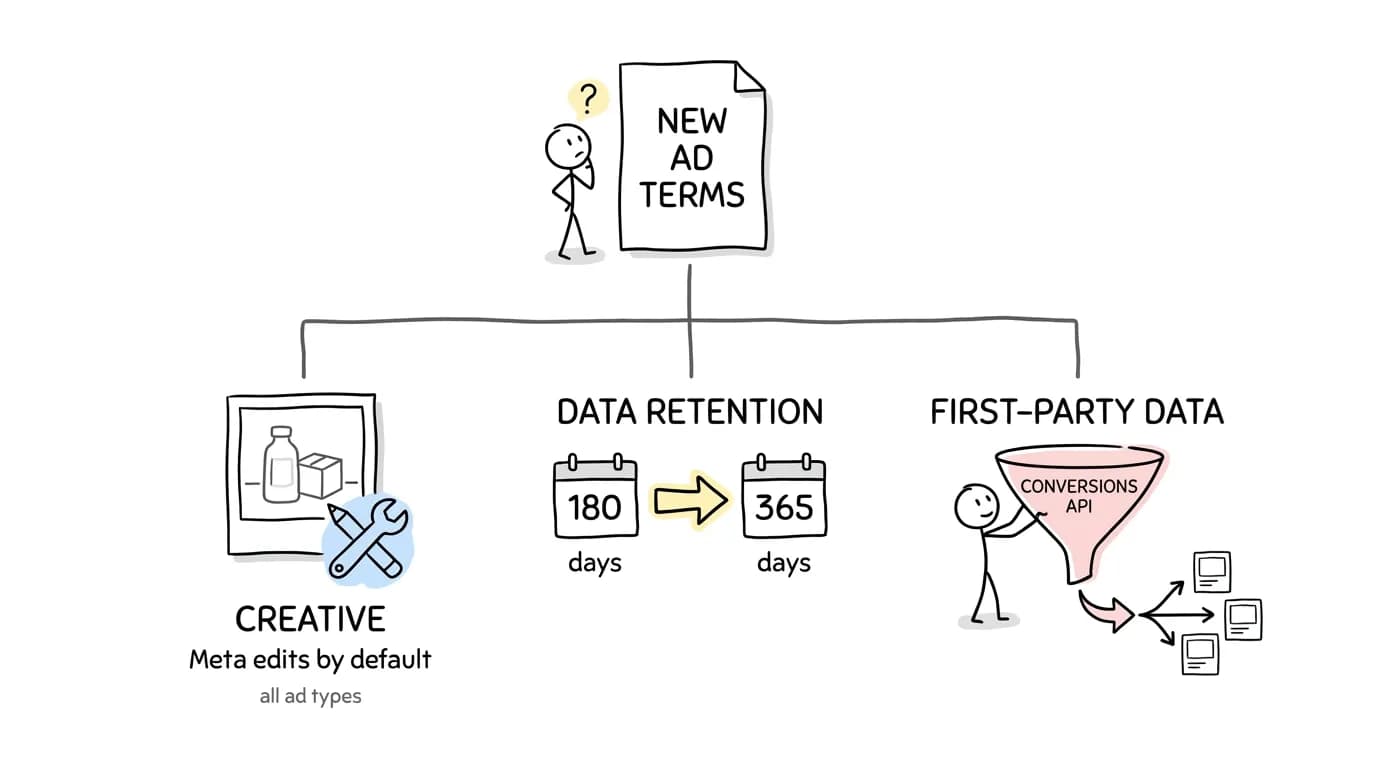
Meta Changed Its Ad Terms: Your Creative, Your Data, and Your 365 Days
This learn article explains Meta's updated advertising terms, covering default automatic creative edits, a conversion data retention window extended from 180 to 365 days, and broader use of first-party data, plus configuration checks for advertisers. It notes reports that the terms were reportedly suspended before the