
When AI Does the Creative, Mistakes Come in Batches Too
A learn article on the risks of using generative AI for marketing creative across brand, legal, compliance, and operational layers, with case examples and seven practices for review, rights clearance, documentation, and vendor governance.
In December 2025, McDonald's Netherlands launched an AI-generated Christmas ad.
The story it told: the holidays are overwhelming, and McDonald's is where you catch your breath.
Word is, several professionals had spent weeks on it behind the scenes.
The result? Viewers were met with a nameless sense of creepiness: the visuals looked fake, the tone felt cold, and there wasn't a trace of holiday warmth. The backlash poured in, and the ad was pulled overnight.
Here's the thing: AI didn't make this ad faster, cheaper, and more effective. It just produced something audiences wouldn't buy — faster.
This got me thinking about a broader problem.
AI-Generated Creative Is No Longer an Experiment
In 2025, McKinsey ran a survey: 88% of respondents said their organizations had adopted AI in at least one business function — a year earlier, that figure was 78%. Roughly nine out of every ten organizations now have generative AI woven into daily business.
Where? Ad copy, product descriptions, accompanying images, product photography, video voiceovers, email, social media posts, support scripts, personalized landing pages — even reviews, influencer content, and community posts. Nearly every seat in the creative production line now has AI sitting in it.
What does that mean?
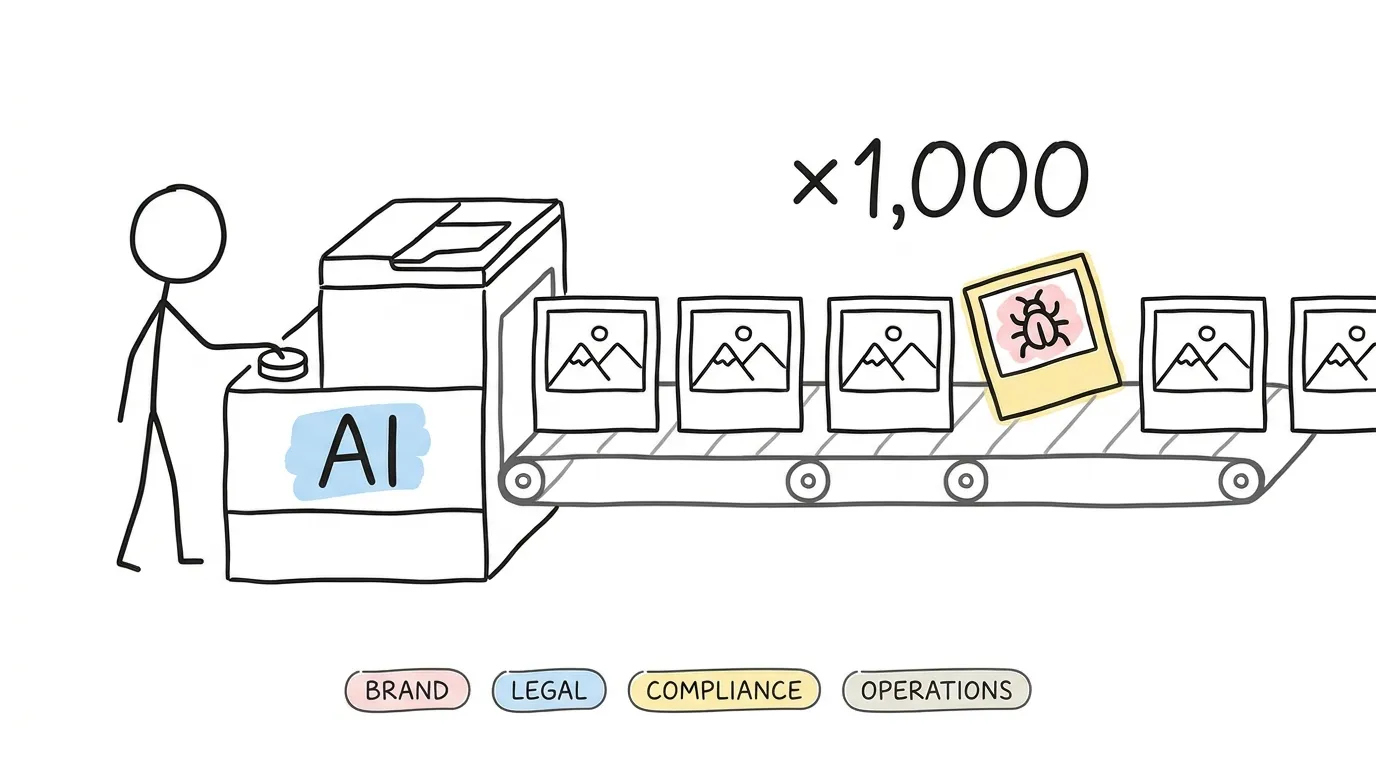
AI hasn't just changed how fast you can produce an asset. It has changed how fast a single mistake can be copied into thousands of places.
Before, if a copywriter got one product feature wrong, that was one wrong line. Today, an automated system wired into a product data source can spread that line across thousands of descriptions, ads, emails, landing pages, and support conversations. Visual errors, copyright exposure, biased content, off-key brand expression — all the same.
Worse still, the risk doesn't only hide in "the generated output." It can slip in at the very top of the pipeline, in the input material, and blow up at the very bottom, in stored and reused assets. Let's take it apart layer by layer.
Layer 1: Brand Risk — Your Audience Finds the Problem Before You Do
AI-made creative usually looks "competent" first; "distinctive" only comes later, if at all.
Without a strong point of view and real polishing, images come out over-refined and emotionally flat, near-indistinguishable from the millions of AI images online. Copy is the same: it reads smoothly, and you can't remember what it said afterward.
There's a name for this kind of content: "AI slop" — in plain language, AI-generated junk. The problem isn't obvious giveaways like six fingers. It's that aura of "mass-produced, poured into channels, not exactly wrong but useless all the same." Audiences are getting more and more familiar with AI's tells; the harder you lean on it, the more your brand reads as perfunctory, cheap, and insincere.
What your team sees as "fast and cheap," your audience sees as penny-pinching and lowered standards.
Be even more careful with subjects that demand empathy. Use synthetic people to tell customer stories, run health campaigns, or post memorial content, and audiences will feel that you don't care at all about the very people you claim to understand.
So here's a standard worth writing down: Don't just ask whether the asset is "usable." First ask whether the scenario is right for AI at all.
Then there's brand voice. What is brand voice? Not just the approved words in the copy guidelines — it's rhythm, confidence, humor, restraint, and what a company dares to say and doesn't. AI can imitate the wording of a prompt; it can't imitate these. Add in different teams using different tools, different model versions, and different review standards, and you end up with social feeds that get slicker, product pages that get louder, support emails that get colder. Each one looks fine on its own. Put together, the brand starts sounding like two different companies. A style guide helps a little, but it's nowhere near enough: you also need per-channel exemplars, boundaries for humor and urgency, banned claims, and reviewers who genuinely know the brand.
Now for one that gets companies into trouble even more easily: synthetic people.
AI can make a real person "say" things they never said and "endorse" products they never used. And the person doesn't have to be a celebrity. An employee, a customer, an expert, a creator — if that face or that voice is close enough to a real one, trouble arrives from every side: reputation, contracts, privacy, likeness rights. Even a purely fictional spokesperson counts if the face and voice resemble a real person too closely.
Some will say: I added an "AI-generated" label. It doesn't help. A label only explains how it was made; it is not the same as having permission to use someone's face and voice. Before using a synthetic person, confirm at least four things: whether the face resembles an identifiable individual; whether consent was actually obtained; whether viewers will mistakenly believe the person really endorsed it; and whether the resemblance is close enough that people will misidentify them.
There's another class of brand risk that lives in what you don't say. Audiences aren't really against AI itself — they're against being kept in the dark: passing generated customers off as real ones, passing a virtual person off as an independent reviewer, inventing a nonexistent author to publish under, passing staged content off as documentary, or showing off a product feature that doesn't exist. Audiences judge the result they see, not how sophisticated your production pipeline is behind the scenes.
Layer 2: Legal Risk — "AI-Generated" Doesn't Mean "Free to Use"
When it comes to the law around AI content, people tend to make two confident assumptions.
One: that anything AI produces can be used freely. The other: that using generative AI automatically means infringement.
Both are wrong. The risk depends on where the material came from, what the output resembles, which inputs were used, and in which market, and in what manner, it gets published.
Start with copyright. Many assume copyright risk lives only in the training-data stage. Wrong — it can seep in through several openings: you uploaded copyrighted reference images; your prompt asked for a close replica of a specific work; the output carries recognizable protected elements; your post-production added unlicensed images, music, or fonts; or the publication went beyond the markets and channels your existing license covers.
Two things need to be kept apart here: whether a model's training data was lawful, and whether this particular output infringes. They are independent questions. A provider may be fighting lawsuits over training data while your specific output is not infringing — and conversely, even a fully lawful training process can produce output that resembles a protected work closely enough to be risky.
The rules also differ by region. In the United States, the core dispute is whether training AI on copyrighted works counts as fair use (fair use: an American legal doctrine permitting limited use of copyrighted material without the owner's permission). A 2025 report from the U.S. Copyright Office put it plainly: some uses may qualify as fair use, some won't, and each case has to be judged on its own. The EU runs on a different track: the Copyright Directive provides an exception for text and data mining, but rights holders can reserve their rights for certain commercial uses; and the EU AI Act sets copyright-compliance obligations for providers of general-purpose models, which must have a policy in place to comply with EU copyright law.
For a marketing team, the question that really matters comes down to one thing: is this asset safe in every market where it will be published?
The risk rises sharply with certain kinds of prompts: naming a specific well-known fictional character; asking for a close replica of a particular photo, illustration, or melody; requesting the signature style of a living artist; asking for a competitor's packaging and protected design elements; extending or remaking an existing campaign; imitating another company's visual identity. Style itself is usually not protected under U.S. copyright law, but a style-heavy prompt can still surface protected elements, create consumer confusion, or invite claims like unfair competition. Switch jurisdictions, and the same thing may collide with different copyright or personality-rights rules.
And there's one thing many teams never think about: with AI-generated material, you may be able to use it — yet find it very hard to stop others from copying it.
The U.S. Copyright Office's position is that copyright protects original human expression. For an AI output to be protected, someone must contribute enough original expression through acts of selection, arrangement, and editing. Typing a few prompts does not constitute authorship. For assets meant to be used long-term — brand mascots, packaging, core visual systems, music and designs you plan to license out — this is a very real problem: you can use it, and so can your competitors.
What to do? Leave genuine traces of human creation throughout the workflow: sketches, source files, revision history, rejected versions, compositing decisions. Note: record real creative control — not a retroactive "leadership has approved" stamp. Paperwork cannot conjure authorship.
Trademarks and likeness rights are another ledger entirely. Material doesn't need to copy an entire work to be risky: a logo that resembles a registered trademark, packaging that resembles a competitor's, a slogan someone else is using, an identifiable face, a composition that implies a celebrity endorsement, a character or design that consumers could easily misattribute. Each one may need its own rights clearance — reverse image search is no substitute. The depth of review should also match the weight: a concept image used in internal discussions, and a global campaign, a brand character that will serve for years, or a product's industrial design, should not get the same treatment.
Tool terms deserve a line-by-line read too. Some platforms offer enterprise customers intellectual-property indemnification, but that protection may hinge on a pile of conditions: subscription tier, which model or feature was used, whether reference material was uploaded, whether the output was modified, whether it passed through a third-party integration, whether the customer followed required procedures, what type of claim it is, and in which jurisdiction the dispute would be fought. Other contracts simply push all review responsibility onto the customer. So marketing, legal, and procurement should go through the contract together and get clear on: who owns inputs and outputs, whether customer data will be retained and used for training, what the indemnification covers and excludes, whether protection survives modification, what evidence to keep, and who handles complaints and takedowns. Don't trust the "commercially safe" on the product page — read the contract itself.
"Available for commercial use" does not mean "immune to all third-party claims." When something goes wrong, the one standing in front is usually the brand that published the content.
The last legal risk happens before generation ever starts: employees pasting things into AI tools that should never be pasted in. Summarize a research report here, polish an email there, brainstorm a few campaign ideas — and along the way, unreleased product details, customer data, campaign performance, financial information, contract terms, source code, and login credentials get pasted right in. How big the risk is depends on the provider, the account type, the retention policy, and the contract. Enterprise accounts do carry stronger controls, but they don't replace usage policies, access controls, employee training, and data classification. The simplest rule fits in one sentence: until both the platform and the specific use are approved, confidential, personal, and restricted information stays out of generative AI tools entirely.
Layer 3: Compliance Risk — AI Gives You No Exemptions
A misleading claim written by AI is still a misleading claim. Personal data that passed through an automated system is still regulated personal data. Discrimination delivered by an algorithm is still discrimination.
The trouble with AI is that it makes these problems happen earlier and spread wider — by the time anyone notices, they're already everywhere.
Start with false advertising. Generative AI is good at "sounding true"; it is no guarantee of "being true." Product specs, price discounts, certifications, customer quotes, environmental claims, health benefits, availability, competitor comparisons — it can fabricate any of them. Once those lines enter ads, landing pages, or support conversations, they start shaping purchase decisions. You can't push responsibility onto the tool because "the model wrote it" — you are the one who chose to publish. So the rule should be: before every factual statement goes live, it must trace back to a reliable source. Reviewers need to be able to find the evidence, not be talked around by the confidence of the generated copy. This goes double for claims involving health, safety, finance, sustainability, regulated products, and quantifiable efficacy.
On reviews and testimonials: the Consumer Reviews and Testimonials Rule from the U.S. Federal Trade Commission (FTC) took effect on October 21, 2024, explicitly prohibiting specific types of fake reviews — including attaching reviews to people who don't exist, or who never went through the experience. The FTC has said clearly: AI-generated reviews fall within the rule. That said, this doesn't mean all virtual endorsements are banned. What gets you into trouble is presenting a fictional experience as a real one, or creating a false impression of who is doing the endorsing.
Then privacy. Personal information doesn't have to wait for you to actively upload a customer database before things go wrong. It can come in through prompts, uploaded documents, audience lists, support records, reference images — and go back out through the output: repeated back, inferred, even fabricated out of thin air. EU GDPR and UK GDPR require a lawful basis for processing personal data, along with the principles of fairness, transparency, purpose limitation, minimization, accuracy, and security. The UK Information Commissioner's Office (ICO) has also made clear: generative models may hold personal data in retrievable, disclosable form, and the purposes of training and deployment must be clear and specific. In the United States, every state runs its own regime — privacy laws in California and other states impose their own requirements on collecting, using, sharing, retaining, correcting, and deleting personal information. The same AI workflow, with different data sources and different launch markets, needs a separate compliance assessment each time. Before you connect a creative platform to customer data, answer these clearly: what can the system touch, why it must touch it, what the legal basis is, whether inputs will be retained for training, where the data is processed, how long it is stored, how individuals exercise their rights to access, correct, and delete, and what happens to the data after the contract ends. Personalization is not a reason to collect more. Use the least data that gets the necessary job done.
Then algorithmic discrimination. Bias can sneak in from training data, reference material, prompts, customer information, historical campaign data — and shape who appears in generated images, which professions get bound to which people, how far apart the tone is for different audiences, who sees job, housing, and credit ads, who gets the discounts, whether accessibility needs get ignored.
Note that none of this requires anyone to have written a discriminatory prompt. An ad delivery system can learn on its own that "this kind of image clicks better with this demographic" and keep reinforcing it, even when your targeting settings are neutral. Research presented at a 2023 hearing of the U.S. Equal Employment Opportunity Commission (EEOC) found that Facebook's ad delivery system showed gender and racial skew in how job ads were delivered, even when advertisers used neutral, inclusive targeting. The EEOC has also stated separately: employers using AI and automated systems remain bound by federal anti-discrimination law.
What you need to test is: who appears across the different asset versions, who received each message and who didn't, whether proxy data reproduces protected characteristics, whether personalization changed anyone's opportunities or prices, whether historical data is amplifying old biases, and whether an actual human can review and overturn the system's decisions. A visually diverse campaign can absolutely deliver discriminatory outcomes.
Finally, disclosure. The United States has no single rule saying "all AI-assisted content must be labeled." Advertising rules govern whether the overall impression is truthful — whether omitting key information would mislead a reasonable consumer. A virtual influencer isn't against the law in herself, but you can't package her as a real customer with a real purchase experience; a material relationship with an advertiser must be disclosed when the context doesn't make it obvious. The EU is much more specific: Article 50 of the AI Act imposes disclosure obligations on certain deepfake images, audio, and video. The Act entered into force in August 2024, with its substantive provisions (including Article 50) applying from August 2, 2026. Cross-border campaigns need to be walked through market by market: where is the content being placed, does it imitate a real person, does it look like news or documentary footage, is a synthetic character doing any endorsing, will viewers take a simulated experience as real, will the platform add labels itself, and are there local industry rules on top.
One more thing worth saying: disclosure is not a get-out-of-jail card. It can't turn a false claim true, or a fake review into a real one; it can't retrofit a license onto an unauthorized likeness, and it can't make discriminatory targeting legal. A label provides context — it is not a pass.
Layer 4: Operational Risk — It Hurts Even When Nobody Complains
Everything above assumed a regulator, an audience, or a rights holder is in the room. In truth, much of the time the loss starts on the inside.
Most organizations used AI first and built process after. Employees got going on personal accounts, agencies brought their own workflows, legacy software platforms quietly rolled out generative features — and nobody ever reviewed the creative, legal, or data risks. In the end it grows into a web of tools no one can see in full: personal accounts holding customer data, agency models outside the contract's coverage, no record of which model generated which image, no clear owner for legal and brand approvals, assets entering the library with no provenance or rights information, different markets publishing the same image under different standards.
A policy document can't fix any of this. Governance has to grow along the real production workflow: who, can use which tools, touch which data, and who approves. And there has to be an exception lane. Otherwise, the moment a delivery deadline tightens, or the approved tool can't produce the look you want, people will route around it all the same.
Second: vendors change. Acceptable-use policies change, content categories get restricted, models get replaced generation after generation, data terms get adjusted. A workflow tuned to one version can be unrecognizable after an update: brand consistency, prompt performance, safety filters, image composition, localization quality, product fidelity, reproducibility — all of it can shift. A prompt that produced stable output yesterday may be blocked by a filter today, or produce visibly degraded results. The platform may also suddenly refuse a synthetic spokesperson you've already signed off on, a claim about a regulated product, a sensitive audience, or a creative concept. Teams counting on AI to hit fixed schedules need fallbacks: human-made alternative assets, saved source files, records of tools and model versions, backup vendors for critical steps, and enough time for rework. The more central AI is to a campaign, the less you can skip the contingency plan.
Third: asset records. When AI assets enter the asset library, they often carry nothing but a filename and a date. Which tool, which model, which version generated it? What prompts and reference files were used? Does it contain a real person's face or voice? Which parts did humans change? Which markets and channels approved it? Does it need disclosure? When does the license expire? Have the vendor's terms changed since? Leave all of these blank, and every act of reuse is a mystery box. One team may scale an image that was only approved for internal testing into a global campaign; another market may miss a locally required disclosure; a designer may be unable to produce evidence of which parts were human-created. The more assets circulate between teams, agencies, markets, and channels, the bigger the risk. So provenance, rights, model, review, and usage information has to travel with the file, written into the asset record — not left in some conversation thread, or disappearing along with a disbanded project team. Copyright enforcement is binding itself ever more tightly to asset management; these records are turning from "optional administrative work" into "mandatory operational practice."
Fourth: insurance. Don't take for granted that your existing media liability, cyber, and professional liability policies will catch every AI incident. Whether something is covered depends on policy wording, exclusions, the facts of the claim, and how the system was used. Possible gaps include: copyright and trademark infringement, unauthorized likenesses and voices, unsupported false claims, privacy and data security incidents, indemnification obligations in contracts, failure to properly supervise agencies, content generated outside the process, intentional violations, and the cost of pulling and replacing an entire campaign. The crux isn't whether the policy contains the word "AI" — it's whether the existing definitions, exclusions, and notice requirements map onto how you actually use AI. Legal, risk, procurement, and insurance should sit down and walk through the workflow together, and decide in advance: after a suspect asset is found, who must be notified, what evidence must be preserved, and who has the authority to pause or pull the campaign. The longer you drag, the bigger the operational loss — and the easier it is for the claim itself to turn contentious.
Two More Stories
I've unpacked four layers of risk. Let me add two real train wrecks.
The first: November 2023. Sports Illustrated was exposed for publishing product reviews under apparently fabricated author profiles — name, bio, headshot, all present, and the headshots later turned out to be AI-generated images being sold online. The publisher argued the articles themselves weren't AI-written and that the content came from a third-party vendor; the articles in question were soon taken down. What stings about this one isn't really "did AI write it" — it's that readers were shown a roster of authors who looked like real people. Transparency, editorial standards, vendor oversight — all of it got called into question in one go. Outsourcing doesn't wash the hands clean either: in the reader's eyes, the content was published under your brand. So what a brand must verify goes far beyond the final copy: the identities, bios, testimonials, and experiences appearing in the content all need checking, and the work handed in by agencies and vendors needs checking too.
The second: 2024, Air Canada. After a passenger's grandmother passed away, he asked the airline's website chatbot about bereavement fares. The chatbot told him: book at full price, then apply afterward for a refund of the difference. He did exactly that — and afterward the airline refused the refund, because what the chatbot said and the actual policy were two different things. The British Columbia Civil Resolution Tribunal found that the airline had engaged in negligent misrepresentation and bore liability. The airline argued that the chatbot should answer for its own responses. The tribunal didn't accept that: the chatbot lives on the company's own website, and customers are entitled to believe what it says.
What this case really illustrates is a very plain question of responsibility: a company cannot treat an automated customer touchpoint as something that sits outside its own organization.
A chatbot is both a support channel and a publishing channel. Every sentence it utters is you "publishing."
So What Do You Do?
After all that — what do you actually do? Seven things.
-
Make the intensity of review match the level of risk. "Someone has looked at it" is not review; the person looking needs the matching expertise, context, and veto power. The checklist includes: factual accuracy, brand fit, intellectual property, product and advertising claims, privacy and confidentiality, representation and bias, local market requirements, disclosure obligations — and the complete experience as the customer actually encounters it. Low-risk social posts get a brand-plus-facts check; synthetic spokespeople get legal rights clearance; health claims get regulatory or clinical input; global campaigns get cultural and localization review added for each market. The same asset also moves between categories: a generated image in an internal deck, and that same image turned into global packaging or a permanent brand character, carry completely different exposure. And review has to happen before production reaches the point of no return. Finding a rights problem at the concept stage is far cheaper than finding it after translation, editing, and distribution.
-
Check the inputs before generating the outputs. However polished the output, it may come from a problematic source. Uploaded images, photos of employees and customers, product photography, music and recordings, script text, brand assets, third-party designs, creators' likenesses, confidential documents — before use, confirm three things: Do we have the right to use this here? Is this tool approved to receive it? Is this data necessary for the task? If the answer to any one of these is unclear, don't let it into the pipeline. Don't assume that because you uploaded a protected work and the model transformed it, the result is safe. The same goes for personal data: deleting the name is not anonymization — the remaining information may still identify the person.
-
Anchor every claim to a source. Treat every AI-generated factual statement as unverified until it maps to a reliable basis. Price, performance, certifications, sustainability, health and safety, availability, competitor comparisons, legal and financial commitments — anchor them one by one. Large campaigns can keep a "claims register": for every factual statement, one source, one owner, one approval status. Auto-generated product content should pull its numbers directly from a well-maintained product data or content system — don't let the model recall from memory. Chatbots should take answers to high-risk questions from controlled sources; when uncertain, or when the cost of getting it wrong is high, hand off to a human. The goal is to verify the underlying claims, not to proofread the wording on top.
-
Clear rights, similarity, and likeness, one by one. For important and sensitive assets, there is far more to check than whether it looks good: recognizable copyrighted elements, existing logos and trademarks, protected characters, similar packaging and product designs, real people's faces and voices, implied celebrity or creator endorsements, unlicensed fonts, music, and stock material. Reverse image search and similarity tools can lend a hand, but they can't rule on legality. The same goes for AI detectors — they're reference signals at best: they flag human writing as AI and miss AI writing, and they can't prove authorship, originality, or infringement. Review depth should match the asset's value and reach: an internal mood board, and a flagship campaign, a product's appearance, or a brand character that will serve for years, are not the same tier.
-
Write down how it was made and how it was approved. Important assets should carry enough information to account for provenance, review, and licensed use: tool and model names, versions, generation dates, prompts and parameters, uploaded reference material, source and license information, rejected alternatives, human edits, approvers, disclosure decisions, approved markets and channels, publication dates, reuse restrictions. These records underpin due diligence, make later rights, compliance, and reuse decisions traceable, and can help distinguish AI output from genuine human creation. The records should live with the file in the asset management system — not in some email thread, an agency's folder, or a creator's memory. Approvals aren't permanent either: when a vendor changes its model, policies, or training practices, high-value assets, licenses, and disclosures should be re-reviewed. And once again: documentation records real creative choices — it cannot conjure authorship that never existed.
-
Govern the tools, the vendors, and the AI features that come "built in." A good AI policy spells out what employees can do, not just what's forbidden. For every approved tool, define clearly: permitted uses, data that must not be entered, approved account types, required privacy settings, whether inputs will be retained for training, whether plugins and third-party models are allowed, who owns the output, whether indemnification exists, what review level is required, and what records to keep. Also keep a close eye on AI features being added to software the company already runs: design, analytics, support, and office platforms may quietly feed data into third-party models while the user has no idea. Agencies, vendors, freelancers, and production partners deserve the same scrutiny. Contracts need to get concrete: which tools and models are allowed, which actions require written approval, who owns inputs and outputs, whether confidential data may go in, where reference material came from, what records must be delivered, who handles complaints and takedowns, how warranties and indemnification are set, whether subcontractors may switch models, and when customers must be told that AI was used. "We may use AI" is not enough. Using AI to make a small variant of a background image, and using AI for the core creative, the spokesperson, and the key claims, are two different things.
-
Have the playbook ready, and count the whole bill. Even the most controlled processes fail. Decide the response actions in advance: how to pause a campaign, pull assets, preserve records, assess which markets are affected, when to notify legal and insurance, and who approves replacement assets. Put your insurance up against your real AI usage, line by line: which policy might respond to a copyright or trademark claim? Does it cover synthetic media and unauthorized likenesses? Are contractual liabilities excluded? Is coverage conditioned on having followed the established process? How soon after discovery must notification happen? Are withdrawal, replacement, and crisis-handling costs covered? Is the agency's insurance enough? Who is responsible for preserving evidence and contacting the insurer? No matter how rushed you are, never delete the files, the prompts, and the approval records — deleting them only makes the legal, insurance, and internal reviews harder.
Then, tally the whole account: tool subscriptions, prompt development, rework, brand and legal review, localization, bias testing, asset documentation, vendor oversight, losses from delay, replacement costs. AI's usual pattern: it hands you the first version at lightning speed, then moves the time and money into review, correction, and risk management. For repetitive, low-risk creative, the math may still work out. But for a sensitive campaign that demands heavy investment in risk mitigation, the whole ledger may not come out cheaper than the old way. For high-risk or cross-border projects, hire lawyers who know AI, advertising, intellectual property, and privacy law — and who know the target market. Rules, contract terms, and technical capabilities are all changing fast; a generalist legal review may not be enough.
Finally
Back to that Christmas ad from the opening — the one that got pulled.
Stop asking "can AI make this?" The question to ask is: can this process produce effective, compliant, scrutiny-proof assets more efficiently than the alternatives?
AI will keep its place in creative production. That part isn't up for debate. What is up for debate: speed should not come at the price of control.
Here's to making things with AI — fast, and steady.
Continue reading
Related articles
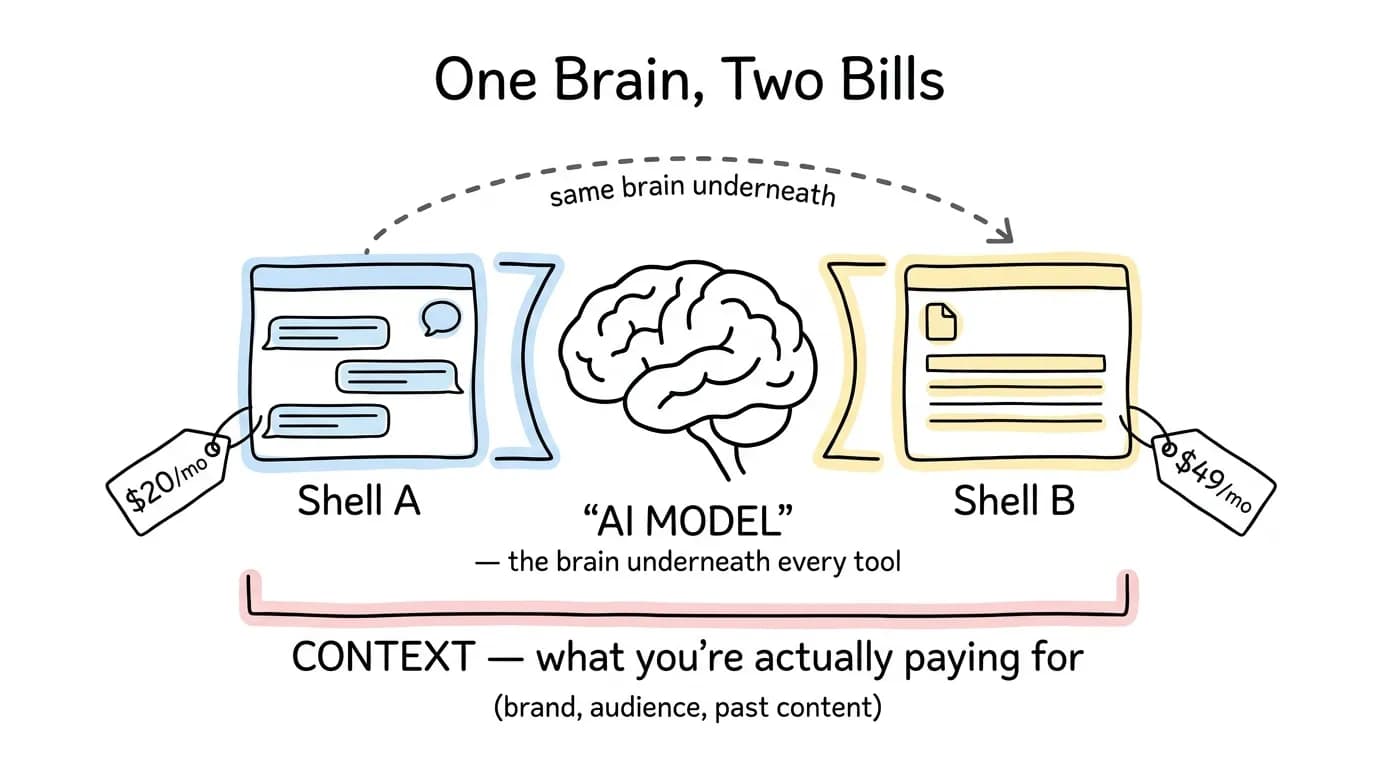
Which AI Should Your Startup Actually Use for Marketing?
A startup marketing guide explaining the difference between AI models and tools, sorting tools by job (writing, research, design, leads, email, video ads), and outlining a 30-day test plan for choosing them. It also covers generative engine optimization and budget trade-offs.
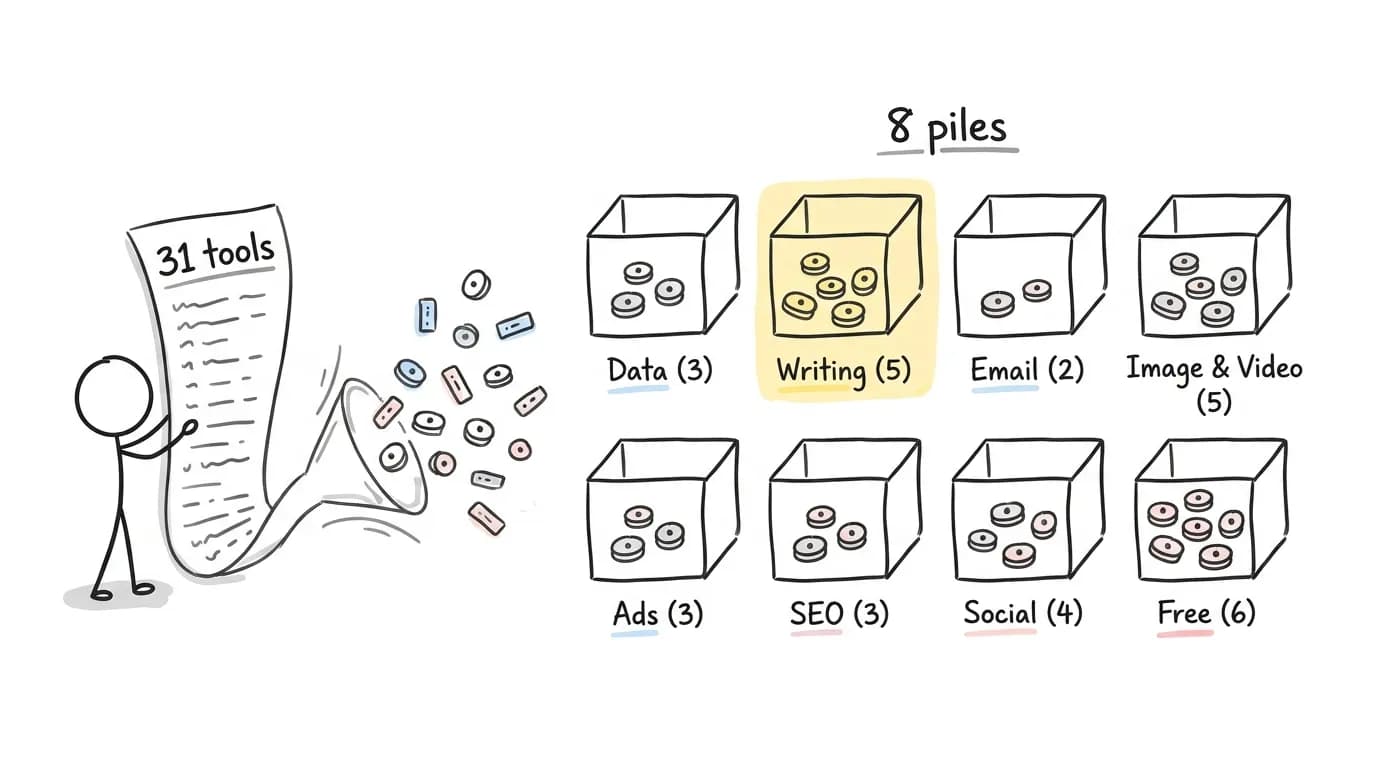
31 AI Marketing Tools, Reviewed One by One: How Exactly Should You Spend the Money?
A review of 31 AI marketing tools grouped into eight categories, covering data, content, email, video, ads, SEO, social, and free options, with guidance on choosing one strong tool for your most frequent task and testing free tiers first.
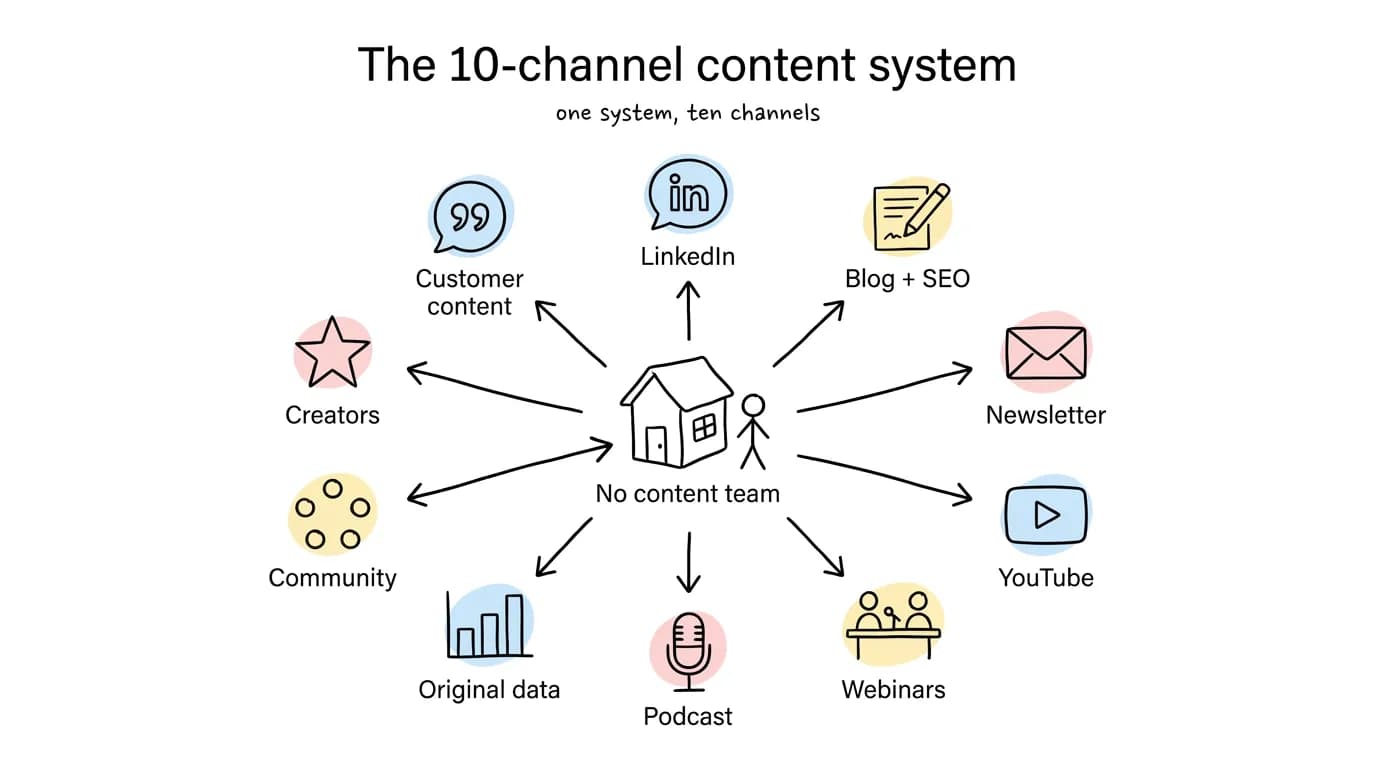
How a Company With No Content Team Grew Its Website From Zero to 4,000 Monthly Visitors in a Year: A Breakdown of Postbeam's 10 Content Channels
An article breaking down the ten content channels Postbeam used to grow its website without a content team, covering LinkedIn, blog and SEO, newsletters, YouTube, webinars, podcasts, original data, community, creators, and customer content, plus AI-assisted workflows and visibility in AI answers.