
Your Customer Hasn't Even Opened a Search Box — and the List Is Already Set: Let's Talk GEO
A long-form explainer on GEO (Generative Engine Optimization): how AI search engines generate answers, how GEO relates to SEO and AEO, and eight practical tactics for increasing brand visibility in AI-generated answers. It also covers measurement metrics, a diagnostic workflow, and platform differences.
A few days ago, I was picking a marketing analytics tool for my team.
Want to guess how I went about it?
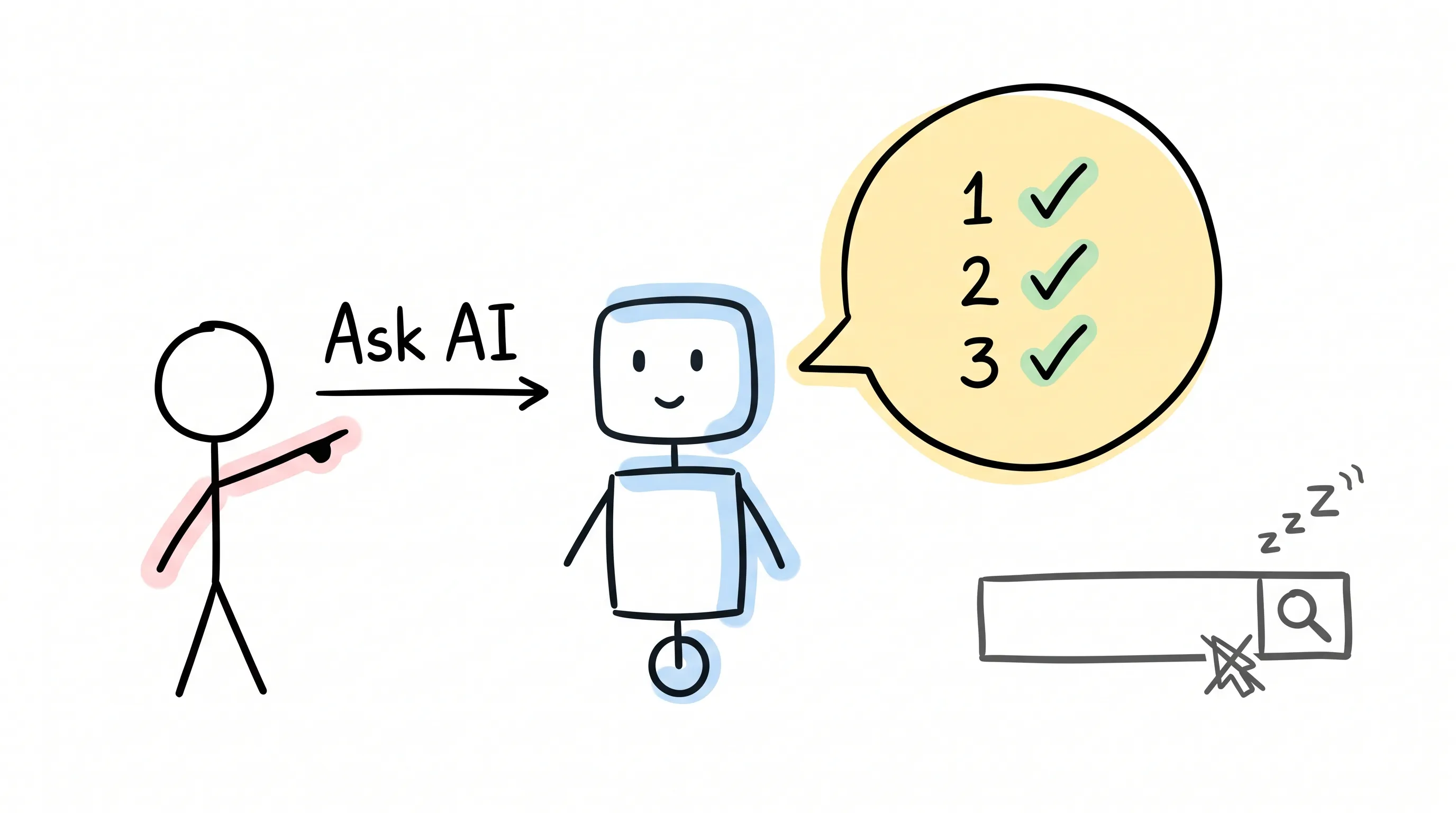
I never opened a search engine. I just asked AI: which ones suit a team our size? It gave me three names, along with a rundown of each one's strengths and weaknesses. I read it, then went straight to booking demos.
Not a single click in the entire process.
Later I told this story to a friend who works in SEO. He went quiet for a few seconds, then asked: so all the rankings we work so hard to optimize — who exactly are we optimizing them for?
That question deserves serious thought from everyone who makes content for a living. In this piece, I'll walk you through my thinking.
Start With Two Numbers
The first number: 69%.
Similarweb ran a zero-click study: in May 2024, 56% of news-related searches on Google ended without a single click. A year later, that figure had climbed to 69%. Why so fast? That year was exactly when Google rolled out AI Overviews at scale.
What does that mean? It means the "organic clicks" that SEO teams have watched for years are a pool that is itself shrinking. Keep judging SEO by click counts, and you're counting how many buckets of water you haul each day from a river that's running dry at low tide.
The second number: 35%.
In its 2026 Generative AI Brand Visibility Index, Similarweb found that 35% of US consumers turn to AI at the product-discovery stage, while only 13.6% use traditional search.
Savor that contrast for a moment.
In other words, when your potential customer starts wondering "what should I buy," one time in three the shortlist is being drawn up by AI, not by a search engine. Whether your name is on that list gets decided before you ever get a chance to speak.
That's why I want to introduce you to a new term: GEO.
What Exactly Is GEO?
GEO — Generative Engine Optimization.
What's a generative engine? Things like ChatGPT, Perplexity, and Google's AI search. They don't hand you a page of links; they hand you a finished answer.
What GEO does is make sure your name is in that answer.
Let's be clear up front: GEO doesn't replace SEO. SEO fights for where a page sits in a list of results; GEO fights for whether a brand shows up in an AI answer. One fights for rankings, the other fights for presence.
By the way, the term has a clear origin: in 2024, researchers at Princeton University and the Indian Institute of Technology Delhi published a paper that studied GEO as a formal optimization framework for the first time. Some in the market call it LLMO, others AIO or GSO — the names are all over the place, but they're all talking about the same thing.
How Does AI Generate Its Answers?
To do GEO well, you first have to understand the machinery — otherwise every move you make is a blind guess.
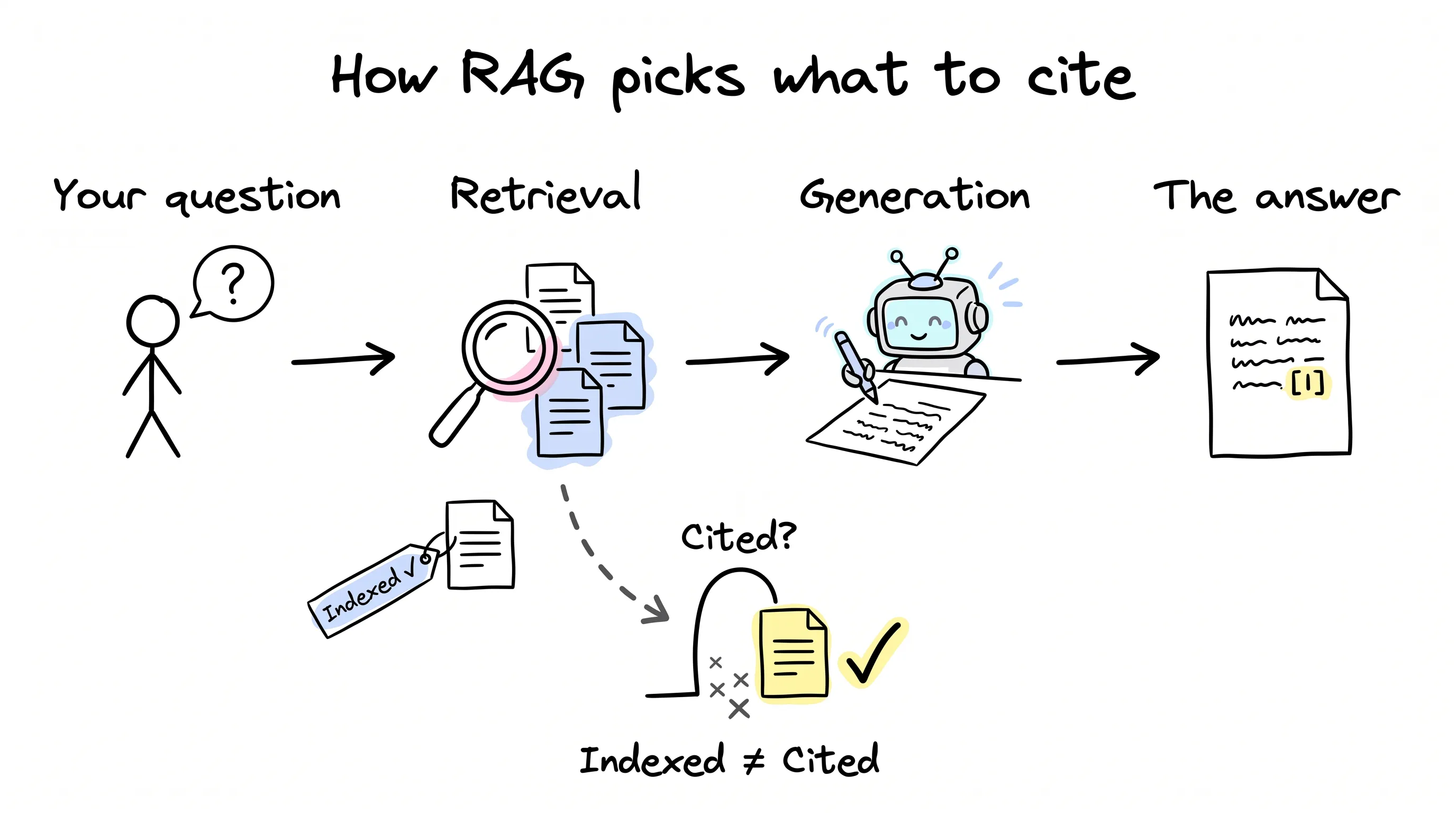
Mainstream AI search today runs on something called RAG (retrieval-augmented generation). The name is intimidating; the idea comes down to two steps.
Step one: retrieval. You ask a question, and the system first digs through a pile of documents. Which pile? Either an existing search index — Google's AI search uses its own — or fresh crawls of the live web, which is Perplexity's route.
Step two: generation. A large language model reads what was dug up and kneads it into one coherent passage. Who gets cited and who doesn't, where you get placed, how you get characterized — the model makes all of those calls at this stage.
Those two steps lead to one conclusion that really matters:
Indexed is not the same as cited.
Being in the index only gets you in the door. Whether AI actually writes you into the answer depends on whether your content is clear enough, credible enough, and worth using as evidence. That gap is exactly the work GEO does.
One experimental result from that Princeton paper is worth remembering all year: adding statistics and explicit first-party citation sources to your content lifts AI visibility by 30% to 40%. And the keyword stuffing beloved by SEO old hands? It scores below baseline — negative optimization.
Brutal.
AI doesn't feed on keywords. It feeds on evidence.
What Does It Look Like When AI Actually Uses You?
When GEO works, you'll see four things.
Linked citations: the AI explicitly shows your URL in the answer, treating you as evidence.
Brand mentions: your brand name appears in the answer, link or no link.
Sentiment: when you come up, the tone is positive — or at least neutral.
Share of voice: across the many questions relevant to your industry, the AI mentions you repeatedly, not just once in a while.
All four are measurable. And none of them live in your Google Analytics dashboard.
GEO, SEO, AEO — How Do They Actually Relate?
The last few years have spawned a lot of new jargon — SEO, AEO, GEO — and plenty of people are already dizzy.
Let me untangle them with a shop analogy.
SEO is opening your shop downtown. You're competing for location — the more foot traffic, the better; more passersby means more people who might step inside.
AEO — Answer Engine Optimization — is getting your sign and your information in such clear order that people can take the answer straight from you at a glance. Google's featured snippets, AI Overviews, voice assistants — anywhere that "reports the answer directly" counts.
GEO is about making the whole industry want to say your name. Not just the search-engine ecosystem, but every scene where users talk directly with AI. What the AI talks about, how it talks about you, whether it puts you or a competitor first — that goes beyond "getting a paragraph cited." It's competition at the narrative level.
Each one watches different metrics too. SEO looks at organic traffic, keyword rankings, click-through rates; AEO looks at citation counts, AI Overviews exposure, and share of impressions under zero-click conditions; GEO looks at a new metric — Share of Model, more on that later — plus things like share of brand mentions and sentiment distribution.
So are these three an either-or choice now?
No. Stack them, and do all three.
Why? Here's some hard logic: Google's AI search draws its material only from Google's own index. Same for Bing and Copilot. If your pages can't rank on Google, Google's AI will never cite you. Traditional rankings are the ticket into AI answers. The ticket price hasn't gone up — but the gate has moved.
So the right posture is to run all three layers at once: SEO lays the foundation, AEO makes your answers precisely extractable, and GEO manages your brand narrative across the entire generative ecosystem. Without solid ground, the upper two floors are castles in the air.
Next time someone tells you "GEO is going to replace SEO," throw this section at them.
So How Do You Actually Do It? Eight Moves
Theory's done — on to execution. The eight moves are independent of one another; whichever gap is most obvious, plug that one first.
1. First, Make Sure AI Can Actually Crawl Your Site
The first move takes the least technical skill, and yet it's where the most people wipe out.
In 2024, Cloudflare changed its default settings: AI crawlers, blocked by default. Which means if you're on Cloudflare and never touched the settings, your site may have quietly shut out the crawlers of every major AI platform.
The door is locked — and you're still wondering why nobody visits the shop?
The self-check is simple: open robots.txt and see whether names like GPTBot, PerplexityBot, ClaudeBot, and Google-Extended are Disallowed. Then scan your server logs to confirm those crawlers have actually been coming by.
One more trap: many AI crawlers don't execute JavaScript. If your key content only appears after browser rendering, to them it's a blank page. For anything important, do honest server-side rendering.
2. In Every Section, Lead With the Answer
AI extracts passages, not whole pages.
What does that mean? When AI looks for the answer to "what is GEO," it doesn't read your whole article and then summarize it for the user — it scans your paragraphs for one it can lift out standalone and use as the answer.
If your core answer is buried in paragraph three while the article next door gives it in the first sentence, the citation goes to them.
This tactic has a name: BLUF — Bottom Line Up Front. Open every section by stating its answer outright in 30 to 60 words, then elaborate. Here's a blunt self-test: take the first sentence of each section, paste it into your social feed on its own — would people understand it? If not, rewrite it.
3. Speak With Data — and Say Where It Came From
As noted earlier, statistics plus first-party sources can lift AI visibility by 30% to 40%. Of all the GEO tactics out there, this is the most thoroughly validated.
But "having data" and "having credible data" are two different things. Here's the format: a number, plus a range, plus a time frame, plus a source. For example: referral traffic from AI chatbots reached 1.1 billion visits in June 2025, up 357% year over year, per a Similarweb report. That's the kind of sentence AI loves to cite. A vague "AI traffic is exploding" is, to AI, the same as saying nothing at all.
One more entry for the ledger: the average ChatGPT query is about 60 words long; the average Google search is just 3.4 — more than a tenfold gap. People asking questions of AI are asking more specific questions, and they're closer to a decision. That figure comes from Similarweb's 2025 GenAI Landscape report — sit with it for a moment: the user typing into that box is the user closest to pulling out a wallet.
One more rule: link your data to the primary source — the original research report, the company's own research page. A blog post paraphrasing a study is no substitute for the study itself.
4. One Question Becomes Seven — Answer Them All
When a user asks ChatGPT a complex question, the AI doesn't search using their sentence verbatim.
It breaks the question apart. You ask "which CRM should I choose," and it splits into a swarm of sub-questions, sends them hunting for material in parallel, then assembles the results. This is called query fan-out.
The trouble: the split is random. The same question produces slightly different sub-questions every time, so you can't optimize for any one specific sub-question.
So what can you do? Cover every question type. A well-structured long-form piece should give each of these seven categories its own section, each able to stand alone as an answer: what it is, how it compares, how to do it, when to use it, what the pitfalls are, what else is related, and how to measure it.
Fill in all seven boxes, and however the AI splits the question, every piece lands on your doorstep.
5. Show Up on Other People's Turf
Of the eight moves, this one probably has the widest awareness gap.
Yext ran a study: 86% of citations in AI answers come from sources the brand itself controls or sits near — your own website, your listings across directories and review platforms, and authoritative media coverage of you. Seer Interactive also found a 65% correlation between how often a brand is mentioned across the web's content and how often it shows up in AI answers.
Put plainly: AI doesn't trust how you praise yourself. It trusts how others talk about you.
What does this resemble? A background check. However polished your resume, HR still calls your former colleagues. Is your G2 listing accurate? Is your Wikipedia entry complete? Do industry media mention you? These used to be brand-PR chores; now they are GEO itself.
And digital PR is no longer a side task that earns backlinks for SEO. It is the main battlefield.
6. Try llms.txt
An emerging little convention that looks like robots.txt; it tells AI which pages on your site are most authoritative and suggests using those.
It isn't yet a confirmed ranking signal in any algorithm, so don't expect overnight results from adding it. But it has two practical benefits: it saves tokens when AI comes to fetch your content — clean Markdown is far easier to read than thick, heavy HTML — and it signals to AI systems that respect the convention that you care about which of your content they read.
If your site has a large content library, it's worth half a day to build one. The cost is trivial; you're buying a possibility.
7. Do Digital PR — Seasoned to AI's Taste
Traditional PR still works, because the high-authority media that large models rely on for training and retrieval are the same crowd traditional search valued. If a brand keeps appearing in Forbes, Newsweek, and the industry press, large models accept it as an authority in that field.
The GEO era adds one filter: prioritize the media that AI platforms actually cite. On platforms like Perplexity, which shows its sources on every answer, you can clearly see a preference for authoritative industry journals, official documentation, and primary research.
So pitching authoritative outlets, supplying data for industry reports, and squeezing onto "best of" lists all pay better than they used to. It used to earn you backlinks; now it earns you AI citations directly.
8. Set Up House Where AI Likes to Hang Out
Reddit, LinkedIn, YouTube, G2, Quora — content from these platforms gets cited by AI constantly, because it's high-signal, real-user content.
Whether people talk about your brand on these platforms, how accurately, and how favorably directly determines your citation footprint. A brand that exists only on its own site has a footprint of a single point; a brand people seriously discuss everywhere has a footprint that's a whole net.
Note that this is not the same as spamming. The distinction comes down to one thing: does what you post have real value, on that platform, for those people? If yes, it's seeding. If no, it's garbage.
Every Platform Has Its Own Temperament
AI engines differ wildly in how they like to be fed. Let me break down five.
Google's AI Overviews and AI Mode: material comes only from Google's own index. So the core of optimizing for them is solid Google SEO plus structured data. On these two fronts, GEO is at heart still an SEO problem.
Perplexity: real-time crawling, its own index, the highest citation density, and extreme sensitivity to content freshness. Don't count on it resurfacing stale content — keep the updated dates on your core pages meticulously maintained.
ChatGPT search mode: a blend of the Bing index and live fetching. You need both traditional search visibility and crawler access with an answer-first structure.
Claude: famously picky. It prefers high-authority sources and cites few but well. To show up in Claude's answers, you compete on domain authority and source quality.
Gemini: Google's index plus its own training data, with heavy weighting on the accuracy of entity information.
Microsoft has published official guidance on generative search, and the core is one line: if it can be indexed, everything else follows. Get that underlying logic straight, and every platform's quirks reduce to differences in indexing strategy and citation habits.
Doing Without Measuring Is Doing for Nothing
Tactics done — now the accounting. This section might be the most important in the whole piece.
First, a scenario that should send a chill down your spine.
A user asks ChatGPT: which marketing analytics platform is good? ChatGPT praises your product. The user notes the name. Two days later, he searches your brand name on Google, clicks through to your site, and places an order.
Now — whose head does your attribution system put that conversion on?
Branded search. Your report will tell you: branded terms are performing well — bump the budget!
And the AI recommendation that actually closed the deal leaves no trace anywhere in your data stack.
In the AI era, more than half of customer acquisition happens outside your dashboard.
That's why traditional SEO tools can't measure GEO — you need a different dashboard. Here are the key gauges:
-
Brand visibility (Share of Model). The headline metric. Track a set of prompts relevant to your business and see what share of AI answers include you. Track 100 questions; if you appear in 30 answers, that's 30%.
-
Share of brand mentions. Of all the brands AI mentions in your industry, what fraction of that talk is you. Think of it as share of voice for the AI world.
-
Topic visibility. Break it down by topic. You're at 25% overall, but only 4% in your most valuable topic — the problem isn't the overall number, it's that topic's blind spot.
-
Prompt-level visibility. Which specific questions you appear in, and which you're entirely absent from. If the overall number looks fine but there's no trace of you in 80% of priority questions, that's a content coverage problem, not an execution problem.
-
Share of domain citations. AI mentioning you and AI linking your URL are two different things. Mentions alone are influence; being attached as a link is authority. Lots of mentions with few citations means AI finds you worth talking about but doesn't consider your content worth using as evidence.
-
Sentiment distribution. When AI mentions you, how much is positive, neutral, or negative — sliced by topic and by competitor. AI does make judgments in recommendation mode. If a brand gets a "neutral" nod in every commercial question, there's work to do.
-
AI traffic and conversions. Optional, but recommended. AI-driven traffic is still small in volume but high in quality: in Similarweb's data, AI referral traffic converts at about 7%, versus roughly 5% for Google referrals. Everyone AI sends your way arrives with decision intent.
Oh — and let's answer the question everyone asks: how long until GEO shows results?
If things move fast: 4 to 8 weeks for high-quality content on an authoritative domain to gain traction. Stable, cross-platform visibility generally takes 3 to 6 months of sustained investment. And note: AI citations don't behave like SEO rankings. A ranking can hold for years; AI citations fluctuate.
How much do they fluctuate?
AirOps analyzed 45,000 AI citations in 2025: only 30% of brands appeared twice in a row in the answers to the same question, and just 20% made it five times in a row.
What does that mean? You're in Monday's answer; by Tuesday you may be gone. AI rotates the cast on purpose — for variety and freshness, it reshuffles the seating every time.
Don't panic yet. The volatility hits everyone equally, and it actually rewards two kinds of people: those who keep updating their content, and those with outposts everywhere. It punishes the ones who publish once and then lie back. So your measurement cadence can't be quarterly — a 30-day cycle is the floor.
A Real Case: 180 Questions, 13 Appearances
Metrics in the abstract are boring — here's a set of real numbers.
Similarweb's AI Search Intelligence toolkit — the same suite behind that 2026 brand visibility index — tracked a travel brand: it picked six topics (travel, hotels, luxury travel, loyalty programs, events, dining) and ran 180 AI-generated answers.
The result: across those 180 answers, the brand appeared 13 times in total.
Share of Model: 7.2%.
Think about what that means. In the topics that should belong to it — "luxury hotels," "business travel," "loyalty programs" — it simply doesn't exist in the answers AI gives. No mentions, no citations, and naturally no users considering it.
So who did show up?
Expedia appeared 36 times, Booking.com 33, Ritz-Carlton 24, Marriott Bonvoy 21, Hotels.com 19.
Were these winners' SEO really that much stronger? Not necessarily. Look at the citation sources and the answer falls right out: the most-cited was Cvent's annual list of meeting hotels, 22 times; Wikipedia 11; TripAdvisor 9; Kiplinger 7; NerdWallet 5.
Note this: not one citation went to any hotel group's own website.
When AI reads the internet, it's exactly like a meticulous researcher: it trusts industry rankings, review platforms, and finance-comparison media — just never the self-praise on your own site.
More interesting still are those 13 appearances. Every one with positive sentiment traces back to the same cause: Cvent published its annual "best hotels for social events" list via a BusinessWire press release, and AI cited that release directly. This brand showed up in AI not through any page of its own site, but because it made someone else's list.
A textbook case for move number five.
And what did the questions without it look like? "Best luxury hotels for business travelers." "Loyalty programs for adventure seekers." The users asking these have their cursor hovering over the booking button. Absent from those answers, you're not just losing exposure — you're losing orders.
A Five-Step Diagnostic: TRACE
That case is actually a reusable diagnostic process. Five steps whose initials happen to spell TRACE.
Step one: Track — measure the baseline. Pick a set of questions your customers would genuinely ask AI, in their own words — "which CRM suits a 50-person team" — not a slapped-together keyword list. Run them across ChatGPT, Gemini, Perplexity, and Google AI Mode, and record your visibility and sentiment distribution.
Step two: Reveal — find the gaps. Pull out the questions where you weren't mentioned; that's your gap list. These are the questions where AI, right in front of your customers, is overlooking you.
Step three: Audit — check the citations. For every gap question, see who AI is actually citing. If some industry ranking gets cited 22 times across similar questions and you're not on it, your single highest-leverage move is one thing: get on that list. A hundred new blog posts wouldn't buy it.
Step four: Close — fill the gaps. Act on each one: make the rankings, issue press releases, update the Wikipedia entry, negotiate review coverage with comparison media. These aren't vanity metrics; they're the direct inputs to your Share of Model.
Step five: Evaluate — review. Rerun the same set of questions every month. As noted, AI reshuffles the seating. January's visibility can be gone by February — if a competitor made a new list.
A one-time audit isn't GEO. The monthly loop is.
How Do You Choose Tools?
There are already plenty of GEO tools on the market — enough to make your eyes blur. Here are four hard criteria; filter by them and you won't go far wrong:
-
Does it measure the behavior of AI engines themselves, rather than just an add-on feature of Google search results?
-
Can visibility be connected to traffic and conversions? A tool that only shows mentions with no link to the business is worth half as much.
-
Is the data independently collected? Tools that hand-run a few prompts have baselines you can't trust.
-
Can you compare against competitors? Knowing your own share is useful; knowing the gap to the top three is what's actually useful.
Scanning the market against those criteria: Similarweb's AI Search Intelligence is the most complete — visibility, traffic attribution, citations, and sentiment in one connected suite, backed by independent panel data; Profound focuses on multi-model visibility tracking with a clean interface, but doesn't connect to traffic; Otterly.ai suits lightweight prompt-level audits; BrightEdge is an enterprise SEO platform extending into AEO, deep on the Google ecosystem and shallow elsewhere; Ahrefs added AI Overview tracking to Rank Tracker in 2025 — passable for AEO, but a dimension short of GEO.
In one line: decide first whether you want "seeing," or "seeing and being able to do the math." For the former there are plenty of options; for the latter, you can currently count them on one hand.
One Step Further Ahead: AI Won't Just Answer Questions — It'll Act
Finally, something forward-looking. Not sci-fi — this is happening right now.
Today's AI mostly answers when asked. The next generation is the Agent: it won't just tell you which CRM is good — it'll compare options for you, sign up for trials, even send the inquiry emails on your behalf.
What does that mean for the citation landscape? A conversational AI answer cites 5 to 7 sources; an agent making purchase decisions on your behalf will most likely converge on one or two.
You used to compete for a one-in-seven shot at appearing; soon you'll be competing for one-in-two. The pool only shrinks, and the seat only gets more expensive.
On the technical side, there's already one thing worth watching: WebMCP, a browser-native standard pushed jointly by Google and Microsoft that lets websites expose structured, callable tools directly to AI agents. With it, agents no longer have to strain to parse your pages and guess what you can do — your site tells them outright: I can check inventory, compare prices, place orders.
Few sites have done the WebMCP adaptation work yet. Windows like this never wait for the person who's still thinking it through.
Finally, Back to Where We Started
Looking back, my experience of picking a tool by asking AI directly wasn't special at all.
Every major search upheaval follows roughly the same script. From keywords to semantic search, from desktop to mobile — never once did everyone turn around at the same time. The winners have always been those who saw it first and moved first. The advantage they banked takes latecomers several times the effort to chase.
The evidence this time is more blunt: zero-click rates on news searches climbed 13 percentage points in a year; AI referral traffic hit 1.1 billion visits in June 2025, up 357% year over year. This is long past the "should we be paying attention" stage. The question now is where you already sit on the reshuffled list.
SEO is the foundation; AEO makes you the answer; GEO decides how the whole AI ecosystem tells your story. The three layers prop each other up — lose any one, and the other two slowly start to leak.
The entry point to the next round of search is being rewritten by AI. And the list is being decided outside the search box.
Here's to showing up on that list — sooner rather than later.
Continue reading
Related articles
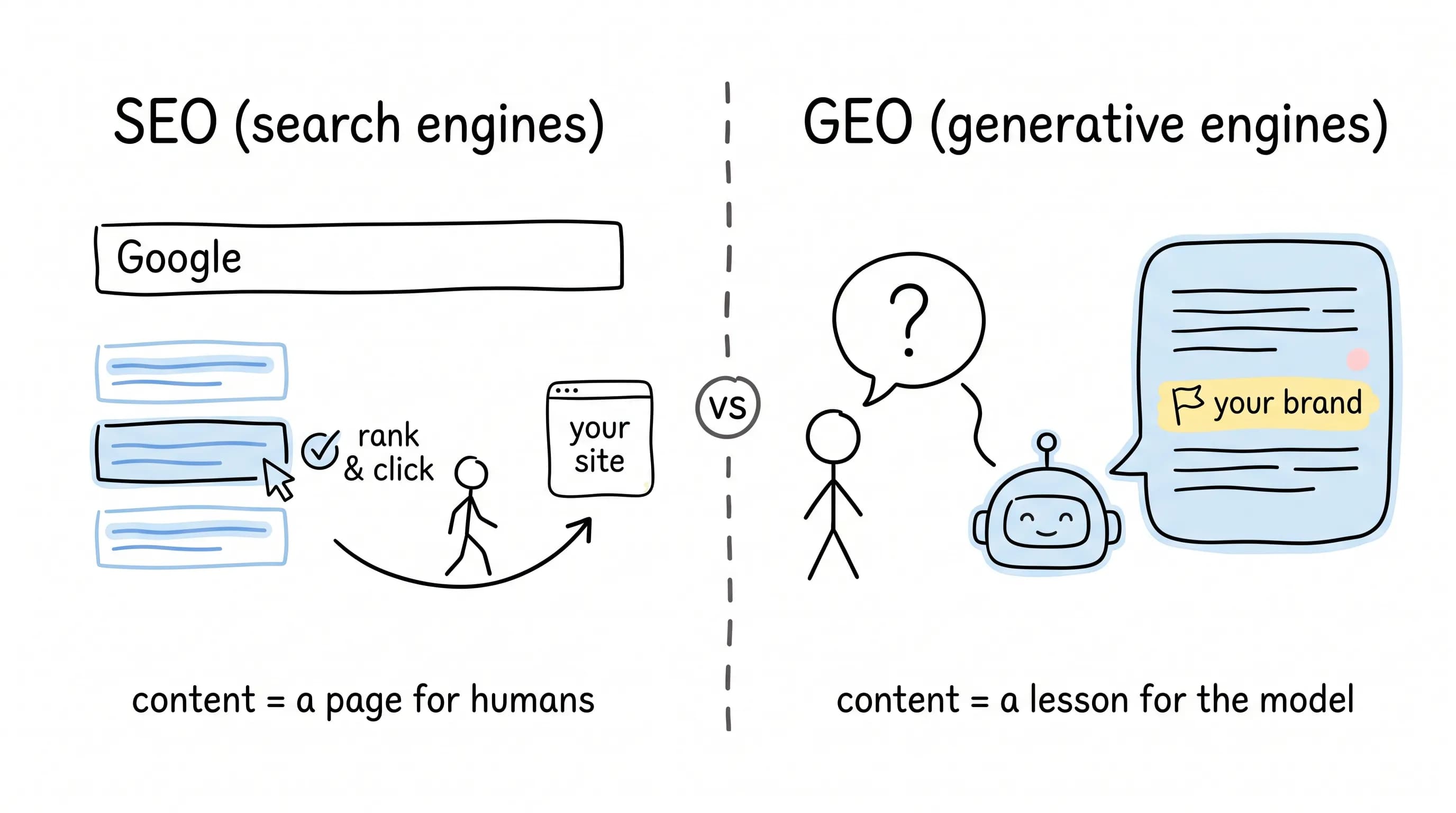
Does AI Know Your Brand? A Look at GEO, the New Craft
An explainer on GEO (Generative Engine Optimization): how AI engines like ChatGPT, Perplexity, and Gemini differ, how GEO goals and metrics diverge from SEO, and which SEO skills still carry over.
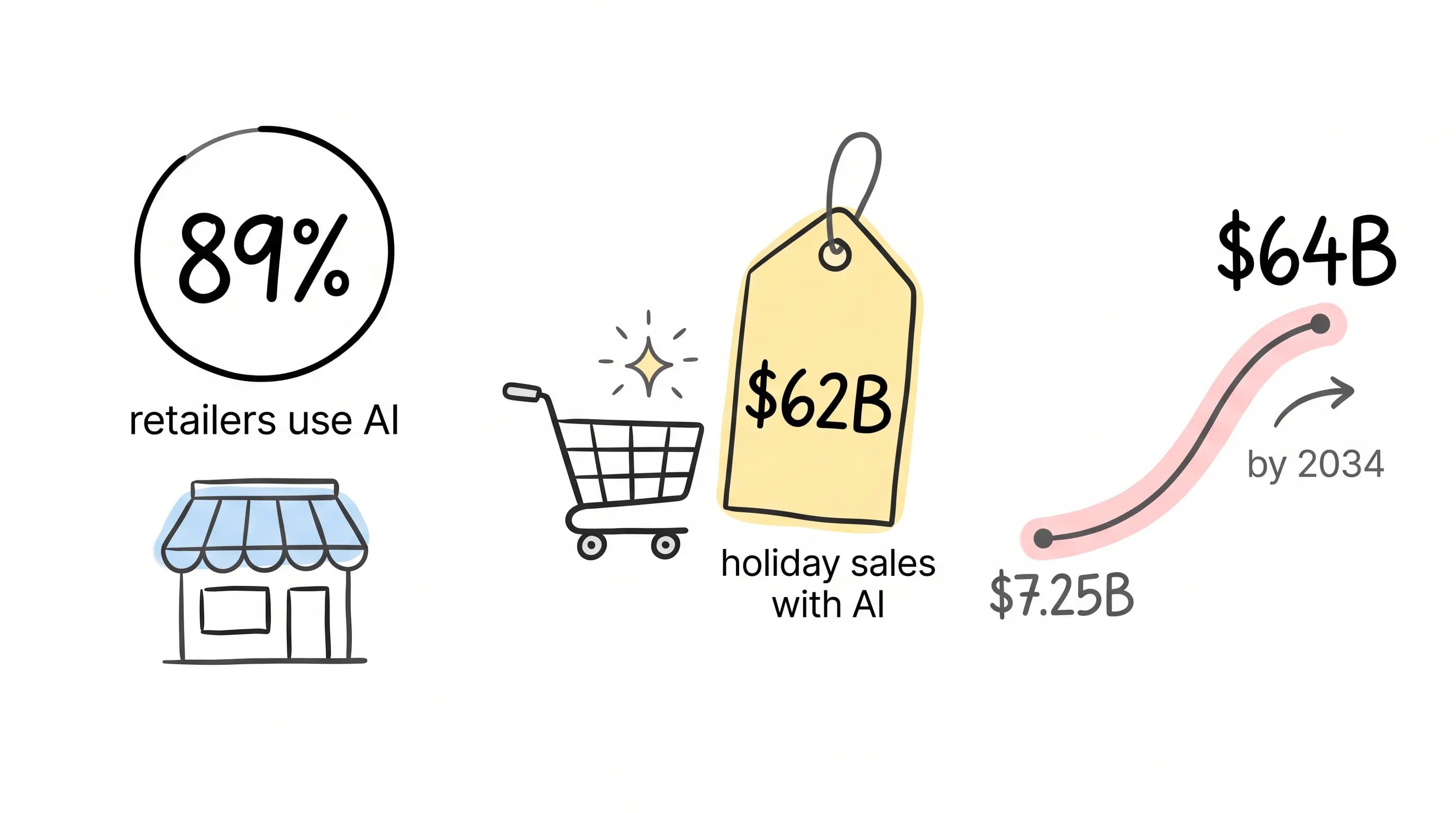
89% of Retailers Are Already Using AI. The Playbook for E-Commerce Has Changed
A learn article on AI in e-commerce: adoption context, use cases from recommendations, search, dynamic pricing, customer service, inventory, and fraud control, plus B2B applications, generative AI content, tool examples, pitfalls, and a six-step adoption path.
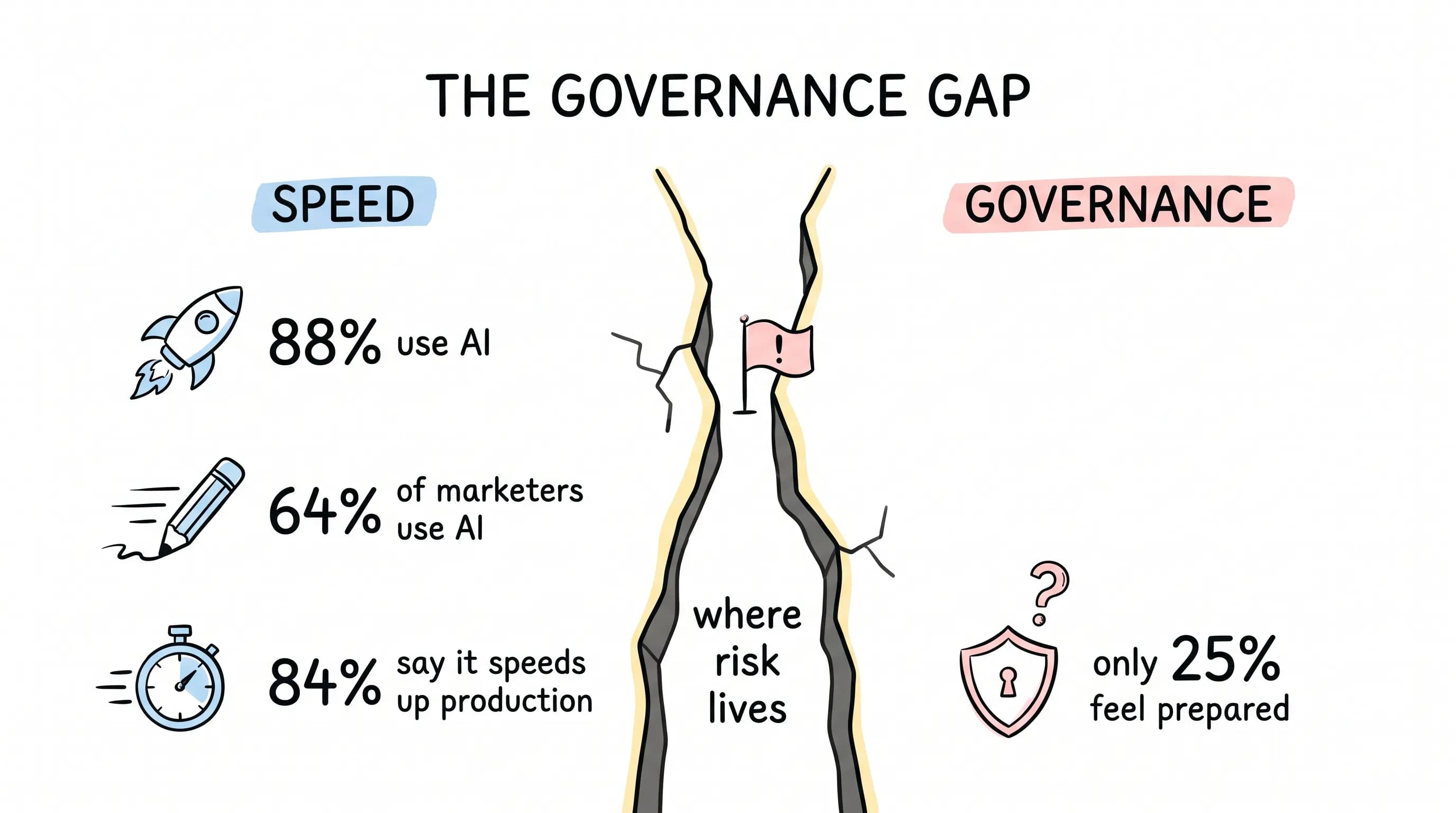
AI Makes Content at Lightning Speed — But Can You Answer "Who Approved This?"
This article looks at the gap between AI content speed and governance readiness in marketing teams, and outlines nine control points — prompt validation, brand guardrails, permissions, approval workflows, human review, versioning, IP checks, audit trails, and asset reuse — for brand-safe AI content.