
Your CRM Might Just Be a Contacts List
A learn article arguing that identical email blasts fail because automation ignores customer behavior. It covers cleaning and centralizing CRM data, behavioral segmentation, trigger-based follow-up, and AI prediction of churn and purchase likelihood, illustrated by an enterprise-services case.
A while back, a friend of mine who runs an enterprise-services business came to me to vent.
He said: I've already got automation up and running, my email sequences are lined up perfectly — so why aren't leads converting? Meanwhile, the unsubscribes climb higher every day.
I asked him to open his admin panel and show me one thing: the email sent to "people who downloaded the whitepaper," and the email sent to "people who requested a product demo."
Identical.
Think about it. One person just casually saved a file; the other had already taken the initiative to book a demo with you. These two people are at completely different stages, yet they received the same letter. The former thinks you're spamming him; the latter thinks you don't care.
The moment I heard this, I knew the problem wasn't the tool. It was that this system had never been designed to "understand" the customer in the first place.
What Is Personalized Automation?
What is automation? You lay down a track in advance, and every customer rides the same train, departing on schedule.
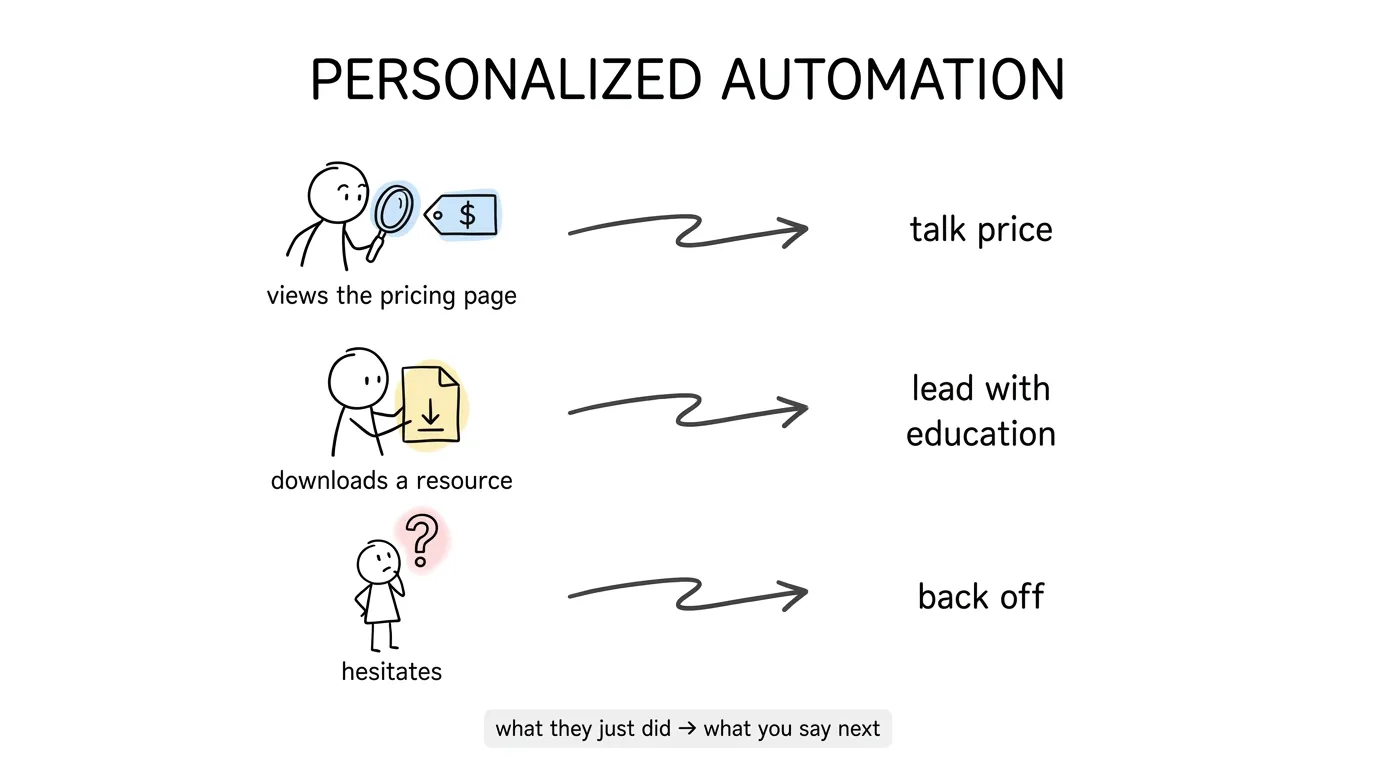
So what is personalized automation? Wherever the customer goes, the train follows. He looks at the pricing page, you talk price; he downloads a resource, you lead with education; he hesitates, you back off.
Put simply: let the system use "what this person just did" to decide "what to say to him next."
Where's the difference? It lies in whether the system recognizes customer behavior at all.
Most Automation Is Blind from Day One
A lot of companies' automation is blind from the very start.
Why? The data is dirty.
Fields are filled in carelessly — a name in Chinese in one place, English in another; the same person lying in the system as three separate records. Having AI do personalization on data like that is like asking someone who's severely nearsighted to recognize faces with his glasses off — who do you blame when he gets it wrong?
Garbage in, garbage out. It's an old saying in the data trade, and when it comes to CRM it doesn't need one word changed.
So the first thing is never to buy a tool — it's to clean the data. Merge the duplicate records, standardize the field formats, fill in the missing information. Only when the data is clean does AI have something worth looking at; if the data is dirty, all AI learns is bad habits.
Where Does AI Actually Earn Its Keep?
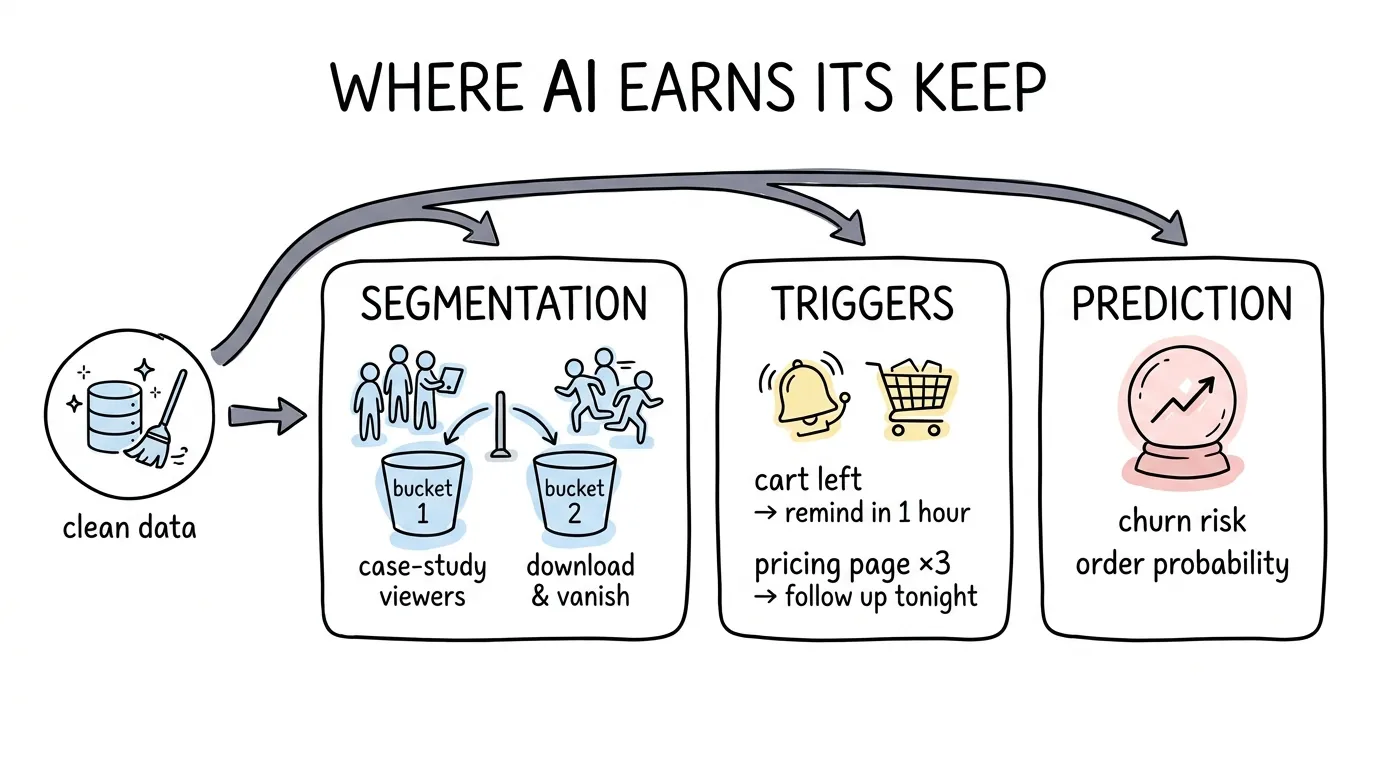
Once the data is clean, it's finally AI's turn to take the stage. It mainly does three things.
First, segmentation. What did segmentation rely on in the past? Region, age, industry. Those labels are fixed "at birth." Behavioral segmentation is different: it looks at "what you've done recently." People who repeatedly view your case-study pages are one temperature of lead; people who download a resource and vanish are another entirely. The same email — these two groups should never receive the same version.
Second, triggers. Put a trigger on behavior. A customer adds a product to the cart and leaves — remind him an hour later; a customer goes back and forth over your pricing page three times — someone should follow up that very night. This isn't some black-magic technology; it's just "you made a move, and I react immediately." Yet how many companies' follow-up is still stuck at "day three, blast everyone"?
Third, prediction. Look one step further ahead. AI can calculate probabilities from historical behavior: how high this person's churn risk is, how likely that person is to place an order. Then you can do what needs doing before the customer himself even realizes it. Wait until he opens his mouth, and you're already half a step late.
The essence of personalization isn't a name in the greeting — it's the timing being exactly right.
Back to My Friend
Afterwards he did three things: cleaned the data, segmented by behavior, and switched his follow-up to trigger-based.
The people who downloaded the whitepaper got a walkthrough of the material as their first email; the people who requested a demo got a phone call within half an hour.
A month later he showed me his dashboard: open rates, reply rates, conversions — all climbing. He didn't swap out a single tool; he simply made the system finally "see" the difference between each customer.
The value of a CRM isn't in how many customers you store, but in how much better you understand them.
If You Want to Do This Too
Where do you start? Don't rush to add AI. Get the order backwards and everything is wasted effort.
- Clean the data and centralize it in one place. Don't let customer information sit scattered across five tools, where nobody can see anyone's full picture.
- Define the lifecycle clearly. From first hearing about you, to getting to know you, to ordering and repurchasing — mark out every station, and only then does automation have something to anchor to.
- Then add triggers and prediction. Only now does AI truly grow into the system, instead of floating above it.
One more thing I want to say to the bosses of small companies: don't assume this is a big-company exclusive. Quite a few CRMs now come with built-in AI features, and the barrier is far lower than you think. A small company has few people, and it can least afford humans doing, by hand, the work machines should be doing.
A few days ago I asked that friend one more question: do you still blast everyone now?
He said: nowadays every email reads like it was written for one person.
Exactly. In the end, business comes down to exactly this: make every customer feel you're talking to him alone.
Here's to saying goodbye to email blasts soon.
Continue reading
Related articles
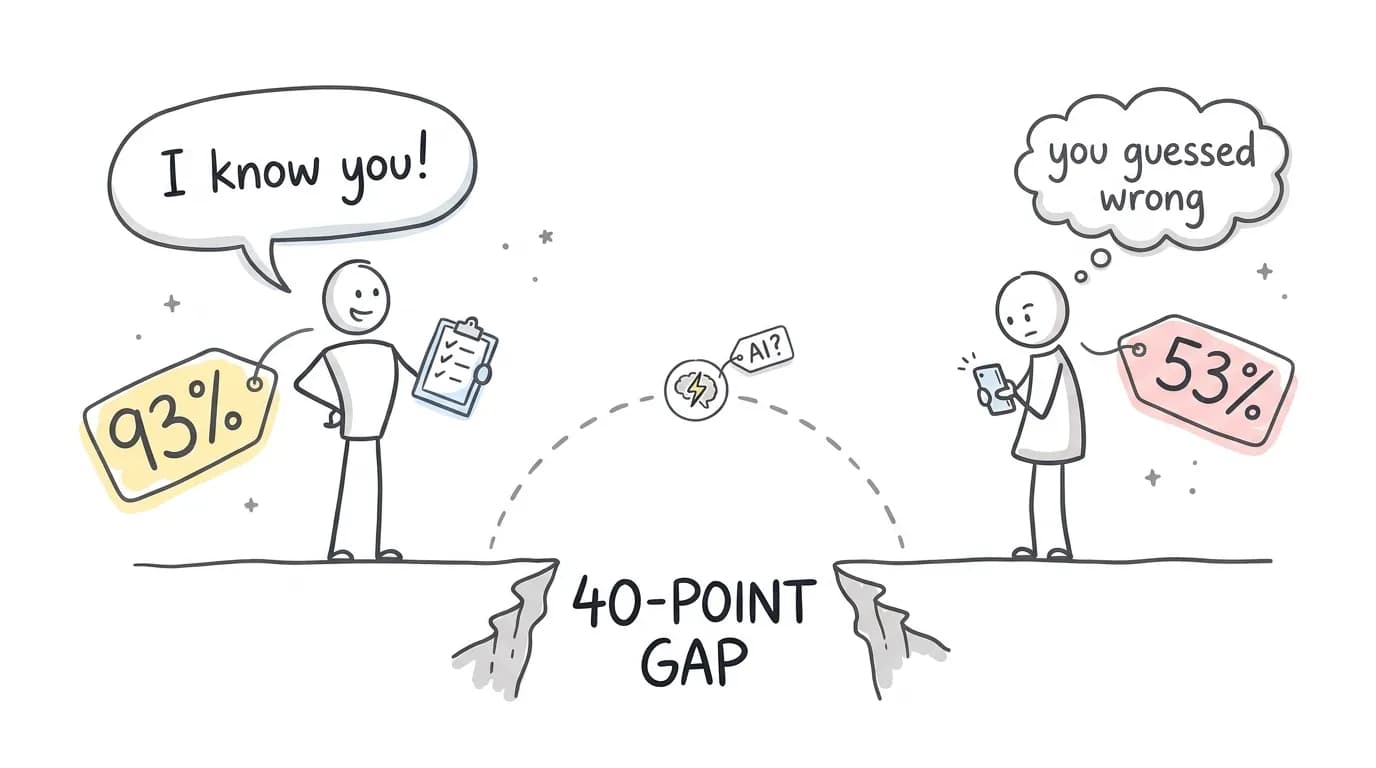
What Is AI Marketing Automation? It Starts With a 40-Point Gap
A learn article explaining what AI marketing automation is: how learning-based systems differ from rule-based automation, how AI decisioning optimizes message, channel, and timing choices, what data it depends on, and where it applies across the customer lifecycle.

Marketing Automation Is Shifting from "You Do It" to "You Say It"
This article explains how marketing automation is shifting from rule-based platforms that merely execute toward AI agents that plan, create, publish, and review campaigns, covering delegable tasks, underlying technologies, tool categories, adoption steps, and risks such as privacy and automating without strategy.
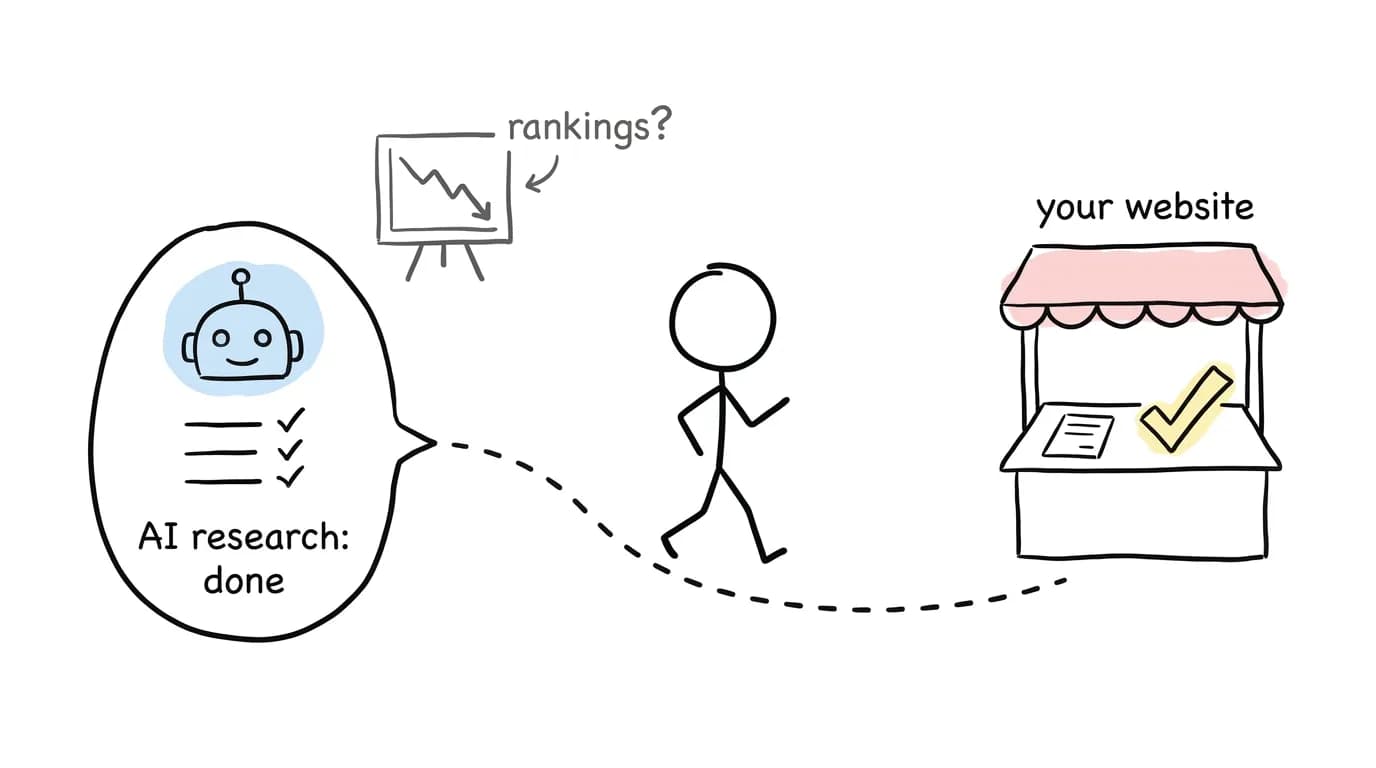
Rankings Are Taking a Dive, Customers Are Sprinting Ahead: This November, I Re-Ran the Numbers on AI Search
A learn article on how AI search reshapes marketing measurement, covering reported mismatches between rank-tracking tools and live Google results, ChatGPT's business profile test, single-page visitors as high-intent leads, and CRO plus GA4 tracking verification practices.