
Your AI is still writing copy. Someone else's is already managing the budget.
A learn article arguing that AI marketing value comes from decisions, not copywriting: predictive churn intervention, lifetime-value-based acquisition, and incrementality-based budget allocation, plus a three-step starting path and a warning that unconnected data is the main blocker.
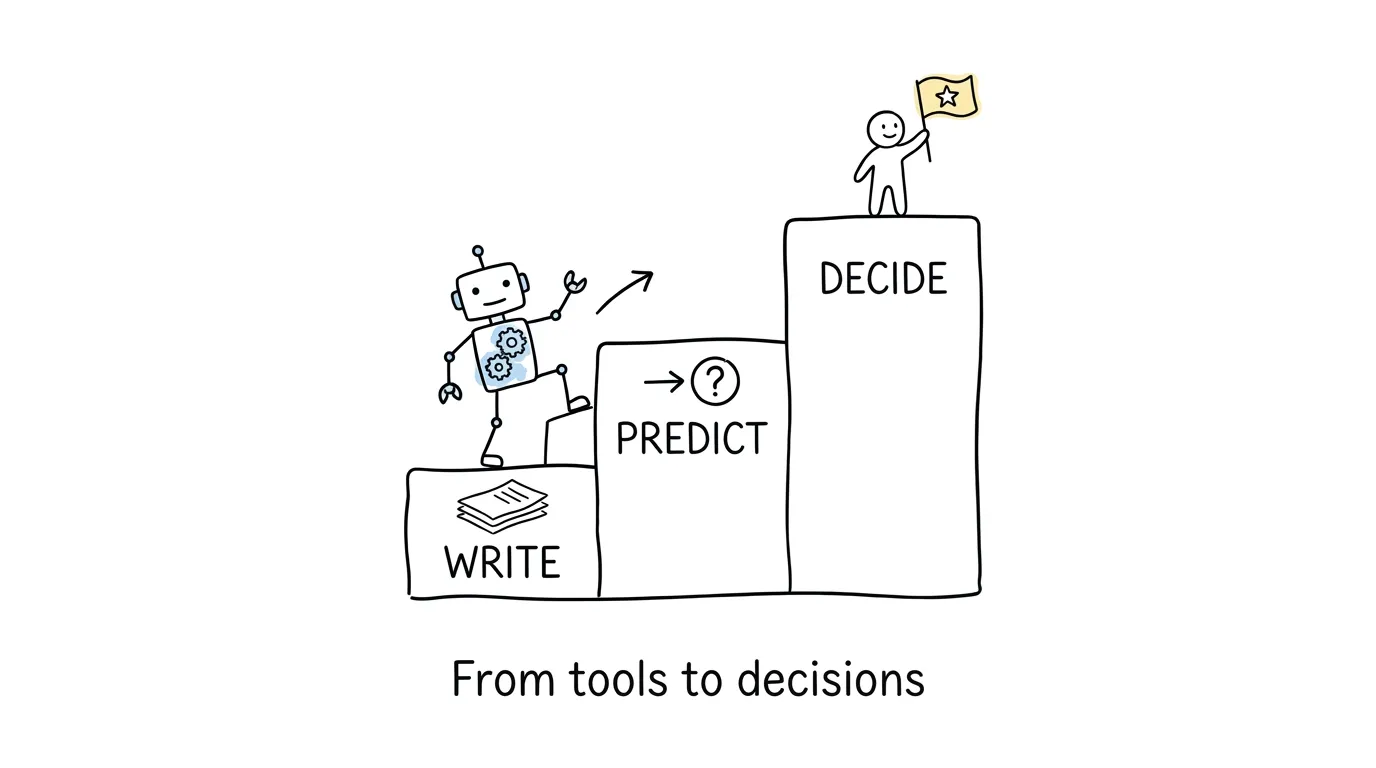
I've met plenty of marketing teams, and the first sentence about AI is almost always the same: "We use it to write copy."
Email subject lines. Ad headlines. Meeting summaries.
Every time I hear it, I want to ask one follow-up question: and then what?
Writing copy is something AI does fast and well — but the time it saves for you, it saves for your competitor too. When everyone gets faster, nobody gets faster.
The real gap hides somewhere else.
One: an efficiency tool and a decision engine are two different species
A recent guide tiers AI marketing use cases by maturity, and the logic stings a little: if your AI only touches content, it's an efficiency tool. The day it starts touching decisions, growth begins.
Let me walk you through the three most practical use cases.
First, predictive churn intervention.
Customers never leave suddenly. Interaction frequency drops, responses slow down, purchase rhythms go irregular — the signals were always there. Nobody was reading them.
What can a model do? Pull each customer's engagement signals, purchase cadence, and channel-touch history, compare them against their own historical baseline, and predict the probability of churn over the next 60 days. Then rank interventions by expected retention lift and ROI.
Notice what that ranking answers. Not "who is leaving," but "who is worth saving first."
Second, acquiring customers by lifetime value.
Most acquisition campaigns optimize one thing: cost per acquisition. But customers are not created equal.
A customer acquired for $50 who buys once, versus a customer acquired for $75 who comes back every month for years — which one is worth it?
The math is easy. The hard part used to be not knowing who to look for. Now a model can learn the profile of high-value customers from behavioral, demographic, and channel attributes, and point your acquisition at them.
Third, allocating budget by incrementality.
This one is the most brutal. It needs no new data at all — only a new algorithm looking at the data you already have: shift budget from "a little for every channel" to "more for whatever actually adds incremental volume."
Two: why most teams get stuck
The guide cites a dataset that stopped me cold: fewer than one in four marketers has fully integrated their martech and adtech systems.
Fewer than one in four.
What does that mean? For most teams, cross-channel incrementality measurement is simply impossible. Data sits scattered across five systems, and the model has nothing to learn from.
So the thing that actually blocks progress is never the model's intelligence.
It's unconnected data.
That's why my advice is: spend one week consolidating data before talking AI. No foundation, no building.
Three: how to start
Here's a path that avoids greed.
Step one: pick one use case and go deep. Subscription and high-repeat businesses should start with predictive churn. Feed existing CRM interaction history in for a baseline, and within four weeks you'll have your first churn-watch list.
Step two: set acceptance criteria up front. What accuracy does the watch list need? What retention cost per intervention? Any use case that can't produce numbers gets cut — no sentiment.
Step three: give second priority to profit-based budget allocation. It pays back fastest, because what it needs is not new data but a new way of seeing.
Four: my take
The guide has a line I fully agree with: the next phase of growth is not doing more tasks faster.
It's turning AI from a productivity tool into a decision engine.
The AI that writes copy saves you time. The AI that makes decisions makes you money.
The first makes you as fast as everyone else. The second makes you different from everyone else.
Everyone has the tools. Judgment is the moat.
May your AI get promoted from junior copywriter to chief of staff soon.
Continue reading
Related articles
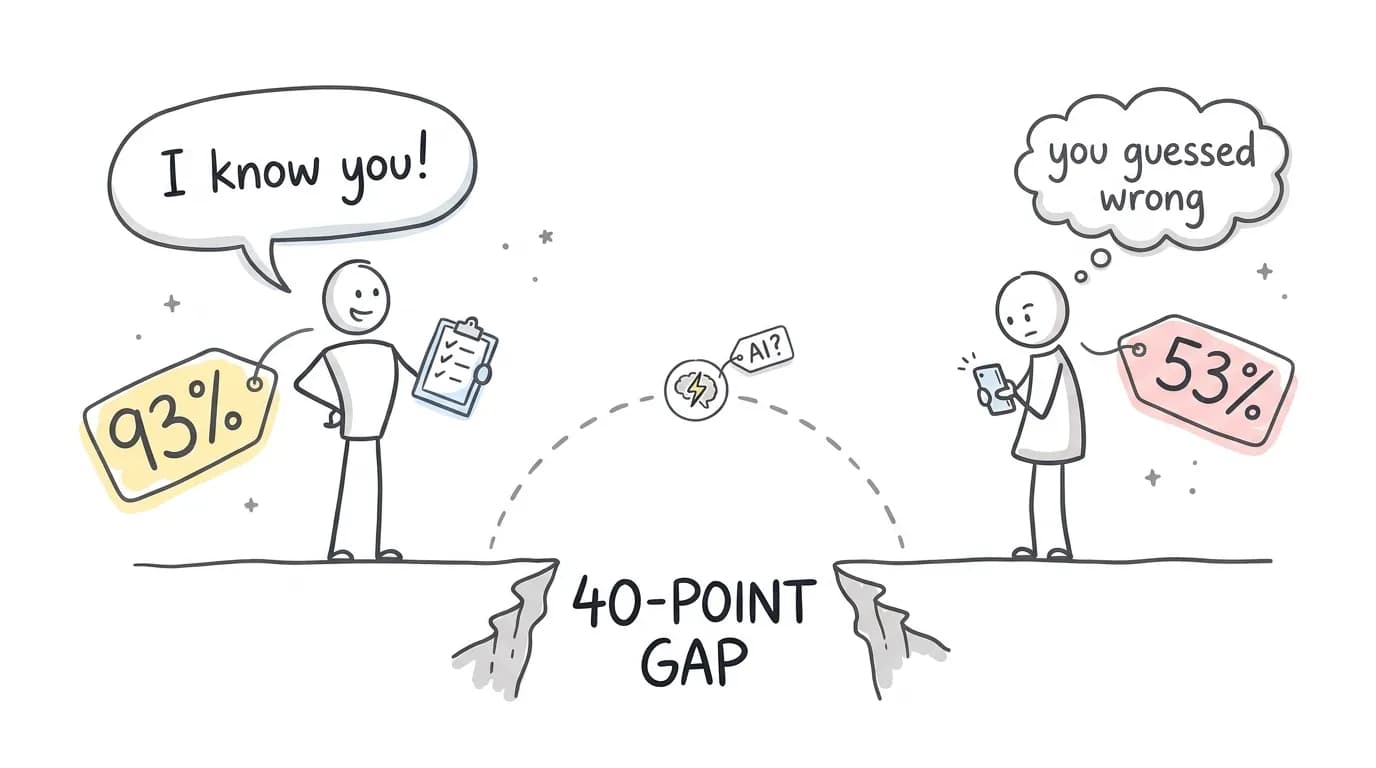
What Is AI Marketing Automation? It Starts With a 40-Point Gap
A learn article explaining what AI marketing automation is: how learning-based systems differ from rule-based automation, how AI decisioning optimizes message, channel, and timing choices, what data it depends on, and where it applies across the customer lifecycle.

Marketing Automation Is Shifting from "You Do It" to "You Say It"
This article explains how marketing automation is shifting from rule-based platforms that merely execute toward AI agents that plan, create, publish, and review campaigns, covering delegable tasks, underlying technologies, tool categories, adoption steps, and risks such as privacy and automating without strategy.
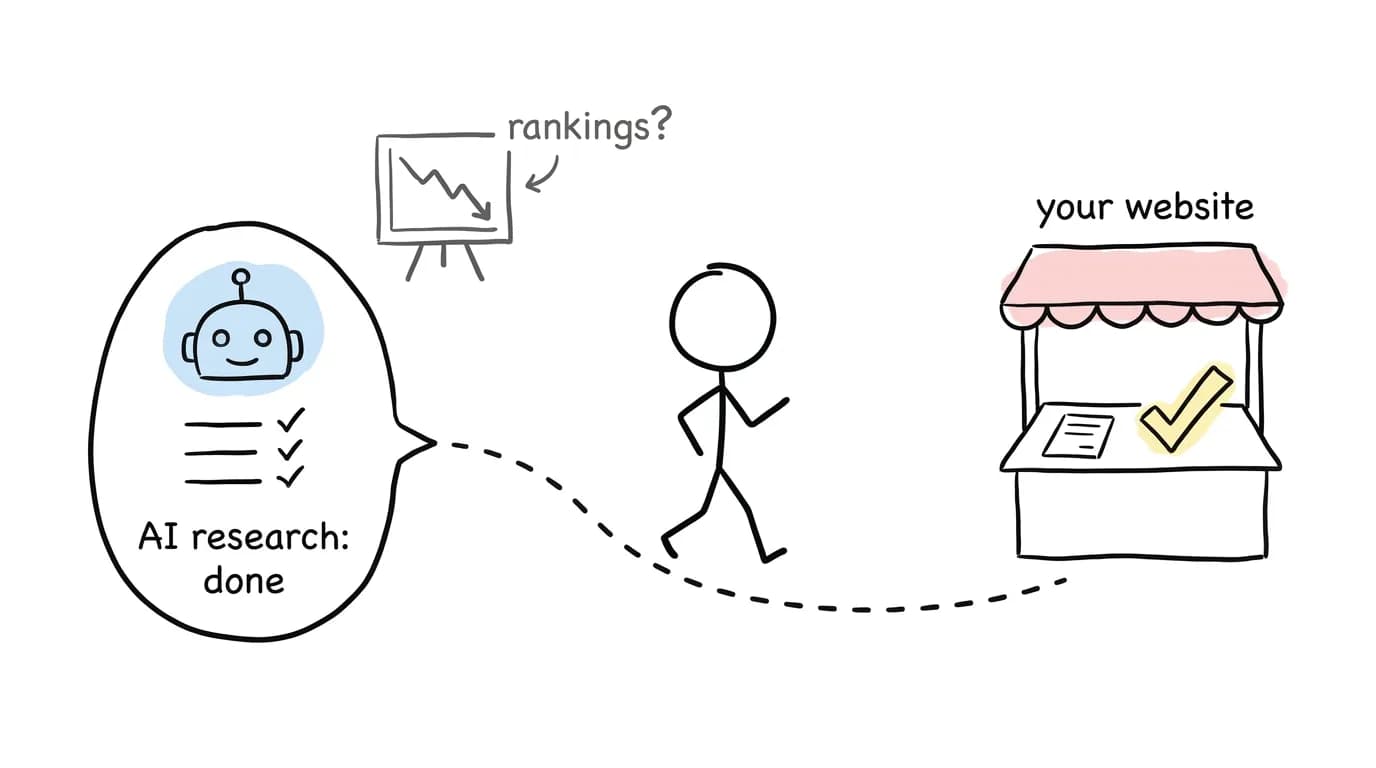
Rankings Are Taking a Dive, Customers Are Sprinting Ahead: This November, I Re-Ran the Numbers on AI Search
A learn article on how AI search reshapes marketing measurement, covering reported mismatches between rank-tracking tools and live Google results, ChatGPT's business profile test, single-page visitors as high-intent leads, and CRO plus GA4 tracking verification practices.