
You Adopted AI Sales Agents — So Why Are You Getting Fewer Leads?
A learn article explaining why AI sales agent deployments often underperform, arguing that data quality rather than the tools decides outcomes. It covers five data foundation layers, tool evaluation criteria and pricing tiers, common failure modes, and a 90-day implementation plan.
A while back, I had dinner with a friend who sells enterprise software.
He looked exhausted. Earlier this year, his company had rolled out a suite of AI sales agents — there was a launch event, and the internal chat channels celebrated. He had gritted his teeth to get the budget approved. And then?
Barely a handful more leads, half of the emails they sent landed in spam folders, and it was the domain reputation (the trust score that decides whether your mail reaches inboxes or gets junked) that broke first.
I asked him: what data are you feeding it?
He froze for a second: "Huh? Data?"
I wasn't surprised at all. Over the past couple of years, I've watched team after team buy agents in a rush of excitement, then lick their wounds three months later. And I've watched a rare few, running more or less the same tools, run circles around everyone else.
Where's the difference?
Not in the tools. In the layer of ground the tools stand on.
AI sales agents stopped being a matter of the future long ago — this is the present. But most teams will die first on their data.
What Exactly Is an AI Agent?
First, let's get the concept straight. What exactly is an AI agent?
In one sentence: software that can take on a goal by itself, break it into tasks by itself, and do the work by itself.
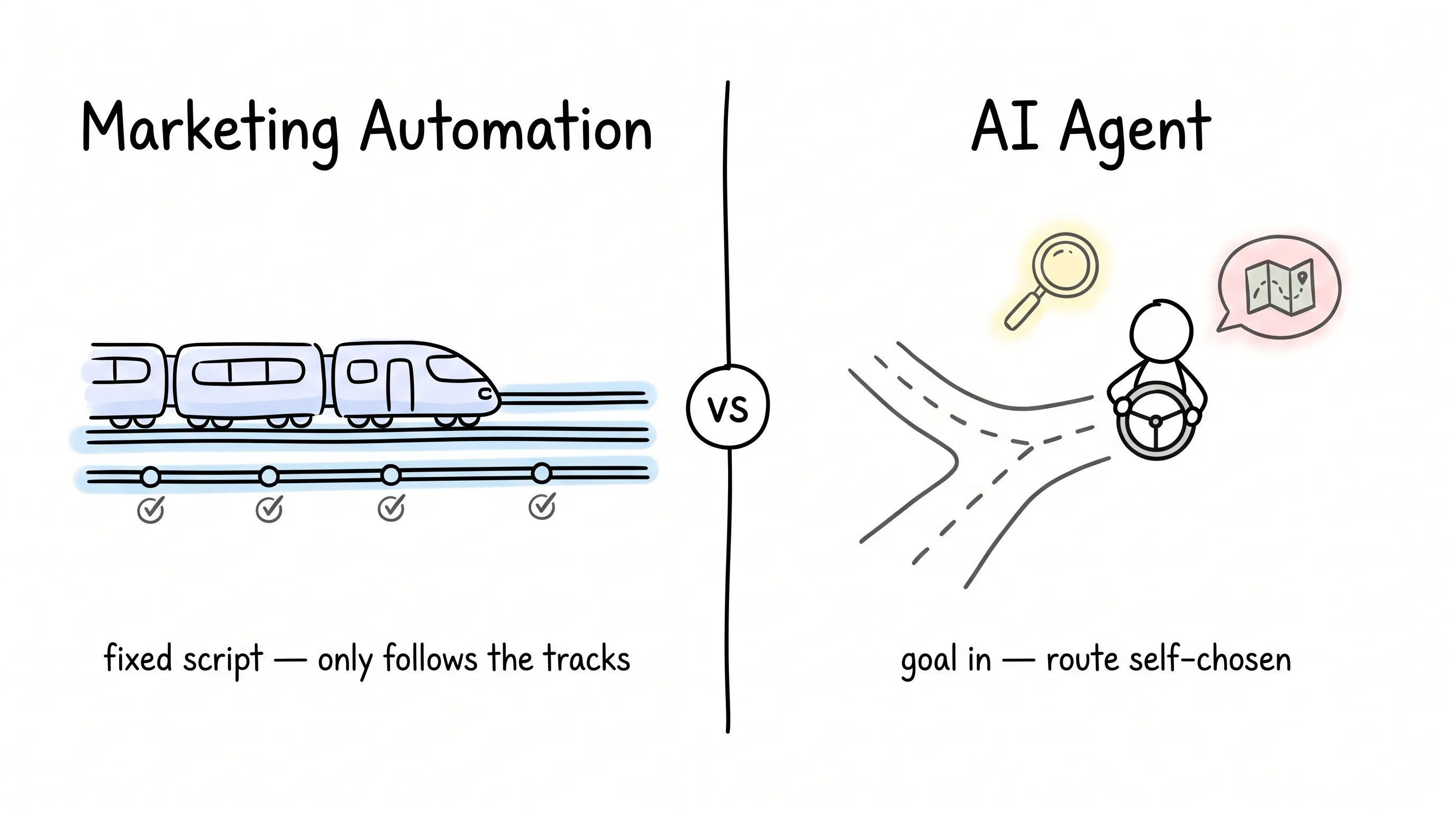
You might ask: how is that different from the marketing automation software I've been using for years?
A world of difference.
Marketing automation is like a high-speed train. The tracks are laid and fixed — when it departs, which stops it passes through, when it arrives, all of it written into the program. You press a button, and it runs the script. Anything outside the script, it simply won't do.
An AI agent is like a veteran driver. You only tell him the destination; he reads the traffic himself, picks the route himself, and knows to detour when there's a jam. When he arrives, he debriefs you: today's route took this long, tomorrow I'd suggest trying that one.
Put it into B2B sales: you give the agent a goal — research these three hundred target accounts thoroughly, and book the right people into meetings.
It digs through LinkedIn on its own, works through company websites on its own, pulls public information on its own, and builds a profile for every prospect; it writes personalized emails by itself, sends them itself, watches the replies itself, follows up where follow-up is due, hands off to human colleagues what should be handed off — and updates the CRM while it's at it.
From "research one prospect" to "book one meeting" — one unbroken pipeline.
That's not task automation. That's doing the work end to end.
Gartner has a prediction: by 2028, at least 15% of day-to-day business decisions will be made autonomously by agents. The same forecast also contains one more line: more than 40% of agent projects will be abandoned because their returns can't be calculated.
The direction is right. And there's no shortage of ways to die.
Let's Run the Numbers First
Many people feel nothing about this because they've never run the math. Let's run it.
A human SDR (Sales Development Rep) — counting salary, commission, benefits, a desk, and amortized management overhead — costs a fully loaded $7,000 to $11,000 a month, roughly RMB 50,000 to 80,000. And from onboarding to working independently takes another eight to twelve weeks.
An AI agent runs $900 to $5,000 a month and can be up and running in one to three weeks.
Traditional marketing automation software? $300 to $3,000 a month — cheap, but it only knows how to send mail by the script. It doesn't research people, doesn't pick people, doesn't read the room.
So who exactly does the agent replace?
It can't replace marketing automation. For sending mail, a script is enough.
What it genuinely takes over is the repetitive labor in the SDR's hands: digging up information, building profiles, writing the first email, chasing follow-ups. As for the genuinely valuable parts of complex sales — judging a customer's true intent, threading the needle among a crowd of decision-makers, accumulating trust bit by bit over a long cycle — those still require humans.
So the teams that run the steadiest all operate on the same model: AI handles the scaling; humans handle the strategic stretch.
Not replacement. Amplification.
What Can It Actually Do? Four Scenarios Already Proven
Concepts alone are hollow. Let me walk you through four scenarios that plenty of teams have already validated, proven out with real dollars.
The first: researching leads.
It used to take an SDR half an hour on average to research one prospect — going through LinkedIn, checking the website, searching the news. Now an agent builds the profile in seconds, and the human spends 30 seconds scanning the highlights.
Thirty minutes becomes thirty seconds. The time saved is enough for dozens more calls that actually have quality.
The second: sending cold emails.
An agent used well can send 5,000 highly personalized emails a month, with quality not dropping a notch.
Note the precondition: used well. Sending 5,000 pieces of spam and sending 5,000 emails that feel "written especially for you" end up worlds apart. Where's the difference? More on that shortly.
The third: handling inbound inquiries.
Here's a cruel fact: from the moment a customer submits a form on your website, the probability of closing them keeps falling with every passing minute. Hot interest has a shelf life.
An agent responds within 60 seconds; the fast ones get a phone call out on the spot. Some teams have pulled inbound conversion rates up by 70% on this one change alone.
The fourth: lead scoring and routing.
Traditional scoring relies on dead rules: opened an email, add 5 points; clicked a link, add 10. AI scoring is alive: it weighs hundreds of behavioral signals at once, and it keeps learning from historically closed deals. Once it's in use, conversion rates typically rise by 20 to 30 percent.
Four scenarios — and underneath all of them sits the same hidden precondition.
Why Do Most Teams Crash?
This is the one thing I most want to make clear today.
An AI agent's capability ceiling is not decided by the agent; it is decided by the data fed to it.
Think it through: for an agent to write an email that feels "written especially for him," the precondition is that it truly knows this person. Is the job title current? Is the email address alive? Can you actually find out what software the other company runs? Has he been researching problems like yours lately?
If the underlying data is stale, wrong, or missing, what happens?
The agent will, with a perfectly straight face, write the wrong name, state the wrong title, guess the wrong business. Sent out, nobody replies. Nobody replies, and you keep sending anyway — deliverability starts to fall. Deliverability falls, and domain reputation goes bad. Domain reputation goes bad, and every legitimate email you send suffers along with it. And into the CRM, another big bucket of dirty leads gets poured.
One link wrong, every link wrong. The bigger the scale, the faster it goes wrong.
That's why I say AI is an amplifier. With the right data, it amplifies efficiency; with the wrong data, it amplifies disaster.
Many vendors, when introducing their products, are rather unwilling to talk about this part. But this part is the true dividing line between success and failure.
To Use It Well, the Foundation Needs Five Layers
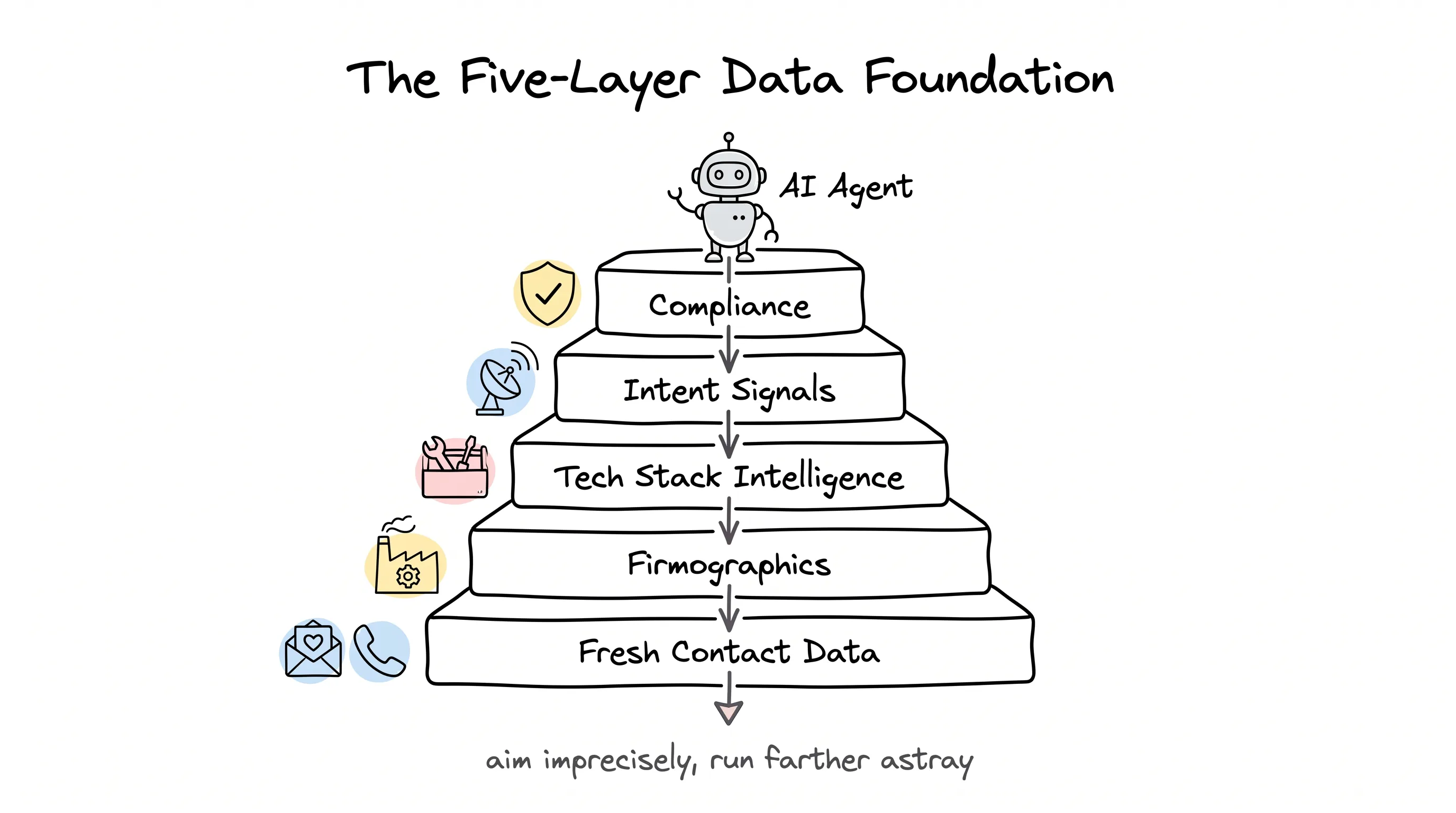
The teams that made it out are all standing on five layers of foundation.
The first layer: fresh contact data. Email addresses that are alive, phones that connect, job titles that are current, LinkedIn profiles that match — so the mail you send really does reach the inbox.
The second layer: firmographic profiles. What industry the other company is in, how big it is, how much revenue a year, which market it's in, what growth stage it's at.
The third layer: tech stack intelligence. What software the other company is running. What you sell has to be able to sit in the same toolbox as what they already use.
The fourth layer: intent signals. Is he actively researching problems like yours, actively comparing options? Buy or not buy — very often it comes down to this layer.
The fifth layer: compliance. Privacy regulations must pass, unsubscribe lists must be managed, and every record's provenance must be auditable.
Five layers of foundation, and most teams have only one or two of them — then expect AI to fill in the rest.
It won't. AI is the execution engine; data is the aiming engine. Aim imprecisely, and the faster you run, the farther you stray.
How to Pick a Tool: Five Hard Standards
Tools like these are a dime a dozen on the market — how do you pick? Here are five standards that genuinely matter.
One: grill the data sources. Ask the vendor directly: where does your customer data come from? How often is it refreshed? How is it verified? If the answers are vague, turn and walk. Projects dying on source data outnumber those dying on the model many times over.
Two: demand real samples. Have them take real customers from your industry and generate a few outreach emails on the spot for you to see. If the so-called personalization is just filling names and company names into a template, that isn't AI — it's mail merge.
Three: ask about the deliverability mechanics. Any team still seriously doing cold outreach today must understand domain warm-up, mailbox rotation, and anti-spam practices. If the vendor can't explain this system clearly, your domain reputation becomes their proving ground.
Four: check whether pricing is transparent. Those who dare to post their pricing on their website usually know where they stand. Those who hide it and insist on dragging you into a sales call are mostly expensive and inflexible besides. AiSDR and Salesforge put their prices plainly on their websites — many of the big names, by contrast, can't manage it.
Five: check whether the vendor will survive. There's an ugly number in this market: AI SDR tools churn at 50% to 70% a year. So before you sign, have the vendor give you three reference customers in your industry who have used it for at least 12 months. Can't produce them? Proceed with caution.
Don't Stop at the Sticker Price — Run the Total-Cost Math Too
Prices come in three tiers; here's a frame of reference.
Entry tier: $600 to $1,500 a month, suited to small teams testing the waters. Typical players: AiSDR, Salesforge, Apollo, Clay.
Middle tier: $1,500 to $5,000 a month — most growth-stage teams running multi-channel campaigns land here. Typical players: Artisan, 11x, Amplemarket, Landbase.
Enterprise tier: $5,000 to $50,000 a month to start, with deep CRM integration and governance controls. Typical players: Salesforce Agentforce, Sierra AI, 1mind.
But I must remind you: the sticker price is only the entry fee.
In the first year, you will almost certainly spend an extra stretch. Data cleansing costs money, CRM cleanup costs money, mailbox configuration costs money, systems integration costs money, the staffing to watch the output costs money, and team training costs money too.
The rule of thumb: the true first-year total cost runs about 1.5 to 2 times the sticker price. Budget straight against that number, and don't get caught flat-footed when the time comes.
The Three Most Common Ways to Die
Gartner has also predicted one more thing: by 2027, more than 40% of agent projects will be abandoned. The problem doesn't lie with the tools; it lies with how they're used. The ways of dying basically come in three kinds.
The first: buy the tool first, don't fix the data.
The CRM is in total disarray, the ideal customer profile (ICP) is pure guesswork, the messaging has never been validated — and then you expect AI to turn lead into gold. It won't. Pave the road before you drive the car. Get the order backwards, and the more expensive the car, the harder it crashes.
The second: wanting full autonomy from day one.
No matter how good an agent is, it needs a four-to-eight-week tuning period: a human standing alongside, watching its output, bending it back when it's wrong. Skip this step, and it's the equivalent of putting an untrained new hire straight onto the job — and handing them blast-send permissions besides. By the time you discover that what went out was a pile of rotten messages, the reputation is already broken, and cleaning up the wreckage is harder work than the original deployment.
The third: treating the agent as a stand-in.
Of the companies that have genuinely harvested the dividends, not one has cut away all of its strategic human roles. What they did is, in fact, the same thing: make each SDR carry the output that three people used to carry.
Replacement thinking and amplification thinking — one word apart, two very different endings.
How to Land It in 90 Days
Here's a cadence you can copy directly.
The first month: lay the foundation. Clean the CRM, draw a clear picture of what your ideal customer looks like, verify the contact data, and get email deliverability built out. You send zero emails this month — and lose nothing by it.
The second month: a small-footprint pilot. Run small-scale campaigns, have a human pass over every piece of output, revise the messaging as you go, and at the same time stand up your baselines: what reply rate, what meeting-book rate — write them down.
The third month: scale up. Spread across multiple channels, hand the validated process to automation, switch on predictive scoring, and keep tuning against the data.
Ninety days — slow? For comparison: recruiting one SDR takes eight to twelve weeks before they even show up.
One Last Thing
Remember that friend from the beginning?
Afterward, they spent six whole weeks cleaning the CRM, verifying the data, and redrawing the customer profiles — then brought the agent back online. Last quarter he told me: lead volume doubled, and the people watching this dropped by half.
The tools weren't changed. What changed was the layer of foundation beneath the tools.
When it comes to AI agents, what everyone is competing over was never who buys first — it's whose foundation is laid more solidly. The teams still winning right now are the ones that first got the data right, then let AI amplify the things that were already right.
Technology has never been what's missing. What's missing is the road that lets the technology run.
Here's to you: pave the road first, then drive the car.
Continue reading
Related articles

What Is an AI Marketing Agent? From "Using AI" to "Delegating to AI"
A learn article explaining what an AI marketing agent is, how it differs from rule-based automation, and which repetitive tasks such as lead qualification, reporting, and campaign monitoring can be delegated while humans keep key decisions.
If AI Can Write the Copy, What's Left for Social Media Marketers?
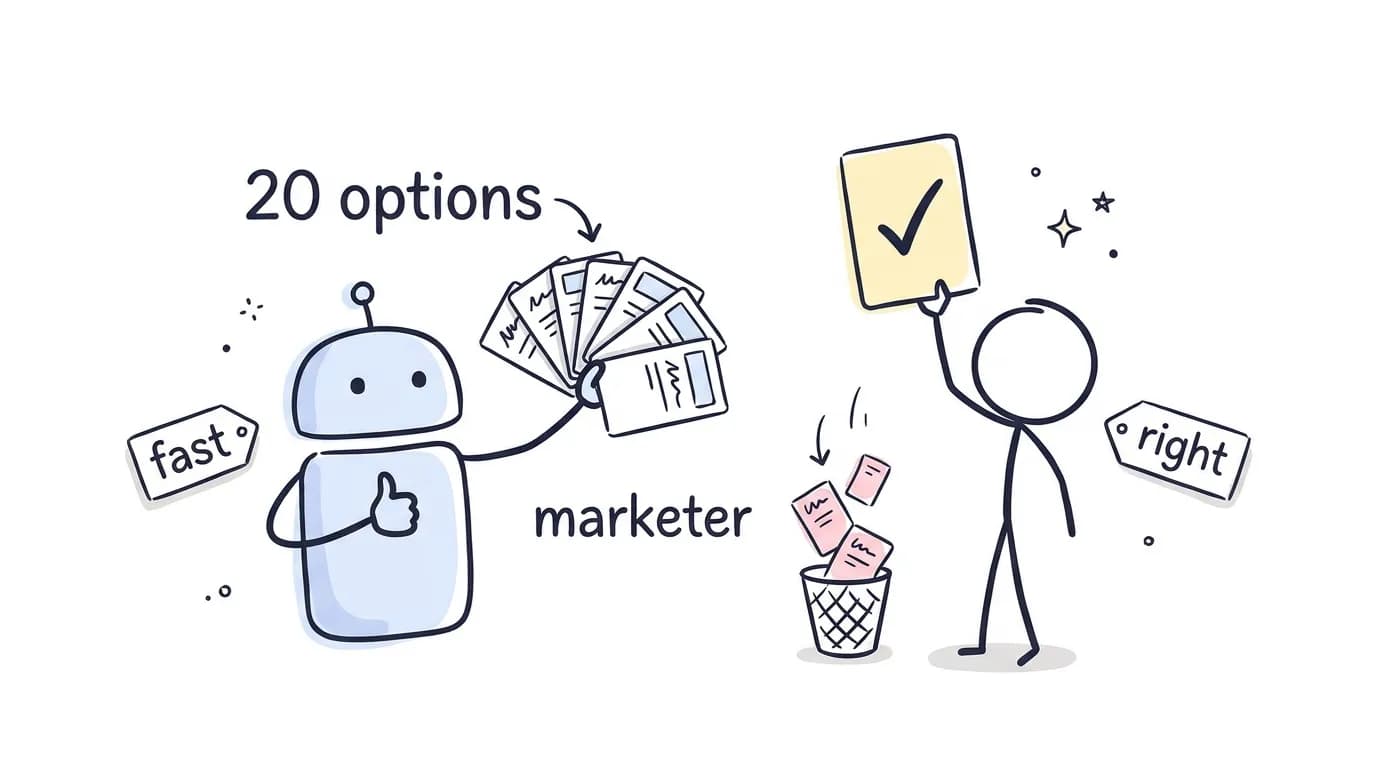
A long-form guide on how AI reshapes social media marketing work, covering content creation, advertising, listening, community management, and data interpretation. It argues that AI accelerates production while humans keep strategy, judgment, review, and accountability.
Your Next Customer Might Not Be Human: What Changes — and What Doesn't — in B2B Marketing, 2026
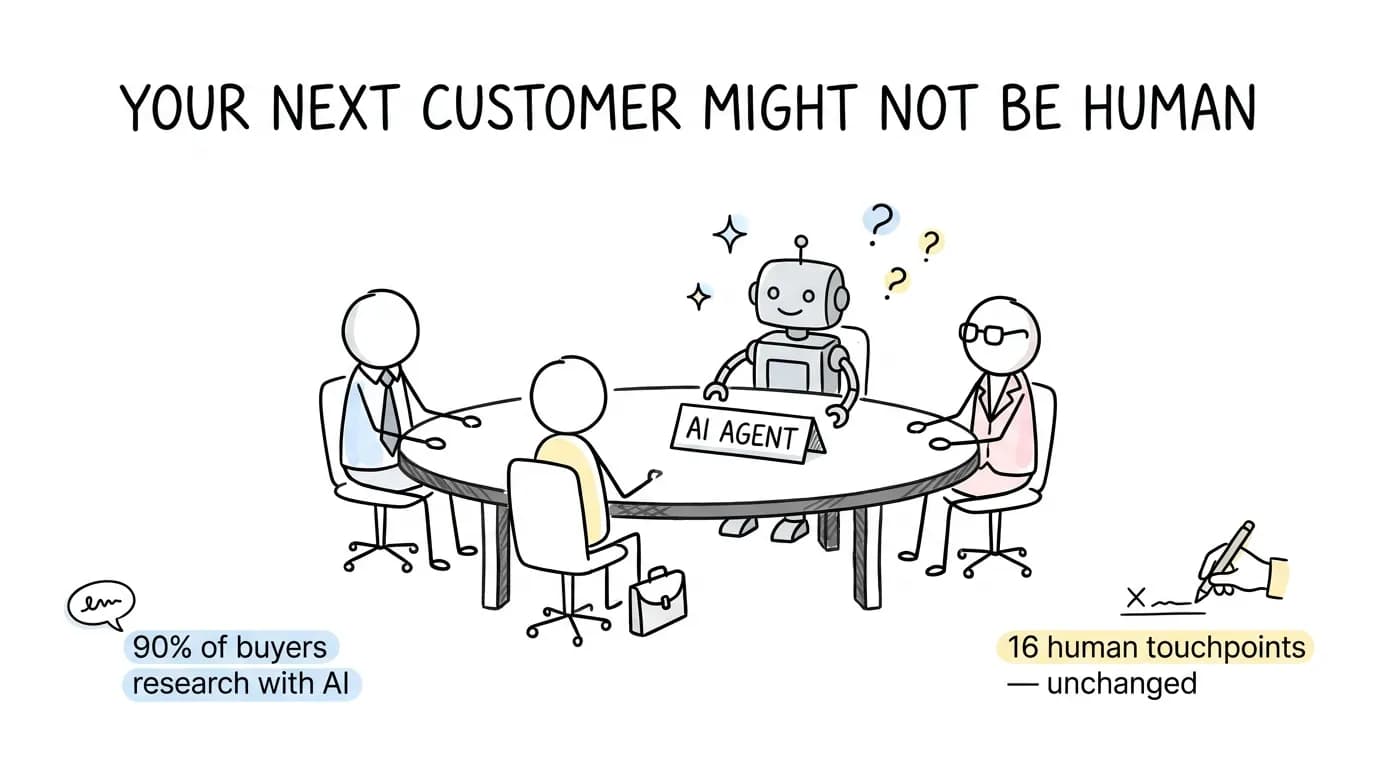
A long-form analysis of 2026 B2B marketing predictions covering AI agents joining buying decisions, visibility in AI answers, email filtering, trust, and first-party buying signals.