
If AI Can Write the Copy, What's Left for Social Media Marketers?
A long-form guide on how AI reshapes social media marketing work, covering content creation, advertising, listening, community management, and data interpretation. It argues that AI accelerates production while humans keep strategy, judgment, review, and accountability.
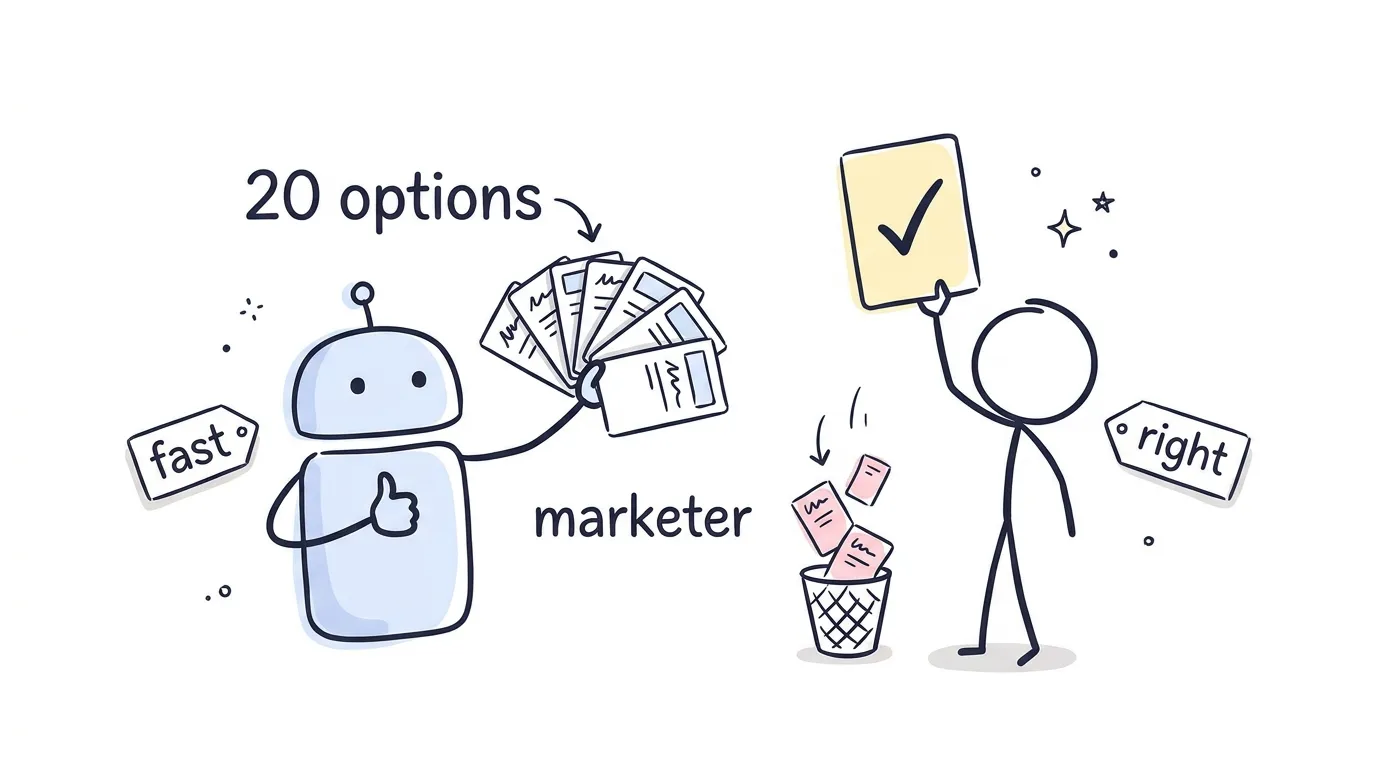
A while back, a friend of mine who works in social media marketing invited me out for coffee. He looked conflicted as he told me: with AI, he can now generate twenty creative concepts in a minute.
I asked him: so, are you happy about it?
He paused, then said: happy, and also uneasy.
Happy because it's fast. Uneasy because: then what am I even here for?
I figured out the answer to that question later on. Today I'm going to walk you through it.
Let me start with the conclusion: AI hasn't killed the job of social media marketing, but it has moved the valuable parts somewhere else.
What do I mean by "moved"? Don't worry — I'll take it one piece at a time.
First, Get Clear: How Many Stages of Social Media Marketing AI Has Already Entered
Many people assume that AI in social media marketing is just a copywriting tool.
It isn't.
Think about it: what you scroll past is decided by recommendation systems; which ad you see is picked by prediction systems; whether a brand is being praised or roasted, social listening tools are hearing it in real time; you leave a complaint with a merchant, and the first reply you get is, nine times out of ten, from a bot. Add generative AI on top, and it can generate a bit of everything for you: text, images, audio, video.
In fact, platforms have been running on machine learning for ages. How content gets ranked, how ad bidding works — AI has been doing these things for over a decade.
So what exactly has changed this time?
What changed is visibility. Before, AI hid behind the platform, working for the platform; now, generative tools have put it directly into every marketer's hands. Before, a platform stood between you and AI; now it sits right next to you.
But there's a common mistake here: treating all tools as one thing. Automated bidding tools and copy generators do completely different jobs, and the things you need to watch are completely different too. Lump them into one vague "AI," and you'll have no idea which stage deserves your extra attention.
Twenty Creative Concepts in a Minute — Then What?
Back to my friend's question. Let me give you a concrete example.
In Galway, a small seaside city in Ireland, a travel business wanted to run a marketing campaign for the off-season. They handed the brief to AI, and within a minute, twenty angles came back: hidden hiking trails, budget-friendly off-peak pricing, autumn light, food pairings...
Beautiful. And then?
A real marketer, holding these twenty concepts, would ask three questions: which one matches why customers actually book in October? Which one fits our brand? Which one can we actually pull off on this budget?
After the filter, nineteen are thrown out and one stays.
The process of throwing out those nineteen — that is strategy.
AI produces the options; you make the call. It doesn't know your business goals, doesn't know why customers open their wallets, doesn't know what your boss can accept. Those things, only you can handle.
Content planning is the same. Picking themes, building content pillars, laying out the calendar, drafting headlines, breaking long content into short pieces, adapting formats across platforms... AI can lend a hand with all of it. But you need to see one thing clearly: AI's creativity is patterns learned from a vast ocean of existing content. So what it gives you will feel familiar nine times out of ten.
Familiar means mediocre.
Where does differentiation come from? From you. The clients you've met, the pitfalls you've hit, the perspectives nobody else can tell. That's what AI can't give you.
Writing Fast Is Not Writing Well
Content creation is where AI is most "capable." Copy, headlines, calls to action, image variants, video scripts, storyboards, subtitles, voiceovers, translation... you could list a dozen items and more.
But I have to warn you: as output gets faster, the ways things go wrong multiply too. Posts that read like press releases, claims that don't hold up, brand voice that contradicts itself from one post to the next, images that look familiar, cultural references that blow up in your face, biased phrasing, assets with murky copyright, undisclosed synthetic content — and worst of all, publishing without review.
The key point is one sentence: whoever publishes, is responsible. The tool doesn't carry the accountability. You do.
So the review step can never be skipped. Accuracy, relevance, brand voice, originality, platform fit, accessibility, legal and ethical concerns — check them one by one.
The same logic applies to video. Small teams can now afford to work in video: script writing, background removal, audio cleanup, cutting long into short, slicing short clips out of long videos — AI can do it all, and the cost of trial and error has dropped by a huge margin.
But the life or death of a video has never been about whether you can make it. It's about: is the idea good enough? Do the first three seconds grab people? Does the pacing fit the platform? Are the subtitles clear? Is the information accurate? Those fundamentals, AI cannot do for you.
The More the Machine Automates, the Clearer You Must Think
Advertising is where the change is most tangible. Audience expansion, bidding, budget allocation, placement selection, predictive optimization, generating creative variants, recommending campaign structures, forecasting results... the platform handles all of it. Compared to a few years ago, the manual setup work has shrunk dramatically.
With less busywork, what do people do?
Set campaign objectives, define audiences, settle on the product and the proposition, set the creative direction, manage brand safety, manage budget, decide how to measure, decide how to test. Not one of these business decisions can be avoided.
And you need to stay alert to one thing: the platform's recommended settings deserve a hard, skeptical look. Why? Because the system optimizes for its own metrics. A system optimizing for "cheap clicks" will cheerfully hand you a pile of cheap clicks — whether those clicks ever buy anything, it doesn't care.
Understanding what your campaign is actually being optimized for — that is the core skill of media buying today.
Personalization is similar. Creating content variants for different audience segments, adjusting messaging by journey stage, recommending products, predicting which version will perform — all doable. But before you start, clear one gate first: data compliance. Europe's GDPR and Ireland's data protection laws draw clear lines, and regulators keep publishing guidance. Personalization must be useful and restrained: how is data collected, is user consent required, can you collect less, is it transparent, could it be unfair to a particular group.
Then there's social listening. AI sweeping discussions across the web is genuinely fast: grabbing high-frequency topics, tracking brand mentions, measuring sentiment swings, mining the questions customers keep asking, comparing reactions across campaigns, flagging newly emerging signals. Very useful.
But it has blind spots.
It misreads sarcasm. It takes jokes literally. The roundabout way the Irish express things, it misclassifies. And the loudest voices online are not necessarily your real customers. Public social media data, to begin with, is not the same thing as your entire customer base.
So the numbers are only clues; interpretation is your job. Sentiment drops — don't jump to conclusions. Pull the customer service tickets and campaign data and compare them side by side. Maybe what you're seeing isn't a reputation problem; maybe logistics went sideways.
Some Doors a Bot Should Never Knock On
In community management, AI can do quite a lot: sorting messages, drafting replies, answering routine questions, routing inquiries to the right team, flagging urgent or sensitive posts, assisting moderation, monitoring response times.
But there are certain situations where a human must step in personally: complaints, customers in distress, reputation incidents, complex product questions, crisis communication.
Why? Because in those moments, a templated auto-reply reads as two words: dismissive and cold.
Set the rules first, then start the machine. Which situations get automated replies, which must be escalated to a human, which trigger an immediate alert — write it all down in advance. Don't wait for something to go wrong to patch it.
The same goes for influencer marketing. AI helps you find creators by topic, review follower profiles, check engagement quality (fake followers and ghost accounts leave telltale signs), match campaign themes, and track content performance. The efficiency is real.
But "does this person fit our brand," "does this content have substance," "is this person trustworthy" — machines can't judge those. Also, virtual influencers and AI-generated influencers are multiplying. Whether to use them and how to label them — check the latest local advertising disclosure guidance, don't go by gut feeling.
Data Is Where AI Fools You Most Easily
AI is strong at handling data: picking out top-performing content, spotting abnormal swings in engagement, comparing formats, even drafting your reports for you.
But there's one thing here I really want to dig into.
AI will hand you a supremely confident explanation for any result you throw at it. Note: any result — including the ones the data can't explain at all.
So you yourself must understand the underlying metrics. A few distinctions are worth a great deal:
Reach is not the same as being remembered. Engagement is not the same as business action. Clicks are not conversions. The returns the platform reports for itself are not verified business impact. And correlation is certainly not causation.
When you see data, first ask: why? What evidence supports this explanation? That one question puts your reports a notch above everyone else's. Because you're talking about the business, not vanity metrics.
There's another word you should watch closely: discovery. More and more platforms are, at their core, search engines: recommendation systems decide who gets seen, how new accounts get discovered, how much weight captions and spoken narration carry in ranking. Facing a place where the rules change daily and competing claims fly everywhere, the only reliable play is: make your content genuinely useful. Don't put faith in any "ranking hacks" — the vast majority have never been validated.
Will You Be Replaced? Break the Job Apart and You'll Know
Many people ask: will social media marketers be replaced by AI?
My answer is: break the job apart, and it becomes clear.
On one side: first drafts, scaling assets, writing copy, transcribing, compiling data, sorting routine inquiries... these repetitive tasks are indeed being accelerated by AI.
On the other side: understanding business goals, setting strategy, truly knowing your users, coming up with original ideas, making ethical judgments, assessing reputational risk, managing communities, interpreting data in context... not one of these looks like "a problem one prompt can solve."
So the real picture isn't disappearance — it's rearrangement: less time spent on production, more time spent on setting direction, making judgment calls, and carrying responsibility.
What Social Media Marketers Should Practice Today
Following that logic, I've grouped the skills worth practicing.
One: strategic thinking. Connect social media actions to business goals: choose audiences, choose platforms, set positioning, allocate resources, define key metrics. AI handles the tactics; strategy is forever the business of you and your organization.
Two: first-hand understanding of your users. Precisely because "passable content" is flooding everywhere, people who genuinely understand users are becoming more valuable. User interviews, social listening, community feedback, customer service insights, market research — all of it is your exclusive material. Remember: an AI-generated user persona without evidence behind it is a guess delivered in a confident tone.
Three: creative judgment. AI widens the range you can explore, but judging "which idea is right, which one fits the brand" is still a human job. This is taste.
Four: prompt and workflow design. State the task, context, audience information, brand constraints, format requirements, examples, and evaluation criteria clearly, all at once. But more important than templates: knowing when to use AI and when not to, and how to review what it hands back.
Five: editing and fact-checking. Verify claims, verify names, verify dates, verify numbers, cut anything unsupported. Fluent phrasing is not evidence of accuracy. What AI is best at is sounding certain about things that are wrong.
Six: data analysis. Pick the right metrics, read platform reports properly, know the limits of the data, distinguish "a pattern" from "evidence," and explain insights to the business side. AI's summaries are only useful once you can verify them.
Seven: brand management. When humans and AI produce content together, how do you keep tone, visuals, and messaging consistent? The answer is a set of guidelines written clearly enough to feed directly into AI-assisted workflows — and by the way, confidential material never goes into unapproved tools.
Eight: ethical judgment. "Can it be done" and "should it be done" are two different questions. Transparency, fairness, bias, privacy, copyright, disclosure, human oversight — all of them live in the second question.
Nine: communication and managing up. You need to explain to legal, data protection, customer service, and management: where AI is used, where it's unreliable, what the evidence is, how risks are managed. This isn't optional; it's daily work.
Ten: community and crisis management. Spot early signals, respond according to process, correct misinformation, and know when not to automate. One bad auto-reply can turn a single complaint into a PR incident.
Eleven: continuous learning. Platforms, tools, ad features, user behavior — everything changes. Test in low-risk scenarios first, follow updates from authoritative channels, keep the workflows that work, retire the ones that don't. Don't chase every new release — you can't.
By the way: loving to scroll social media and being good at social media marketing are two different things. Don't mistake the former for the starting point of the latter.
How to Put AI to Work, Responsibly
For execution, here's a process you can follow step by step:
- Set the goal: who's the audience, what does the business need, what outcome do you want.
- Choose the task: is this step actually a good fit for AI?
- Protect data: confidential and personal data never goes into unapproved tools.
- Provide context: the task, brand guidelines, output requirements — state them all clearly at once.
- Review: accuracy, originality, bias, tone, relevance.
- Make it yours: add your insights, your examples, your brand personality.
- Get approvals: content process, compliance process — skip none of them.
- Publish transparently: decide in advance whether synthetic content needs a disclosure.
- Measure results: against the real goal, not against vanity metrics.
- Capture learnings: what worked, what didn't — write it down.
For example: a retailer in County Kerry, Ireland, was launching a new line and shooting a short video, with the goal of getting existing customers to try the new products. AI produced three script versions plus a set of copy. The marketer took the best version and rewrote it around a real staff member's personal recommendation. The brand lead approved it and published; a week later, the team reviewed the data against their previous three videos.
Did you notice? In the entire process, AI only did the "drafting." The rewriting, the final call, the approval, the review — all human.
And this shouldn't be one person's job — it's an organizational one. I suggest every company using AI for content establish an AI usage policy: which tools are allowed, what data can go in, which outputs must be reviewed, who approves, when AI involvement must be disclosed, and who to turn to with doubts.
That document isn't expensive. The incident is.
Finally, Back to My Friend's Question
That day over coffee, he asked me: so am I about to lose my job?
I said, think about it the other way around. Once everyone has the same generative tools, "knowing how to use the tools" is no longer an advantage. At that point, you can tell at a glance who's valuable: the ones who truly understand their users, the ones who read data without fudging it, the ones who protect the brand well, the ones who use AI with method and discipline.
Tools have flattened the barrier to production — and at the same time, raised the value of judgment.
The machine is in charge of fast. The human is in charge of right.
Here's to you becoming the one who makes the call.
Continue reading
Related articles

What Is an AI Marketing Agent? From "Using AI" to "Delegating to AI"
A learn article explaining what an AI marketing agent is, how it differs from rule-based automation, and which repetitive tasks such as lead qualification, reporting, and campaign monitoring can be delegated while humans keep key decisions.
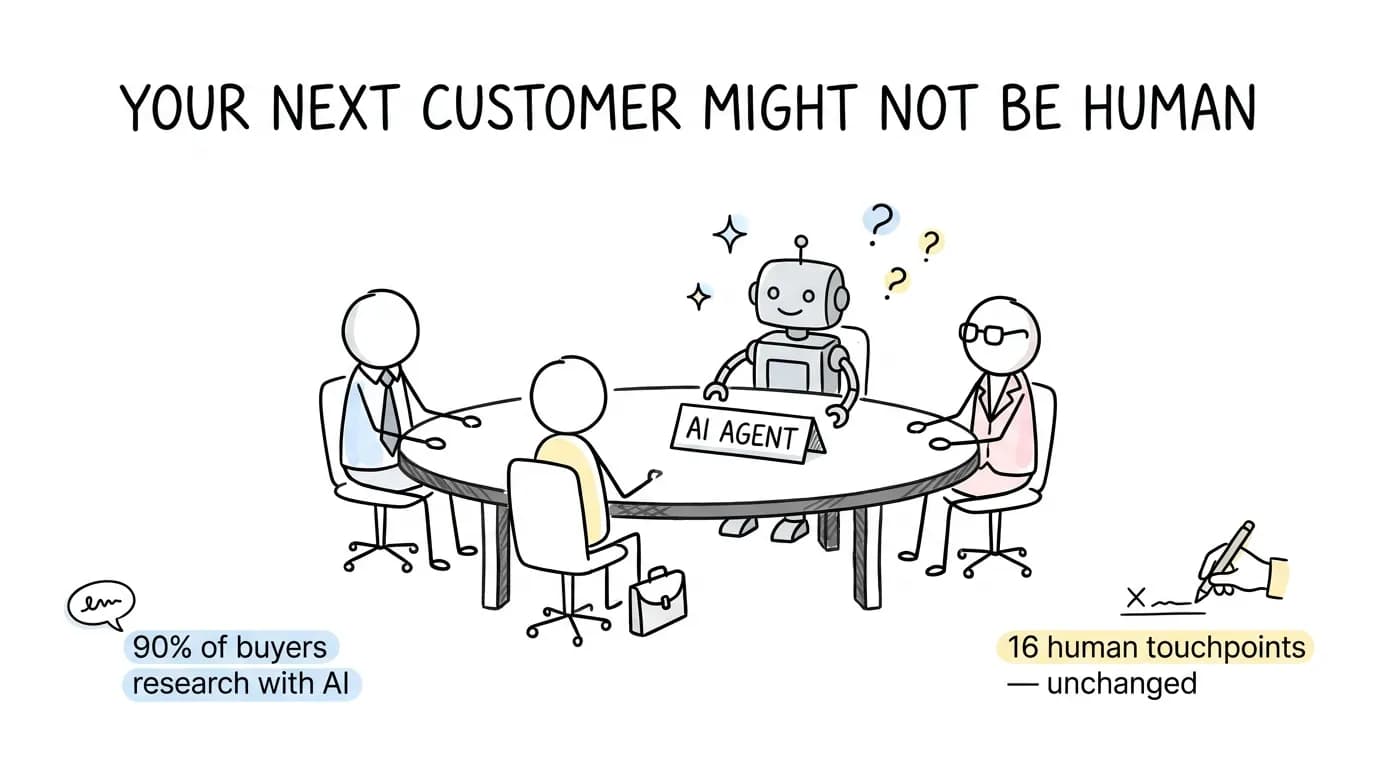
Your Next Customer Might Not Be Human: What Changes — and What Doesn't — in B2B Marketing, 2026
A long-form analysis of 2026 B2B marketing predictions covering AI agents joining buying decisions, visibility in AI answers, email filtering, trust, and first-party buying signals.
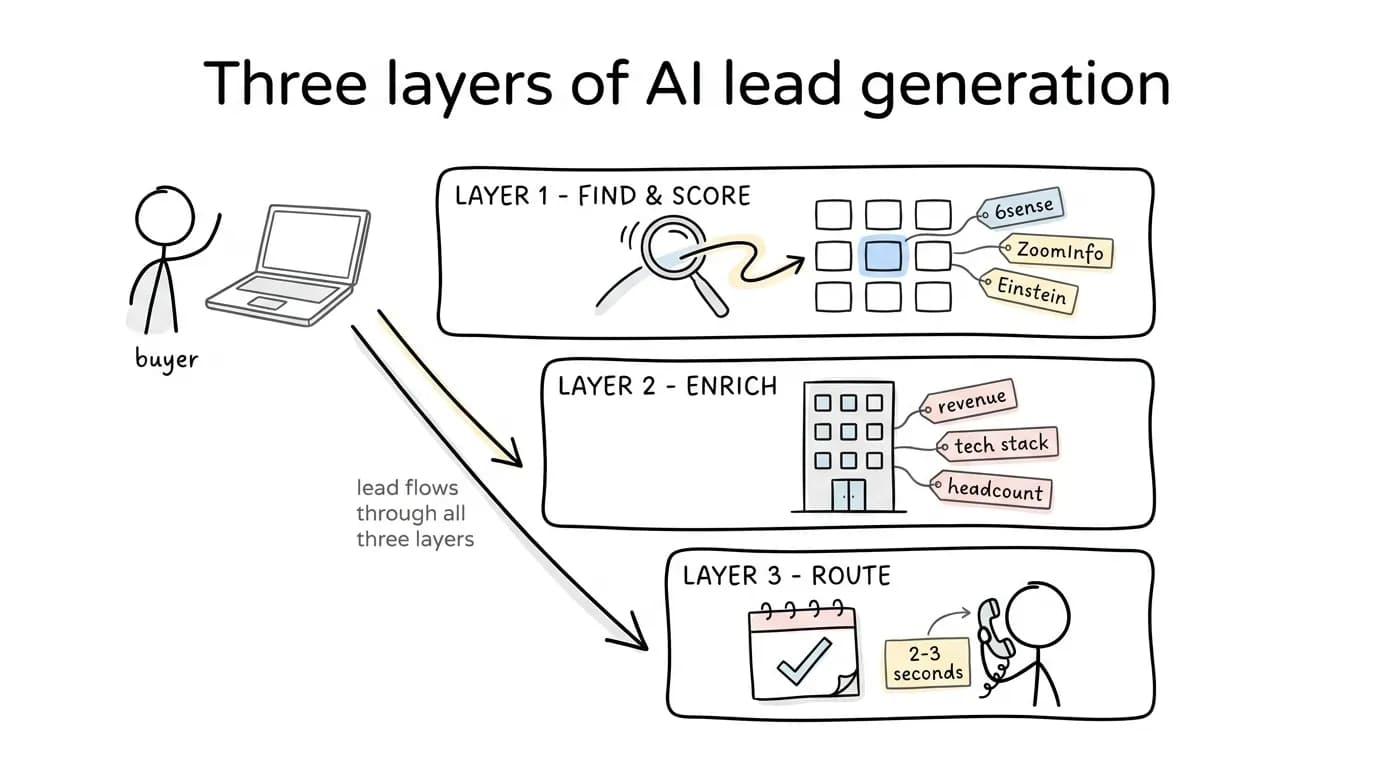
The Lead Came In, But Nobody Called for 48 Hours: The Three Layers of AI Tools Defining B2B Lead Generation in 2026
A bilingual guide to AI lead generation for B2B in 2026, covering predictive and intent-based scoring, data enrichment, and routing tools across three layers. It also discusses compliance checks for black-box scoring and share-of-model visibility in AI answers.