
Why Big Brands Are Spending Their Ad Budgets on Someone Who Doesn't Exist
An explainer on why brands invest in virtual influencers, covering how AI-driven digital personas work, case studies from Brazilian retail, and the benefits and limitations of replacing human endorsers.
Let me paint you a picture. The 2022 Oscars ceremony. Will Smith walks up on stage and slaps Chris Rock across the face.
That slap stunned more than just Rock.
Sony, Netflix, Apple — several major companies cancelled their collaborations with Smith overnight. An international superstar, his likable persona wiped clean in a single night.
Kanye West — Ye, as he's better known — went through the same thing, only more thoroughly. After one scandal after another, by the end of 2022, Gap, Adidas, Balenciaga, Vogue, JPMorgan Chase — every last contract was gone.
You might be thinking: that's a celebrity's private conduct — nothing to do with business.
No. This is exactly what brands fear most.
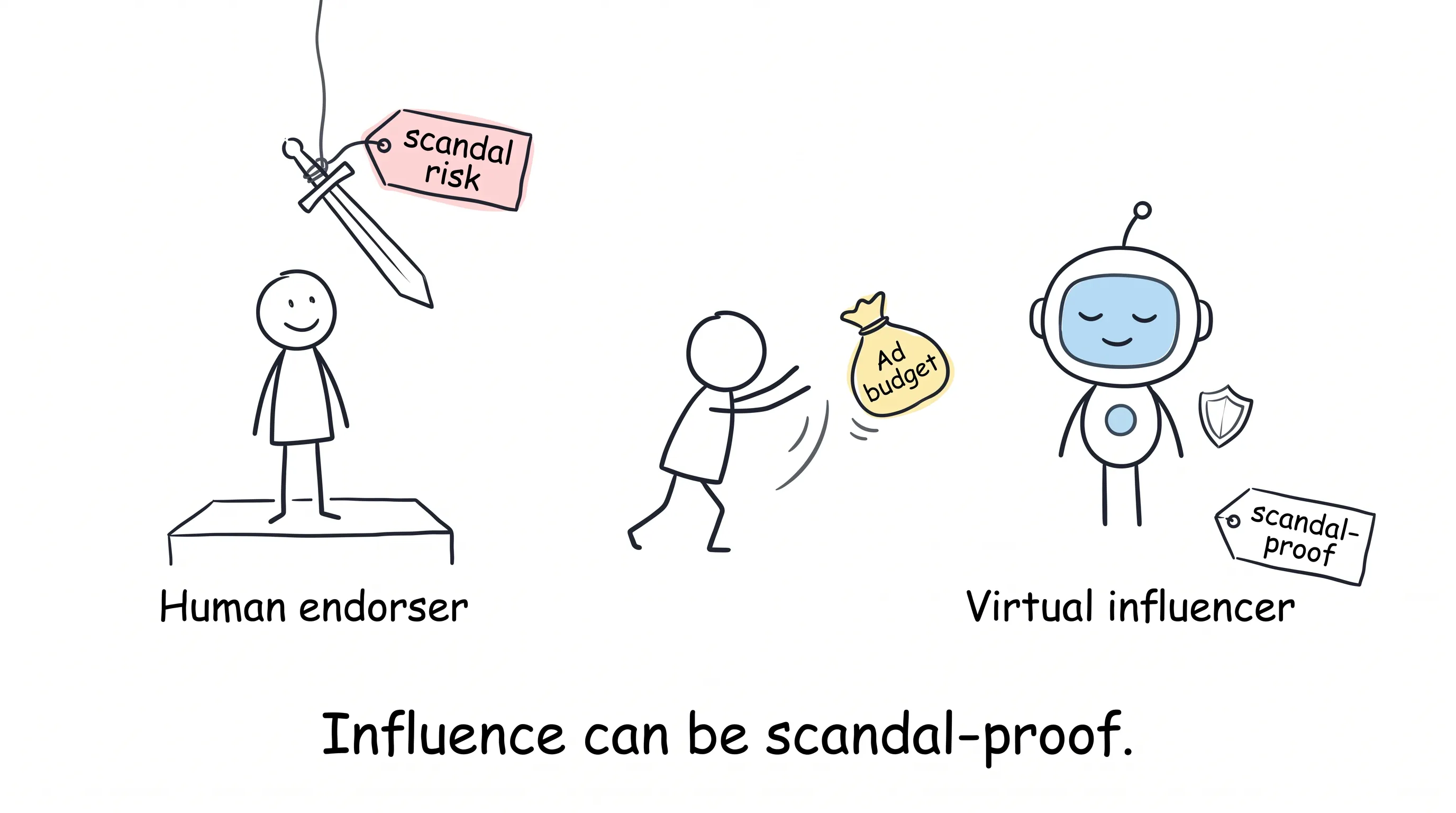
Think about it: why do brands sign celebrity endorsers? For popularity, for trust. But popularity and trust both live on a person. And people can collapse.
As long as your spokesperson is human, a reputation collapse hangs over the brand like a sword.
So what do you do?
I brought this question to a few friends who work in marketing. They pointed me in a direction I never saw coming: more and more brands are spending their advertising budgets on people who don't exist at all.
What Exactly Is a Virtual Influencer?
You've almost certainly seen her already — you just didn't know it.
There's a "girl" called Lil Miquela who suddenly showed up on Instagram in April 2016, looking like a 19-year-old California girl: posting selfies, sharing opinions, falling in love. She got so big that TIME named her one of the "25 Most Influential People on the Internet." Prada and Calvin Klein both cast her in their ads.
But she doesn't exist. She's a digital character built with 3D modeling and animation software, driven by artificial intelligence, with an entire team behind her cultivating her. Japan's virtual model Imma goes even further — even the family dog has its storyline fully scripted.
Hold off on saying "who would believe a fake person."
Look at the data first.
HypeAuditor, an engagement analytics platform, ran the numbers in 2020 and 2021: virtual influencers get roughly 3x the engagement rate of humans. Their content earns 3x the likes, shares, and comments. 45% of their followers are women aged 18 to 34, and girls aged 13 to 17 make up about 15% — twice the human rate.
A fake persona "carries" real audiences better than a real one.
Why?
That calls for three stories. Three stories from Brazilian retail.
Let Me Tell You 3 Stories
The first story is about Lu.
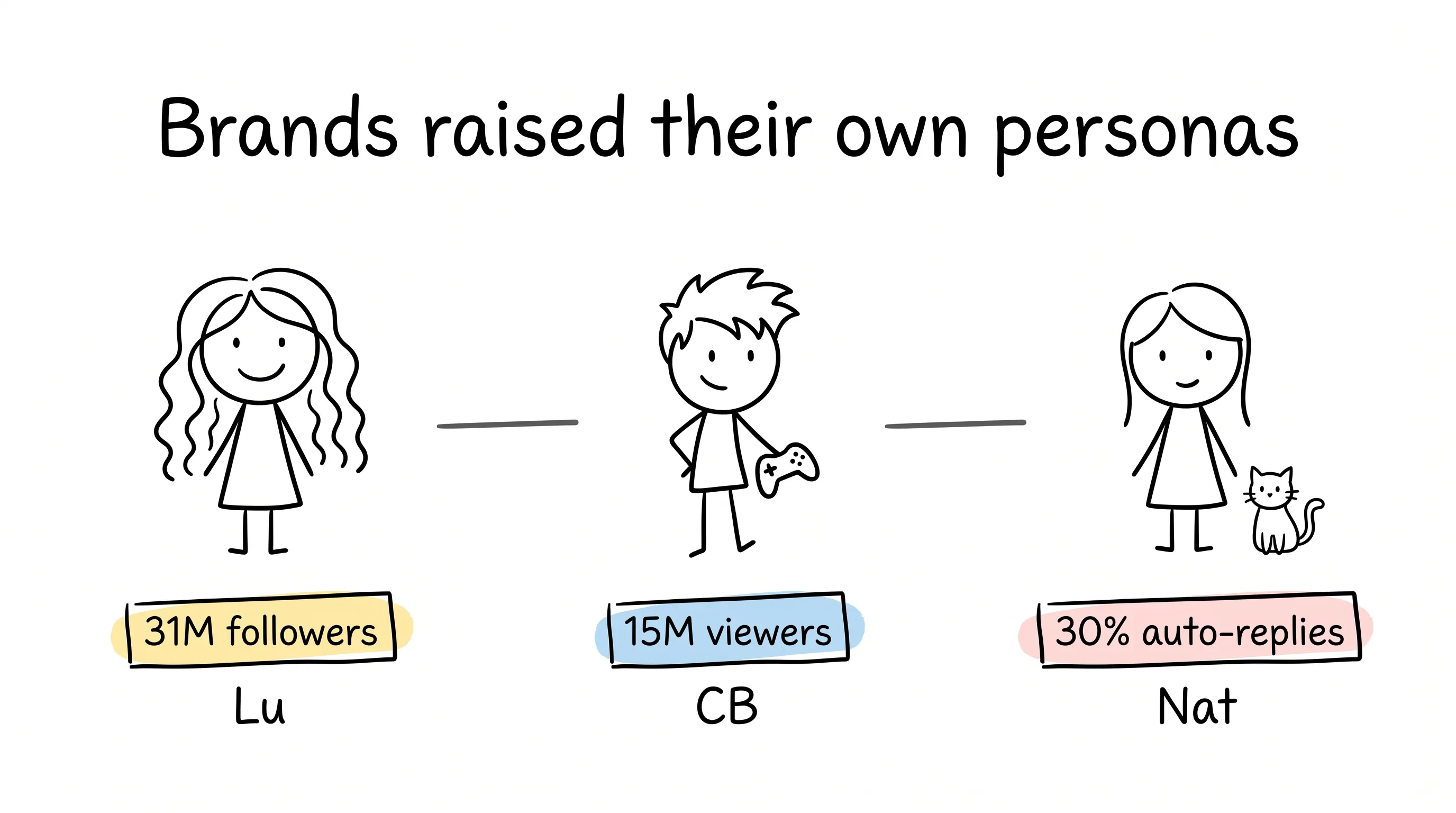
Magazine Luiza, one of Brazil's largest retail groups, created a virtual salesclerk named Lu back in 2003 to introduce new products on its e-commerce site. User response was so good that Lu's role kept growing: a YouTube channel, a TikTok account, a lifestyle feed — until she grew into the most-followed virtual influencer in the world, with more than 31 million followers across platforms and over 300 million video views.
On Brazilian Valentine's Day (Dia dos Namorados, celebrated in June) in 2017, Lu joined Tinder. In 12 hours she matched with 150,000 people, handing each match a home-appliance coupon — and platform activity jumped 5x that day. Impressive.
For Black Friday 2021, Brazil's largest television group paired her with pop superstar Anitta in a music video that hit one million views in under an hour. In August 2022, she landed on a giant screen in New York's Times Square, fronting a Samsung product launch.
A virtual character pulled off what most human celebrities never could.
The second story is about CB.
Casas Bahia, a home-appliance retail chain, has had a mascot since 1960 — practically a folk symbol of Brazil by now. In 2020, the group remade that mascot into CB, a mixed-heritage teenager who loves gaming and memes, and handed him the job of brand spokesperson too.
He hosts a game stream every two weeks with world-champion players as his gaming partners, and has partnered with Meta in a bid to become the first virtual host in the metaverse. For Black Friday 2022, he appeared on Brazil's beloved variety show The Voice, watched by 15 million people.
The third story is about Nat.
Natura, the beauty group that owns The Body Shop and Avon, built a virtual customer-service agent named Nat in 2016. At first she was just a chatbot that could automatically answer about 30% of order inquiries. After the pandemic accelerated the group's digital push, they upgraded her into a virtual influencer: she got a cat, loves posting seaside daily life, chases trends, and speaks up for protecting the Amazon.
Notice something? None of these three characters is an "ad asset." They are personas the brands raised themselves.
How Can Fake Be More Real Than Real?
This was the part I struggled with most at the beginning.
Then a veteran with thirty-plus years in digital marketing said one sentence to me, and it all clicked.
He said: are human influencers really more real than virtual ones? Kim Kardashian and Lu are, at bottom, both characters built by teams. Neither is more "real" than the other.
Right, of course.
The life a human influencer shows on social media is carefully designed to begin with: which photo to post, which line to say, which ad to take — it's all business. Fans know it. Nobody says it out loud.
Virtual influencers are different. They openly admit they're fake.
Fans know she's fictional and still choose to play along — this unspoken deal of "I know you're performing, and I'm in the audience anyway" turns out to be the greatest sincerity of all.
One marketing expert who was interviewed calls this the "fictional contract" (the audience's unspoken deal to go along with the story): the more coherent the story, the more willingly fans set aside "this is made up" and follow her the way they'd follow a TV series.
What's more, virtual influencers hold three things no human can offer.
First, she can't collapse. No losing her temper, no 3 a.m. meltdowns, no drunk driving, no verbal gaffes. Scandal barely touches virtual influencers — if anything goes wrong, it has to be a mistake by the team behind her, and a team can be managed. Remember the earlier story? In late 2021, Viya (China's biggest livestream seller) fell from grace over tax evasion, with 110 million followers watching. At Double Eleven (Alibaba's mega shopping festival on November 11) in 2022, the ones stepping up in Alibaba's mega-sale livestream rooms were two virtual streamers. Virtual streamers don't commit tax fraud.
Second, total control. When content goes out, what it says, in what language, building what persona — the brand decides. And one virtual influencer can split into several versions: one for the West, one for the Middle East, one for Asia, with crossovers between them like the Marvel Cinematic Universe. A human influencer could never pull this off — humans get tired, raise their rates, switch agencies, and drift away from a brand's tone.
Third, she gets cheaper the more you use her. The hotter a human influencer gets, the more expensive she becomes. Virtual influencers work the opposite way: the longer you use them, the thinner the cost spreads — and a well-raised one can end up earning back more than was ever invested in it. Magazine Luiza is the living proof.
But There's Always a Catch
First, a technical hurdle: the uncanny valley (the unease we feel toward things that look almost, but not quite, human).
The roboticist Masahiro Mori made a classic observation: the more human-like a thing is, the more we like it — but once it reaches 99% human and is missing just that final touch, we recoil in horror. Virtual influencers have to walk this line: human enough to feel approachable, yet keeping a residue of "not-quite-human" that wraps them in a layer of mystery. That's why so many virtual influencers keep a deliberate ambiguity about what they really are.
Beyond that, experts keep hammering on a few limitations.
Content that's too perfect loses its human touch. One expert notes that what truly moves people is often the photos that aren't so polished. The moment a virtual influencer starts looking like an "official account," engagement wilts.
Then there's the missing "close-friend effect." That sense of "he's my bro" between you and a human streamer is very hard to replicate with a pixel character.
Cultural anchoring runs deep. Lu's persona is a quintessential Brazilian big sister: warm, chatty, even a bit nosy. To a French audience that personality might seem baffling — but in Brazil, it's just right. Virtual influencers are hard to copy across borders.
And then the most stinging point of all: she has never actually used the product. The person recommending that face cream has never touched the jar. To be fair, though, human influencers may not have used it either — the difference is, humans pretend they did, while the virtual one openly admits it.
So here's the picture: even in Brazil, where virtual influencers are played most skillfully, experts broadly agree they can't replace all humans. The more realistic play is a hybrid — use virtual influencers for safety and cost control, and use humans, especially small-but-authentic micro-influencers, to supply trust and human warmth.
Back to That Slap
Now look back at that Oscar slap in 2022, and it might read differently to you, the way it now does to me.
What brands truly want was never really "a certain person" — it's that person's influence. In the past, influence could only grow on a person, and the person came bundled with risk. Now, AI has split influence apart from the human.
For the first time, influence can be scandal-proof.
That's why Prada, Gucci, and Louis Vuitton are willing to spend their ad budgets on someone who doesn't exist.
Of course, this leaves us a warning, too: when digital characters can pass as human and precisely tug at our emotions, the rules for protecting minors and the easily manipulated haven't caught up yet. Virtual influencers have a long road ahead — but the guardrails need to go up first.
May everything you endorse never collapse.
Continue reading
Related articles

When AI Does the Creative, Mistakes Come in Batches Too
A learn article on the risks of using generative AI for marketing creative across brand, legal, compliance, and operational layers, with case examples and seven practices for review, rights clearance, documentation, and vendor governance.
Which AI Should Your Startup Actually Use for Marketing?
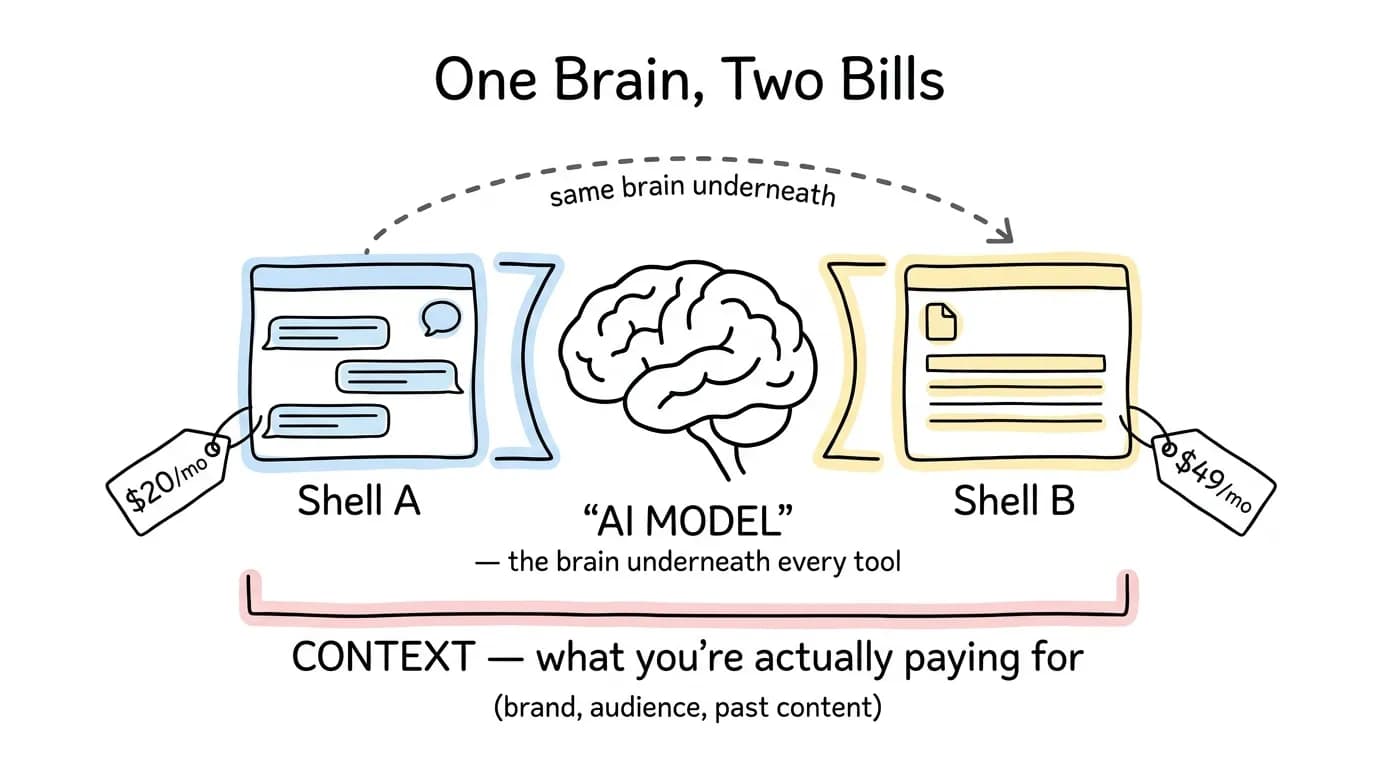
A startup marketing guide explaining the difference between AI models and tools, sorting tools by job (writing, research, design, leads, email, video ads), and outlining a 30-day test plan for choosing them. It also covers generative engine optimization and budget trade-offs.
31 AI Marketing Tools, Reviewed One by One: How Exactly Should You Spend the Money?
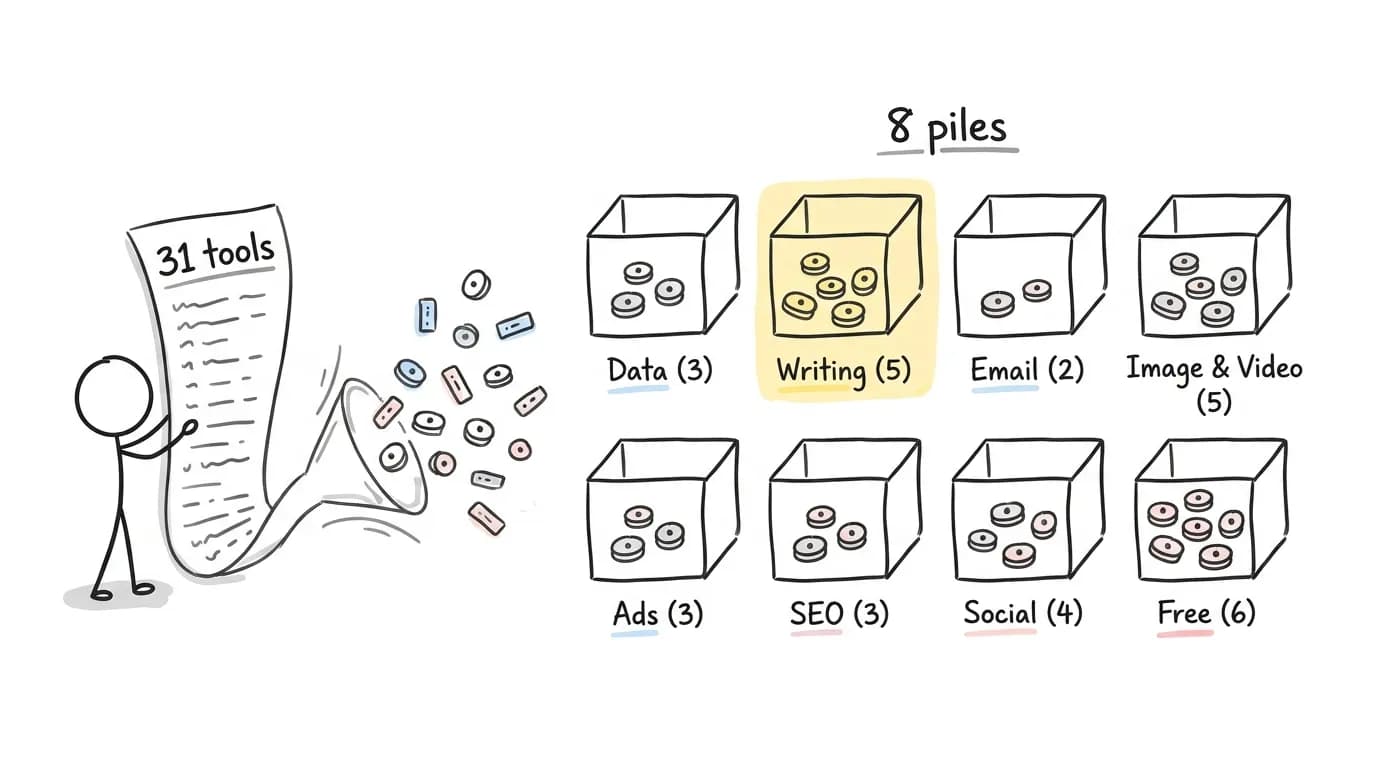
A review of 31 AI marketing tools grouped into eight categories, covering data, content, email, video, ads, SEO, social, and free options, with guidance on choosing one strong tool for your most frequent task and testing free tiers first.