
When an Influencer Speaks, Is It Still Them Speaking?
An analysis of AI-altered influencer content, framed by a creator's lawsuit against a brand over AI-edited footage (allegations only, case withdrawn). Covers industry disclosure expectations, Turkey/EU/US regulatory approaches, and contract tips on approval scope and usage rights.
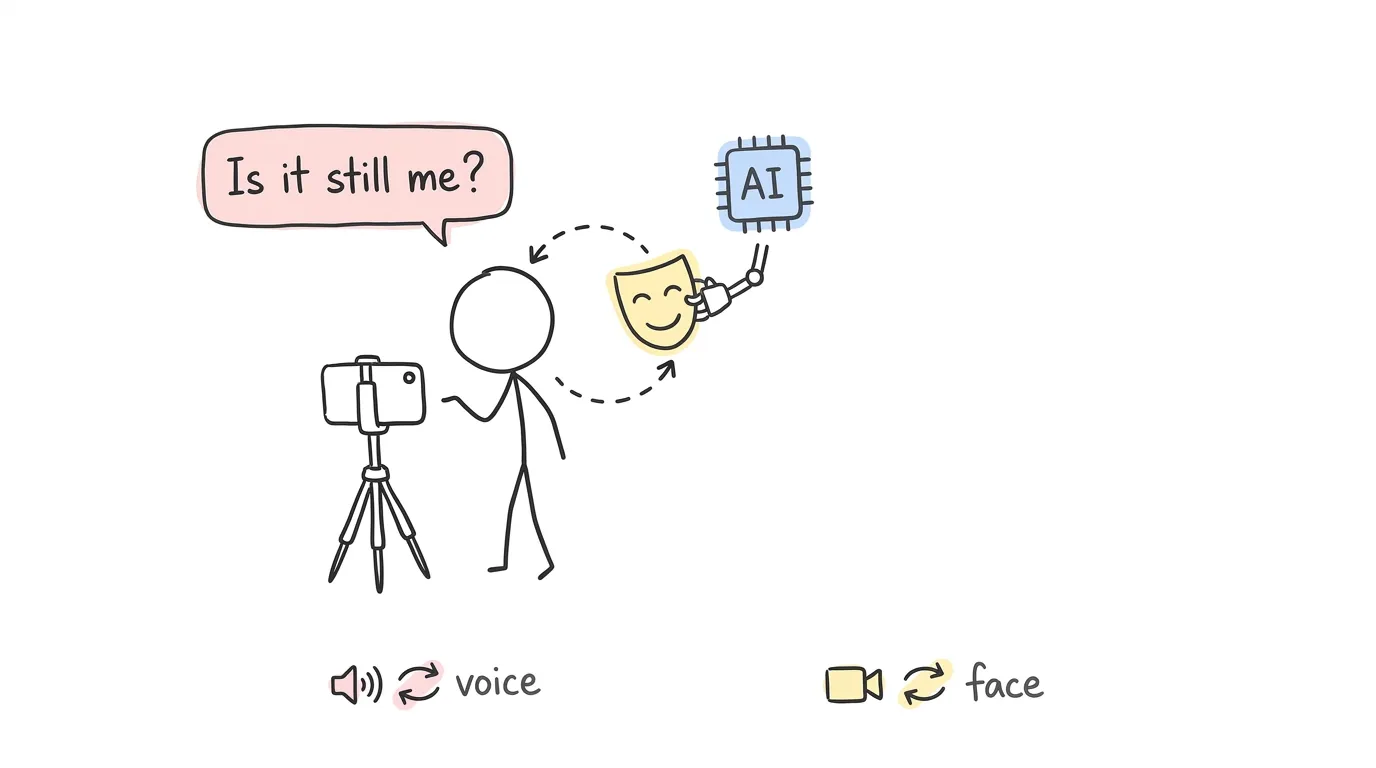
I recently came across a lawsuit that I haven't been able to stop thinking about. If you work in branding, this one deserves your attention.
On June 9, 2026, an American fashion creator sued the underwear brand EBY. The creator's name is Molly Tranchin, known online as FashionVeggie. Her allegation goes like this: she shot a video for the brand under contract, and the brand later ran it through AI — reworking it into something she never approved — and posted it on Instagram. Nothing in her contract allowed that kind of unilateral editing.
Note: these are her allegations. The court has not ruled on any of them.
Then on August 28, she dropped the case herself — the kind of dismissal that doesn't bar her from filing again. The withdrawal came after the brand challenged the federal court's jurisdiction, and she intends to refile in a court that actually has it. So to date, no court has said a single word about who's right.
But set the verdict aside for now. I'm singling this case out because behind it stands an entirely new question for the whole industry:
When AI can casually swap a face or a voice, what the audience sees — is it still the influencer?
1. AI Stopped Being a Novelty a While Ago
First, a number. According to a 2026 survey by the World Federation of Advertisers (WFA), 78% of multinational brands surveyed are already using AI in consumer-facing marketing creative.
What does that tell us? AI in advertising is no longer "let's give it a try" — it's a routine step on the production line. Influencer marketing, of course, is no exception.
Think about what today's tools can do: replace the entire background of an influencer's video; clone their voice; alter their appearance; even make them "say" things they never said. Work that once kept a professional team busy for ages now takes one off-the-shelf tool — and it's fast.
For brands, this is obviously good news. A campaign video can be re-dubbed and shipped to several markets; a single product image can be tested in dozens of versions; the raw footage a creator delivers can be reworked over and over until it looks the way the brand wants.
In one line: influencer content has gone from a one-off work of art to raw material that can be processed again and again.
But the moment you treat content as freely processable material, a question follows: as the AI share of a piece of content keeps growing, should we tell the audience there's AI in it — and if so, where, and how?
2. How Much "Fake" Will the Audience Accept?
The interesting part is that the industry already has its own internal scale.
Back to that WFA survey. When you ask "did you use AI or not," the disclosure expectations for different uses are wildly different:
96% of brands believe AI-generated voices that could pass for real should be disclosed.
91% believe a synthetic presenter — a digital human — playing the lead in an ad should be disclosed.
And purely decorative AI backgrounds? Only 4%.
4% versus 96% — a 92-percentage-point gap.
What does that mean? It means nobody thinks "using AI" is bad in itself. What people look at is what the AI actually touched.
Here's an analogy. When you step out in a new coat, you don't owe the neighbors an announcement. But if you've had your face changed — if you walk home wearing someone else's face — your family has the right to ask: who are you? Swapping a background is changing a coat. Swapping a face, a voice, or putting words in someone's mouth — that's walking home in someone else's face.
And here's the twist that makes it harder.
Academic research on advertising has found that disclosing AI doesn't always help. In some scenarios, telling viewers "AI was involved in this ad" actually lowers their trust in the ad and the brand.
It's like a restaurant proudly posting a sign that says "Our kitchen uses pre-made meals." Honest, certainly honest. But some customers will quietly put the menu down after reading it.
So disclosure is never as simple as slapping on a label. What really matters isn't whether AI was used, but what it touched, and how much.
3. How Are Governments Regulating This?
What about regulators? In different places, regulators face the same question: how do you govern AI-generated and AI-altered content?
The goal is remarkably aligned: don't let people pass off the fake as the real. But the approaches are wildly different.
Start with Turkey. On August 1 this year, a new set of advertising rules took effect (published in the official gazette on July 1), with provisions that go straight at AI: Article 18(8) requires that wherever the use of AI or other software may significantly influence consumers' economic behavior, or wherever an AI-created digital character has become indistinguishable from a real person, that use must be disclosed clearly, understandably, and recognizably. Article 27(12) then sets a limit: no using AI digital stand-ins to create the false impression that "this person actually used, experienced, and recommends this product."
Now the European Union. One day later — August 2 — the transparency obligations for AI-generated and manipulated content under the EU AI Act officially came into application: once an image, audio clip, or video constitutes a deepfake, it must be disclosed as artificially generated or manipulated.
So what counts as a deepfake? Guidance published by the European Commission on July 20 lays out several assessment factors: how much the output resembles a real person, what message it conveys, the context it's used in, and what the target audience would expect to see. For example, changing a background or adding visual effects in the ordinary course of making a film — as long as it doesn't leave viewers believing "everything on screen is real" — may be treated differently.
The United States takes a different road. The FTC (Federal Trade Commission) doesn't watch the technology; it watches the outcome: do advertising and endorsements mislead consumers? What's an endorsement? Advertising messaging that consumers will believe "reflects the real views or real experience of some person." FTC rules prohibit fake endorsements — and an influencer who falsely claims to have used or experienced a product is equally covered. An AI avatar, in itself, is not illegal; but use an AI avatar to deliver fake testimony, and you may well fall within the existing rules.
Three roads: Turkey wrote an explicit disclosure checklist, the EU drew the line defining a deepfake, and the US laid down a catch-all "don't deceive." Yet the direction is one and the same:
Whether AI could deceive the audience is the bullseye every regulator is aiming at.
4. The Gray Zone Is Bigger Than You Think
The rules set out the principles. But when you actually get to work, you find that many scenarios don't land neatly inside the grid.
Is swapping a background the same as swapping a face? Is trimming the original footage the same as making an influencer "say, in their own voice," things they never said? Why does the EU guidance bother listing "resemblance, context, audience expectations" as factors? Because this line isn't a straight line — it's a gradual spectrum. The gray zone is far bigger than the blueprint suggests.
And there's another trap, hiding inside contracts.
An influencer approves a cut. The brand then takes the same footage and uses AI to spin off several new versions. Question: does that one "OK" from the influencer cover the new versions?
This is no longer just a disclosure question. It's a usage-rights question, an approval-scope question. Where the boundary of approval isn't clearly drawn, a dispute is only a matter of time.
5. Back to That Lawsuit
Now, back to FashionVeggie.
The most interesting thing to chew on in this case isn't actually "was the audience deceived." It's another question:
Her face, her voice, her words — who has the right to change them?
Whether the audience was misled is a matter for regulators. A creator's control over their own image is a matter for the contract. The two often get tangled up in the same conversation, but they need to be handled separately.
In practice, my advice comes down to three things — and all three belong before production starts:
First, nail down disclosure in the brief and production phase: which AI uses require disclosure? In what form, and where on screen?
Second, define the approval flow: to what degree may the influencer's image and voice be altered at most? Who approves? At which stage?
Third, spell it out in the contract: does the usage license granted for this campaign cover AI-derived new versions produced later?
One Last Thing
Pull the whole piece together and you're left with three judgments.
Regulators are converging: whichever jurisdiction you're in, "could AI intervention mislead the audience" is the bullseye. The industry is already sorting itself into tiers: 96% against 4% — people are voting with their feet, treating different kinds of intervention differently. And between those two poles lies a gray zone whose boundaries nobody can draw cleanly.
So what do you do? Stripped of everything, it's plain: disclose any AI intervention that could leave audiences unable to tell real from fake — and write it into the brief, the approval flow, and the contract from the start, instead of negotiating after something goes wrong.
Technology will only get faster and cheaper. Today it can swap a background; tomorrow it can swap the entire performance.
Back to FashionVeggie. The case was withdrawn — word is, she'll sue again. For the rest of us watching from outside the screen, rather than waiting for a court to draw the line for us, draw it ourselves first.
May every video you shoot, and every word you speak, still be your own.
Continue reading
Related articles

When AI Does the Creative, Mistakes Come in Batches Too
A learn article on the risks of using generative AI for marketing creative across brand, legal, compliance, and operational layers, with case examples and seven practices for review, rights clearance, documentation, and vendor governance.
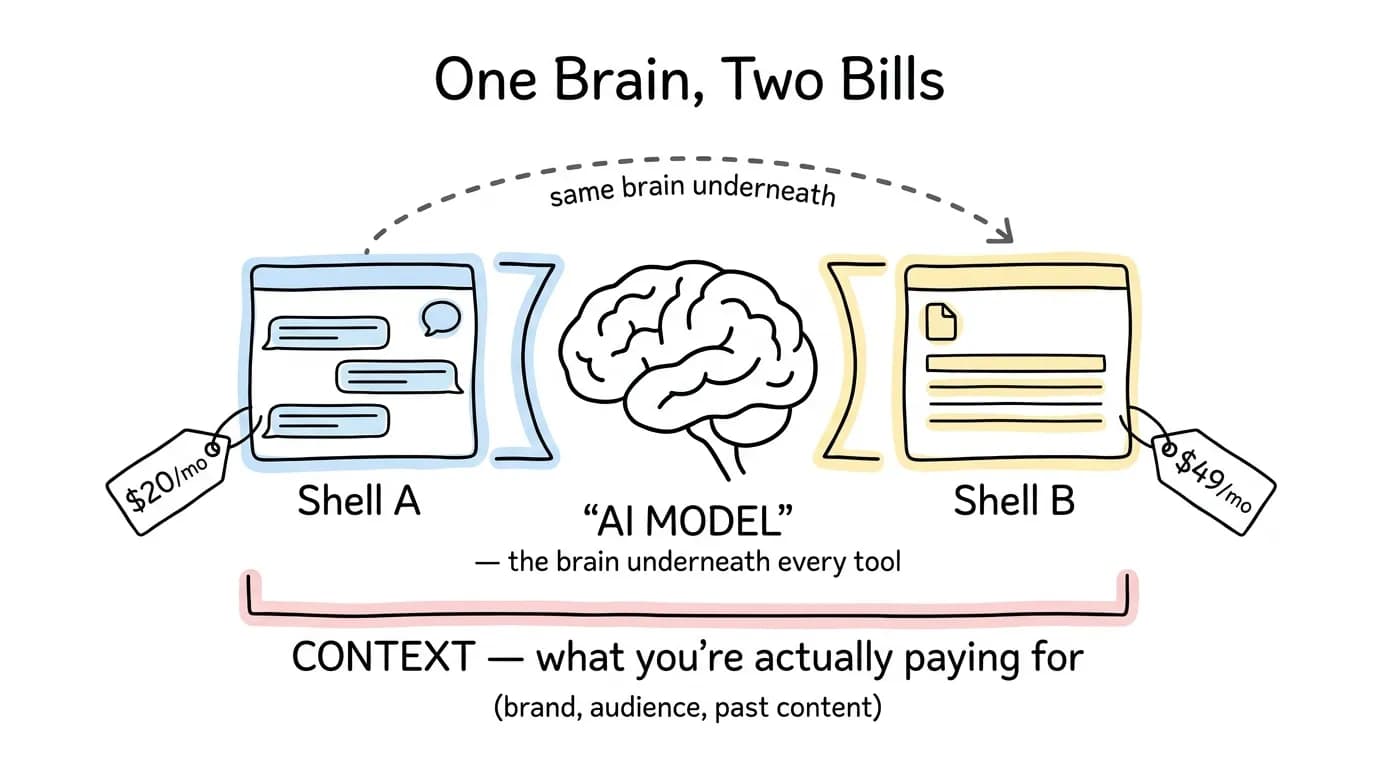
Which AI Should Your Startup Actually Use for Marketing?
A startup marketing guide explaining the difference between AI models and tools, sorting tools by job (writing, research, design, leads, email, video ads), and outlining a 30-day test plan for choosing them. It also covers generative engine optimization and budget trade-offs.
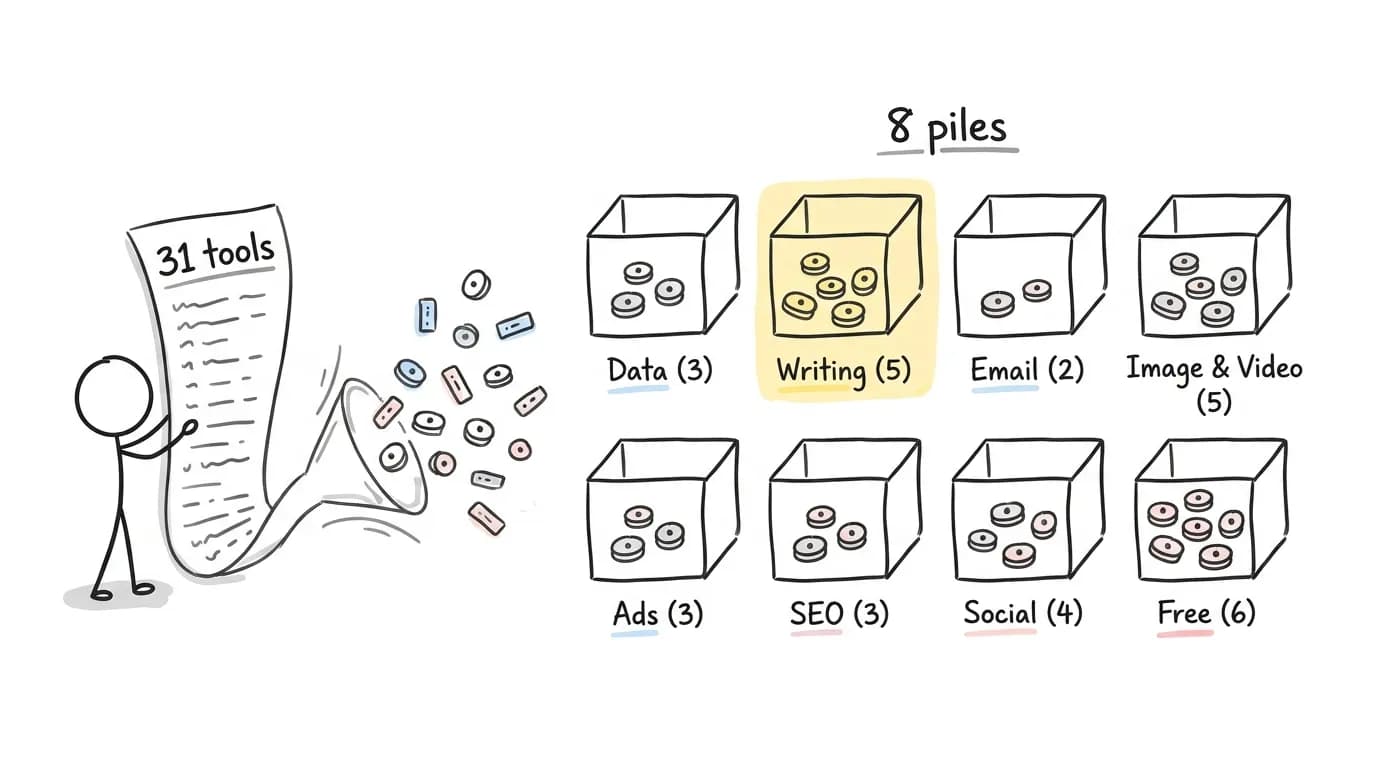
31 AI Marketing Tools, Reviewed One by One: How Exactly Should You Spend the Money?
A review of 31 AI marketing tools grouped into eight categories, covering data, content, email, video, ads, SEO, social, and free options, with guidance on choosing one strong tool for your most frequent task and testing free tiers first.