
What Is GEO? The New Playbook for Local Business in the Age of AI Search
This learn article explains GEO (Generative Engine Optimization) for local businesses in the AI search era, outlining five practices: targeting question-based prompts, keeping business information consistent, refreshing content, building brand mentions, and tracking AI visibility metrics alongside existing SEO.
A few days ago, I wanted to buy a pair of pickleball shoes for my son.
Not long ago, I would have opened Google, searched "pickleball shoes near me," and scrolled through a pile of blue links until my eyes glazed over.
This time I took the lazy way out and just asked ChatGPT.
It didn't hand me links. It handed me an answer: two recommended brands, plus the reasons why.
I stared at the screen for a few seconds. Then it hit me:
The gateway to your customers has changed.
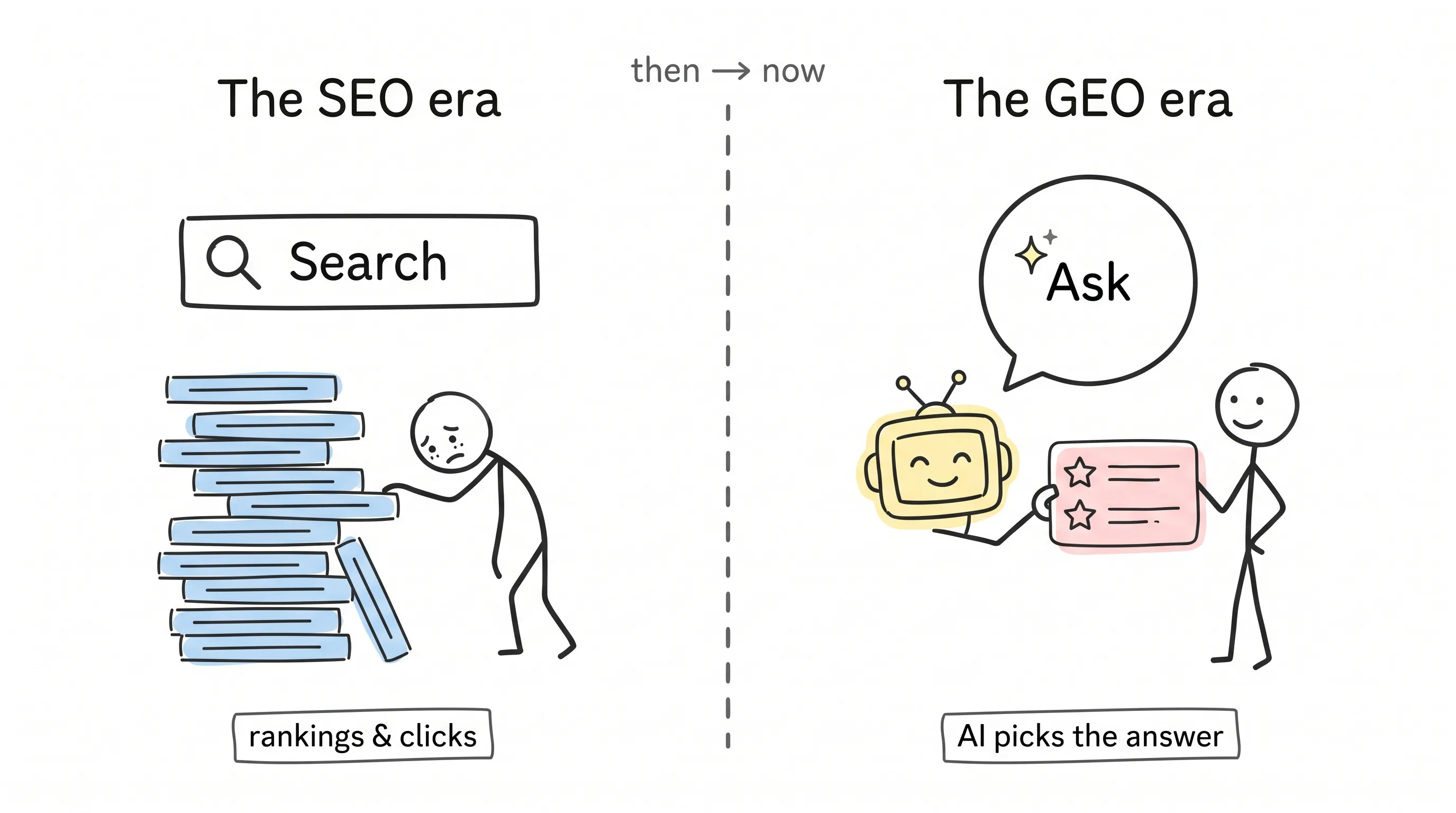
It used to be "search." Now it's "ask."
ChatGPT, Claude, Gemini, Perplexity — plus TikTok and Xiaohongshu (China's go-to lifestyle-review app), where searching feels like strolling — and Siri and Alexa on top of that. The way people discover a business has completely bypassed that row of blue links.
What Is GEO?
The marketing world has given this shift a name: GEO, Generative Engine Optimization.
So what is GEO?
In plain terms: it's the practice of influencing how AI mentions you, describes you, and decides whether to recommend you in its answers.
Here's the thing: what you're competing for has changed. In the SEO era, you fought for rankings and clicks. In the GEO era, you fight to be picked by AI — to become the answer itself.
The library metaphor explains this difference best.
In the SEO era, your job was to get the book title right and shelve it in the right place, so someone flipping through the catalog could find it.
In the GEO era, readers don't browse the catalog anymore. They walk straight up to the librarian and ask: What's this book about? Any similar recommendations?
And this AI librarian reads the entire book. Cover, table of contents, chapter one, chapter two, chapter three. Then, based on its own understanding, it gives the reader a summary.
Your job is to make your content clear enough, structured enough, and authoritative enough that the librarian summarizes you accurately — and throws in a compliment or two.
That metaphor is brilliant.
One more thing that's easy to miss: GEO isn't just about your website. AI reads your entire digital footprint — your site, your social media, your business listings, every directory platform out there. Not one of them can afford to be wrong.
So What Do You Actually Do? Five Things
Good news: if your SEO has always been solid, GEO isn't a teardown. It's five extra drills.
First: Move from Keywords to Questions
The old playbook was to sprint after high-traffic keywords. That road dead-ends in GEO.
Why? Think about it: if someone asks an AI "what are shoes," how does it answer? With a definition. Not a single brand mentioned. Generic questions like that bring no exposure — and no customers.
What's actually valuable are the specific questions with real intent behind them: Where can I buy pickleball shoes? Which ones fit wide feet?
That's a prompt. Study what your customers are actually asking AI — and what people are asking about your competitors — then build content around those high-value questions. Uberall's GEO Studio has a Prompt Center that does exactly this: it surfaces the most relevant prompts, flags which ones competitors already occupy, and leaves the gaps for you to fill with content through the Action Center.
One rule to remember as you write: serve humans and AI at the same time. Write in the same everyday language customers use when they ask. AI understands content through natural language processing — plain human talk is, ironically, the easiest thing for it to read.
Second: Keep the Information Consistent and the Structure Clear
AI is a stickler of a librarian. If your hours, address, and phone number tell three different stories across ten platforms, it won't dare cite you. Or worse: it will serve outdated information as fact.
The user gets burned — and blames you.
So clean up your business information everywhere, get every platform telling the same story, and implement schema markup. Old-school fundamentals like NAP (name, address, phone) consistency are worth double in the GEO era.
And check one more thing: can AI actually crawl your content? Is robots.txt blocking the crawlers? Is key information locked behind a paywall?
One data point is pretty interesting: when AI cites brands, 44.6% of the entry points are blog posts, 19% are homepages, and 13% are product pages. Put your core information inside those three "doors" — don't hide it behind a form.
Oh, and don't just collect stars in your reviews. Prompt customers for details: Why were they satisfied? What exactly was good? AI forms its judgment of you from the way people talk about you.
Third: Keep the Content Fresh and One of a Kind
Consumers' questions keep getting more specific. They drill down inside AI, compare over and over — the whole decision happens inside the conversation.
Your answers have to be more specific and more substantive than your competitors'. Data, photos and video, real user content, reviews, promotions, up-to-the-minute updates. In short: something people can't find anywhere else. Stacked together, these signals are what E-E-A-T (Experience, Expertise, Authoritativeness, Trustworthiness) looks like through AI's eyes.
AI also cares deeply about freshness. Stale content suggests a business that might be fading. So keep updating: product news, customer stories — and stay active not just on your Google Business Profile, but on Apple, Facebook, and Instagram too.
Fourth: Get the Whole World Talking About You
Here's the counterintuitive part: even brand mentions without a link count as authority signals for AI.
Search engines read links. Large language models read "word co-occurrence" — which words your brand name keeps showing up with, and in what context.
So go plant roots in the authoritative ecosystems: industry directories, review platforms. And create content on the platforms AI loves to cite most — Reddit, YouTube, TikTok — to build a "surround sound" presence around your brand.
There's a line in an AthenaHQ report that puts it well: models do tend to favor fresh content about competitors, but when that content lacks credible third-party backing, the advantage fades fast. Reviews propping up a competitor's positioning can't sustain it — its influence collapses on its own.
In the AI era, authority is the whole web testifying on your behalf.
Fifth: Watch Your AI Visibility Closely
Traffic is falling. Now what?
Don't panic yet. Over the past year, a large body of hands-on work with multi-location brands has shown that businesses doing GEO well are seeing more clicks and actions on their Google Business Profiles, faster bookings, and higher-intent customers coming in through organic search.
But there's a catch: you have to switch to a new measuring stick and keep your eyes on these metrics:
- Share of Voice: how often you get mentioned compared with local competitors
- Mention Rate: how often AI actually says your name
- Citation Rate: how often AI treats your content as a source
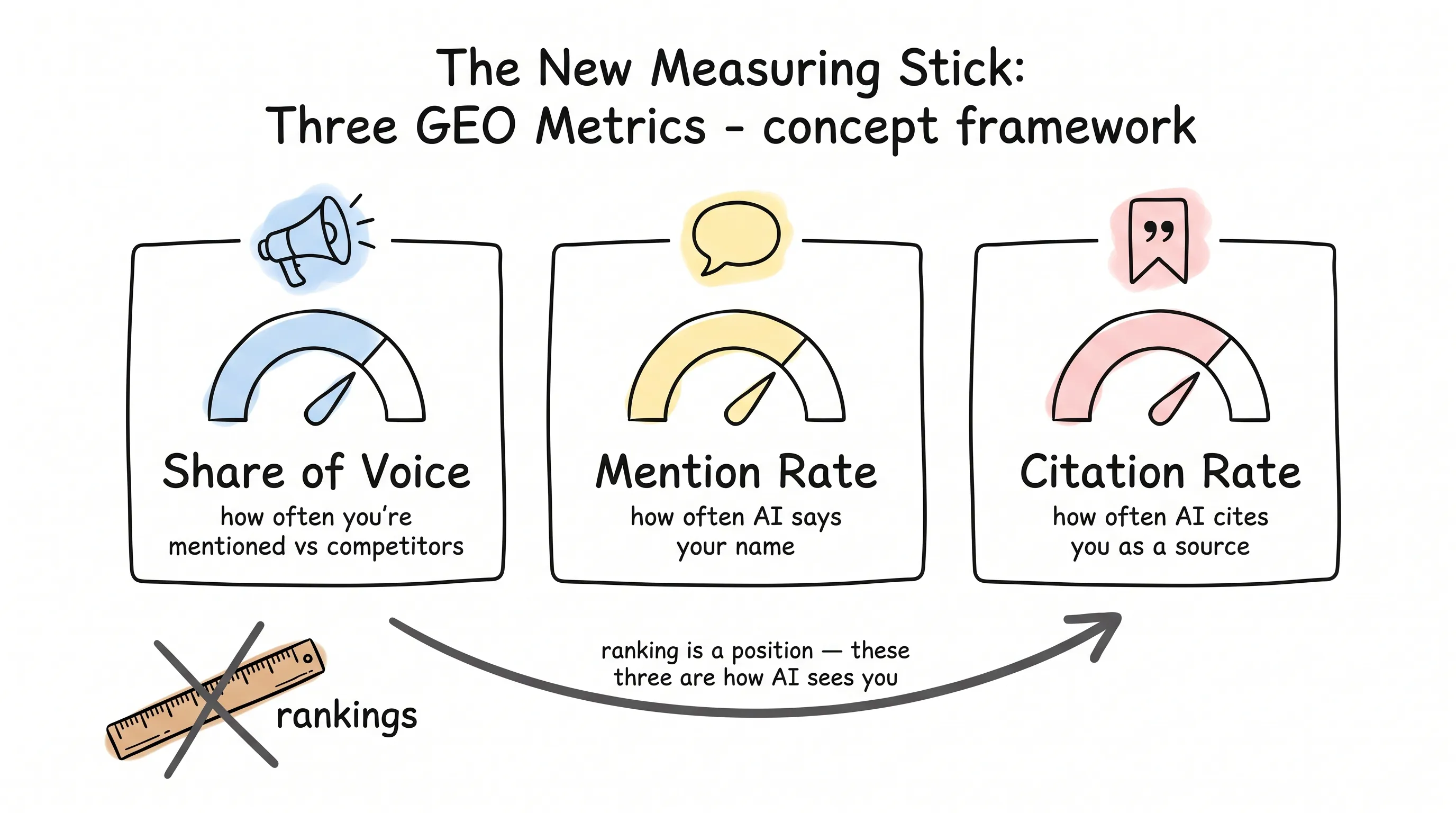
Ranking is just a position. These three numbers are what you look like in AI's eyes. Find the prompts nobody has covered yet, fill them with content, keep iterating, and win share of voice. That's the daily routine of the new-generation GEO specialist.
So, Is SEO Dead?
People ask me this all the time.
My answer is clear: no. Not yet, anyway.
GEO doesn't demolish a well-built SEO. It's one more story built on the same foundation. Keywords, links, content quality — that hard work still counts. What's changed is the measuring stick: from "where do you rank" to "what does AI say about you."
And here's a seriously underrated opportunity: this shouldn't be the SEO team's problem alone. PR, social media, brand, sales — every team holds material that AI is reading. That goes double for multi-location brands. Every single location can be the one that gets recommended.
Back to those pickleball shoes.
I honestly can't remember which two brands the AI recommended. But I do remember one thing: that day, I never once clicked a link.
Getting found is just the passing grade. Getting talked about is the new battleground.
May you always hold a spot in AI's answers.
Continue reading
Related articles
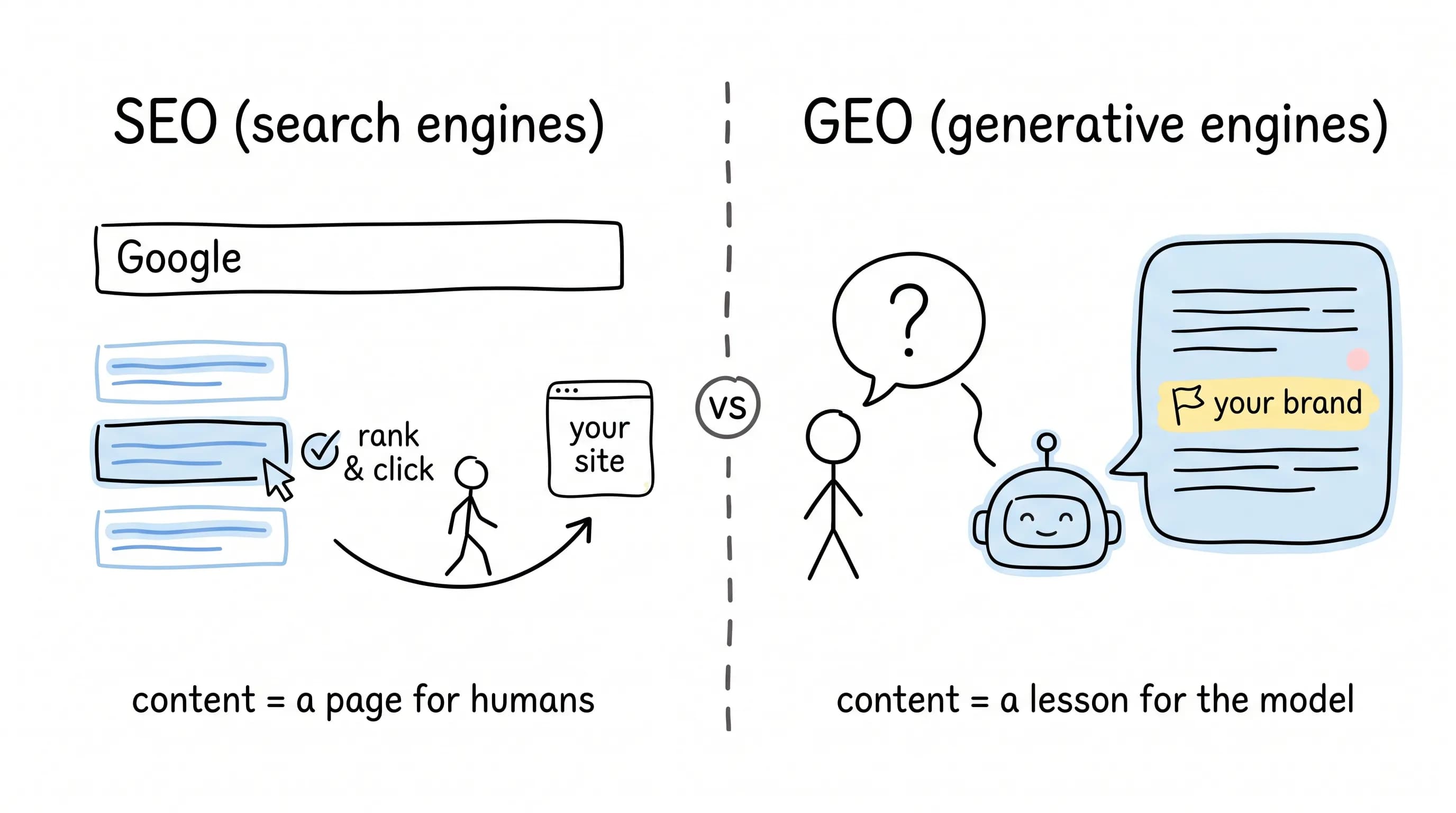
Does AI Know Your Brand? A Look at GEO, the New Craft
An explainer on GEO (Generative Engine Optimization): how AI engines like ChatGPT, Perplexity, and Gemini differ, how GEO goals and metrics diverge from SEO, and which SEO skills still carry over.
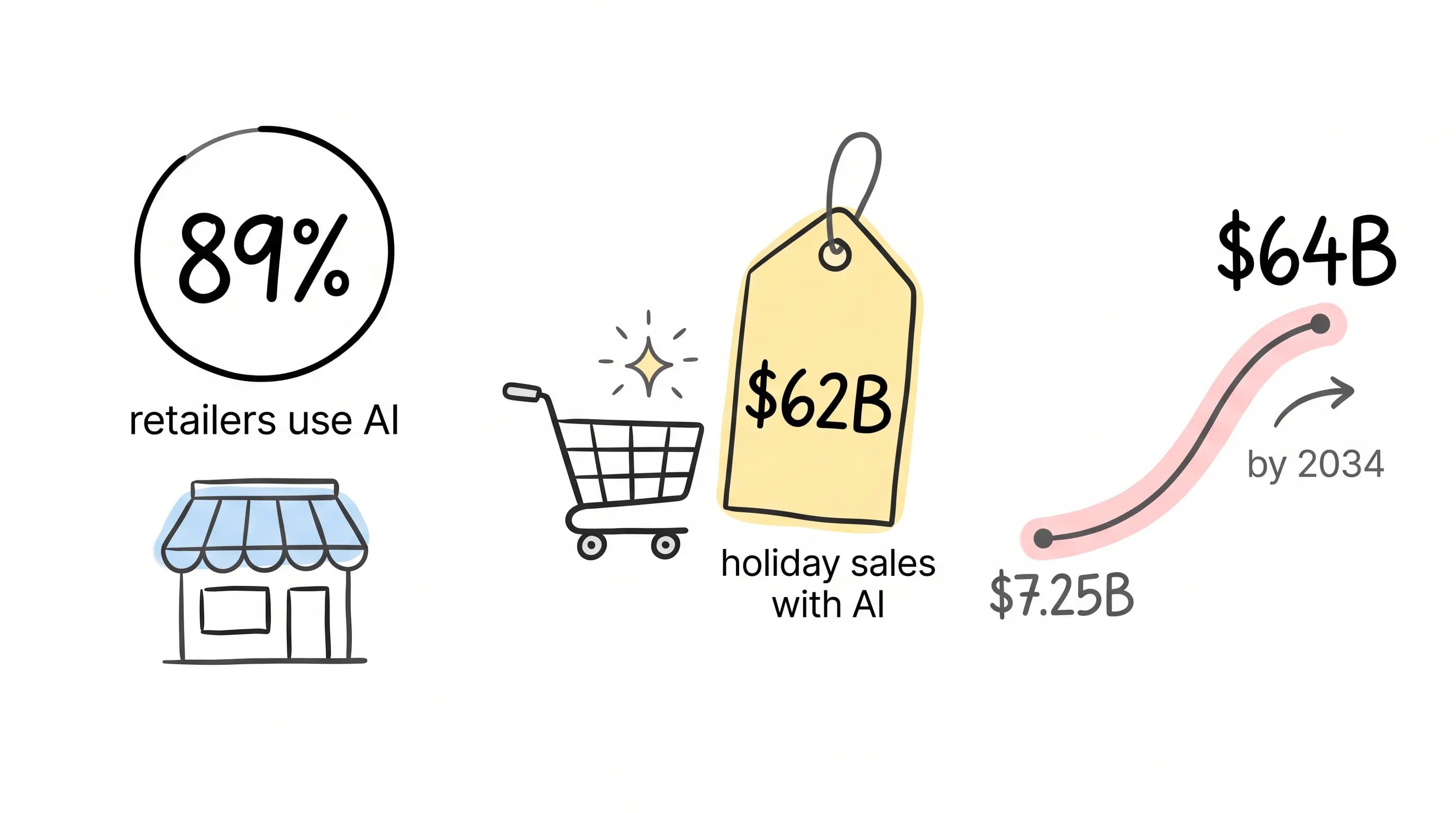
89% of Retailers Are Already Using AI. The Playbook for E-Commerce Has Changed
A learn article on AI in e-commerce: adoption context, use cases from recommendations, search, dynamic pricing, customer service, inventory, and fraud control, plus B2B applications, generative AI content, tool examples, pitfalls, and a six-step adoption path.
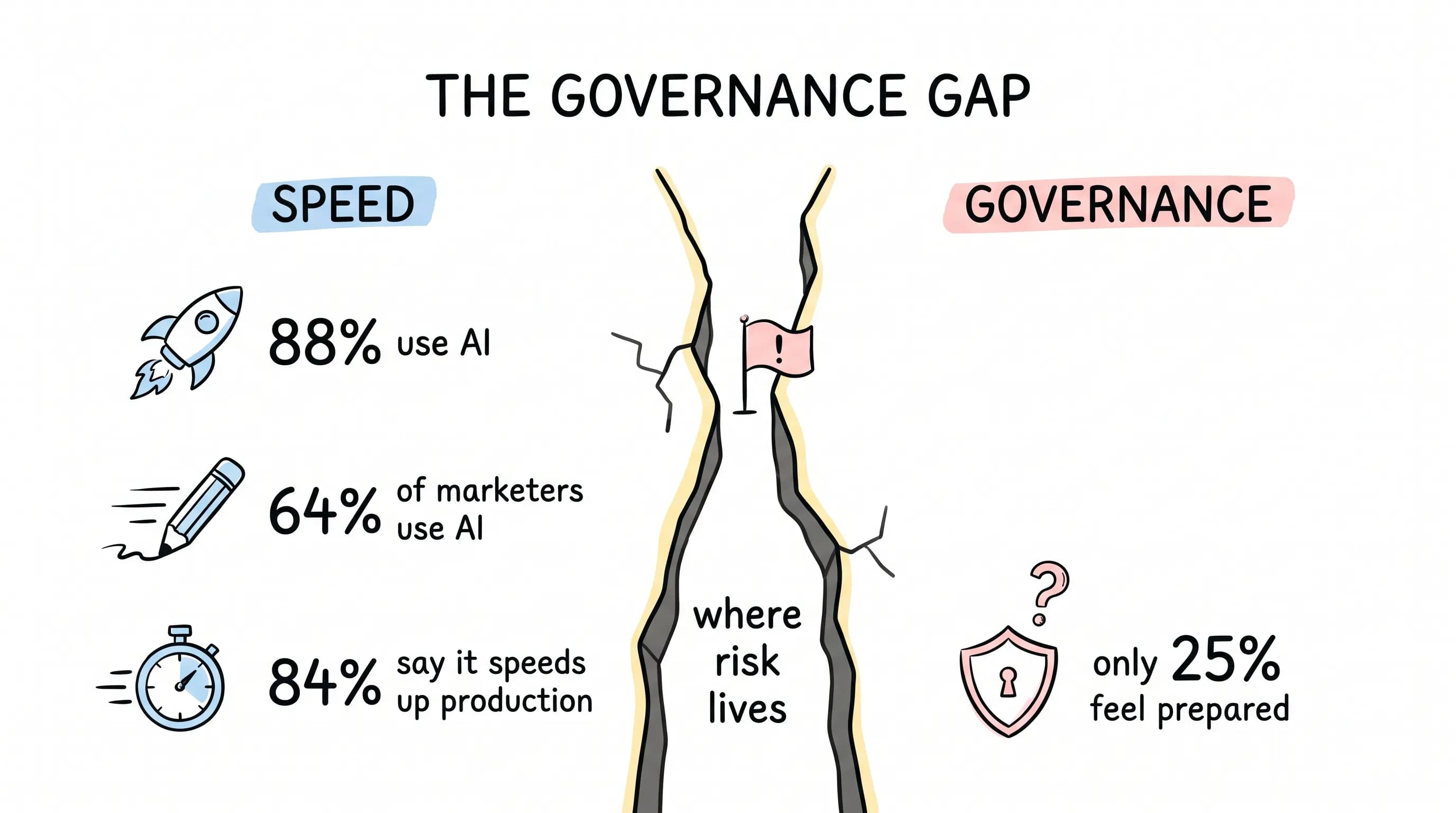
AI Makes Content at Lightning Speed — But Can You Answer "Who Approved This?"
This article looks at the gap between AI content speed and governance readiness in marketing teams, and outlines nine control points — prompt validation, brand guardrails, permissions, approval workflows, human review, versioning, IP checks, audit trails, and asset reuse — for brand-safe AI content.