
What AI Does Best Is Exactly the Work Nobody Wants to Do
An analysis of AI in advertising: consumer research shows backlash to AI-generated ads, while generative AI excels at behind-the-scenes work like asset adaptation, background replacement, and audience targeting. Covers tool overload, platform adoption, and data-ownership risks.
A while back, I grabbed coffee with an old friend who has spent more than a decade scrapping it out in brand marketing. When AI came up, he waved his hand and fired a question back at me:
"You saw that AI Christmas ad Coca-Cola ran at the end of 2024, right?"
I had. I was hoping for a hit of nostalgia; what I got was a tidal wave of backlash. Scroll back a little further and you'll find Google and Apple pulled similar stunts: their spots played like dystopian trailers, viewers came away creeped out, and both companies had no choice but to pull the films themselves.
I couldn't help wondering. If giants with bottomless budgets and top-tier tech could faceplant this hard, would any other brand dare touch AI advertising?
Here's the interesting part: the backlash was loudest precisely when marketers were leaning on AI hardest.
Why?
1. The Audience's Eye Is Sharper Than You Think
Start with a study.
In December 2024, NielsenIQ (NIQ) released an advertising study. They asked consumers to rate AI-generated video ads. The result: on "annoying," "boring," and "hard to follow," these ads lost to ordinary ads across the board.
What stings more: some of these AI ads were actually decent. Viewers finished watching and couldn't name a single flaw — they just couldn't remember them. Somewhere in the subconscious, something always felt off.
Ever heard of the uncanny valley? When something is 99% like a real human, it's the remaining 1% that doesn't match — that's what makes your skin crawl. And that's exactly the spot where AI ads get stuck.
Marketers feel it too. Yieldmo and Ascendant Network ran a survey: 38% of marketers are uncomfortable using generative AI in marketing campaigns of any scale.
And beyond audience revulsion, there's one more source of that discomfort: the fear that a brand loses its edge.
Craig Brommers, Chief Marketing Officer of American Eagle, has voiced the worry publicly: what AI mass-produces tends to be "generic" creative. Think about it — what's a brand's most valuable asset? The part that makes it unlike any other brand. But AI kneads material from across the entire web into pulp and spits it back out, and what comes out is born wearing an "average" face. For brands that lead with diversity and authenticity — like Aerie under the American Eagle umbrella — that kind of "average" is nearly fatal.
Megan Belden, who leads advertising research at NIQ, put it even more bluntly: AI learns from everything that already exists, but the world it builds from all that learning doesn't always take good care of every group of people.
So you see: when it comes to creative, AI can't yet sit firmly in the main seat. Chris Neff of creative agency Anomaly even predicts AI's involvement will grow more and more invisible: methods blend, humans do half, AI fills in the other half — and it's cheaper that way too.
The front of the stage goes back to humans. So where did AI go?
2. Behind the Scenes Is the Real Battlefield
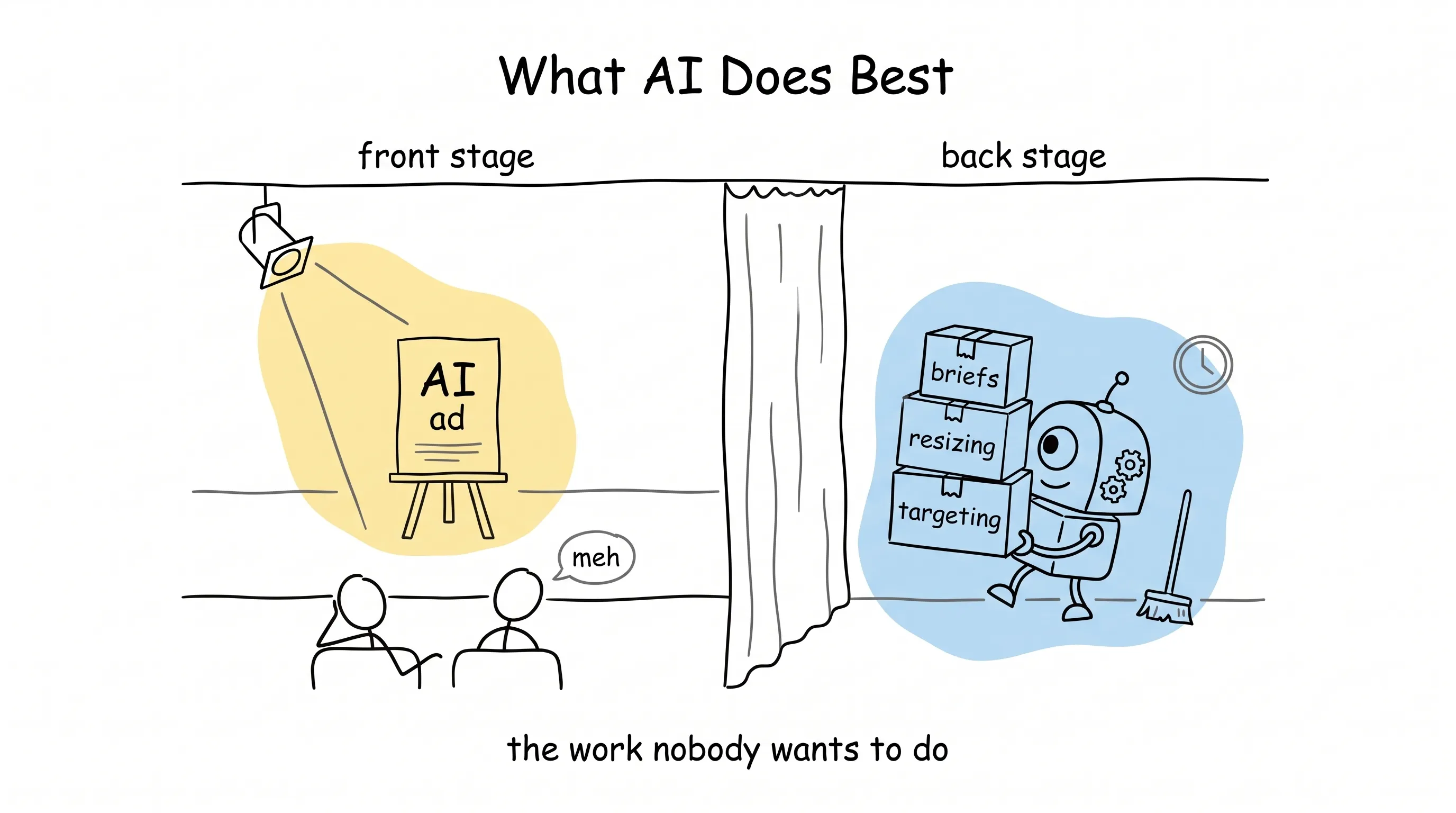
When Razorfish CEO Josh Campo was asked whether AI will one day shoot TV commercials all by itself, his answer was delightful: a great debate to have over drinks. But in the real business world, what generative AI can already do is delivering genuine productivity gains. Then he said the line I'd most like to put in bold:
What AI does best is exactly the work nobody wants to do.
What counts as "behind the scenes"?
Between the idea and the placed ad sits a mountain of work nobody loves but somebody has to do: writing briefs, running research, drawing storyboards, resizing assets, swapping backgrounds, adapting to dozens of placement formats. People used to grind through all of it. Now AI does it faster and cheaper.
Lance Wolder, head of strategy at PadSquad, says this stretch of the pipeline is severely undervalued right now.
Let me run the numbers for you. Adobe's Firefly shipped a Bulk Create feature: replace the background on thousands of images in one click, resize in batches. Designers used to cut those images out one by one — a job that started at dozens of hours. Now, one click.
Move further downstream and you hit placement. Lindsey DiGiorgio, Chief Marketing Officer of Yieldmo, sees the biggest growth in audience targeting. Why? Because targeting feeds on big, heavy datasets — finding patterns and carving out audiences from oceans of data is exactly AI's comfort zone. And think about it: even Google backed off its plan to kill third-party cookies right away in 2024. Targeting will only get more fine-grained, and AI's room to run will only grow.
Creative gets adapted fast, data gets crunched fast — that's how the ad a consumer sees finally lands right. Campo spelled it out: when adaptation gets more efficient, personalization can keep up.
But here's a number worth chewing on. The Interactive Advertising Bureau (IAB) surveyed US media buyers: eight in ten are already using generative AI — yet only three in ten have actually built it into their collaborative workflows.
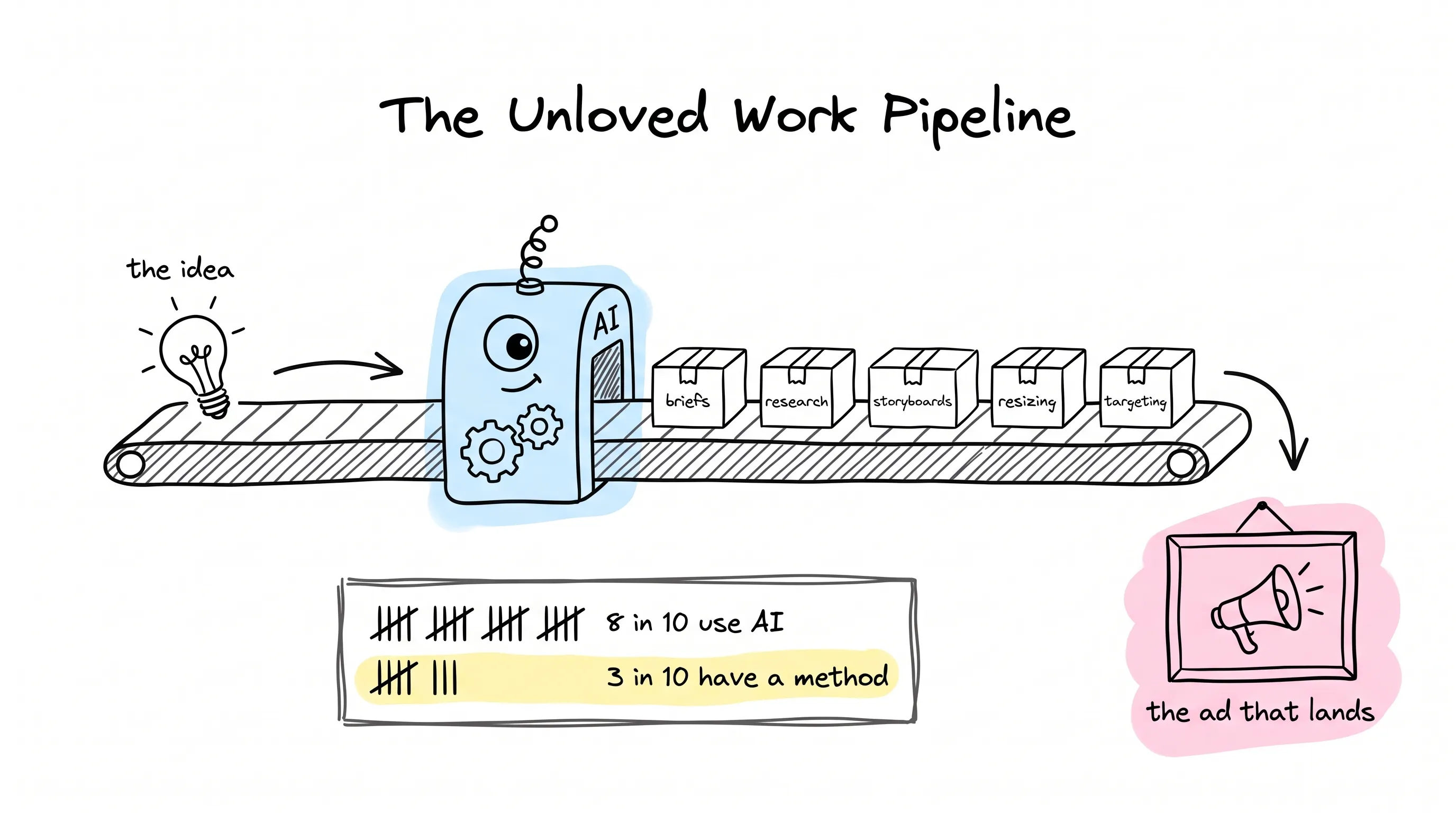
What the rest are missing is method.
Which is why Wolder warns his peers: being able to generate ten thousand versions with one click doesn't mean you should. Tools answer "can we?" Method answers "should we?"
DiGiorgio puts it even more sharply: clients don't care whether you have AI; they care about results. Nobody pays for "we used AI." People pay for "the job got done well."
3. In a Gold Rush, Pick the Real Shovels First
As tools get used more deeply, a new headache arrives: too many tools.
How many is too many? Several of the executives interviewed reached for the same word: overwhelming — the kind that leaves you gasping for air. Wolder says the hardest thing is picking the real shovels out from the fake ones in a gold rush where everyone is piling in shouting "AI solutions."
Marketers have seen this movie before. When the metaverse was hot, how many brands treated it as "the next big bet" and poured money into virtual spaces? The party lasted a while; now those digital lots are still growing weeds. Chasing the new carries a price tag, and the people who got burned have wised up this time.
So who's cashing in on this wave, steady and sure? The big platforms.
Meta disclosed the numbers: in Q3 2024, more than a million advertisers used its generative AI tools, producing over 15 million ads a month. Amazon, meanwhile, built video, audio, text, and image generation straight into its seller backend.
Small businesses, if anything, are the most eager. Neff's read: small companies will race to embrace these tools — spend little, accomplish plenty, and "look like a big company."
And then came the earthquake that shook the industry in early 2025.
A Chinese company, DeepSeek, built a product of matching quality at a far lower cost. Within days, American peers were left stunned, every last one of them. Its app rocketed to the top of the download charts, leaving Perplexity in the dust. Sensor Tower counted more than 3 million downloads — 80% of them inside a single week.
Good grief — that speed.
The industry split into two camps. One is uneasy: hand your brand data to a startup that just got hit by a cyberattack? Better think twice. The other is already figuring out how to use it — while quietly hoping their American rivals hurry up and cut prices.
But no matter whose model you use, a deeper question hangs over every major brand: once the data goes in, is it still yours?
Wolder puts it plainly: ownership is the biggest question, and it won't be settled anytime soon. A billion-dollar brand feeds its brand details and brand plans into a model — what if they leak? Legal's caution is well founded.
And the risk runs the other way too: what if what the model generates turns out to have "copied" some other artist, some other company? Neff sums it up in one line:
No one wants to be the first big brand to get sued.
4. The Technology That Slips In Through the Back Door
At the end of that coffee, I asked my friend: so — is your team still using AI?
He laughed: yes, of course we still use it. Only nobody fixates on making posters with it anymore. Cutting footage, running the numbers on placements, swapping backgrounds — it quietly took those jobs over a long time ago.
See, this is how a technology truly enters an industry. No gongs and drums, no banners. It slips in through the back door and takes over every last bit of the work nobody wants; only then does it slowly learn to do the pretty stuff.
As for those waiting to watch AI shoot its own blockbuster — I'm afraid they'll have to keep waiting.
A technology's true coming of age isn't how dazzling it is. It's when it starts doing the work nobody wants to do — and does it fast and reliably.
Here's to never being the first big brand that gets sued. And here's to finding that real shovel of yours in the gold rush, one day soon.
Continue reading
Related articles
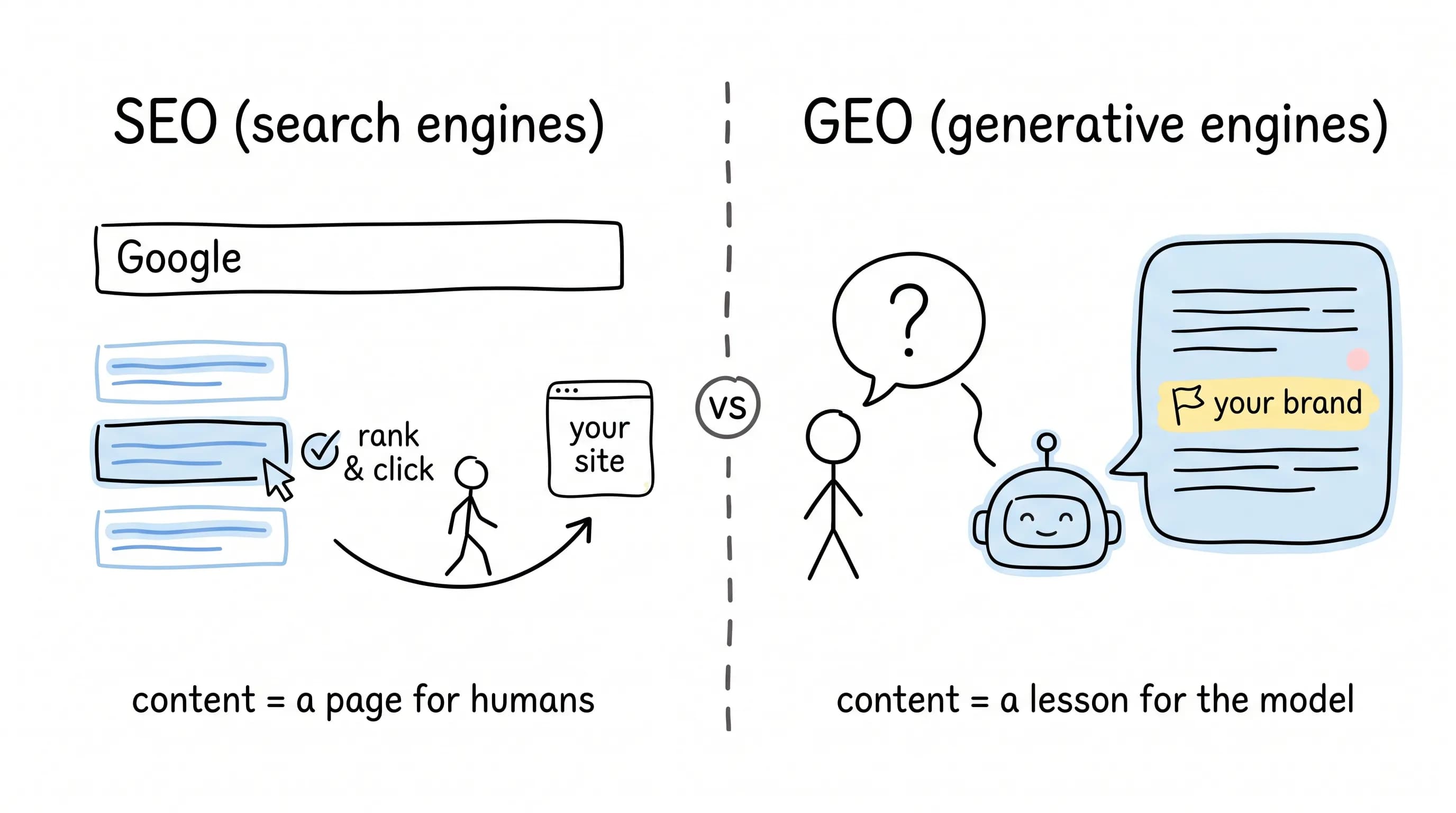
Does AI Know Your Brand? A Look at GEO, the New Craft
An explainer on GEO (Generative Engine Optimization): how AI engines like ChatGPT, Perplexity, and Gemini differ, how GEO goals and metrics diverge from SEO, and which SEO skills still carry over.
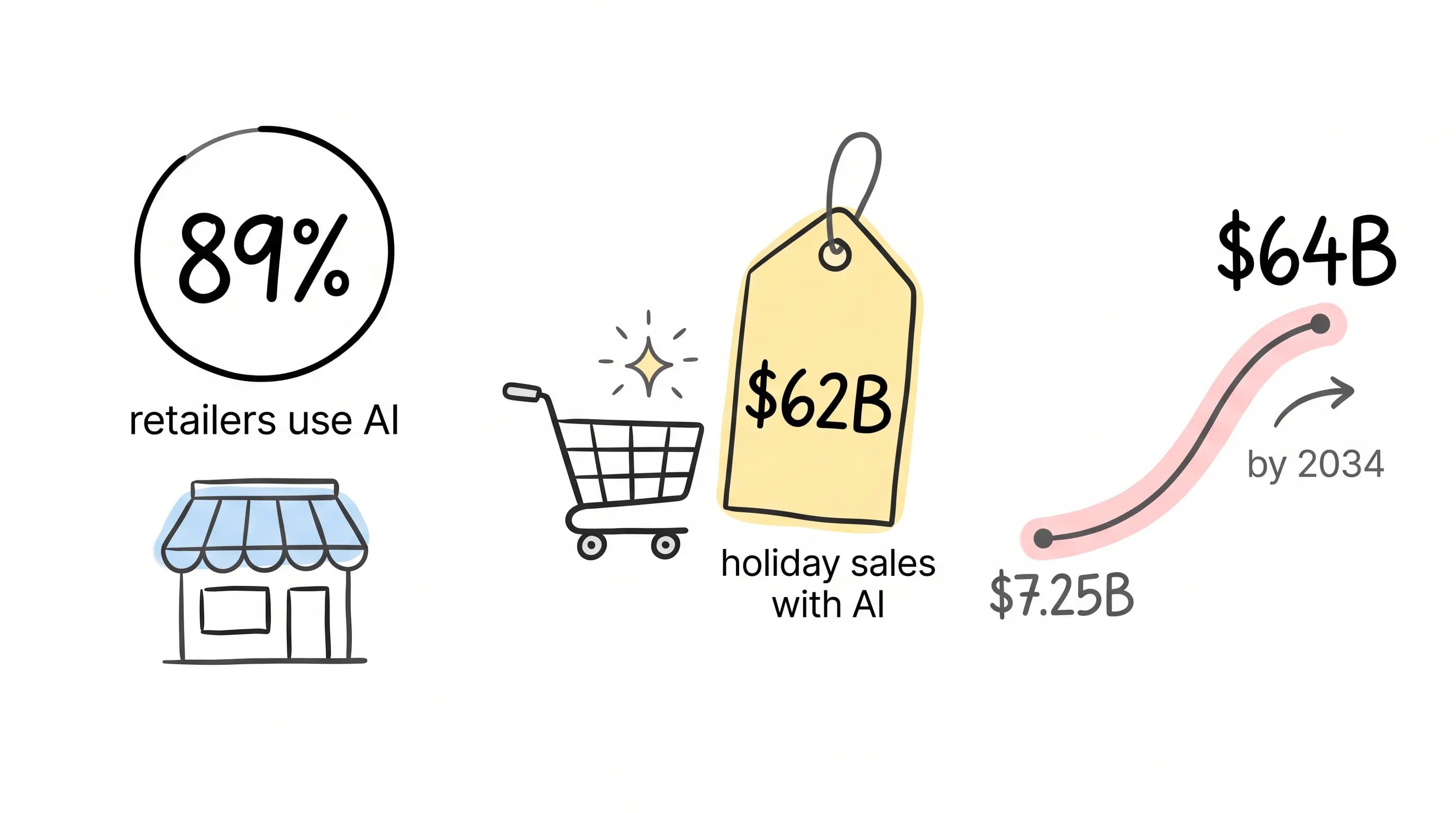
89% of Retailers Are Already Using AI. The Playbook for E-Commerce Has Changed
A learn article on AI in e-commerce: adoption context, use cases from recommendations, search, dynamic pricing, customer service, inventory, and fraud control, plus B2B applications, generative AI content, tool examples, pitfalls, and a six-step adoption path.
AI Makes Content at Lightning Speed — But Can You Answer "Who Approved This?"
This article looks at the gap between AI content speed and governance readiness in marketing teams, and outlines nine control points — prompt validation, brand guardrails, permissions, approval workflows, human review, versioning, IP checks, audit trails, and asset reuse — for brand-safe AI content.