
Users Aren't Growing. The Money Will Grow 13x: Europe's AI-in-Social-Media Business Is Being Forced into Existence by Law
An analysis of Europe's AI-in-social-media market, explaining how the DSA, GDPR, user expectations, and 24-language localization drive AI adoption, with country-level differences and platform strategies.
Recently, in a group chat for cross-border e-commerce sellers, I watched a crowd of business owners argue over one thing.
Someone asked: for the European market, should we actually raise our AI marketing budget or not?
The chat split into two camps. One said raise it — Europe's digital advertising is a juicy prize. The other said don't — Europe has too many rules, and the traps run deep.
I jumped in: hold off on the budget fight. I finished reading a report on Europe's AI-in-social-media market a while back — let me copy down three numbers for you first.
First: in 2025, Europe's AI-in-social-media market is worth $960 million.
Second: in 2026, the report projects, $1.29 billion.
Third: by 2034, the report forecasts, $13.29 billion.
The group went quiet for a few seconds. Then someone did the math: nine years, more than thirteenfold. The report's compound annual growth rate: 33.85%.
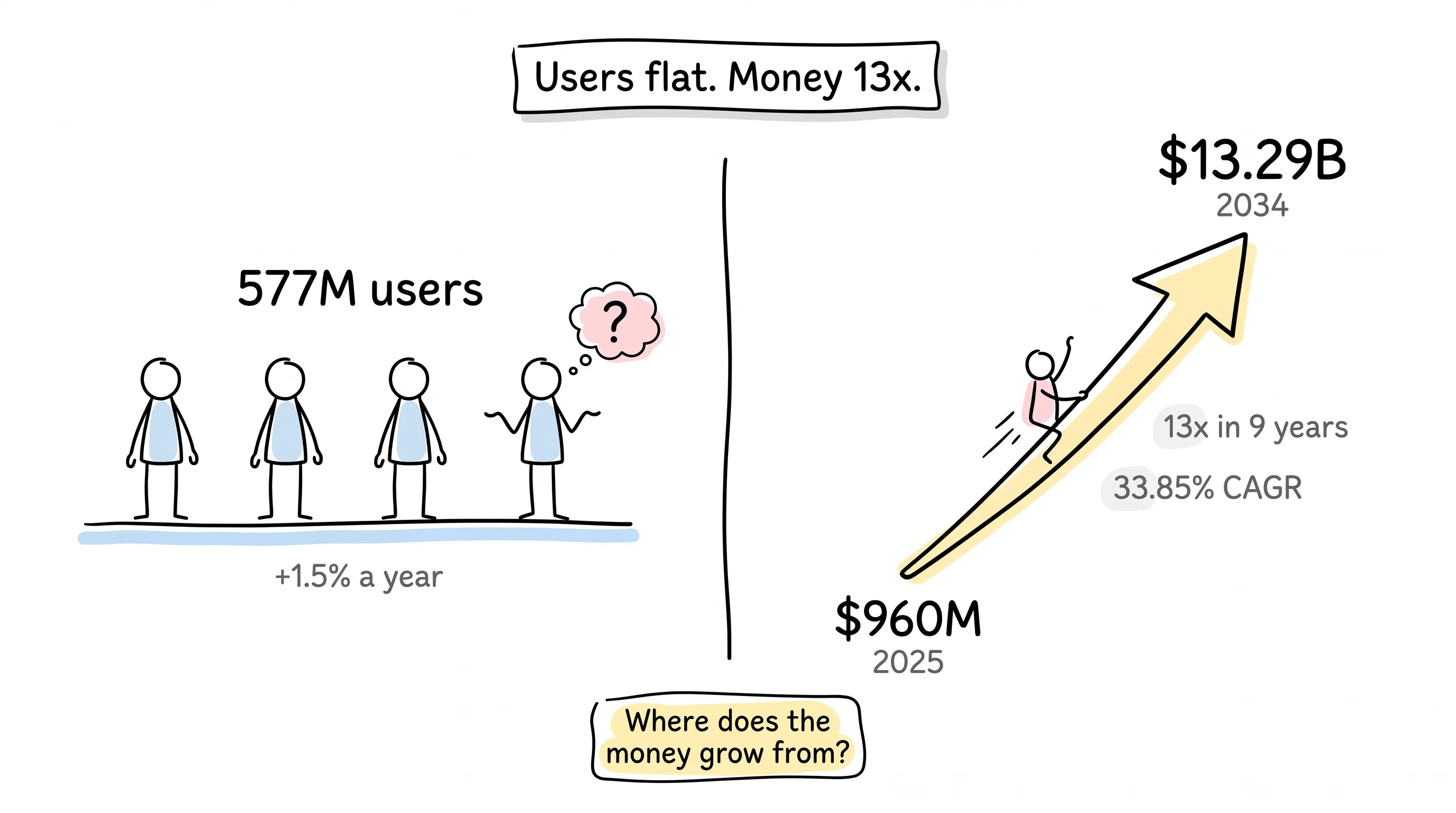
Let me be clear upfront: these are the report's forecasts — don't take them as gospel, and don't bet on them just yet. What really caught my attention was a different number in the report.
Active social media users across the entire EU in Q1 2025: 577 million. Wider Europe: 731 million. And a user base that enormous is growing just 1.5% a year.
The users, basically, have stopped growing.
The money, meanwhile, will grow thirteenfold.
The people aren't multiplying — so where does the money grow from? That's the question the report is really trying to answer. Today, let's break this math apart.
The First Engine Is the Law
You'd think this business got big because advertisers pushed it there.
In Europe, it really didn't. The single biggest push comes from the law.
So what is the Digital Services Act (DSA)?
An EU law that governs online platforms. The core requirement comes down to one thing: platforms must proactively find, remove, and block illegal content. Hate speech, terrorist propaganda, disinformation — nothing gets a pass.
You might say: haven't platforms always had moderation?
They have. But human moderation simply can't scale in Europe — the volume of content generated every day is too big. So platforms are left with one road: bring in AI, analyze in real time, decide in real time.
And the law doesn't stop at takedowns. Platforms must run regular risk assessments, open the algorithm's books to regulators, respond quickly to reports from officially certified flaggers, document every action, and be ready for an audit at any moment.
Think about what that means.
In Europe, AI is no longer an efficiency tool for social media platforms. It's compliance infrastructure.
An efficiency tool, you can buy or skip. Infrastructure, you build — or you're out.
So for companies building content-monitoring and moderation technology, the orders come delivered by law. The European Digital Media Observatory has also noted that disinformation surges visibly around elections. Demand for detection is only going to harden.
The Second Engine Is What Users Demand
The law pushes platforms; users drag brands along.
What's the temper of European users today? Send an inquiry, expect a reply within minutes. See a recommendation, expect it in your own language, matched to your own tastes.
Traditional human teams can't do minutes, and they can't do around-the-clock. So AI customer service moved in. Chatbots and virtual assistants use natural language understanding to handle each country's local language: routine questions go to the machine, complicated ones get handed to humans, coverage is 24/7.
But the temper of users cuts both ways.
The European Consumer Organisation ran a survey: 9 out of 10 online shoppers worry about being over-targeted by ads. People will trade their data for loyalty points, but they strongly resent algorithm-driven differential pricing that serves different people different deals. The same product, priced differently depending on who you are — that might fly in some markets. To European consumers, it's called discrimination.
To translate: users want you to get them, not to game them.
Getting personalization's boundaries right is the price of admission to the European market.
The Third Engine Is 24 Languages
Europe has one headache nobody else has: the EU has 24 official languages.
The old way for a brand to roam across Europe was to keep a local team in every country. Anyone who has taken a business overseas knows what that costs.
Generative AI changed the math. Copy, images, videos — generated in bulk by language and by cultural context, at a fraction of what human teams cost. And consumers naturally prefer to place an order on a page in their mother tongue, so the return on that investment can actually be calculated.
That's why the report lists multilingual content production as one of the biggest opportunities. In plain terms, generative AI lets small and mid-sized brands field a European-scale localization operation too.
And here's a glimpse of how much room is left. By Eurostat's count, 93% of EU residents were online in 2024. By the European Commission's figures, only 13% of enterprises were actually using AI in 2024.
On one side, people are already all online. On the other, companies are just getting started. The gap between them is the market.
But on the Same Continent, the Other Foot Is on the Brake
Having covered the push, we need the brakes. Otherwise the story isn't complete.
The first brake: GDPR.
For AI to be accurate, it has to eat data. GDPR says: to take personal data, first get explicit consent; and users have the right to be forgotten — they can demand you delete their data at any time.
And the price tag is written in law. Per the European Data Protection Board, fines can reach €20 million, or 4% of global annual turnover — whichever is higher.
What does 4% of turnover mean? Plenty of companies' entire net margin never reaches that number.
So European companies are cautious about data to the point of conservatism: no collecting first and figuring it out later — you may only take what you'll use, and use what you took. To keep training models in shackles, the industry has been forced into privacy-preserving techniques like federated learning. Workable — but pricier, and harder.
The second brake: small and mid-sized businesses can't afford it.
Building your own AI models — hardware, software, talent, not one of them cheap. The European Investment Bank has observed that SMEs in Southern and Eastern Europe struggle to finance even their digital transformation. And the technology iterates brutally fast: the solution you buy this year may be obsolete next year, and the spending never stops after that.
So this market has developed a very real structure: big players stack compliance walls ever higher, while small players watch from outside the gate.
Two more problems wear you down even more than the brakes.
One is algorithmic bias. Models trained on historical data inherit history's biases intact, and when they moderate content or place ads, some groups get treated unfairly. The EU Fundamental Rights Agency has warned that biased algorithms reinforce stereotypes and shut marginal groups out of opportunity. Interestingly, under the EU AI Act's risk tiers, features like chatbots and content recommendation are classified as limited risk — the main requirement is transparency, and they skip the full high-risk assessment regime. But a black box is still a black box. A system that can't explain its own decisions will cause trouble sooner or later.
The other is deepfakes. AI can fabricate audio and video too real to doubt, then use them to spread rumors and rattle elections. The European External Action Service's judgment: state and non-state actors are already doing exactly that. Platforms keep detecting; the fakers upgrade faster. It's an arms race with no finish line. And upload volumes are so enormous that screening everything is simply unrealistic.
AI drives the cost of producing content toward zero — and turns "what's real" into a business that costs money.
Where the Money Actually Flows
Three sets of numbers, and the market's structure is fully laid out.
By use case. In 2025, the biggest slice is sales and marketing, at 38.1%. Precision targeting, real-time bidding, dynamic creative — advertiser money flows here first. The fastest-growing, though, is customer experience management, forecast at a 22.4% CAGR. The AI customer service from earlier? It lives on this track.
By technology. Machine learning and deep learning hold 55.3% — the foundation of the entire market. Feed ranking, content moderation, ad targeting: underneath them all, it's this. The fastest-growing is natural language processing, at a 24.1% CAGR. With 24 languages sitting right there, the business of understanding language has no reason not to grow fast.
By industry. Retail e-commerce holds 32.8% — product discovery, social selling, price comparison, all of it happens inside social apps. The fastest-growing is media advertising, at a 23.8% CAGR. As short video volume explodes, demand is bursting for auto-editing, auto-captioning, and ROI projections for influencer campaigns.
Notice what these three sets of numbers are really saying — the same sentence:
In an era when users no longer grow and everyone plays for the same fixed pool, the game is mining each person deeper than your rivals do.
One Europe, Five Playbooks
The report's country section is, to me, the most interesting part. Same EU — completely different playbooks from one country to the next.
Germany, 21.5%, first in Europe. Deep industrial foundations, a strong instinct for rules — the first rule of doing anything: don't touch GDPR's red lines. B2B marketing demand from automotive and manufacturing props up half the market for AI social media tools. The federal government has its own AI strategy, and the innovation circles of Berlin and Munich keep feeding in talent and capital.
The UK, 19.4%, right behind. London is a global hub for fintech and ad tech, and its digital advertising market matured early. Figures from the UK Department for Digital, Culture, Media and Sport put active users above 50 million — more than enough data to feed the AI. One detail worth savoring: after Brexit, the UK still keeps its digital rules aligned with European standards. Business is business — but the standards don't budge.
France takes the culture-and-sovereignty route. The government pours money in through the France 2030 investment plan. Luxury and fashion brands cluster here, with demand for AI in visual recognition and influencer marketing that is both distinctive and unyielding. Station F in Paris is one of Europe's largest startup campuses. The French are also especially serious about digital sovereignty: core AI technology must stay in French hands.
Italy: e-commerce is growing fast, SMEs are coming online en masse, and the national recovery plan has money set aside specifically for digitalization. In tourism and hospitality, using AI to manage reviews and reply to travelers in real time is a flat-out necessity.
Spain: user engagement ranks among the highest in Europe, with young users setting the pace. The Digital Spain 2025 agenda laid down a base layer of digital infrastructure a few years back, and the startup scenes in Barcelona and Madrid are growing. Tourism and retail are likewise strongholds for AI deployment.
One-line summary: Germany leans on rigor, the UK on market maturity, France on culture, Italy and Spain on growth.
What the Players Are Doing
The report's list of named players runs long: Meta, Alphabet, Microsoft, IBM, Amazon Web Services, Adobe, Salesforce, Oracle, Sprinklr, Hootsuite, Brandwatch, Talkwalker, Meltwater, Buffer, Zoho. The first few are global giants; the string behind them are specialists in social media marketing.
Let me pick out a few with concrete moves.
Meta is rebuilding Facebook's and Instagram's recommendation and ad systems with AI, is handing creators generative AI to mass-produce content, and has launched AI Studio so brands can build their own AI personas that interact with users. Its moderation systems support multiple European languages, and it is also working on privacy-preserving machine learning. You can tell it has been schooled by GDPR and the DSA.
Alphabet: YouTube rolled out Dream Screen, letting Shorts creators generate video backgrounds from a single sentence. Auto-captioning, copyright identification — AI carries it all. Then Google Cloud turns around and sells that AI infrastructure to companies that want to hear the whispers on social media.
TikTok has used its recommendation engine to build user stickiness that makes everyone nervous. Multilingual auto-captions and script generators pave the road for creators, and in short-video e-commerce, AI handles product recognition. It also talks about algorithmic transparency proactively. In Europe, skip that conversation and growth hits a ceiling.
Strategically, the giants' moves really boil down to a few: partner with local institutions, pour money into R&D, acquire AI startups, and write privacy by design into their product principles.
Back to the Math We Started With
Users grow 1.5% a year. The market grows 33.85%.
Now we can answer that question from the group chat: where does the money come from.
It comes from the law's compulsion: compliance isn't optional. From what users demand: they only pay when they feel understood. From the cracks between languages: 24 languages mean 24 localization battlegrounds. And from fear: disinformation, deepfakes, and fines of up to 4% that force everyone to buy insurance.
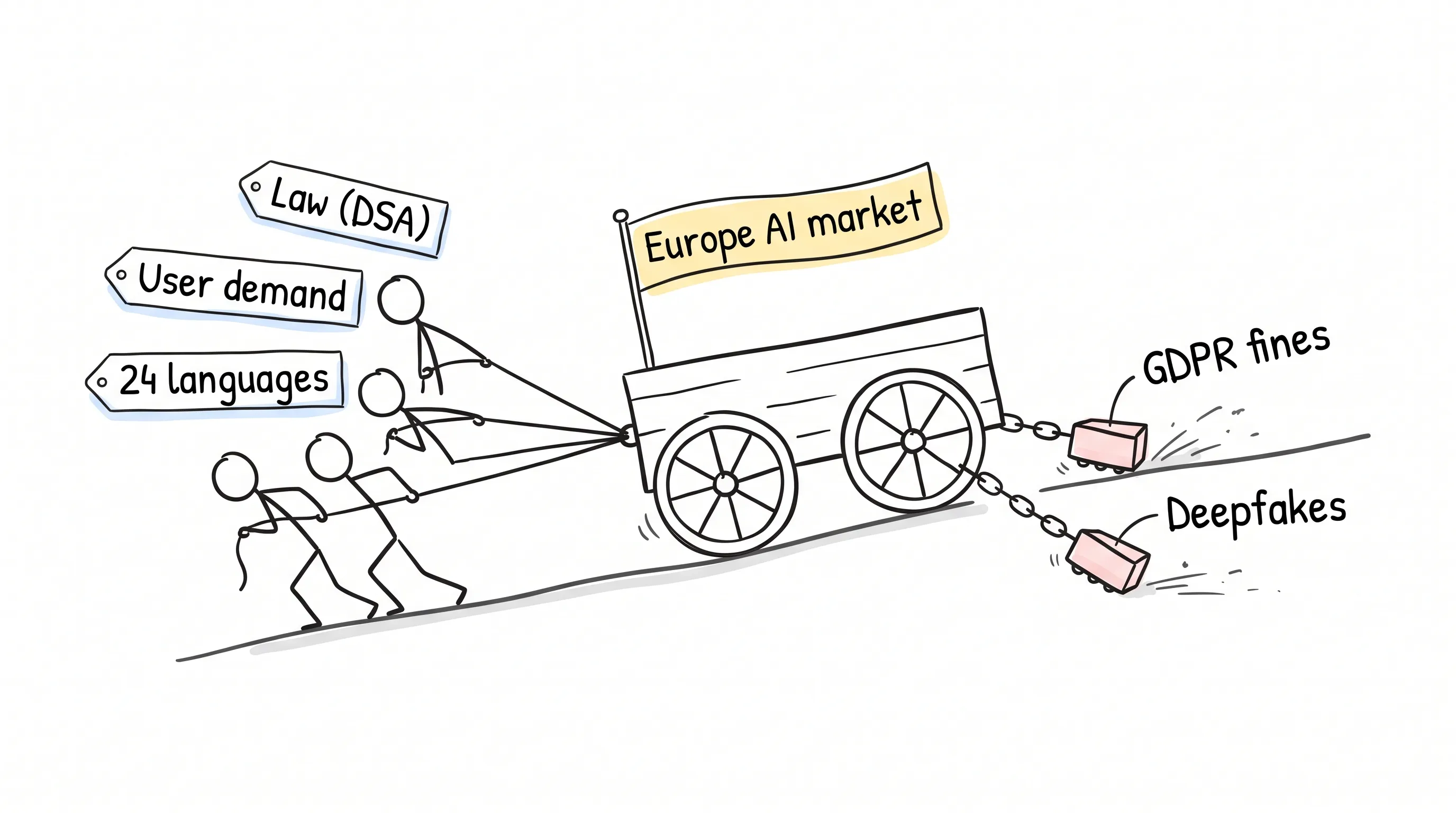
So if you're eyeing the European market too, my view is simple.
Elsewhere, AI is an efficiency race. In Europe, AI is, first of all, a compliance race.
The business owner who asked whether to raise the budget eventually figured it out: yes, raise the budget — but the first chunk of that money shouldn't go to tools. It should go to understanding the rules.
And here's to you getting your own European math right.
Continue reading
Related articles
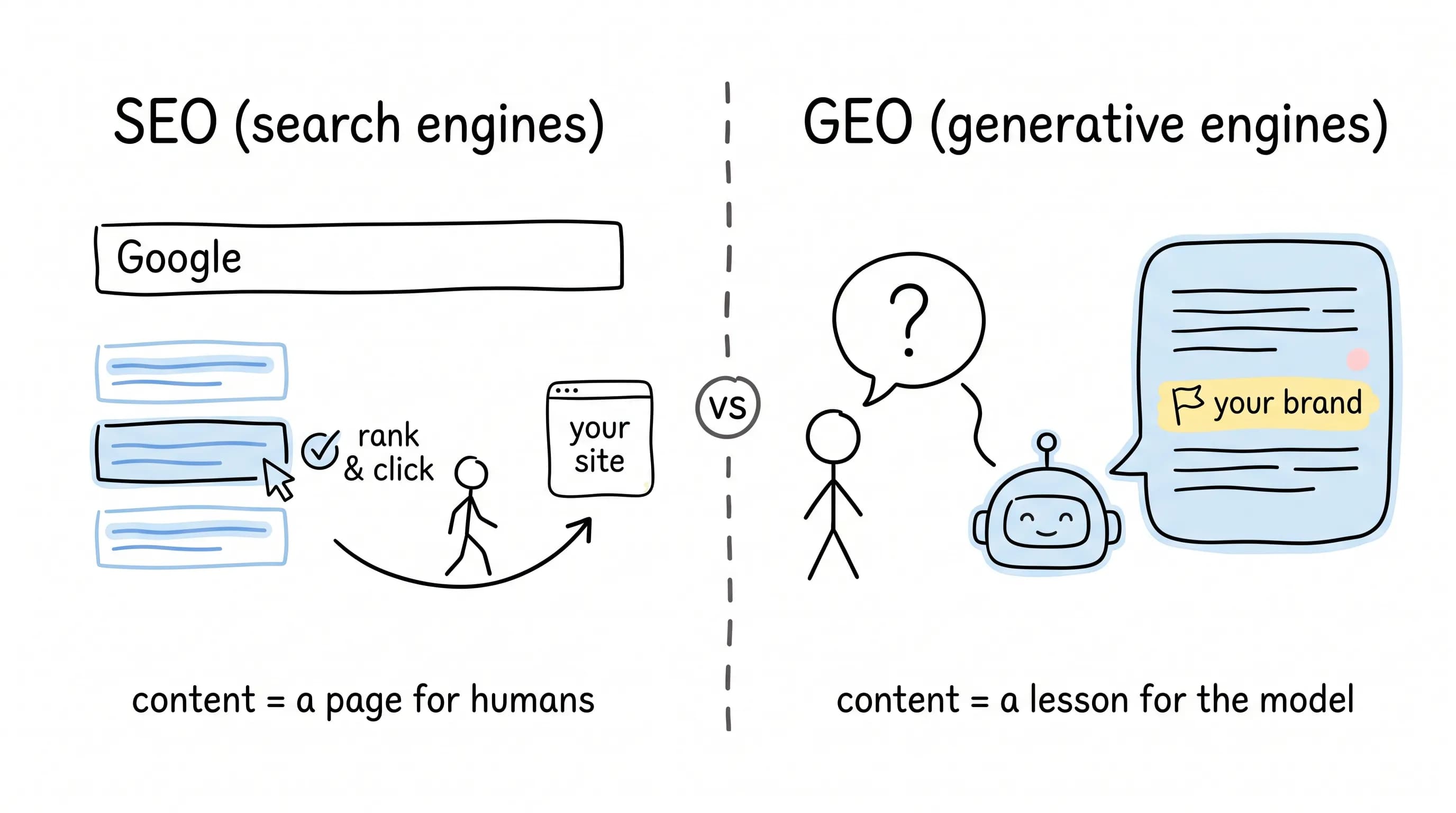
Does AI Know Your Brand? A Look at GEO, the New Craft
An explainer on GEO (Generative Engine Optimization): how AI engines like ChatGPT, Perplexity, and Gemini differ, how GEO goals and metrics diverge from SEO, and which SEO skills still carry over.
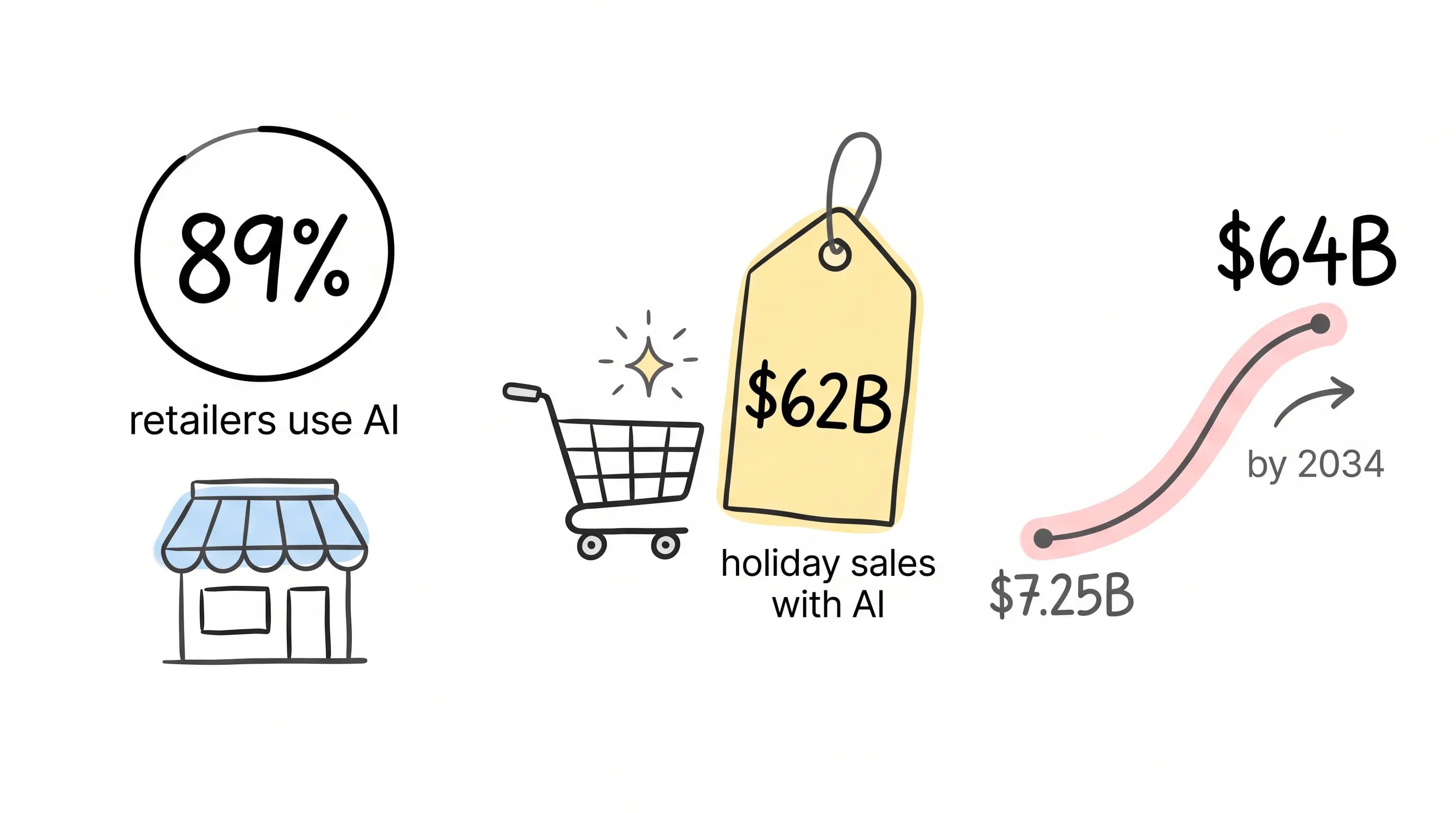
89% of Retailers Are Already Using AI. The Playbook for E-Commerce Has Changed
A learn article on AI in e-commerce: adoption context, use cases from recommendations, search, dynamic pricing, customer service, inventory, and fraud control, plus B2B applications, generative AI content, tool examples, pitfalls, and a six-step adoption path.
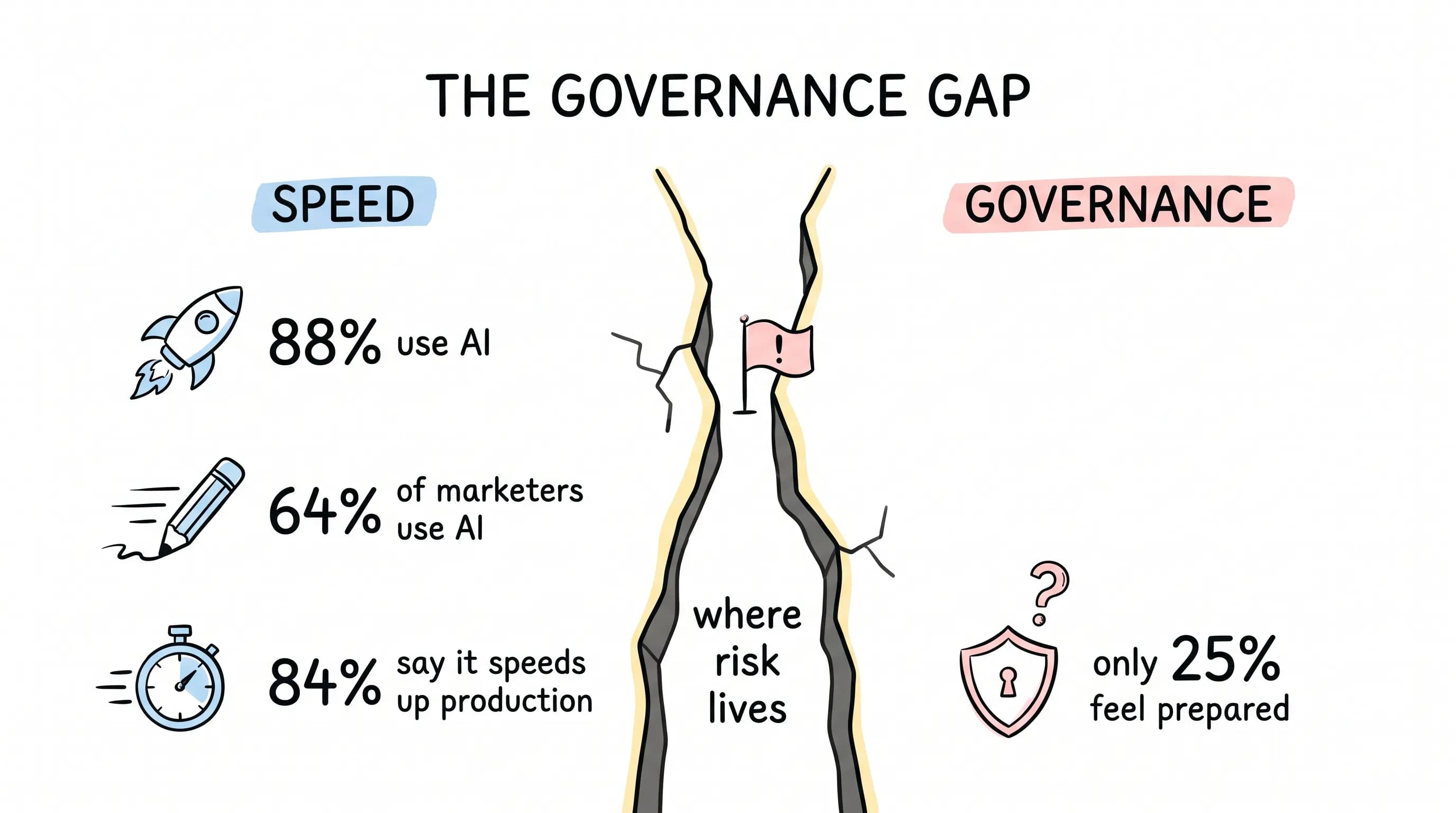
AI Makes Content at Lightning Speed — But Can You Answer "Who Approved This?"
This article looks at the gap between AI content speed and governance readiness in marketing teams, and outlines nine control points — prompt validation, brand guardrails, permissions, approval workflows, human review, versioning, IP checks, audit trails, and asset reuse — for brand-safe AI content.