
Traffic Plunged, but Business Kept Growing: In the AI Era, Being Believed Beats Being Seen
A learn article exploring why organic traffic can drop while business grows in the AI era, arguing that being believed by AI engines matters more than being seen. It discusses brand signals, Wil Reynolds' take on AI visibility measurement, and using AI to improve thinking rather than produce volume.
A few days ago, a friend of mine who works in marketing took me out to dinner and told me about something strange.
Their website's organic traffic had dropped by a big chunk. It fell hard enough to keep him up at night.
But guess what? Business didn't fall — it grew.
He said, "I can't figure it out. Traffic is the starting point of every marketing KPI. Traffic falls and business rises — so what exactly have we been optimizing for all these years?"
I told him: congratulations, you've just run into the defining choice of this era.
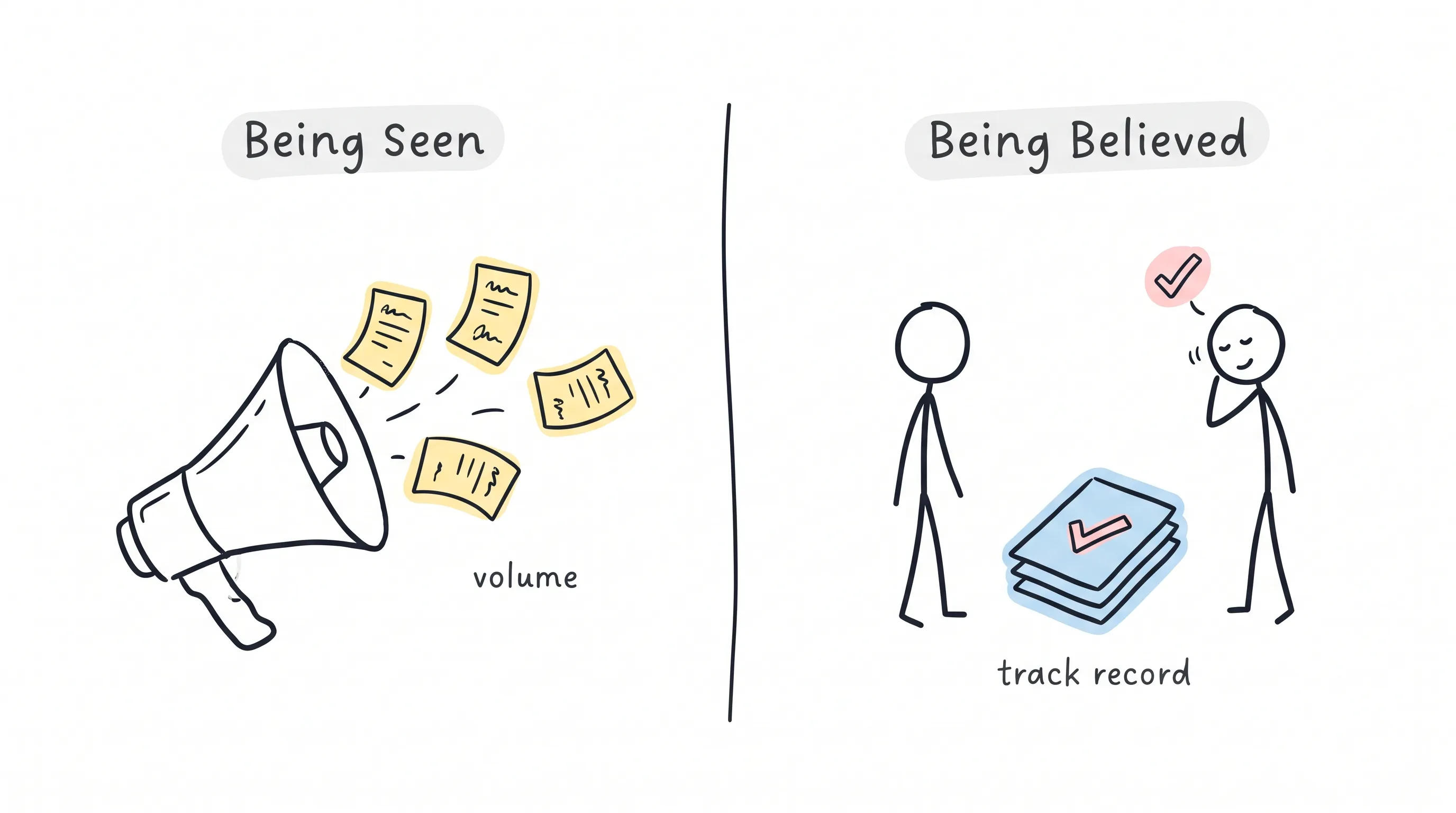
Being seen and being believed are two different things.
What Does "Credibility" Mean in the AI Era?
To understand this, you first need to see one change: where people ask their questions has moved.
It used to be that when you went looking for a tool or a vendor, you opened a search engine, typed in keywords, and dug through page after page of results.
Now? More and more people go straight to ChatGPT, straight to Gemini.
So on what basis does an AI decide who to recommend and who to cite?
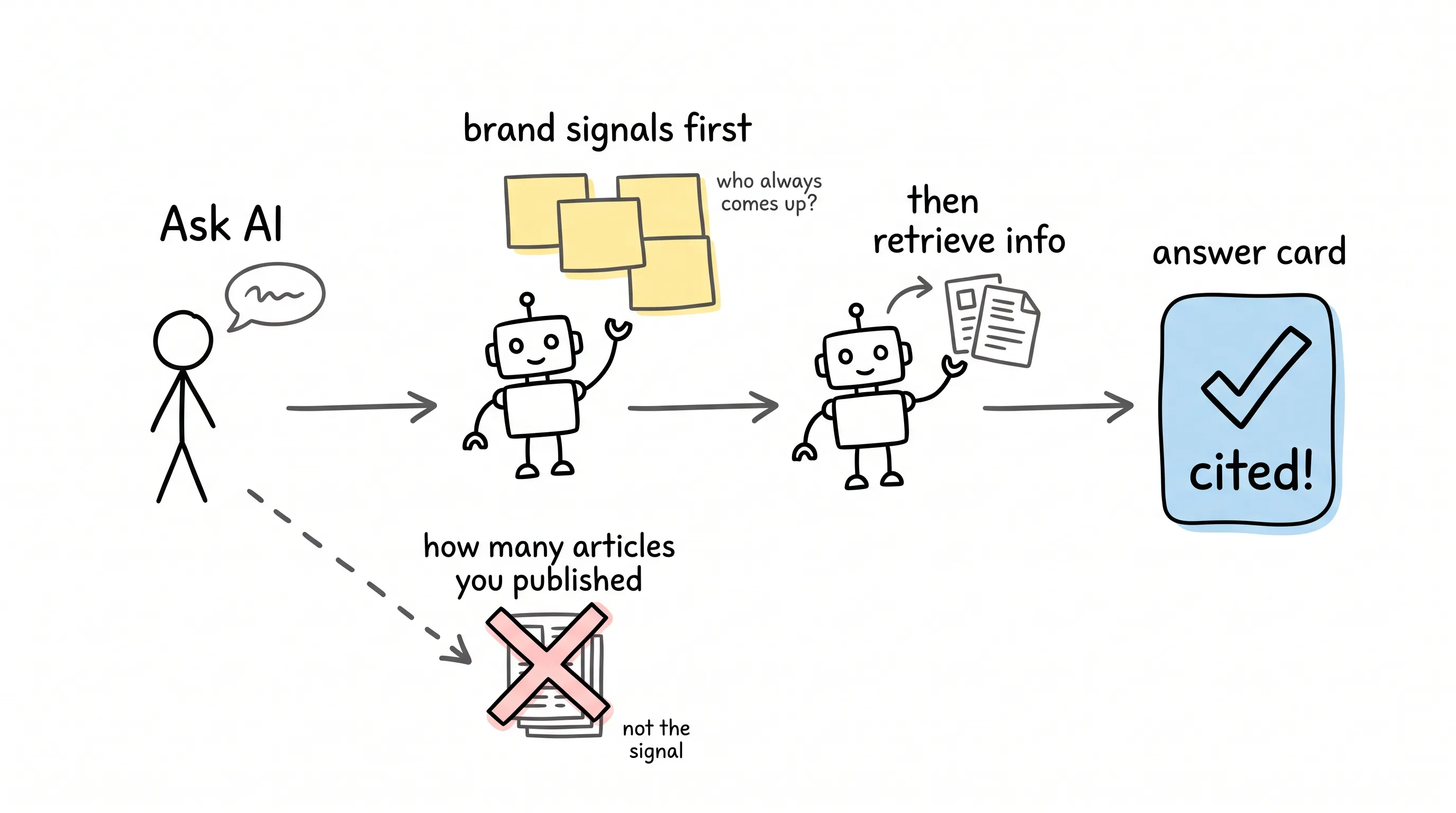
Wil Reynolds, founder of Seer Interactive, has spotted one crucial behavior: when ChatGPT and Gemini answer a question, they first reach for the brand signals already tied to a topic, and then retrieve information around those brands.
What are brand signals? To put it plainly: over a long stretch of time, when people talk about a certain topic, who always comes up?
Talk CRM, and you can't get around Salesforce. Talk design software, and you can't get around Adobe.
That "can't get around it" — that's the signal.
AI engines don't care how many articles you published this month. All they know is: on this topic, who do people trust?
So I fully agree with a judgment Reynolds has made: the brands that rush to chase traffic before they've built trust are about to fight their hardest battle yet inside AI.
Because you're sprinting down the old map — and on the new map, you don't even have coordinates.
How Does He Use AI Himself?
There's a detail here worth pondering for anyone who makes content.
Reynolds founded Seer Interactive in 2002, built it over twenty-plus years into a team of more than 200 people, and lives inside AI every day. Yet the line he draws for himself is startlingly clear.
What does he use AI for? Thinking. Challenging his own ideas. Connecting articles he's read and viewpoints he's encountered.
What doesn't he use it for? Two big things: auto-writing emails, and auto-editing videos.
Why?
Because his voice, his judgment, his way of expressing things are this company's most valuable asset. Letting a machine grind that asset smooth to save a few minutes just isn't worth it.
You see — with the same AI, some people use it to mass-produce noise, and some use it to polish their thinking.
The tool is identical. The choices differ. A few years later, what's left in your hands is completely different.
Use AI to raise the quality of your thinking. Don't use it to flood your channels.
Traffic Fell, Business Grew — So Then What?
Back to my friend's confusion at the start. Reynolds' own company went through exactly the same thing: organic traffic slid hard, while the deals in the pipeline actually increased.
The interesting part is how he reads it.
The biggest problem in AI visibility right now, he says, is measurement. Everyone wants to be seen; everyone wants to pin their results to one ROI number. But all of this has only just started — nothing is settled.
He also said something blunt and brutal: panicked marketers will cling to expired KPIs and dodge the hard conversations they should be having.
What does that mean?
It means the report you're staring at may be graded by the rules of the old world. Traffic is the classic case: users' questions get answered directly by AI, they stop clicking links, so of course traffic looks ugly. But ugly doesn't mean worthless.
Reynolds treated that divergence — traffic down, business up — as a gift. Because it forced him to start, a full year early, on the conversations he'd have to have eventually with his clients: your measurement system needs replacing.
Same data. My friend saw a nightmare; Reynolds saw a head start. The difference isn't in the data — it's in the mindset.
So What Should You Actually Do?
Reynolds will be bringing these questions to MAICON 2026 (the Marketing AI Conference) this year. The talk is titled "Seen. Believed. Chosen."
He'll lay out his real numbers, real decisions, and real trade-offs to make one thing clear: what to amplify, what to slow down, and what to refuse outright.
It comes down to one sentence: let visibility and credibility reinforce each other — never let them eat away at each other.
If you're anxious about "should I use AI to produce more content," take today's logic back to your own work and ask yourself one question first:
Is what I'm publishing making people see me, or making people believe me?
Being seen takes volume. Being believed takes a track record.
AI has made "being seen" cheaper than ever — which makes "being believed" more valuable than ever.
This is how I've felt lately. I'm writing it down here, partly to remind myself.
Here's to you and me becoming the brands people believe.
Continue reading
Related articles
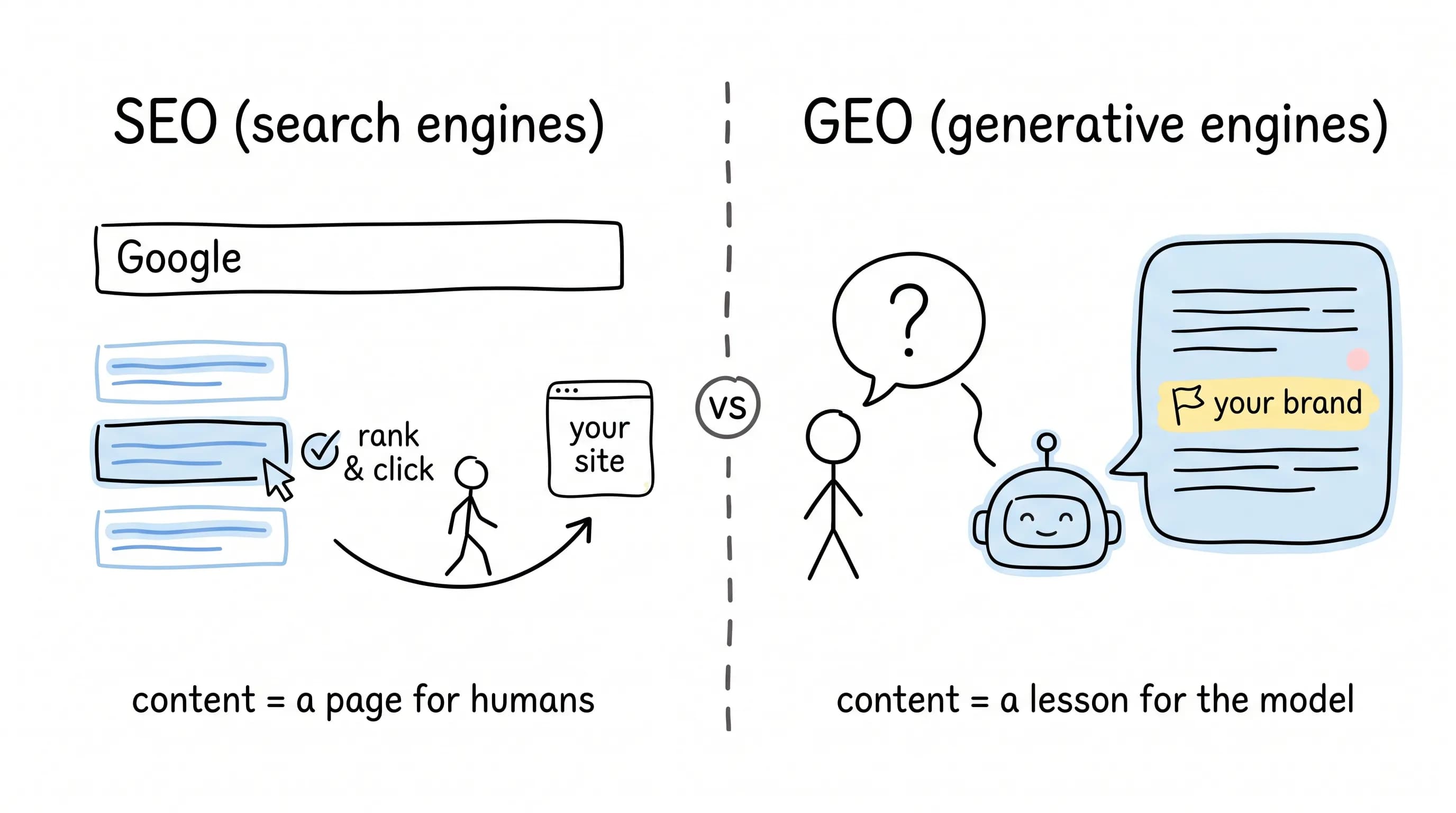
Does AI Know Your Brand? A Look at GEO, the New Craft
An explainer on GEO (Generative Engine Optimization): how AI engines like ChatGPT, Perplexity, and Gemini differ, how GEO goals and metrics diverge from SEO, and which SEO skills still carry over.
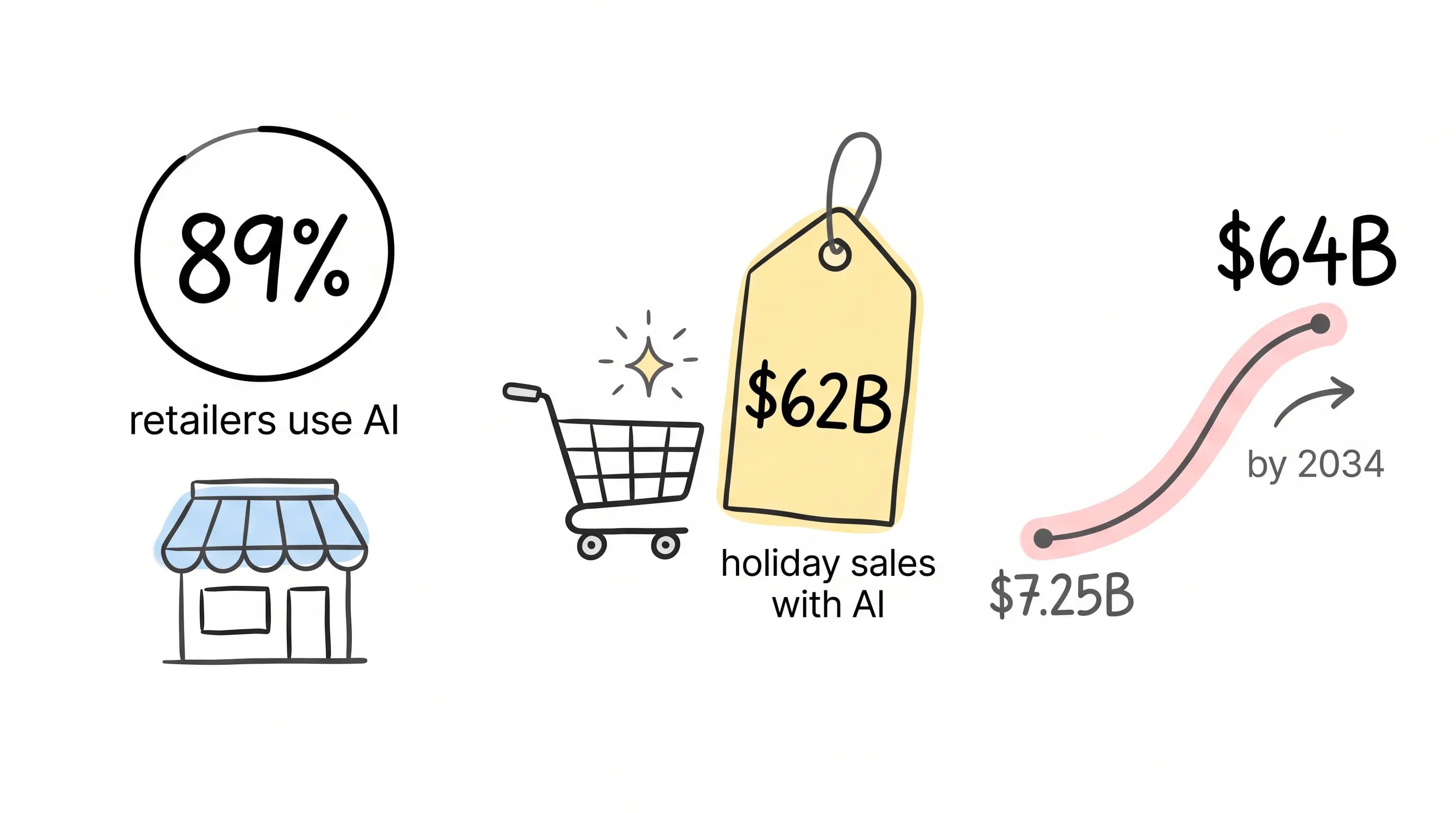
89% of Retailers Are Already Using AI. The Playbook for E-Commerce Has Changed
A learn article on AI in e-commerce: adoption context, use cases from recommendations, search, dynamic pricing, customer service, inventory, and fraud control, plus B2B applications, generative AI content, tool examples, pitfalls, and a six-step adoption path.
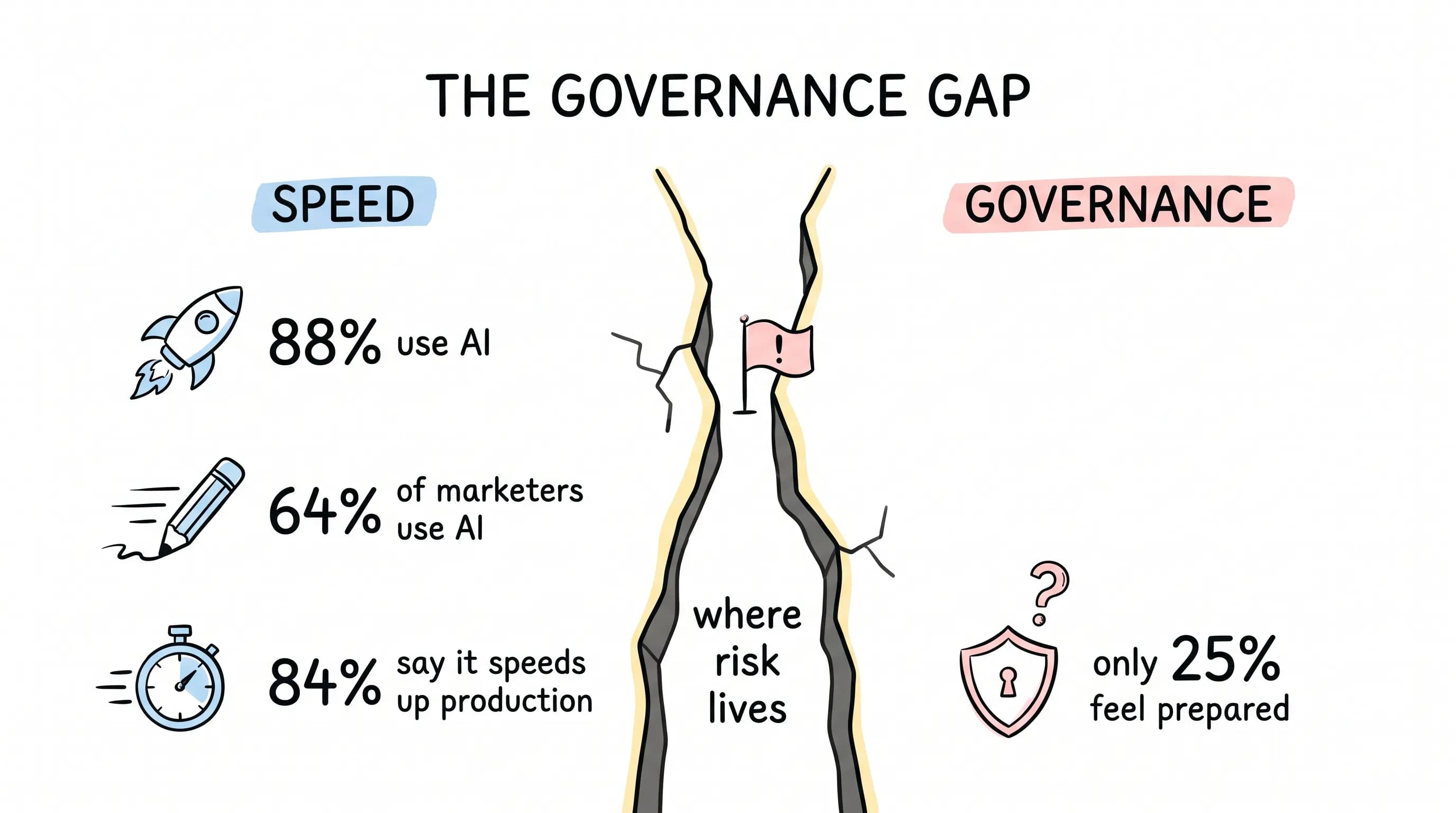
AI Makes Content at Lightning Speed — But Can You Answer "Who Approved This?"
This article looks at the gap between AI content speed and governance readiness in marketing teams, and outlines nine control points — prompt validation, brand guardrails, permissions, approval workflows, human review, versioning, IP checks, audit trails, and asset reuse — for brand-safe AI content.