
TikTok Shoots Your Videos, Meta Grades Your Ads: AI Is Taking Over the Entire Social Media Marketing Assembly Line
This article explains TikTok's upgraded Symphony AI video tools for turning prompts and product photos into videos, plus Meta's reported plan to let AI handle most content and ad moderation. It covers what these shifts mean for merchants, from faster ad reviews to stricter policy compliance and appeals.
A few days ago, I had dinner with a friend who runs a jewelry store.
He looked miserable. I asked what was wrong.
He said doing business on social platforms these days is hard on both ends. Want to post short videos? His small team has no videographer, no editor, and hiring outsiders to shoot a decent product video is expensive and slow. Want to run ads? The platform rulebook is a thick tome, and he lives in constant fear that one careless phrase will cross the line, get the ad rejected — and he won't even know why.
I told him there are fixes for both of these headaches now. And the fix is the same "person": AI.
Recently, the two big platforms made major moves, one after the other. TikTok gave its AI video tools a full upgrade, while Meta is rushing to hand content moderation over to AI. One handles "making content," the other "judging content." Think about it: the entire social media marketing assembly line, rebuilt with AI from one end to the other.
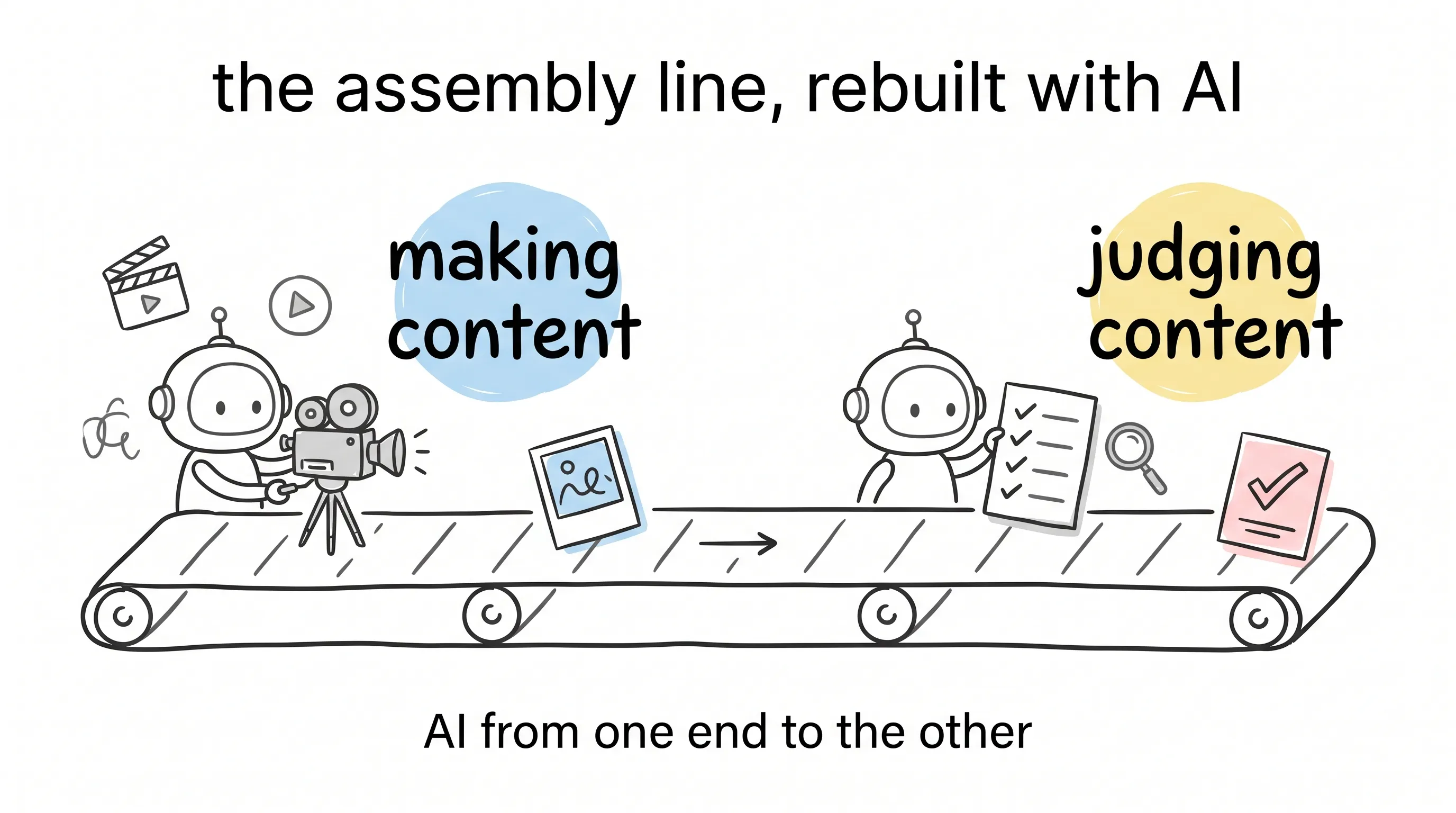
First, the "Making Content" End
So what is Symphony Creative Studio?
It's TikTok's AI video studio, freshly upgraded. In plain language: you give it one sentence, it hands you back a video.
What can it actually do?
A one-line text prompt generates a video outright. A single product photo becomes a moving video. Digital avatars can go on camera and deliver your lines for you. Finished videos can be translated into multiple languages with one click. And if you give it nothing at all, it will come up with new creative ideas on its own.
Think about what that means.
The old way, a 30-second product video meant a videographer, models, an editor, plus post-production — a budget starting at several thousand yuan, and a week of hassle end to end. Now, you type "turn this ring photo into a video," and a few minutes later, the draft is ready. Your product can even spend a single evening pitching itself in English, Spanish, and Japanese, once for each country's audience.
Wow.
And that's not all. Buried inside this studio, TikTok has planted something even more potent, called Symphony Agent.
So what is Symphony Agent?
You tell it your marketing goal. It goes and scans platform trends on its own, studies the ads that perform best on the platform, assembles a strategy, and generates ads "tailor-made for TikTok."
In the past, pulling this off took a team that understood both creative and data.
But there's one detail here that I find especially worth pointing out.
How does TikTok itself position this toolset?
Four words: just a starting point.
TikTok says it explicitly — AI produces the drafts; the brand's voice, your story, is yours to fill in.
That positioning is admirably clear-eyed.
Now, the "Judging Content" End
On the creation side, it's TikTok. On the moderation side, it's Meta's turn.
According to the Financial Times, Meta is moving fast to replace human moderators with AI. What's the play?
First, the money saved: billions of dollars a year.
Then, the efficiency math. Meta's own numbers: at reviewing violating content, large language models (LLMs) make 13% fewer mistakes than humans, and catch 10% more violations.
Cheaper, more accurate, and never needs a break. If you were the boss, would you make the switch?
Reportedly, by the end of this year, Meta plans to have AI moderate up to 90% of the content and ads across its apps — Instagram and Facebook included.
Ninety percent. What does that mean?
The ads you run? Nine times out of ten, AI gets the final say.
That means two things for merchants.
The good news: approvals could get a lot faster. Human review used to mean waiting in line; AI judges in seconds. An ad submitted in the morning could be running by the afternoon.
The bad news: when AI is doing the grading, it may not read what's between the lines.
What's between the lines? Here's an example. You write, "This necklace isn't suitable for sensitive skin — wear with caution." The intent is a thoughtful heads-up. A human reads it and understands. AI? It might take that string of words for a prohibited claim. Click — rejected.
So what do you do?
Follow the rules more strictly than ever. Where things were once a gray area, a human reviewer could see your good intentions — AI may not. Check ad policies line by line. Don't gamble.
Make appeals a basic skill. AI does misjudge. When it does, don't just take the hit — get your documentation ready and go through the appeals process. From here on, knowing how to appeal may become as essential for merchants as knowing how to run ads.
So What Are Humans For?
AI has creation covered, and moderation is about to be AI's job too. You might be asking: so what are humans for?
AI handles efficiency. Humans handle soul.
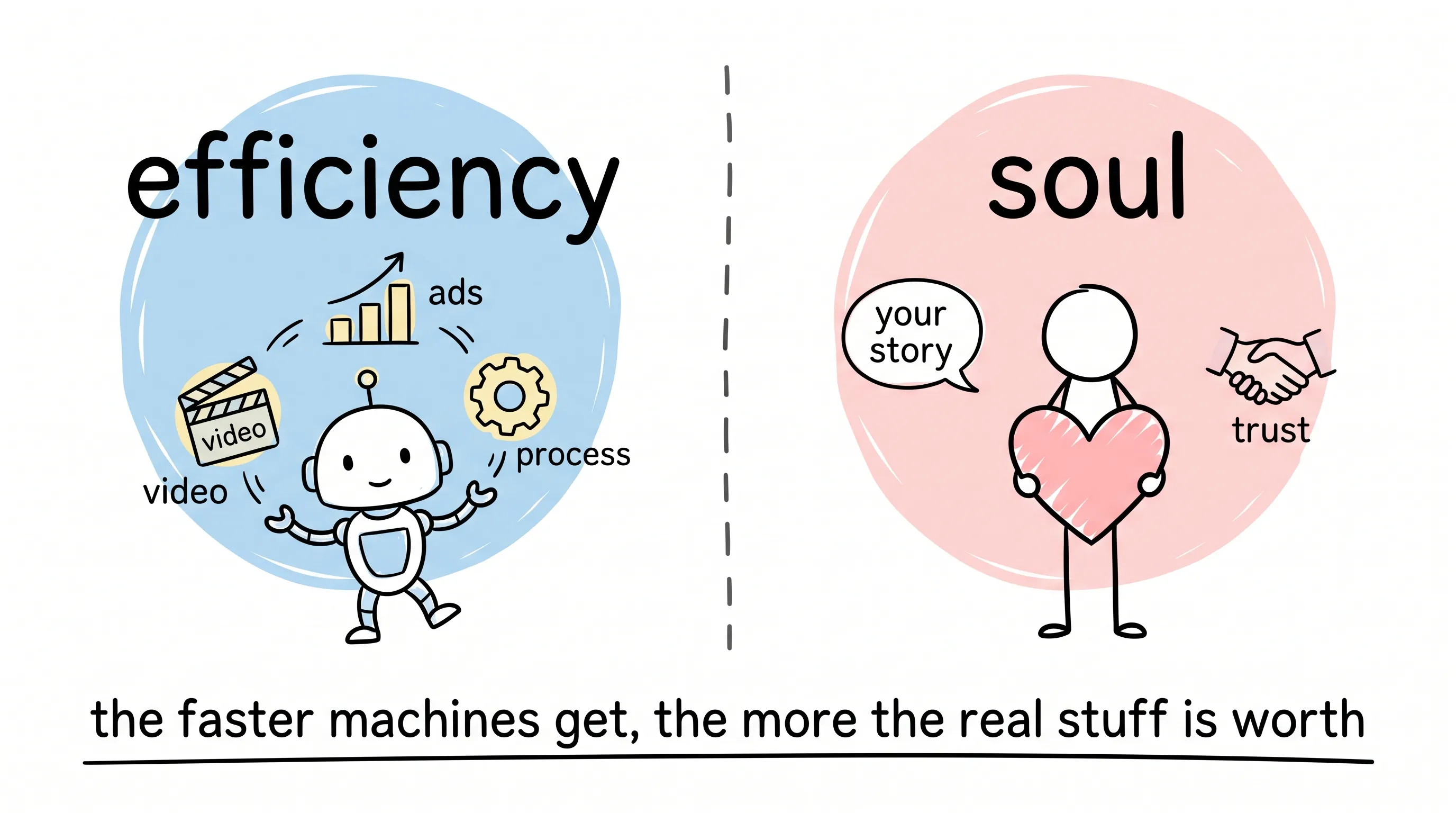
AI can generate the video. It can't generate the story.
Why does a customer buy only from you for ten years? Because you know your product. Because the story you tell is true. And because you remember that longtime customer's wedding anniversary.
Those three things — however powerful Symphony gets, it cannot generate them.
So treat AI as a tireless assistant: hand it the video production, the ad campaigns, the process work. But why customers trust you? That's beyond its reach.
The faster machines get, the more the real stuff is worth.
After dinner that day, my friend pulled out his phone on the spot and gave Symphony a try. As he left, he said he could start on the videos tonight.
I wished him a booming business.
And I wish you the same: may AI max out your efficiency. But more than that, may you always be the one person AI can't replace.
Continue reading
Related articles
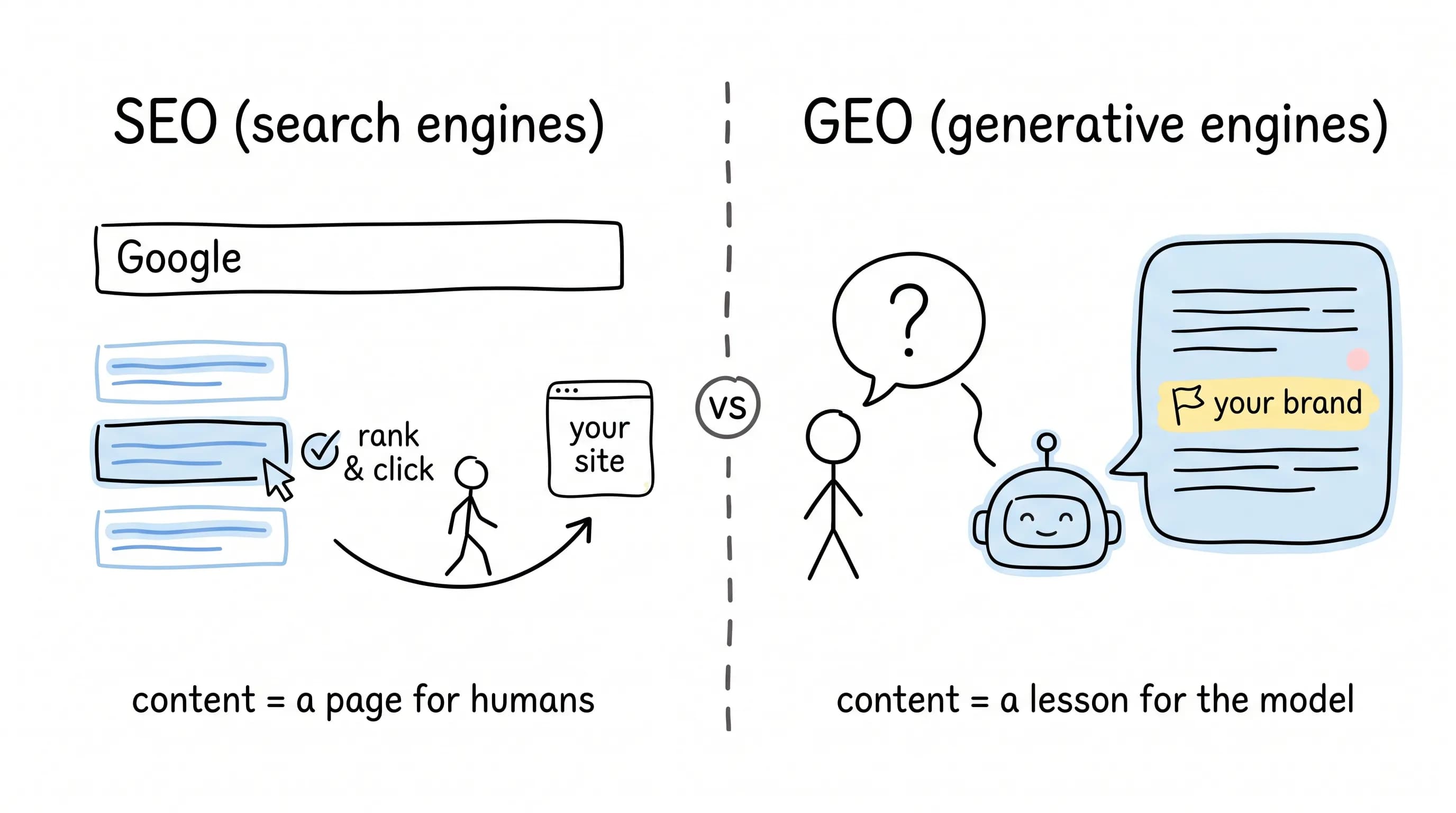
Does AI Know Your Brand? A Look at GEO, the New Craft
An explainer on GEO (Generative Engine Optimization): how AI engines like ChatGPT, Perplexity, and Gemini differ, how GEO goals and metrics diverge from SEO, and which SEO skills still carry over.
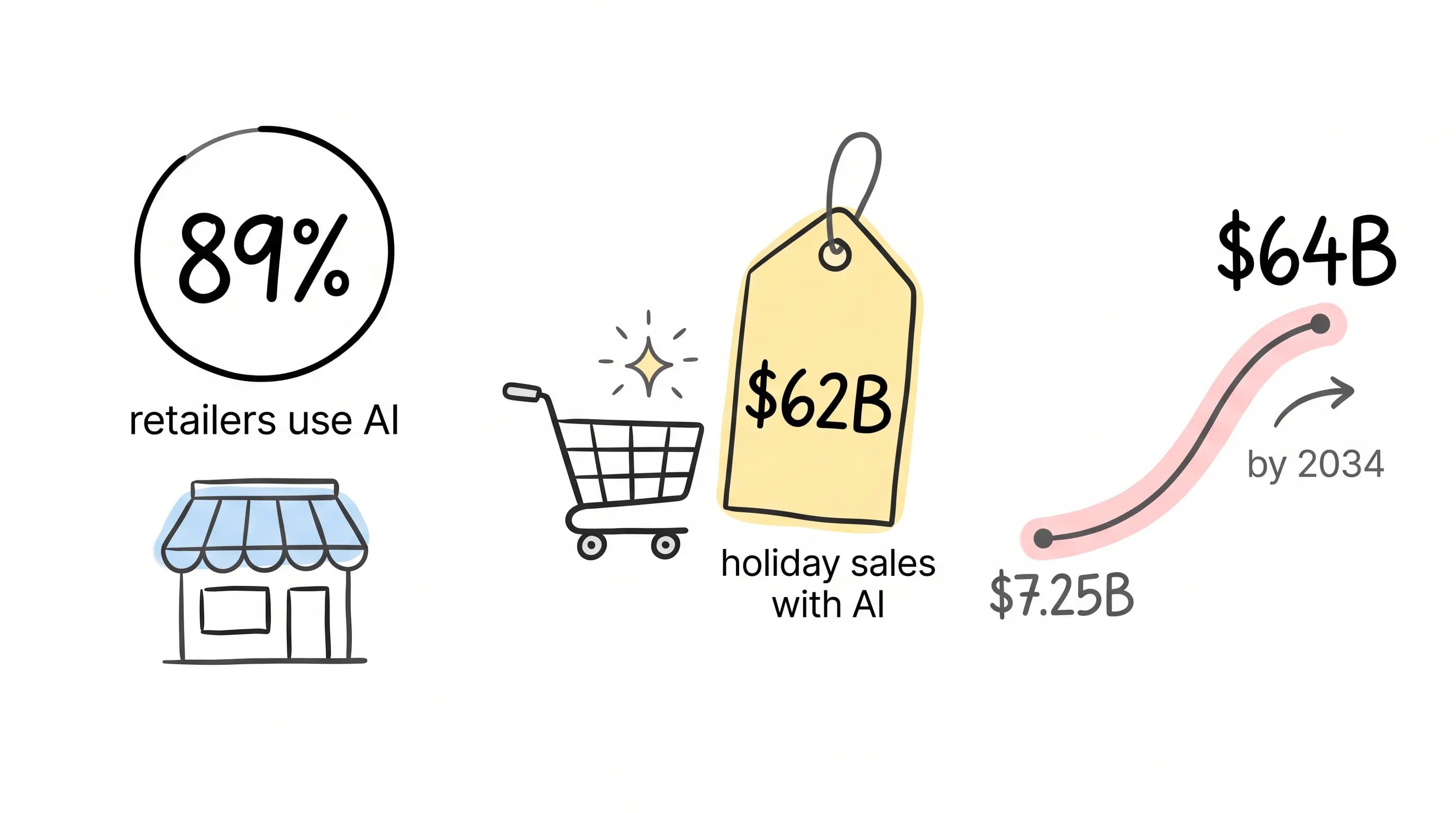
89% of Retailers Are Already Using AI. The Playbook for E-Commerce Has Changed
A learn article on AI in e-commerce: adoption context, use cases from recommendations, search, dynamic pricing, customer service, inventory, and fraud control, plus B2B applications, generative AI content, tool examples, pitfalls, and a six-step adoption path.
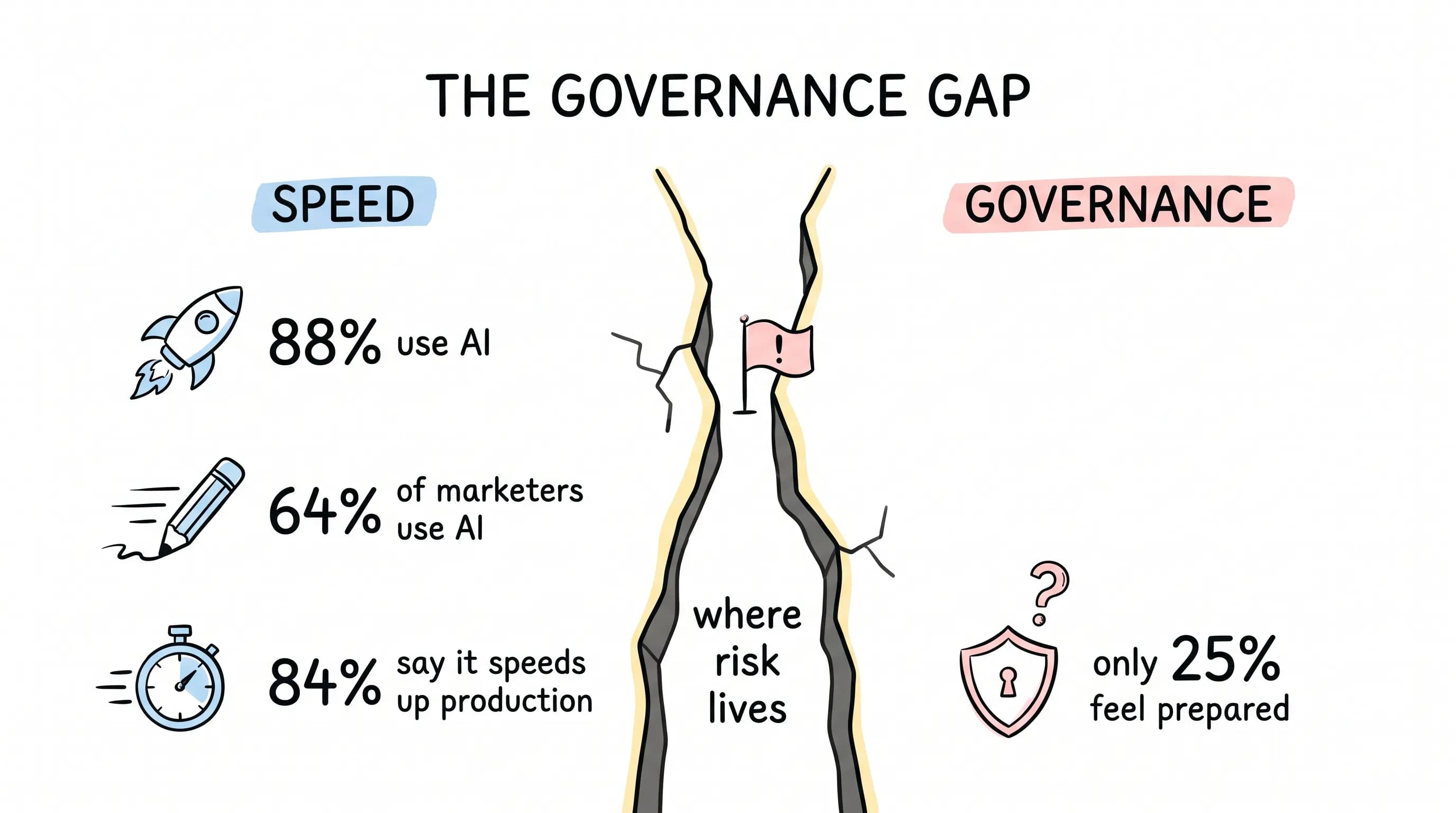
AI Makes Content at Lightning Speed — But Can You Answer "Who Approved This?"
This article looks at the gap between AI content speed and governance readiness in marketing teams, and outlines nine control points — prompt validation, brand guardrails, permissions, approval workflows, human review, versioning, IP checks, audit trails, and asset reuse — for brand-safe AI content.