
The Moment AI Walked In, Martech's Foundations Were Laid Bare
This essay argues that AI agents expose the hidden gaps in martech stacks that veteran 'human middleware' has long papered over, and proposes 'machine operability' — explicit metadata, rights, permissions, and workflow states — as the new starting point for martech strategy.
A while back, I had dinner with an old friend who has spent more than a decade working in marketing technology (martech).
He told me about something that sent a chill down his spine.
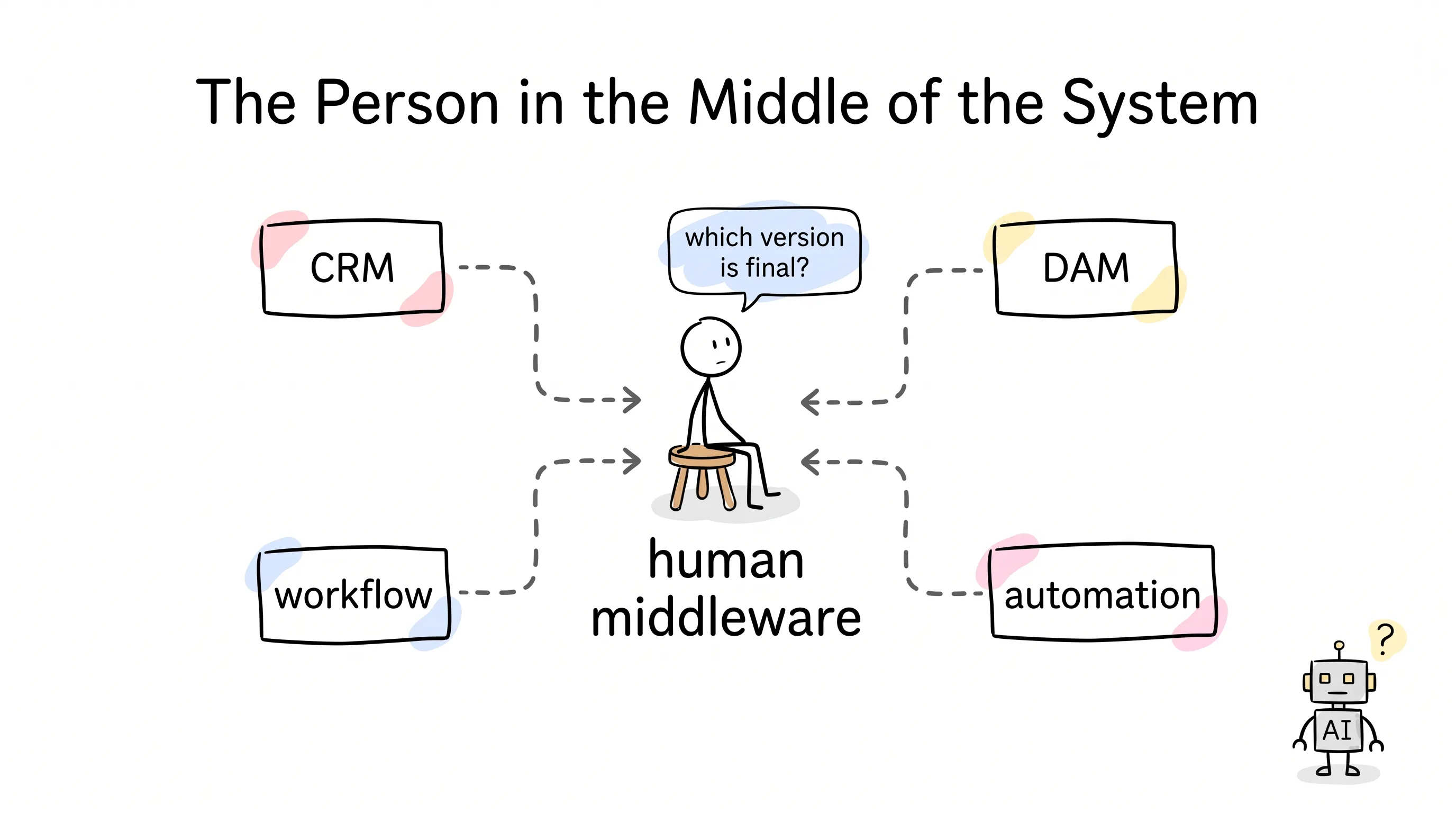
Their company's digital asset management (DAM) library holds tens of thousands of assets. Which one is the final approved version? Nobody in the company could say for sure. Except one veteran. He had been soaking in that library for over a decade — name any project, and within ten seconds he could tell you: use the third one, don't touch the fifth, legal had issues with the wording in the fifth.
In September, the veteran took his annual leave.
The company's newly deployed AI agent, following the principle of "looks most like it," automatically picked the very asset legal had objected to, tweaked it, and shipped it straight to an overseas market.
Terrifying.
Luckily, they caught it early. But the incident forced him to confront a question: their martech stack — CRM, DAM, workflow, automation — had everything; it looked like nothing was missing. What actually kept the system running was all the things inside the veteran's head that had never been written down.
And the moment AI walked in, the bill this invisible asset had been running up came due.
For Twenty Years, Someone Has Been Sitting in the Middle of the System
Why do I say that? Let's rewind and look at how people used to build martech strategy.
What is martech? Marketing technology. CRM manages customer data, DAM manages creative assets, workflow manages collaboration, CMS manages publishing, automation manages execution, analytics manages the post-mortem. A place for everything, and everything in its place.
And the strategy? Buy all the right tools, wire them together, push everyone to adopt them, then keep optimizing the architecture.
This playbook still works today. But underneath it sits an assumption — one we rarely say out loud:
Someone is sitting in the middle of the system.
What does "someone sitting in the middle" mean? It means that everything the technology doesn't know, a person quietly fills in.
Five versions of an asset — which one is approved? He knows. That customer record in CRM is technically correct but hasn't been updated in six months — he knows that too. Legal objected to a certain claim once, and even though nobody ever updated the guidelines, he still knows. A certain market's materials need an extra review before launch? He knows that better than anyone.
Not one of these things can be written into a product manual. But without them, the system simply doesn't run.
I call this person "human middleware."
This was supposed to be a fully finished home. The wiring, the address plates, the property deed — all of it lived in exactly one place: one man's head.
Why Did Nothing Go Wrong Before?
You might ask: with processes this rough and metadata this messy, why did disaster never strike before?
Because the one filling in the potholes was always a person.
People are the best in the world at working through ambiguity. The documented process doesn't match what actually gets done? No problem — the old hands know how things really work. Information scattered across email, spreadsheets, meeting notes, and a few people's memories? No problem — ask and you'll have your answer.
So think about it: why do so many companies with beautifully integrated systems still fall apart without those few veterans who "know everything"?
Because this system was designed from day one on the assumption that someone would be watching.
Waves of automation have come and gone, but each wave shared the same essence: people set the rules first, configure the processes, draw the boundaries — then the system runs inside the box. Anything outside the box, humans are the backstop.
For a system backstopped by humans, these flaws are at worst an "inconvenience." Make a phone call, dig through old emails, and you can always muddle through.
Software doesn't get that luxury.
Software can't pick up the phone.
What Is "Machine Operability"?
Now, things have changed.
Intelligent systems are shifting from "helping people do the work" to "doing the work themselves": selecting assets, scheduling tasks, generating content, making decisions.
That means everything that used to live inside the veteran's head now has to move somewhere a machine can read.
What does the machine need to know?
It needs to know which of several similar pieces of content is the authoritative version. It needs to know whether it even has the standing to do this — whether this particular scenario allows it. It needs to know whether an asset is actually usable: Has it been approved? Is it still current? Are the rights cleared? Can it be used in this market?
Put plainly, it's the "disciplines": metadata, provenance, permissions, workflow status, rights ownership. Nothing new here — enterprise architects have been preaching this for a decade.
So what's changed?
The weakness never changed. What changed is who's standing on it.
Before, a bad taxonomy merely made the DAM hard to search. Now, it makes the AI pick the wrong asset. Before, a fuzzy approval status merely meant one more nudge message in your collaboration software. Now, it can make a system "believe" it has permission and ship the thing out the door.
By now you might be thinking: isn't this just the same old composable architecture and API interoperability talk, wearing an AI costume?
It really isn't.
Integration did solve one big problem: it let information and capabilities flow between systems, so you didn't have to cram everything into one giant platform. Credit where it's due.
But reachable is not the same as usable.
An API can expose an asset perfectly to a machine yet say nothing about whether that asset was ever approved. It can hand over customer data but doesn't care whether the use is compliant. It can show you a workflow status but won't tell you whether that status means "authorized to act" or "for reference only."
Connection makes information reachable. Operability makes the environment readable. The second one does not come free with the interface.
And so a new requirement has emerged — one martech strategy has rarely considered:
Machine operability.
What is machine operability? Human usability asks: how smoothly can marketers work with this technology? Machine operability asks: are the information, rules, and capabilities in this environment defined clearly enough that another system can read them and act on them?
These are two entirely different exams.
What's more, this is no longer just a concept. In Gartner's 2026 CMO Spend Survey, CMOs on average put 15.3% of their marketing budgets into AI-related initiatives — yet only 30% of respondents considered their AI-readiness mature, and 70% admitted their internal processes weren't mature enough to support AI deployment and scaling.
The money is in place. The tools are in place. The processes are not.
On the surface, this giant gap looks like an AI problem. Really, it's an environment problem.
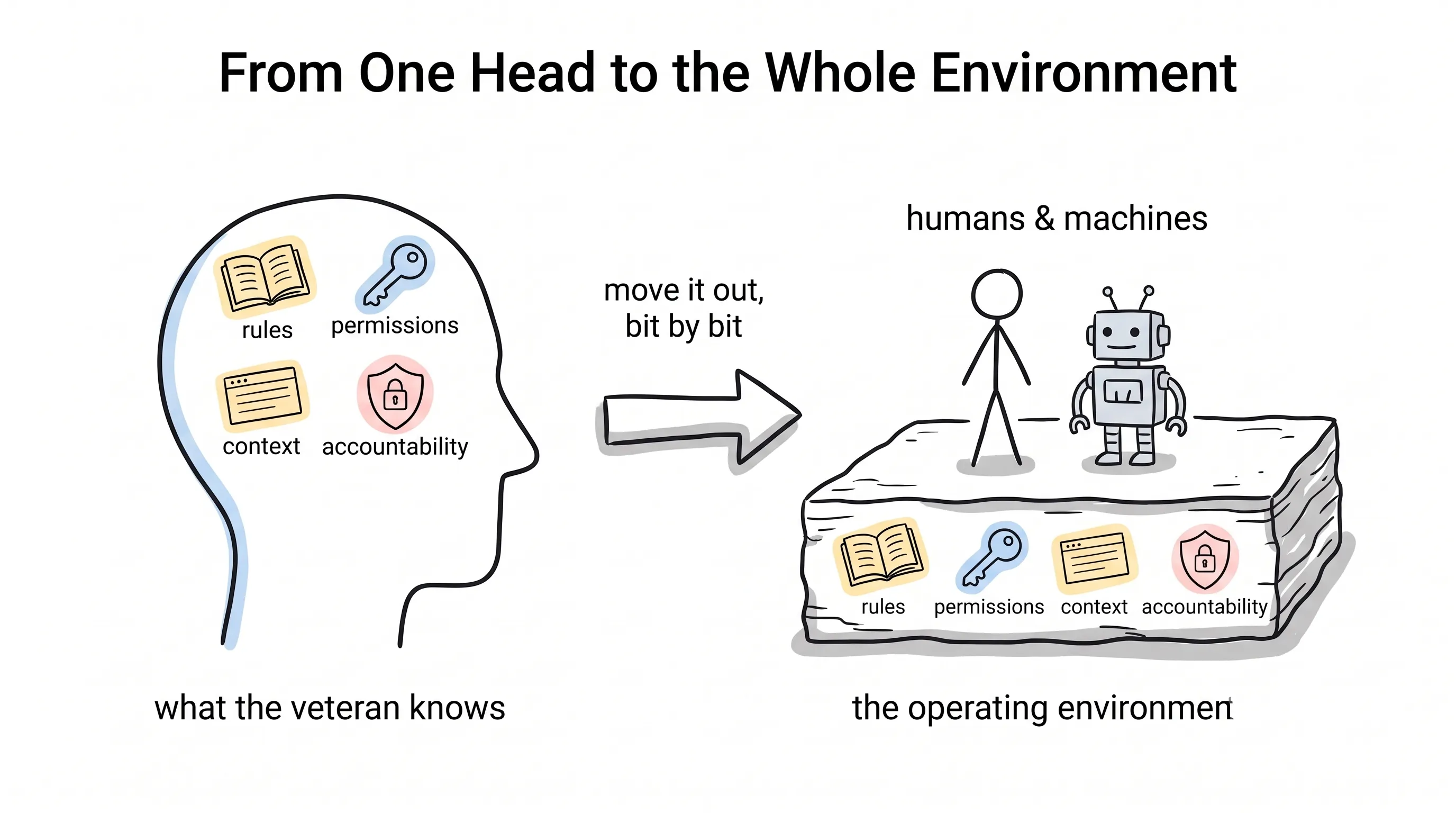
What is the operating environment? Everything that surrounds the stack: context, rules, permissions, accountability. A place where both humans and machines can work reliably.
That is the operating environment.
Ten Times Faster Generation — Then What?
Where did the cracks show up first? Content production.
The logic is simple: generative AI multiplied the "how much can we produce" number many times over.
At the task level, the math looks beautiful: first drafts in minutes, visual options by the handful, localization done almost instantly. What used to take a team a week now takes one person an afternoon.
And then?
And then that content slams headfirst into the exact same processes as before. Let me do the math for you: a tenfold jump in generation efficiency does not mean a tenfold jump in useful marketing. As long as intake, rights, review, approval, localization, and publishing still move at the old pace, all you get is a bigger lake backing up behind the same old dam.
The bottleneck didn't disappear. It just moved.
McKinsey found something similar. They compared 25 organizational attributes to see which correlated most strongly with the bottom-line impact of generative AI. The number one: workflow redesign. Yet only 21% of companies had actually redesigned at least part of their workflows.
Faster tasks don't mean a better system.
The Hard Part Comes After Generation
Let's go one level deeper.
Suppose you're running a global campaign that needs thousands of variants. Today, the "generation" step is no longer hard. What's hard is the string of questions that follows:
Which product information is up to date? Which claims has legal approved? Which images can run in which markets? Which elements of the brand guidelines are fair game? Which markets require an extra review? And when something weird happens outside the process — who do you call?
A seasoned reviewer has all of this carved into their intuition. A machine has none of it.
That's why CreativeOps (content operations) is becoming the testing ground for the next generation of martech strategy. Adobe's Workfront Content Reviewer is a very early example: it can join projects and approval flows like a real user, look at the work, give feedback — and in the end, a human makes the final call.
Seriously impressive.
But I have to warn you: "AI can review" is, by itself, worth nothing. What's valuable is everything that must already exist before the review can happen.
Brand rules need to be explicit enough for a machine to use them as a ruler. Approval criteria need to be unambiguous. Rights and context need to be available on demand. "On-brand" can't still depend on whether a seasoned eye takes one look and knows whether it works.
If deciding whether something can ship still takes ten years of human experience, then no number of additional agents will solve a single problem.
The systems are connected. The judgment is not.
The Starting Point of Strategy Has to Flip
Which brings us to what martech strategy most needs to change: its starting point.
How do most roadmaps get drawn? They start by taking inventory of what you already own: What's underperforming? What's redundant? What can be consolidated? Which platform is due for replacement? What are we missing?
All fair questions. But have you noticed? Every one of them assumes the same thing: that today's shopping list is the starting point for tomorrow's operating model.
That's putting the car together backwards.
The right way to draw it: start from the operating capabilities and work backwards. What do we expect humans and intelligent systems to achieve together?
Say your goal is automated localization. Then the requirement goes far beyond a better generative model. It demands: structured assets, reliable rights information, usable metadata, explicit rules for each market, clear approval logic, and a single authoritative home for final versions.
Miss one, and automation will crash right there.
Or say you want AI to autonomously optimize ad spend. The key question was never "can the software touch the budget." Of course it can — is that even a question? The real questions: under what conditions is it allowed to? Based on what information? Where do the exceptions get blocked? And if it gets it wrong, who's accountable?
Notice the pattern: dig two layers down into any AI use case, and it turns into a string of martech requirements.
That's why AI strategy and martech strategy are growing into the same thing. AI strategy asks: what possibilities does greater intelligence unlock? Martech strategy asks: can this organization's foundation bear the weight of those possibilities?
Yesterday's Warehouse, Tomorrow's Foundation
Here's a conclusion that runs a bit against intuition: the least fashionable parts of the stack may become more and more important precisely as fewer and fewer people touch them.
DAM is the textbook example.
A DAM with terrible governance — stuffed with duplicate files, thin and under-filled metadata, rights nobody can untangle. Bolt AI onto it. Does it become a strategic asset?
No. It becomes a highway for finding the wrong assets faster — and misusing them faster.
Flip it around. A clean DAM: authoritative assets, complete metadata, clear rights, and a documented mapping between content, products, and markets. Intelligent systems can digest that context directly.
In the future, fewer and fewer people may log into the DAM. That doesn't make it less important. It means it has been upgraded: from "a place where people go to work" to "the foundation the entire operating environment stands on."
It's also a wake-up call for procurement. Features, experience, implementation, price — sure, still evaluate all of that. But today you have to ask one more question: can the data, context, and actions inside your platform plug into a larger environment that my organization controls?
If everything useful is locked inside the vendor's own ecosystem, then no matter how dazzling the AI demo, what you've bought is an expensive dead end.
A Final Word
Let me be clear: I'm not telling you to hand AI the steering wheel today. The stack isn't going away, and neither are people. Different organizations move at different speeds, and the depth of authority they dare hand to software will differ too.
What really matters is keeping the choice itself.
So when you draft your next martech roadmap, stop writing only what you plan to buy, replace, cut, and connect. Start by writing down: what kind of environment do you intend to build — one where humans and machines alike can work in ways you can trust?
Move the rules, permissions, context, and accountability out of the veteran's head, bit by bit, and into the environment itself.
Turn what the veteran knows into what the whole environment knows.
For the past twenty years, the mission of the martech stack was to give marketers better tools. Its next mission is far bigger: build an environment where people, automation, and intelligent systems run marketing together — one that no longer depends on that person in the corner who "just gets it."
Maybe one day your veteran takes his annual leave again. The moment he shoulders his bag and walks out the door, you won't feel a flicker of panic.
Because you know: what he knows, the environment knows.
Here's to building that environment — a day sooner.
Continue reading
Related articles
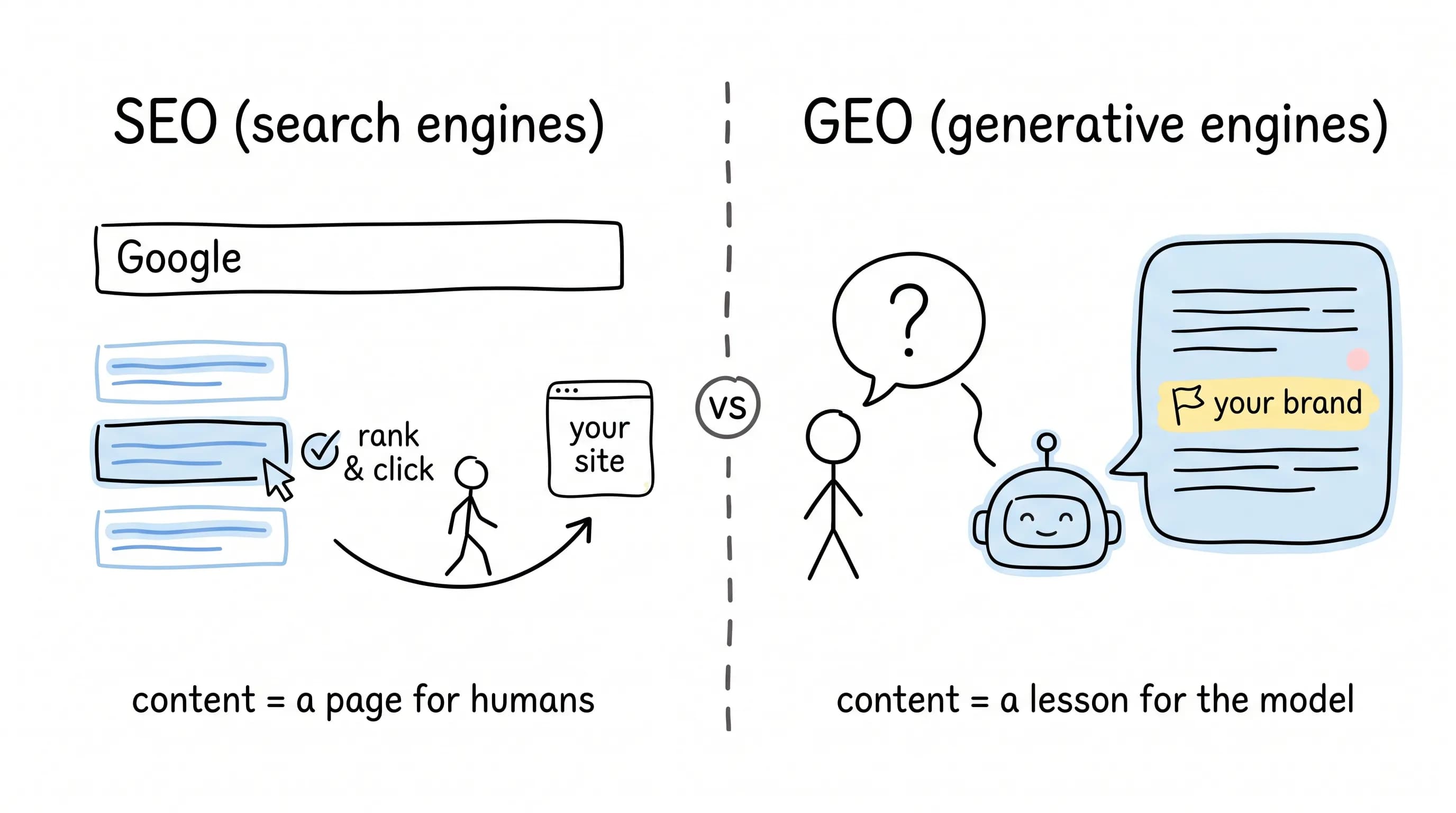
Does AI Know Your Brand? A Look at GEO, the New Craft
An explainer on GEO (Generative Engine Optimization): how AI engines like ChatGPT, Perplexity, and Gemini differ, how GEO goals and metrics diverge from SEO, and which SEO skills still carry over.
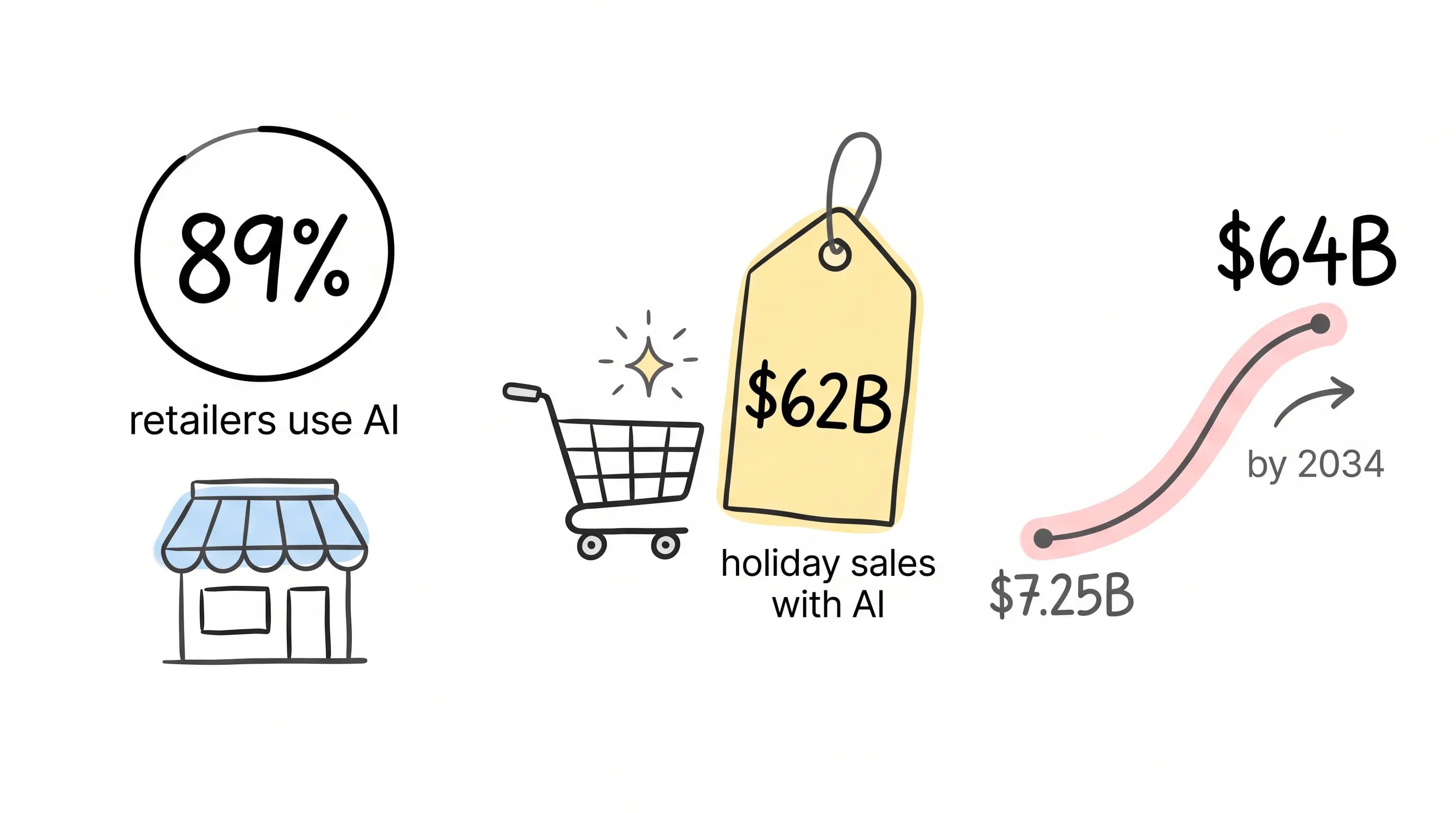
89% of Retailers Are Already Using AI. The Playbook for E-Commerce Has Changed
A learn article on AI in e-commerce: adoption context, use cases from recommendations, search, dynamic pricing, customer service, inventory, and fraud control, plus B2B applications, generative AI content, tool examples, pitfalls, and a six-step adoption path.
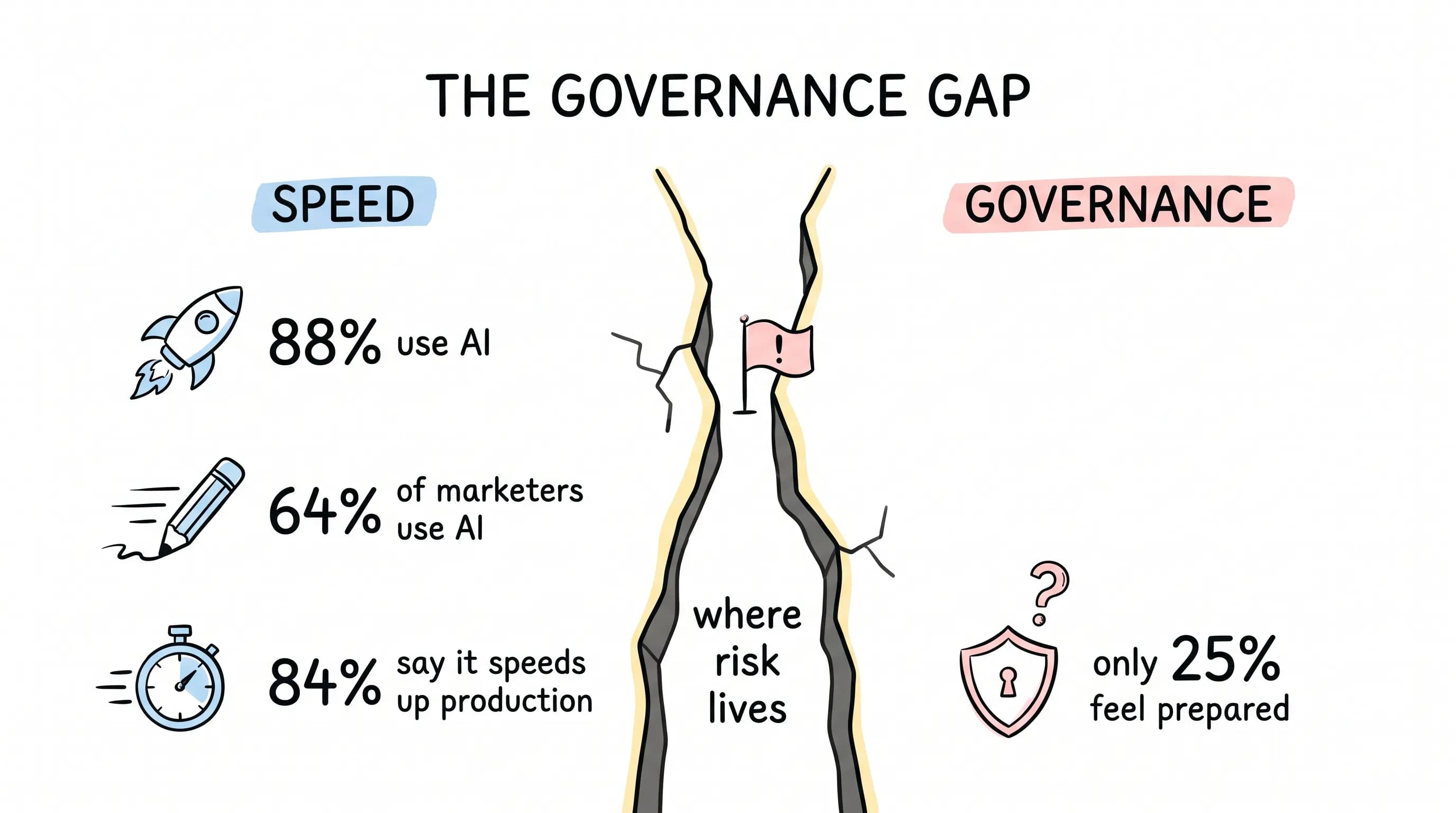
AI Makes Content at Lightning Speed — But Can You Answer "Who Approved This?"
This article looks at the gap between AI content speed and governance readiness in marketing teams, and outlines nine control points — prompt validation, brand guardrails, permissions, approval workflows, human review, versioning, IP checks, audit trails, and asset reuse — for brand-safe AI content.