
The Influencers Selling for Brands Don't Actually Exist
A learn article explaining virtual influencers: computer-generated personas operated by brands, why companies choose them for customization and control, and how appearing alongside real-looking people affects audience trust and engagement.
A few nights ago, deep in a late-night social media scroll, I came across a fitness selfie from a blogger: toned abs, flawless skin, perfect lighting. The comments were flooded with "link, please!"
A friend leaned over, took one look, and said something that stopped me cold:
This person doesn't exist.
What do I mean by "doesn't exist"? Every inch of this blogger, from head to toe, was computer-generated. No one on Earth actually owns the face in that photo.
My first reaction: wait, what? My second: the business behind this is actually kind of fascinating.
That's what I want to talk about today: virtual influencers.
So What Exactly Is a Virtual Influencer?
Put simply, it's a "person" built by a computer.
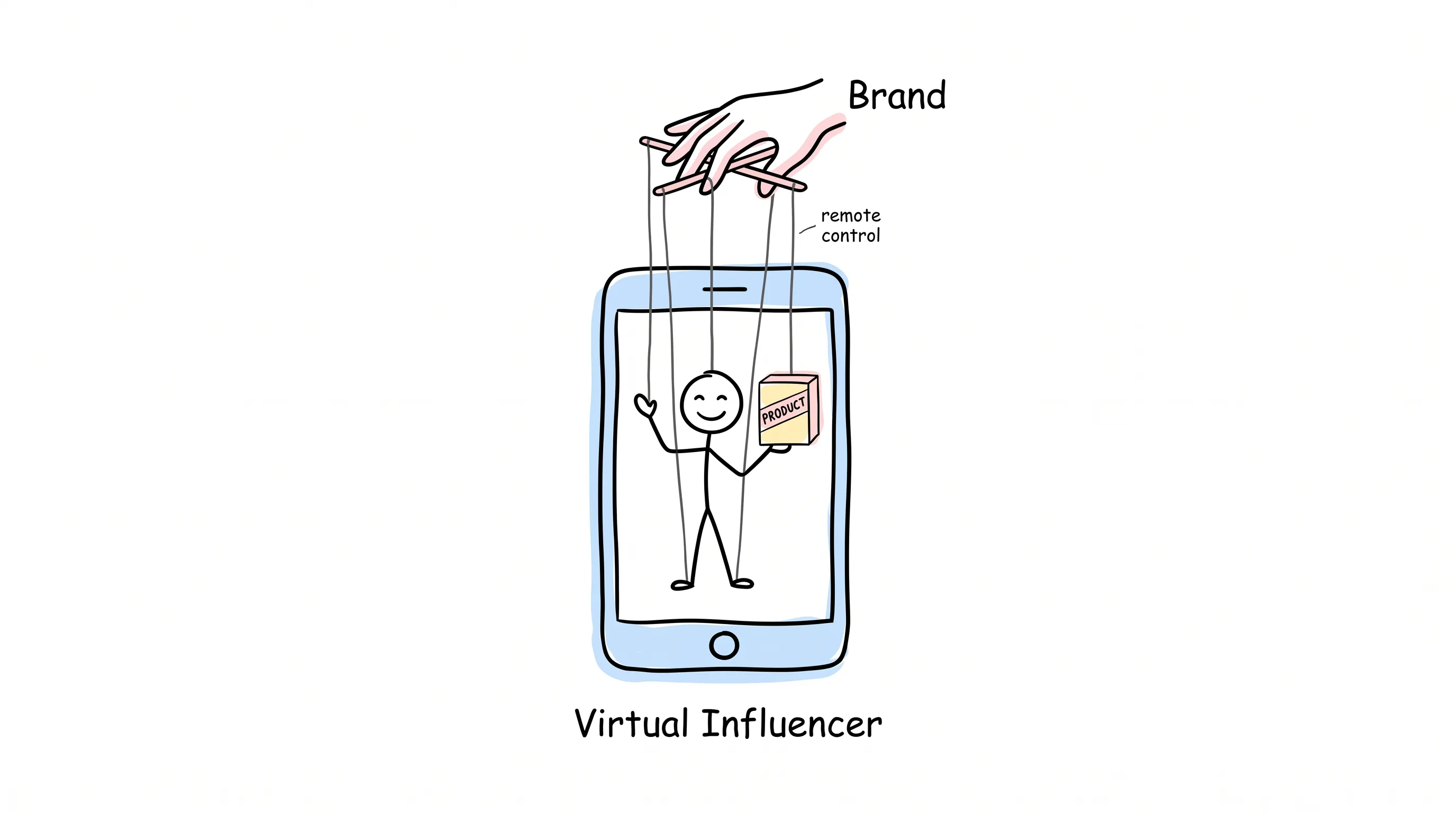
It looks like a real human, has its own account, its own daily life, posts photos and videos on a regular schedule, and interacts with followers. But behind the scenes, a design company—or the brand itself—is remotely "piloting" it.
The early attempts were pretty crude: take one real person's body, graft on an invented face, and piece together her "daily life" one stitched image at a time.
Today is a different story. Since large AI models took off, generating an image or a video clip takes seconds. Content that was impossible to make two or three years ago now rolls out on demand. The species has evolved from static pictures into digital humans that can talk and move.
Why Would a Brand Pay for a "Person Who Doesn't Exist"?
Fair question: with thousands of influencers on the market, why would a brand hire a fake one?
Two reasons.
First, customization. What kind of person do you want? From a certain country, a certain age, certain hobbies, a certain vibe. Finding a real human who checks every box is like finding a needle in a haystack. A virtual influencer? Adjust the parameters, and there it is.
Second, control. Hiring a real endorser is like taking on a business partner: you can offer suggestions, but you can't dictate. What he posts today or says tomorrow is largely out of your hands. And if one day he implodes—embroiled in scandal, or casually saying something he shouldn't—the flames land squarely on you.
A virtual influencer has none of these problems. It never throws tantrums, will never be photographed being hauled into a police station at 2 a.m., and you can review every piece of content word by word. Every word it utters on your behalf is one you've signed off on.
Hire a real human, and you've taken on a partner. Hire a virtual influencer, and you've bought a machine.
And there's a fascinating psychological twist here.
When a real influencer says, "I've been using this face cream lately," you quietly wonder: does she actually use it, or was she paid? That shadow of doubt never quite lifts.
When a virtual influencer says, "I use this face cream," you don't doubt it at all—because it can't use anything, and we all know it. The doubt simply disappears.
Sit with that for a second: a fake person is actually spared a burden of suspicion that only real people carry.
How Big Is This Business?
Look at three numbers.
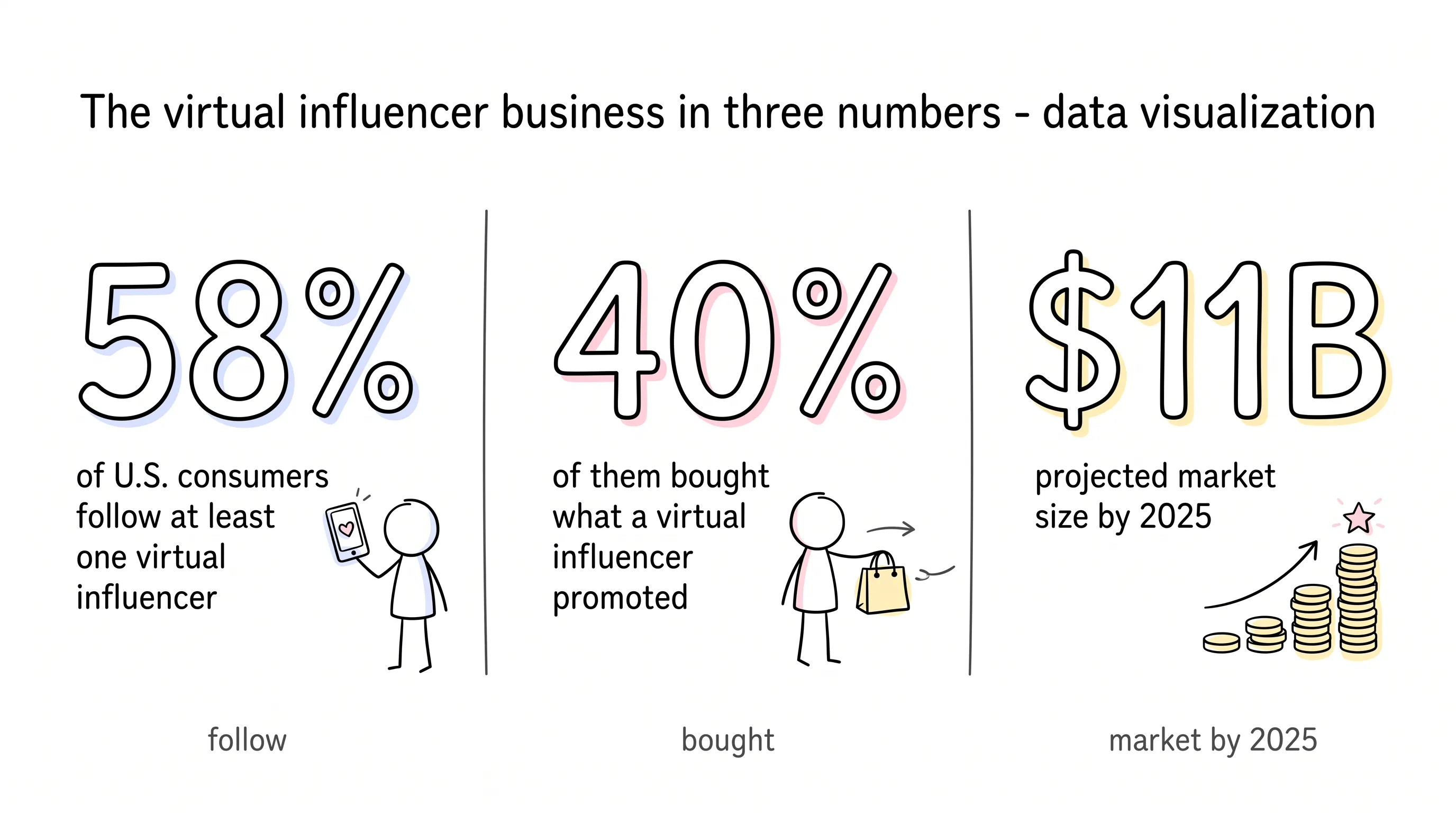
58%. One study found that 58% of American consumers follow at least one virtual influencer.
40%. Of those people, 40% have actually gone on to buy what a virtual influencer promoted.
$11 billion. Industry forecasts have projected that by 2025, this market could grow to that scale.
A business driven by people who don't exist is already a ten-figure market.
Build Your Own, or Partner Up?
So how should brands get in? Build your own virtual influencer—does that work?
You can. But there's a catch.
Think about why anyone follows a blogger in the first place: because she feels like a living person. Where she went on the weekend, who she had dinner with. If all she ever talks about is her own brand of cola and her own sneakers, would you keep watching?
Nobody wants to follow an empty shell that only exists to read ad copy. That goes for Coca-Cola, Nike, Delta—every brand alike. So with a homegrown virtual influencer, the hard part was never the technology; it's that she has to feel like a person, with a life outside the brand.
So most brands took the other path: partner with virtual influencers who already exist, negotiating fees and settling content, nothing overlooked. Just like hiring a human influencer.
And then the same question lands on the table: is the money well spent?
Which Virtual Influencers Do You Actually Trust?
Push this question one level deeper and you reach the very core of the matter: what makes a virtual influencer effective?
Same photo posts: some blow up with engagement, some get ignored. Why?
One marketing study broke down a large batch of virtual influencer posts, analyzing the photos one by one—and surfaced a rule that is strikingly simple, and strikingly elegant:
Virtual influencers photographed alongside people who look real see clearly higher engagement.
Friends at a restaurant, a workout partner at the gym. As long as someone is standing beside her, engagement climbs.
Why?
Because when people judge whether to trust a post, they carry an internal scale. A virtual influencer starts with a trust deficit—it can't possibly have actually used the product. So the only thing that can add points is how much it looks like a "person."
Appearing alongside real humans is the strongest signal of all. She has friends, a social life. A person who doesn't exist appears to live inside a web of relationships. In that instant, your brain quietly logs a credit of trust in her favor.
And the effect is finely tuned: the more human the companion looks, the stronger it gets. Put another virtual figure beside her instead, and the numbers drop noticeably. Because you'll think: neither of these two is a person—this photo doesn't count.
But Don't Forget: Consumers Aren't Fooled
This playbook sounds beautiful, but it has one bright line you cannot cross.
Consumers don't open their wallets because an avatar looks cute. After years of scrolling social media, people's judgment of content is sharper than many marketers assume.
Zoom out, and the picture gets even clearer.
A researcher who has studied word-of-mouth marketing for nearly two decades has remarked on this: why did early word-of-mouth carry weight? Because the person talking wasn't getting paid. When a friend recommends a restaurant, there isn't a cent of self-interest behind the recommendation—that's what makes it credible.
And today? You can't tell which influencers got paid to post, AI-generated content is mixed into the feed, and every recommendation you scroll past now deserves a second look.
That's why quite a few brands are walking back the other way: instead of hiring big-name influencers, they let real users try products and speak up. An ordinary person posting to their own feed might reach only a few hundred people. But those few hundred know he wasn't paid.
A Final Word
Back to that fitness blogger from the beginning.
She doesn't exist. The friends beside her may not exist either. But the sales she drives are real, and so is the business behind her.
That's the most tangled—and most interesting—thing about marketing in this era: content can be manufactured; trust cannot. However polished a virtual influencer becomes, the contest in the end still comes down to that small sliver of humanness.
Technology changes by the day. What the platforms will look like in five years, nobody can say for sure.
The only certainty is that whether the one on the other side of the screen is real or fake, the rules of trust have never changed.
Here's wishing you always know exactly whom to trust.
Continue reading
Related articles

When AI Does the Creative, Mistakes Come in Batches Too
A learn article on the risks of using generative AI for marketing creative across brand, legal, compliance, and operational layers, with case examples and seven practices for review, rights clearance, documentation, and vendor governance.
Which AI Should Your Startup Actually Use for Marketing?
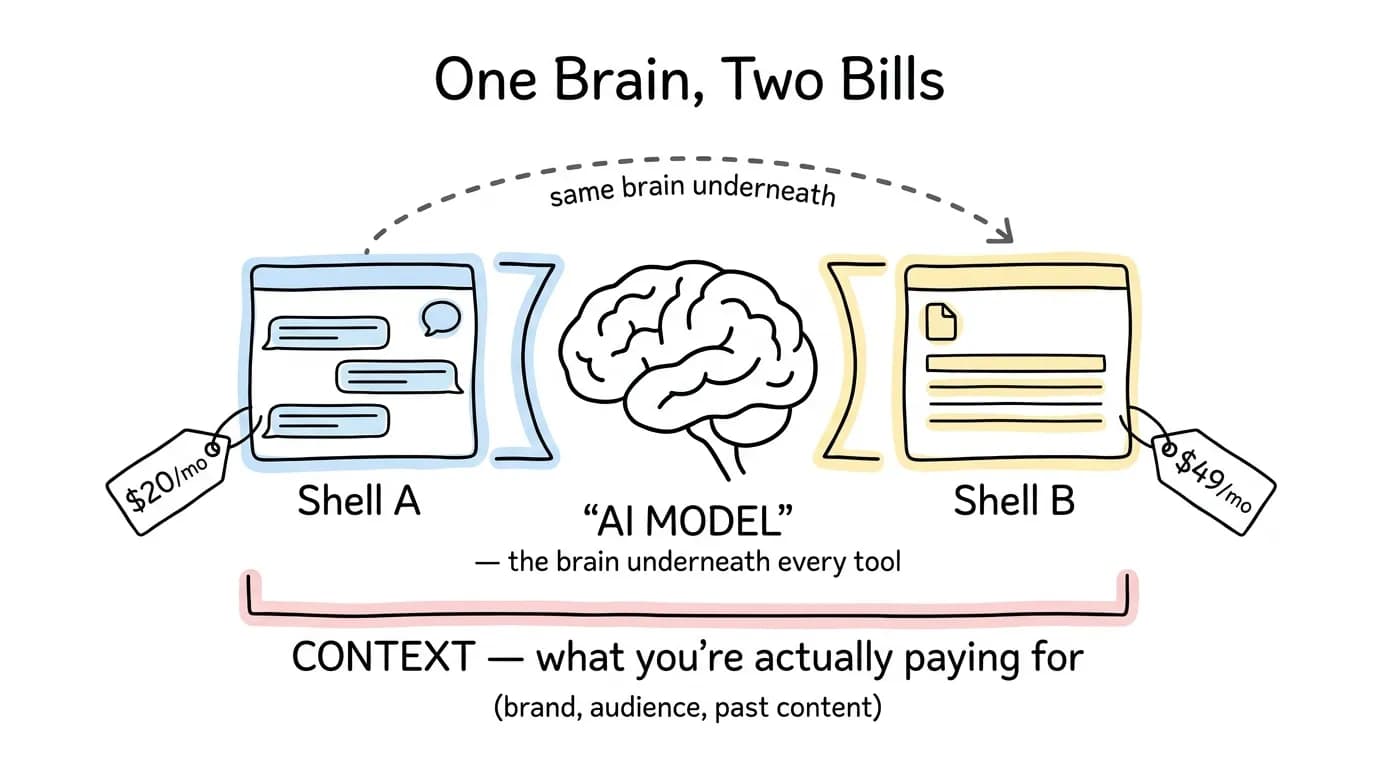
A startup marketing guide explaining the difference between AI models and tools, sorting tools by job (writing, research, design, leads, email, video ads), and outlining a 30-day test plan for choosing them. It also covers generative engine optimization and budget trade-offs.
31 AI Marketing Tools, Reviewed One by One: How Exactly Should You Spend the Money?
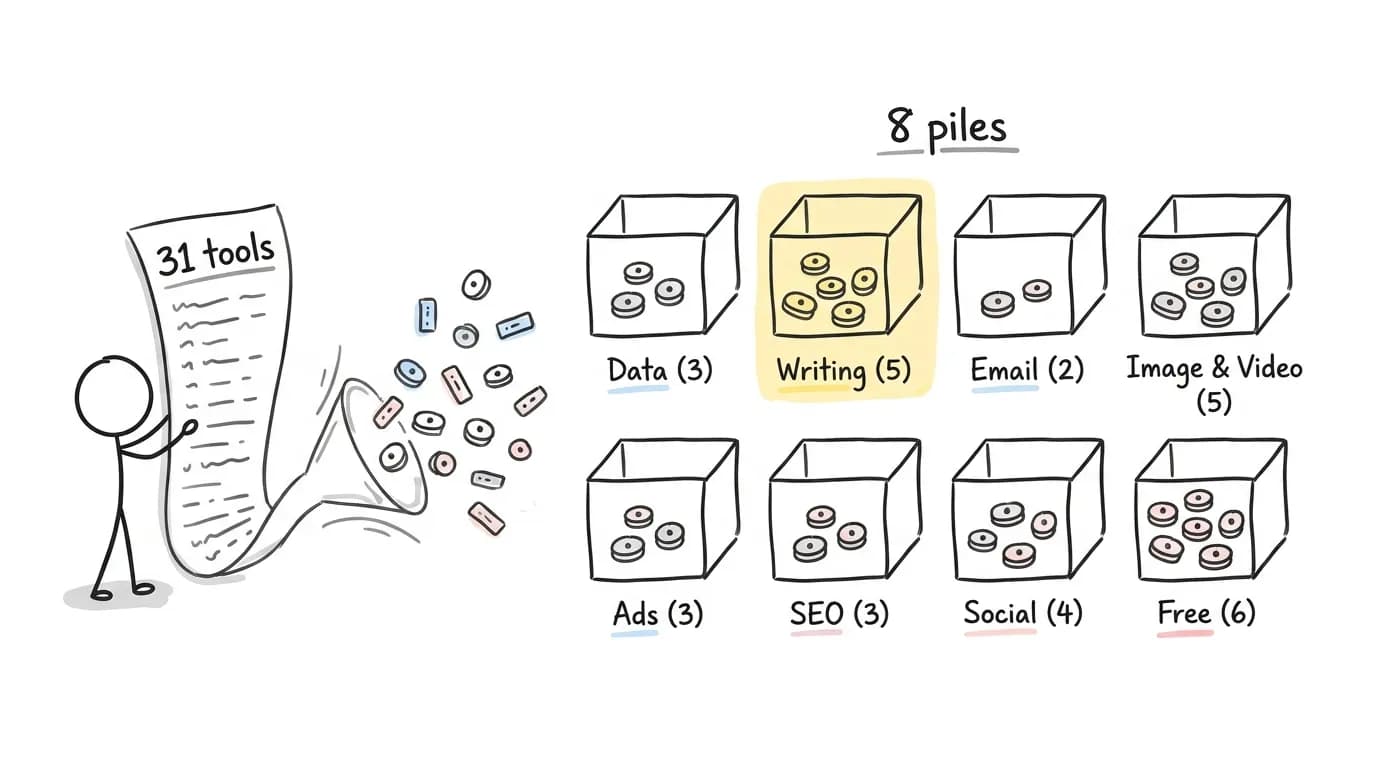
A review of 31 AI marketing tools grouped into eight categories, covering data, content, email, video, ads, SEO, social, and free options, with guidance on choosing one strong tool for your most frequent task and testing free tiers first.