
The Empty Chair Doesn't Lie: A Fresha Masterclass in Loop Marketing for the AI Era
A learn article walks through a four-step loop marketing framework (Express, Tailor, Amplify, Evolve) using Fresha as a case study, covering AI-assisted content, channel choices, and answer engine optimization.
Let me start with a scene.
Saturday afternoon, 2 p.m., a hair salon. A stylist sits by the door scrolling on his phone, his chair empty. The client who was supposed to fill that chair sent a message an hour ago: something came up, not going to make it.
You couldn't rebook the slot, and he didn't cancel early enough. That slot is now impossible to fill.
People in the hair business call this a no-show. It isn't like rent, which deducts a fixed amount every month. It leaks away piecemeal, day after day, from your revenue.
Do the math. A stylist with an average ticket of two to three hundred yuan, losing three clients a day to no-shows, ends up with a twenty-to-thirty-thousand-yuan hole in a month. And that's just one shop.
Is there a company that specializes in curing exactly this problem?
Yes. Fresha.
This company makes software for the beauty and wellness industry. Whether you run a salon or a spa — bookings, payments, day-to-day operations — you can run it all on its system. And one of the problems it watches most closely for its customers is precisely the no-show: don't let clients book and not show up; and when they do show up, don't let the visit be for nothing.
So in the AI era, how should a company like this market itself?
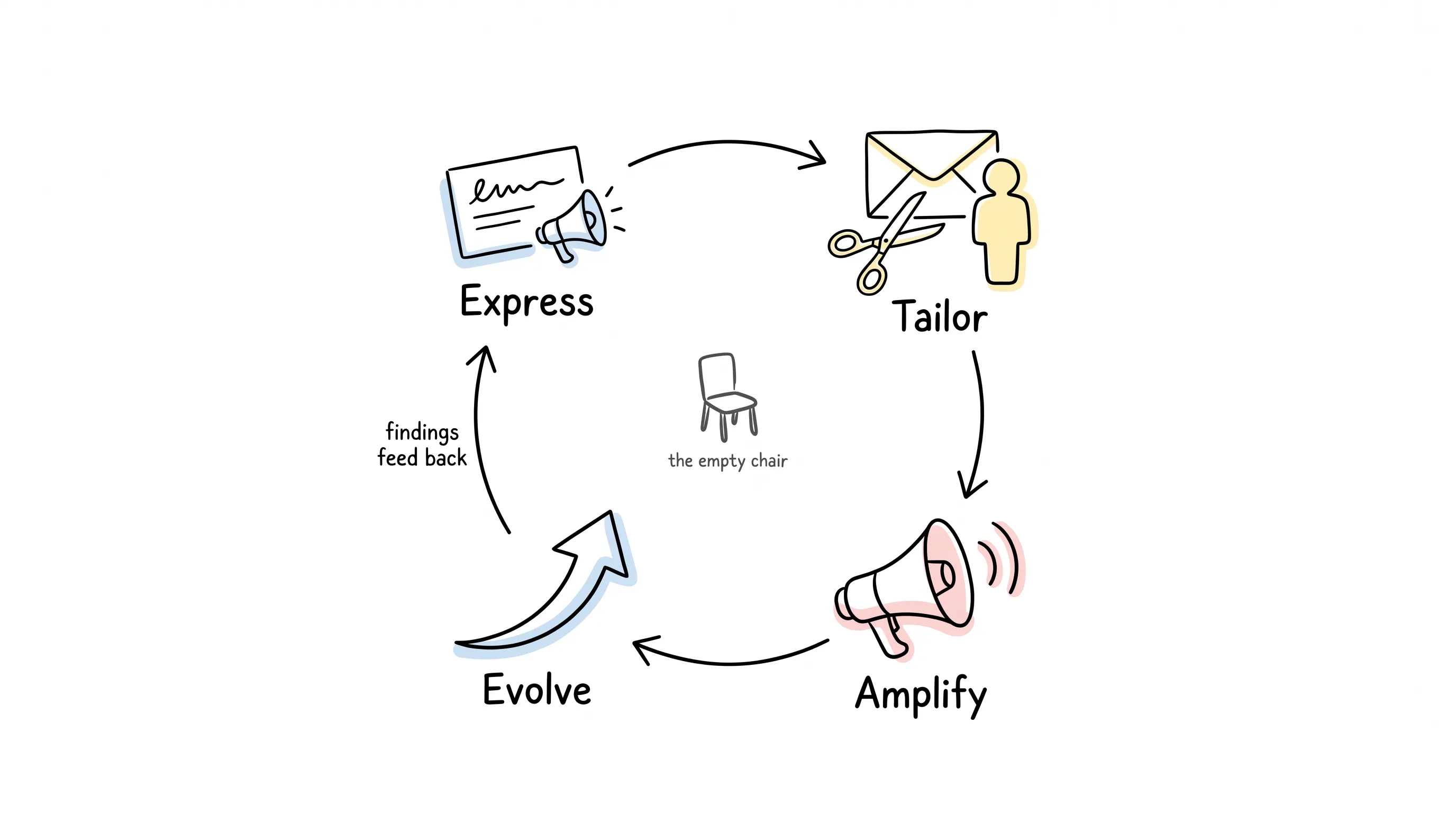
I recently studied a playbook in earnest. It's called loop marketing. It isn't complicated — four steps: Express, Tailor, Amplify, Evolve. Run through one cycle, and the findings feed back into the starting point. That's why it's called a loop.
Concepts in the abstract are boring. So I'm using Fresha as the teaching case and walking you through the whole thing. Swap its situation for your own business — the playbook is the same.
Step 1: Express. First get clear on who you're talking to
What does "express" mean?
It means that before you start shouting, you get three things straight: who you're talking to, what you're saying, and in what tone.
First, the persona. Sometimes you define the ideal customer for the whole company; sometimes it's just for one specific campaign. This one is the latter, and Fresha's target choice is sharp: salon owners running one to three locations, the kind being tormented by no-shows. Why small and mid-sized shops? Think about it: a shop only has so many chairs, and every empty chair stings. Big groups have the budget to absorb it; mom-and-pop shops can't. That's their best customer base.
Second, the style guide. Many people hear "style guide" and think of logo colors and font sizes. That's ancient history. The style guide that's actually valuable is about language: which lines strike this group of owners right in the heart.
Take "from empty chairs to fully booked." A line like that is never a copywriter's flash of inspiration; it's a core message, verified again and again, that genuinely resonates. Write it into the guide, and from then on — whether a human writes or an AI writes — the tone won't drift.
Third, feed the guide to an AI assistant. Every vendor has a ready-made way to hook this up — use their own assistant, or connect ChatGPT or Claude. Once it's fed in, you can have it draft in bulk: emails, ad copy, landing pages — first drafts of everything, produced for you.
Think about it: what's the logic here?
The hard part isn't writing — it's thinking things through. And you've already done that thinking in the steps above; what AI takes over is only the execution. The result: output gets dramatically faster, and costs fall dramatically. If you haven't put AI to work in your marketing yet, start here. It's the most down-to-earth approach, and it works the fastest.
Step 2: Tailor. Stop Sending the Same Letter to Ten Thousand Faces
The first drafts exist. Then what?
Then comes what I consider the most obvious step of the four: tailoring the content down to each specific person.
How did mass sending work before? One email written, sent to ten thousand people, with at most a name variable stuffed into the opening. Recipients saw right through it.
Now the game runs the other way. Using data, AI does that "half an hour per person" homework for you: look into this shop's situation, work out its pain points, and put together a message that speaks to it specifically. A human doing this needs half an hour per message; AI does it — thousands of messages in a few minutes.
Personalization used to be bottlenecked by manpower. Now the bottleneck is gone.
In the Fresha case, how specific can the message get? This specific: last month your shop had 14 no-shows; at your average ticket, more than 5,000 yuan leaked away just like that; you can add a deposit step at booking, and the system can collect it automatically for you.
Instead of "Dear user, you may be interested in our anti-no-show feature."
The barrier to this step is now low to the point of being ridiculous. Email, ads, WhatsApp, SMS — every channel can use it. How much can engagement and conversion rates climb? Anyone who's done it knows.
Step 3: Amplify. If Nobody Sees It, It Might as Well Not Exist
However good the message, if nobody sees it, it's wasted.
Suppose you were Fresha's strategist — how would you pick the battlegrounds? Here's the formation I'd set for it, for your reference.
Short video. TikTok, Instagram Reels — film real customer testimonials: how much a shop's no-show rate dropped after using it, how the business turned around. Put the hook in the first three seconds; that's the basic etiquette of short video.
Reddit. Many marketers don't touch it much, but it deserves a serious word: Reddit is one of the important corpus sources for the major AI answer engines. Answer beauty-industry owners' questions there in earnest; share the patterns you see in industry data, instead of pitching your software to everyone you meet. Over time, you'll become both a trusted voice on Reddit and a source cited in AI answers. That trade is well worth it.
YouTube. It's one of the world's largest search engines. As traditional web search gets diverted by AI, video search becomes the untapped opportunity instead. Product demos, tutorials — publish them one by one and live off the long tail.
And there's a fourth item, called out separately, because it's important enough to deserve its own section.
What is AEO? Answer Engine Optimization.
Before, when you looked something up in a search engine, you'd flip through the first few results. Even ranking on page two, at least someone still saw you. Now more and more people ask AI directly: how do I stop clients from no-showing? The AI gives one answer. However many shops that answer mentions — that's all there is. If you're one of them, you exist; if you're not, you don't exist in that client's world.
What you competed for in the past was rankings. What you compete for now is being mentioned.
Two terms to keep straight here. One is mentions — did the answer name you or not. The other is citations — did the answer link to you or not. The former decides whether you're known; the latter decides whether you receive the traffic. One metric further down: share of voice — of all the times a topic is mentioned, what percentage are yours.
The tactics have changed too. SEO used to fixate on website visits. Now, besides continuing to earn those visits, you also grow a stream of direct traffic from being frequently mentioned by AI. The books have to be tallied together.
For Fresha, where do old and new differ? The old way: write a piece called "Five Tips to Prevent No-Shows" and wait for people to search. The new way: when an AI is asked "how do I prevent no-shows," it has read the data and content you left behind, so it can give a good answer with real context — and bring you along with it.
Step 4: Evolve. Once the Money Is Spent, Know Which Dollar Worked
The final link: evolve.
The campaign is running, and every link in the chain sends data back. Which email gets the high open rate? For the deposit-setup tutorial, which version has the high completion rate? Which traffic is actually converting?
Read the data and double down. Whichever content format performs, put more weight behind it.
Set one or two core metrics for each link and watch them. These four steps are a circle; the conclusions evolution produces feed back into the next round's Express. Round by round, each cycle lands more precisely than the last.
Finally, Something Outside the Framework
The four steps are done. But the thing I most want to say about this framework is something else entirely.
The best marketing today is made neither purely by humans, nor by the mythical fully-automated AI agent. It's made shoulder to shoulder, humans and AI together: humans are in charge of judgment, taste, and genuine empathy for customers; AI is in charge of amplifying that judgment a thousandfold.
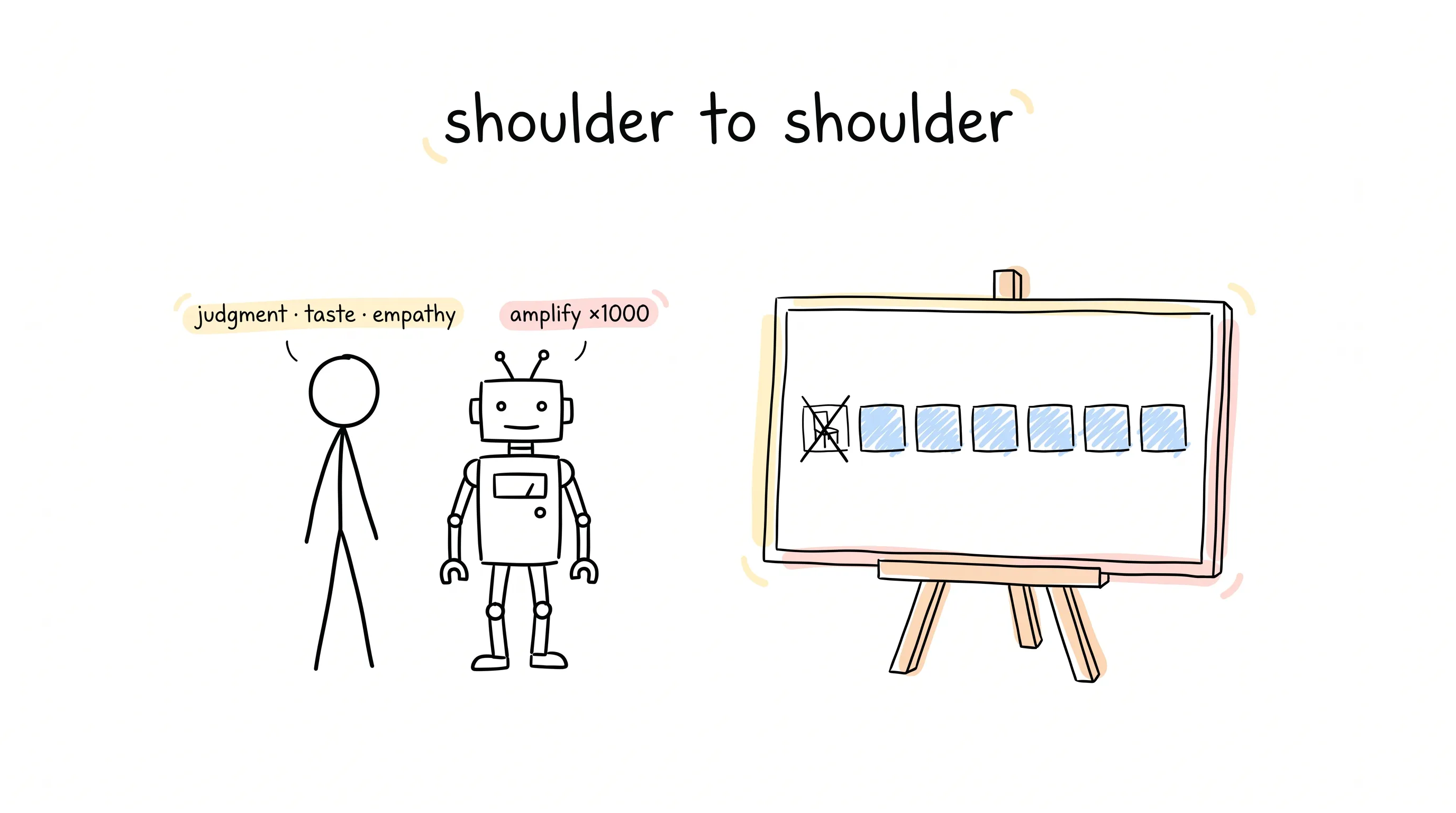
Back to the empty chair from the beginning.
It's the same chair, and an empty chair still hurts. What's changed is only that you now have a tireless helper — one that finds the people who are hurting, and puts a line that speaks precisely to their pain right in front of them.
May all your chairs be fully booked, soon.
Continue reading
Related articles

It's 2026: Stop "Buying" AI Tools for Your Marketing Team — Start "Hiring" AI Agents
This learn article explains how AI agents differ from standalone AI tools in marketing, outlines three agent categories — build-your-own platforms, CRM-native agents, and vertical tools — and covers use cases across SEO, social media, advertising, and reporting, plus criteria for choosing one.

What Is GEO? How Your Brand Gets "Mentioned" in the Age of AI Search
An explainer on GEO (Generative Engine Optimization) for e-commerce and DTC brands: how it differs from SEO and AEO, why AI answers shape brand visibility, and eight practices covering question-focused content, consistent brand messaging, structured pages, external evidence, comparisons, and AI mention tracking.

AI Is Already Making Decisions for Your Customers. Are You on the List?
A learn article explains GEO (Generative Engine Optimization): why AI-generated answers now shape which brands customers see, and how SEO fundamentals, entity clarity, citable evidence, and monthly measurement affect visibility in AI answers.