
It's 2026: Stop "Buying" AI Tools for Your Marketing Team — Start "Hiring" AI Agents
This learn article explains how AI agents differ from standalone AI tools in marketing, outlines three agent categories — build-your-own platforms, CRM-native agents, and vertical tools — and covers use cases across SEO, social media, advertising, and reporting, plus criteria for choosing one.
A while back, I had dinner with an old friend who runs a cross-border e-commerce business.
He manages a marketing team of about ten people. Halfway through the meal, he started venting: weekly reports, content writing, social scheduling, watching ad campaigns, chasing leads... his team was running nonstop, yet every channel felt like it was missing something.
I asked him: have you bought AI tools?
He said: yes, a whole pile of them. Writing tools, image tools, analytics tools. They were all in use — but each one worked in its own silo, like a drawer full of loose screwdrivers.
I told him: your problem probably isn't that you don't have enough tools.
It's that you haven't hired enough "people."
In 2026, the hottest word in marketing circles is AI Agent. What is an AI agent?
It's a software program that can see on its own, think on its own, and act on its own.
You give it a goal, and it runs the process by itself: reads the data, makes the calls, does the execution — with barely a nod from you at each step.
That's a fundamental difference from ordinary AI tools.
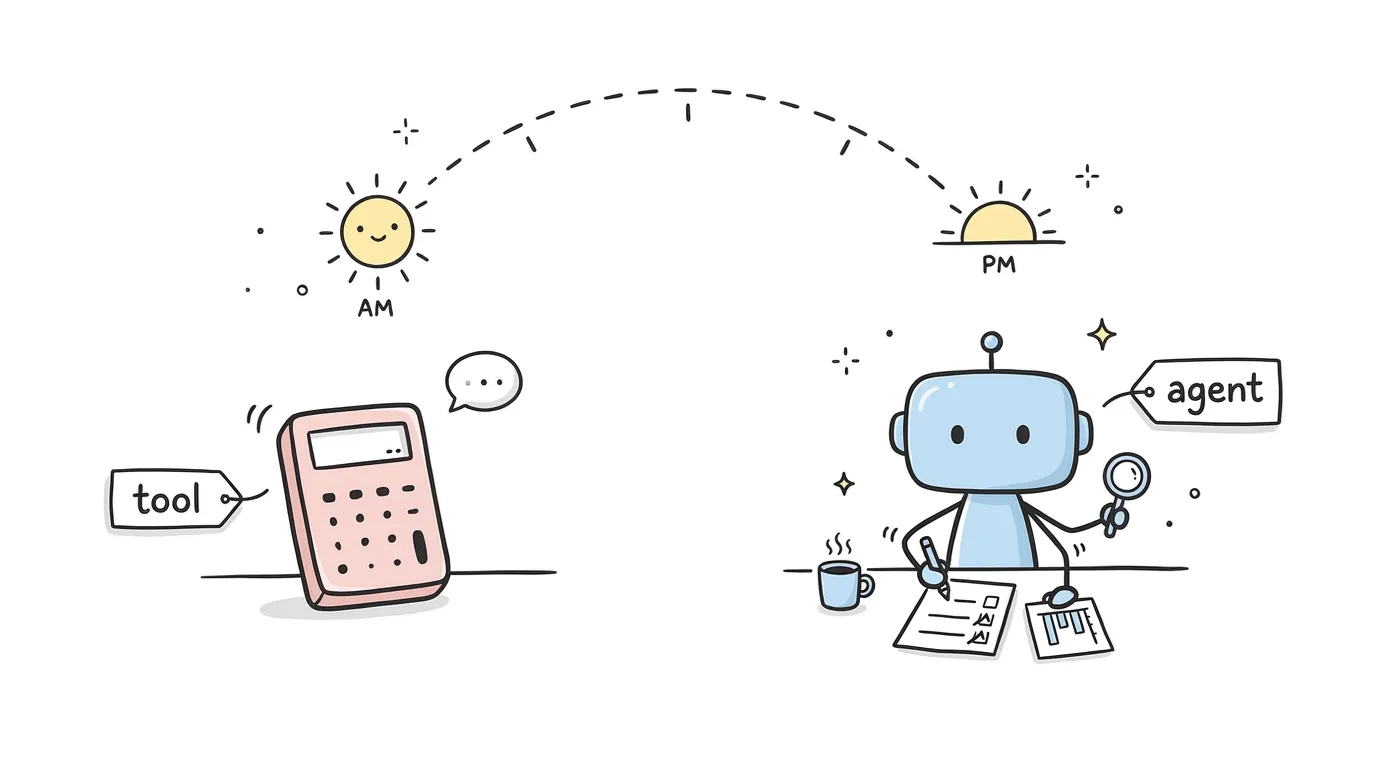
An ordinary AI tool is like a calculator. You press a key, it spits out a result, and then it sits there waiting for your next press.
An AI agent is like a new employee. You spell out the goal clearly, and it checks the data in the morning, adjusts the ad campaigns at noon, emails you the results in the evening — and picks up right where it left off the next day.
Tools wait for instructions. Agents go find the work themselves.
What Makes This "New Employee" Good at the Job?
From what I've observed, a marketing agent that actually works has four capabilities.
First, it runs on its own. Once the workflow is set, it executes automatically, no babysitting required. An SEO agent, for example, watches ranking changes every day, and at the first hint of movement, drafts optimization suggestions for you automatically.
Second, it has a great memory. How useful an agent is depends entirely on what data it can reach. HubSpot's AI tools connect to the customer context inside the CRM: from a customer's first website visit and first email open to the final deal, the agent knows the whole journey. The more complete the data you feed it, the sharper its work.
Third, it orchestrates. In a single run, it can pull data from Google Analytics, push insights into a dashboard, and then give everyone a heads-up in Slack.
Fourth, it reacts fast. Performance agents keep adjusting budgets and swapping ad variants, optimizing in real time instead of waiting for a weekly human review.
The Agent Market Comes in Three Flavors
So where do you start? I've sorted the 2026 agent market into three categories.
The First Kind: Platform Agents You Build Yourself
ChatGPT's Agent Mode is the lightest option. Give it a task, some context, and tools, and you can have a prototype up in minutes to handle light work like summarizing threads or scheduling content. The downside: limited connections to external systems.
Claude's Computer Use is more flexible. It can drive a browser to do complex research: dig through competitor websites, extract the key points, and write the conclusions into a Google Sheet. Controlled entirely through natural language or the API.
n8n is the favorite of technical teams. It's open source, connects to Claude and GPT APIs, and handles lead enrichment and AI reports — customize it as much as you like. With hundreds of ready-made community templates, getting started isn't hard.
Make and Zapier offer similar AI capabilities, though both are paid cloud services.
This route offers the most freedom, but the barrier is right there: you need some API knowledge, and when something breaks, you fix it yourself.
The Second Kind: Enterprise Agents Native to the CRM
The big platforms build agents directly into their own systems. The biggest advantage: customer data lives there by default.
HubSpot houses its AI agents in Agent Hub. Because they connect directly to Smart CRM, these agents natively understand the complete customer journey — from the first landing page click to the final deal.
HubSpot's agents divide the work clearly:
- Content Agent: it doesn't just write copy. Using the buyer personas stored in the CRM, it produces data-driven blogs and landing pages.
- Social Agent: it digs through historical conversion data to find the best posting times for your posts, then schedules them.
- Prospecting Agent: it finds qualified leads and key decision-makers, writes personalized outreach, and follows up on leads automatically. Available starting from the HubSpot Starter plan.
- Data Agent: it combs through CRM records, calls, documents, and web information to do customer research for you automatically.
Want to build your own agent? Agent Builder is included starting with Starter. Billing runs on credits, like prepaid game credits — every task you run deducts a bit: Starter comes with 500 credits per month, and how far those credits go depends on how you use your plan.
On the Salesforce side, Agentforce lets you build custom agents directly inside Marketing Cloud. These agents tap into CRM data, campaign history, and behavioral insights, and can automatically trigger journeys and kick off lead nurturing. Salesforce backs it all with solid official documentation and plenty of ready-made templates.
The Third Kind: Out-of-the-Box Vertical Agents
If you don't want to build your own and don't want to wait for your CRM vendor, just buy ready-made.
For content and SEO, Gauge continuously tracks rankings, spots content gaps, and serves up optimization suggestions. Jasper and Copy.ai specialize in mass-producing content in your brand voice — a fit for teams that need social posts, blogs, and ad copy every single day.
For advertising, the platform-native options lead the pack. Meta Advantage+ and Google Performance Max automatically optimize ads toward the goals you set; Smartly goes a step further, coordinating campaigns across platforms and shifting budgets dynamically.
How do you choose between the three? Here's a comparison table.
| Build yourself (n8n, Claude, ChatGPT) | CRM-native (HubSpot Agent Hub) | Vertical agents (Jasper, Gauge, Warmly) | |
|---|---|---|---|
| Flexibility | Highest — the logic is yours to decide | High — direct CRM data access | Low — fixed workflows |
| Getting started | Requires API knowledge | Works out of the box | Plug and play |
| Maintenance | You fix it when APIs change | Vendor handles it | Vendor handles it |
| Cost | n8n is open source and free; APIs are pay-as-you-go | Included in the CRM subscription, charged by credits | Mostly €50–200 per month |
| Best for | Technically strong teams with unique workflows | Teams of any size | Teams that want to run immediately |
Honestly, though, many teams that run smoothly mix and match the three: build-your-own agents handle customized internal workflows, like special lead enrichment, while standardized work goes to CRM-native or vertical agents.
What Can Agents Actually Do?
Think about it: agents shine in workflows that are repetitive and data-backed. The four most common:
Content and SEO. Agents chase trending topics for blog drafts, monitor keyword rankings, and raise the alarm the moment rankings swing hard. HubSpot's AI tools write and edit for you right inside the platform, using CRM context. There's also a beta of HubSpot AEO worth watching: it shows how your brand is being mentioned in answers from ChatGPT, Gemini, and Perplexity, and tells you how to improve. The tool comes included with Marketing Hub Professional and Enterprise, and can also be bought separately for $50 per month.
Social media. A LinkedIn content agent digs through your best-performing posts, generates new topic ideas from them, and sets up a publishing rhythm.
Advertising. Performance agents keep testing ad variants and shifting budgets, and campaigns that fall flat get paused automatically. ABM agents are even sharper: the moment a target account shows an intent signal you care about, they trigger a personalized journey.
Reporting and analytics. Reporting agents pull data every week from Google Analytics, Meta Ads, and HubSpot, turn the insights into dashboards, and send them automatically to the team's inbox. Forecasting agents use historical data to estimate the trajectory of lead volume and CAC.
Let's do the math. If the weekly report eats 4 hours of your team's time every week, that's about 200 hours a year — 25 full workdays. Those 25 days could have gone to strategy and customer meetings.
If You're Ready to Get Started, What Should You Look For?
I'd suggest four criteria.
- Start from one specific pain point. Don't go "full AI" right away. Pick one concrete pain — like "the weekly report eats 4 hours" or "our LinkedIn scheduling is always a mess" — and go with whichever solution treats that pain most directly.
- Check whether it can reach your data. An agent that can't touch your CRM, analytics, and social data is working blindfolded, no matter how smart it is. The smoother the integrations, the fewer manual exports. If you're already on HubSpot, Agent Hub has a built-in advantage: your data and existing business workflows already live on the same platform.
- Think about whether it can grow. One agent today; tomorrow you may want it to handle more. Platform agents like n8n grow with your needs; vertical agents often hit the ceiling of their own tool pretty quickly.
- Ask whether your team can actually run it. Platform agents need colleagues who know some APIs and are willing to debug; anyone can pick up a vertical agent, but there's little room for customization.
There's one more point I want to set apart.
Delegate the execution to the agent. Keep the steering wheel in your hands.
An agent can optimize your ad campaigns on its own, but decisions like whether to approve the budget, who to target, and how to word the core message should stay with people.
As for pricing, it varies widely by platform, usage, and features. HubSpot, for instance, bills by subscription and credit usage — check the latest pricing and product docs before you commit.
My Core Judgment
An AI agent's power doesn't depend on how clever the model is. It depends on how close it is to your customer data.
Cramming a pile of isolated AI tools together only creates new data silos. Each tool manages its own patch, and nobody can see the real revenue impact. House your agent inside the CRM, and it finally gets the customer context it needs to do useful work — and connects to your marketing, sales, and service workflows.
If you want to try it, the starting point is simple: the free HubSpot CRM already includes the Breeze assistant, at zero cost. To go a step further, get Starter — Prospecting Agent and Agent Builder are both included. List price is €20 per seat per month; for new customers, it's €7 per seat per month on annual billing, or €10 per seat per month if billed monthly.
Oh, and that friend from the beginning.
Last week he messaged me: this week's report had been calculated and sent to the group chat by their reporting agent, all on its own — without tagging a single person.
He replied with two words: "So good."
Here's hoping your marketing team, in 2026, hands the repetitive work over to these tireless digital colleagues too.
Spend the time you save on the things only humans can do. Think strategy. Meet customers. Make judgment calls.
Continue reading
Related articles

What Is GEO? How Your Brand Gets "Mentioned" in the Age of AI Search
An explainer on GEO (Generative Engine Optimization) for e-commerce and DTC brands: how it differs from SEO and AEO, why AI answers shape brand visibility, and eight practices covering question-focused content, consistent brand messaging, structured pages, external evidence, comparisons, and AI mention tracking.

AI Is Already Making Decisions for Your Customers. Are You on the List?
A learn article explains GEO (Generative Engine Optimization): why AI-generated answers now shape which brands customers see, and how SEO fundamentals, entity clarity, citable evidence, and monthly measurement affect visibility in AI answers.
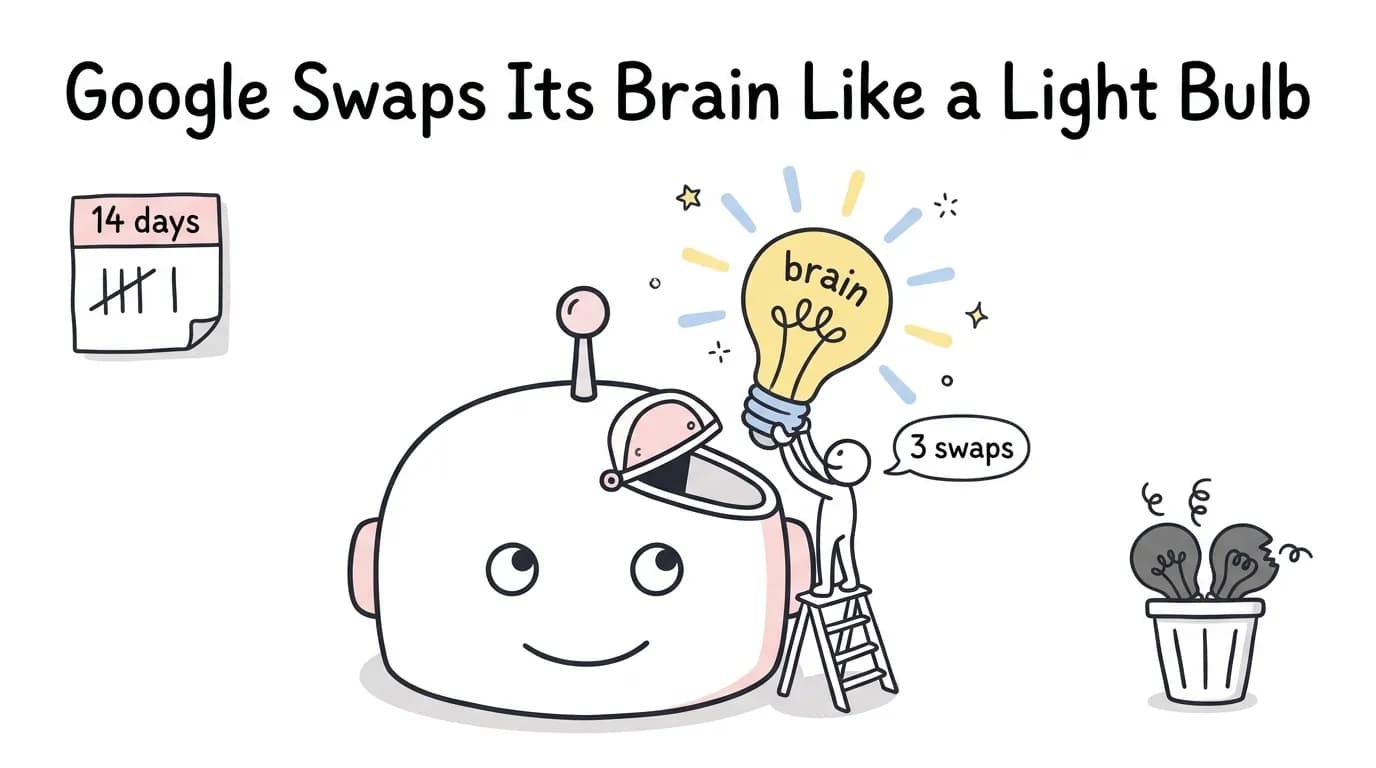
Google Swapped Its Brain Three Times in Two Weeks — the Search Table Just Got Reshuffled
A learn article reviewing recent search-industry developments, including Google's rapid AI model swaps, AI Overviews and AI Mode expansion, ads entering AI search, and social platform updates. It advises marketers to track whether their brand appears in AI-generated answers.