
The Customer Asked an AI Before Placing the Order
A marketing commentary reviewing June AI-advertising developments: higher conversion rates from AI-referred traffic, Facebook's AI Mode sourcing answers from on-platform content, ChatGPT's new product feed ads capability, six ad platforms launching MCP servers, and hands-on testing of Google's Gemini Omni video model,业
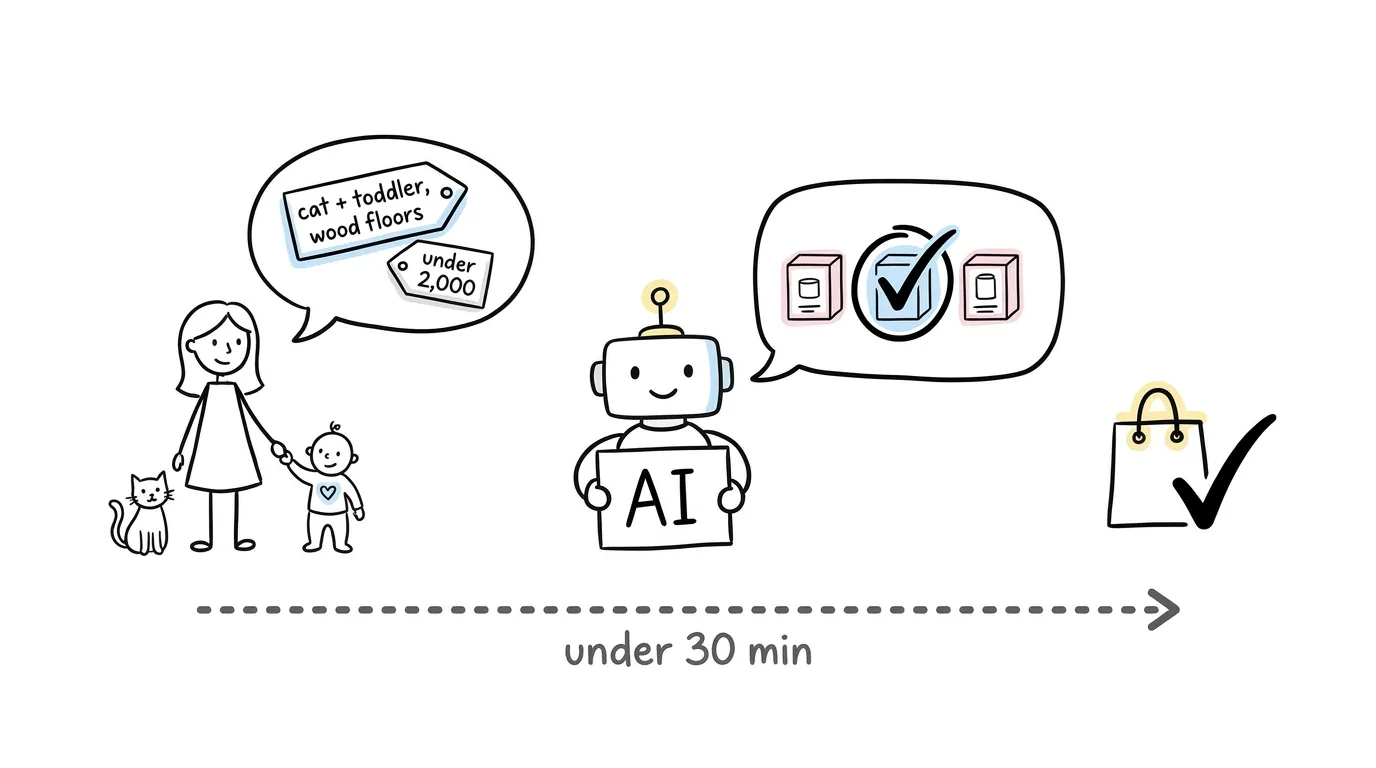
A few days ago, my cousin was shopping for a floor washer.
She didn't open a shopping app. She didn't search around comparing prices. She didn't even come ask me. She went straight to an AI: "We have a cat and a toddler, wood floors, budget under 2,000 yuan — which one should I get?"
The AI gave her three recommendations. She clicked in, took a look, and ordered.
The whole thing took less than half an hour.
It dawned on me, a little late, that this order had never passed through the old playbook we marketers have been guarding.
Then I went back through the big advertising stories of June this year. Five of them, and every single one tells the same story.
Let's take them one at a time.
Visitors from AI Actually Buy More
Data first.
In June this year, Reuters ran an analysis of retail and e-commerce conversion data and found that visitors arriving from channels like ChatGPT, Perplexity, and Google's AI Mode converted at a rate roughly 42% higher than the average web visitor, and spent 48% more time on site.
42%. That's nearly half.
Adobe's Q2 report added another number: across its network of retail customers, AI-driven traffic to websites was up 393% year over year.
Why do visitors from AI buy more?
Think it through and it's obvious. In the past, someone clicking in from a search box might just be wandering around. Now, someone first asks an AI "which floor washer works for a home like mine," the AI sharpens the question for them — and only then do they click through.
They weren't there to browse. They were there to get something done.
So what should you do? Two things.
First, go into your analytics dashboard and slice out AI-sourced traffic as its own segment. That step costs nothing; you can do it today. A channel you can't see is a channel you can't optimize.
Second, take SEO seriously. At its Marketing Live event mid-year, Google said so itself: who AI recommends still comes down to the same things search has always weighed — structured product data, clear descriptions, genuine reviews, substantive content.
Brands whose SEO is solid are already reaping the rewards in AI's organic results.
SEO isn't dead. It's now the foundation that GEO stands on. (GEO, Generative Engine Optimization — making your brand the source that AI engines cite and recommend.)
Facebook Moved "Just Asking" Into Its Own App
In mid-June, Meta added an AI Mode to Facebook.
What is AI Mode? It means that in Facebook's search box, you can now talk to an AI directly. You ask, and instead of tossing you a list of links, it chews up in-platform content and answers you: discussions from public groups, Reels, community posts, all handed over in a conversational tone. It can even help you plan events, organize a get-together, or recommend somewhere to eat nearby.
Notice one detail: the answers are all built from on-platform material — and after answering, it tries its best to keep you on the platform.
What does this mean for advertisers?
It means the things you post in public groups and the Reels you publish have changed in nature. They used to be community management, seeding interest. Now, they are the raw material an AI draws on when answering users' questions.
A user asks, the AI quotes. Your content is the textbook AI learns from.
So there's one practical task to do right now: go back and review everything you publish publicly on Facebook. Is what AI relays outward the same thing your brand means to say? If the two don't match, what ends up skewed is the mouth that speaks for your brand.
Will Facebook eventually stuff ads into these conversations? In Meta's history, no piece of real estate has ever sat vacant. It's only a matter of time.
OpenAI Laid the Pipes for Selling
Now, OpenAI. In June this year, it added product feed capability to ChatGPT's advertising platform.
In plain terms: you can upload your entire product catalog into its ads backend and let the system generate ads from the catalog in bulk, instead of crafting them one by one. It also added an attribution mechanism called user objects, which ties "who saw the ad" more tightly to "who placed the order."
You only feel the weight of this move against the backdrop.
ChatGPT sees roughly 50 million shopping-related questions every day. Before this, though, its ad slots were basically text slots: see the brand, click, and that was it.
With a product feed, the nature of it changes. A user asks "which floor washer is right for me," the AI answers, and then hands over your product card. The gap between "seeing" and "buying" just got filled.
This playbook of matching products to people is the one Google and Meta have lived off for over a decade. Now OpenAI is patching in the same infrastructure, piece by piece — and it isn't moving slowly.
If you're in e-commerce, this one is worth getting your hands on early.
Six Platforms Opened a Door for AI
And one more story that looks minor but, I think, has serious staying power.
On June 17, Pinterest and Microsoft Advertising each launched official MCP (Model Context Protocol — a standard that lets AI plug directly into external platforms and tools) servers. Add the earlier Google Ads, Amazon Ads, Yahoo DSP, Meta, and TikTok, and that makes six.
What is MCP? The protocol was originally built by Anthropic and is now governed by the Linux Foundation. Simply put, it's the standard power socket between AI and the ad platforms. Plug in, and the AI can read real-time data from your ad accounts directly — no more building a separate integration for every platform.
Of the six that launched, most are read-only: the AI can pull data, check account health, and suggest optimizations, but it can't touch your bids or budgets. Meta and TikTok went further, opening both read and write.
Used to be, keeping an eye on six platform accounts meant six dashboards and six reports to pull. Now one AI assistant reads them all in one go, and can even flag which account looks off.
Fast. Genuinely fast.
But here I have to pour some cold water. AI can read the data. It can't read you. It doesn't know a client had some falling-out with your team three years ago, and it doesn't know whether that overspend was a budget your boss tacked on at the last minute or a campaign that genuinely ran off the rails.
AI pulls the data. You make the call.
The work those few words stand for? It's one cost you can't cut.
AI Makes Video: Usable Now, but Don't Let Go of the Reins
Last, something I've actually used.
At Google I/O in May this year, Google released Gemini Omni, a video generation and editing model. In June, I spent a full month seriously testing it.
Its signature strength is multi-turn editing: have it generate a clip, then keep going — "change the background to a beach," "add a sunset" — one instruction at a time, and the characters in the scene don't morph from shot to shot. The physics hold up too: flowing water, falling objects, all believable enough.
Right now, Gemini Omni Flash is open to subscribers of AI Plus, Pro, and Ultra, usable in the Gemini App and Google Flow; there are free routes on YouTube Shorts and Create. Every generated video carries Google's SynthID watermark, which is a responsible touch.
In my testing, for b-roll and for bringing static product shots to life, it genuinely delivers. Quality is good enough, style is controllable, and it is fast.
But. The moment a human appears in frame, it stumbles.
In the same scene, a character doesn't match from one second to the next. In one clip, a character was holding a glass of red wine; the camera cut, and it had become a glass of hard liquor. You ask it to fix it, it fixes that spot and breaks another.
So my usage rule is clear: product animations and environment shots, use with confidence; anything with people, review frame by frame before it ships. Don't hand the production budget you just saved to a single clip with a glaring continuity error.
Closing Thoughts
Back to that floor washer at the start.
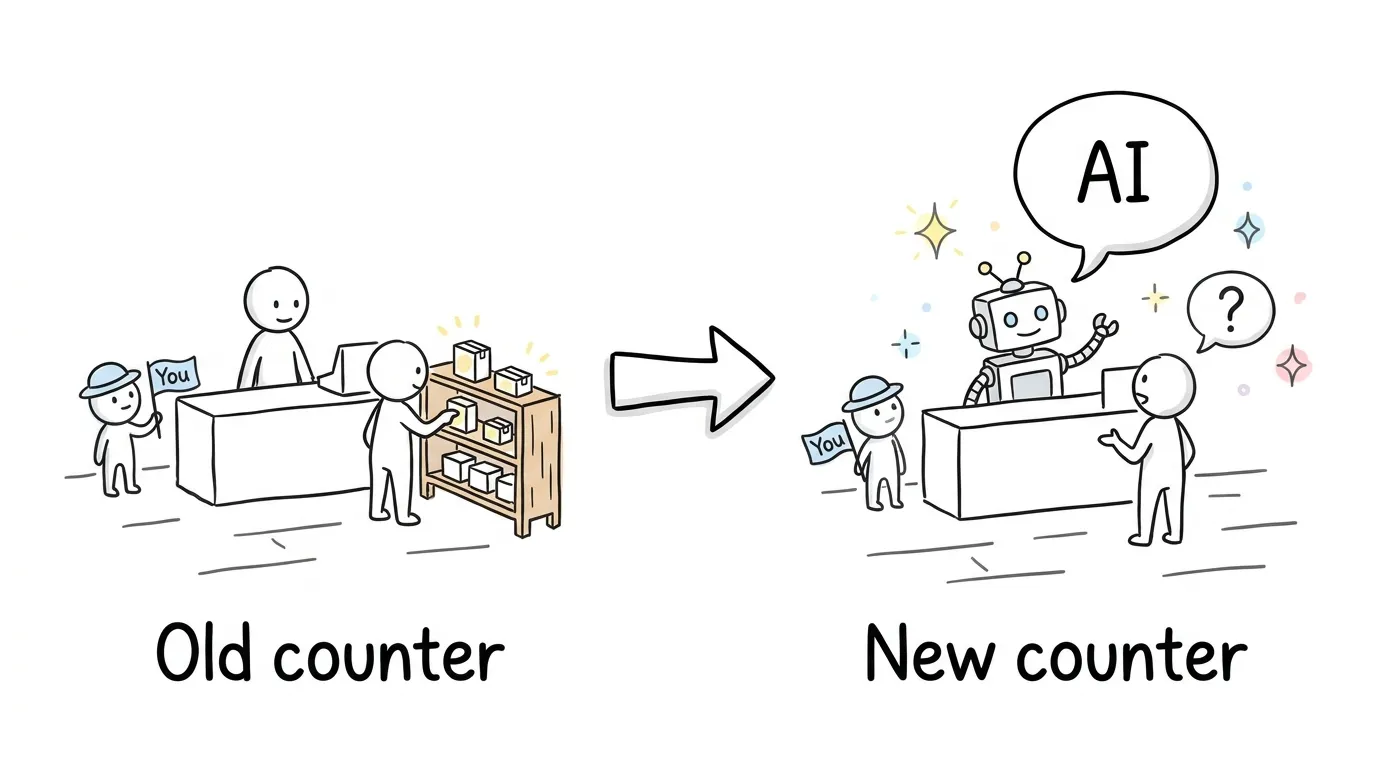
What that order told me is this: the place where customers ask their questions is becoming the new counter. The data says the customers over there buy more; Facebook is moving Q&A in-platform; OpenAI is laying the pipes for selling; six platforms opened a door for AI; and the cost of producing video is collapsing.
The tools are all in place.
But inside every one of these stories hides the same word: judgment. Which channel's numbers to trust, whether to accept the AI's recommendation, whether a generated clip needs another revision. A machine can't do any of that for you.
The counter has changed. The person standing behind it is still you.
Continue reading
Related articles

When AI Does the Creative, Mistakes Come in Batches Too
A learn article on the risks of using generative AI for marketing creative across brand, legal, compliance, and operational layers, with case examples and seven practices for review, rights clearance, documentation, and vendor governance.
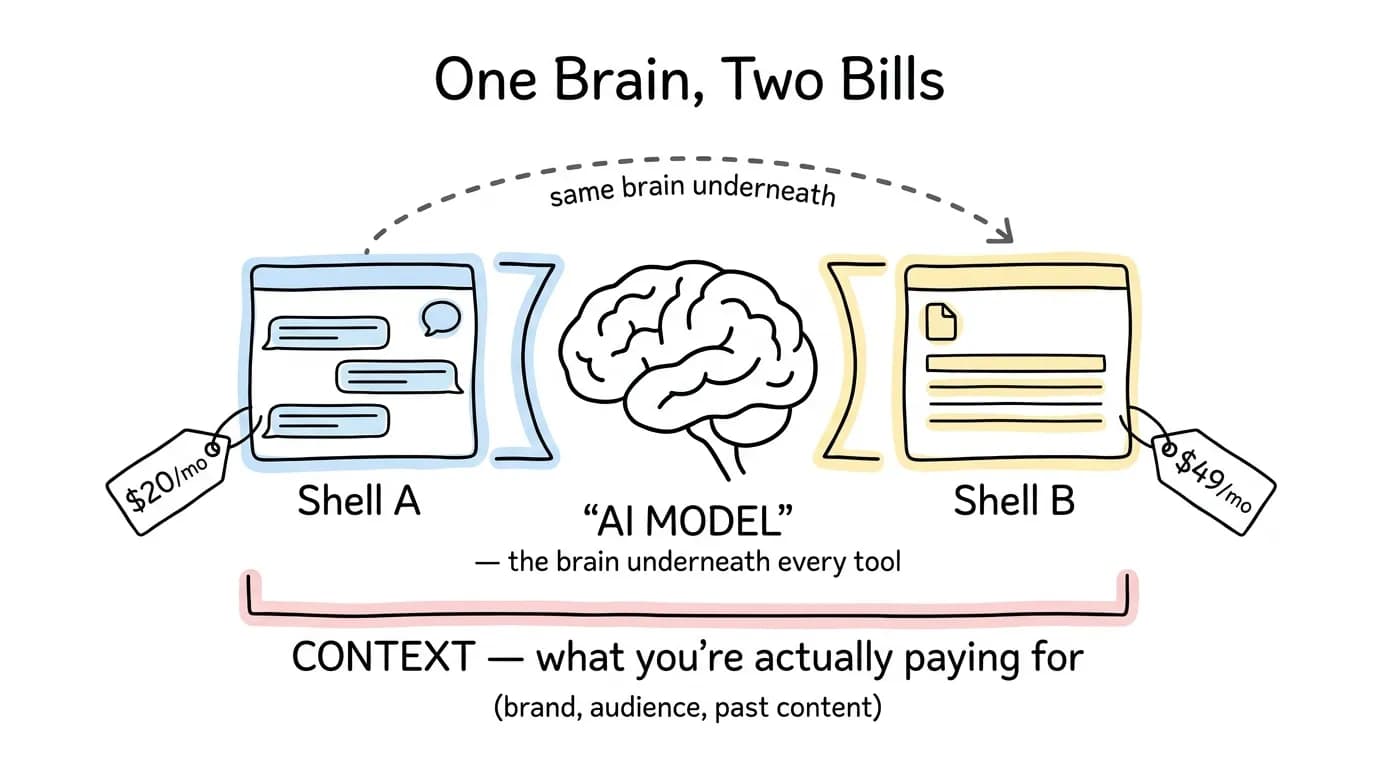
Which AI Should Your Startup Actually Use for Marketing?
A startup marketing guide explaining the difference between AI models and tools, sorting tools by job (writing, research, design, leads, email, video ads), and outlining a 30-day test plan for choosing them. It also covers generative engine optimization and budget trade-offs.
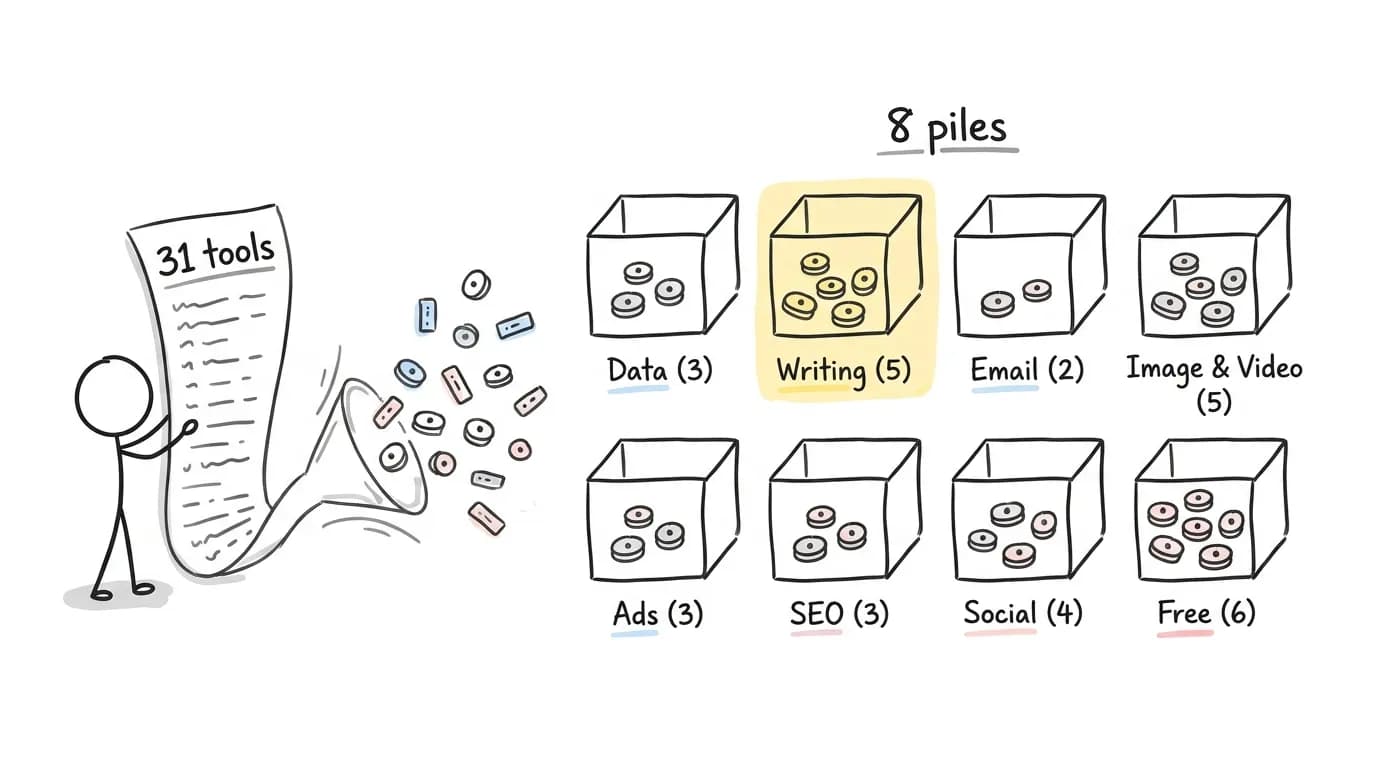
31 AI Marketing Tools, Reviewed One by One: How Exactly Should You Spend the Money?
A review of 31 AI marketing tools grouped into eight categories, covering data, content, email, video, ads, SEO, social, and free options, with guidance on choosing one strong tool for your most frequent task and testing free tiers first.