
The Advertising Business Is Being Redone by AI
An explainer on how AI now handles real-time ad bidding and targeting across Meta, Google, TikTok, and LinkedIn, comparing each platform's data strengths and tools, with advice on choosing platforms based on where your customers' data lives.
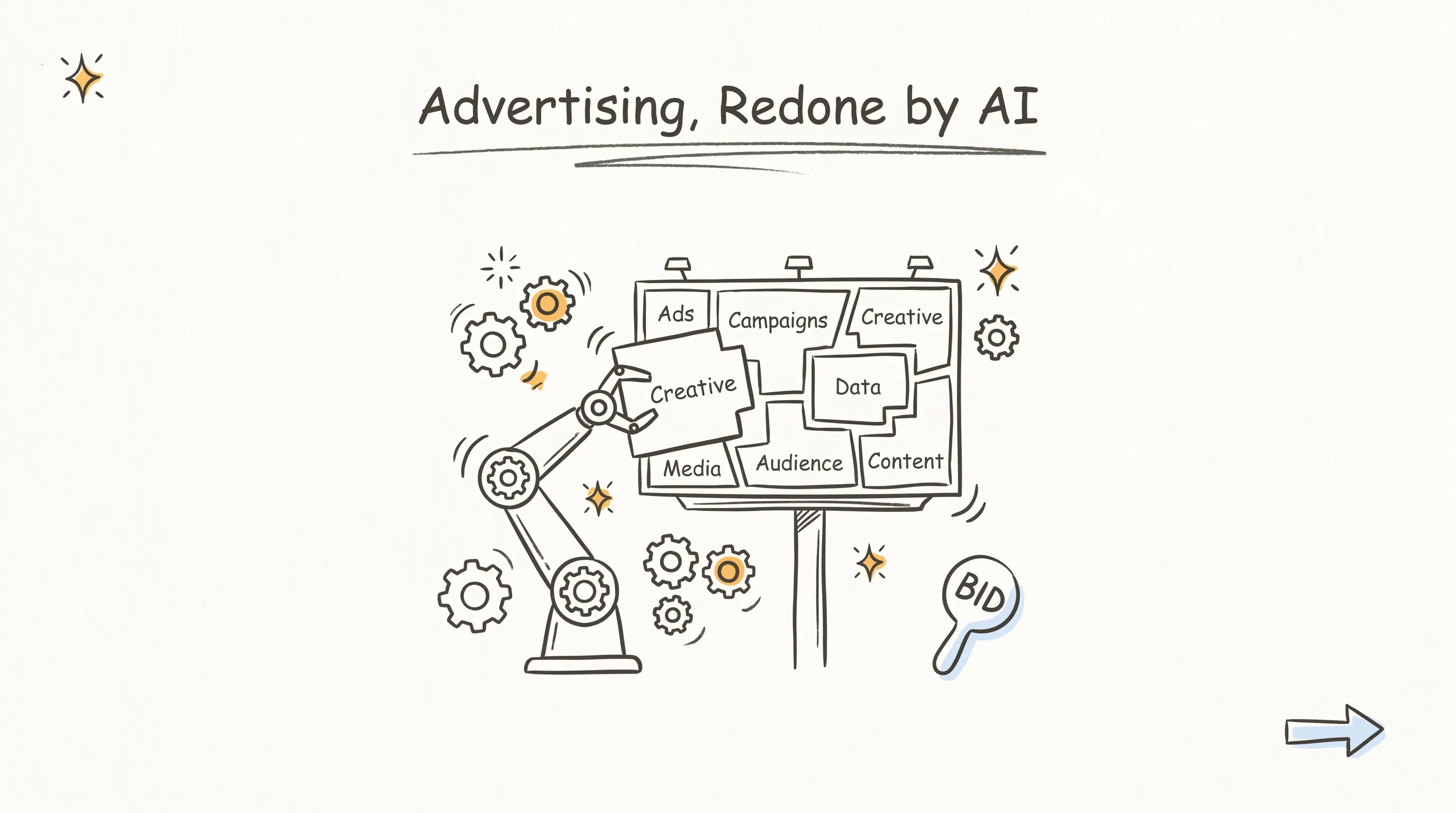
A few days ago, an e-commerce friend invited me to dinner. Halfway through, he pulled out his phone to show me his ads dashboard: hundreds of ad combinations running in the account each day, with bids adjusted over a thousand times.
I asked: you changed all those yourself?
He said: change nothing. The machine changed them all itself.
I was stunned for a moment. He added one more line that stuck with me: my job long ago stopped touching bids. My job is telling the machine who should see what.
Good grief. That sentence deserves unpacking.
First, What Exactly Did AI Take Over?
What is AI-powered ad delivery?
One sentence: matters you used to decide are now decided by machines in milliseconds — and they decide every single time.
Think about it: the instant an ad appears on your Meta feed, what happened? An auction. Countless advertisers are bidding for that fraction of a second of your attention — whoever bids sensibly and whose content is more relevant to you wins.
These auctions run hundreds of thousands of times per second.
Watched by humans? Humans can't even watch one.
So Meta, Google, TikTok, and LinkedIn — all four are doing the same thing: handing the paddle-raising to machine learning models. The machine reads your behavioral data, guesses whether you'll click or buy, and decides in real time whose ad lands in front of your eyes.
The platform hasn't changed, the auction hasn't changed. What changed is the hand holding the paddle.
Four Platforms, Four Hands of Cards
Do these four play the same way?
No. Each holds different data, so the tools that grew out of them are completely different.
Meta first.
Meta holds Facebook and Instagram, and what it knows best is your life. What you like to watch, what you like to buy, whom you interact with — it remembers all of it.
Its killer move is Lookalike Audiences. What is a lookalike? You upload a list of existing customers, the machine breaks those people's traits apart, and searches over a billion users for "people who look like your customers."
It also has Dynamic Ads: you looked at a pair of shoes on some site and didn't buy; turn around to scroll Instagram, and those shoes chase after you.
It even saves you the copywriting. Based on historical performance data, it automatically suggests ad copy and images.
One sentence on Meta: it knows what kind of person you are.
Now Google.
Google knows something else: your questions. What you type into the search box tells it what you're worried about at this moment.
So its Smart Bidding logic is: every search is an auction, and the machine combines signals — device, location, time — to set a separate price for your single search.
Responsive Search Ads are even more interesting. You supply a batch of headlines and a batch of descriptions; the machine permutes and combines them itself — whichever combination clicks more plays more often. Like a horse race: the faster horses run more races.
Small shop owners, don't panic — there's Smart Campaigns: set your budget and goal, hand the rest to the machine.
One sentence on Google: it knows what you're worried about at this moment.
Next, TikTok.
TikTok is a content platform, and what it knows best is your "hooked moment." Which video stopped your scrolling finger — it knows precisely.
So its whole play revolves around content. Smart Optimization adjusts budgets in real time, moving money to ads that perform; creative optimization tools run A/B tests to see which version of material actually makes people pause.
The most playful is Branded Effects: AI-made AR effect stickers that let users take selfies with brand props. Is this still an ad? It's clearly a toy.
One sentence on TikTok: it knows the moment you'll stop.
Finally, LinkedIn.
LinkedIn knows your profession. Title, company, role — all written in your profile.
B2B is a business negotiated deal by deal, with long decision chains — spray-and-pray is useless. So its Matched Audiences lets you match directly against customer lists; Dynamic Ads swap content by each person's professional profile: whatever your title, that's what it talks to you about.
One sentence on LinkedIn: it knows who you are in the workplace.
You see, all four platforms are answering the same question: this ad — to whom, when, and how.
Tools Are Moves. Data Is the Inner Power.
Someone asked me: so many tools, I can't remember the names — what do I do?
I said you don't need to remember. Tools change yearly, names get renamed, buttons get moved.
What to remember is the thing underneath: each platform's AI uses the data it knows best to make judgments for you.
Meta knows life, Google knows questions, TikTok knows interest, LinkedIn knows profession.
So before choosing a platform, ask yourself one question: which dataset are my customers hiding in?
Selling consumer goods — go to Meta and TikTok. Living on search traffic — bet on Google. Doing enterprise services — hold LinkedIn. Pick the wrong pond, and the cleverest machine can't fish out any fish.
Looking Ahead, a Few Things Are Basically Certain
Personalization will get ever finer. Yesterday it was segmenting by audience group; tomorrow it's "one person, one version." The same pair of shoes — the copy pushed to you and pushed to me may be two entirely different scripts.
More and more content will be AI-generated. Writing copy, making images, cutting video — AI drafts, humans select, fast test, fast swap.
Anti-fraud will matter more. Fake traffic always mixes into ad budgets; while AI invests for you, it must also catch bots for you. Money should be spent on real people.
And privacy. GDPR, CCPA and these regulations have tightened year by year; platforms must find the balance between "knowing you" and "not scraping you." This exam never has a submission date.
Back to That Dinner
At the end of that meal, I asked him: the machine does it all — so what do you do?
He thought and said: the machine raises the paddle. I have to think clearly about who should see what, and when.
I've kept that line ever since.
Tools age, models get swapped, but this question never ages.
The machine raises the paddle. You think clearly: who sees what.
May you see this question one shade clearer than your competitors.
Continue reading
Related articles
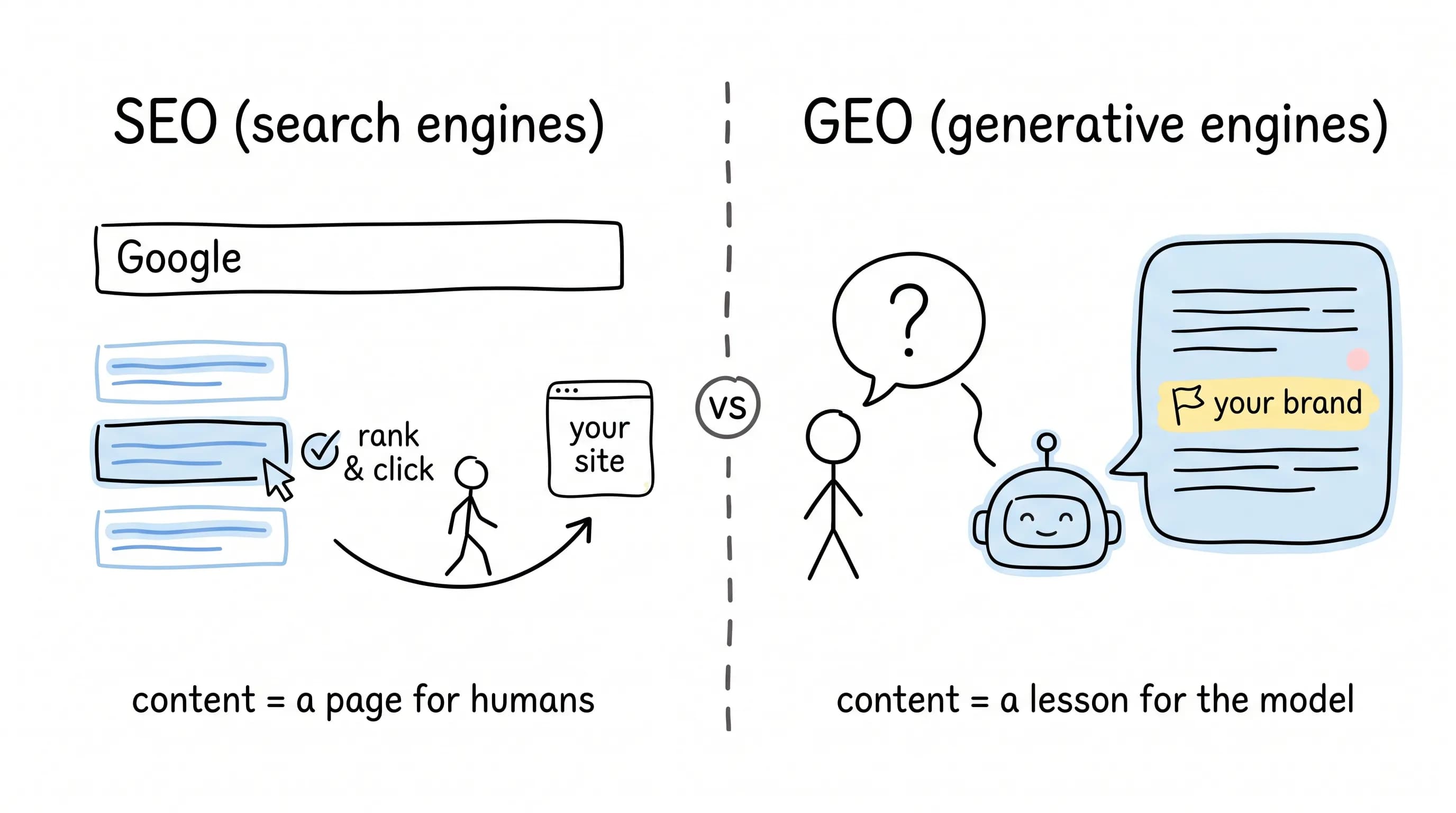
Does AI Know Your Brand? A Look at GEO, the New Craft
An explainer on GEO (Generative Engine Optimization): how AI engines like ChatGPT, Perplexity, and Gemini differ, how GEO goals and metrics diverge from SEO, and which SEO skills still carry over.
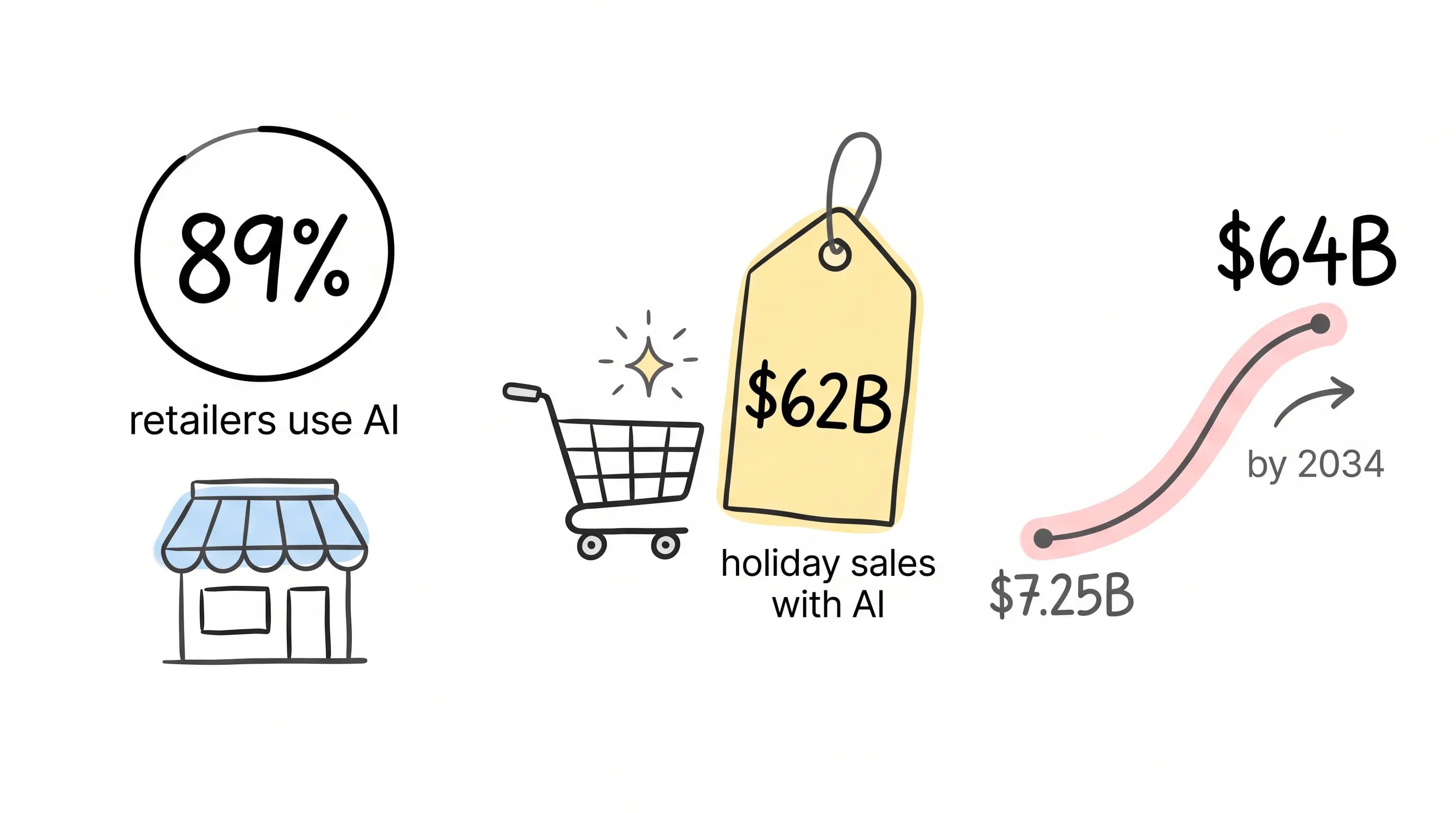
89% of Retailers Are Already Using AI. The Playbook for E-Commerce Has Changed
A learn article on AI in e-commerce: adoption context, use cases from recommendations, search, dynamic pricing, customer service, inventory, and fraud control, plus B2B applications, generative AI content, tool examples, pitfalls, and a six-step adoption path.
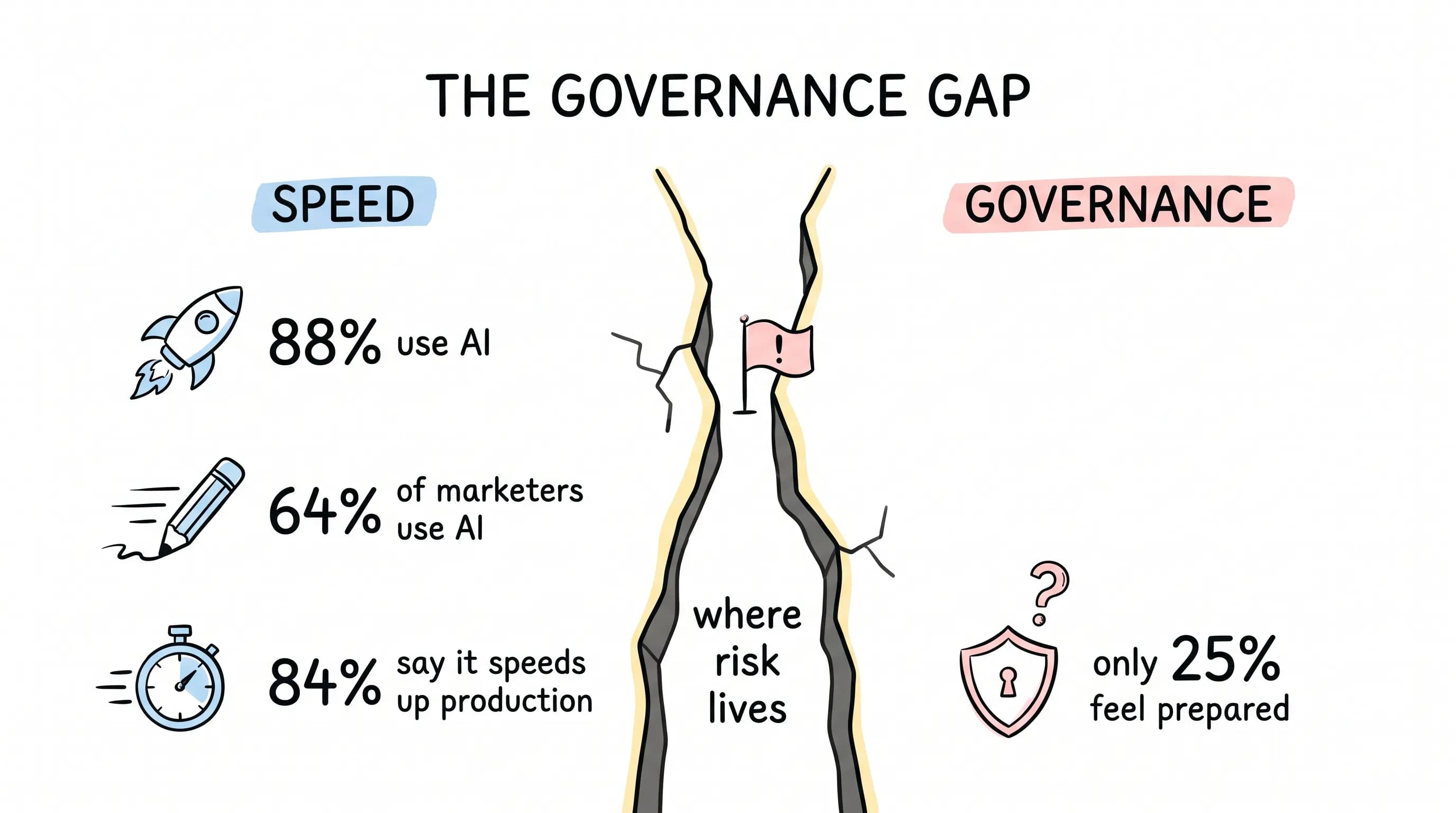
AI Makes Content at Lightning Speed — But Can You Answer "Who Approved This?"
This article looks at the gap between AI content speed and governance readiness in marketing teams, and outlines nine control points — prompt validation, brand guardrails, permissions, approval workflows, human review, versioning, IP checks, audit trails, and asset reuse — for brand-safe AI content.