
Target's AI Traffic Is Up 20x. That Matters More Than the Number Itself.
An analysis of Target's reported 2,000% rise in AI-driven traffic in Q1 2026, its shopping integrations with Google, Microsoft, and OpenAI, and the Universal Commerce Protocol, with takeaways for e-commerce sellers on AI shopping entry points.
A few days ago I came across a set of numbers, and I couldn't stop staring at them.
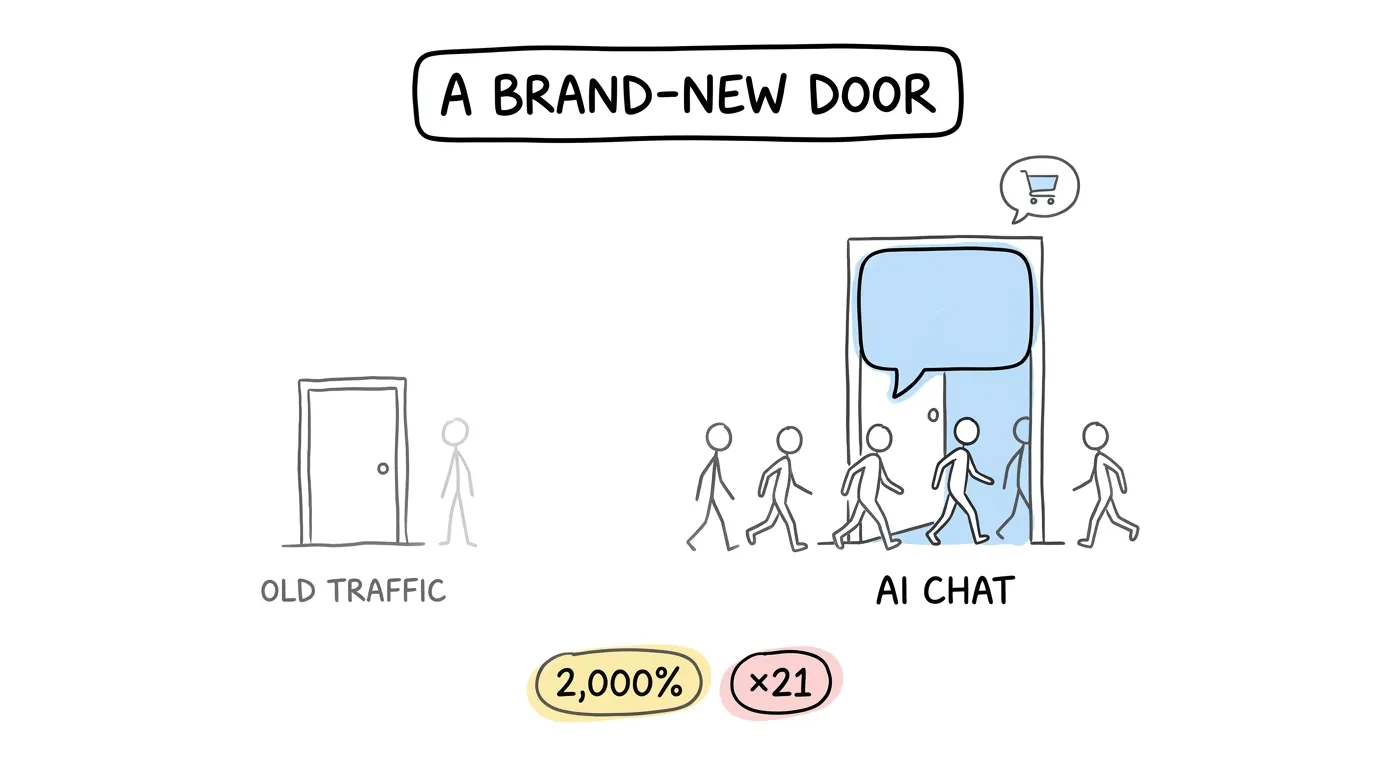
Target — the big American retailer you've probably seen in the movies — saw traffic from AI grow 2,000% in the first quarter of 2026.
2,000%. What does that mean?
That's 21 times. Where 100 visitors used to wander in from AI, now there are 2,100.
You might shrug: traffic goes up, traffic goes down — that's e-commerce for you.
But over the same period, the average AI-driven traffic increase across the entire retail industry was nearly 400%.
Five times is scary enough on its own.
Target did 21 times.
The multiple itself doesn't matter. What matters is this: these people came in through a brand-new door.
What Does "Shopping Inside AI" Mean?
Think about how you shop online today.
Open a shopping app, search, scroll down, compare prices, add to cart, check out. The whole routine takes ten-plus minutes.
Now here's a different way to play it.
You open ChatGPT, or Google's AI Mode, or Gemini, or Microsoft Copilot. You say: I want to replace the coffee maker at home, budget under 800, and ideally something easy to clean.
The AI chats with you for a bit, picks out a few models, walks through the pros and cons of each. You like one, you tap once, and it's in your cart. Your Target Circle membership was linked ages ago, so you can check out without ever leaving.
The whole time, you never even opened Target's website.
This isn't some far-off fantasy. Target is the first major retailer to make this real. It is working with Google, Microsoft, and OpenAI at the same time, moving its own shelves into all three of these AI entry points.
Finding things, choosing things, rounding out your order, tying in your membership — all of it gets done inside the chat.
So Will AI Decide for You?
This is the question I care about most.
The answer is: no. The ideas come from AI, the money comes from you, and the final say always stays in your hands.
Target's own phrasing is that AI's job is to make everything simple: give you ideas, filter the options for you, and let the deal close smoothly.
Put simply, AI is an extremely knowledgeable sales associate — not the person swiping your card.
That distinction matters. The sales associate can be enthusiastic, but you're the one who has to walk to the register.
Sarah Travis, who leads digital and revenue at Target, says that more and more people are discovering products and finding inspiration inside AI environments, so Target might as well go meet them on that path; partnering early with these tech companies is about helping customers turn "interest" directly into "action."
Prat Vemana, their chief information and product officer, added a line I found refreshingly grounded: consumers have started shopping through conversation, and on where this goes next, Target wants to pitch in and help set the direction. However the technology changes, the plan is to learn fast, collaborate closely, and make the experience feel smooth, trustworthy, and unmistakably Target.
In plain language: nobody has any experience with what this new entrance will look like, so get in there first and learn by doing.
Underneath It All Runs a Far More Critical Pipe
All of that is the show out front. What's really worth chewing on is backstage.
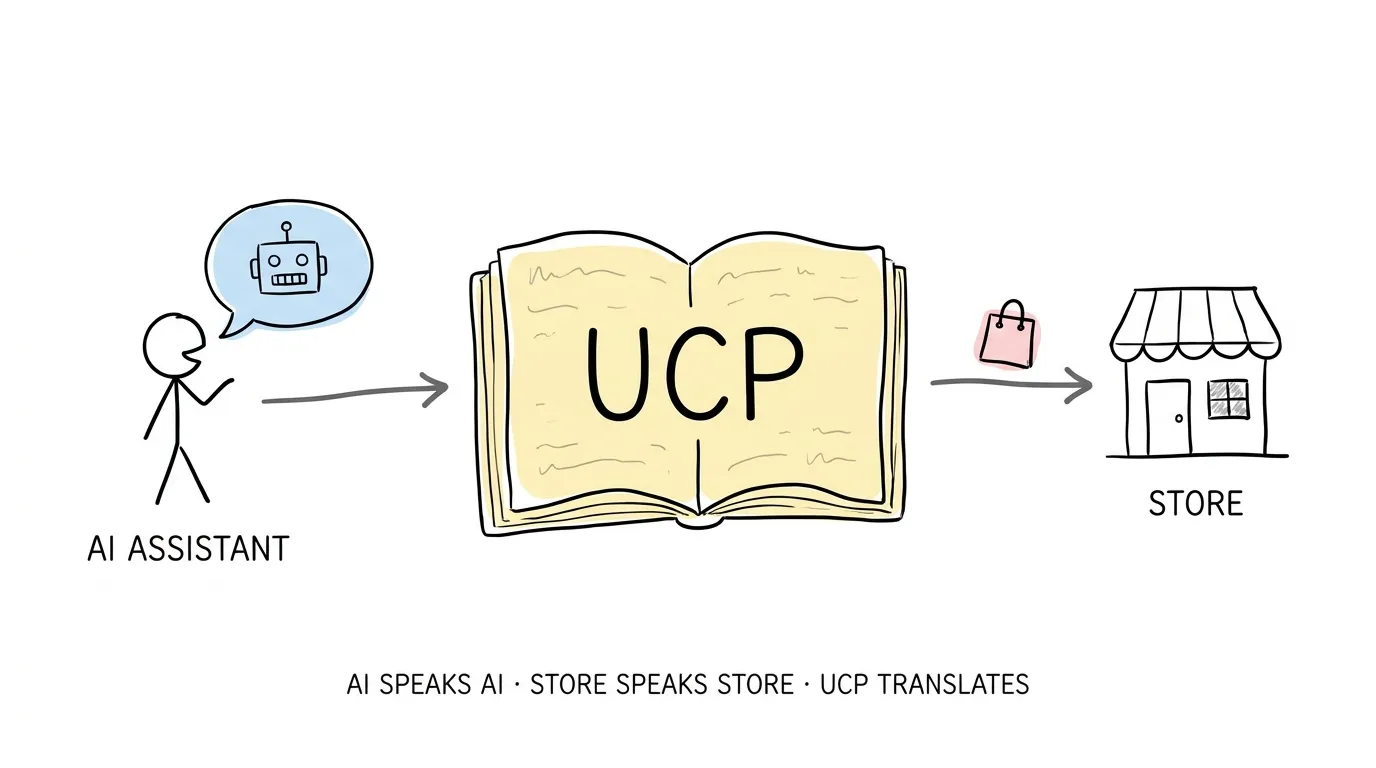
It's called the Universal Commerce Protocol, UCP for short.
What is a universal commerce protocol?
You know how it is: AI and stores never spoke the same language. AI speaks AI, the store speaks store, and in between, humans do the hauling by hand. UCP is an open standard that Google, Target, and other companies spearheaded together — essentially a universal dictionary issued to every AI and every store.
With that dictionary in hand, an AI assistant can actually place an order on your behalf. You say what you want to buy inside Google Search, and you can buy Target's goods right there, without ever leaving the conversation.
Ashish Gupta, who runs the shopping merchants business at Google, weighed in too: he's glad to have built UCP together with Target and the others, so customers can check out directly inside Google Search (AI Mode included) and the Gemini app.
Look — the entrance is moving out of the search box and the app, and into the conversation.
E-commerce used to compete on who had the better placement and the louder ads. From here on, the contest may be whose products AI can read, AI can recommend, AI can sell in a single sentence.
What Does This Have to Do With You?
If you run e-commerce, or the company you work for sells anything, I'd suggest committing Target's 2,000% to memory.
Not so you can copy them — it's that they showed everyone one thing ahead of time: where users buy things really does change.
And it changes faster than you'd think. The industry average is 5x; Target is 21x. The ones who move first eat the share that belonged to everyone else.
Oh, and Target's own website and app haven't been sitting idle either — they're being re-polished with AI insights: sharper recommendations, faster checkout, member perks that actually fit the people earning them.
A bet on the new and the old at once. That's how the smart players play it.
Maybe before long, you and I will get used to telling a chat box: "That's the one."
Looking back one day, this quarter of 2026 may well be the dividing line.
Continue reading
Related articles

What Is GEO? How Your Brand Gets "Mentioned" in the Age of AI Search
An explainer on GEO (Generative Engine Optimization) for e-commerce and DTC brands: how it differs from SEO and AEO, why AI answers shape brand visibility, and eight practices covering question-focused content, consistent brand messaging, structured pages, external evidence, comparisons, and AI mention tracking.

AI Is Already Making Decisions for Your Customers. Are You on the List?
A learn article explains GEO (Generative Engine Optimization): why AI-generated answers now shape which brands customers see, and how SEO fundamentals, entity clarity, citable evidence, and monthly measurement affect visibility in AI answers.

Google Is Stuffing Ads Into AI Search: These Recent Stories Are Really One Story
A news roundup linking recent AI marketing stories—Google adding ads to AI Mode, Amazon's Ads Agent, ChatGPT image updates, a UK startup tracking brand mentions in AI answers, and an AI ransomware warning—arguing that control over ad data and visibility is shifting toward platforms.