
So Your Company Is Using Generative AI? First, Count the Traps Underfoot
A learn article on the risks of using generative AI for business content: it cites a McKinsey survey naming inaccuracy the top concern, notes only 27% of companies review AI content line by line before official use, and argues for human review gates and dedicated AI governance.
A few days ago I had dinner with a friend who works in marketing. The moment he sat down, the complaints started: his company uses AI to write things, and efficiency has genuinely gone up. But last month, AI made up an industry statistic that doesn't exist anywhere — and it went straight into an external report.
He now has a new daily job: fact-checking the AI.
I told him that rang a bell. In July 2024, McKinsey ran a survey of 1,491 businesspeople around the world, asking exactly one question: what worries you most about using generative AI?
Forty-two percent of the respondents came from companies with annual revenues over US$500 million. These are people who have seen a thing or two.
The results are in. The No. 1 worry is not what most people would guess.
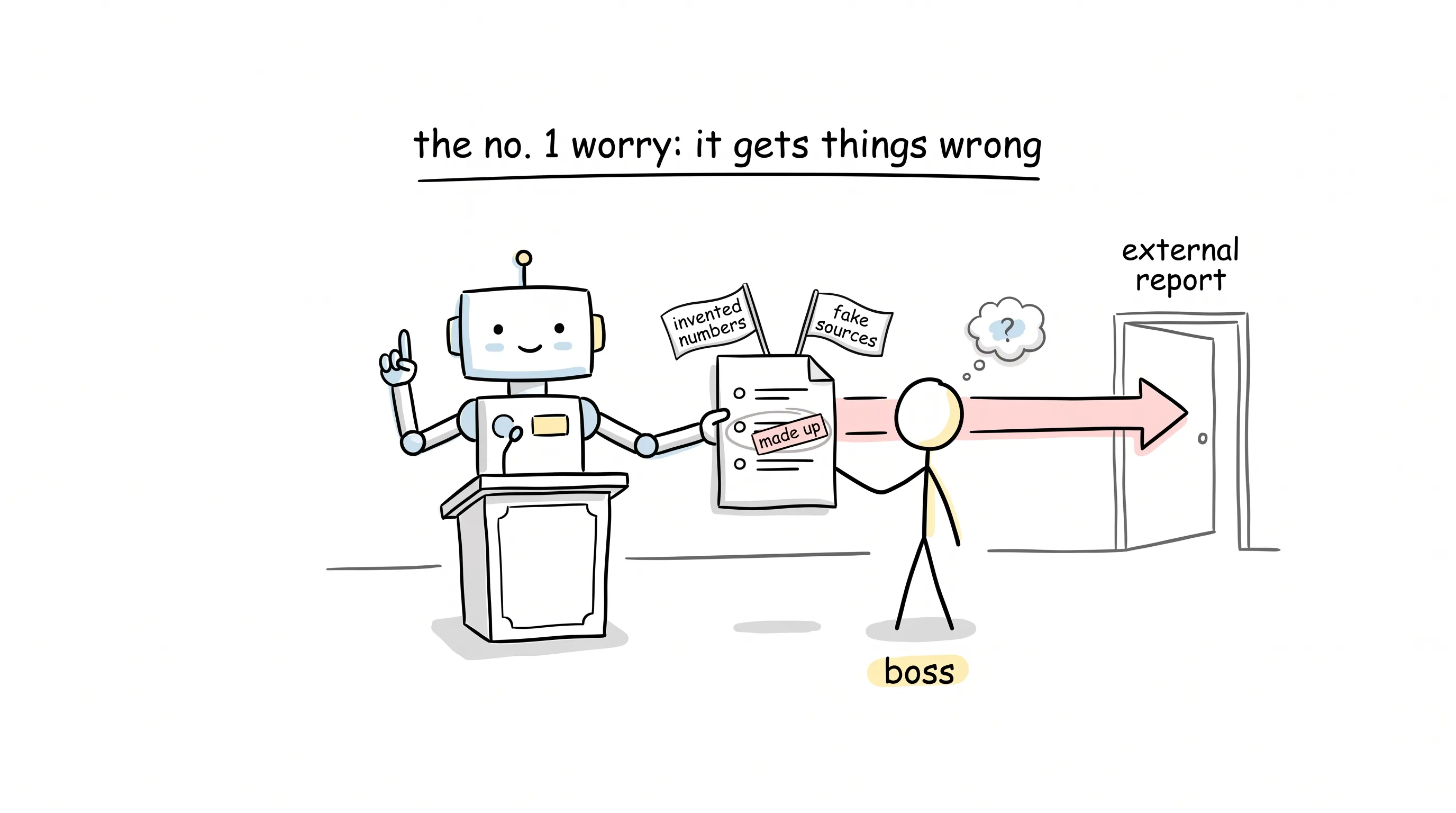
What Worries People Most: AI Gets Things Wrong
What does "inaccurate" mean here?
It means the AI makes things up with a perfectly straight face.
The numbers are invented, the sources are fake, the logic reads smoothly — and the facts are wrong. Worse, it's wrong with total confidence: assured tone, tidy formatting. Unless you scrutinize it, you won't spot a thing.
Think about it: an AI-written industry report cites three sets of data, one of which is fabricated. The boss loves it and makes the call on the spot. And by the time it's discovered, the entire conference room is sitting right there.
Anyone who has tasted that knows exactly how it feels.
Ranked second is cybersecurity. That one is easy to understand: whatever you feed into AI, you can't take back. Client records, internal data, unreleased proposals — if any of it leaks from there, you're in serious trouble.
Then come intellectual property infringement and regulatory compliance. At bottom, two questions: if AI-generated work copies someone else's, what then? And is content made with AI even allowed under the rules?
One is about getting sued; the other, about getting fined.
Worried Is One Thing. Installing the Gate Is Another.
When I read this survey, what actually stopped me was a different number.
The survey asked: does your company have employees review every single piece of AI-generated content, line by line, before it goes into official use?
Guess how many companies actually do this?
27%.
Fewer than 3 out of every 10 companies.
Nearly three-quarters of companies say the right words about AI making mistakes — and still haven't installed the gate.
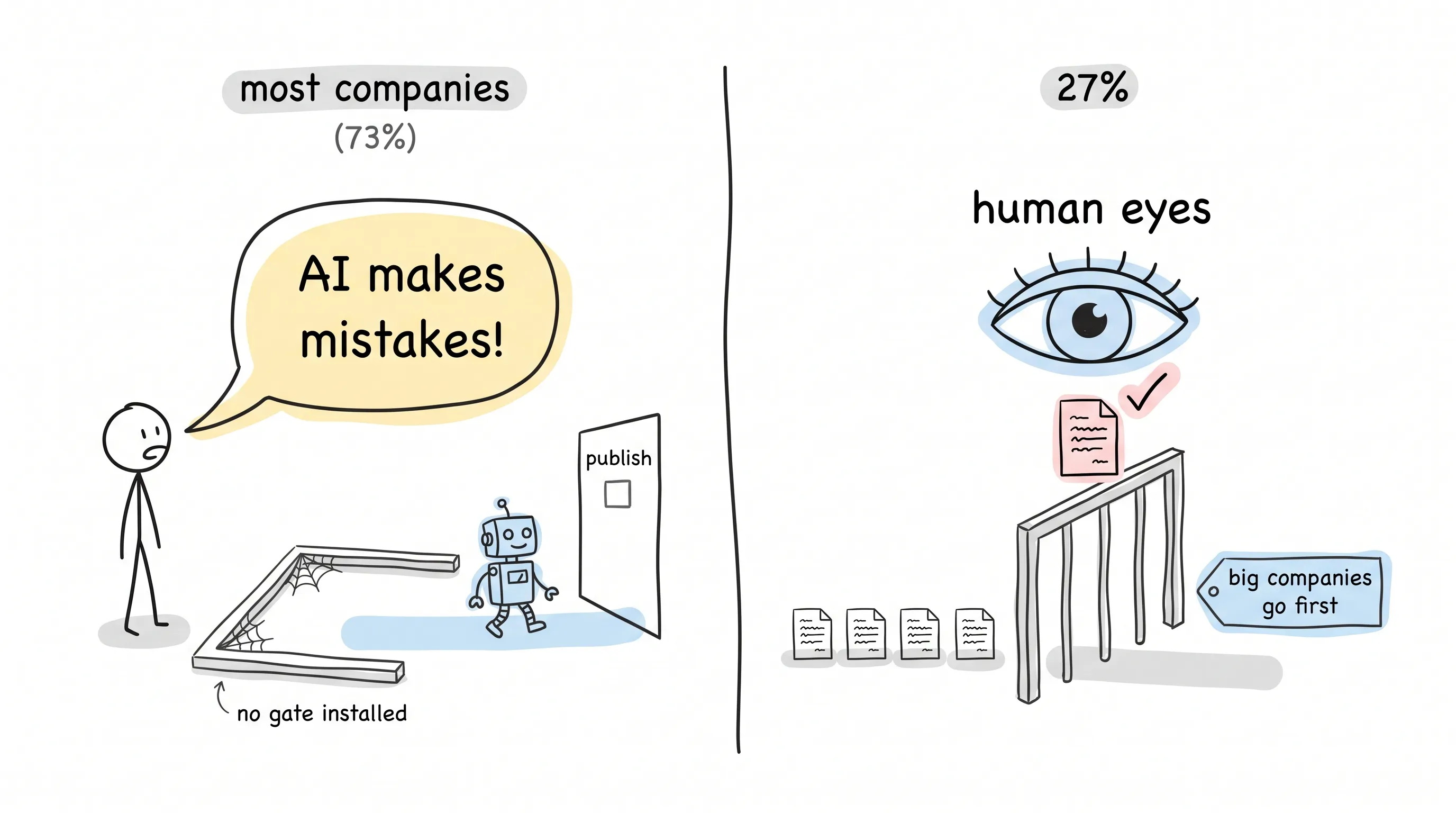
Think about it: a car whose brakes feel a bit soft, with a driver who mutters every day, "These brakes need fixing" — then drives onto the highway as usual. If you're the passenger, how does that feel?
The idea isn't hard to grasp. The hard part is turning worry into an actual gate.
Why Bigger Companies Are Steadier
The survey has one more finding I think deserves to be pulled out on its own.
The bigger the company — annual revenue over US$500 million — the more likely it is to be doing the unglamorous, plodding work: standing up a dedicated team to govern AI use, and communicating and training internally, over and over.
Doesn't that seem odd? Big companies have the heaviest processes and are the slowest movers — how come they're out in front on this one?
My read: big companies are big. A single wrong data point steering a decision off course can cost tens of millions. They can't afford that, so they install the gates first.
Small companies figure "we're not big enough for that to matter" — usually because nothing has gone wrong yet.
Once it happens, they get it.
Back to That Dinner
Near the end of the meal, I asked my friend: so what are you doing about it now?
He said: everything AI produces now has to pass human eyes before it goes out — not a single word skipped. The extra time? Consider it insurance.
I think he did the math right.
The efficiency AI gives you is real money. The mistakes it makes are real money too. If the time you save up front gets paid back double down the road, the deal is a loss.
The stronger the tool, the tighter the gate needs to be.
Here's to getting the efficiency AI promises — and keeping the things efficiency can't buy back.
Continue reading
Related articles

What Is an AI Marketing Agent? From "Using AI" to "Delegating to AI"
A learn article explaining what an AI marketing agent is, how it differs from rule-based automation, and which repetitive tasks such as lead qualification, reporting, and campaign monitoring can be delegated while humans keep key decisions.

Marketing Automation Is Shifting from "You Do It" to "You Say It"
This article explains how marketing automation is shifting from rule-based platforms that merely execute toward AI agents that plan, create, publish, and review campaigns, covering delegable tasks, underlying technologies, tool categories, adoption steps, and risks such as privacy and automating without strategy.

When AI Does the Creative, Mistakes Come in Batches Too
A learn article on the risks of using generative AI for marketing creative across brand, legal, compliance, and operational layers, with case examples and seven practices for review, rights clearance, documentation, and vendor governance.