
She's Not Real, but She Fronted a New Car Launch: Inside the AI Influencer Business—and Its Bottom Line
How AI influencers went from novelty to a real marketing option: the 2020 MINI x Lil Miquela launch, why virtual humans win on creative feasibility rather than cost savings, how brands pair virtual and human creators, and why transparent labeling is the industry's bottom line.
A while back, over dinner, an old friend who has spent more than a decade at a brand agency told me about the campaign that stuck with him most.
In 2020, MINI was launching a new electric car. They didn't hire a celebrity. They didn't hire a car reviewer. They hired Lil Miquela.
Someone who… isn't a person.
My friend said that when the proposal first went out, half the room thought it was crazy and the other half thought it was brilliant. Time proved the brilliant half right.
I went and dug into this case afterward. The deeper I dug, the more interesting it got: today's hotly debated AI influencers—this industry had already written the playbook six years ago.
First, Let's Be Clear About What This Kind of "Person" Is
Who is Lil Miquela?
She has more than two million followers on Instagram. Scroll through her feed and you'll see the life of a textbook influencer: a family photo at Christmas, selfies in the car, a beach vacation, a fresh outfit of the day. Posting, replying to comments, chatting in DMs—she does it all.
There's just one difference: she isn't a real person.
She's a digital human built with CGI (computer-generated imagery), motion capture, and machine learning. The industry calls characters like her AI influencers, or virtual influencers. They live on social platforms just like human influencers do, with followers and brand deals. The only difference is that this "person" herself is designed and manufactured.
She's not the only player. Magazine Luiza, a Brazilian retail platform, has a virtual character called Lu do Magalu who moves product year-round with an almost scary kind of pull. And newcomers like Leyla Love keep pouring in, batch after batch.
Honestly, this stopped being an experiment long ago.
This is an assembly line.
So What Exactly Made That Campaign Brilliant?
Look back at MINI's 2020 campaign. It was crafted by a creative agency called Pulse Advertising, and once it wrapped, it became a case study the industry would cite again and again.
Where was the brilliance? In what Miquela said when she introduced the new car.
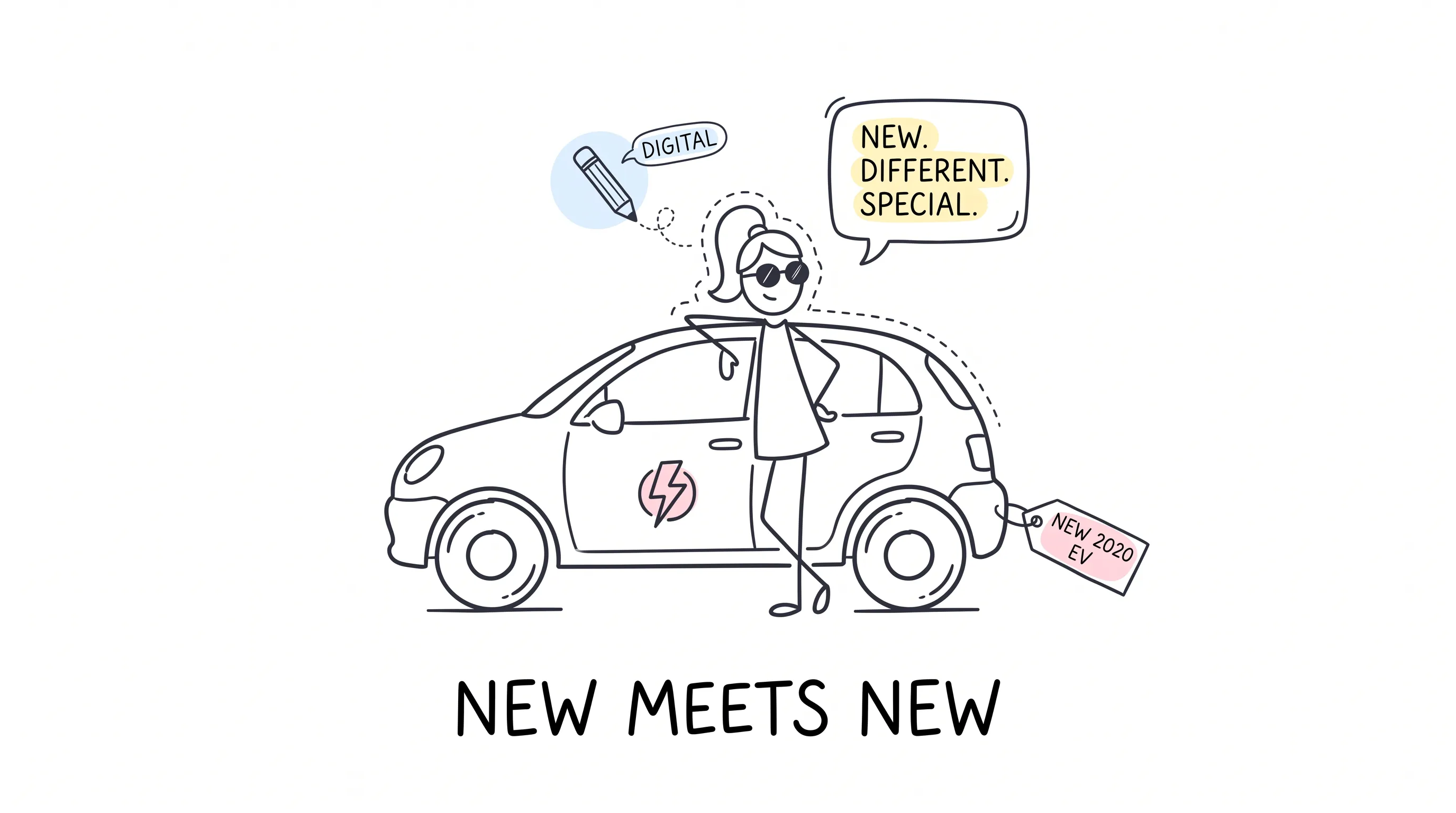
The gist: she and the car have something in common. New. Different. Special.
Sit with that line for a second. A new electric car and a newly created "person," each the perfect footnote to the other. The car stands for a new way of getting around; she stands for a new way of existing. Two "news," lifting each other up.
And across the whole campaign, she sits in the car, leans against it, shares the frame with a real vehicle—seamlessly.
Think about it: could a human pull this off?
Sure. But not with this hook. You've seen a real celebrity endorse an electric car a hundred times; that playbook was worn out long ago. But a virtual human claiming a futuristic EV as her own—saying "she's like me, new and special"—that's a story only she can tell, and she tells it with total conviction.
So here's my point: the value of AI influencers isn't cost saving. It's creative feasibility. Some stories can't be told by humans, or come out wrong when they try. Digital humans opened that road.
Not Stealing Jobs—Just One More Place Setting at the Table
At this point someone will ask: are human influencers about to lose their jobs?
My call: no. And the data is on my side.
A survey of marketers found that 52.8% of respondents believe AI influencers will significantly shape the future of marketing. Now note the other side of that number: nearly half don't see it that way—or haven't made up their minds at all.
But what really tells the story is how brands actually work. Today, AI influencers are used alongside humans, not instead of them: when you need content that stays stable and on-message over the long run, hand it to the virtual one; when you need warmth and die-hard fans, stick with a human.
One handles control; the other handles hearts. Each does its own job.
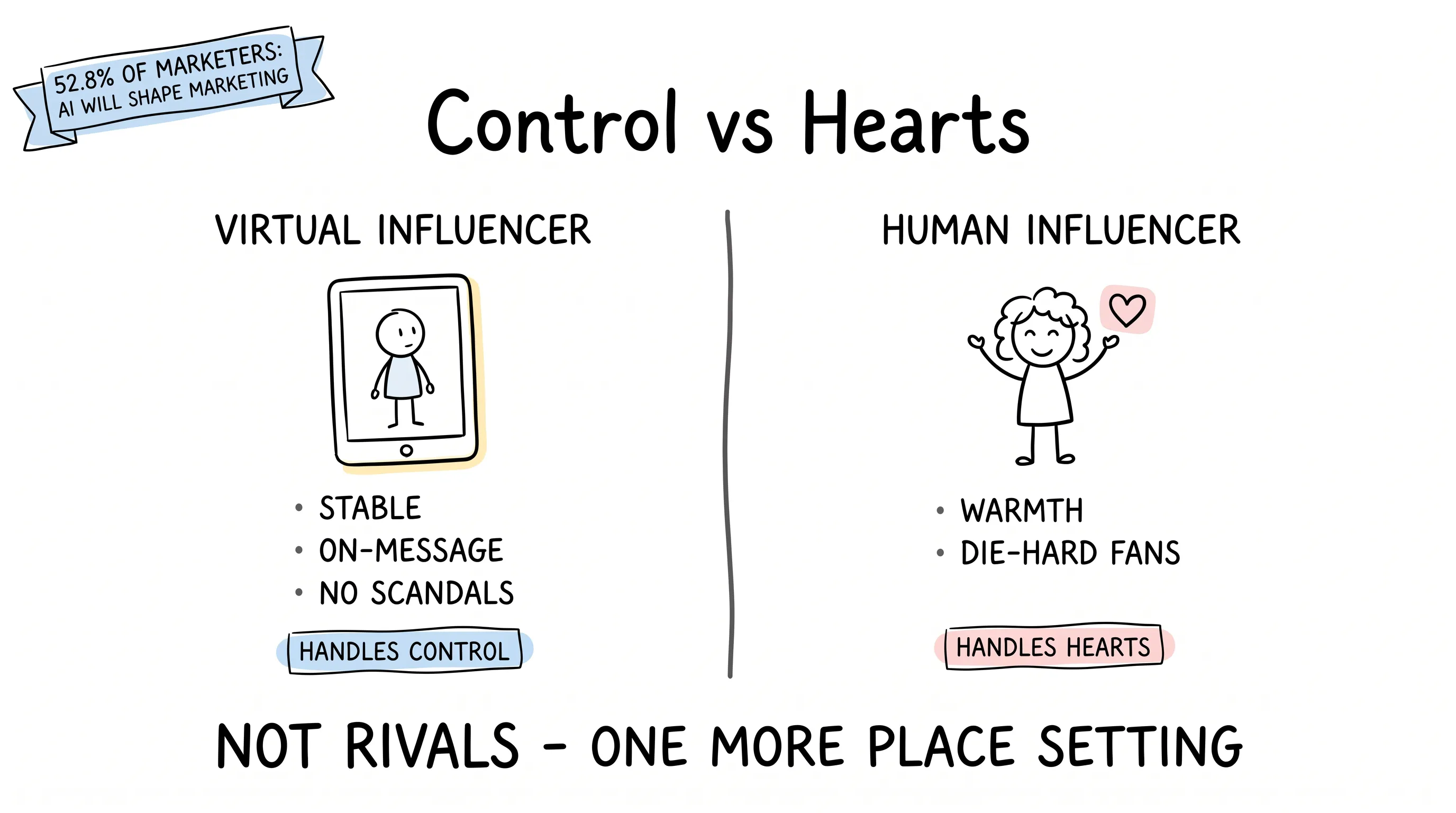
Put simply: the table just got one more place setting.
The Real Lifeline of This Business: Don't Treat the Audience Like Fools
That said, the hotter this track gets, the more I want to stress something else.
Transparency.
You scroll past a blogger online, get moved, get sold, place an order. Then you find out this "person" is code from head to toe. How does that feel?
Most people, it turns out, can accept "she's not real." Virtual idols have been stars for years—Hatsune Miku debuted almost twenty years ago, and people love her all the same, fully aware she isn't real.
What people can't accept is being deceived. It's when you know she's fake, but she's dressed up as human anyway, coaxing the audience into investing feelings—and money.
So the first-principle rule of this industry comes down to one sentence: honestly label which content is AI-generated, and make sure the audience knows exactly that what they're following is a digital creation.
That's not moral preciousness. Trust is the foundation of this business. The entire value of influencer marketing rests on the word "trust": audiences trust a human influencer because she has really used the product and really thinks it's good; audiences trust a virtual human because the brand is willing to say things straight. Once trust is gone, no matter how polished the virtual human is, she's just an animated picture.
The audience can accept that you're fake. What they can't accept is you lying to them about being real.
Back to That Car
Back to that 2020 MINI.
What moves me most about that campaign is actually the timing; the technology comes second. The word "AI" still needed two or three more years to go mainstream, and they had already fused a virtual human with a brand in the most front-and-center way possible, telling a story only that combination could tell.
Six years on, AI influencers have gone from novelty to option. The technology is cheaper, the players are multiplying, and it's time the rules were laid down.
If you're weighing whether to give your brand a virtual human, the campaign left two questions to think through: First, what story can she tell that only she can tell? Second, do you have the nerve to tell your audience, openly, who she is?
Answer both, then make your move.
Here's wishing your brand a story to tell, always.
Continue reading
Related articles

When AI Does the Creative, Mistakes Come in Batches Too
A learn article on the risks of using generative AI for marketing creative across brand, legal, compliance, and operational layers, with case examples and seven practices for review, rights clearance, documentation, and vendor governance.
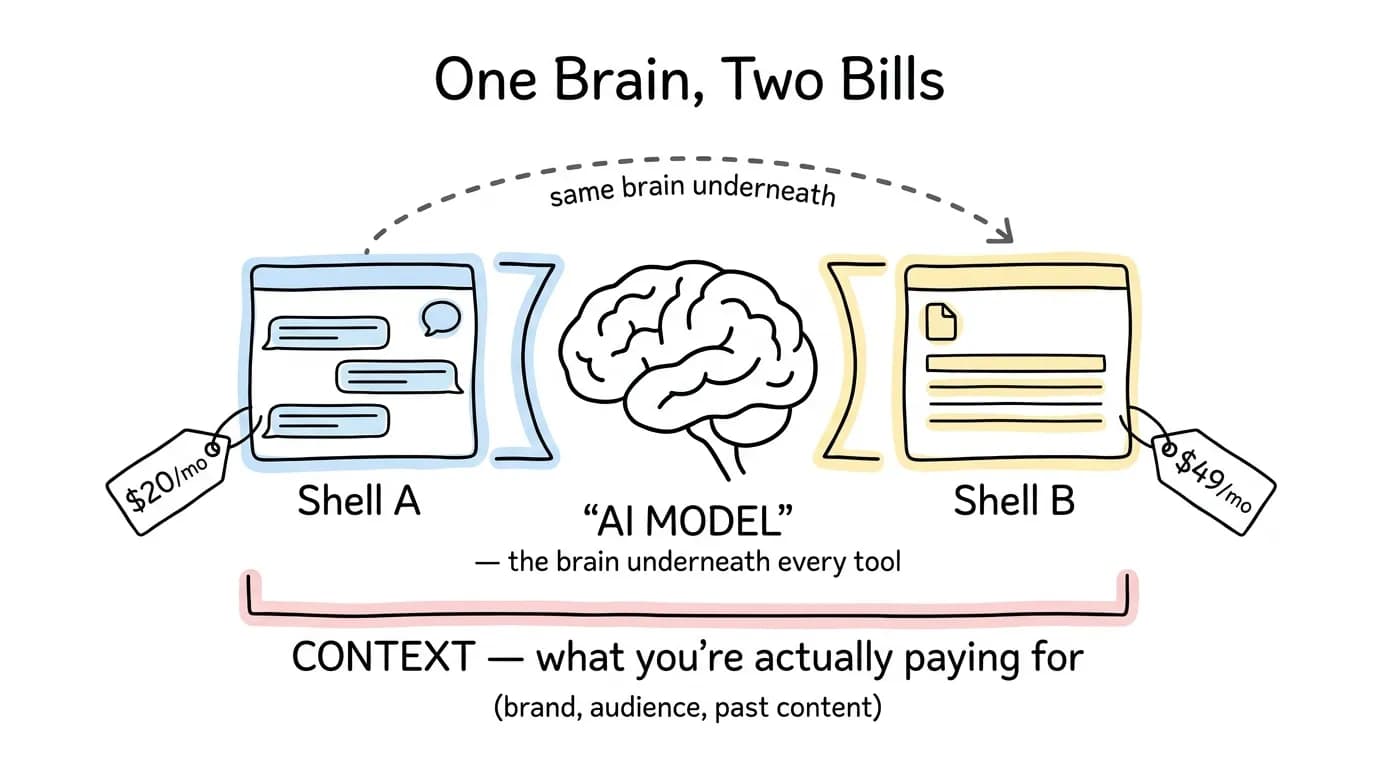
Which AI Should Your Startup Actually Use for Marketing?
A startup marketing guide explaining the difference between AI models and tools, sorting tools by job (writing, research, design, leads, email, video ads), and outlining a 30-day test plan for choosing them. It also covers generative engine optimization and budget trade-offs.
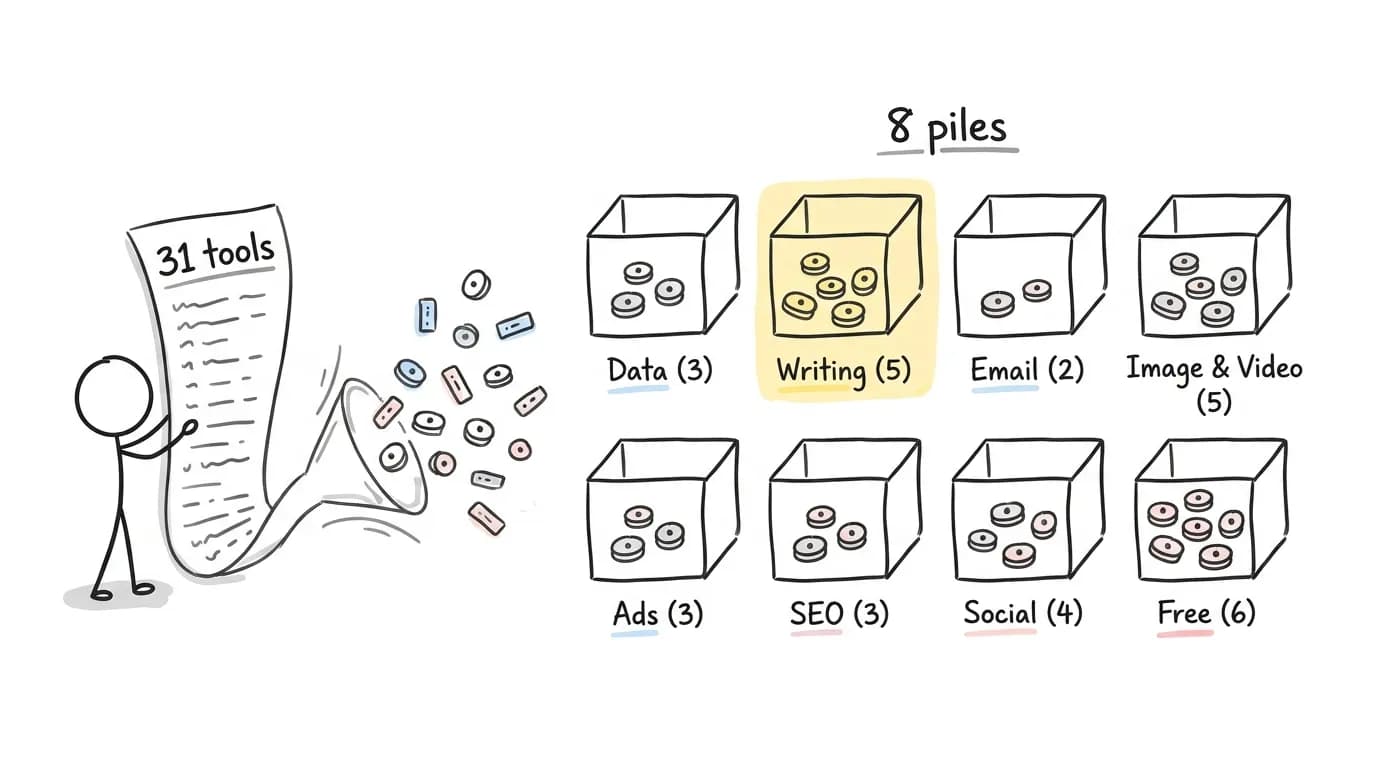
31 AI Marketing Tools, Reviewed One by One: How Exactly Should You Spend the Money?
A review of 31 AI marketing tools grouped into eight categories, covering data, content, email, video, ads, SEO, social, and free options, with guidance on choosing one strong tool for your most frequent task and testing free tiers first.