
Salesforce Launches Koa: AI Is Already This Smart — Why Does It Need a Model That "Knows CRM"?
Salesforce launched Koa, a CRM-focused reasoning model built with Nvidia and trained on synthetic data, while opening its platform to third-party models and APIs. The article explains how AI shopping interfaces like Google AI Mode are shifting product discovery and orders away from brand-owned channels.
A few days ago, a news story crossed my feed. I must have read it three or four times.
At this year's Dreamforce conference, Salesforce launched its own AI model, called Koa — a reasoning model built specifically for CRM, developed together with Nvidia.
What's a reasoning model?
Hold that thought. Let's start with something small.
Ask an AI to write an email to a customer, and it's done in seconds — and it reads beautifully. But ask an AI to "handle this lead," and the trouble begins:
Is the lead even qualified? First you have to check its account history. Once you've checked, does it pass company rules? If it does, does the CRM record need updating? And once it's updated, do you trigger the sales process downstream — or the nurture flow?
None of that tests the AI's way with words. It tests whether it understands how this particular company's business actually runs.
Writing an email is answering a question. Handling a lead is doing a job.
That "doing a job" part is exactly what Koa is built for. Its whole task is to figure out: which tools, which steps, to actually get the thing done.
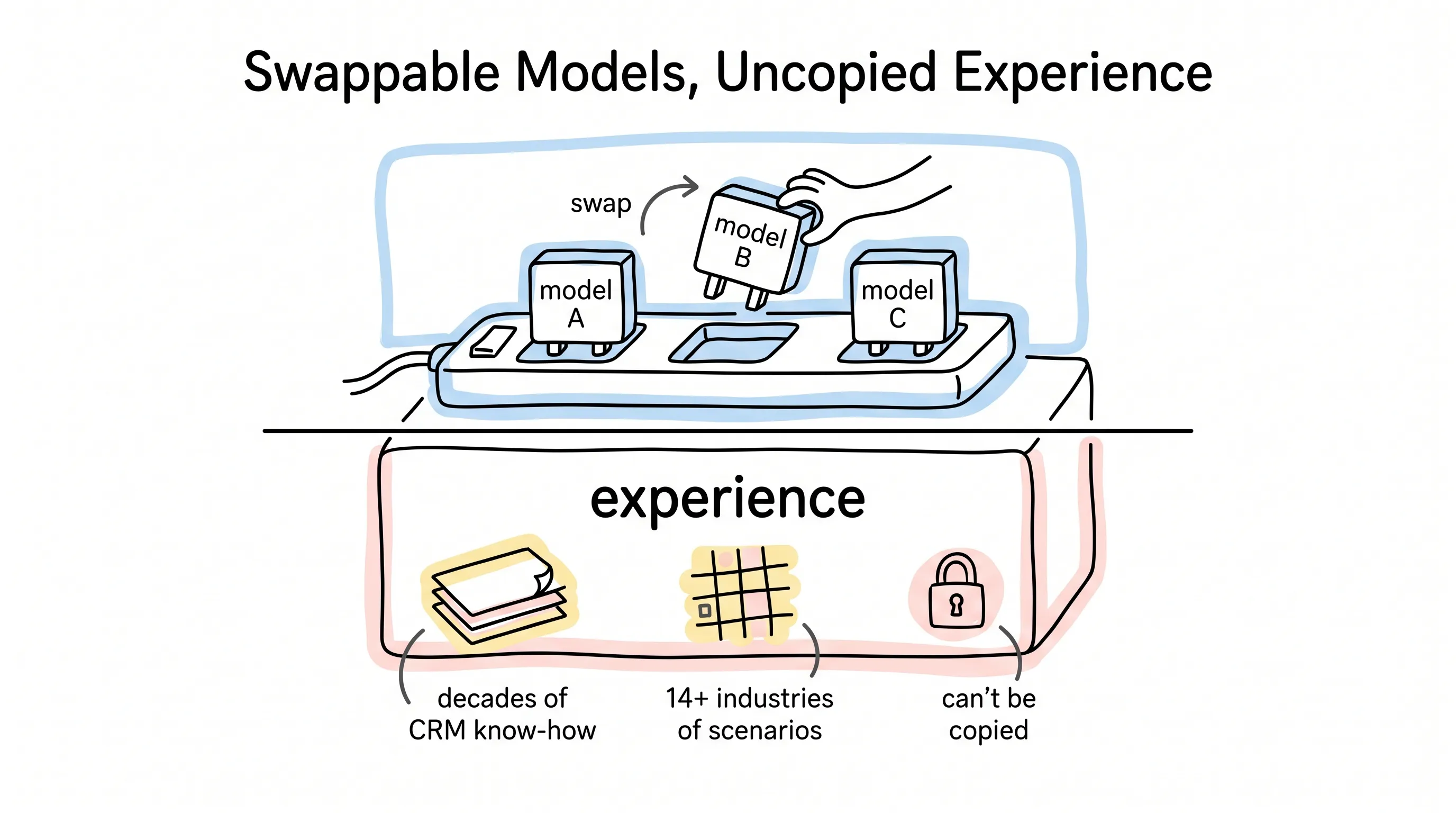
Salesforce CEO Benioff put it roughly this way: the most valuable thing about Salesforce was never the platform — it was the knowledge of "how enterprise business runs," accumulated over decades. That knowledge used to live on the platform, hidden inside its workflows. Now they've poured it straight into the model.
Models can be swapped. Experience can't.
How Do You "Train" a Model Like This?
So here's the question: how do you teach a model to "know the trade"?
The foundation is Nvidia's Nemotron 3 Super. The real work went into post-training (the fine-tuning that happens after a base model is built): Salesforce used its own synthetic data to reconstruct, one by one, the "how business gets done" scenarios from decades of CRM projects, and fed them to the model. Customer data was never touched.
These scenarios span more than 14 industries: how leads get generated, how opportunities get qualified, how service tickets get resolved. And every scenario is labeled with which tool gets called at each step and what the next action is. What the model learns is the complete path to the outcome.
One more thing I find especially critical: the model weights stay in Salesforce's own hands, and inference runs on its own infrastructure. Customer data never has to step outside its trust boundary.
For writing copy, whether data leaves the house doesn't much matter. But the moment AI starts touching customer records, changing data, triggering workflows — that one promise, "data never leaves the house," becomes the whole ballgame.
When can you use it? It's already in customer pilots — Formula 1, UChicago Medicine, and Xero are on the list. General availability in the US is expected this winter.
What's the "Multi-Model" Play?
Here's the interesting part: even as Salesforce pushes its own model, it's inviting everyone else's onto the platform.
Agentforce users can work with Gemini, thanks to the partnership with Google Cloud. The AWS integration has deepened too — models on Amazon Bedrock all plug in: Anthropic's, Nvidia's, OpenAI's, take your pick.
You just launched your own model, and the next move is inviting your "competitors" through the door. What's the play?
The play rests on one judgment: in the marketing tech stack of the future, no single model wins it all.
Brainstorming, research and analysis, drafting content, polishing translations — general-purpose models do all of that well. But once the work involves CRM processes, company rules, customer records — the kind of work where not one step can go wrong — you hand it to a specialist model like Koa.
For marketing operations teams, "choosing a model" will become routine homework, just like "choosing a vendor": cost, accuracy, speed, whether it can touch customer data, governance requirements, the price of a mistake. Every variable feeds into who gets the job.
It's like staffing a company. You'd never hire just one kind of person. Some jobs, a sharp generalist handles fine. Others, you need the twenty-year veteran.
The Interface and the Engine Are Splitting Up
There's an even more intriguing move on this chessboard.
Last month, the Salesforce–Anthropic partnership (Claudeforce) went live: Salesforce's data, business logic, and actions now sit directly inside Claude. The interface became optional — you can get the work done entirely in Claude without ever opening Salesforce.
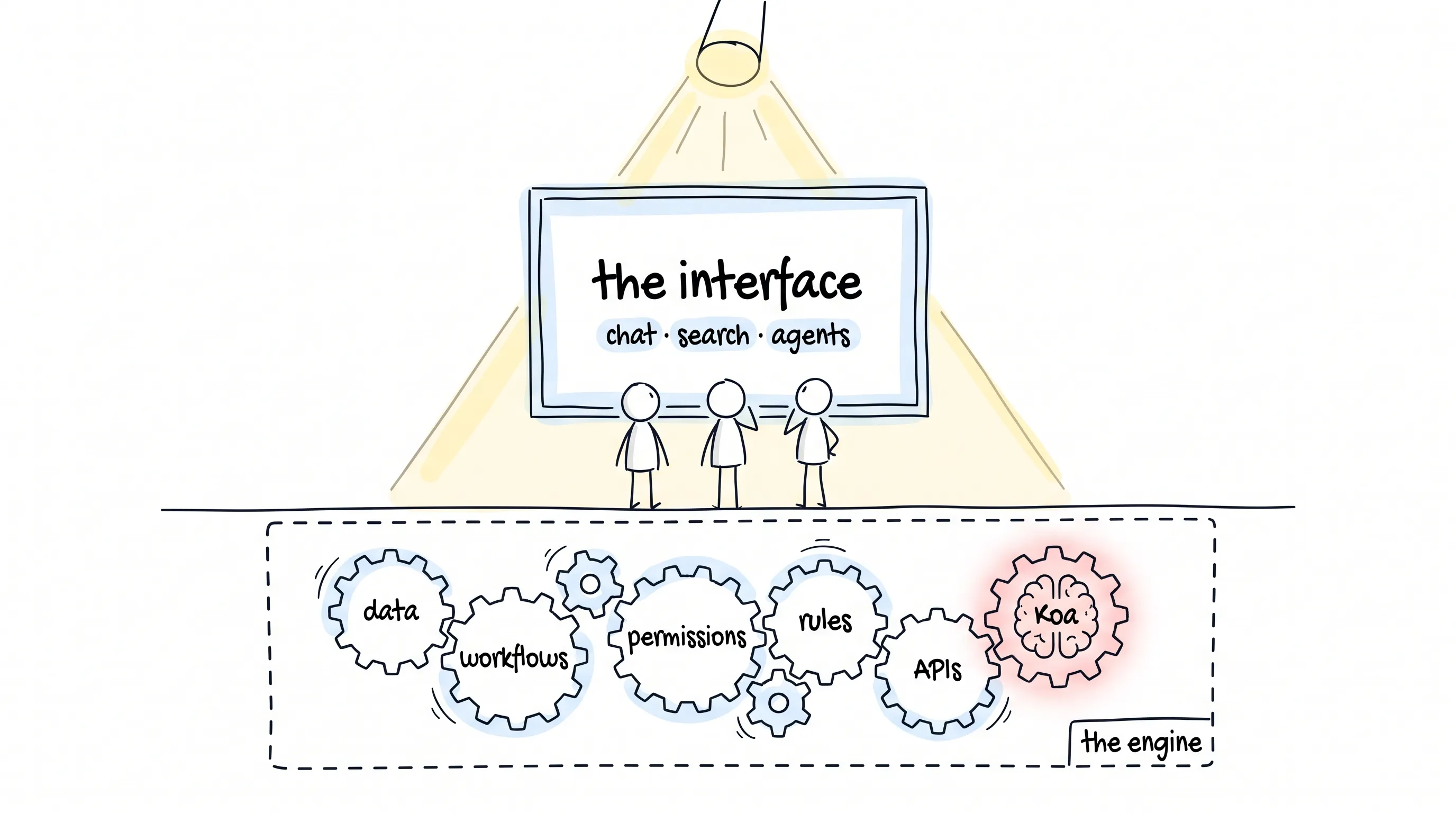
At this Dreamforce, Salesforce went further and officially launched AIforce: data, workflows, semantics, permissions, security, governance, actions — all exposed through APIs, callable from any other AI environment. In effect, Salesforce is turning itself into the utilities in other people's AI environments.
Add the AWS and Google Cloud partnerships on top: Salesforce's capabilities can now show up inside Amazon Quick and Gemini Enterprise — and in reverse, the models and agents in those ecosystems can do their work directly on Salesforce's data and workflows.
For marketers, what does this mean?
"Where you work" and "what you work with" are becoming two separate choices. Customer context and business rules? That can be Salesforce. General reasoning? Claude or Gemini. Work that needs real CRM depth? Hand it to Koa.
The same shift is happening on the customer's side.
Starting this fall, merchants on Commerce Cloud can put their products directly into Google Search, including AI Mode and Gemini. Customers browse and place orders inside Google, over Google's Universal Commerce Protocol. Payments, compliance, order management — all still sitting steadily on the merchant's Commerce Cloud.
The customer thinks they're just using Google.
They have no idea Salesforce is standing underneath.
The interface takes the spotlight up front. The engine does the work underneath.
What's Truly Valuable Is the Layer Underneath
By now you might be asking: what does all of this actually mean for marketers?
We're used to picturing the "customer journey" as a string of brand-owned territories: the website, the app, the online store. Customers come from here and go there, all under your watchful eye.
But when AI interfaces become the new place where discovery and purchase happen, the technology deciding "what customers see and what happens next" becomes invisible to them — and no longer fully visible to you.
Agents will run errands for you across apps, too. Your chances of dealing with those apps directly will only keep shrinking.
So what becomes more and more important?
The layer underneath: accurate customer data, shared definitions, crystal-clear permissions, unambiguous business rules, smooth APIs, solid governance. And one more thing: for every job, picking the right "reasoning brain."
Back to that news story from the beginning.
AI keeps making information cheaper and "experts" easier to hire. When Salesforce poured decades of accumulated know-how into a model, the bet boiled down to one sentence:
Experience is one of the few things that can't be copied in the AI era.
Here's hoping you start banking your own share of it, sooner rather than later.
Continue reading
Related articles
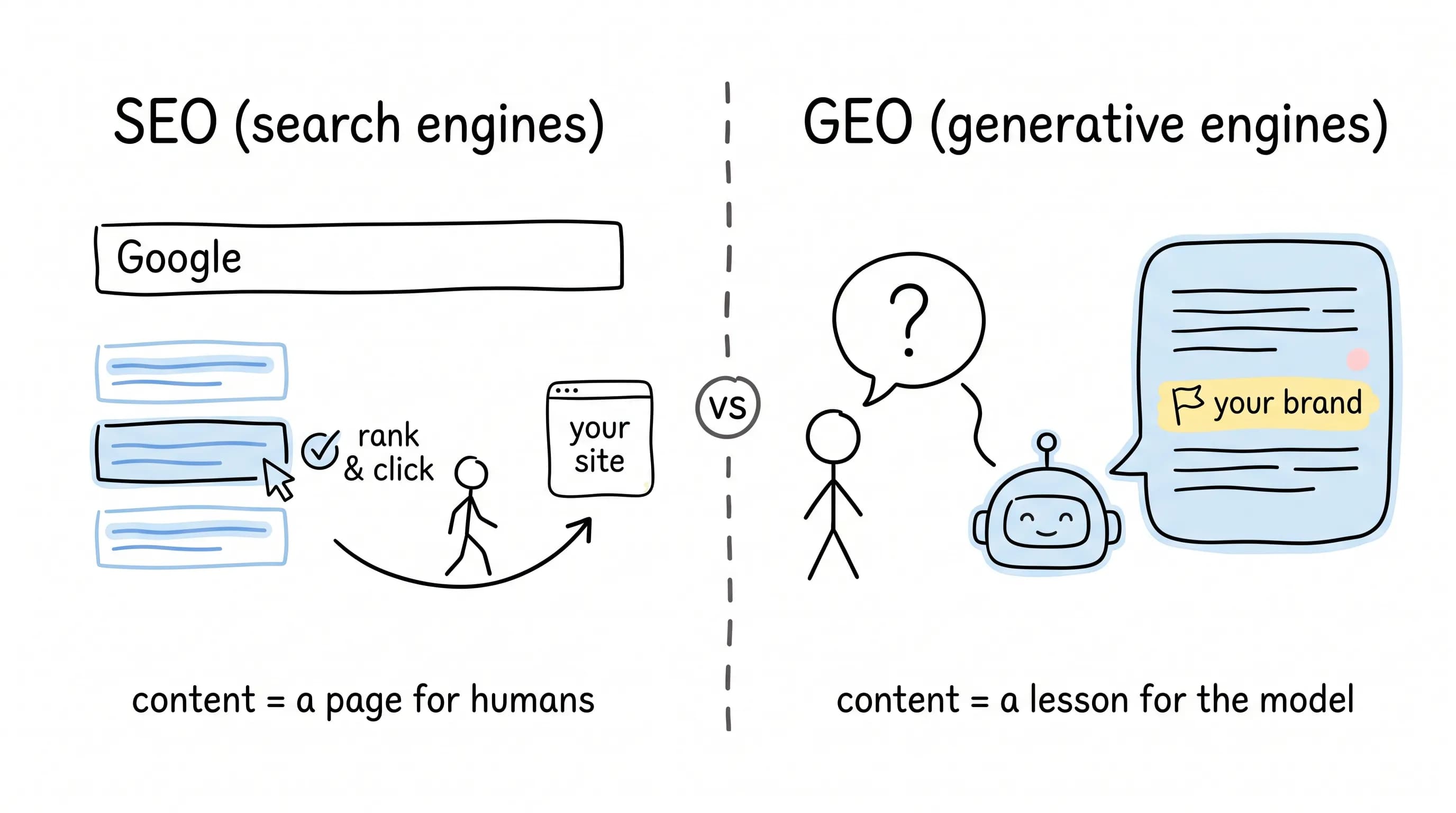
Does AI Know Your Brand? A Look at GEO, the New Craft
An explainer on GEO (Generative Engine Optimization): how AI engines like ChatGPT, Perplexity, and Gemini differ, how GEO goals and metrics diverge from SEO, and which SEO skills still carry over.
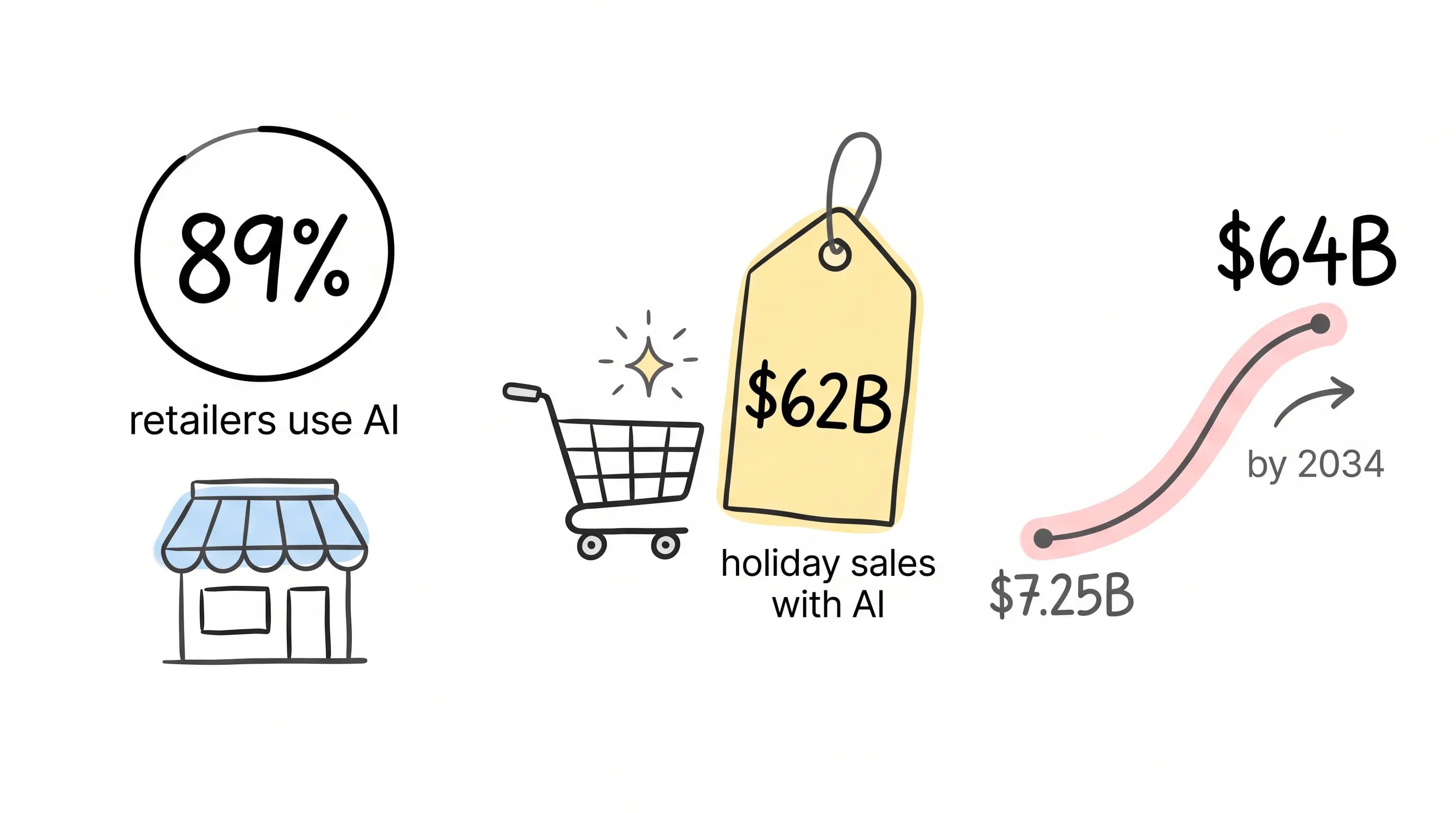
89% of Retailers Are Already Using AI. The Playbook for E-Commerce Has Changed
A learn article on AI in e-commerce: adoption context, use cases from recommendations, search, dynamic pricing, customer service, inventory, and fraud control, plus B2B applications, generative AI content, tool examples, pitfalls, and a six-step adoption path.
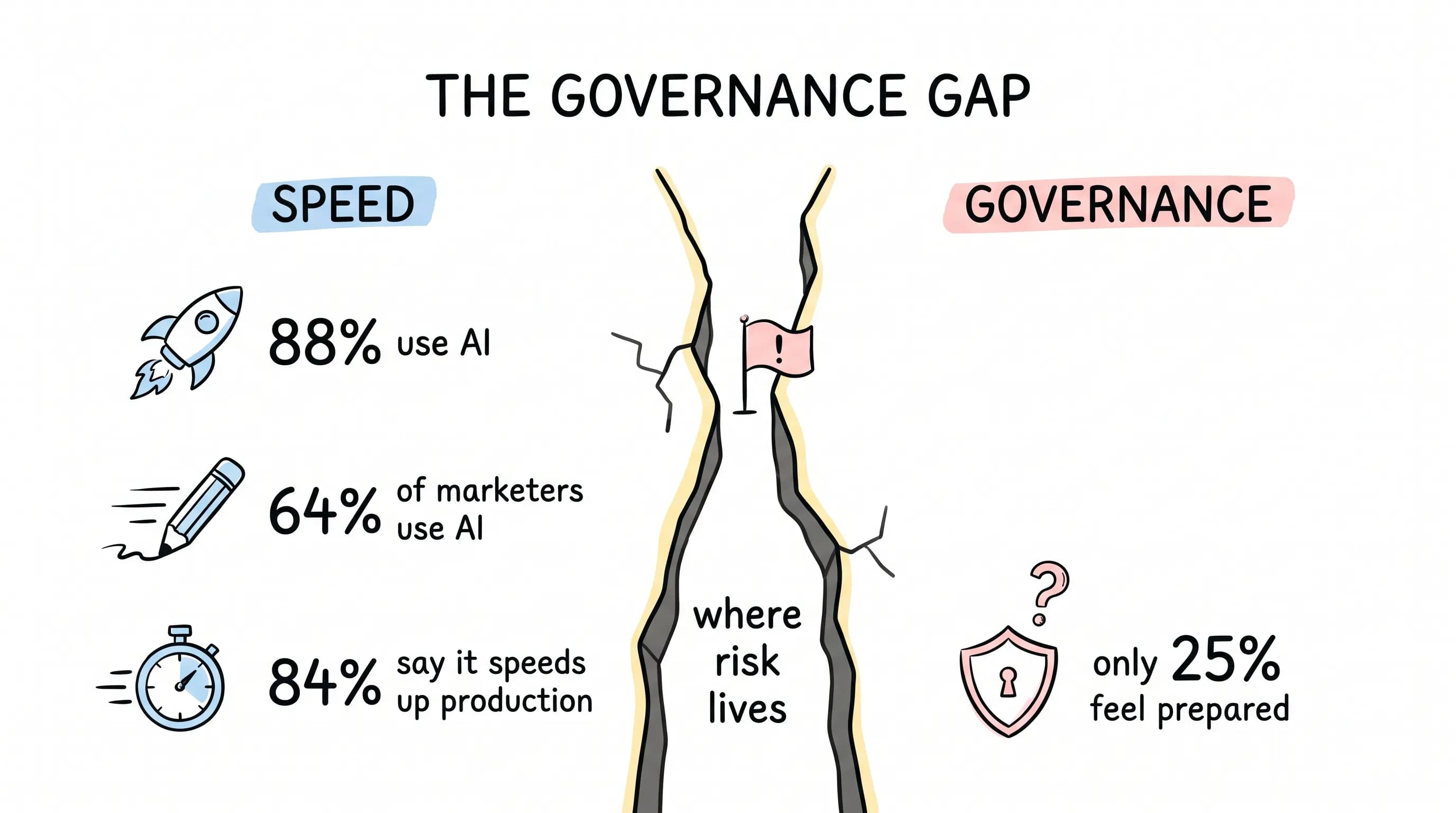
AI Makes Content at Lightning Speed — But Can You Answer "Who Approved This?"
This article looks at the gap between AI content speed and governance readiness in marketing teams, and outlines nine control points — prompt validation, brand guardrails, permissions, approval workflows, human review, versioning, IP checks, audit trails, and asset reuse — for brand-safe AI content.