
Rihanna Went to China and Flipped a Jianbing — a Lesson for Every Brand Going Global
A learn article uses Rihanna's 2025 618 livestream selling Fenty Beauty in China, with AI real-time translation, to draw lessons for global brands: follow consumers into livestream and social commerce channels, build awareness before opening stores, and treat branding as a slow variable.
A while back, I watched a replay of a livestream.
It left me stunned.
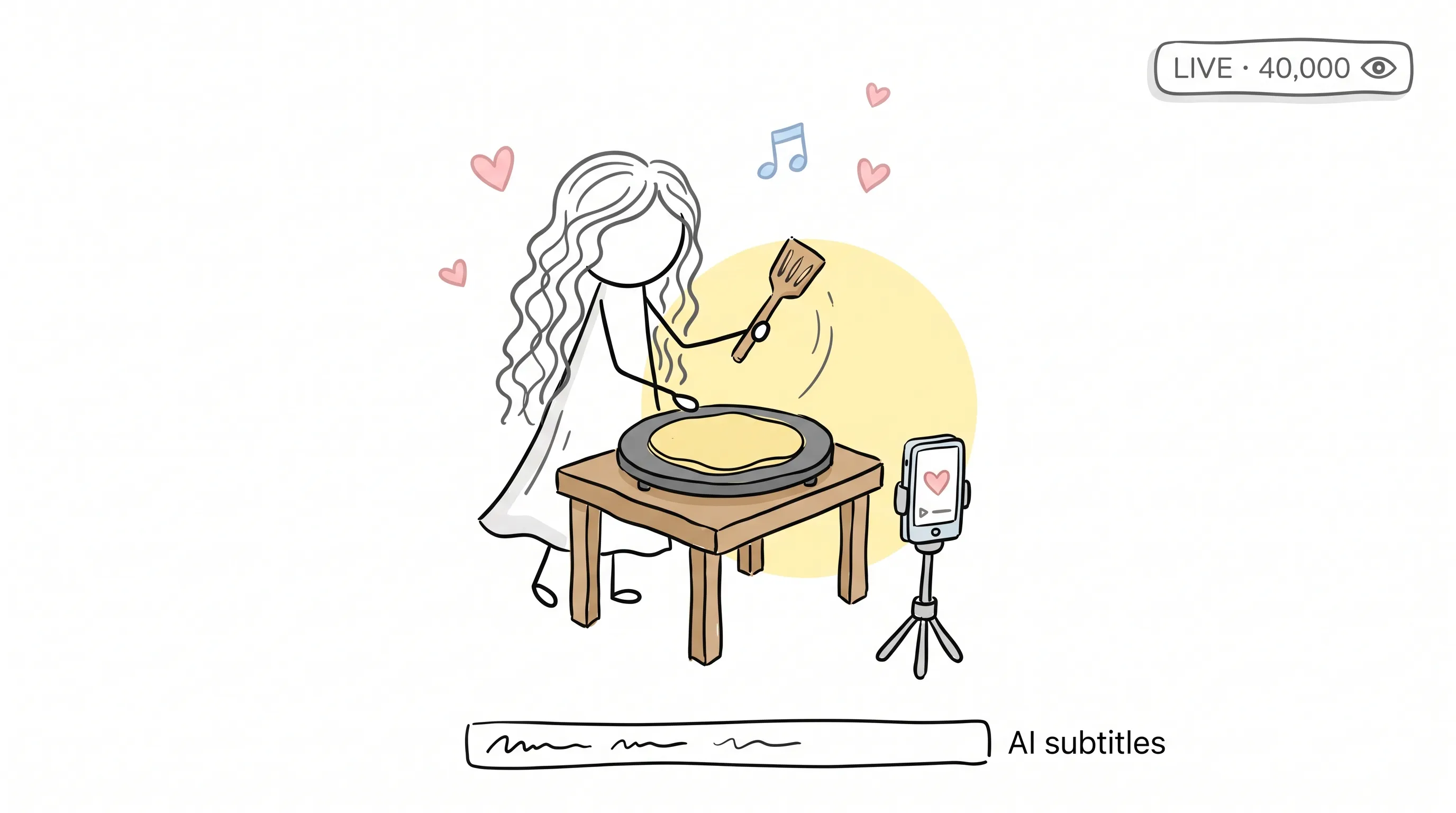
During the 2025 618 shopping festival, a global pop diva set foot in China for the first time and hosted a series of livestreams selling her own beauty brand, Fenty Beauty.
What is 618? Think of it as China's version of Black Friday. Every June, the whole nation goes on a shopping spree.
Here's what the stream looked like: top-right corner, the live viewer count — 40,000. Center screen, she was trying lipstick shades on her co-host's lips. In one corner, a sales counter kept ticking upward.
Even more striking were the subtitles. Every English sentence she spoke was translated into Chinese by AI in real time and laid across the screen. Blazing fast, and remarkably accurate.
Unbelievable.
Why would a global superstar travel all the way to a Chinese livestream studio to sell lipstick?
This is something everyone in the going-global business should think long and hard about.
First, a Story About a Jianbing
Rihanna's bond with Chinese netizens began with a song.
One of her signature hits is "We Found Love." Chinese netizens misheard it as "Wéifāng de ài" — "the Love of Weifang," which sounds almost exactly like the English title. Weifang is a city in Shandong Province.
That one joke spread far and wide, and it earned her a nickname: the Shandong Diva.
You'd think she'd ignore it. She didn't. When she came to China, she brought up the meme herself, promised to visit Weifang someday, and on the livestream she even learned to flip a jianbing (a savory Chinese street crepe) — a Shandong specialty — then ate it on the spot.
With that single move, her standing with Chinese netizens maxed out instantly.
Think about what's really behind this.
It's meeting consumers in their own context. The joke was theirs first; all she did was catch it. Catching it is an attitude.
And notice: she didn't hold some grand press conference. She went to a livestream studio.
Why? Because at that moment, the livestream studio was where Chinese consumers gathered the most.
She went where the consumers were, and did business the way consumers are used to.
Remember this line. Everything that follows is a footnote to it.
First, Understand What Kind of Market This Is
To understand this move, you first have to understand what makes Chinese e-commerce unique.
The Chinese internet is a self-contained ecosystem.
Self-contained how? The toolkit you're familiar with is basically useless there. No Google. No Facebook. No Instagram either.
China grew its own tech giants: Alibaba, ByteDance, Tencent… Together they form a self-sufficient commercial universe.
And inside that universe, territory is being carved up anew.
Run the numbers. Five years ago, Alibaba's share of China's e-commerce market was roughly half. By 2025, it had slipped to around 40%.
Note that Alibaba's pie hasn't shrunk. It simply hasn't grown much.
So who is growing? Two dark horses.
One is Pinduoduo. Its play: connect factories straight to consumers and farms straight to dinner tables, cut out every middleman, and swallow the budget end of the market with rock-bottom prices. For going overseas, its vehicle is Temu.
The other is Douyin. Behind Douyin is ByteDance, which also owns TikTok. Douyin has been devouring high-ticket categories like beauty and health, and its weapon is the livestream.
Five years, from zero to roughly 15% share (2025).
How big is 15%? China's e-commerce market is the largest in the world. That slice alone is worth more than 7% of global e-commerce sales.
The incumbent didn't lose. Someone simply switched tracks.
What Is Social Commerce?
Look again at the platforms in this ecosystem and a common trend emerges: social life and commerce are growing into each other.
Xiaohongshu (RED) — think Instagram meets Pinterest. A lifestyle content community with roughly 300 million users and over 100 million monthly actives, concentrated in big cities and mostly female. It used to be all about "planting grass" (Chinese slang for seeding the desire to buy through genuine recommendations); over the past two years, it has filled in the gaps with in-app shops and livestream commerce.
WeChat, the nation's default messaging app, has more than a billion users. The average user spends 27 hours a month inside the WeChat ecosystem — about an hour a day. Its e-commerce share is still small, but the potential is sitting right there.
Bilibili, the video platform where young people cluster. Taobao and JD.com, the traditional shelf-based e-commerce giants, still enormous in scale.
Back during the lockdown days, users averaged 88 minutes a day on Douyin.
What does that mean?
It means consumer attention has been shattered and spread across several platforms. And on every one of them, consumers are being bombarded: friends' updates, influencer recommendations, brand ads, promo messages — all mixed together.
Business goes where attention goes. Wherever attention breaks, business has to spread.
By the way, let me define a term in passing: cross-border e-commerce.
Goods shipped from outside the customs border, mailed directly to consumers inside it, under dedicated rules and a different tax regime. Many industry reports say this sector grows 15% a year, but they lump "Chinese goods sold to the world" together with "foreign goods sold into China" — and the bulk is the former. For this track, beauty and health are an especially natural fit, because those two categories have the most complicated registration and filing requirements — exactly what the cross-border channel solves.
There's also luxury. In recent years, more than 40% of the world's newly opened physical luxury stores opened in China. After grinding through a painful 2021 and 2022, Bain's 2025 report recorded a clear rebound. But the market is splitting: at one end, a charge toward ultra-luxury; at the other, ordinary consumers have started counting every penny.
Lesson One: Go Where the Consumers Are
Now, back to Rihanna. I've distilled her play into three lessons.
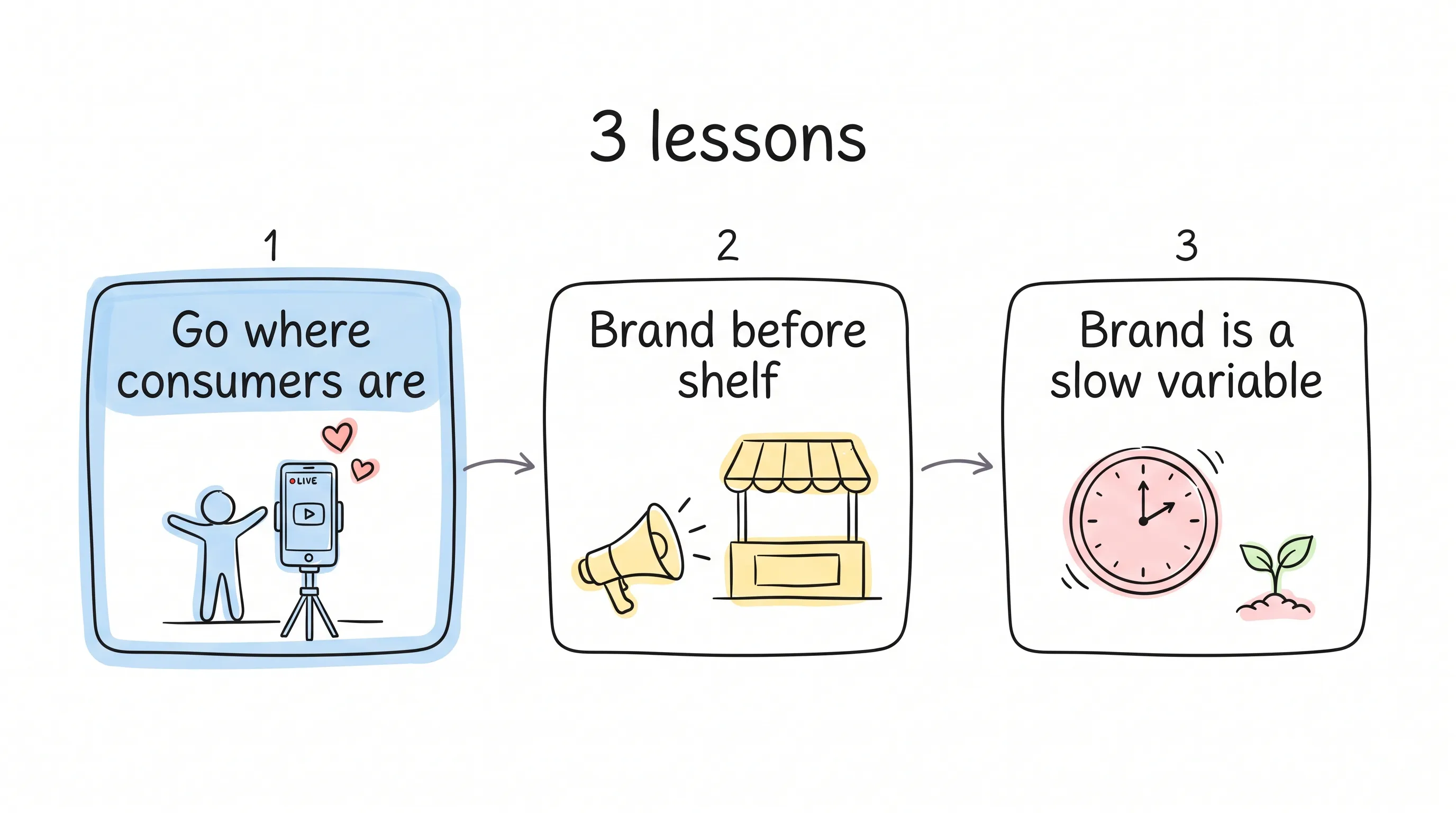
Lesson one: embrace new channels — go where the consumers are.
At the time, livestreaming was virtually the only growth engine Chinese e-commerce had. Put another way, Chinese e-commerce has been growing inside livestreams.
But hold on — don't get carried away. Big dividends come with hard math.
First ledger: price. Livestreams are promotional arenas; consumers arrive expecting discounts and freebies. If you can't defend your pricing structure, the brand gets cheapened into the ground.
Second ledger: inventory. In a good livestream, you can sell out three months of stock in a single session — and restocking may take another three. Momentum snaps. So you have to keep inventory banked in advance to keep full-price sales running day to day.
Third ledger: returns. Ordering in a livestream is impulse shopping. You're scrolling along, you spot a face cream — buy! Twenty minutes later you come back to your senses — return! In this industry, cancellation rates of 20% to 30% are nothing unusual.
Fourth ledger: trust. Chinese livestream hosts may demand more documentation than anyone else in the world. You claim your product has a certain effect? Show the certification papers. Some tests have to be run again in China before they'll accept it.
This isn't obstruction for its own sake. When a host sells a bad product, it's their own reputation that takes the hit. They stake their personal credibility on the words "genuine goods."
Who does the streaming is another ledger.
Hire a top-tier influencer — in industry jargon, a "KOL stream" — and sales explode, but they'll take a 25% to 30% commission. And at the end of the day, those buyers are the influencer's fans, not your customers.
Grow your own hosts instead — that's in-house livestreaming, or "self-broadcast." The audience is your own fan base; smaller in scale, but every order earns more.
One more industry trend worth noting. China's single most famous sales host — what's the style? "Buy it! Buy it! Buy it!" High pressure, fast tempo, one product every 10 minutes.
On Xiaohongshu, meanwhile, two hosts have walked the exact opposite road: slow livestreaming. They don't stream often; their content is sharing lists of things they genuinely love, taking viewers on a wander through their homes, reading poetry. Want to partner with them? It costs a fortune. But the results are just as striking.
One shouts; the other talks. Which would you choose?
Lesson Two: If Nobody Knows You, More Stores Won't Save You
Lesson two grows straight out of social commerce.
Many brands reason very simply: I'll open a shop on Xiaohongshu, sit back, and wait for the orders to stroll in — there's bound to be some business, right?
Nope.
We just covered how bombarded consumer attention is. An unfamiliar brand, squeezed between a friend's update and an influencer's recommendation — why would anyone see it?
If nobody knows you, no amount of shelf space helps.
So build the brand first, do business second. Only when people know who you are and what you stand for do you earn the transaction.
Lesson Three: Fast Money Is Harder Now; Brand Is a Slow Variable
Lesson three is about time.
There was a time when Chinese e-commerce grew 10%, 20% a year and opportunity lay everywhere. Back then, you really could skip brand investment, chase short-term promotions, and still grow.
In the last few years, the wind has shifted. Growth has slowed; customer acquisition has gotten expensive. Winning one customer today costs far more than it did five years ago. Consumers browse more platforms too, and you have to follow them, cultivating each one, platform by platform.
And the competition? Brands from Japan, Korea, Europe, America, Australia — all of them are here. Fiercer still are China's homegrown brands: a huge crop of them sprang up in those years, with quality that now matches the international majors, far faster speed, and a much deeper read on the market.
In this landscape, your unique selling point has to be rock-solid, and your product has to give people a reason to buy they can't refuse.
How do you invest in brand? I've seen playbooks that work; roughly three steps.
First, strategy. Set the tone, the visual identity, the channels — get clear on which platforms to show up on and what to say there.
Then, activation. Influencer partnerships, paid media, PR — build the buzz.
Only then do you release demand: plug in your shop and livestream commerce, and harvest the awareness.
Here's a real case for you. mui, a high-end Dutch furniture brand, was virtually unknown in China three years ago. It didn't rush to chase sales; instead, following those three steps, it patiently built content and social media. The result? Every month, one or two B2B inquiries come knocking, wanting to partner on showrooms and retail stores; consumer price inquiries keep flowing in too. Concentrate a burst of spending around moments like Milan Design Week, and the buzz climbs another level.
An even more interesting case: a body-care brand divided the work with its distributor. The distributor ran the sales side — picking hosts, setting discounts, running promotions. The brand owned the narrative, making sure every platform told the same story — they even redesigned their Taobao store from top to bottom. Within a few years, GMV (gross merchandise value — total sales) doubled.
See? One manages today's sales; the other manages tomorrow's brand. Lose either one, and you can't run far.
A Final Word
Back to that livestream from the start.
A diva big enough for you? Global fame high enough? Yet when she came to China, she still went, without any fuss, straight to the livestream studio — played along with the netizens' meme, learned to flip a jianbing, and ate it.
The essence of all business: first become someone's guest, then become someone's choice.
May you, too, go where your consumers are, speak a language they understand, and earn the money they're happy to hand over.
Continue reading
Related articles
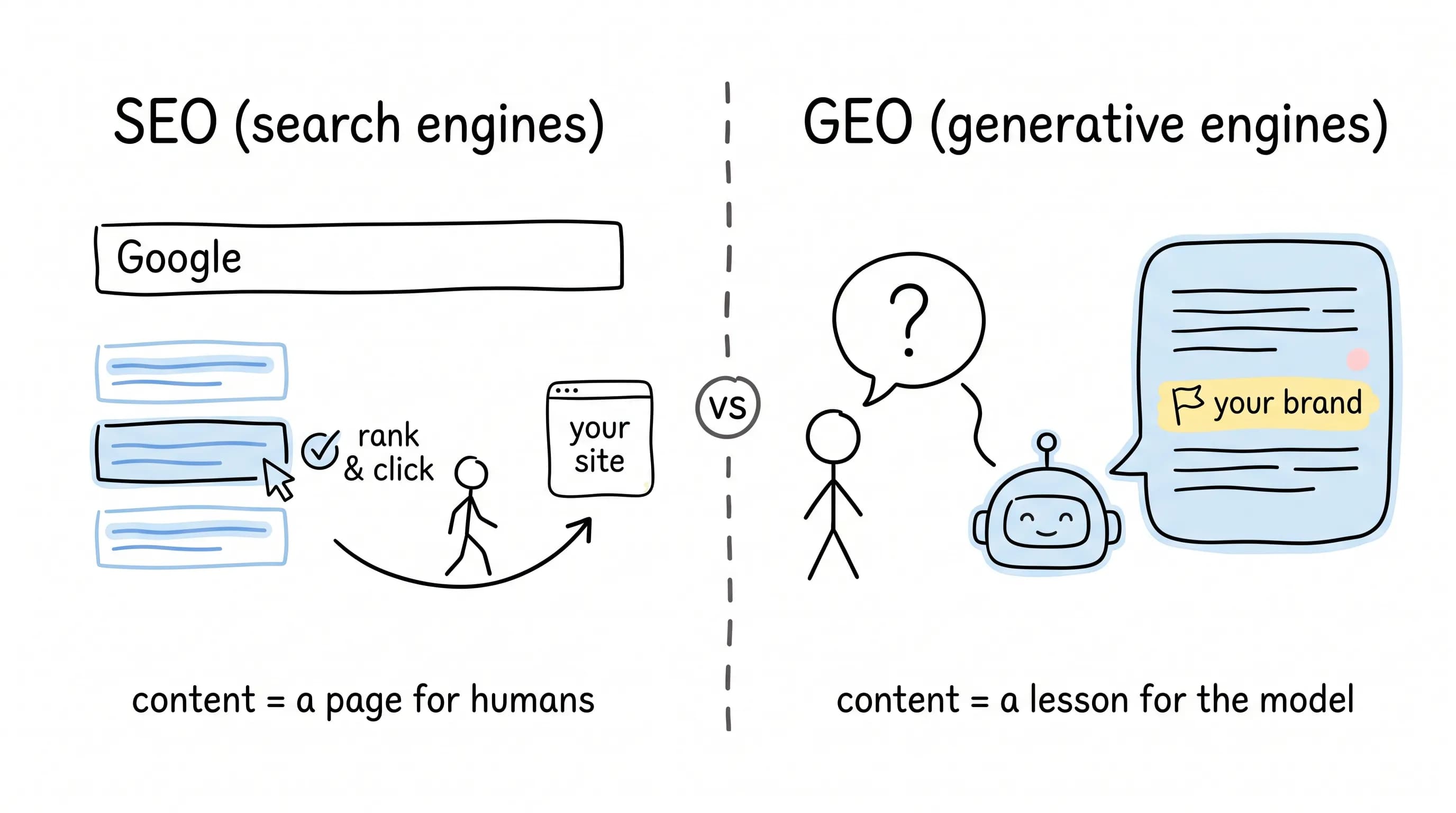
Does AI Know Your Brand? A Look at GEO, the New Craft
An explainer on GEO (Generative Engine Optimization): how AI engines like ChatGPT, Perplexity, and Gemini differ, how GEO goals and metrics diverge from SEO, and which SEO skills still carry over.
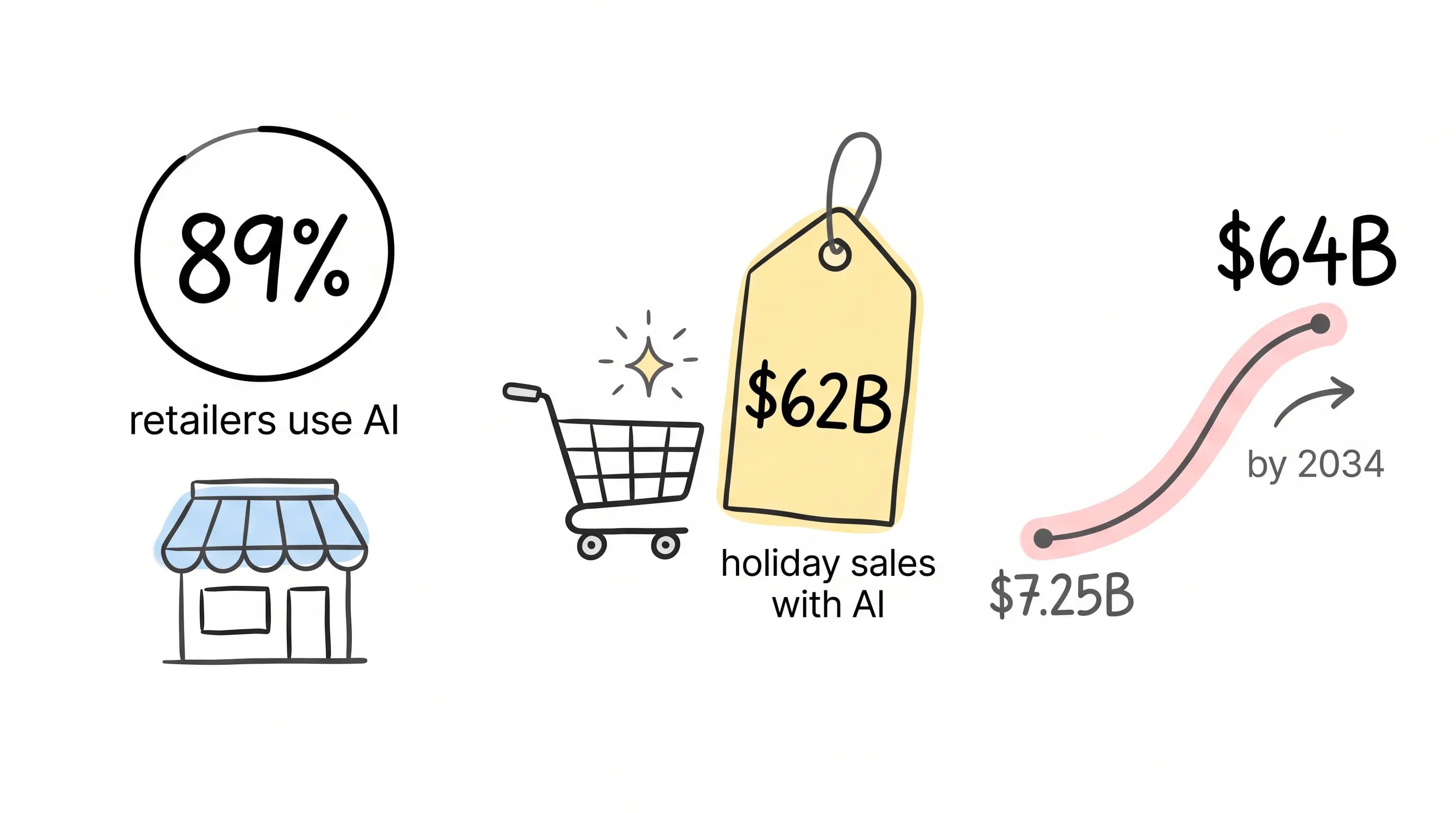
89% of Retailers Are Already Using AI. The Playbook for E-Commerce Has Changed
A learn article on AI in e-commerce: adoption context, use cases from recommendations, search, dynamic pricing, customer service, inventory, and fraud control, plus B2B applications, generative AI content, tool examples, pitfalls, and a six-step adoption path.
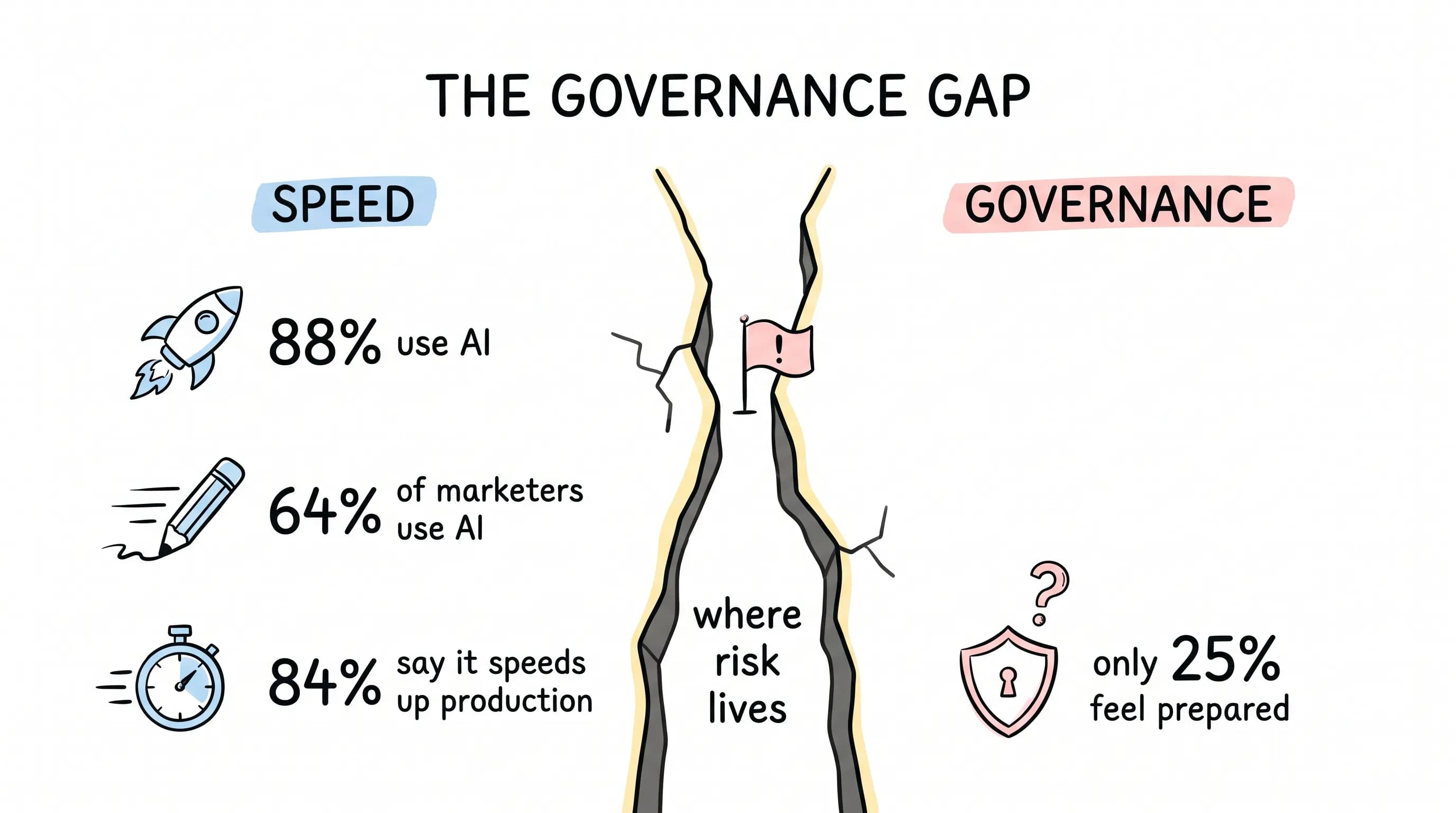
AI Makes Content at Lightning Speed — But Can You Answer "Who Approved This?"
This article looks at the gap between AI content speed and governance readiness in marketing teams, and outlines nine control points — prompt validation, brand guardrails, permissions, approval workflows, human review, versioning, IP checks, audit trails, and asset reuse — for brand-safe AI content.