
People Writing Content with AI Are Quietly Pulling Ahead
An article explaining how generative AI is changing marketing content work, covering efficiency, personalization, and lower entry barriers alongside quality, originality, bias, and dependency risks. It advises treating AI as an assistant with human review and final sign-off.
A while back, a friend of mine who works in new media invited me out to dinner.
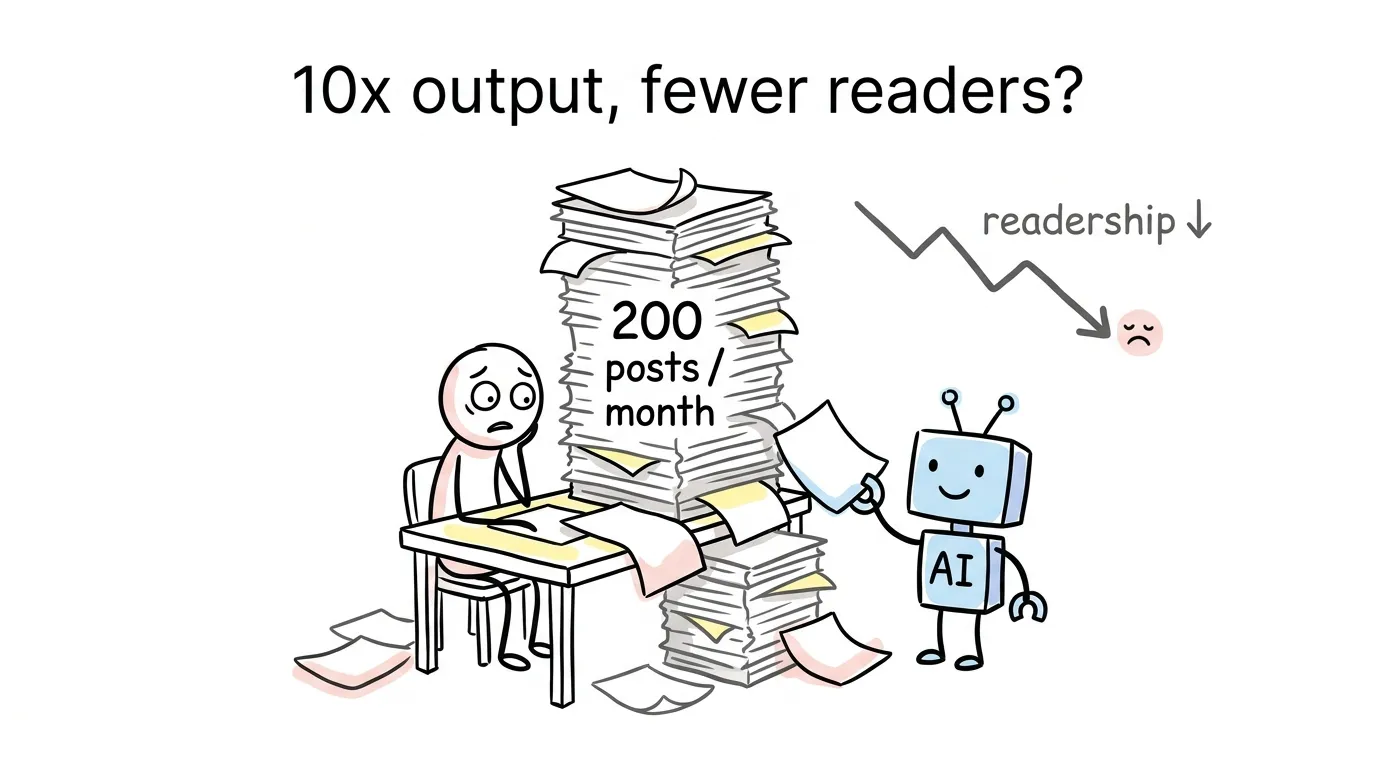
Before the dishes had even finished arriving, he let out a sigh. His company had brought in AI writing tools last year, he said, and now a single editor could put out two hundred pieces of content a month. It used to be twenty.
Output up tenfold. Guess what happened to readership?
It fell.
Then he said something that stuck with me: "We've got huge capacity now, but no idea what to do with it."
I think this is well worth talking about. Because behind it stands the thing almost every company doing content can't dodge today: generative AI.
What Exactly Is Generative AI?
Let me put it in plain language.
You let a machine read millions of articles and look at millions of images, and it learns roughly what these things look like. Then you say, "Write me a piece of product copy," and it churns one out on the spot. Text, images, audio, video — all possible.
So how is it different from the "tools" of the past?
Old tools helped you polish. Catching typos, fixing layout, adjusting color. You were still the one doing the work.
Generative AI writes the thing for you.
And with that, everything changes.
First, Let's Do the Math — Three Times Over
The first ledger is efficiency.
Writing a product post used to swallow half a day — from picking the topic and digging up research to getting a finished draft. And now? AI hands you three first drafts in ten minutes, and you pick one to polish. Where does the saved time go? Into things that genuinely need a human brain: judging which topics are worth doing.
The second ledger is personalization.
Think about it: a brand messaging a million people used to send one identical message to everyone. And now? The person searching "what face cream suits sensitive skin" and the person searching "anti-aging for oily skin" each see a different version — and neither takes much effort.
The era when one-to-one was a fantasy is over.
The third ledger is the barrier to entry.
This is the one I most want small companies to hear. In the past, running a decent content team meant writers, designers, video editors — plenty of people, and even more money. Today a ten-person company can do the work of a fifty-person team.
For the first time, tools have leveled a good part of the resource gap.
Hearing all this, you might be thinking: isn't this great? Better rush out and put AI on everything.
But Everything Has a Flip Side
Start with quality.
AI writing has one defining trait: high averages, low ceilings. It reads smoothly, and you can't pick out a single grammatical slip — but it's often the "correct yet boring" kind of talk. And it has one bad habit: making things up with a perfectly straight face. Numbers can be invented. Quotes can be invented. Plot lines too.
Would you dare hit publish without giving it a single look?
Get it wrong, and the thing trending won't be good news. So the human-review step is one you can't cut. Machines handle fast. Humans handle right.
Next, originality.
AI was trained on a massive ocean of existing works. And how well did it learn? Every so often it "recites" someone else's sentences, someone else's paragraphs, word for word. What you take for inspiration, the law may take for infringement. Run a check before anything goes out — this bit of time cannot be saved.
Then there's bias.
Whatever it learned, that's what it carries. Whoever the training data favored, whoever it ignored — they're lurking in what it generates. The machine isn't broken; the feeding is the problem. So every once in a while, go back and look at the output, and don't let bias quietly flow out along with the content.
Finally, the most hidden one of all: dependency.
This is what I truly worry about. When every company uses roughly the same tools, content grows more and more alike. Try scrolling your phone for ten minutes — doesn't every post feel a little familiar?
When everyone is using the same brain to think up ideas, the word "creative" is in danger.
Oh, and one small thing that's easy to overlook: before you feed internal company materials or customer data into an external tool, think hard about whether that data can be pulled back once it walks out the door.
So What Should You Actually Do?
My advice fits in one sentence: treat AI as an intern, not an editor-in-chief.
When an intern hands in a draft, do you send it out without changing a single word? You don't. You read it, you edit it, you sign off. Same with AI.
Its boundaries are actually quite clear: give it the fast work, the repetitive work, the exhaustive grunt work. The judgment calls, the accountability, the stuff that can wreck a brand — leave those to people.
Entrepreneurs from my era had a saying: "Play to a person's strengths; make room for their faults." It applies to AI just the same.
Back to my friend.
Dinner was nearly over when I asked him: so what happened next?
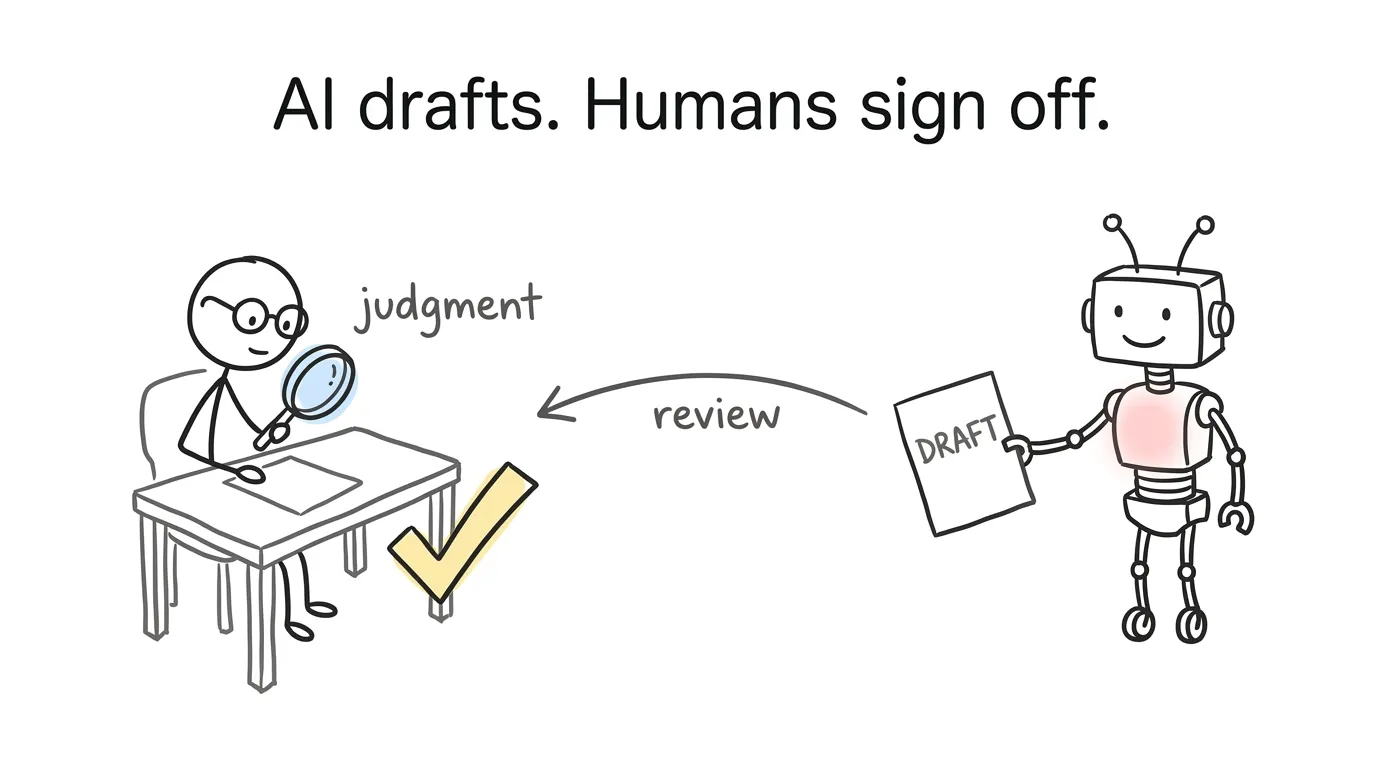
He said they later set one rule: AI drafts, humans sign off. Output didn't drop, and the disasters stopped.
Beautifully put.
Capacity is cheap. What's expensive, always, is judgment.
And may you, too, end up using AI as your most capable intern — not as the editor-in-chief who is bound to cause trouble sooner or later.
Continue reading
Related articles

It's 2026: Stop "Buying" AI Tools for Your Marketing Team — Start "Hiring" AI Agents
This learn article explains how AI agents differ from standalone AI tools in marketing, outlines three agent categories — build-your-own platforms, CRM-native agents, and vertical tools — and covers use cases across SEO, social media, advertising, and reporting, plus criteria for choosing one.

What Is GEO? How Your Brand Gets "Mentioned" in the Age of AI Search
An explainer on GEO (Generative Engine Optimization) for e-commerce and DTC brands: how it differs from SEO and AEO, why AI answers shape brand visibility, and eight practices covering question-focused content, consistent brand messaging, structured pages, external evidence, comparisons, and AI mention tracking.

AI Is Already Making Decisions for Your Customers. Are You on the List?
A learn article explains GEO (Generative Engine Optimization): why AI-generated answers now shape which brands customers see, and how SEO fundamentals, entity clarity, citable evidence, and monthly measurement affect visibility in AI answers.